
The Thousand Islands and the Plight of the Double-Crested Cormorants

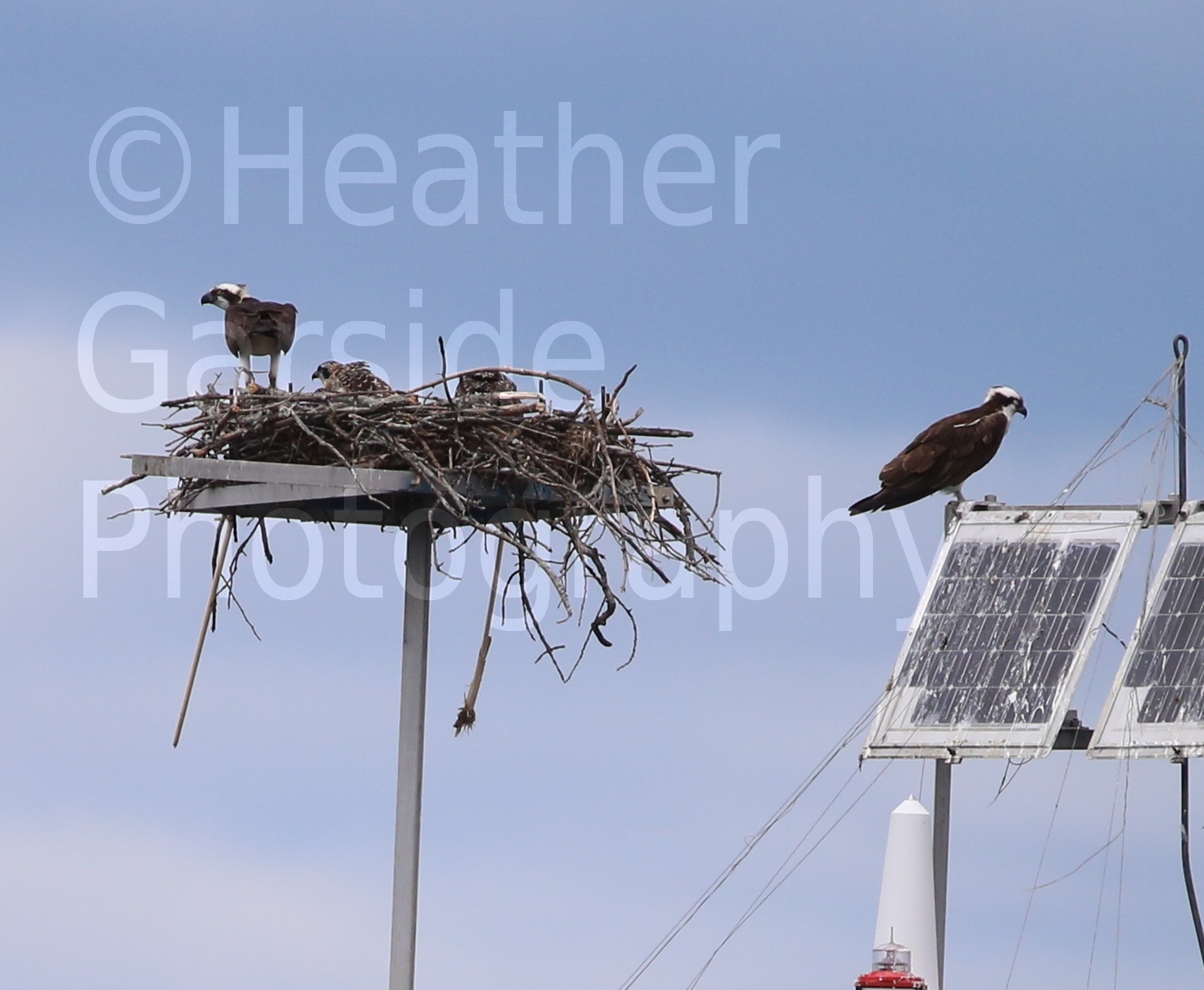
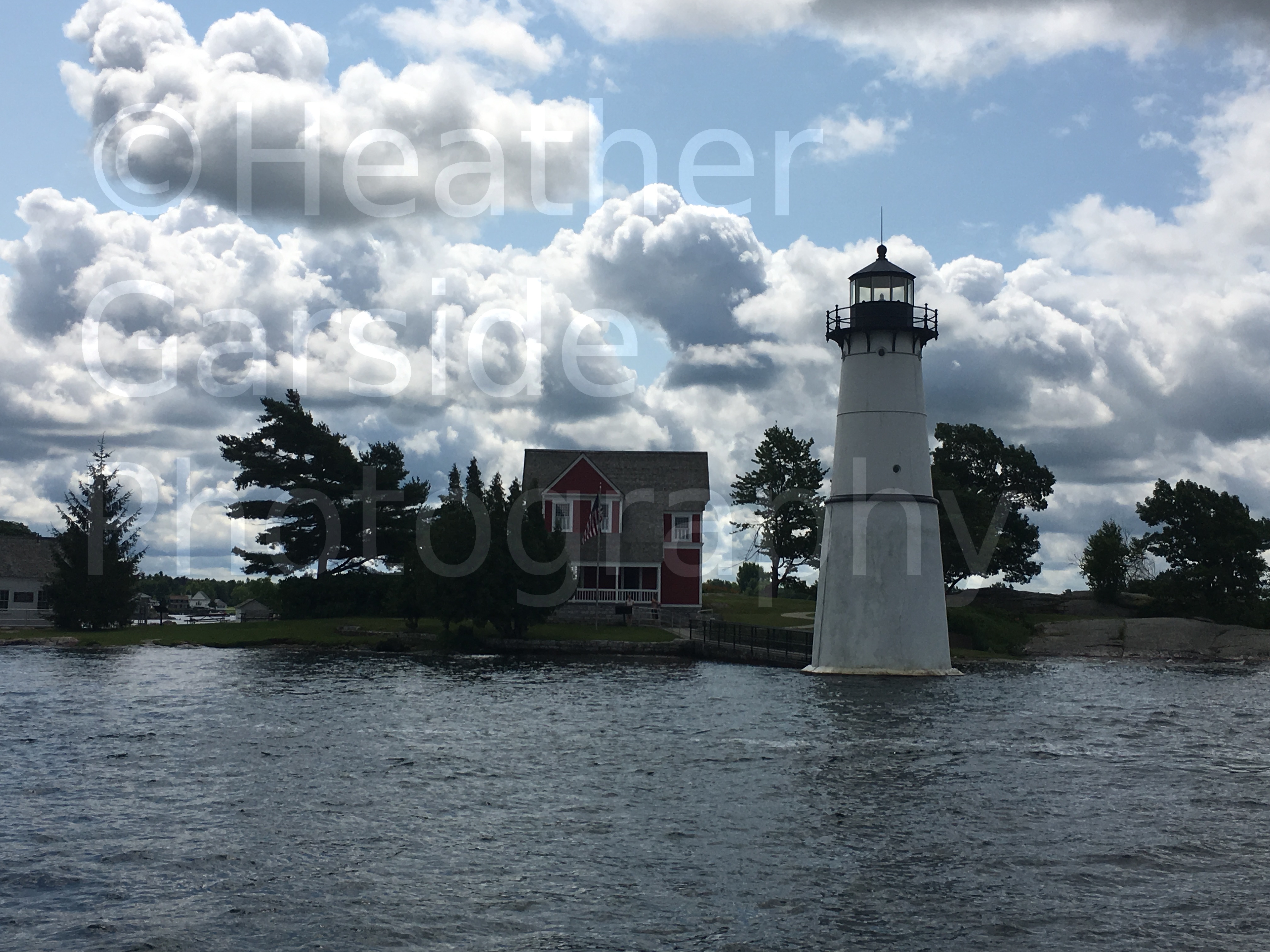
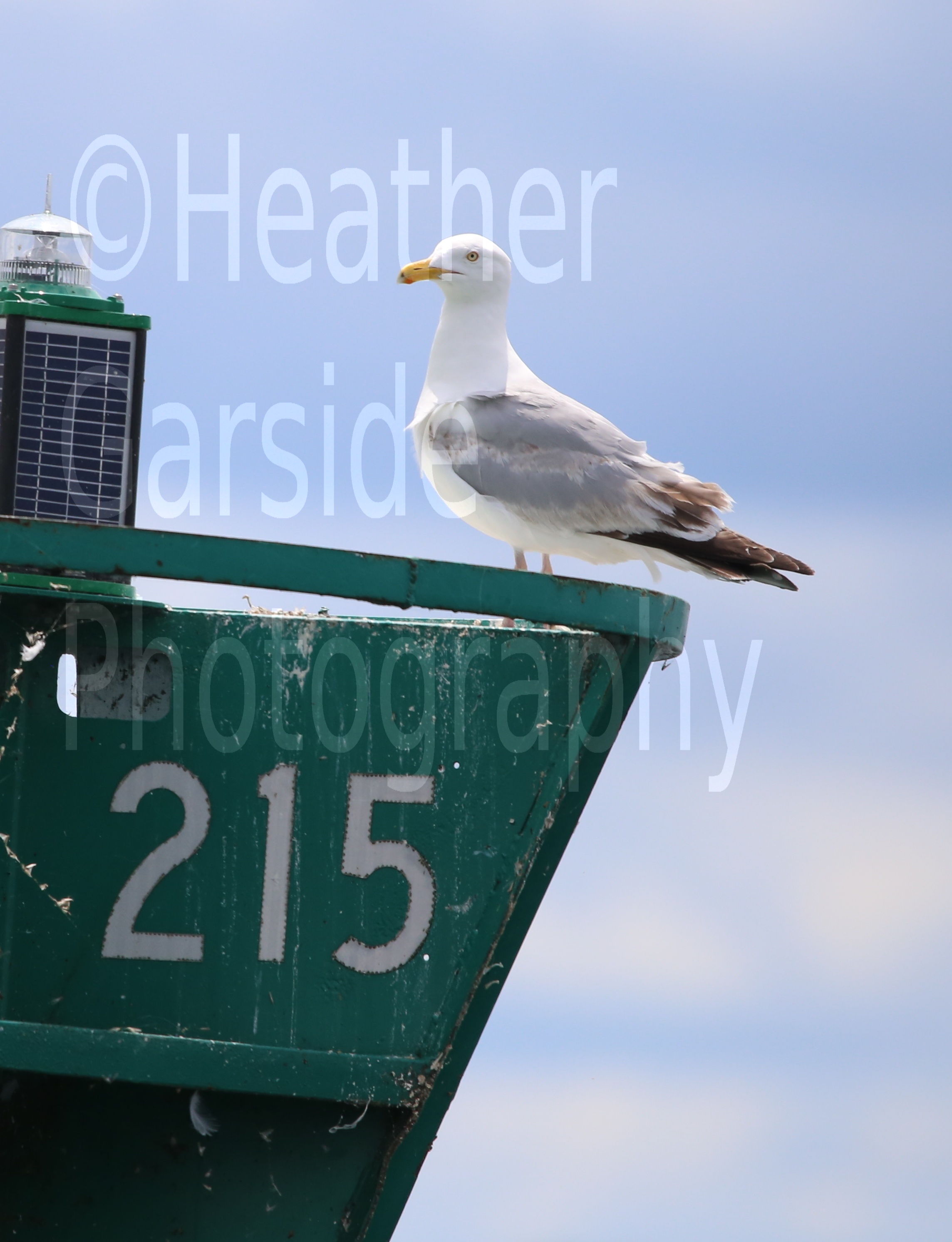
The Thousand Islands is a lovely spot for a vacation or a day trip. There is lots of history, culture and natural beauty. The natural beauty of the islands is in contrast with the industrial might of the many transport ships traveling along the St. Lawrence Seaway. Home to many species, summer inhabitants of the Seaway include Osprey and Seagulls of all types.
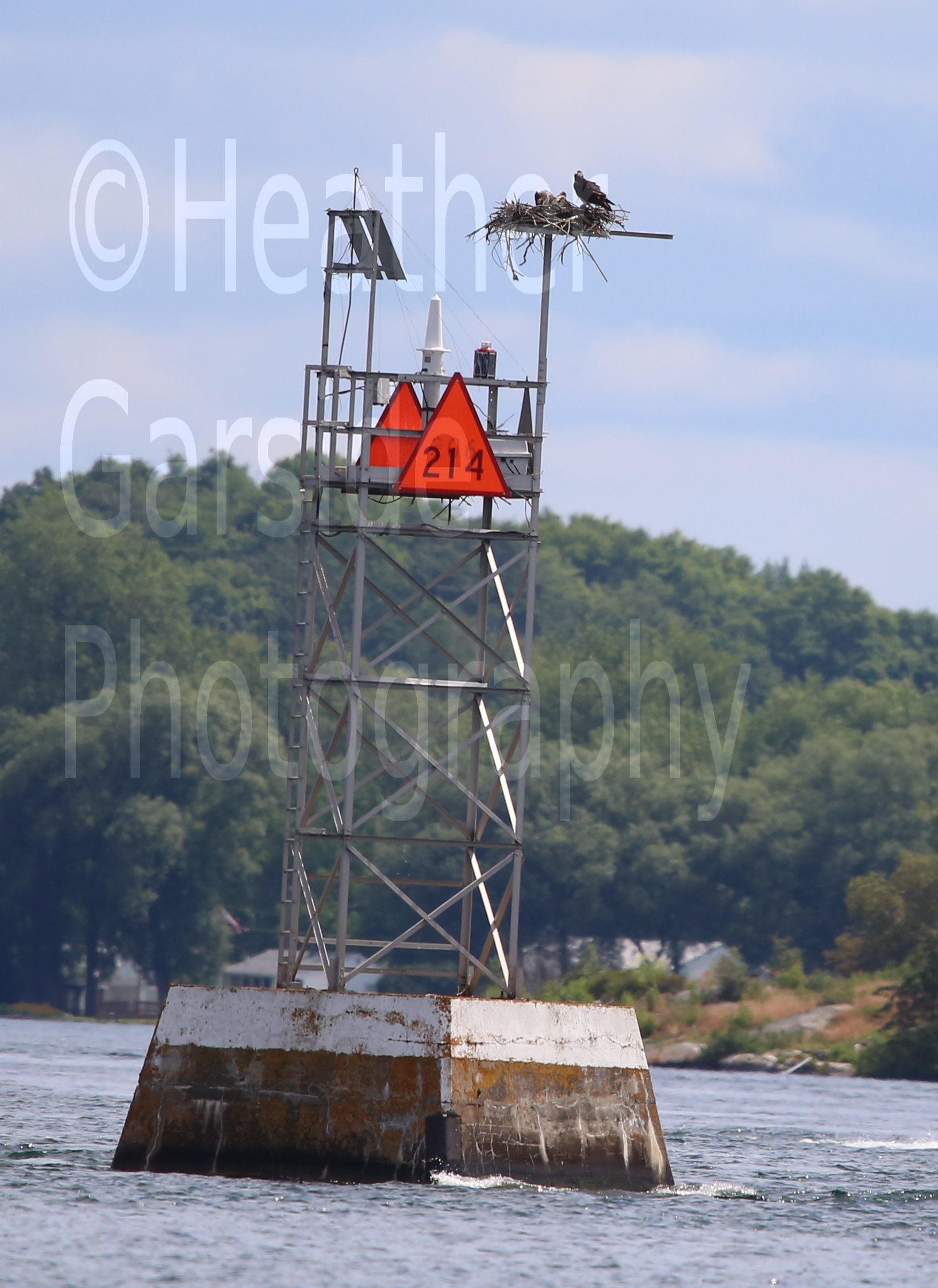
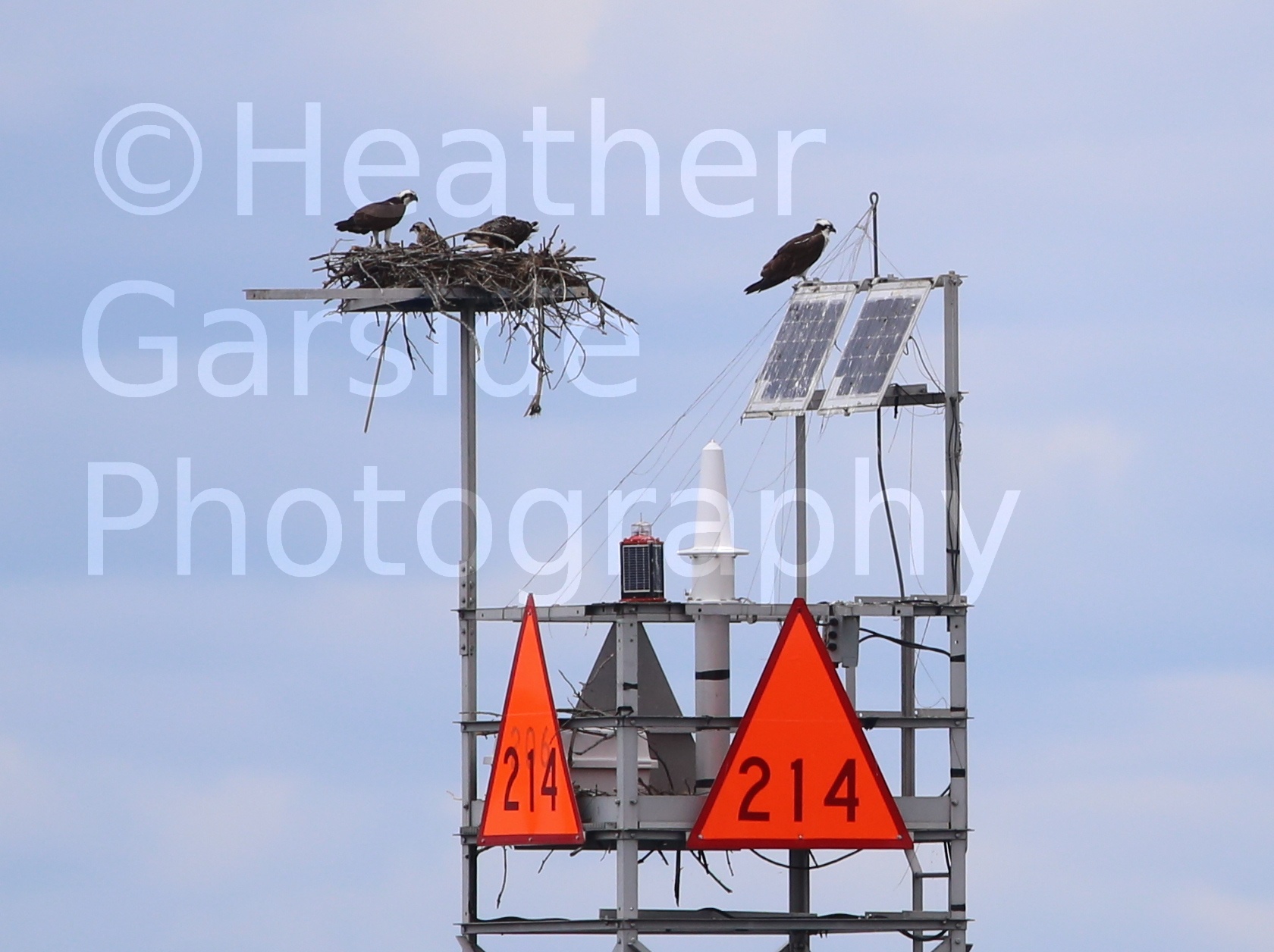
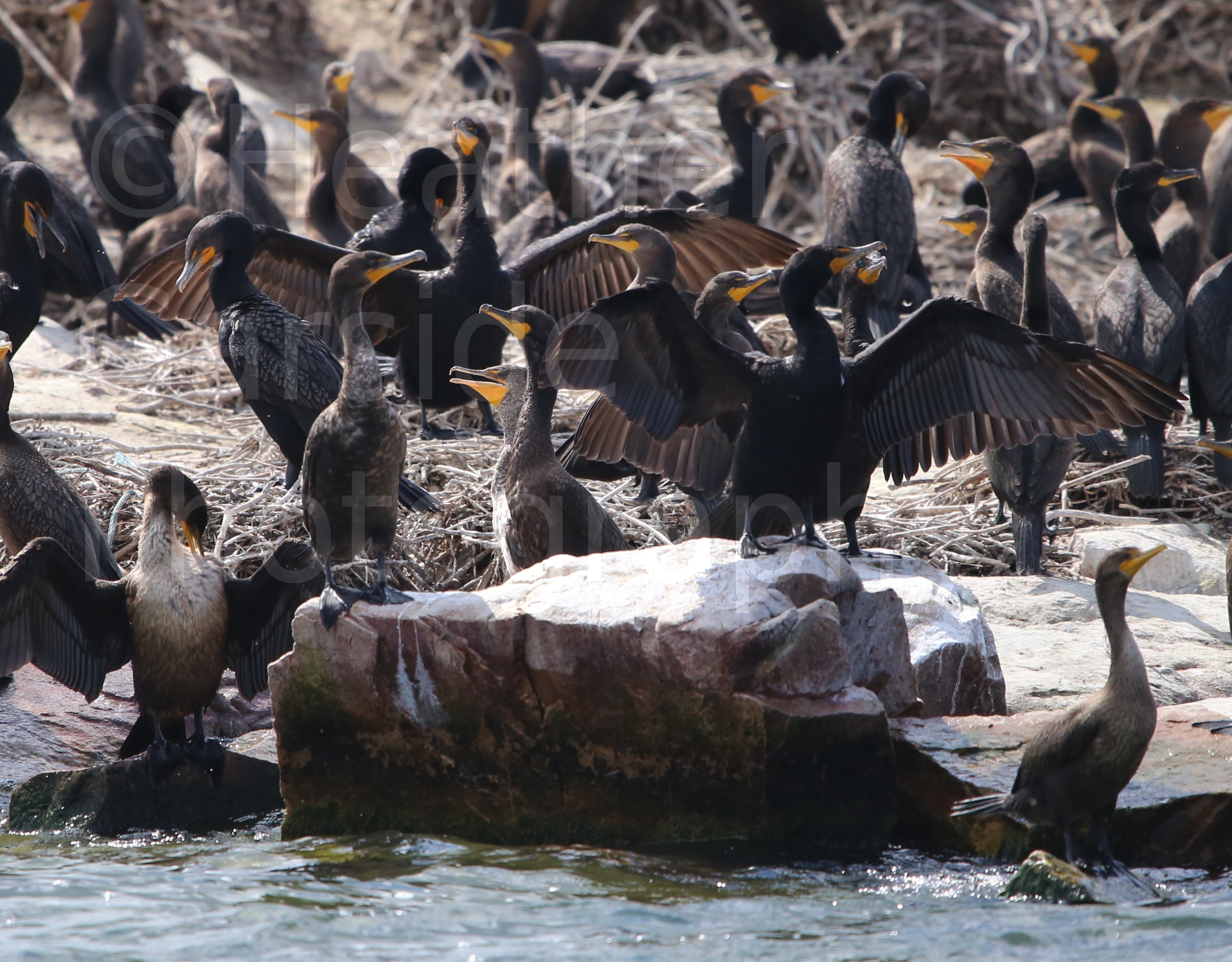
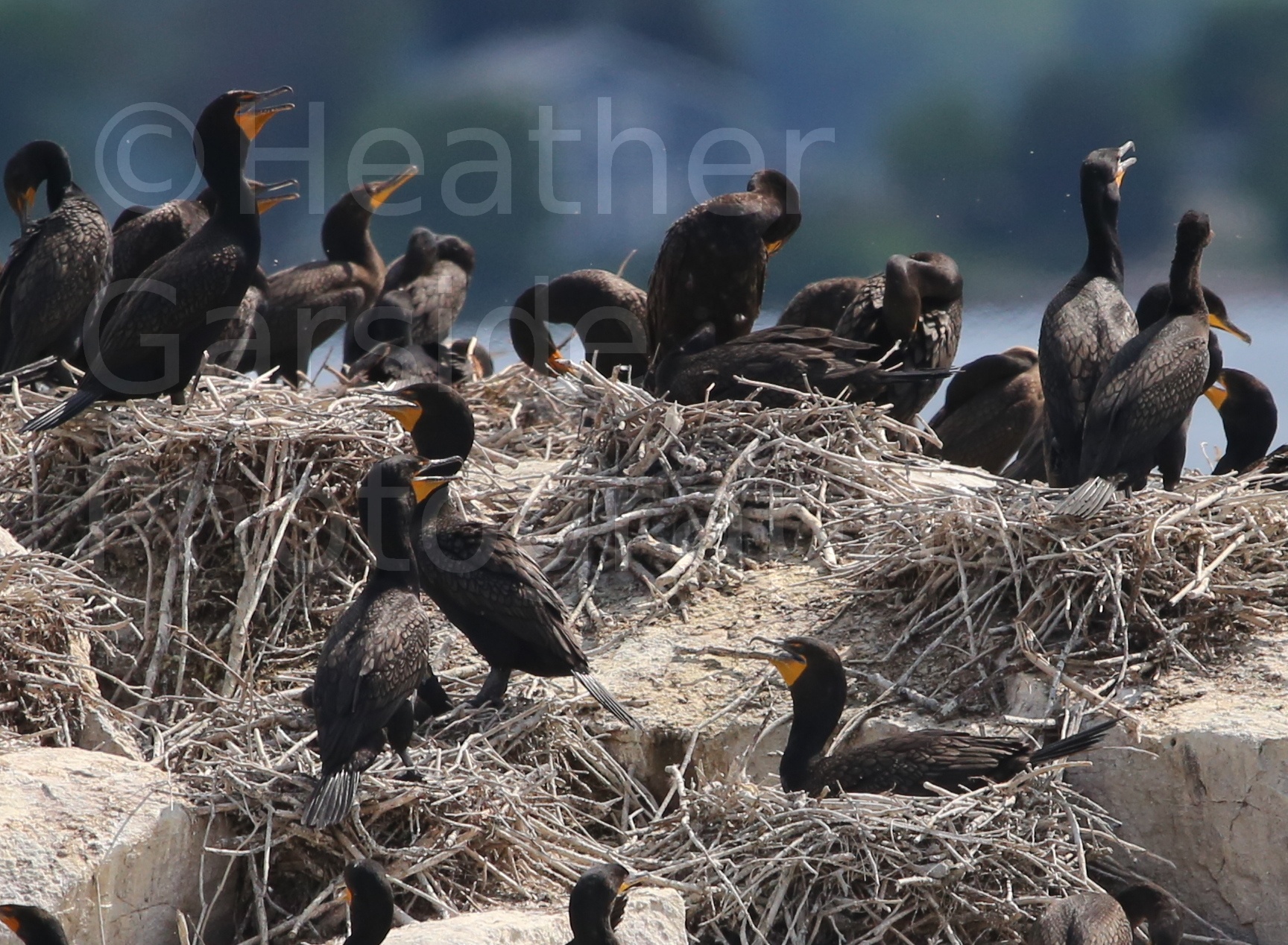
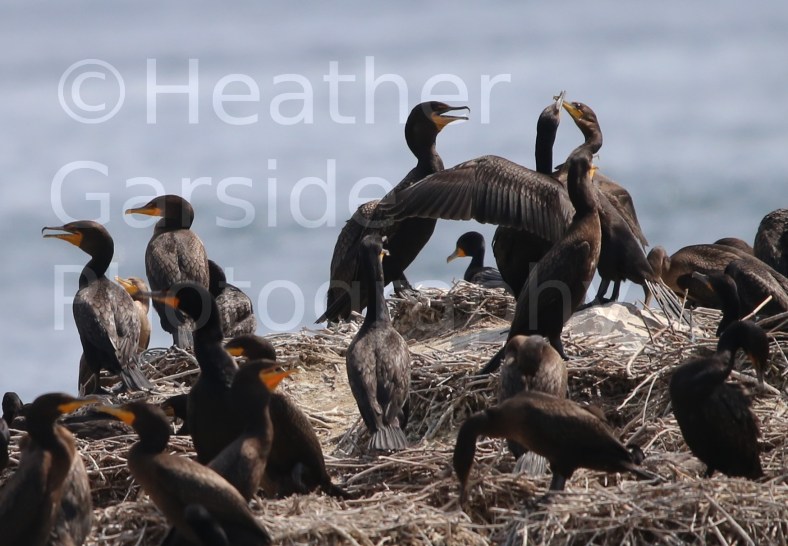
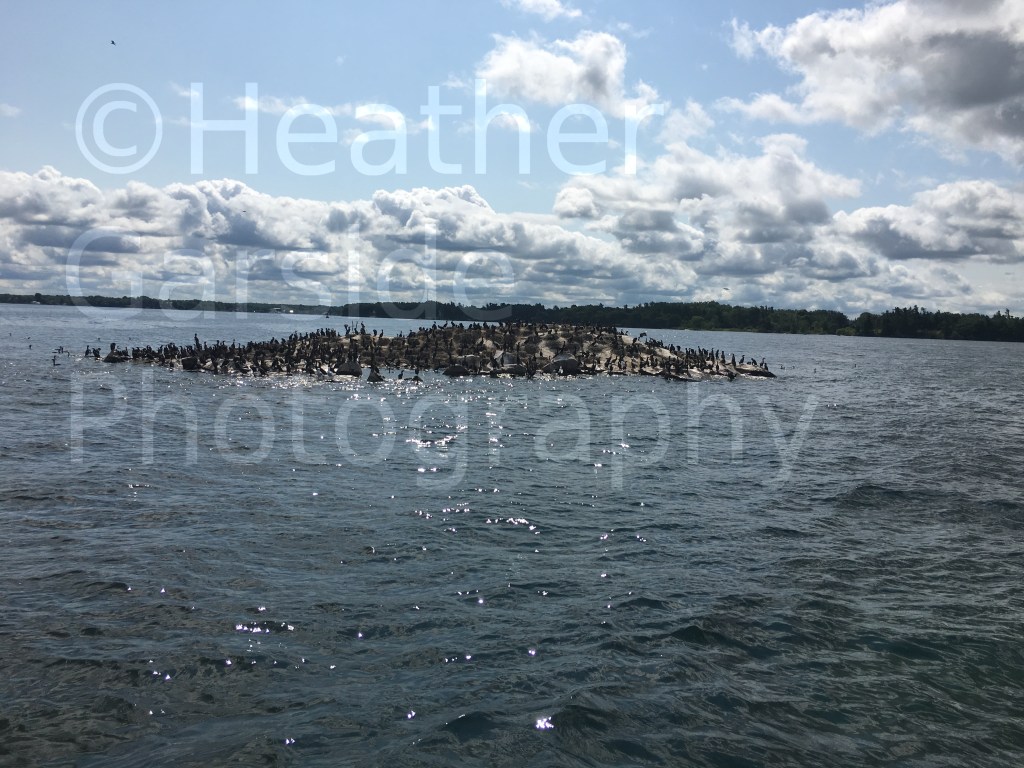
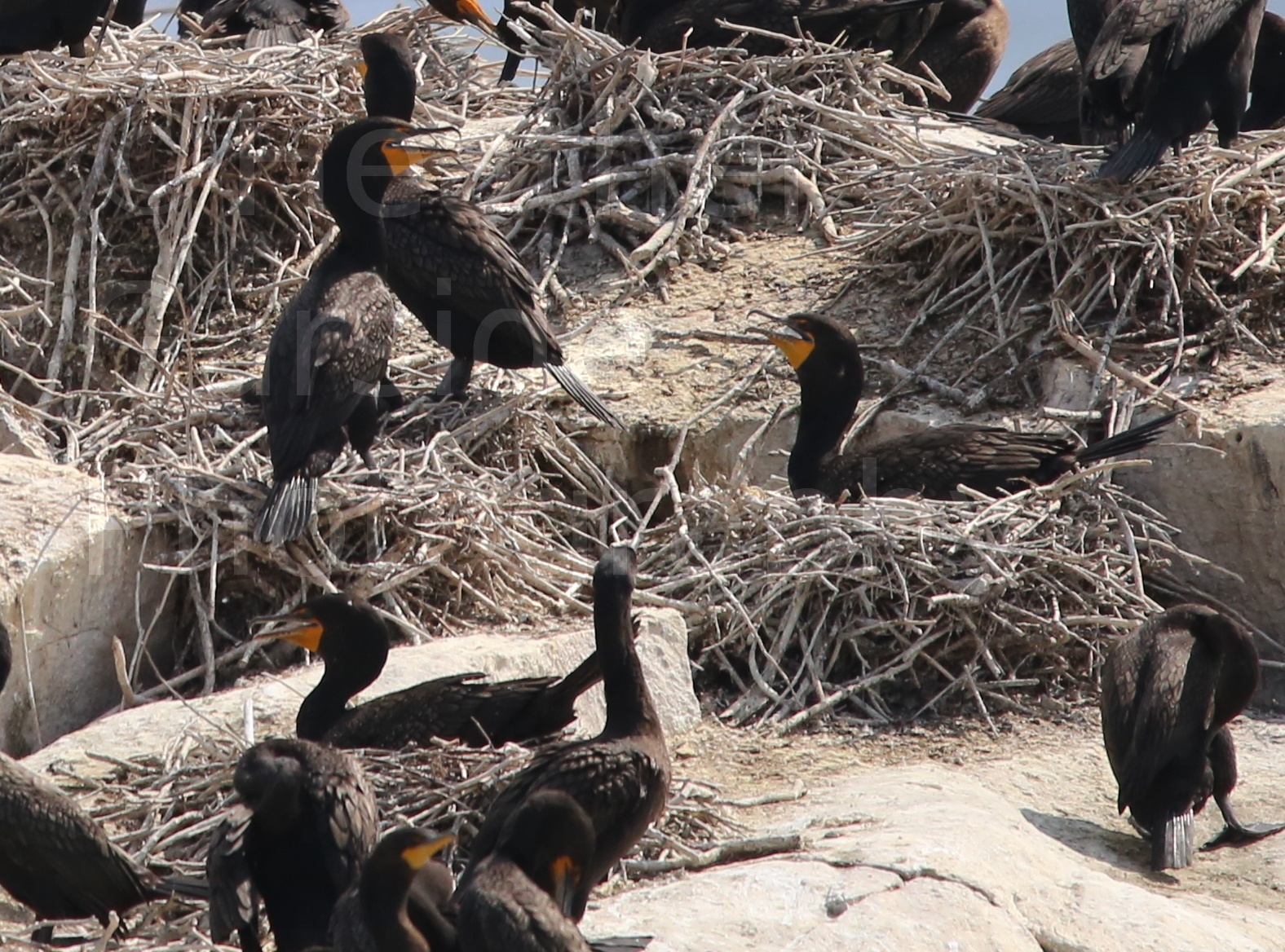
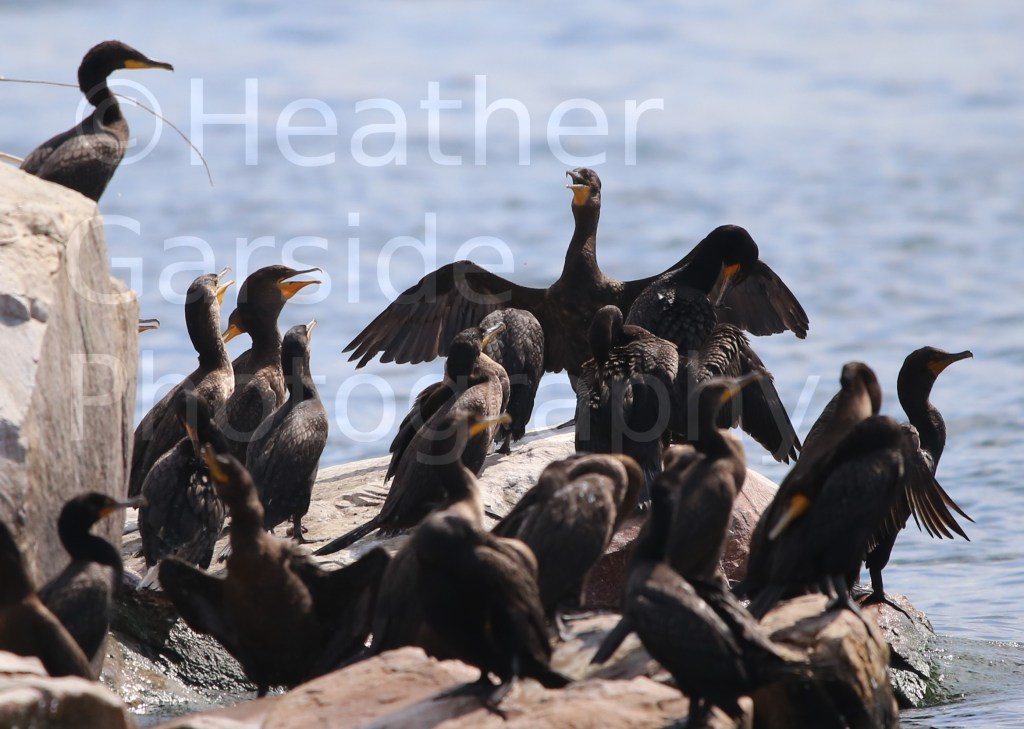
This past summer, while on a boat trip in the Islands, I was introduced to Gull Island, a bird watchers’ paradise. Despite the name, Seagulls were not the main attraction of this tiny rock outcrop in the midst of the St. Lawrence River. Rather every available surface seemed to be covered with loud, socially active, nesting Double-Crested Cormorants.
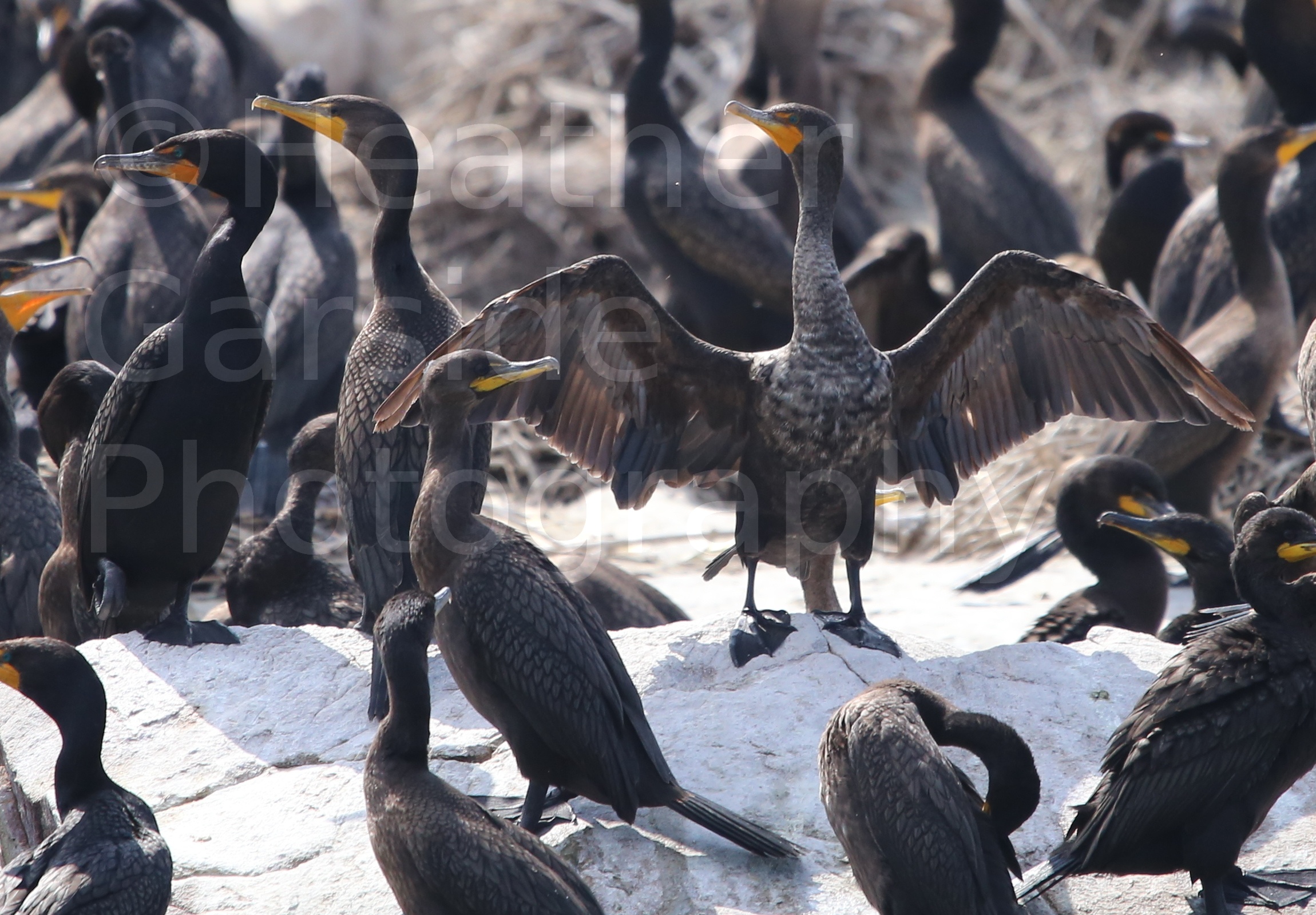
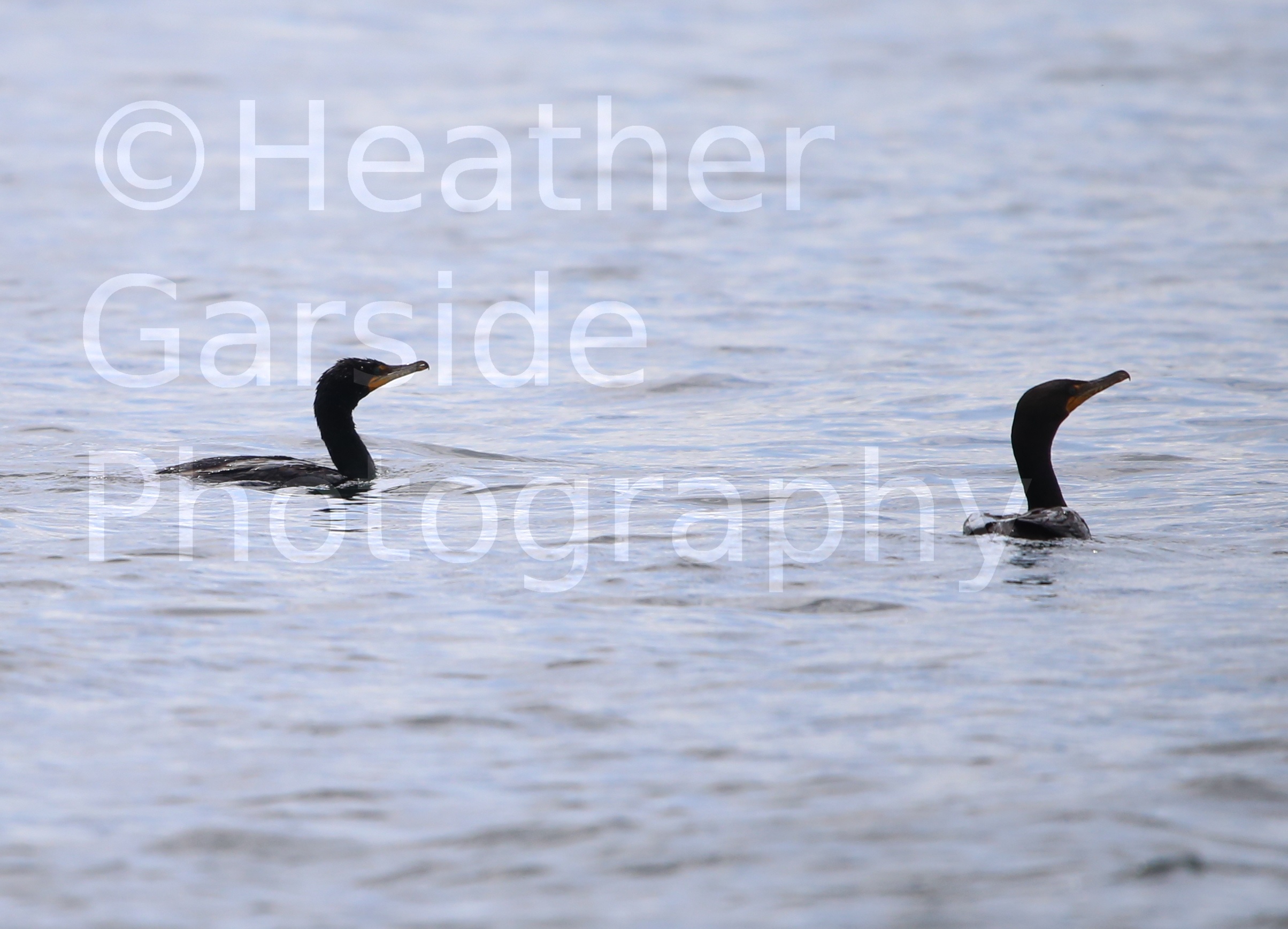
Double-Crested Cormorants are a very interesting bird. Genetically related to a pelican, they resemble a loon while swimming. Both male and female Double-Crested Cormorants are all black birds, rather large in size, but lanky rather than stout at about thirty-three inches. Their long neck is a distinguishing feature, as is its bright, orange-yellow bill and face, made more stunning by the black surround. This bill has a hooked tip, very like a pronounced overbite, no doubt helpful in the pursuit of fish. The “Double-Crested” refers to two plumes or tufts of feathers that develop on either side of its head (about where ears would be) during the breeding season. The final, and in my mind most intriguing physical feature of the Double-Crested Cormorant is its sparkling, crystal-like blue eyes. Their eyes are very special as they have evolved to allow aerial and underwater vision. Underwater vision is particularly key for this species, as the birds diet consists of fish and mollusks.
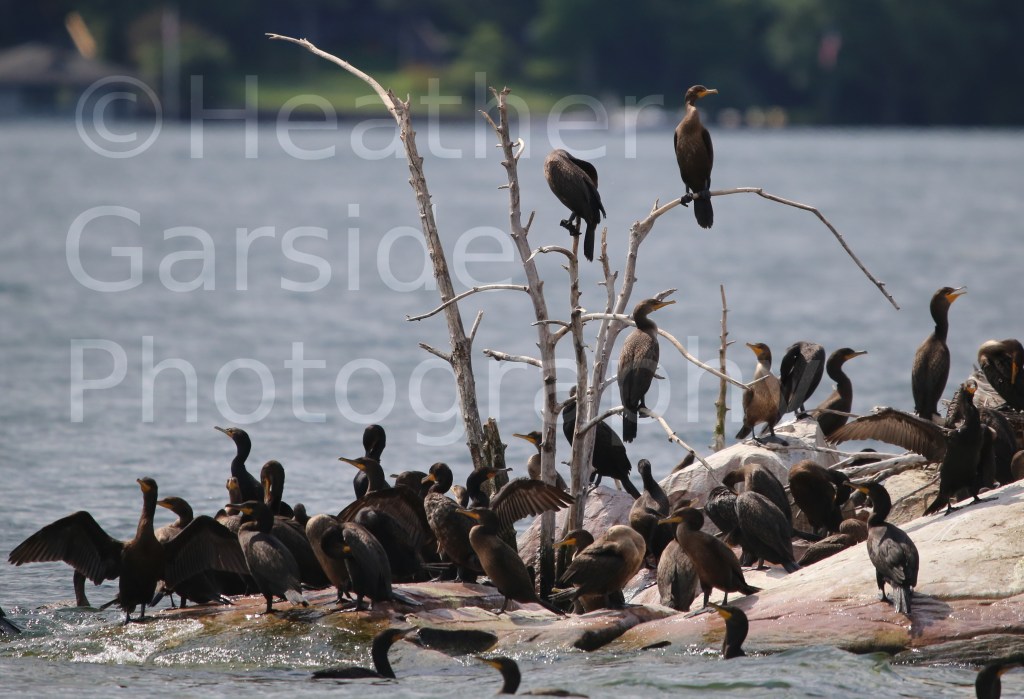
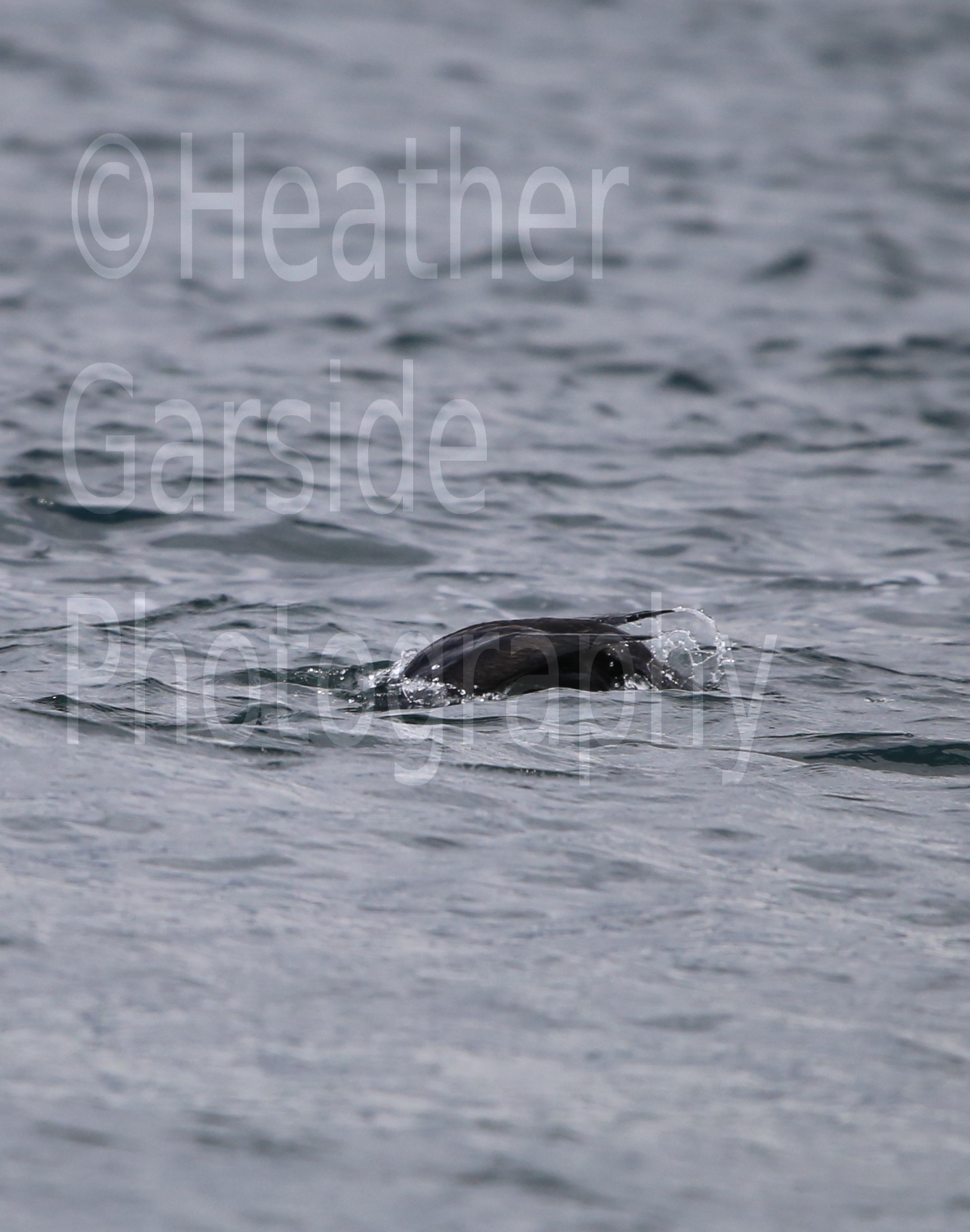
As you would expect with an aquatic bird, swimming is a big part of the Cormorant’s life. Despite the fact that its name translated from Latin means “Sea Crow,” the Double-Crested Cormorant prefers fresh water to salt. If you see a Cormorant swimming, it is often alone or with a few fellow Cormorants. They bob in the water like a duck or a loon and then suddenly they dive with a great burst of speed and a splash. Because their pursuit of fish can be arduous, they are able to remain under the water for longer periods than ducks or geese. They also swim long distances and often pop up a yard or so away from their dive spot. Unlike a penguin, the Cormorant swims with its wings at its sides. Once the Cormorant returns to dry land, it is a very common site to see it standing with wings outstretched, the best method of drying its feathers in the sun.
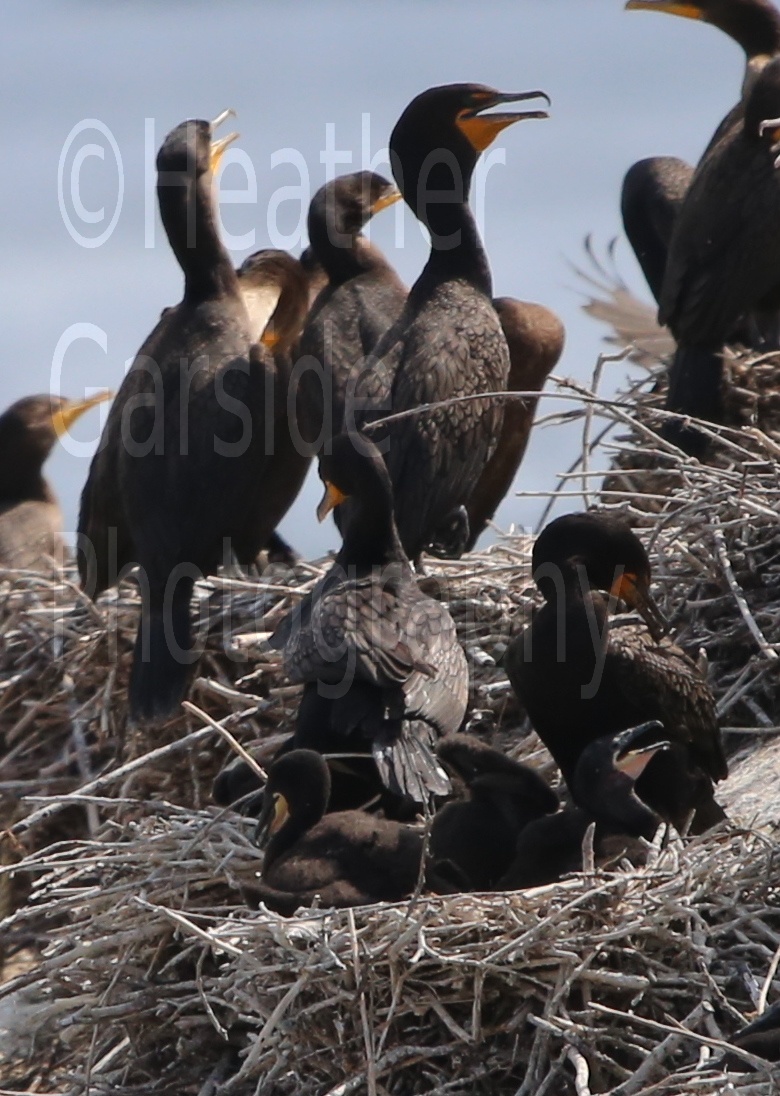
Cormorants are colonizing birds, meaning they choose to nest in large groups. They are happy building nests either in trees or on the ground, however the whole colony will build consistently, so you will never find a colony where some nests are in trees with others on the ground. Each mating pair have one brood a year, of three or four eggs on average. The young Cormorants who grow up in ground colonies will get out of their nests after three or four weeks and wander the community, however they will still return to their nests to be fed. As they develop, the juvenile Cormorants take on a light gray or brownish color until their mature feathers grow in.
There is some controversy regarding the presence of Cormorants in the Great Lakes and Thousand Islands regions. Once a common resident of the Great Lakes Region, their populations were greatly diminished by a combination mandated population control and pollution in the 1940s-1960s. The elimination of DDT and other pesticides allowed their populations to grown throughout the 70’s and 80’s. Following this slow beginning, the population has been steadily increasing and they now thrive throughout the Great Lakes region. However, as living memory doesn’t reach beyond the time of DDT and its effects on the environment, many people look on the Double-Crested Cormorant as an invasive species.
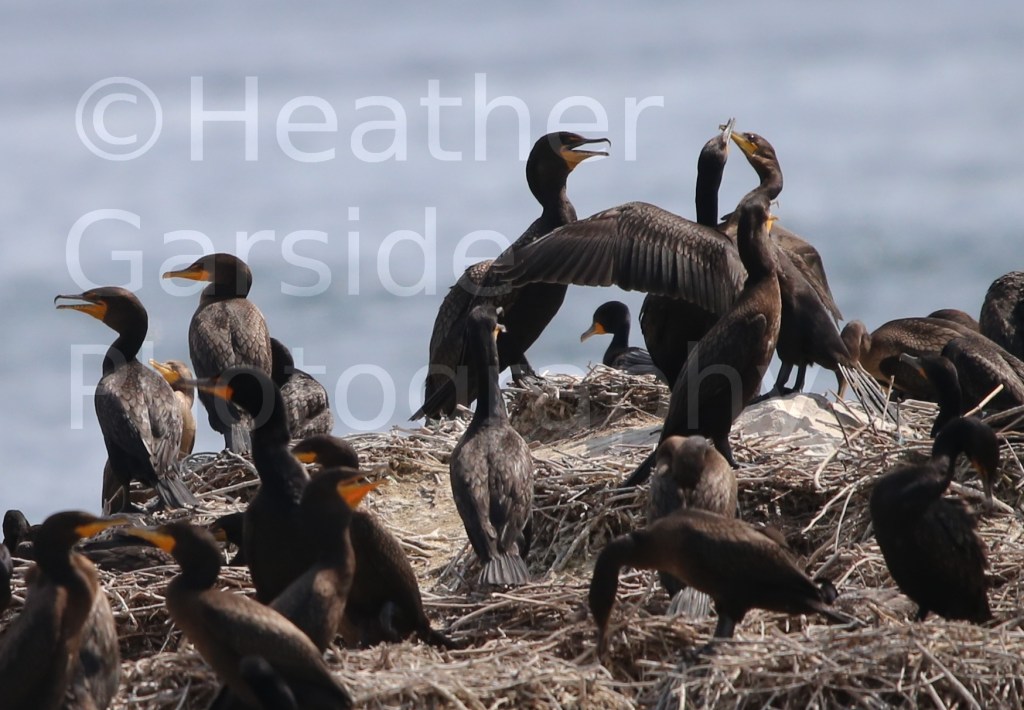
The Cormorants’ large populations throughout the region has caused them to attract the attention of the fisherman, who feel the presence of so many Cormorants is negatively affecting their fishing. There are even some shocking reports of unlicensed killing of whole Cormorant colonies in an effort to protect fish populations in the region. The worst report I came across occurred in 1998 outside of Watertown, New York. 800 birds were killed in the name of recreational fishing. I am sad to say this is not an isolated incident. The decline of the Smallmouth Bass population specifically has been blamed on the increased populations of Double-Crested Cormorants, however the fisheries believe that a number of contributing factors, of which the Cormorant population is only one of many, has led to this population decline. Extensive studies of the Cormorant diet in the Great Lakes and Thousand Islands regions found this concern to be unfounded (study conducted in late 1990s). While a Cormorant’s diet does consist of a variety of sport fish, both Northern Pike and Smallmouth Bass comprised of only 3% of the fish they consumed. The same study found that smaller fish (pumpkinseed, yellow perch and rock bass) made up the majority of the Double-Crested Cormorant’s diet, about 83%. The same study found some differences in the diets of the birds residing in the St. Lawrence verses those birds that colonize in Lake Ontario, however these variances still did not effect the Smallmouth Bass populations. I also feel the need to point out that the Cormorants also do their bit for the Great Lakes/Thousand Islands ecosystems. They eat indiscriminately, meaning that their presence helps battle invasive species of fish and mollusks, such as the alewife and zebra mussel.
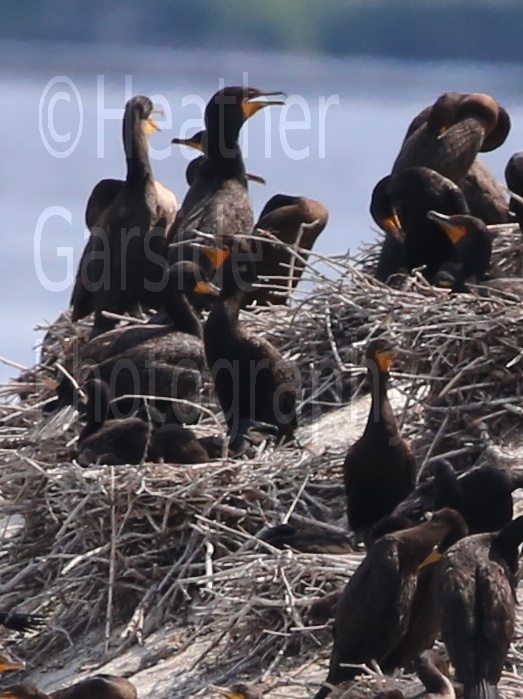
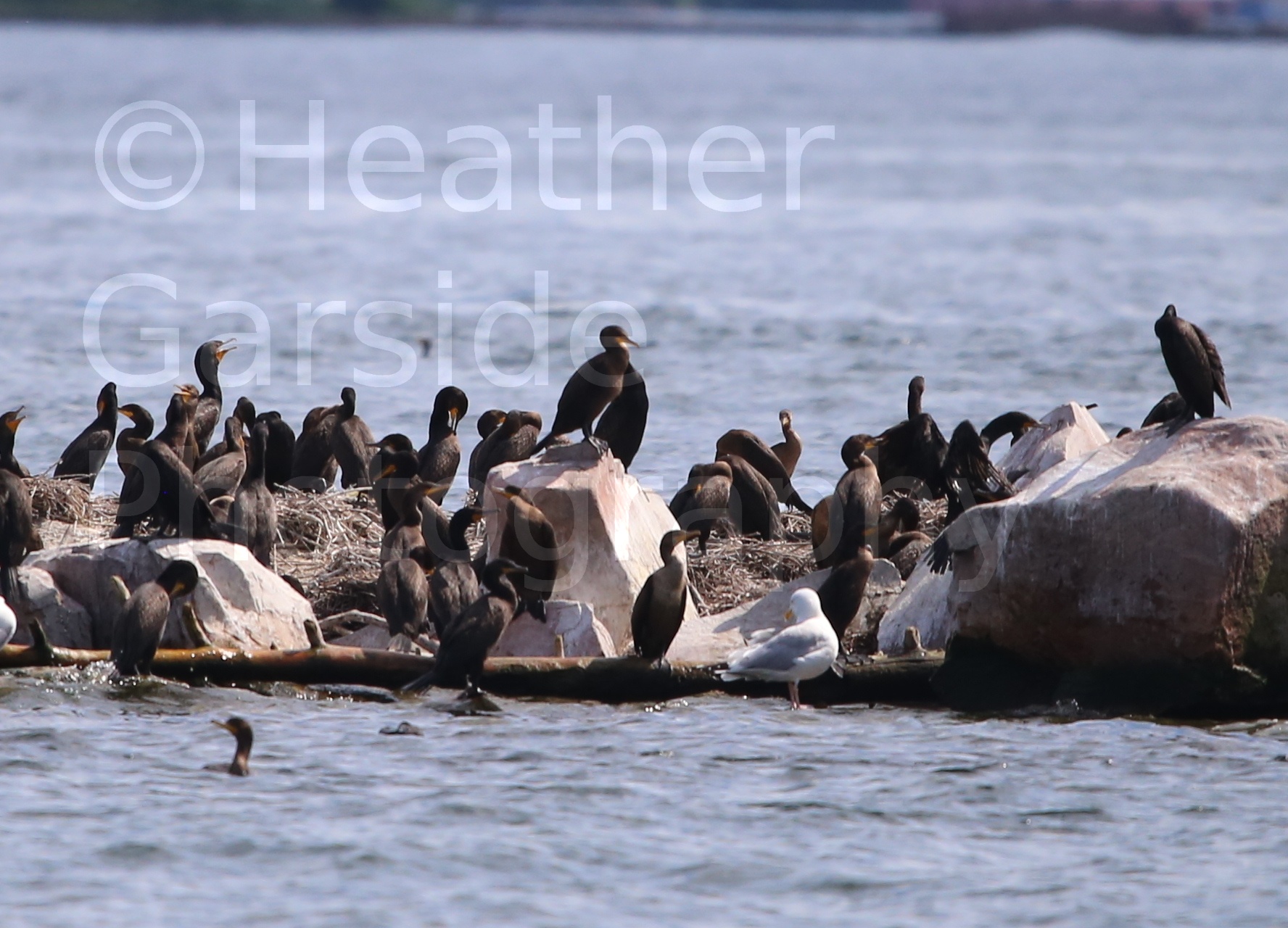
While they are innocent of the charges against them with regard to fish populations, the Cormorants are guilty of another crime which some of the locals think is just as bad. Their settlement on an island seems to spell impending doom for all vegetation and trees that live there. This phenomenon could definitely be seen from the state of Gull Island. This is directly related to the Cormorants’ excrement which is very rich with ammonia. The effect is worsened by the fact that the Cormorant lives in colonies, meaning that small areas receive a concentration of the droppings and they are repeat visitors, returning the same nesting location year after year, which gives the vegetation little time to recover.
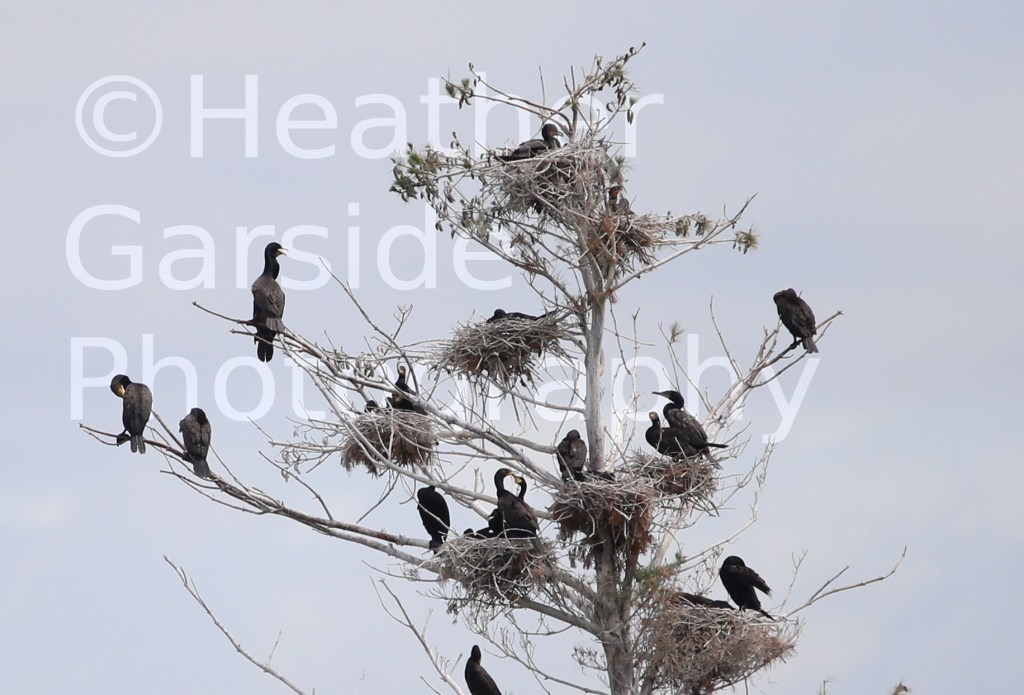
In the discussion of these Cormorant controversies I do not mean to imply that people are totally wrong or that the Cormorants are completely victimized. I think one look at Gull Island can show that the Cormorant population is thriving in this region, which can have many negative effects on both the vegetation and habitats of other bird species. Rather, I think it is best left up to the New York Department of Environmental Conservation and other similar departments on both sides of the lakes to monitor and manage. The Cormorant population is being monitored and controlled in New York, which include nest destruction and nesting deterrents. The idea that wholesale slaughter of a bird population won’t have negative effects on the whole region demonstrates a lack of understanding I thought far behind us. Did we learn nothing from the Dodo? Individuals should never take matters into their own hands. Ecosystems are very delicate webs and the slightest changes can have catastrophic effects.
Sources
http://tilife.org/BackIssues/Archive/tabid/393/articleType/ArticleView/articleId/2101/The-Devils-Bird-in-the-St-Lawrence-River.aspx

Click to access cormorant.pdf

https://www.dec.ny.gov/animals/28442.html

A Day in Clinton

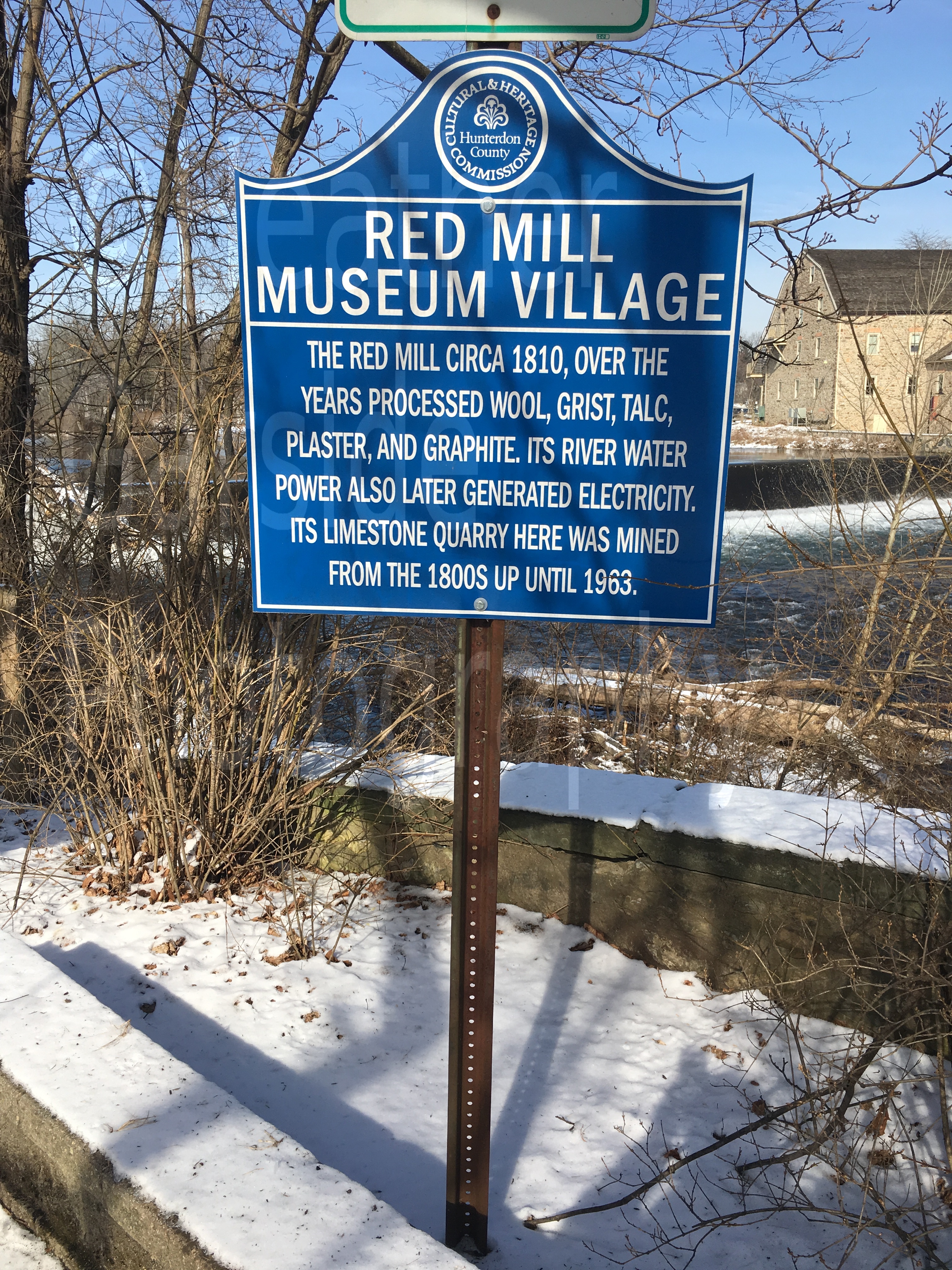
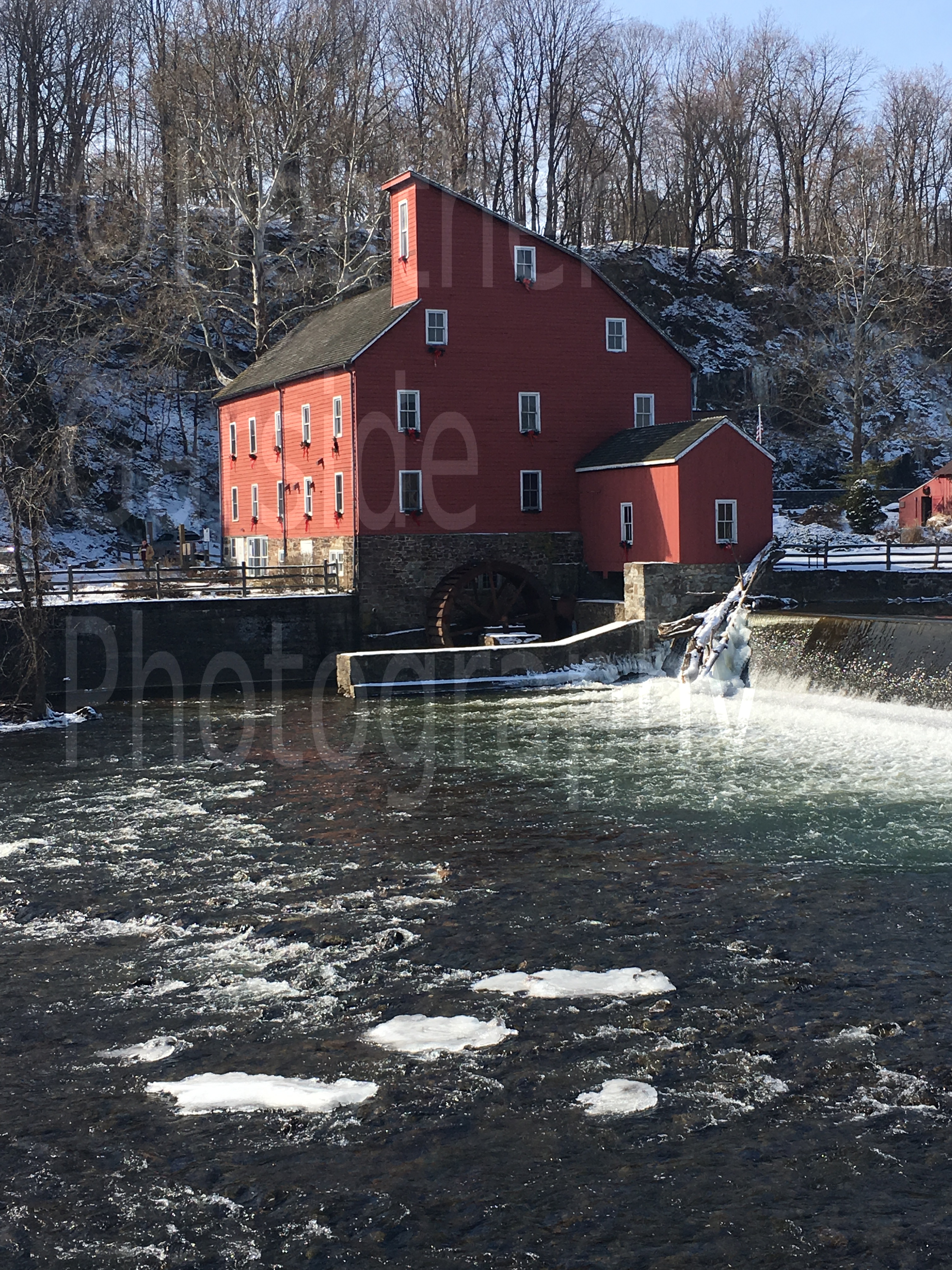
Do you get cabin fever in January and February? I know I do! One winter weekend I couldn’t take it any more, so we piled into the car and off down the road we went. After a bit of driving, we found ourselves in Clinton, New Jersey. Clinton is the perfect town to kill some time and wander. Coffee shops, stores with plenty of window shopping opportunities and the Red Mill Museum, which is well worth a visit if you are in the mood!

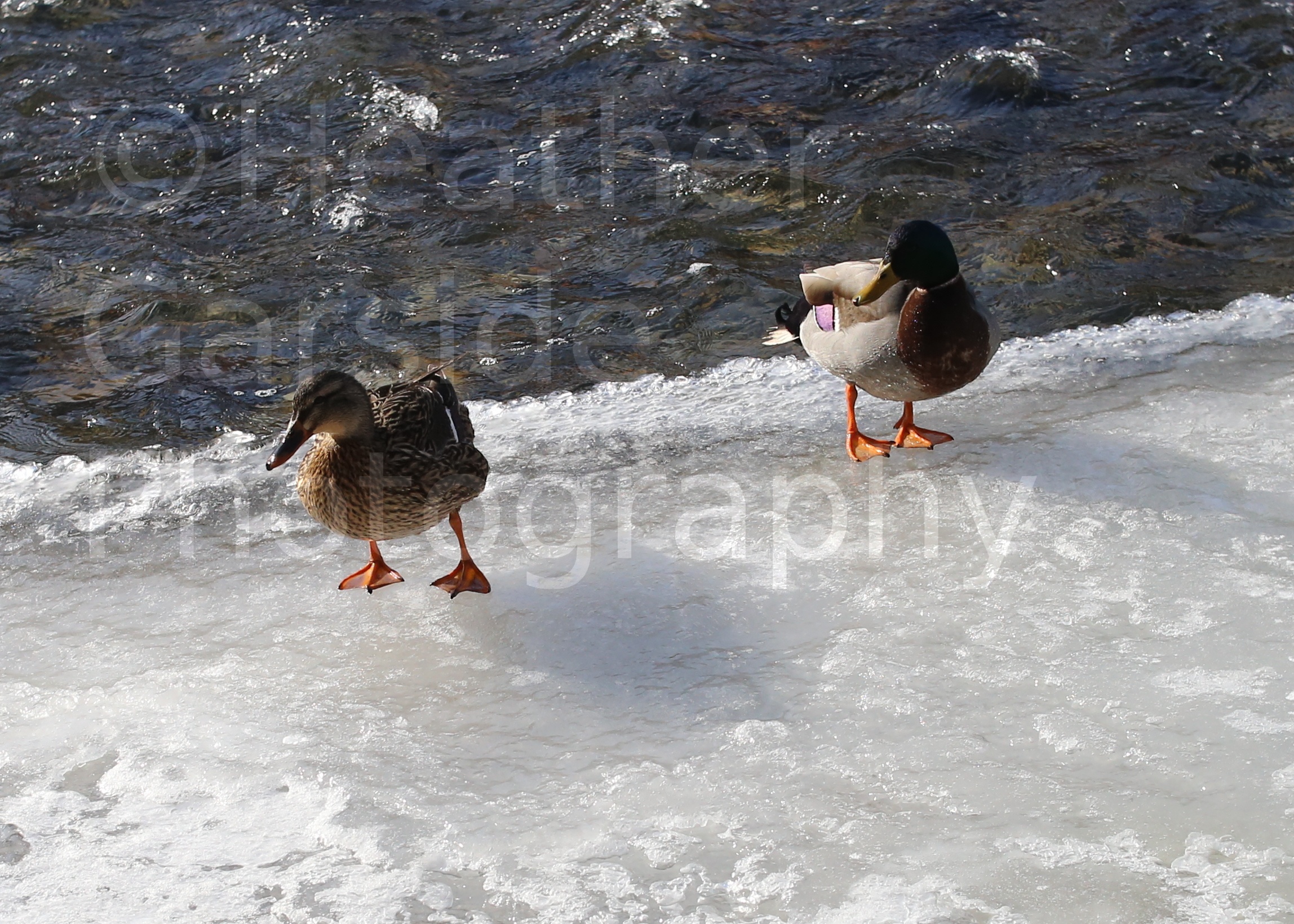
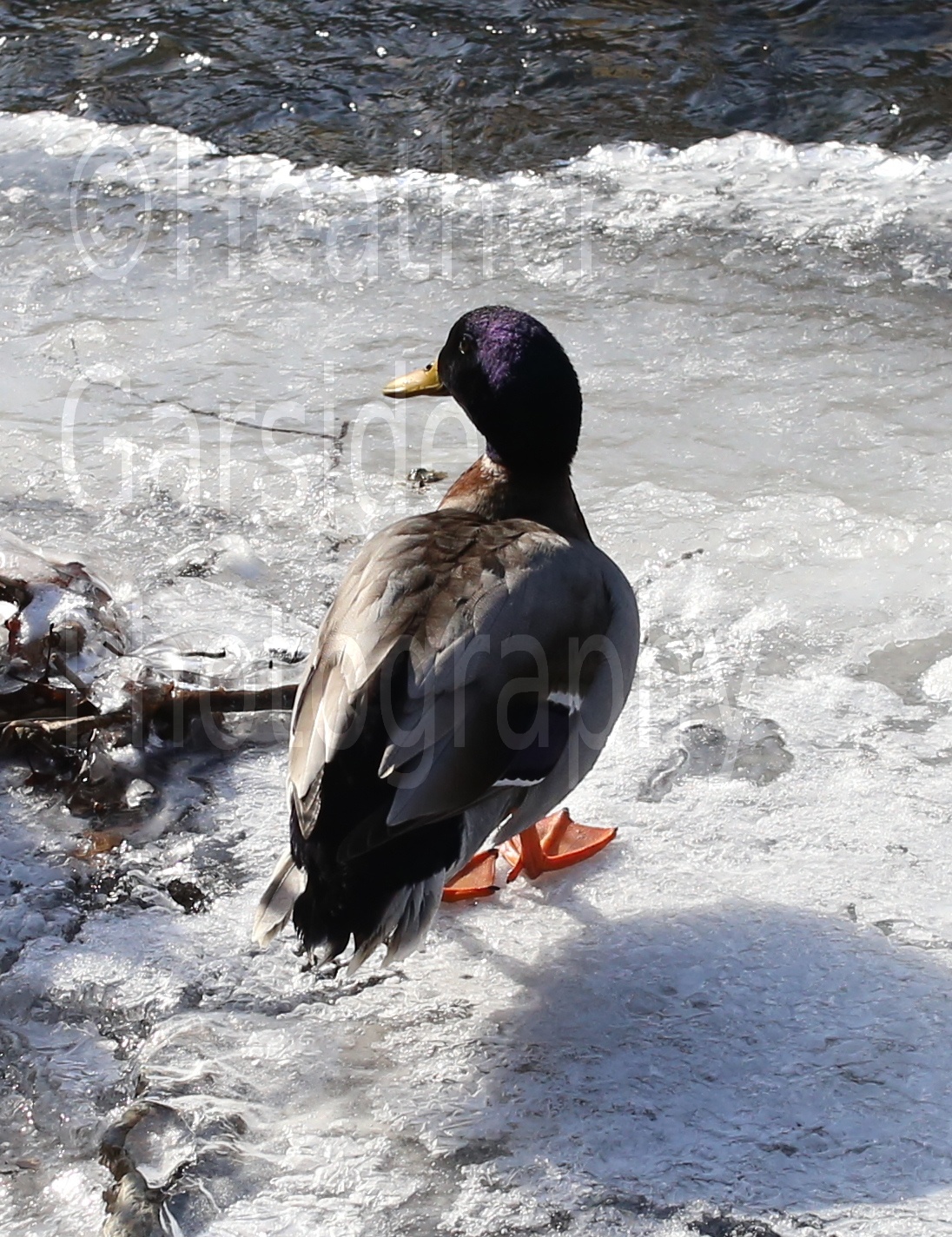
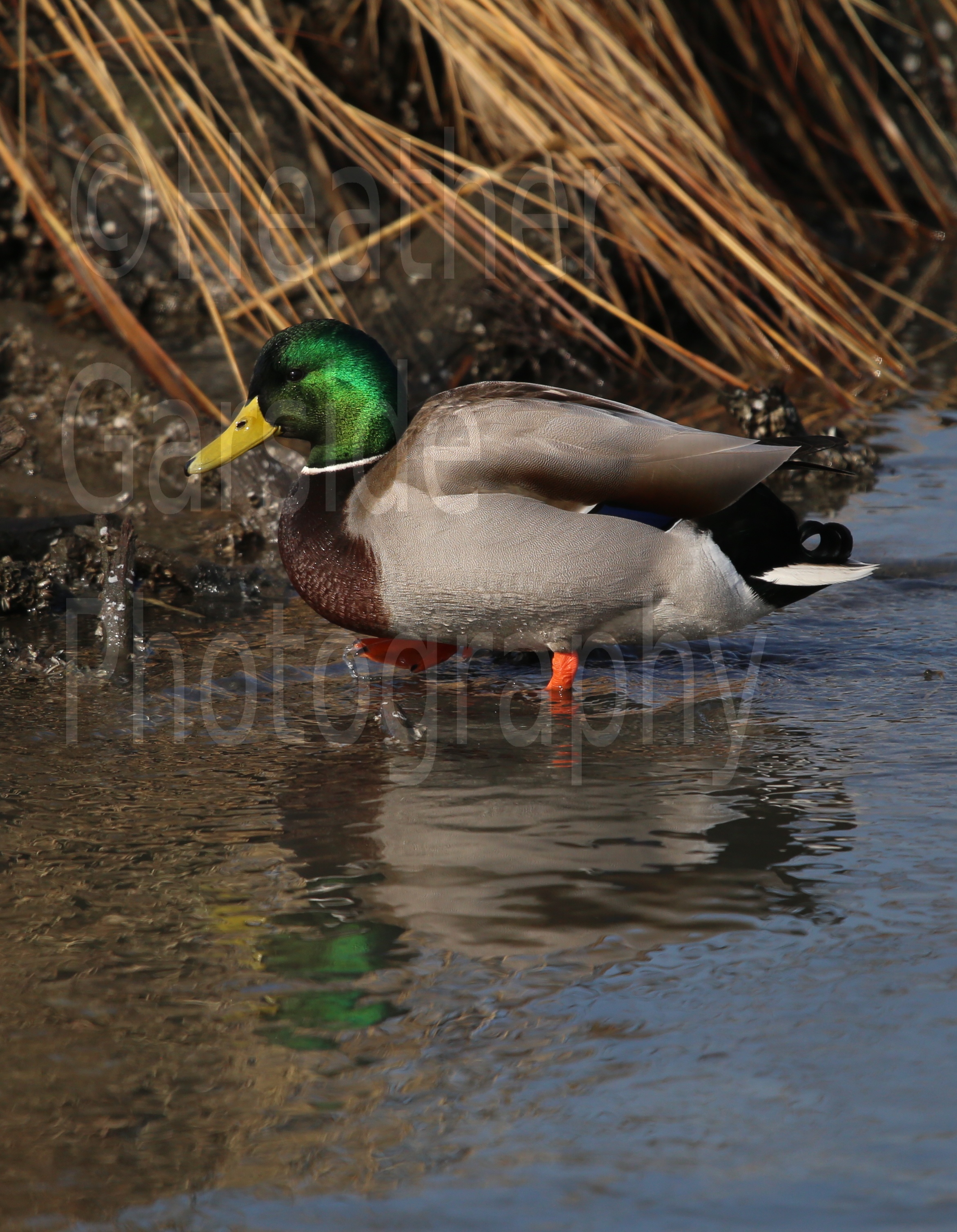
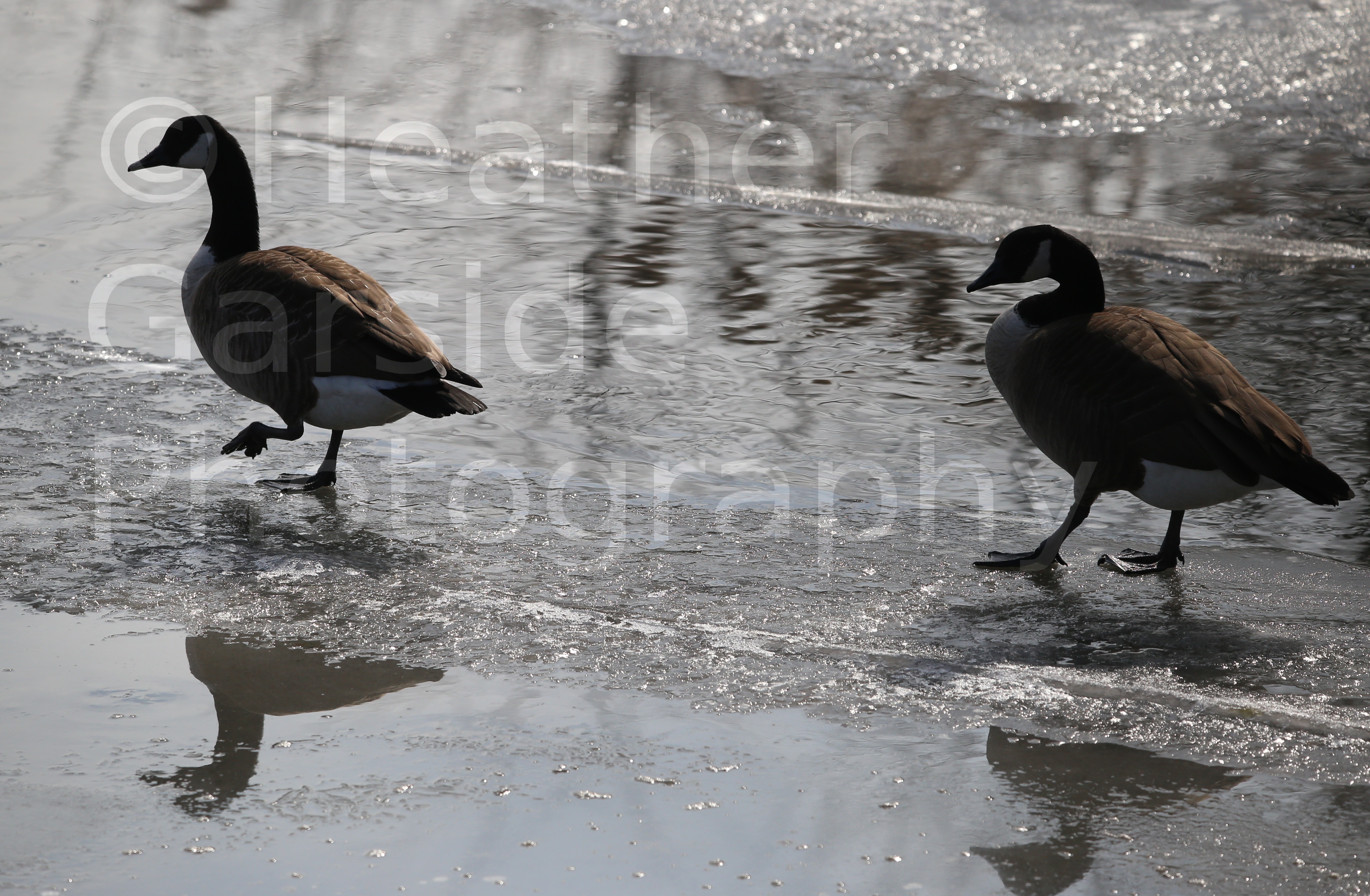
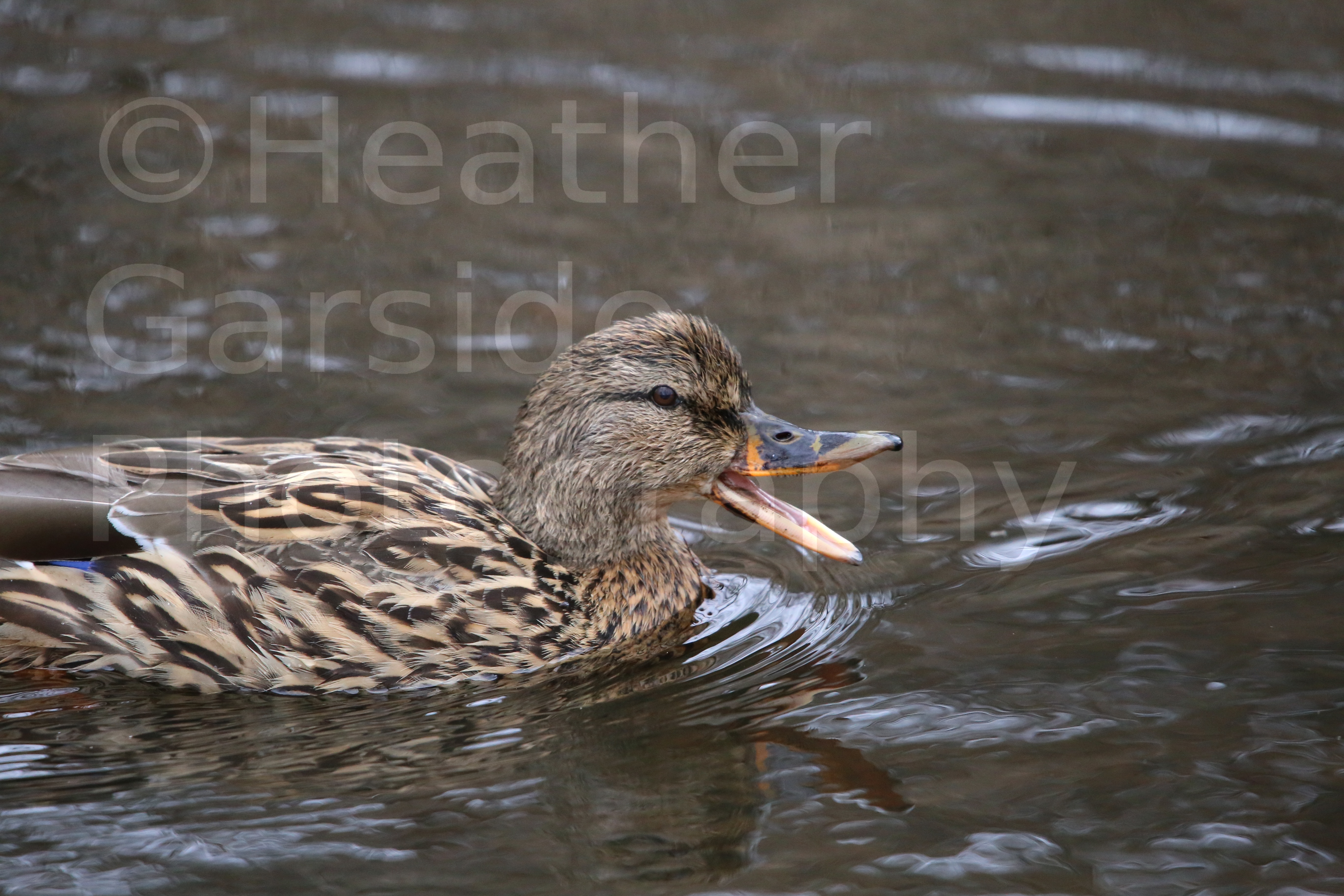
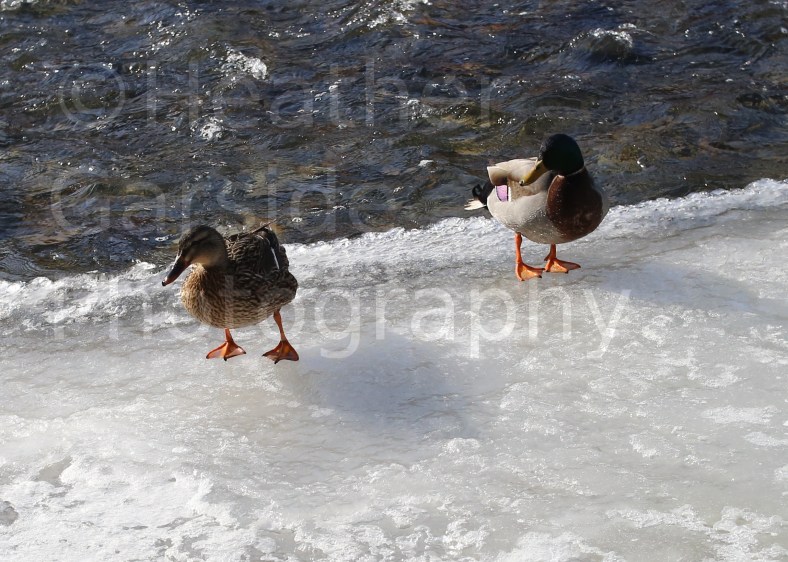
While taking a minute to snap a few picturesque shots of the Red Mill, we discovered another couple had the same idea as we did, and they were taking a stroll along the Raritan River. A pair of Mallards came walking up the ice, slip-sliding as they waddled. I know it isn’t nice, but I couldn’t help chuckling. While some Mallards do migrate to warmer climates in winter, much of the Northeast retains its Mallard populations through the winter. Look for them in places were the freshwater has not completely frozen. They seek winter homes where they will have access to their aquatic food sources.
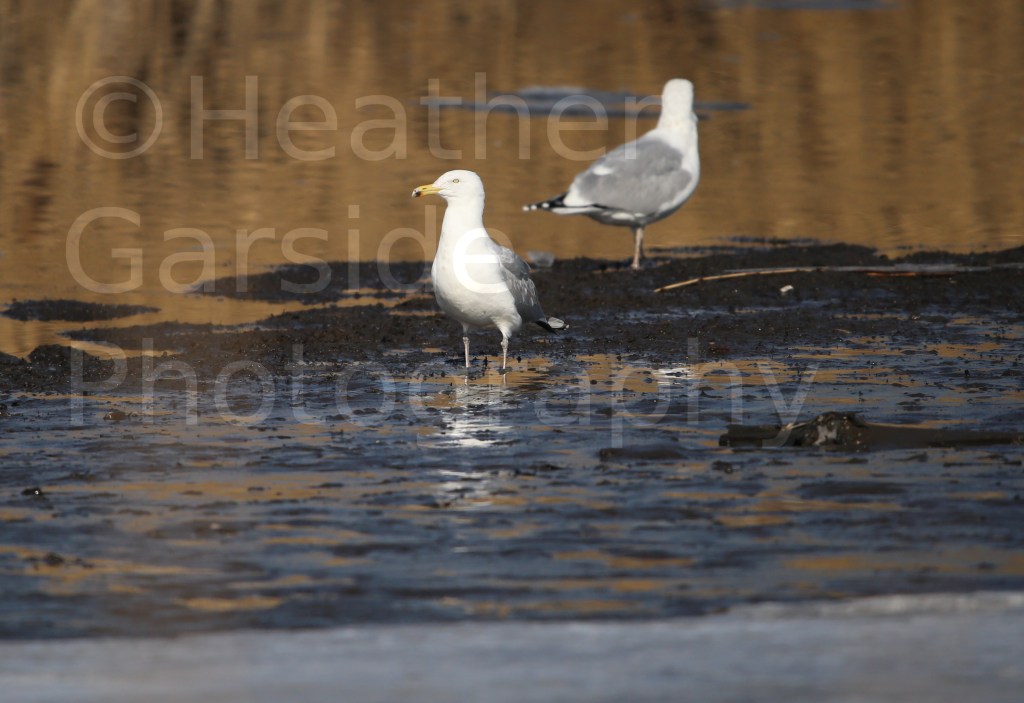
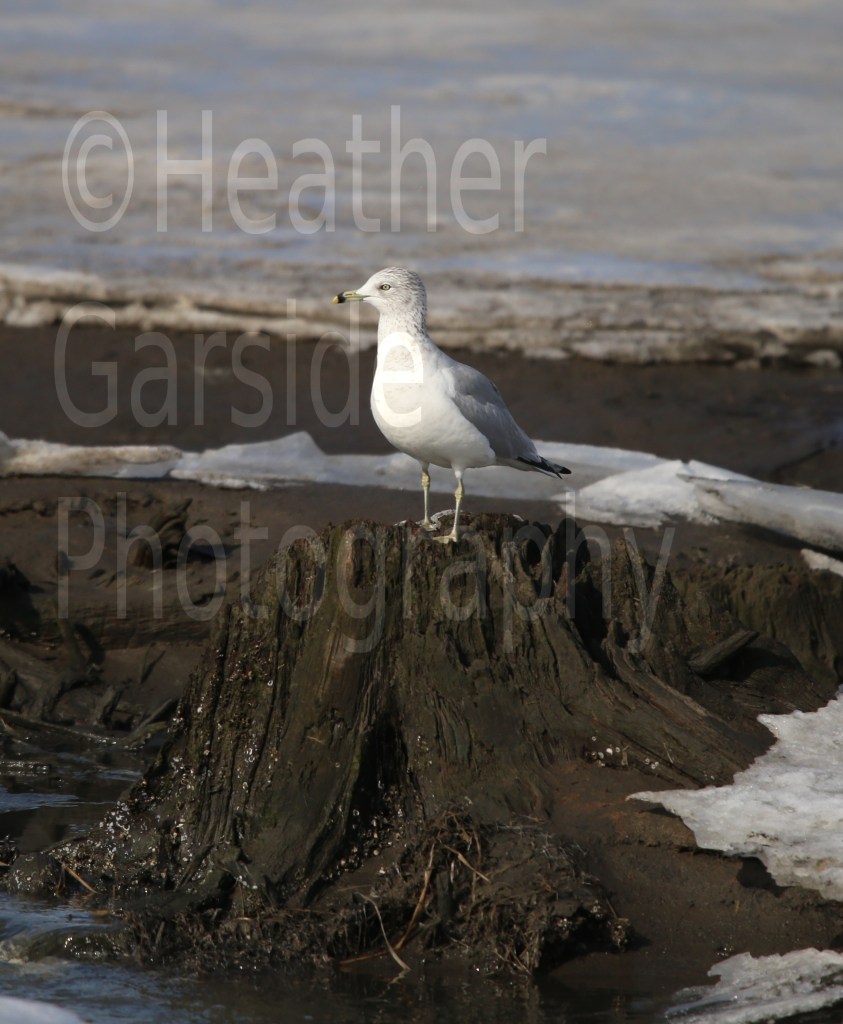
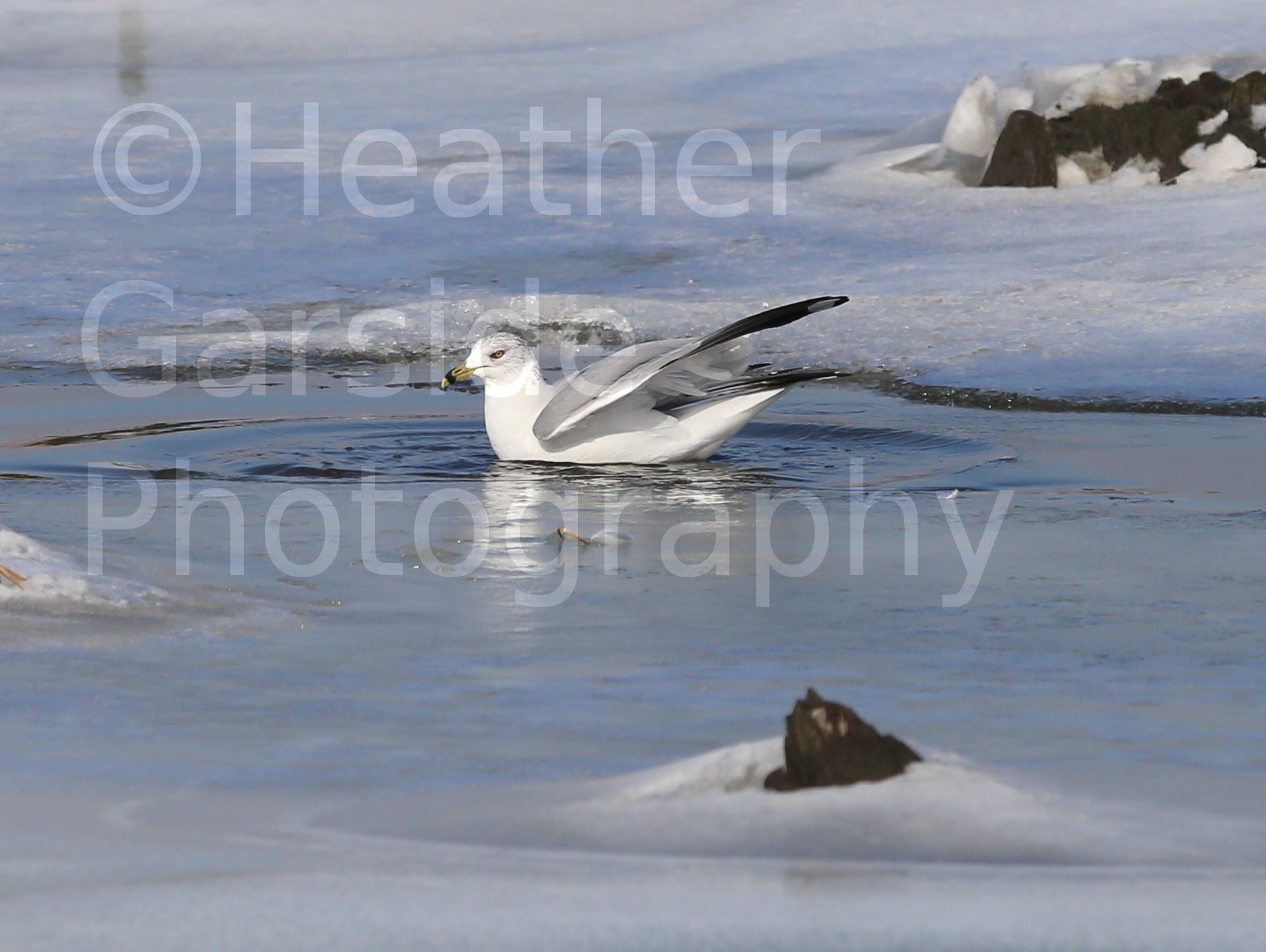
We also spotted a few Ring Billed Gulls, who were much braver than us and decided to dip their feet in the water!

If you are interested to know more about the Red Mill Museum, visit https://theredmill.org/

Winter Visit To Mills Creek Marsh

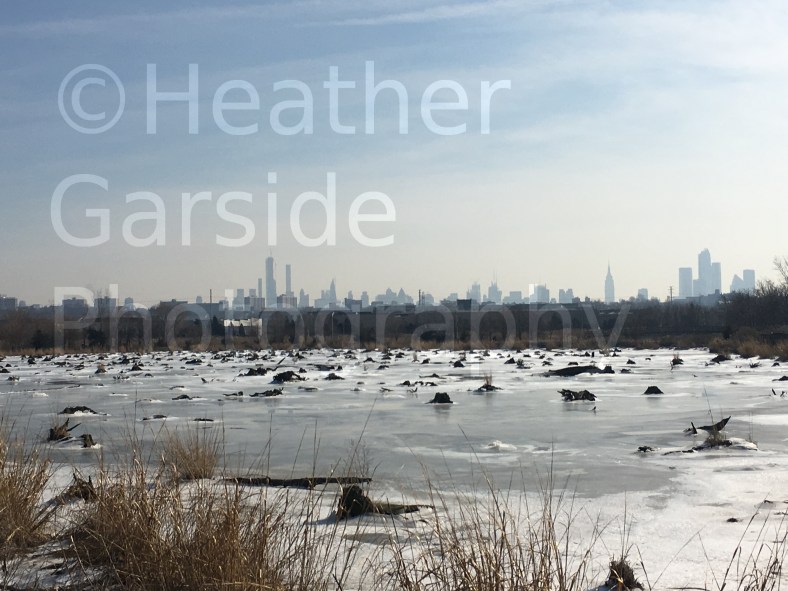
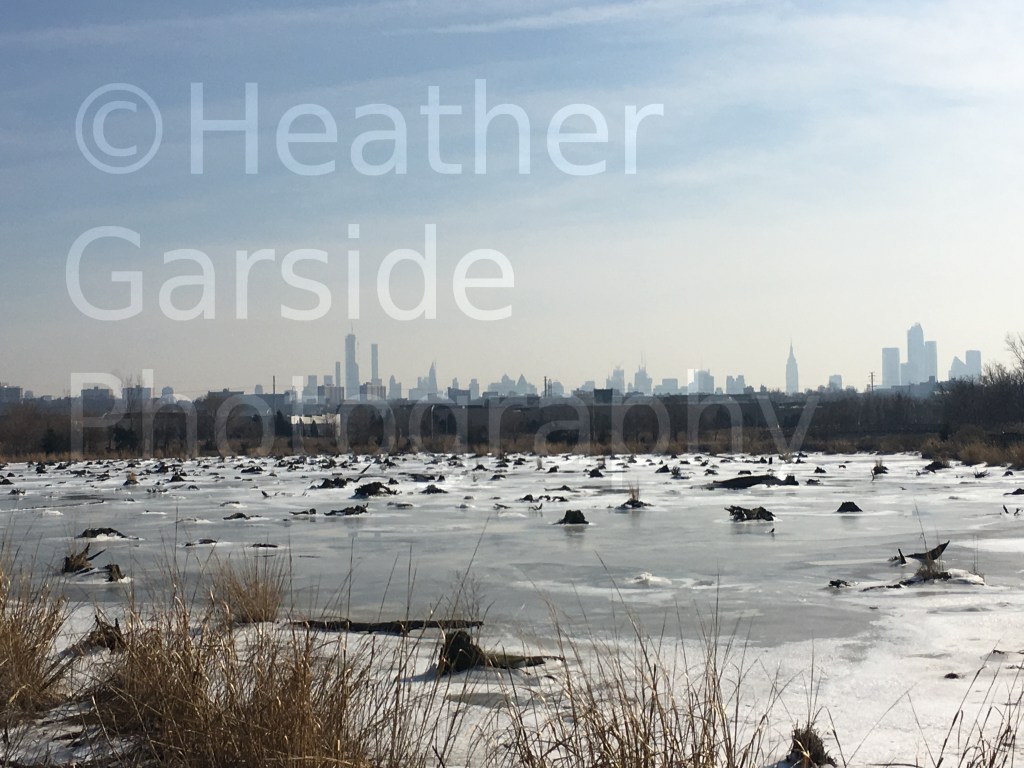
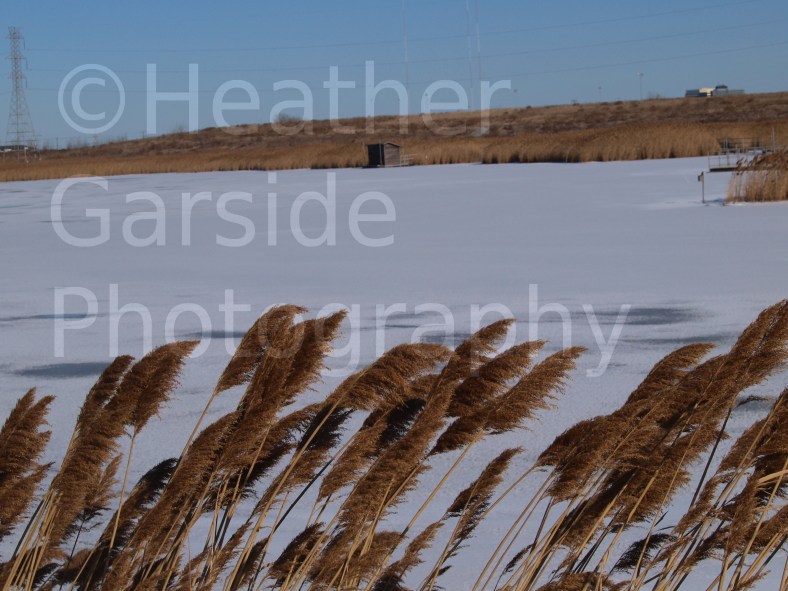
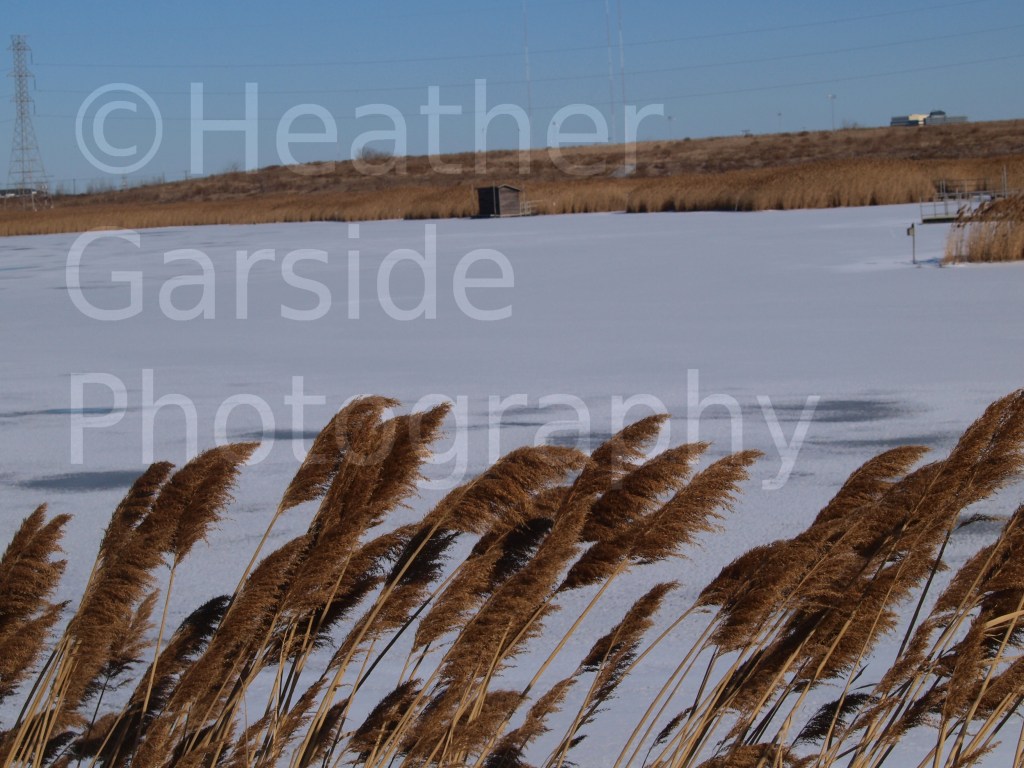
Having been under-wowed, and cold, on a winter walk in Richard W. DeKorte Park, my expectations for Mills Creek Marsh in the winter were extremely low. However, I should have realized that Mills Creek Marsh is more sheltered from the bitter winds we encountered in Lyndhurst. Therefore a few more birds seem to shelter here in the winter. Regardless of the number of animals we encountered, the frozen landscape at the Marsh is also much more interesting, with the tree stumps planted in the ice covered water.

We spotted many of the winter residents we expected to see, Mallards, Canada Geese and Ring-Billed Gulls. They all seemed to be managing with the icy water. There was enough of a current that some of the water was still flowing ice free and many of these birds had turned the icy patches into a shortcut, walking across the ice with the ease of a figure skater.

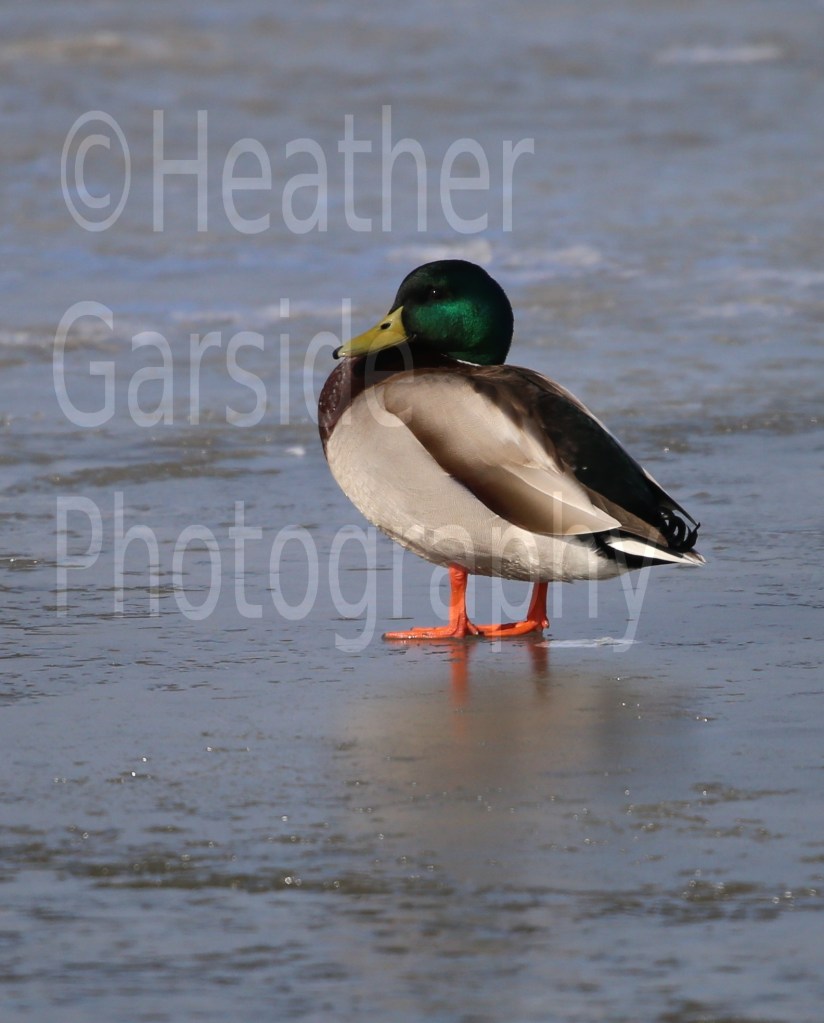
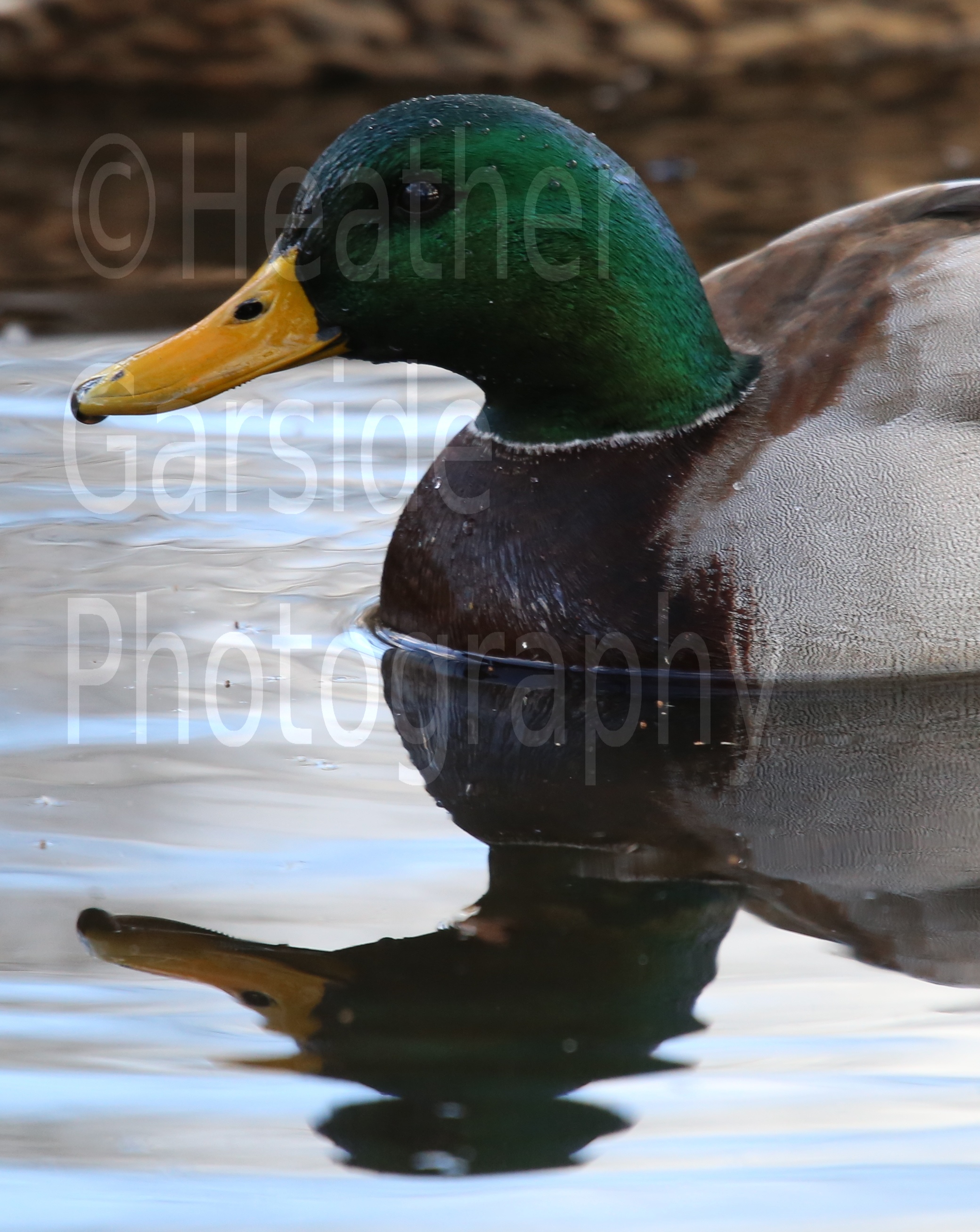
One Mallard was so impressed by my camera that he stopped his march across the ice to pose for me. He turned his body and his head several times, holding the pose just like a runway model, complete with attitude. I took several great photos, but the one I selected below I think expresses his personality the best.

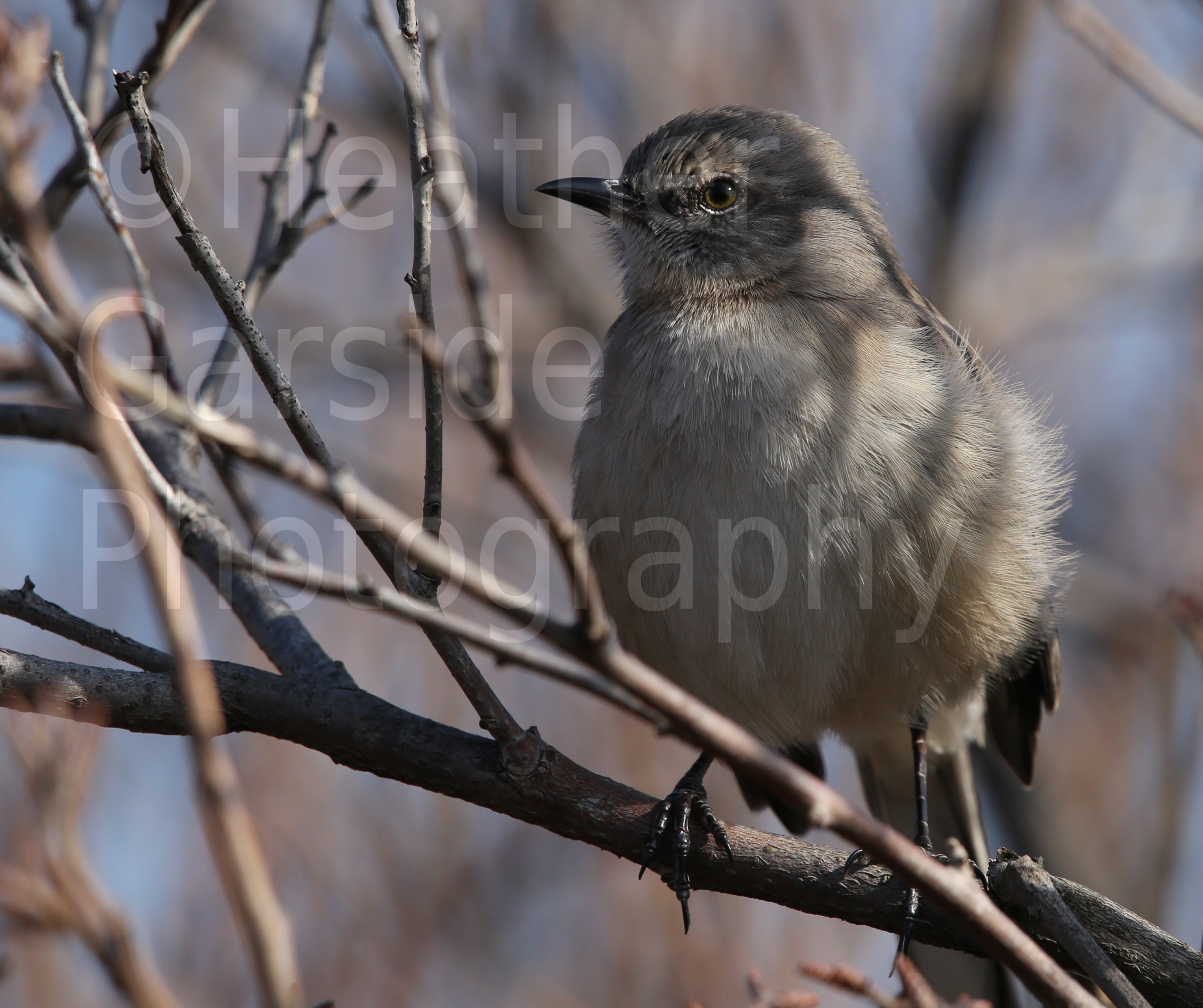
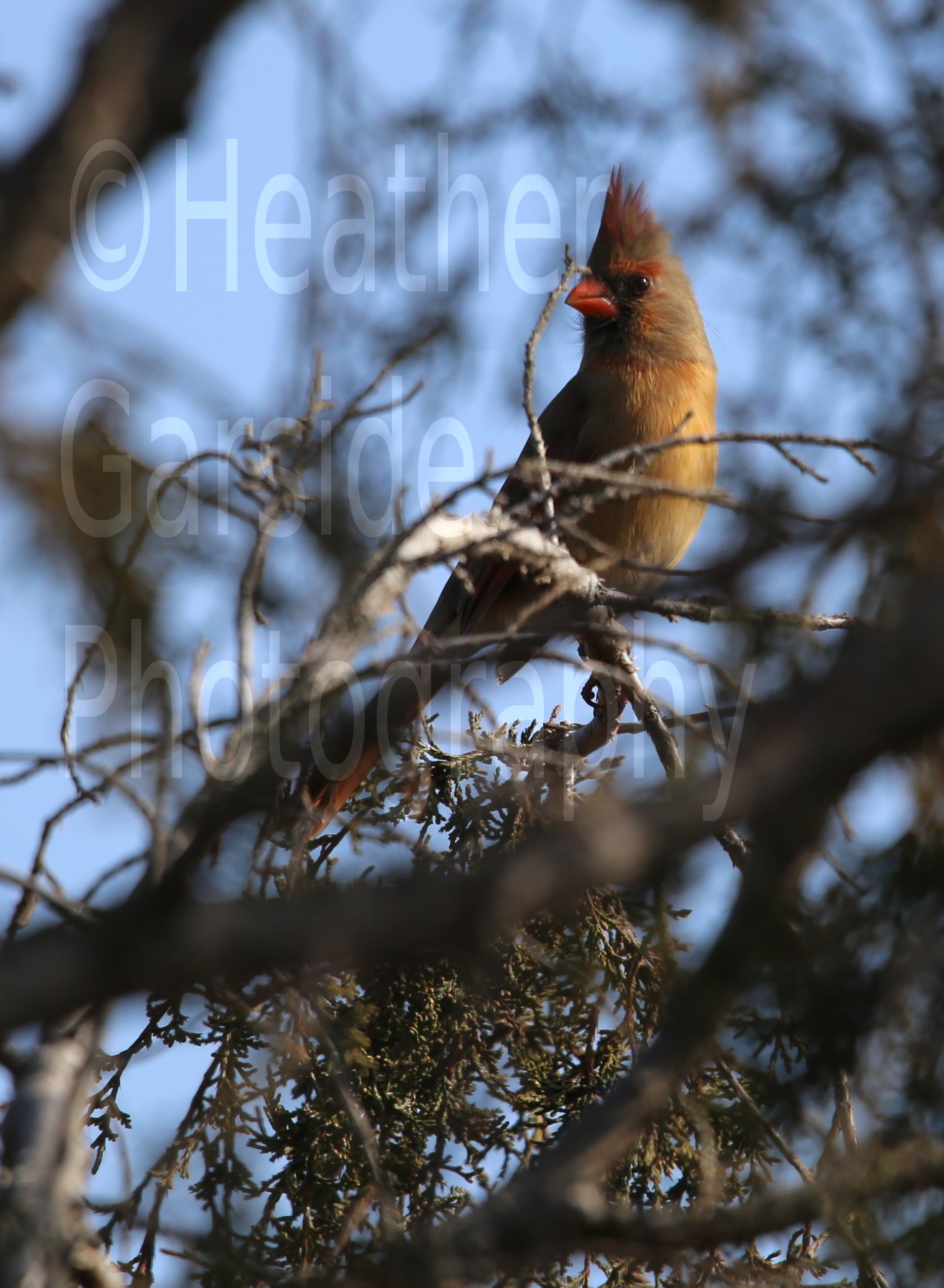
The lack of vegetation on the surrounding trees also allowed us to get a good look at a few feathered friends that we know are at the Marsh, but don’t usually see so clearly. A very cold and fuzzy Northern Mockingbird was trying to get some shelter in the branches of a naked tree. He kept his eye on us, but decided we weren’t so scary that he needed to hi-tail it. A female Northern Cardinal also showed herself to us. She took a high open vantage point in a pine tree, and while she was looking around, I moved a bit closer and took her photo.

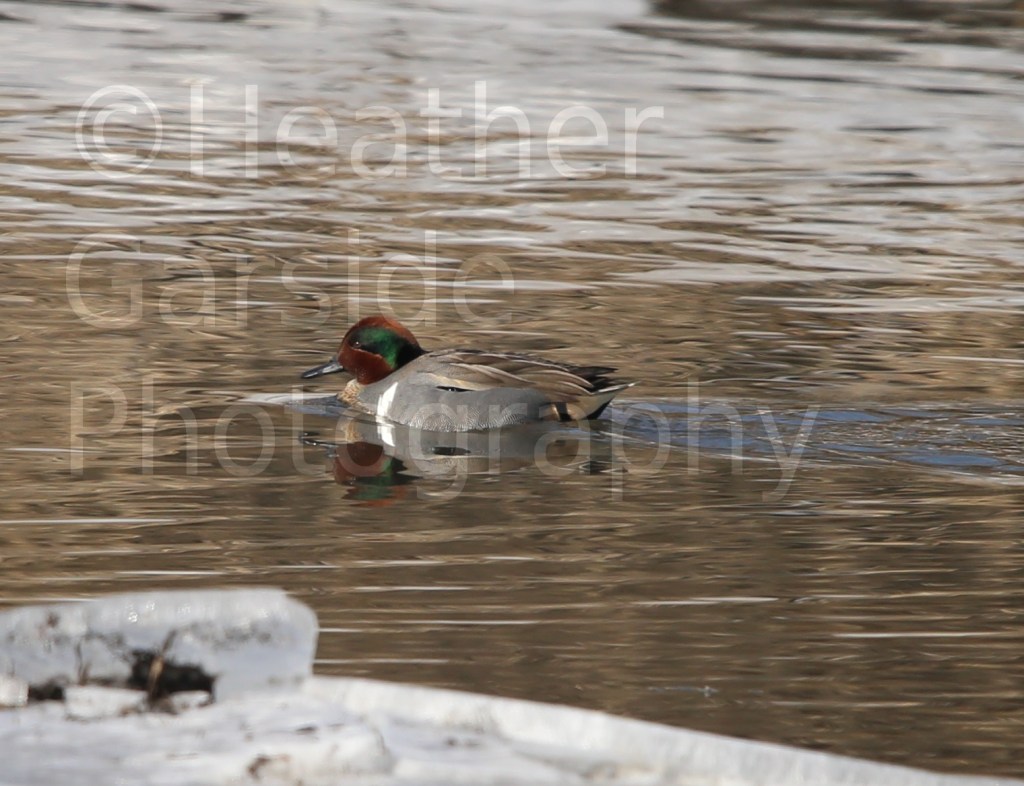
The water in the Marsh also flows on the outer edge of the trail and in the winter that water seems less prone to freezing. While taking a few more photos of the Canada Geese and the Mallards, I noticed a different duck that I had never seen before. He was a Green-Winged Teal. According to my New Jersey book he should have been migrating thorough this area in the Autumn, but it was definitely winter and he seemed pretty content. I don’t think he had received the memo. The Green-Winged Teal’s chestnut brown head has a vibrant patch of green. A matching patch of green on his wing (as his name implies) is harder to see when swimming.

The Mills Creek Marsh trails are a must visit in winter.

New Year’s Day in Richard W. DeKorte Park

My husband’s family have a lovely tradition, they like to take a walk on the beach each New Year’s Day. It blows out the cobwebs, helps with the hangover and is a good move toward working off all of the Holiday’s tasty treats. We have carried on the tradition, and every New Year’s Day we try to go for a walk somewhere, although we don’t always choose the beach. A few year’s ago, I suggested we take a turn around Richard W. DeKorte Park in the meadowlands. Previously we had only ever visited these trails in the spring and summer, but they were always chuck-full of wildlife of every description, so I didn’t see why winter would be much different.

However, what I hadn’t accounted for was how exposed to the elements we would be. The same open landscape that was so great in the summer meant that we were beaten by the cold winter wind from the moment we left the car, with no relief. It was a particularly cold winter that year, which certainly didn’t help.

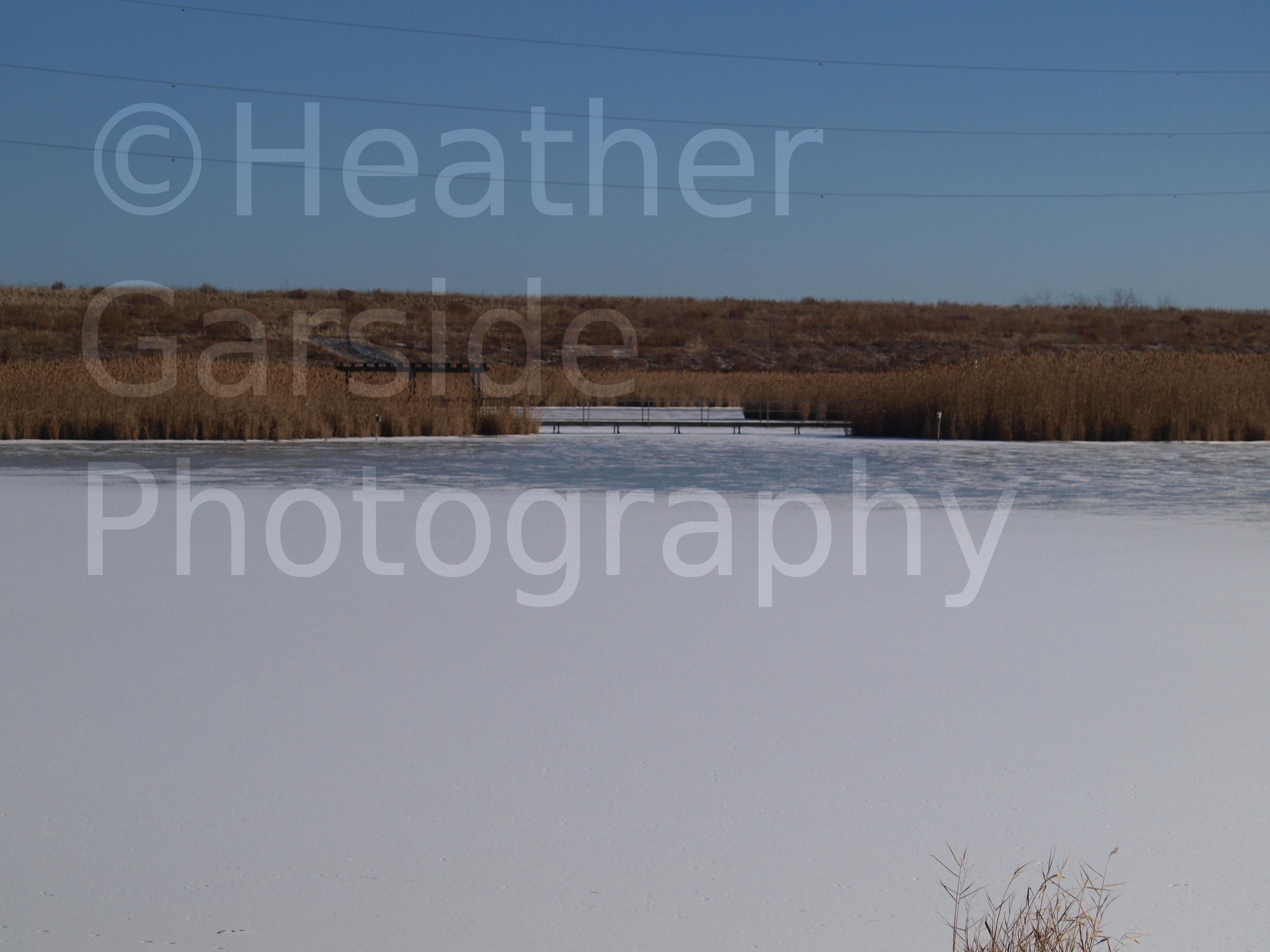
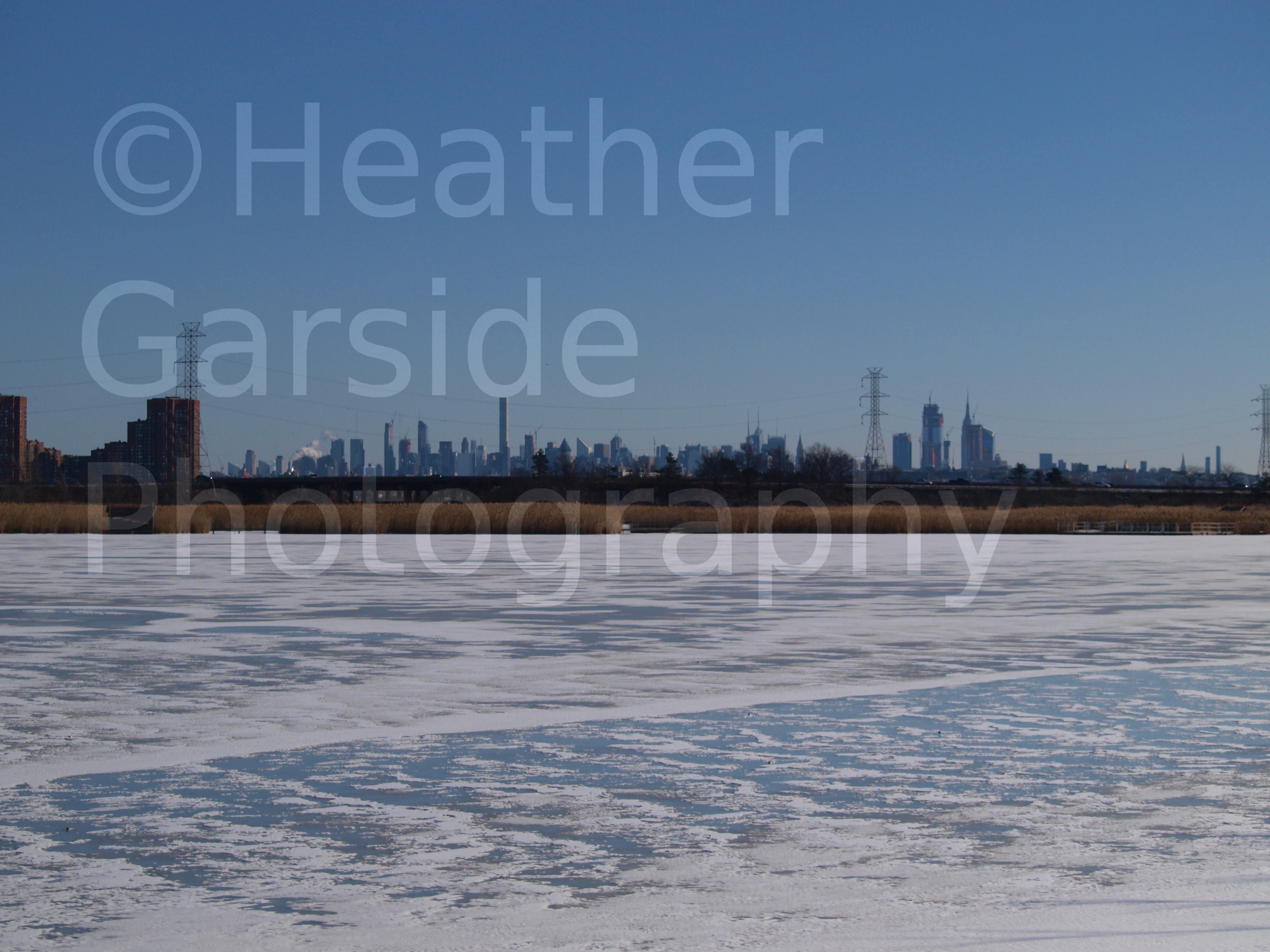
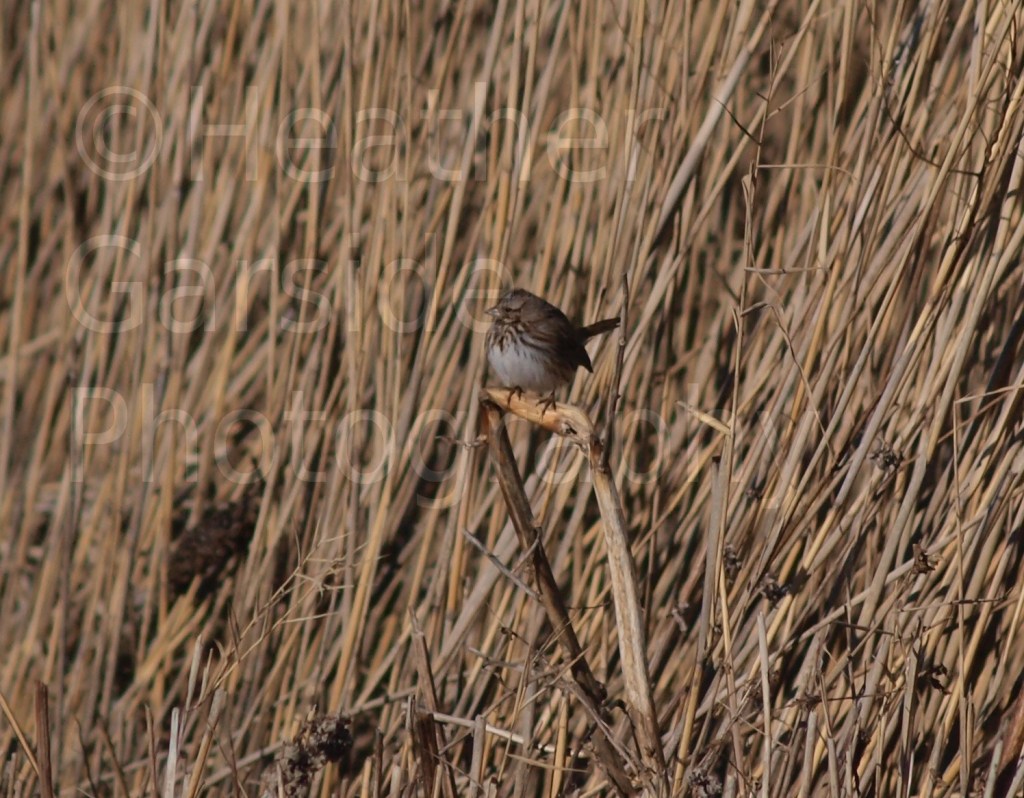
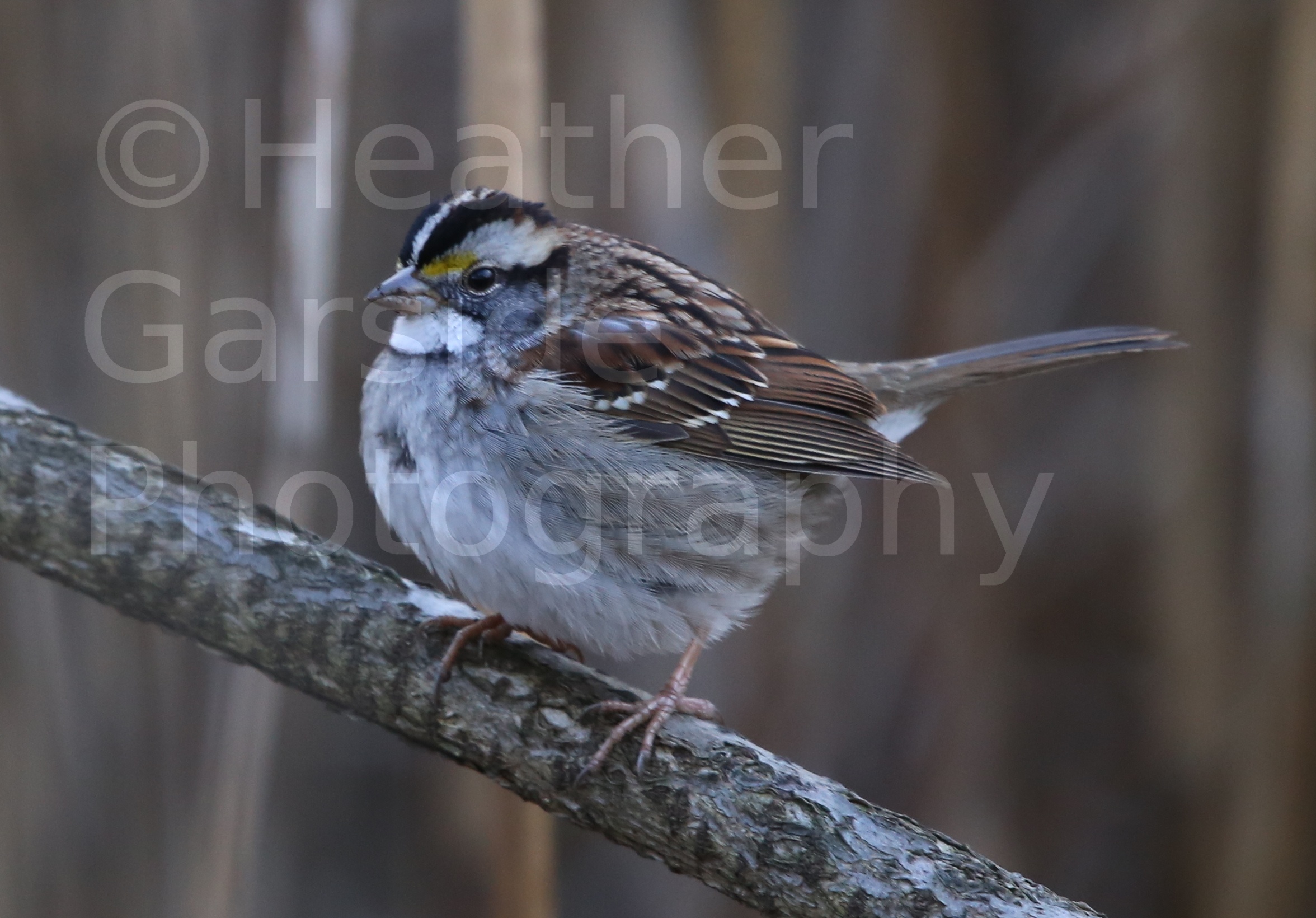
You have to give us credit though, we braved it. We walked the entire perimeter of the West Pool. Despite the cold we did spot a few birds, hearty enough and brave enough to have endured these Baltic conditions. One single, very fluffy Song Sparrow was trying to look unaffected by the cold. He posed for me on top of a reed, making sure to turn his head a few times, so that I definitely got his best side.

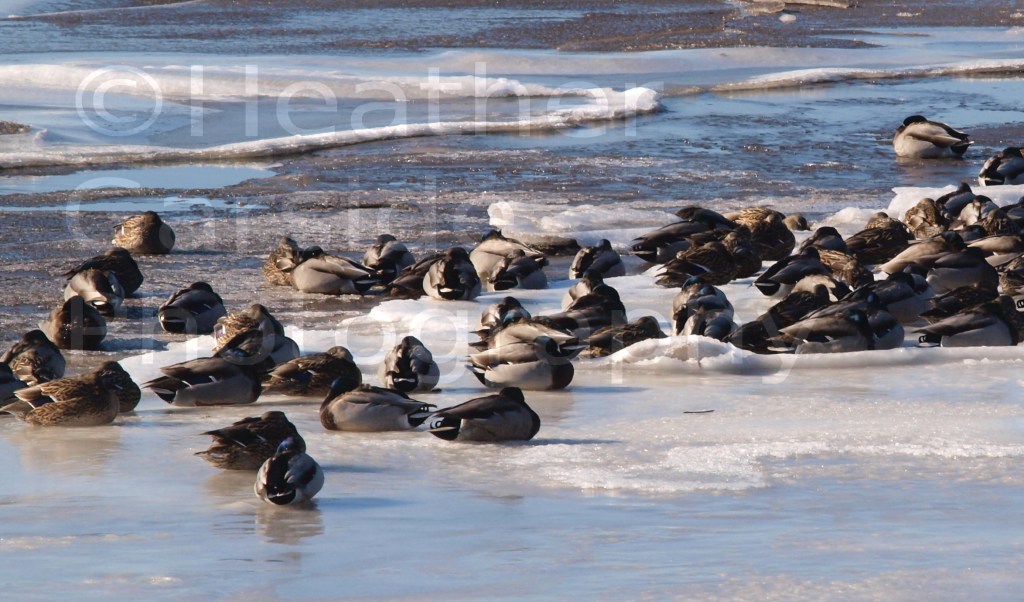
Opposite the West Pool, the Saw Mill Creek Mudflats were mostly frozen over with the exception of a thin flowing stream running through. They were occupied by a very large flock of Mallards. Unlike the Sparrow, they were not trying to prove anything. They all had their faces buried deeply into their chests, hiding their bills from the cold.

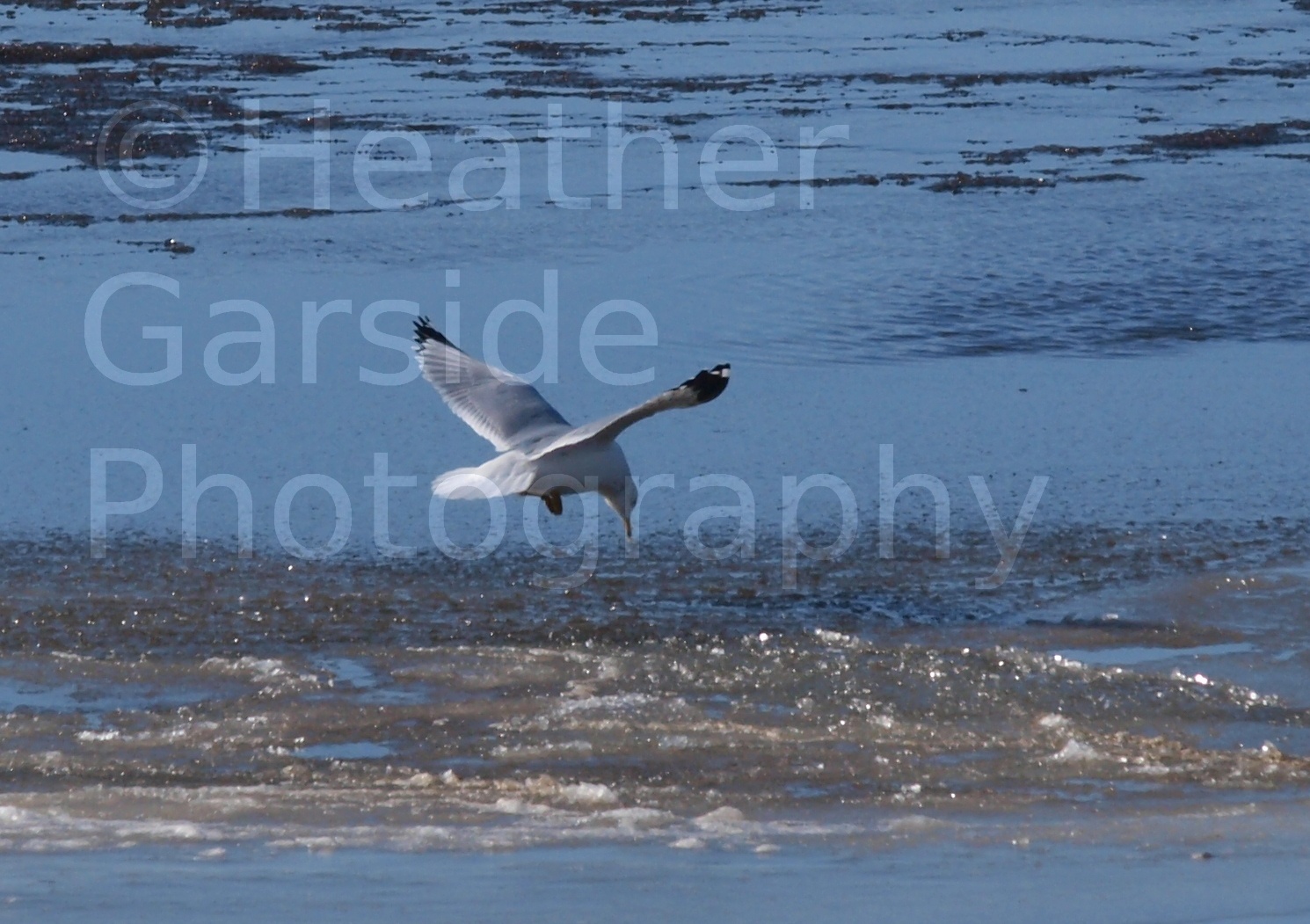
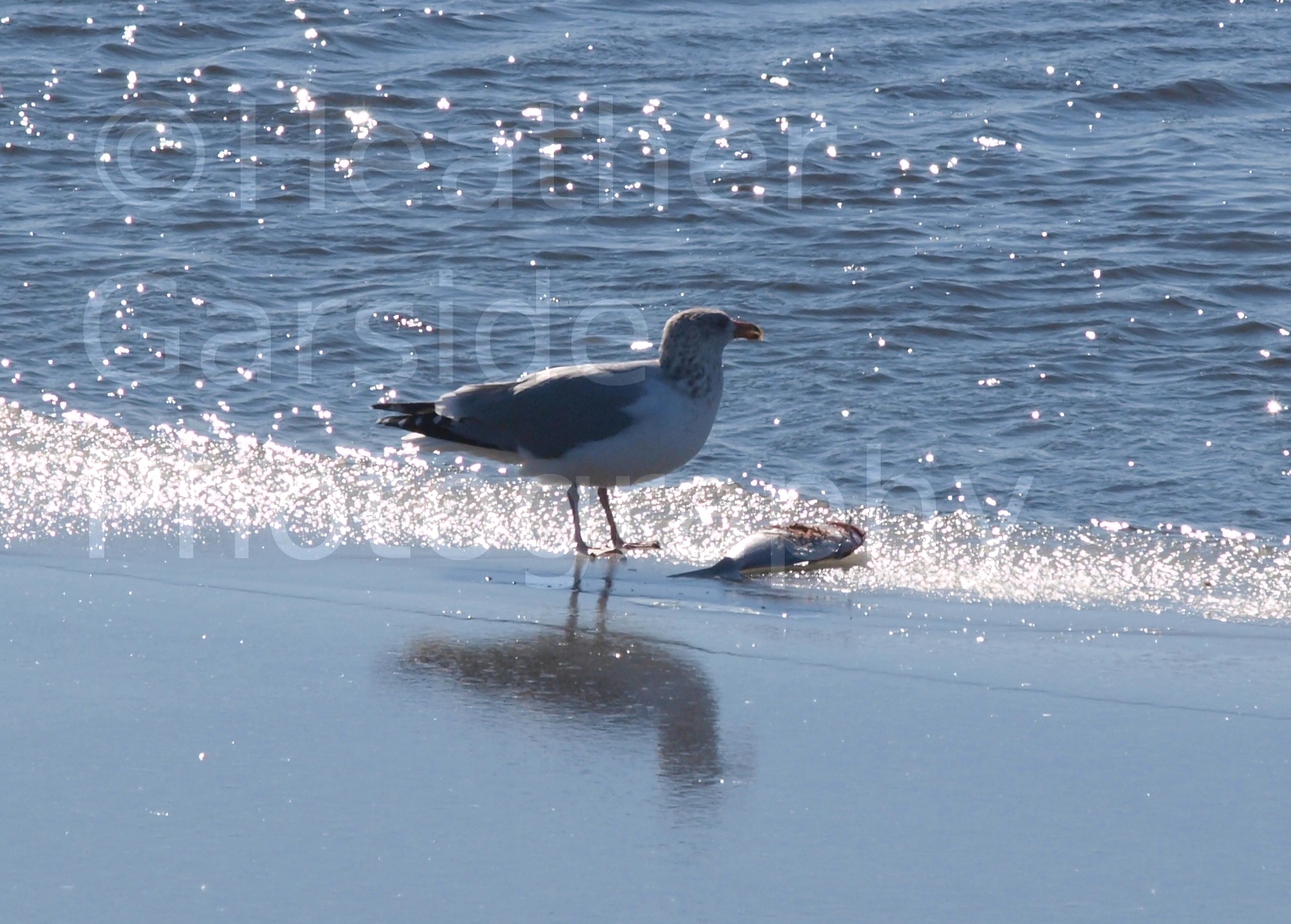
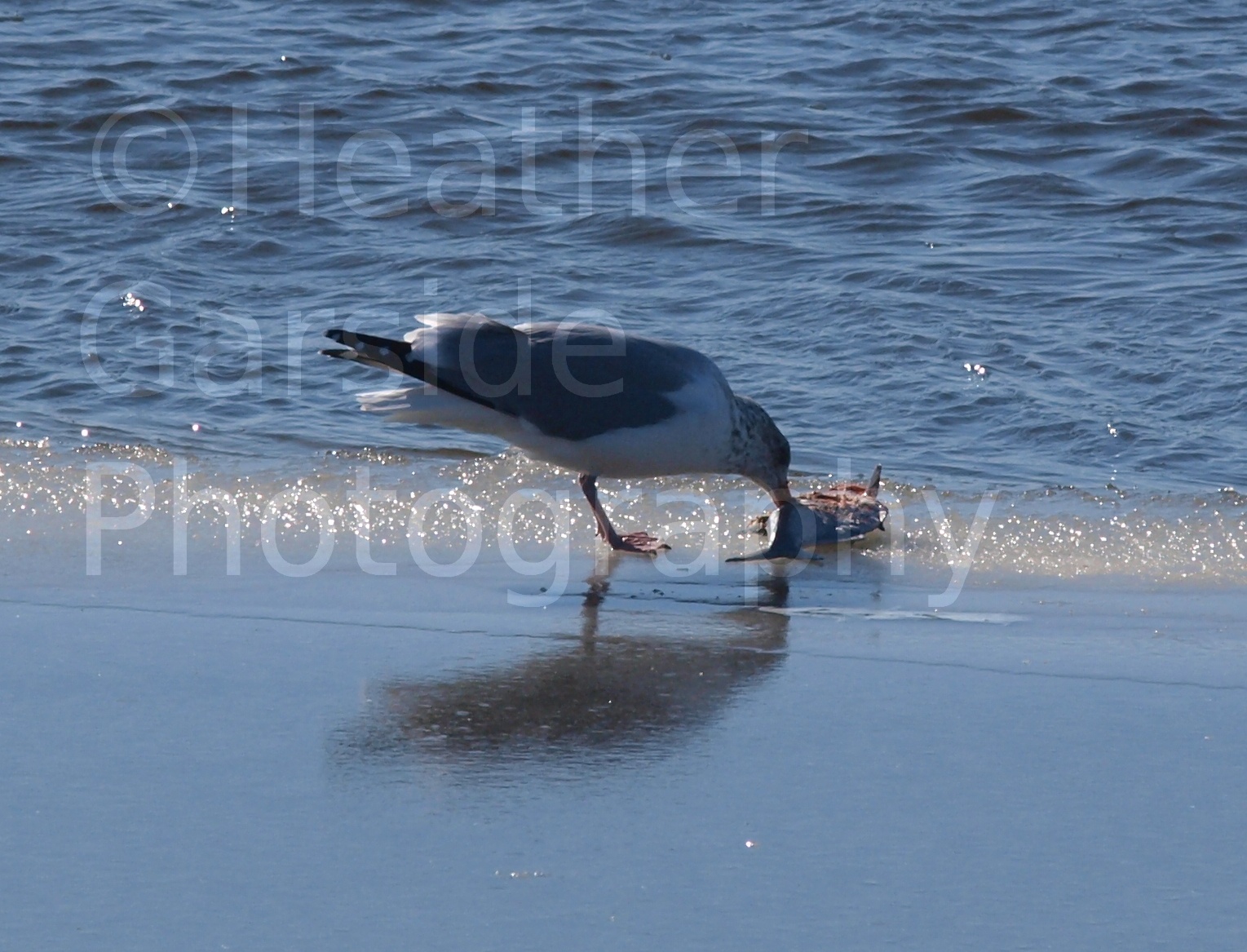
A few Gulls were also around. One was very busy hunting, hovering over the water, peering into the depths. His persistence was rewarded in the end and he did catch a rather large fish, which he most definitely did not offer to share with any of the others.

Looking back on the experience, I think I can say with confidence that the wind was definitely fresh. But so far we have never repeated the experience of visiting Richard W. DeKorte Park in the “off-season.” I leave that to those who are made of sterner stuff than myself.

Cooper’s Hawk

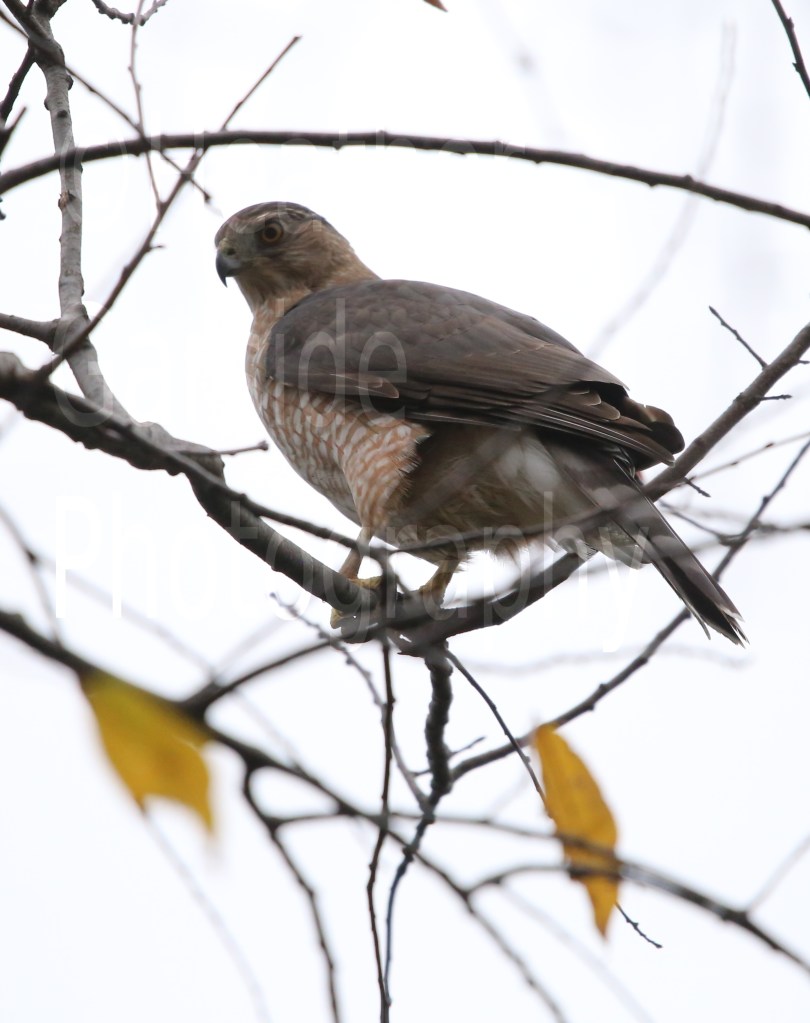
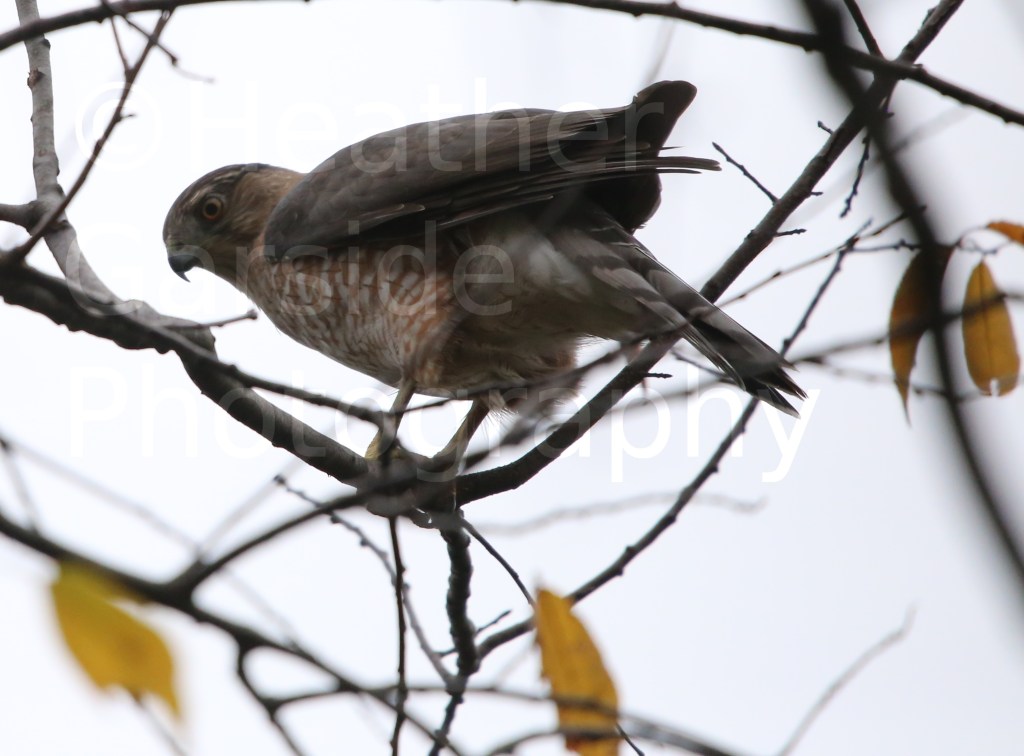
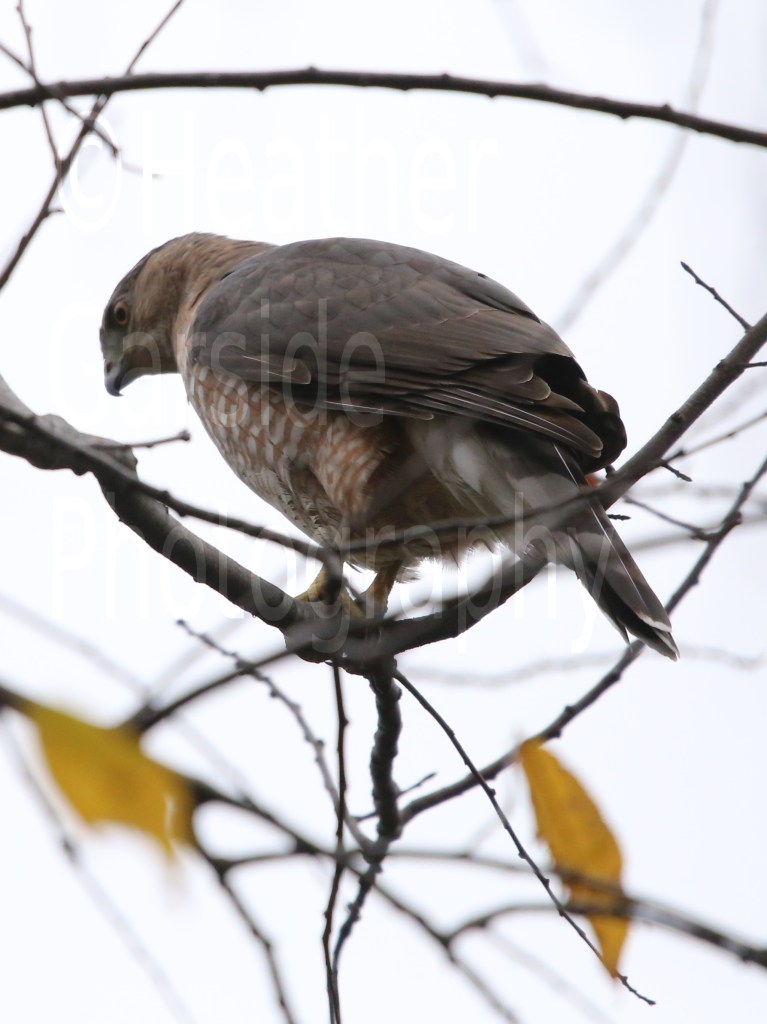
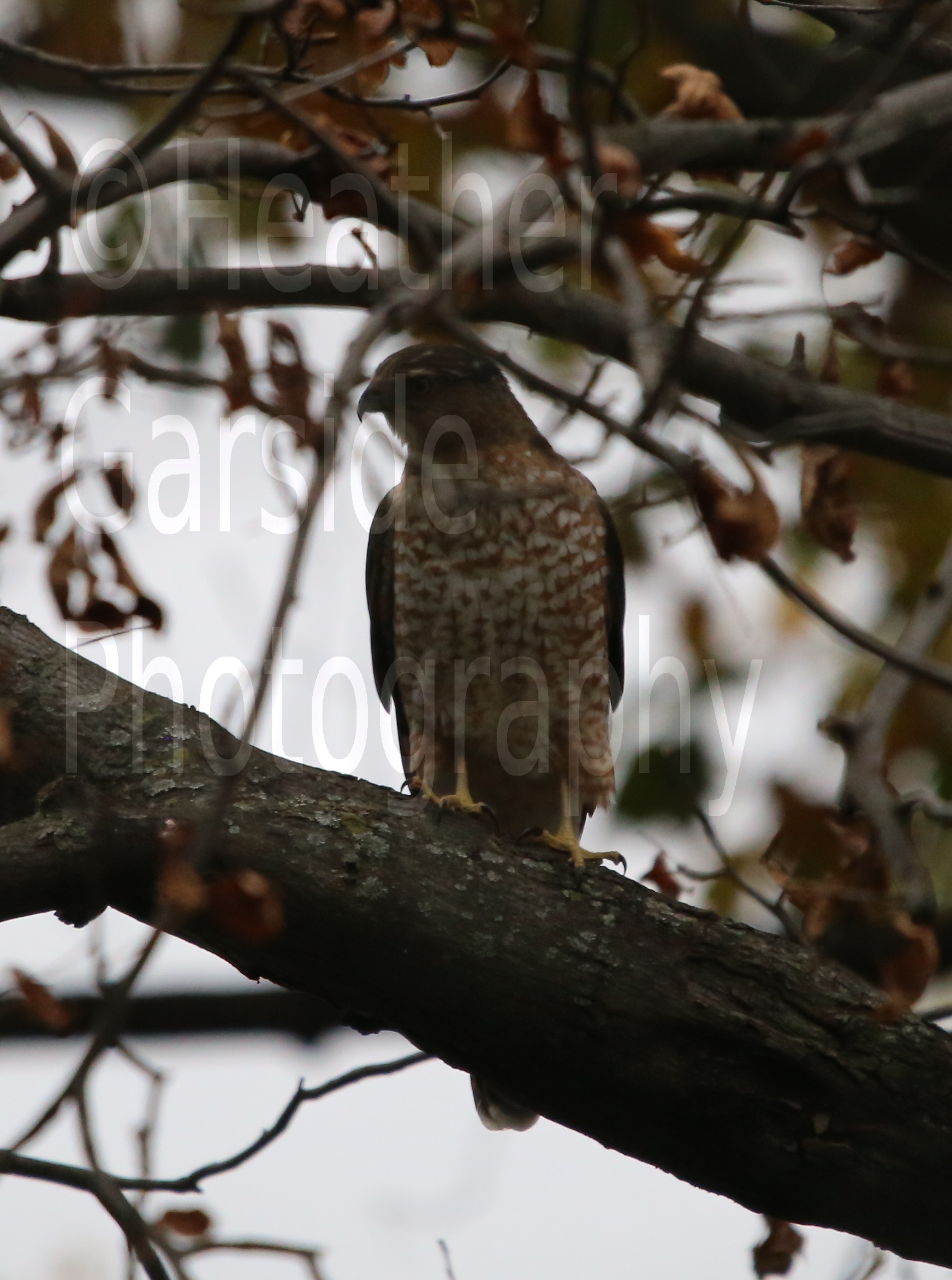
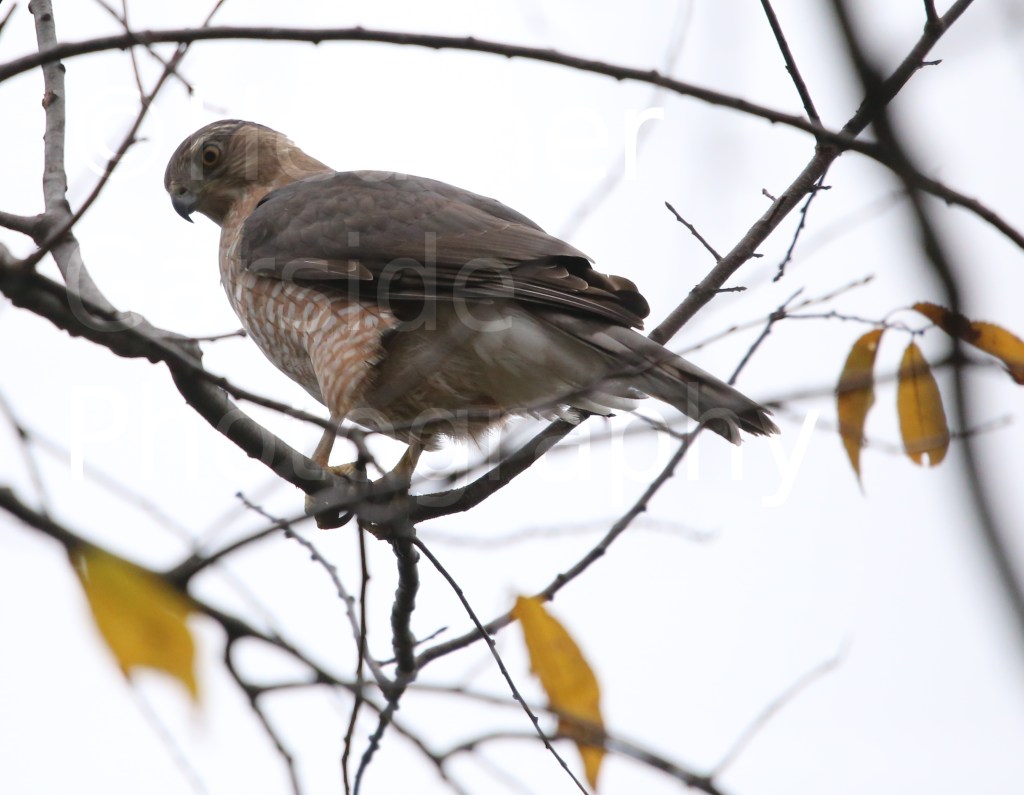
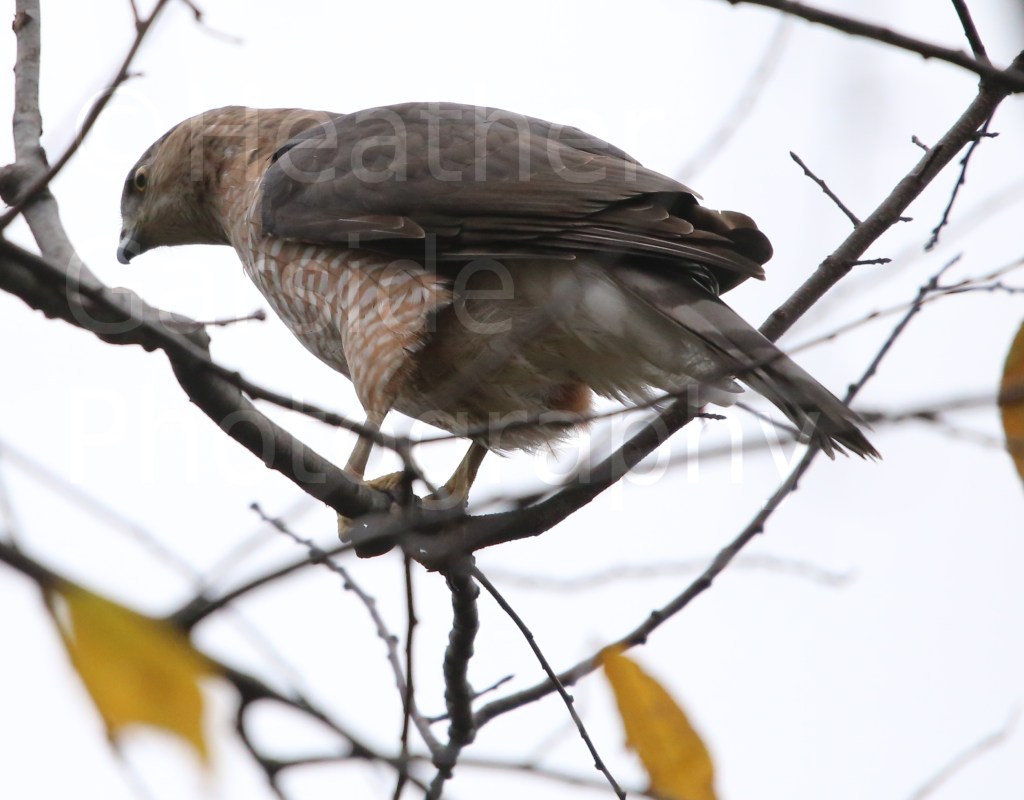
This November I was able to add a new bird to my list. I was particularly pleased about this sighting as it was not only a new bird, but a new bird of prey. In my own backyard, literally. Thank goodness for the strong fall breezes removing most of the leaves from the trees. I had only been sitting out for about fifteen minutes, relaxing and waiting for the birds to get used to my presence and return to the feeders, when they all called out this horrible racket. As the Cooper’s Hawk settled down on a nearby branch, the trees erupted with objections from every other feathered and furred creature in the vicinity. The Blue Jays attempted to intimidate the predator with there loudest shrieks. The Squirrels making their panic noise, which is a cross between the sound of a dry-heave and nails on a chalkboard. The House Sparrows were also adding their sweet voices, not so much to intimidate as to deter the would be predator by demonstrating their greater numbers. Together these sounds and calls created the most inharmonious chorus ever heard. And they just kept it up!

At first I thought they were disturbed by the neighbor’s cat, who I had seen rushing from the middle of the next yard a moment earlier. This is a fairly regular occurrence. Later I realized that the cat was also panicked by the Hawk and running for his life. Not to sound too mean, but I took a slight bit of satisfaction that for once the cat was being terrorized, instead of terrorizing. But when the cat appears the ruckus soon calms down. With the cat gone, I started looking for another reason for their unhappiness. And that was when I spotted it. To have that kind of power to have just your silent presence on a branch cause so much commotion.

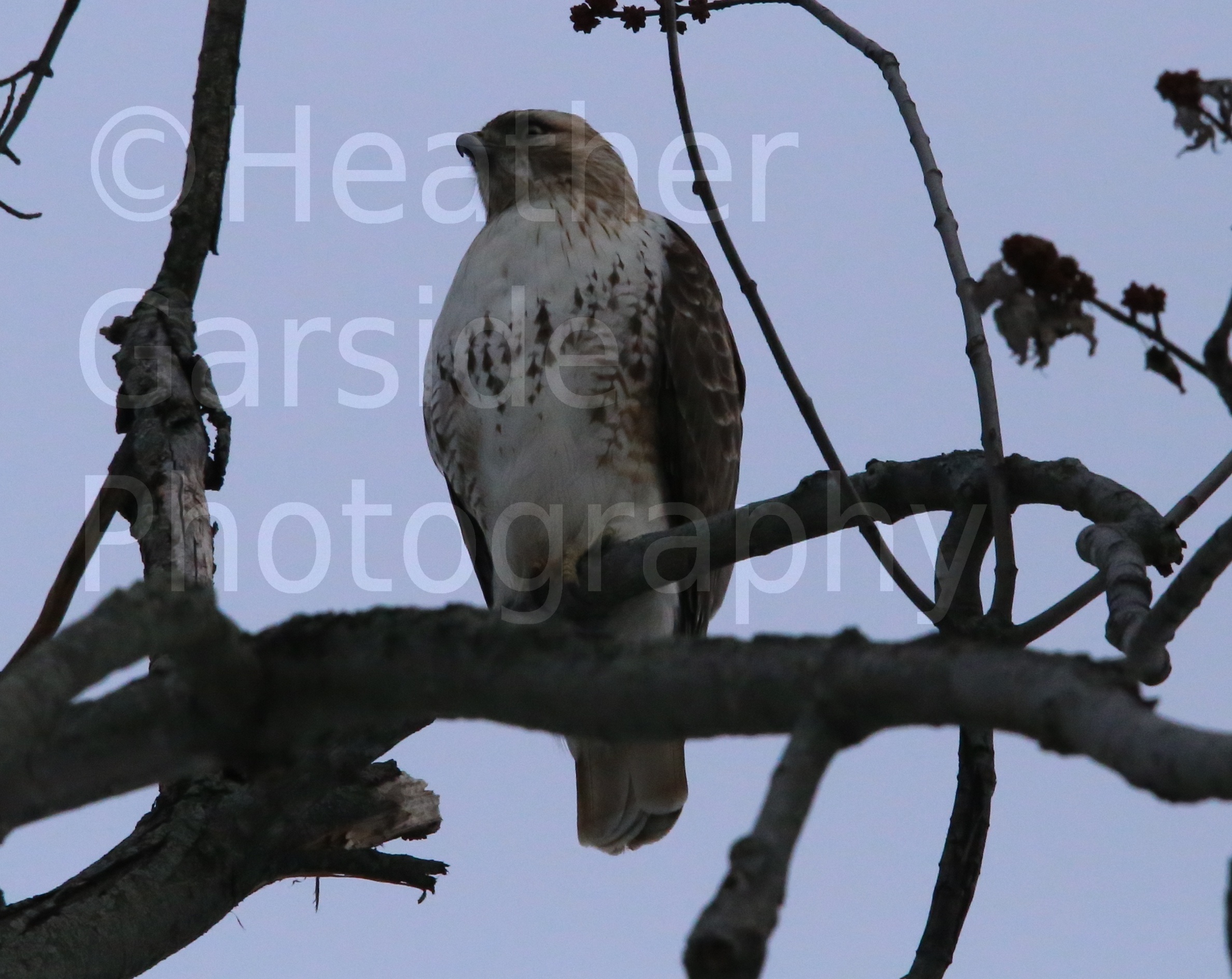
I knew instantly that this magnificent creator was not a Red-Tailed Hawk, the species of hawk seen very often in our town, especially in the nearby park. The darker color of the wings was my first indication that this bird was different. A quick look at its tail and rump confirmed that it was not the Red-Tailed Hawk (pictured on right below). The hatch marks of the feathers along the belly were also differently patterned and more heavily colored.

The Cooper’s Hawk is considered a medium sized hawk. They measure between just over a foot to twenty inches. The females are slightly larger than their male counterparts, but this is their only difference in appearance. The Cooper’s Hawk has a white chest, which appears rusty due to the closely placed hatch-marks on his belly feathers. Its back and wings are a slate gray and its tail is also gray and long, with a rounded end and a series of black bands running along the width of its tail. The face of the Cooper’s Hawk made the greatest impression on me. A fierce intelligence radiates from its red eyes. The top of its head is capped with dark gray feathers, while its cheek is covered in a rust colored blush, which further helps to emphasize the bird’s eyes. The Cooper’s Hawk looks almost the same as the Sharp-shinned Hawk except it is larger and has rounded tail where the Sharp-shinned has a squared tail.

The Cooper’s Hawk has shorter wings than some other hawks, a feature that helps them steer through trees. They apply ambush tactics when hunting and have been known to spend time at or near feeders, hoping to pick off an unsuspecting songbird. They are mostly silent, calling only to or from their nests. This quiet adds to their aura of danger and menace. While their diet is mostly comprised of smaller birds and small mammals, they have been known to eat reptiles and amphibians in a pinch.

While this species of hawk is present in New Jersey year round, some birds do migrate to Mexico and other warmer areas in the south. While their population was badly affected by DDT pollution in the 1950s-1980s, today they are a common bird. Spotting them however is often by chance. Knowing that I feel doubly lucky that I chose that morning to enjoy a bit of the autumn sunshine.

A Chance Encounter with a Famous Owl

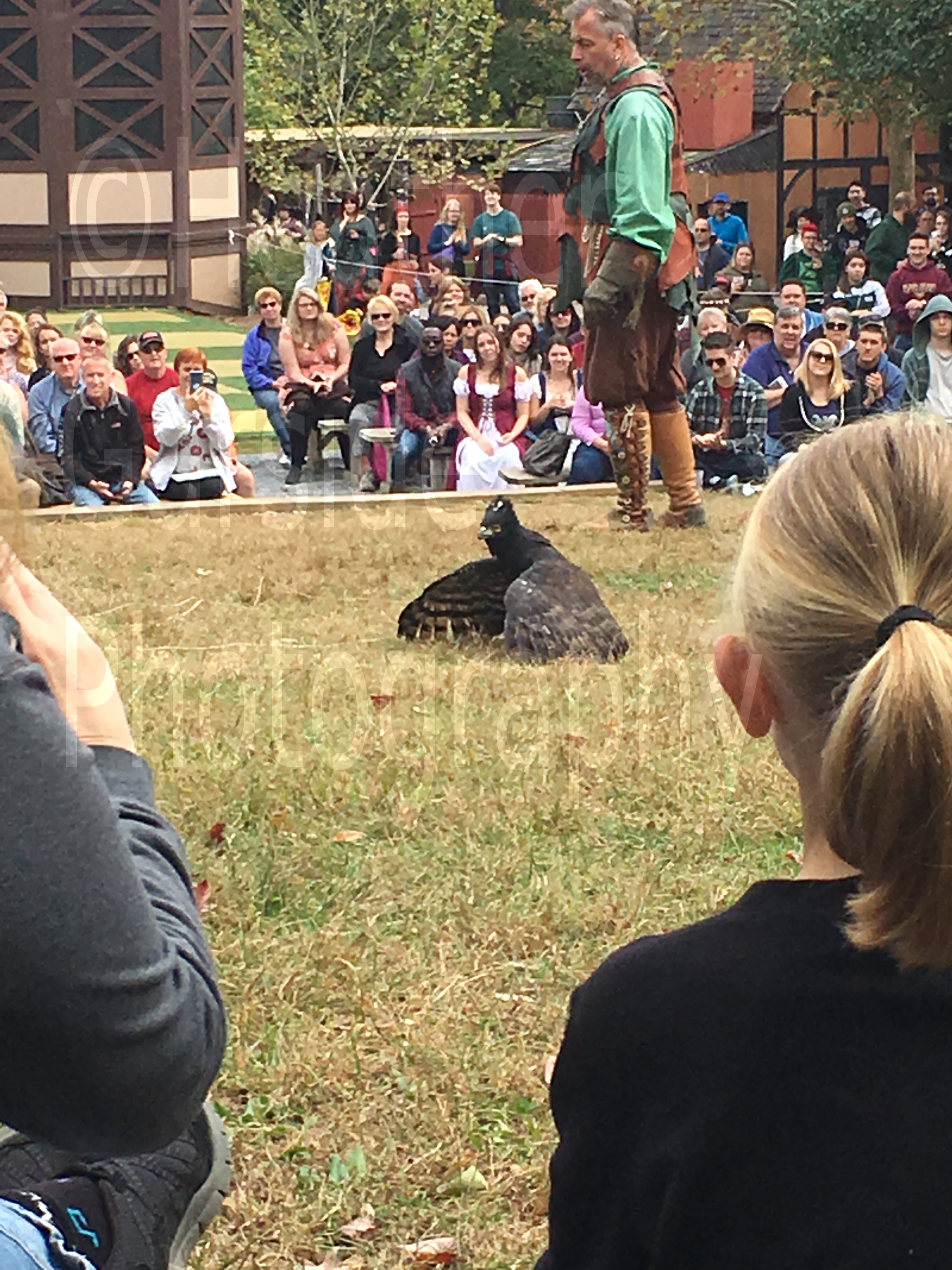
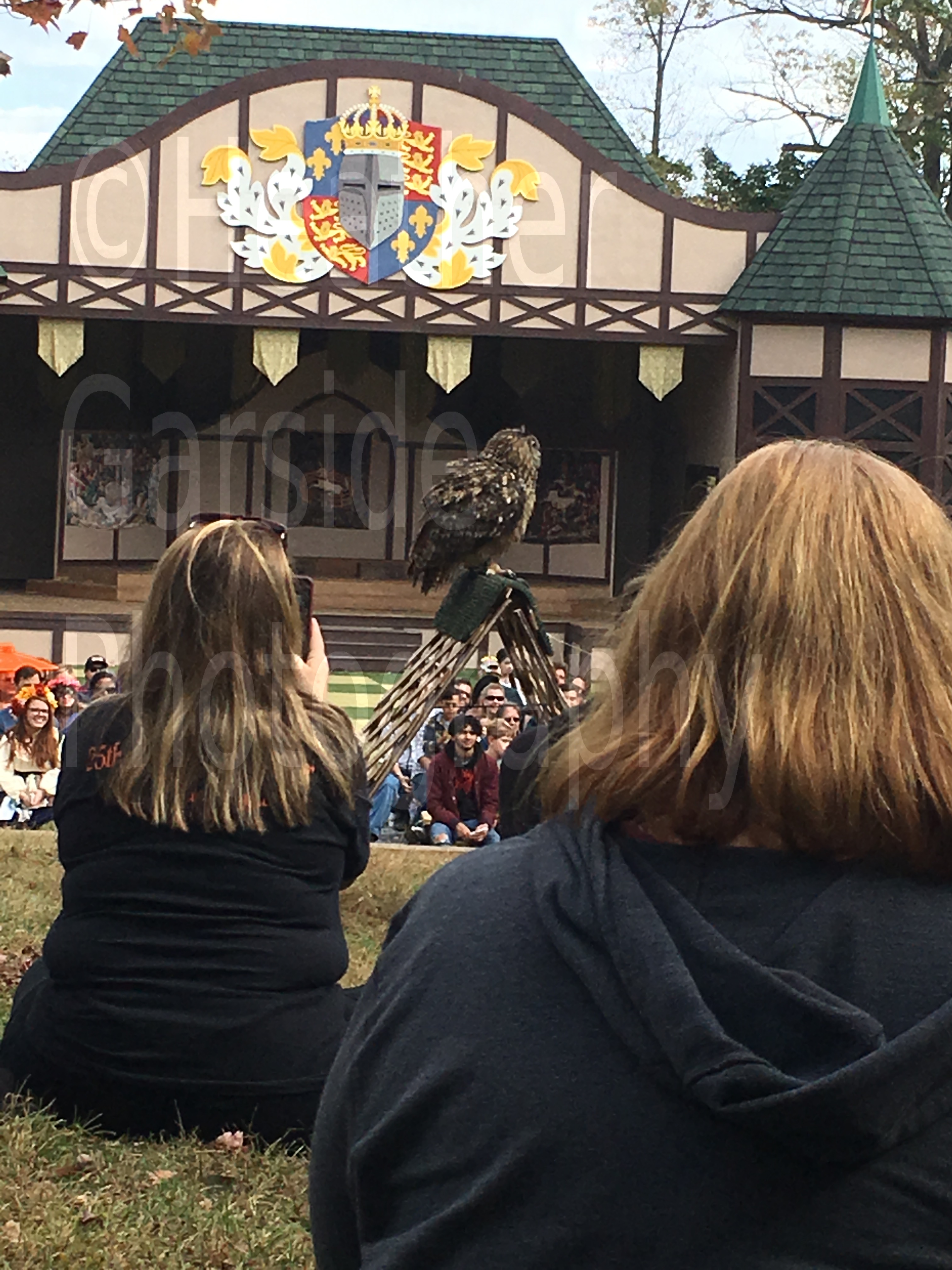
This past August I attended the Pennsylvania Renaissance Faire and had a brush with fame. Located on the estate of the Mount Hope Winery, the faire is home to the wide variety of acts and demonstrations we have come to expect at Renaissance themed events. Alongside the jousts and human chess, the jugglers and musicians, was Her Majesty’s Royal Falconer. It didn’t take much convincing to get my party to both take a look at the birds in their pens and to check out one of their daily educational demonstrations. The faclconer, Ash Cary gave a wonderful talk entitled Knightwings: Birds of Prey, which included a lot of information about the efforts made toward conservation of birds of prey. To learn more about Cary and his conservation efforts, you can visit the website of his non-profit One World Raptor at https://oneworldraptor.org/

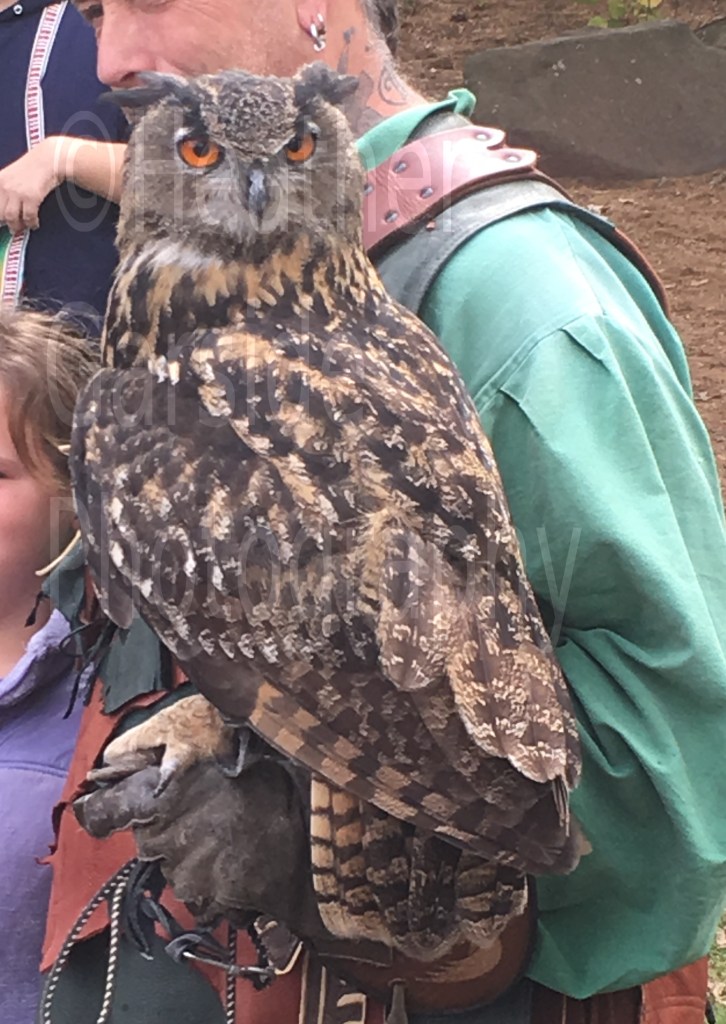
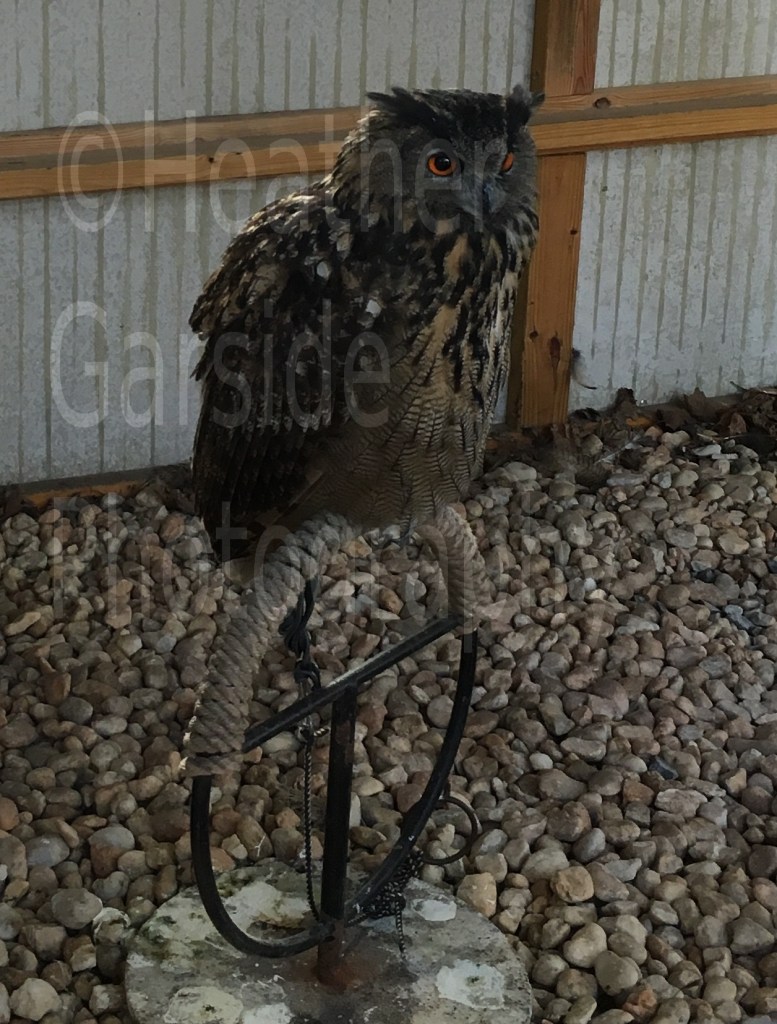
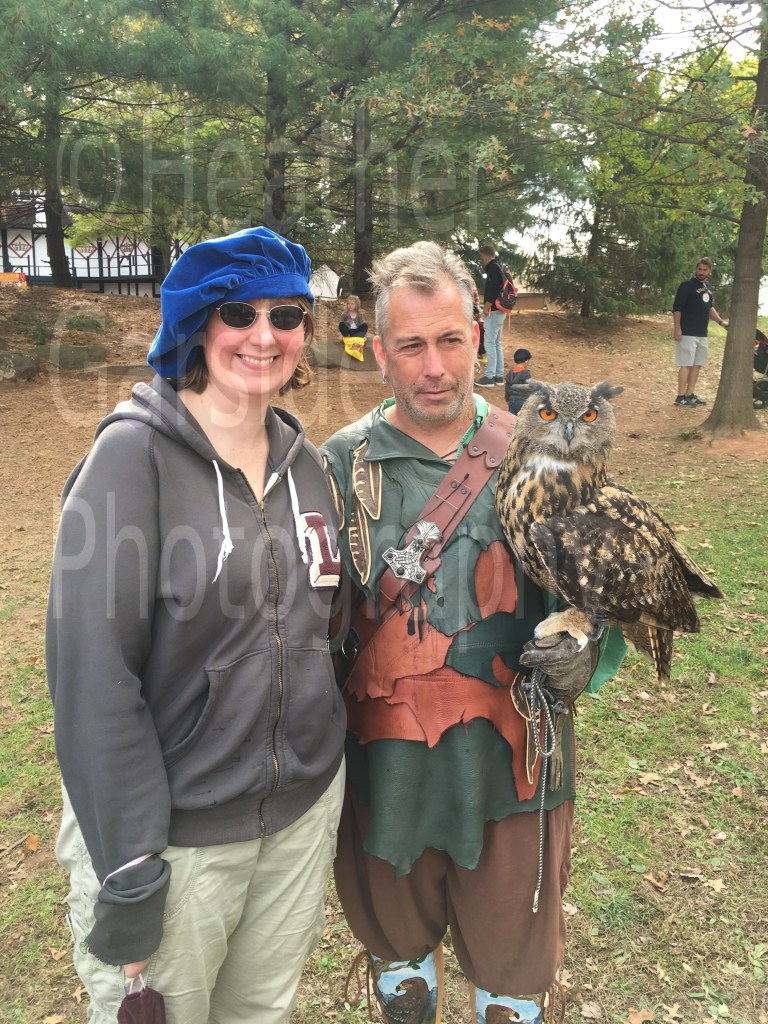
Unfortunately, I had decided I would enjoy the faire more without carrying the weight of my camera and lens, so I was forced to rely on a phone camera for the show. As you might expect, not all the birds are included in each demonstration. Our demonstration included Zuul, a South American Black Hawk-Eagle and Ulysses, a European Eagle Owl. While Zuul was a beautiful bird, it was Ulysses who completely captivated me. Elegant and distinguished, his large size dominated your attention from the moment he emerged. And one look into his large orange eyes with their disdaining disinterest, and you understand immediately why humans often personify owls as being stuck up and haughty.

It is really a small wonder that Ulysses caught my attention. Eagle Owls are the largest species of owl in the world. While in looks they somewhat resemble the Great Horned Owl, the Eagle Owl is over two feet tall. Its size is further enhanced with its “fluffy” plumage, presenting a large girth that seems formidable. Ulysses and other Eagle Owls have yellowish brown bellies with darker brown wings and back. Besides their large orange eyes, their other distinctive facial feature are their long ear tufts on either side of their forehead, which stand straight up except when they are in flight. The young look much less distinguished, being as white as snow with fluffy downy bodies, resembling a clump of cotton candy.

When living in the wild, Eagle Owls reside in mountain regions. They like forests that have rocks or cliffs. They often nest in the cliffs and spend most of the daytime hours roosting in coniferous trees. Like many other owls, they feed on small mammals and small birds.

As if Ulysses was not cool enough already, he is also a movie star. According to Cary, he was cast as Draco Malfoy’s owl in Harry Potter and the Sorcerer’s Stone (2001). A quick review of the movie credits indicated that they did not list every animal by name. I decided to re-watch the movie in full to see if I can spot him. While he might have been cast as Draco’s owl, I am confident that there are no scenes of Draco with an owl. I did however spot a European Eagle Owl in a few scenes. Assuming that owl was Ulysses, he was in the first scene, sitting on the street sign as baby Harry is delivered to his aunt and uncle’s home and he was the owl who delivered the first Hogwart’s letter to Harry. He was hanging on the roof with several other owls trying to deliver Hogwart’s letters when uncle Vernon goes to work, he was among other familiars hanging out in Diagon alley and he also delivered some mail to Hogwarts when Neville received his remembrall. Unfortunately my DVD doesn’t include deleted scenes so I couldn’t investigate further.

I am very excited because this post has given me the opportunity to use the newest resource in my growing bird library, a gift from my husband Collins Bird Guide: The Most Complete Guide to the Birds of Britain and Europe text by Lars Svensson, 2009.

The White- Breasted Nuthatch

When I first started watching birds in my own backyard, the White-Breasted Nuthatch was one of the first “exotic” species I encountered. Basically, what I mean by that is the Nuthatch was the first bird I wasn’t able to name without the assistance of a field guide.

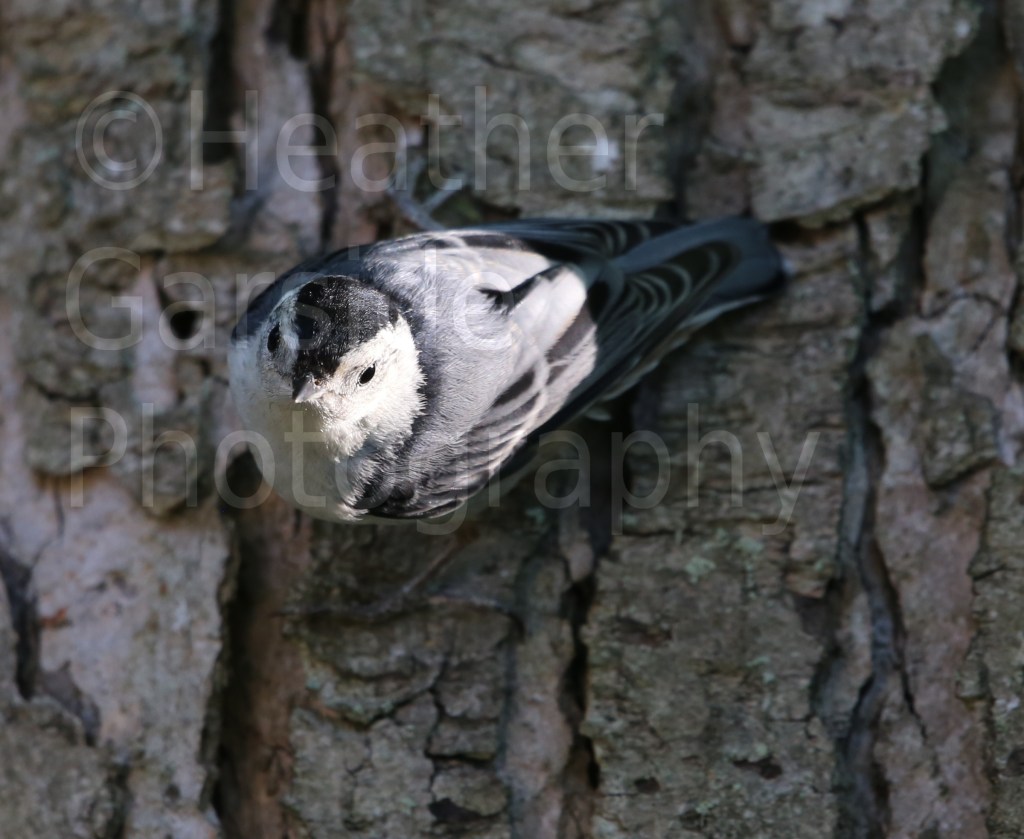
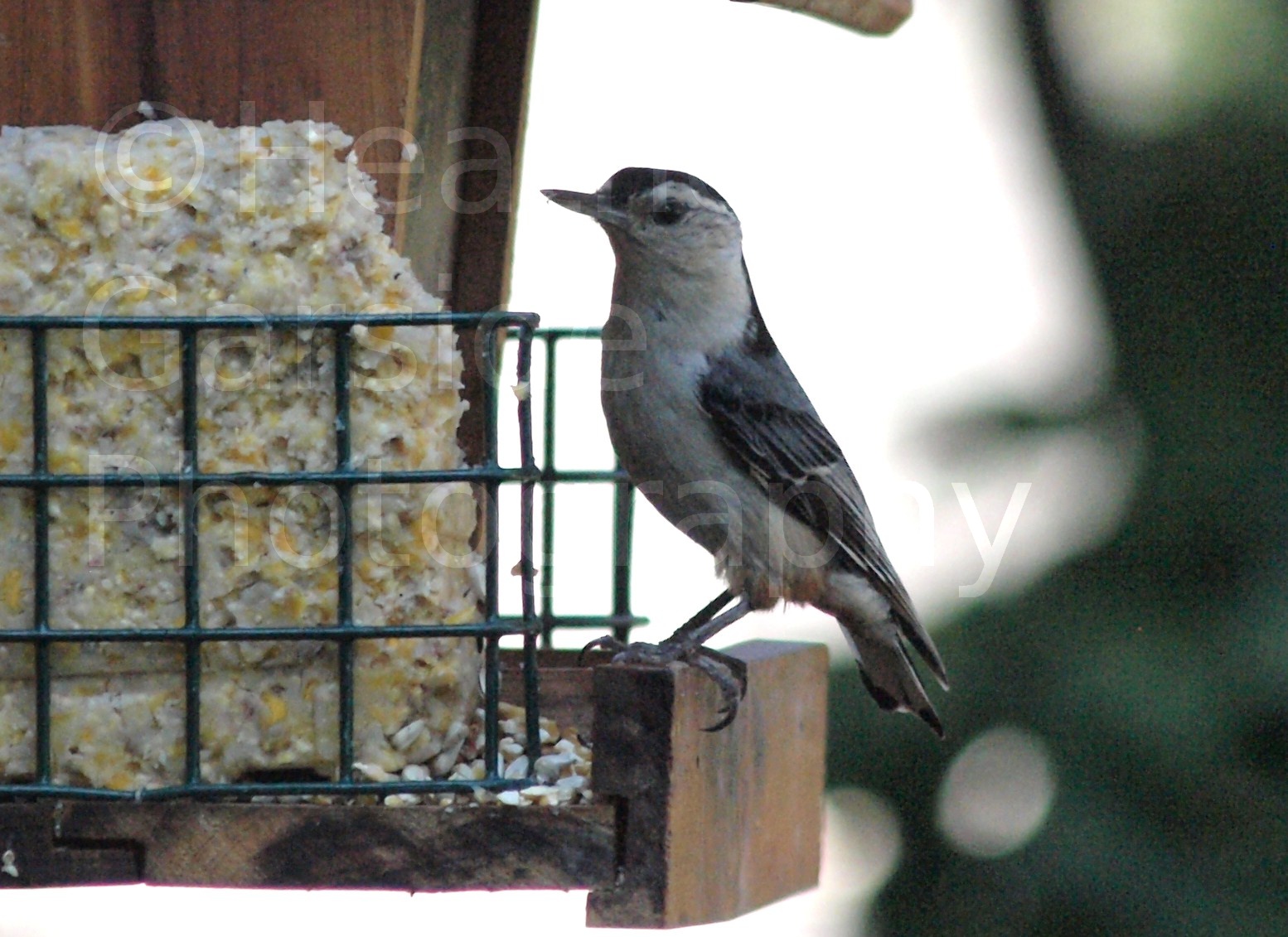
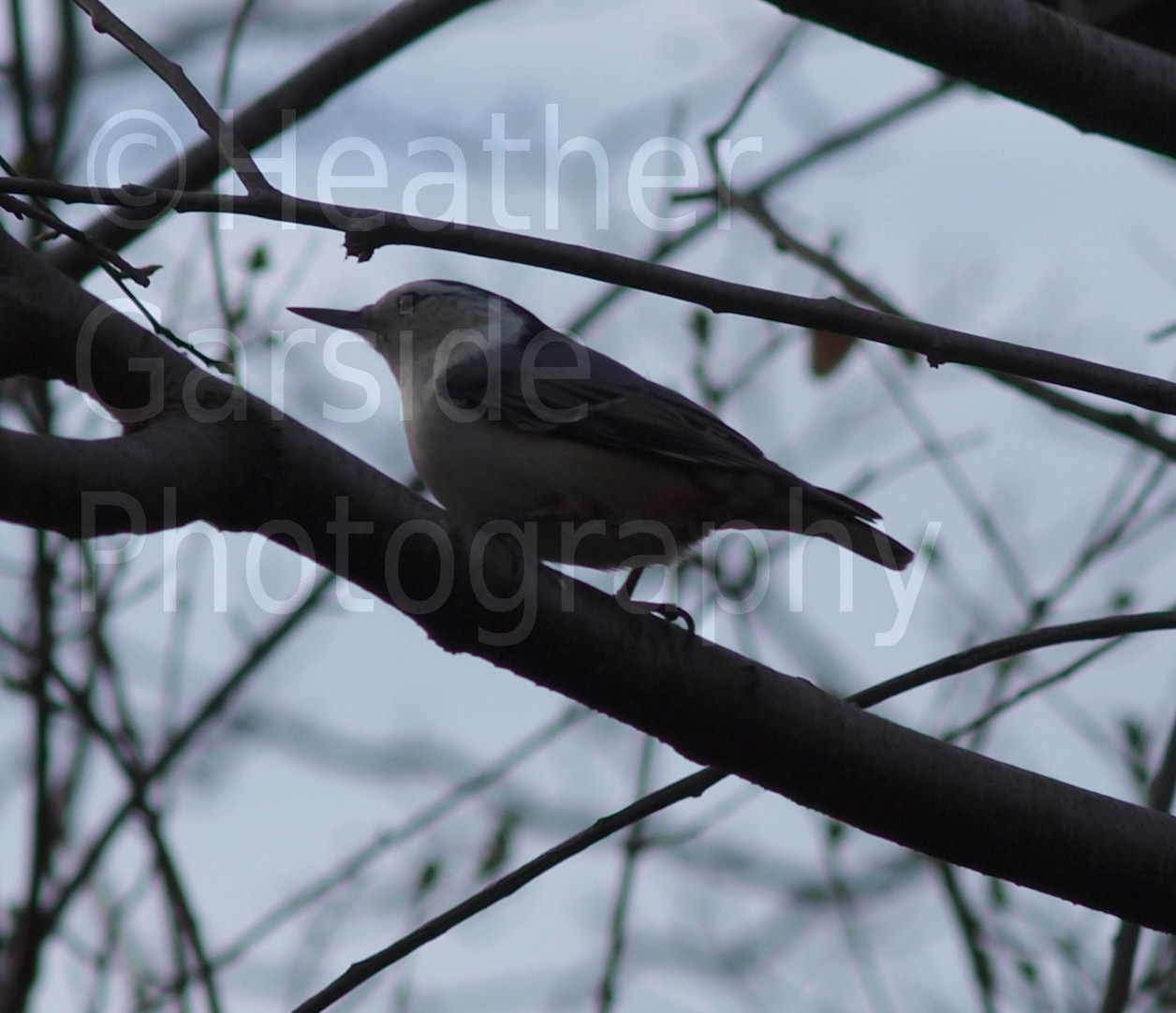
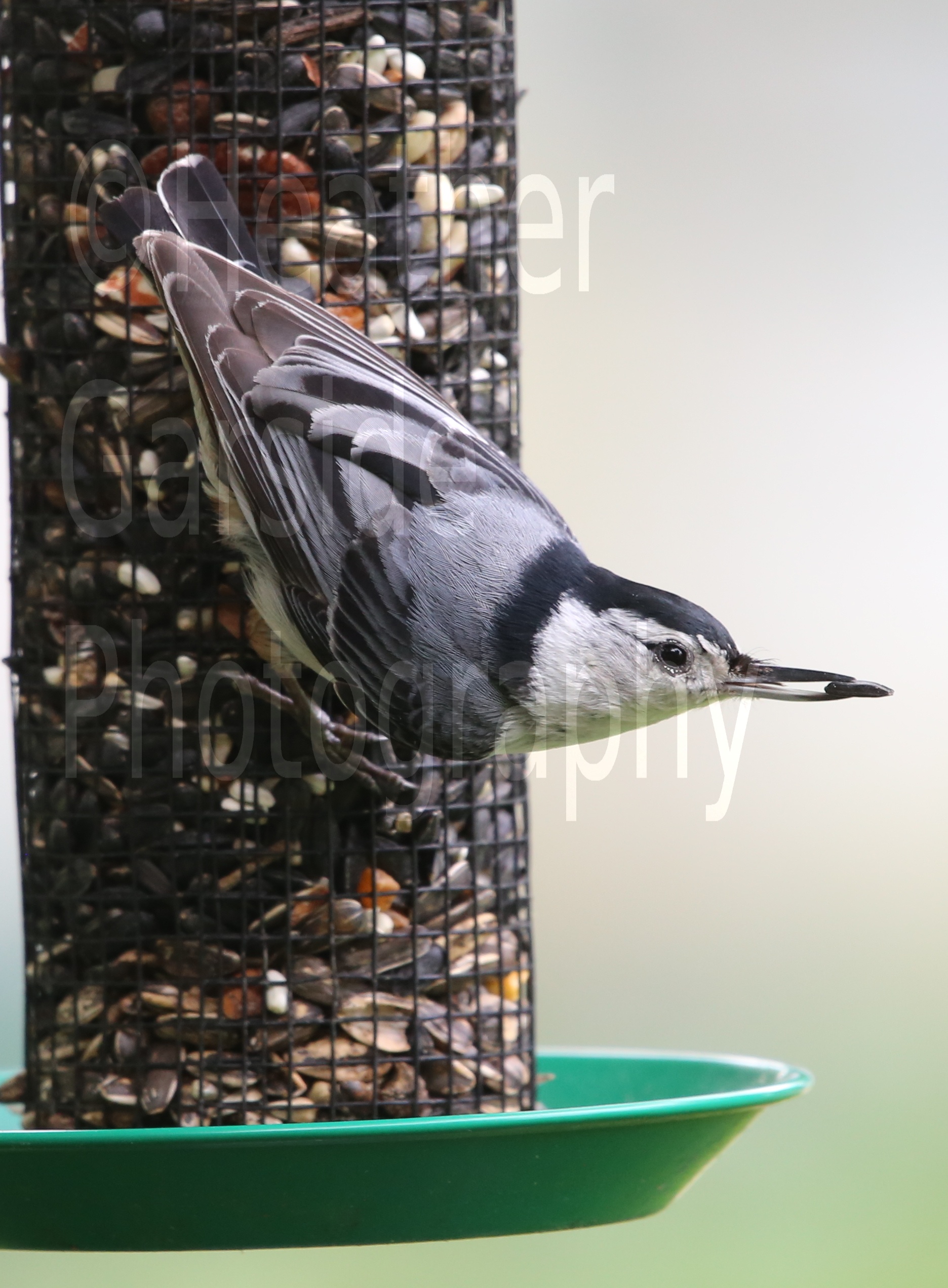
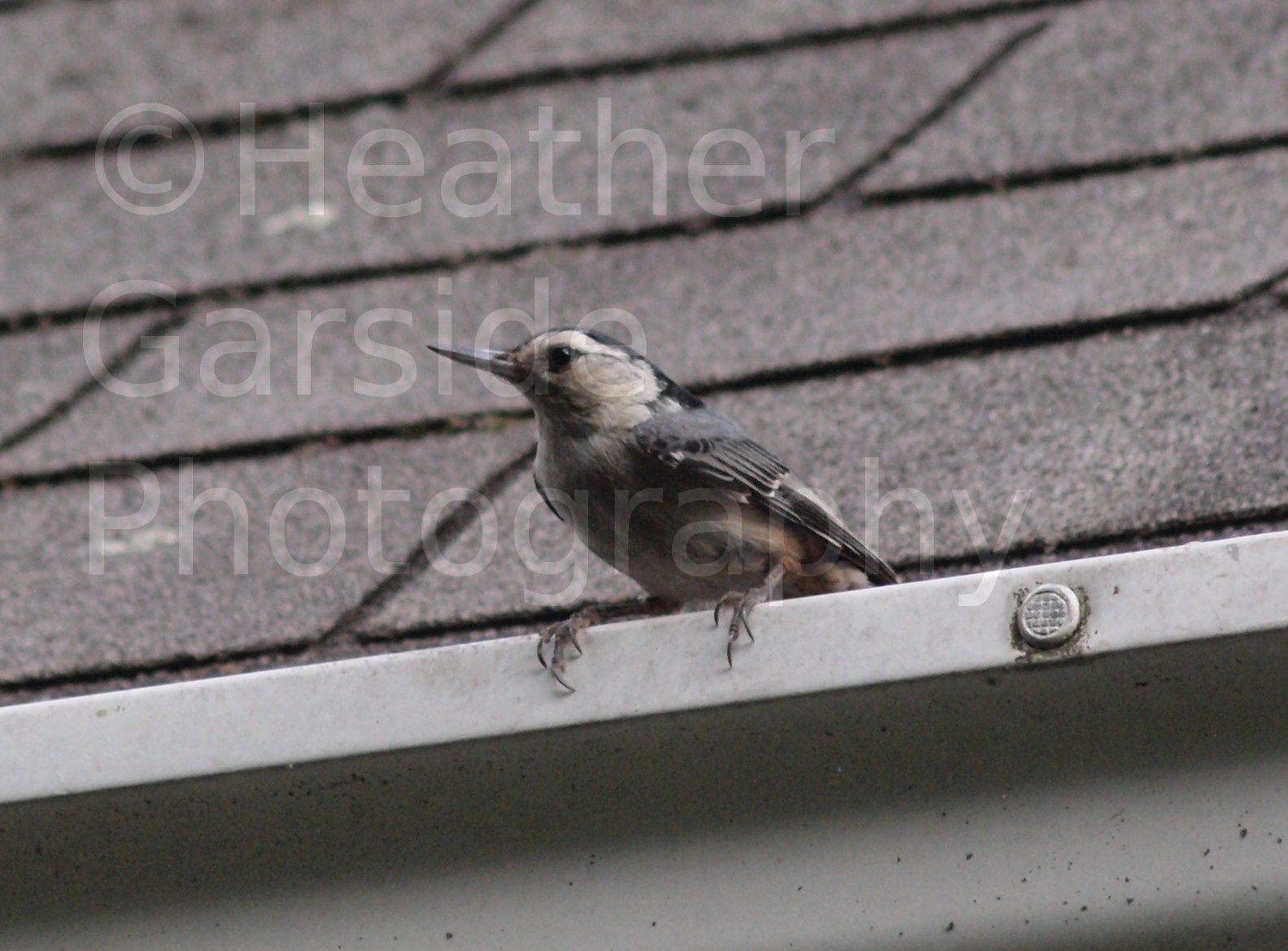
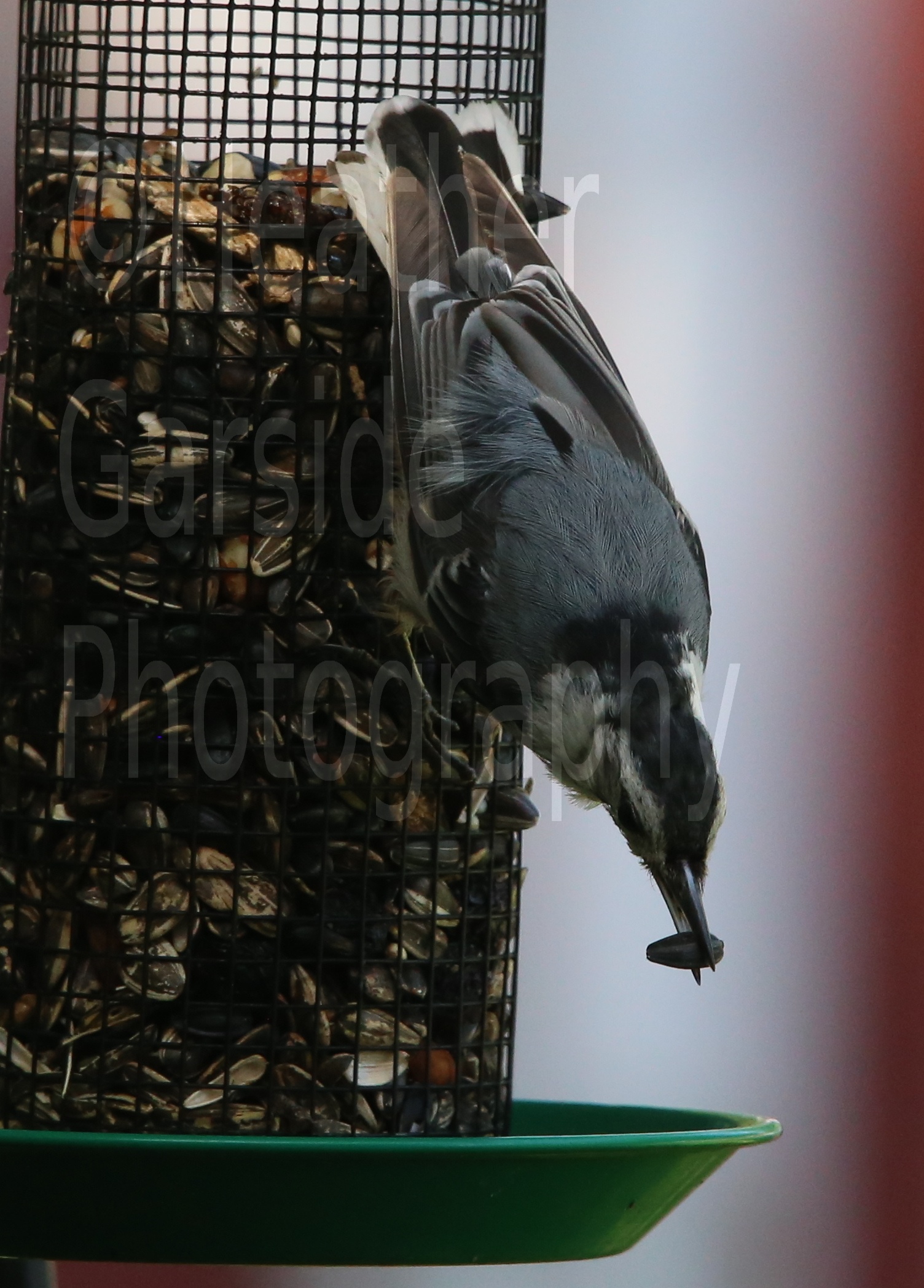
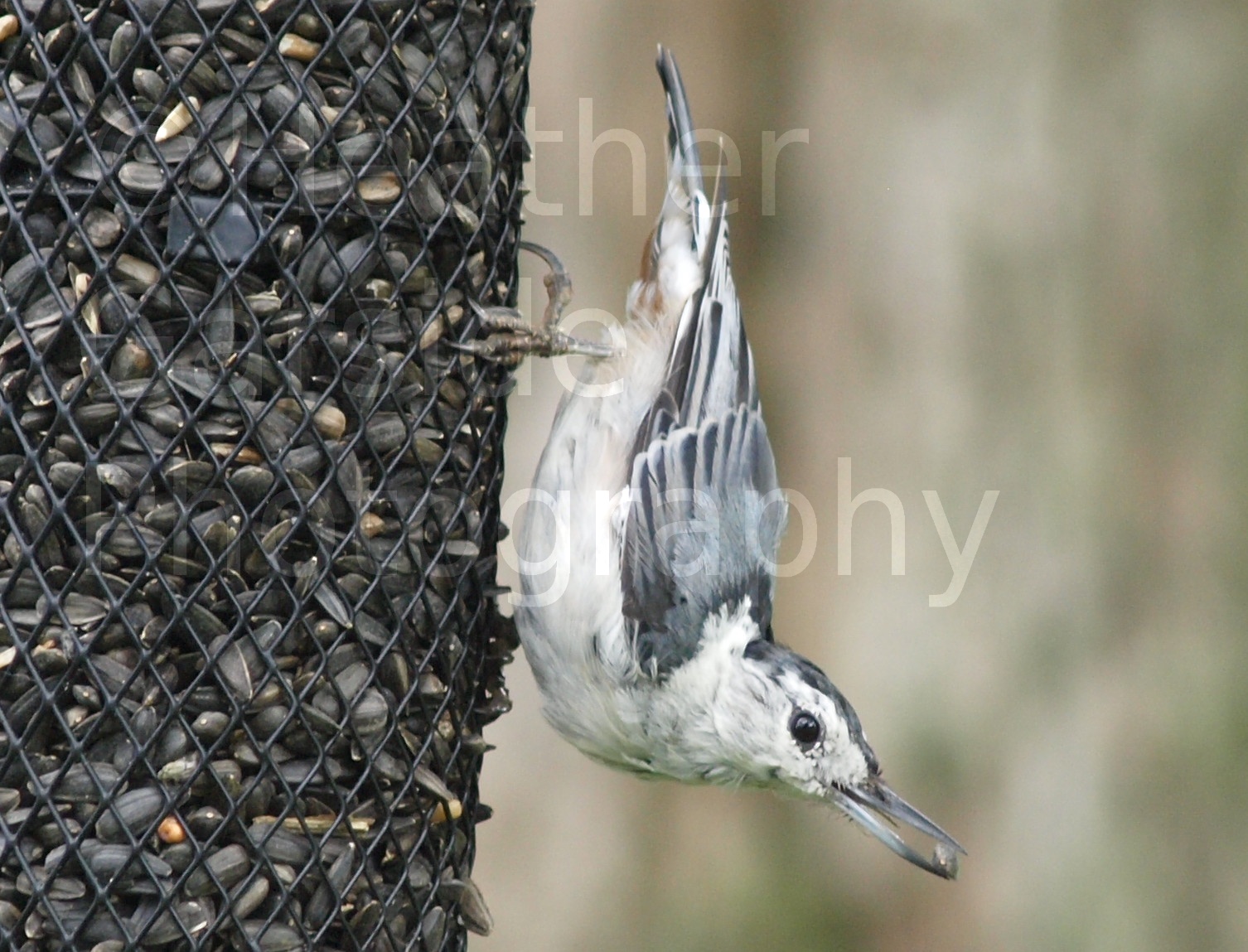
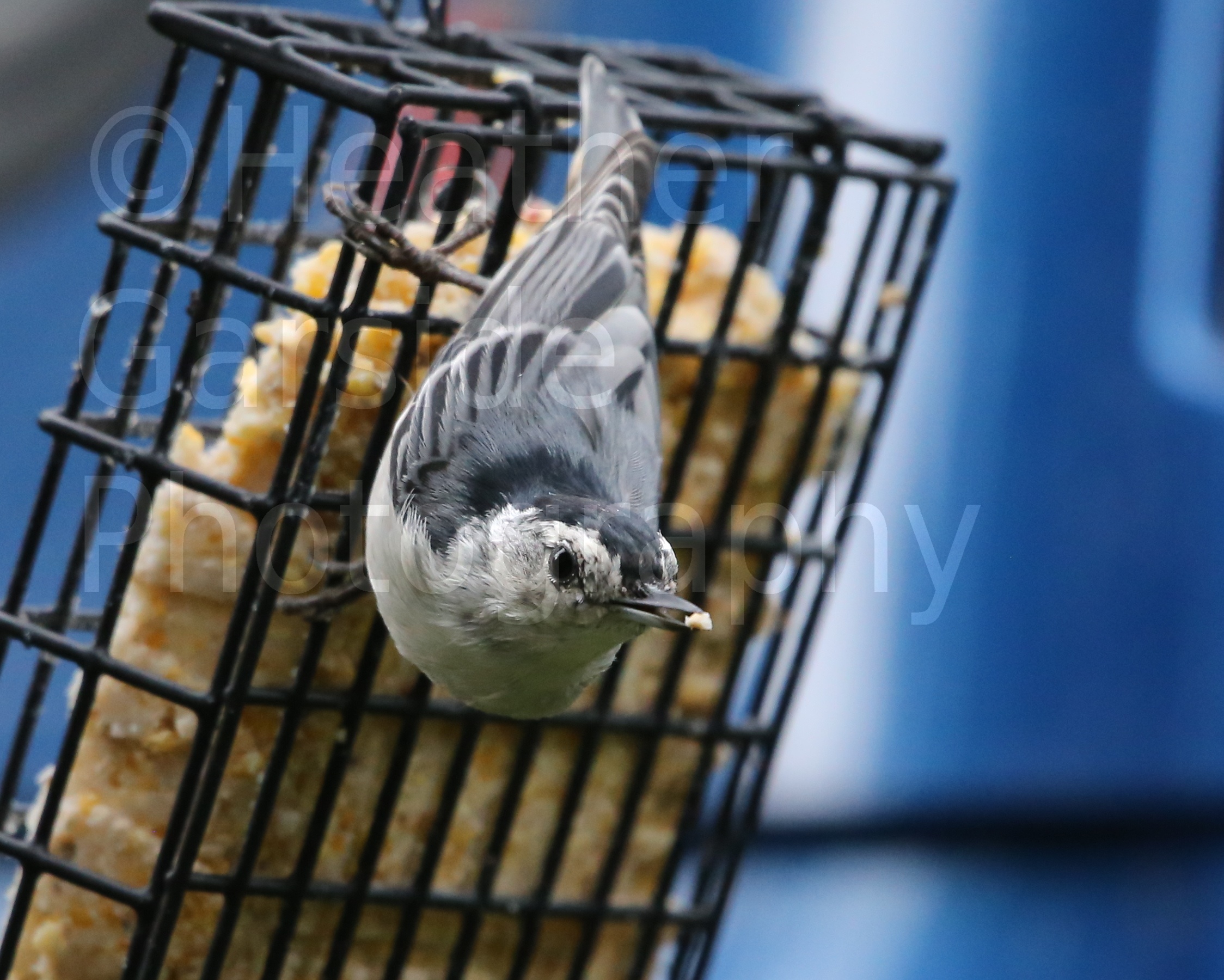
Since that initial sighting, I have become familiar with the comings and goings of these little guys. They are fairly small in stature, being about 5 or 6 inches, which puts them between the size of a Chickadee and a House Sparrow. Their coloring is not particularly memorable. The have slate gray wings, backs, necks and head caps and a white belly, throat and bottom. You can also look for a little bit of chestnut by the back of their legs and butt but it will probably be a flash sighting as these little guys move rather rapidly. Males and females look similar, but the females are a dark gray where the male is black. Their bodies are almost streamline, with their tail and their very long, thin beak almost lining up when the White-Breasted Nuthatch is looking straight ahead.

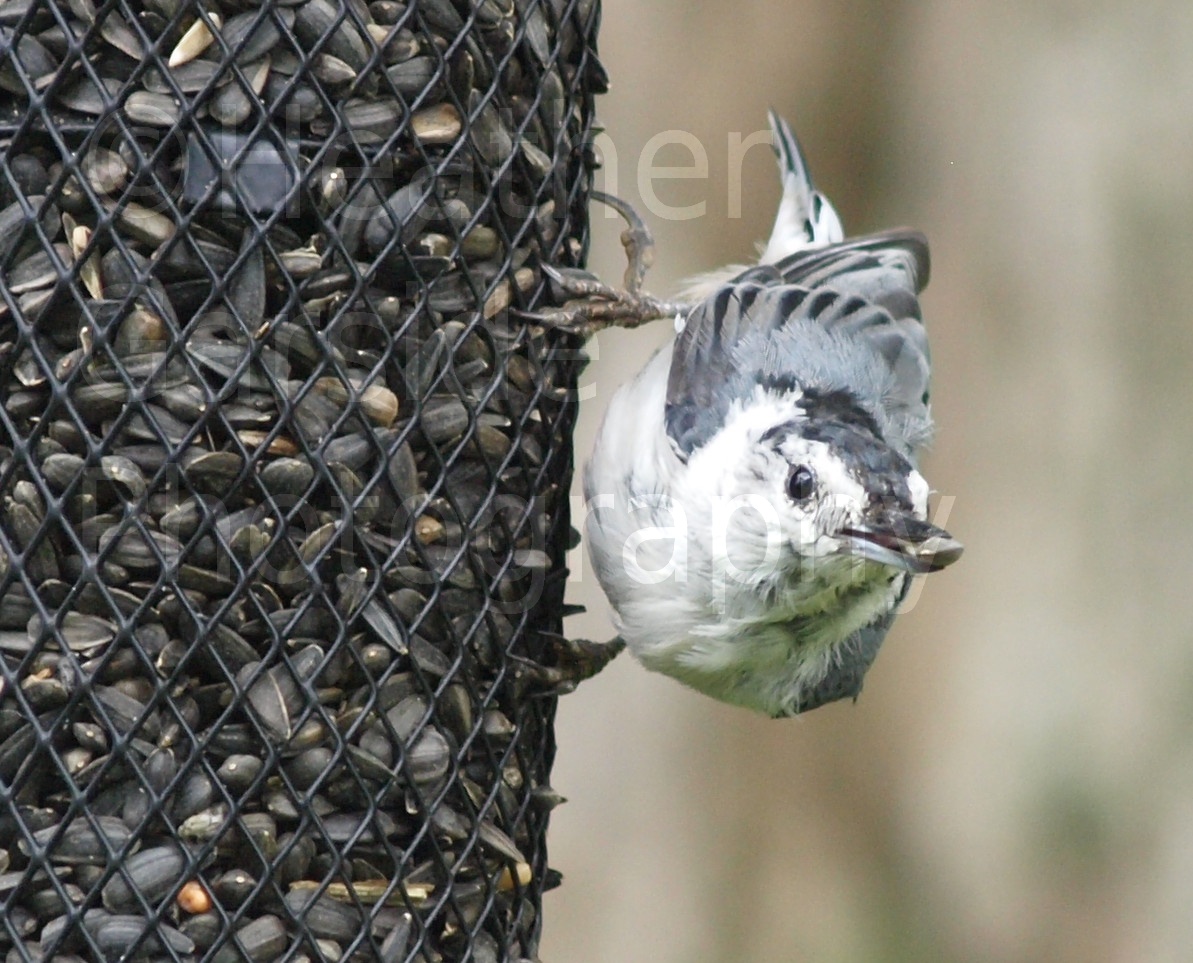
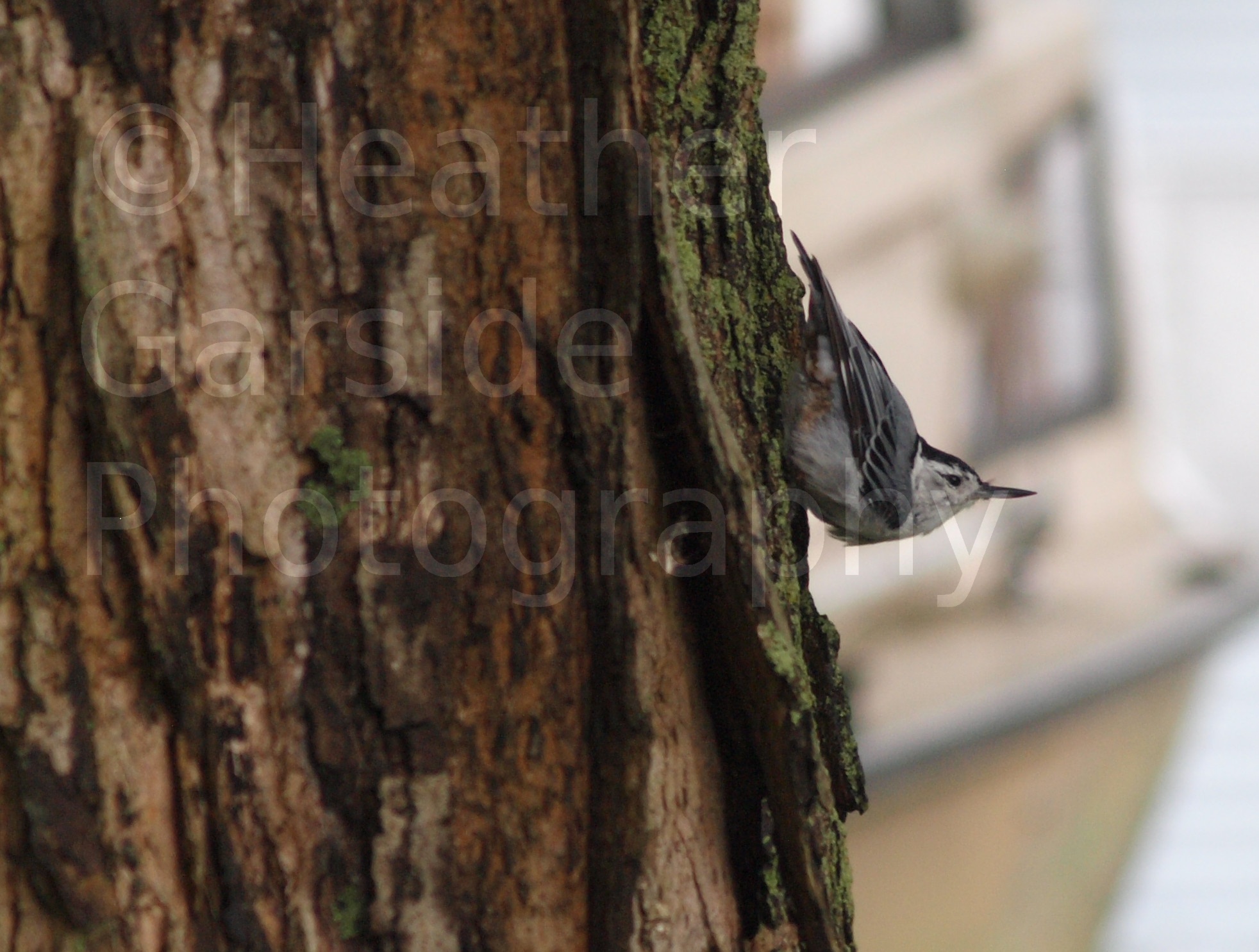
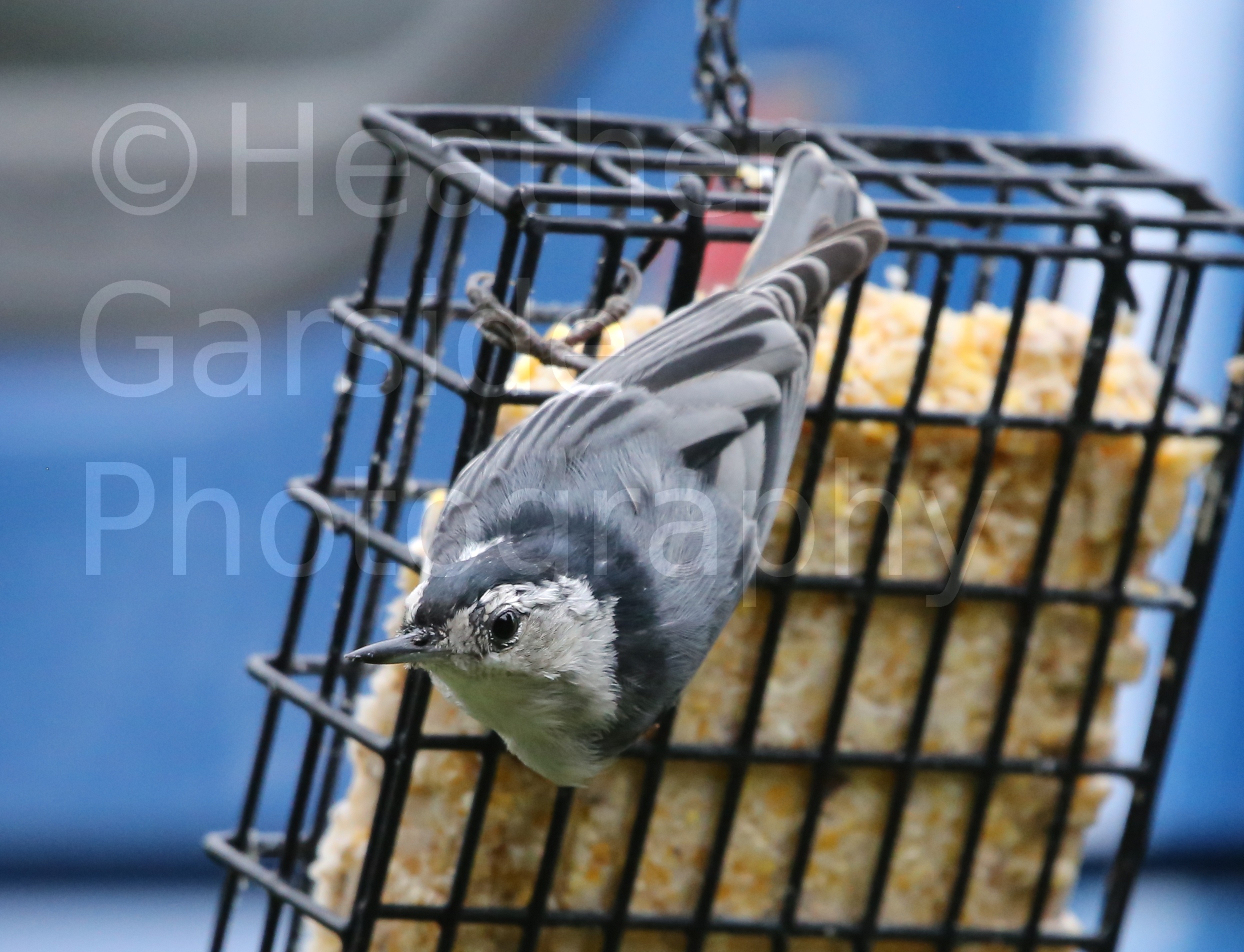
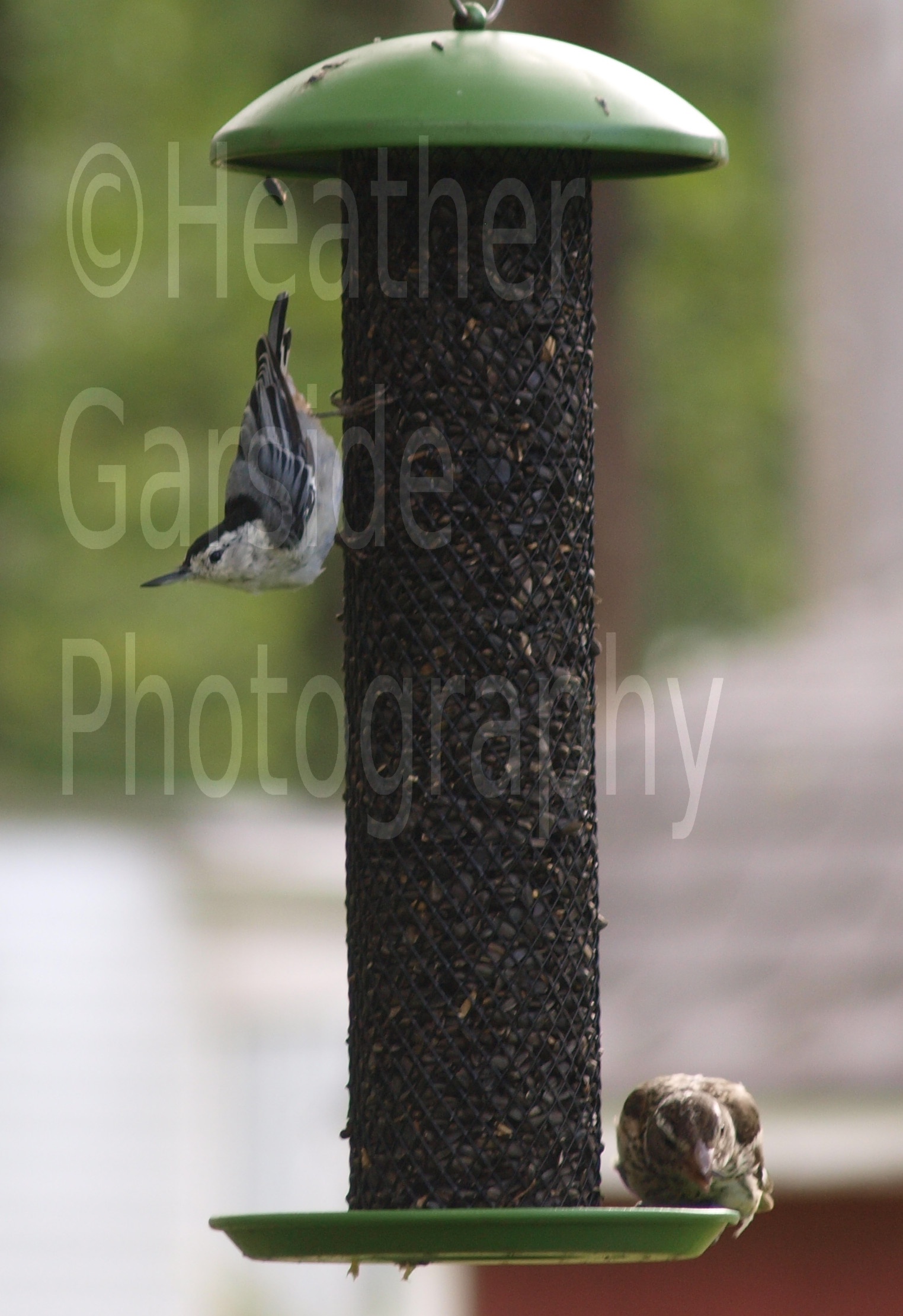
However plain is its appearance, the Nuthatch is distinct in its behavior. The Nuthatch hops head first down feeders and trees. From this upside-down posture, they often arch their necks to see forward, causing them to resemble a marble dolphin in a fountain. It is this behavior that has caused the White-Breasted Nuthatch to be nicknamed the “upside-down bird” by several members of my family.

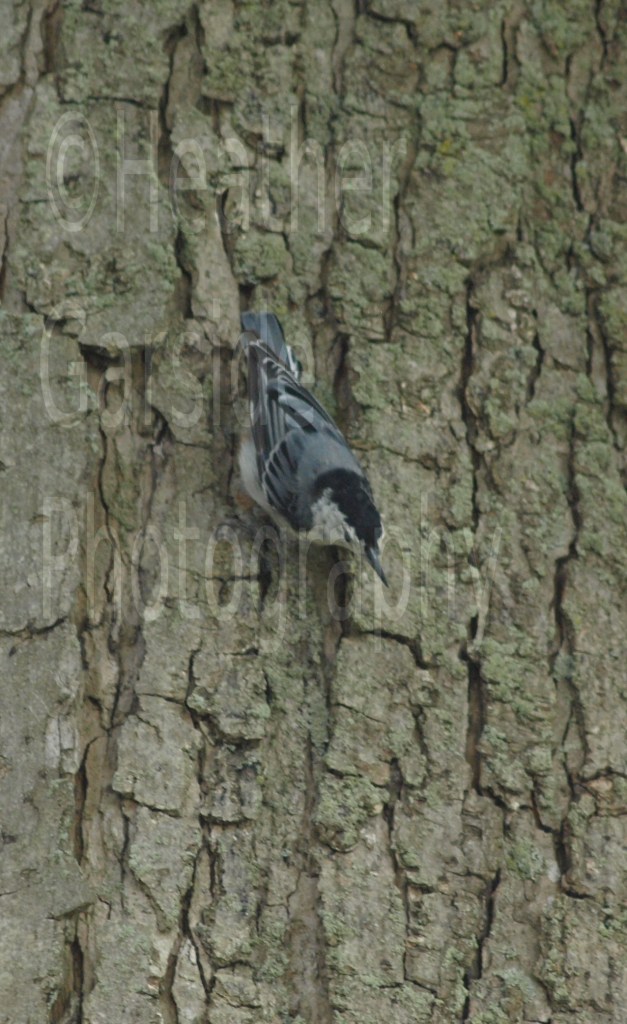
The Nuthatch resemble Woodpeckers in their eating habits. They like to hunt and eat insects directly from trees. Their long toes and toenails, along with their long, thin beaks, are great tools for the job. They scrabble along tree bark, hunting for their dinner. However, this is where the Nuthatch is different. While a Woodpecker will land on a tree and hunt its way up to the top, the Nuthatch starts at the top and works down. This strategy allows them to see insects and insect eggs that are not visible from the bottom to top approach.

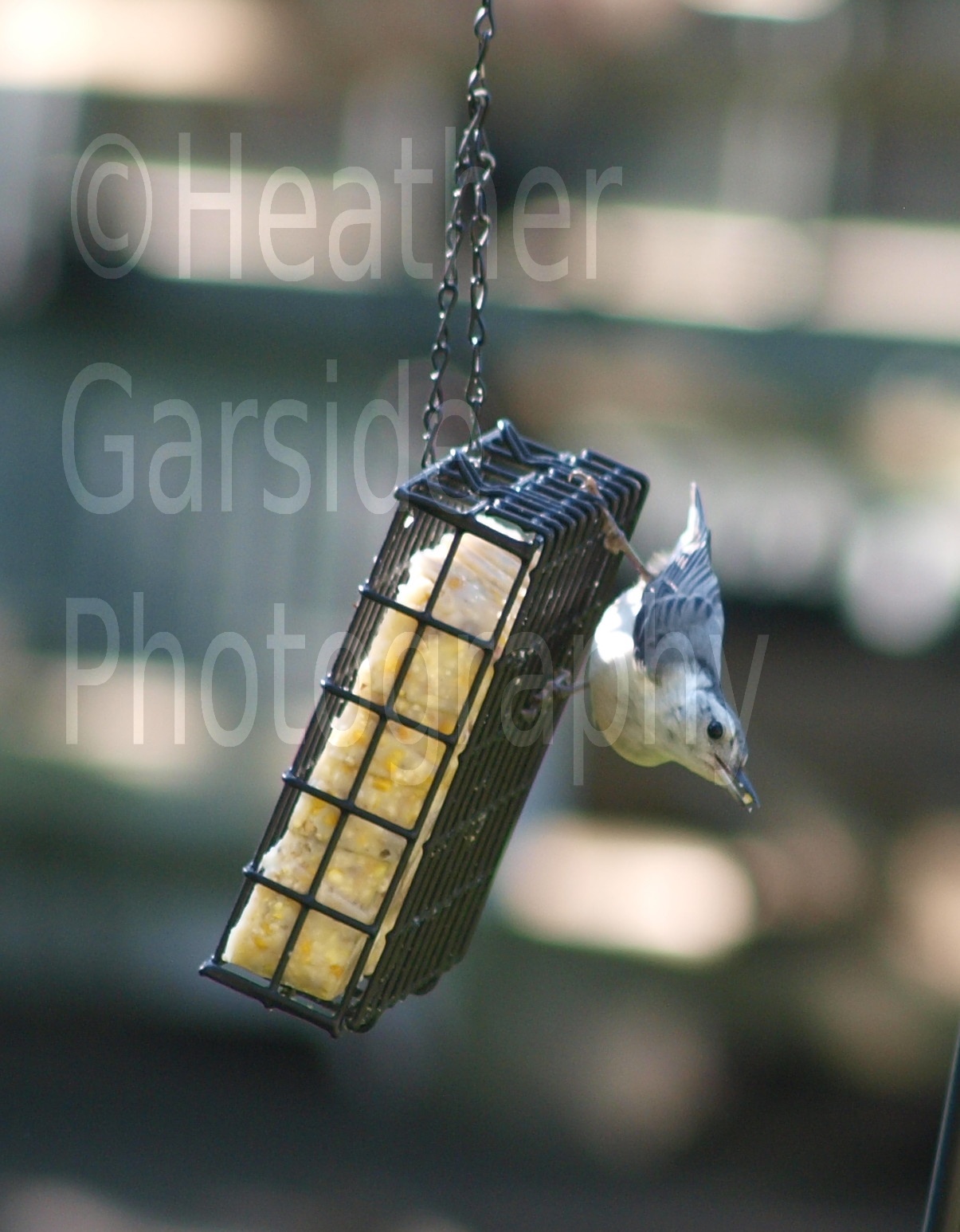
The Nuthatch will come to suet and seed feeders, but suet seems to be their preference. They also eat nuts and acorns, particularly in the autumn and winter, for they are non-migratory. Due to their Woodpecker-like behaviors, it won’t surprise you to learn that White-Breasted Nuthatches like to nest in cavities and often take over holes that have been deserted by woodpeckers. They have only one brood a year, and both parents concentrate their efforts on feeding the nestlings. Despite their smaller stature, the Nuthatch is generally not shy of other birds. They fly in mixed flocks outside of the breeding season and are not usually startled by companions at the feeder.

The White-Breasted Nuthatch has several relations that look similar to him. He resembles the Red-Breasted Nuthatch, which is also common to New Jersey, but is slightly smaller and has rusty red belly. The stripe over its eyes is the first noticeably difference for observers. The Brown-Headed Nuthatch, which only resembles the White-Breasted in shape and behavior, is more commonly found below the Mason-Dixon line, which includes the Southern tip of New Jersey.

Felt Birdhouses?

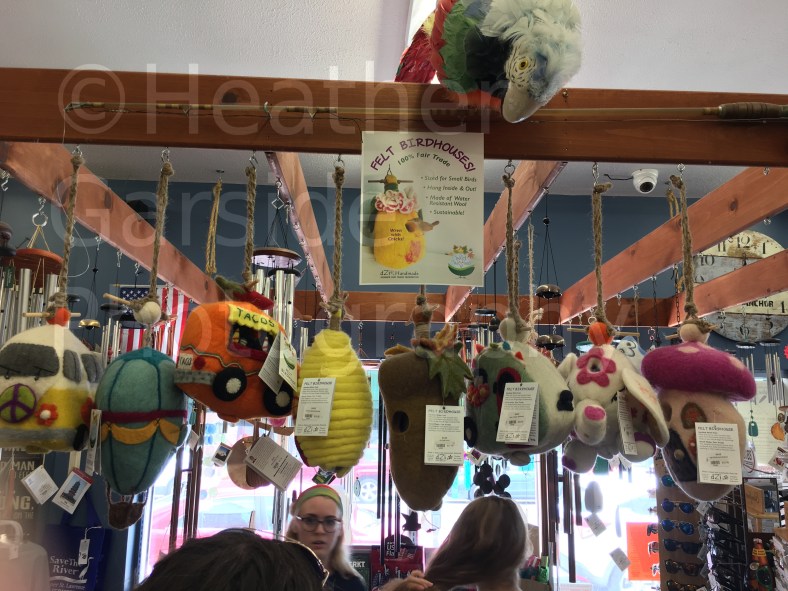
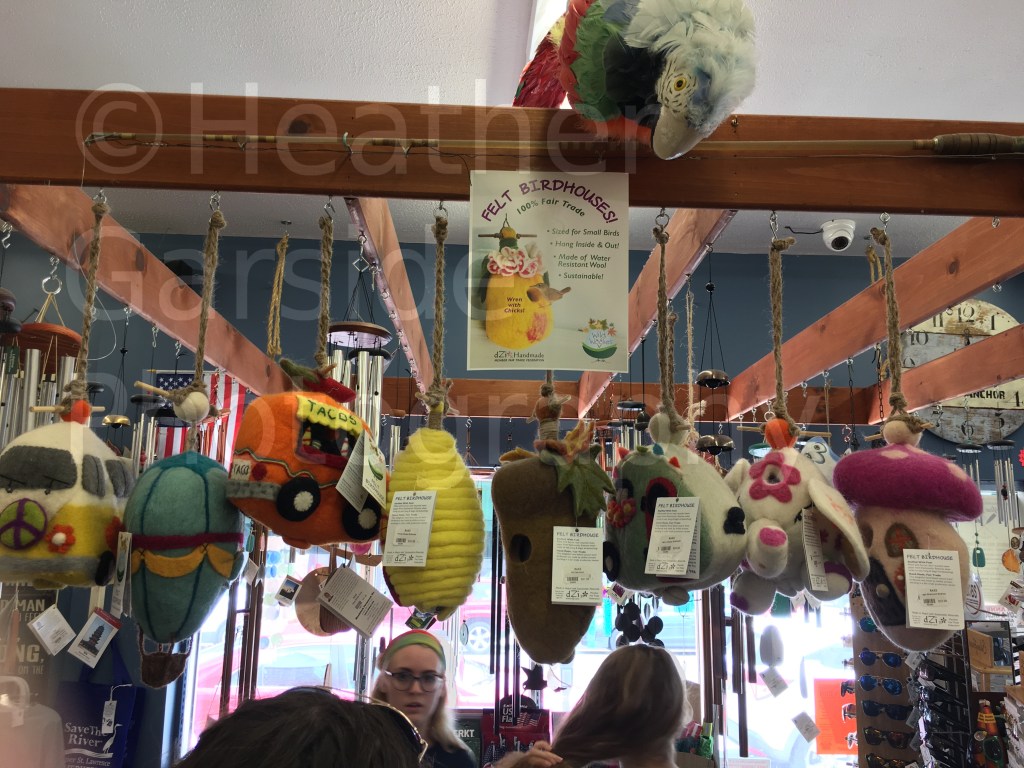
Over the summer, I found myself shopping in a touristy, vacation town. I had only just started working on this blog and was still trying to determine what directions I would like to go with it and all bird related products were of particular interest. I happened to look up over the registers and there, hanging among the wind chimes and windsocks were a series of felt birdhouses. The accompanying sign assured customers that not only were they a sustainable and fair trade product, but they were for inside or outside use. Taking one look at these cute things I felt great doubt that they could sustain a full season outside. But who knows? Lucky for me I had my phone handy and thought fast enough to snap a quick reference photo. I put this in my metaphorical bag of ideas, for a rainy day when I had time for more googling.

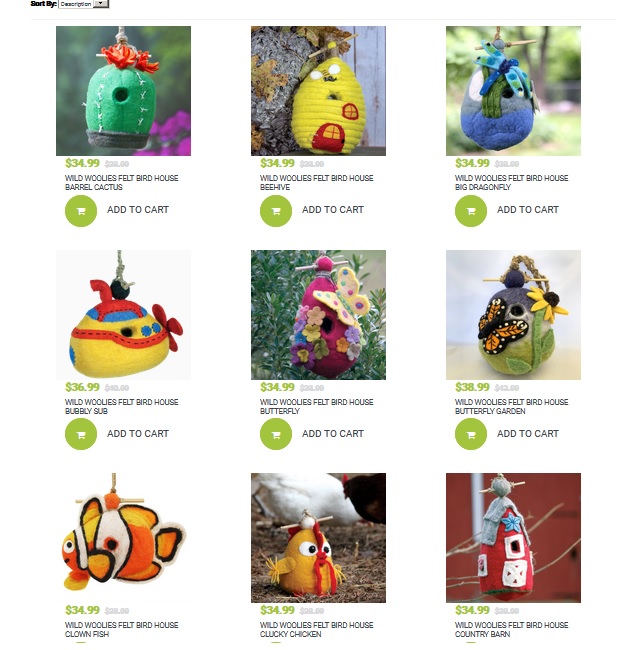
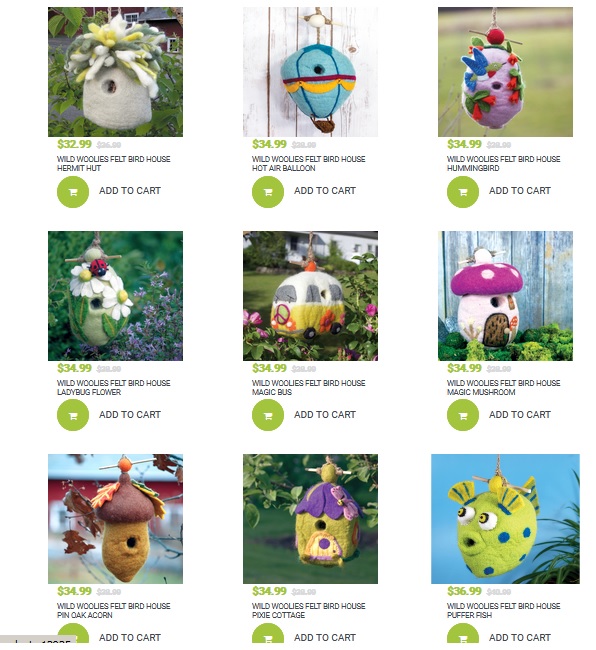
It didn’t actually take much research to find the source of these felt birdhouses. Wild Woolies Felt Homemade Designs. The retail website indicates that they are made of 100% wool, in Nepal. As I searched the site and took a look at the birdhouses, I was genuinely surprised by the variety of styles. According to my count, there are exactly thirty-nine different felt real estate options. Many are what you might expect, cute houses, themed and decorated in a way that you just know Tinkerbell and her fairy friends would feel right at home. These styles included the Pixie Cottage, Magic Mushroom and Fairy House, as well as the Chalet and Hermit Hut (for those birds seeking a life of solitude and quiet contemplation). There were others inspired by nature such as the Acorn, Cactus and Beehive and several decorated with flowers, humming birds and insects. But there were also some less traditional housing options, including a Taco Truck, Yellow Submarine, Hot Air Balloon and Yeti Hut (for which you could also purchase the accompanying yetis). For me the most bizarre were those designed to look like animals. The Owl, Chicken and Fox, which all have holes in their bellies, making me assume that the emergence of the resident bird probably looks like an adorable parody of a scene from Alien. For me the Puffer fish and flower power Elephant were just a bit too weird, though admittedly cute.

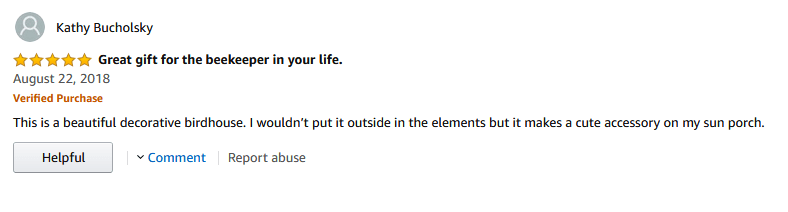
As I browsed the different houses I caught myself thinking of which friends would like which designs, as if I was doing my Christmas shopping instead of researching for my blog. But the questions still remained, can they really survive the elements and act as a functioning birdhouse? I snapped out of my shopaholic state, and started looking for reviews. I could only find one, which was a five star review from 2018. A positive sign. Unfortunately the review didn’t answer the question of outside use as the reviewer specifically said she wouldn’t put it outside. Five stars for cuteness, but does the product work outside as promised? I searched in vain for a while longer before coming to the conclusion that there were no more reviews. No one had put the wool birdhouses to the test AND written about the results.

And then I got an idea. An Awful Idea. I had a Wonderful Awful Idea. Just kidding! What are the holidays without a good Grinch reference?! But I did truly have an idea. If I wanted to know how the houses fared outside, I should buy one. I could hang it out this spring and document its progress. And then I could write the definitive review that either confirmed or denounced whether these cute little houses can weather the elements.

So I have put in my order, and am anxiously awaiting my package. Stay tuned to see which design I picked and learn how it does outside.

If you are interested in buying one of these lovely houses, since I think we can all agree that they are super cute, you can find them at a variety of retail outlets, including amazon. I referenced https://www.songbirdgarden.com/ when I did my research which seems to be the outlet that features all of the different style options. They also sell a variety of felt bird ornaments, perfect for any bird lover on your holiday shopping list.

Black-Capped Chickadees

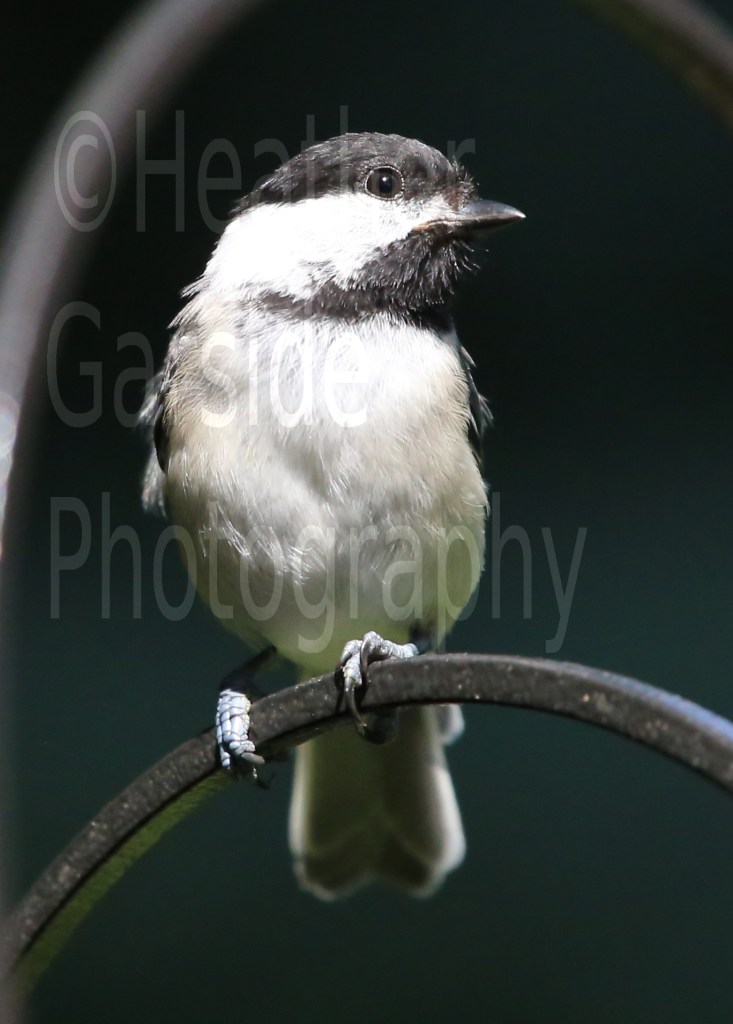
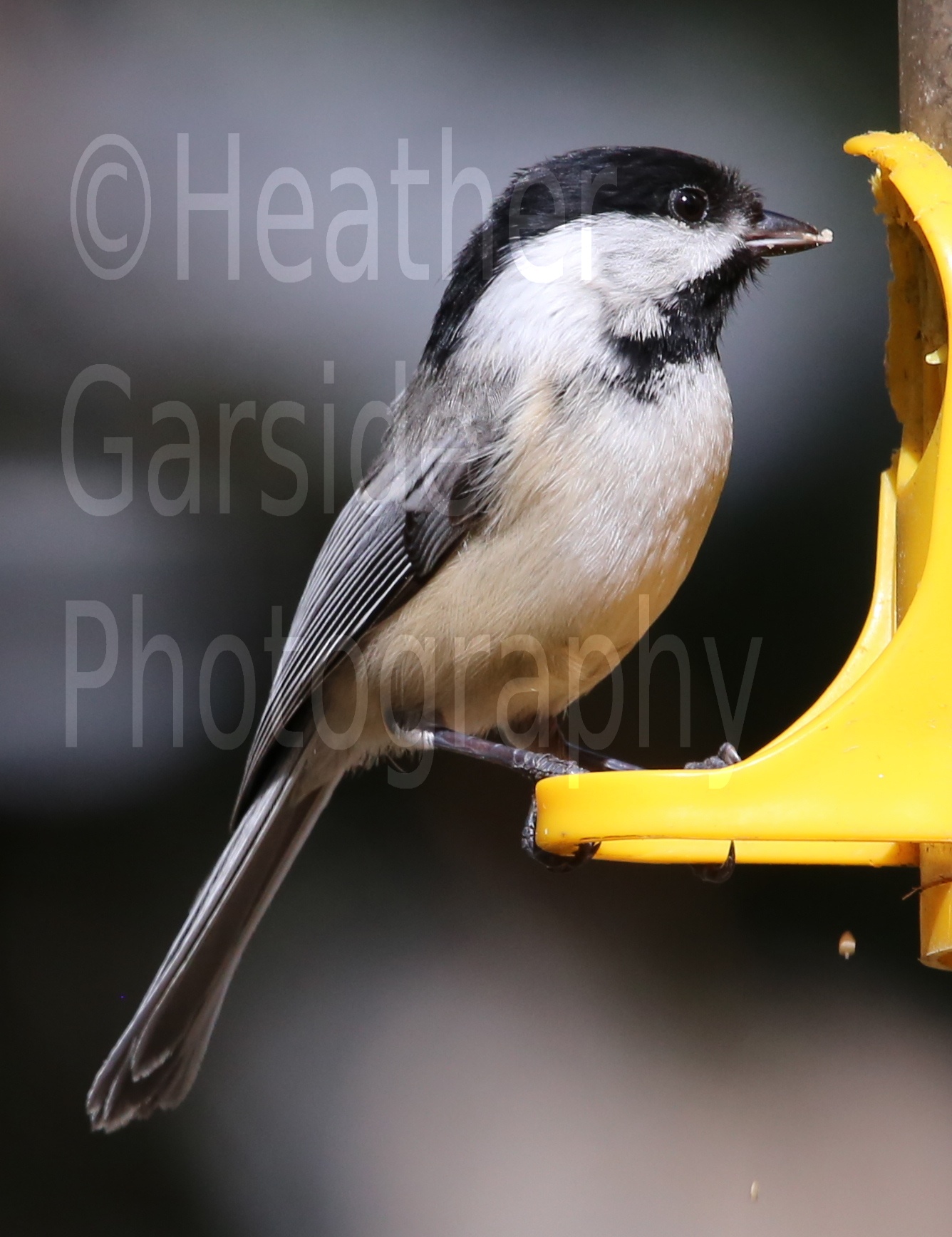
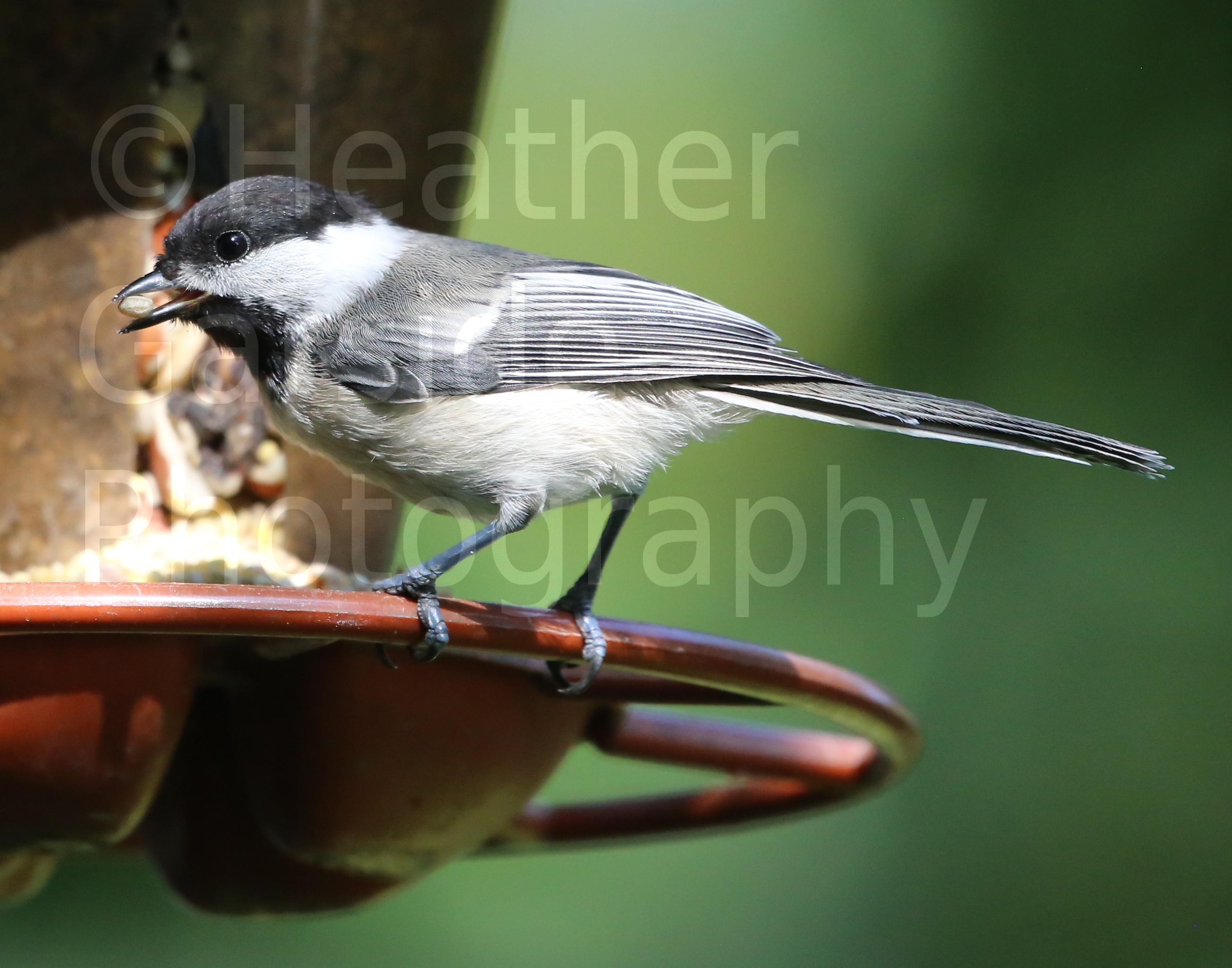
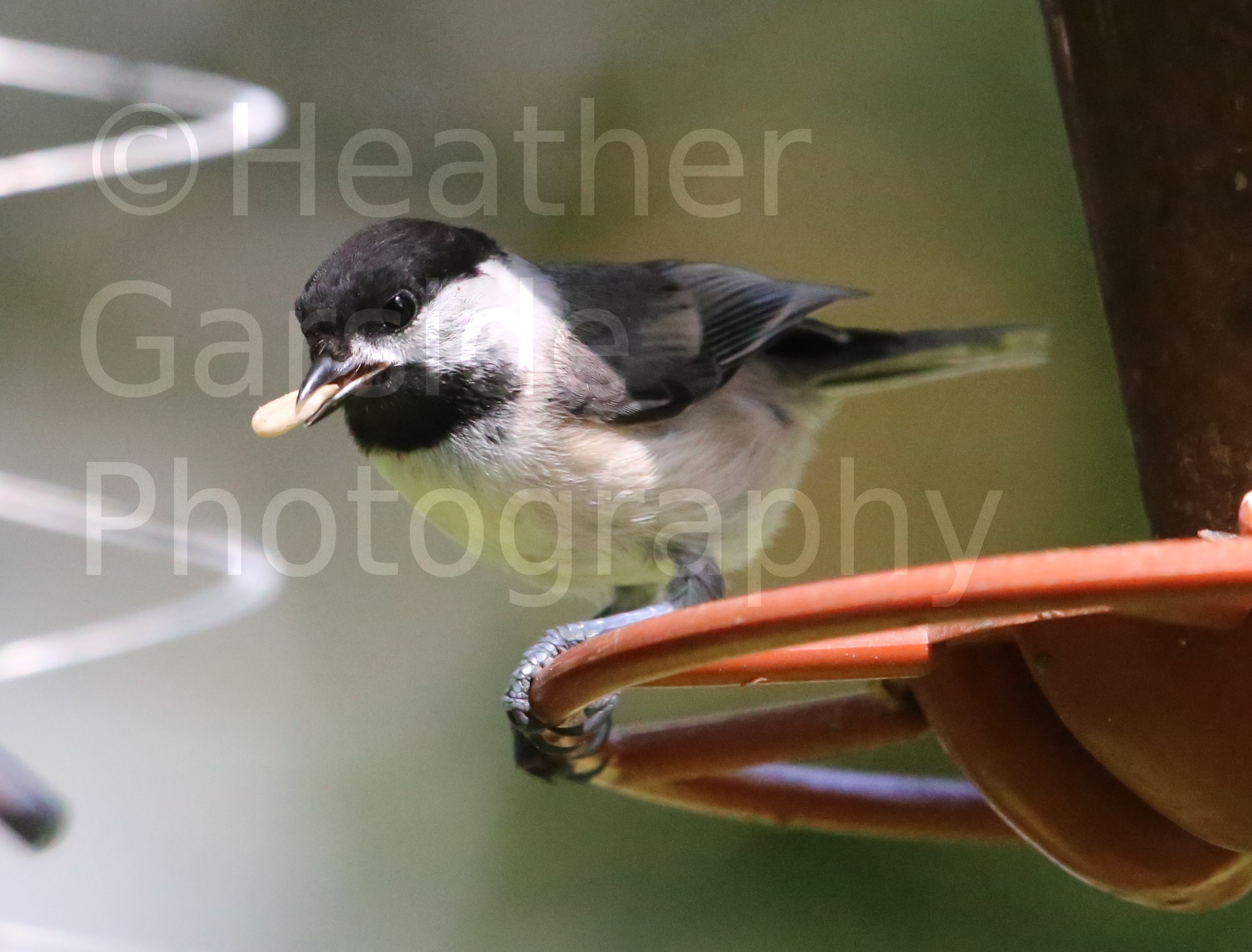
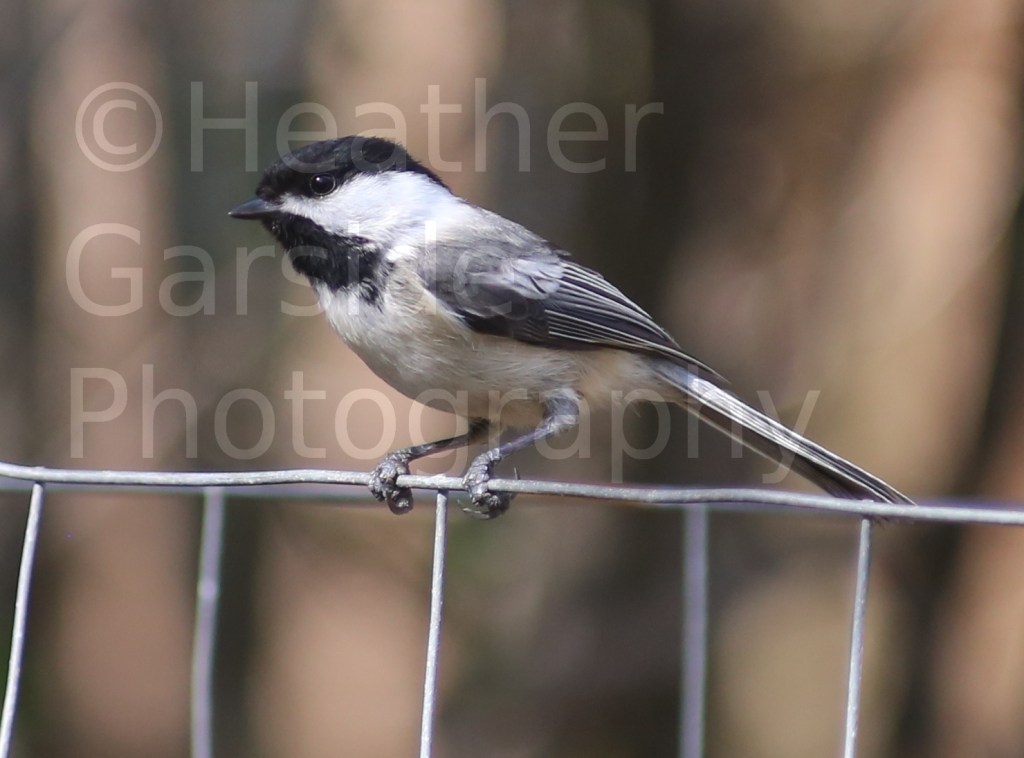
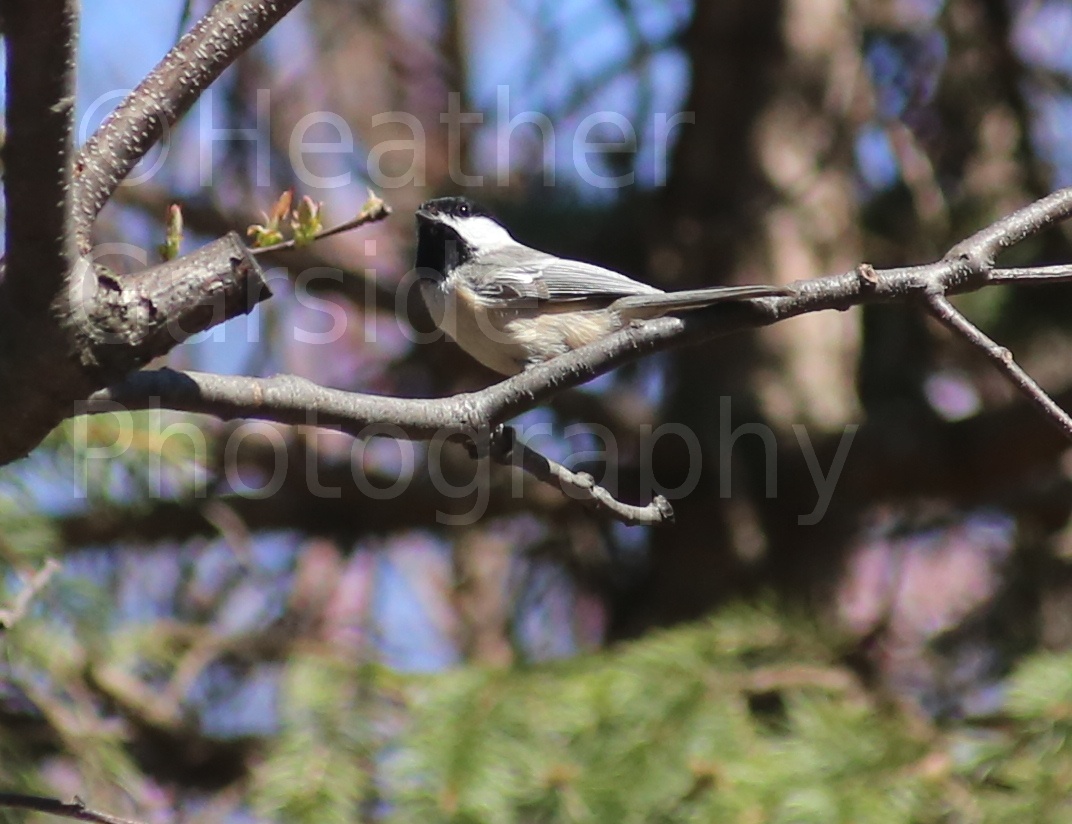
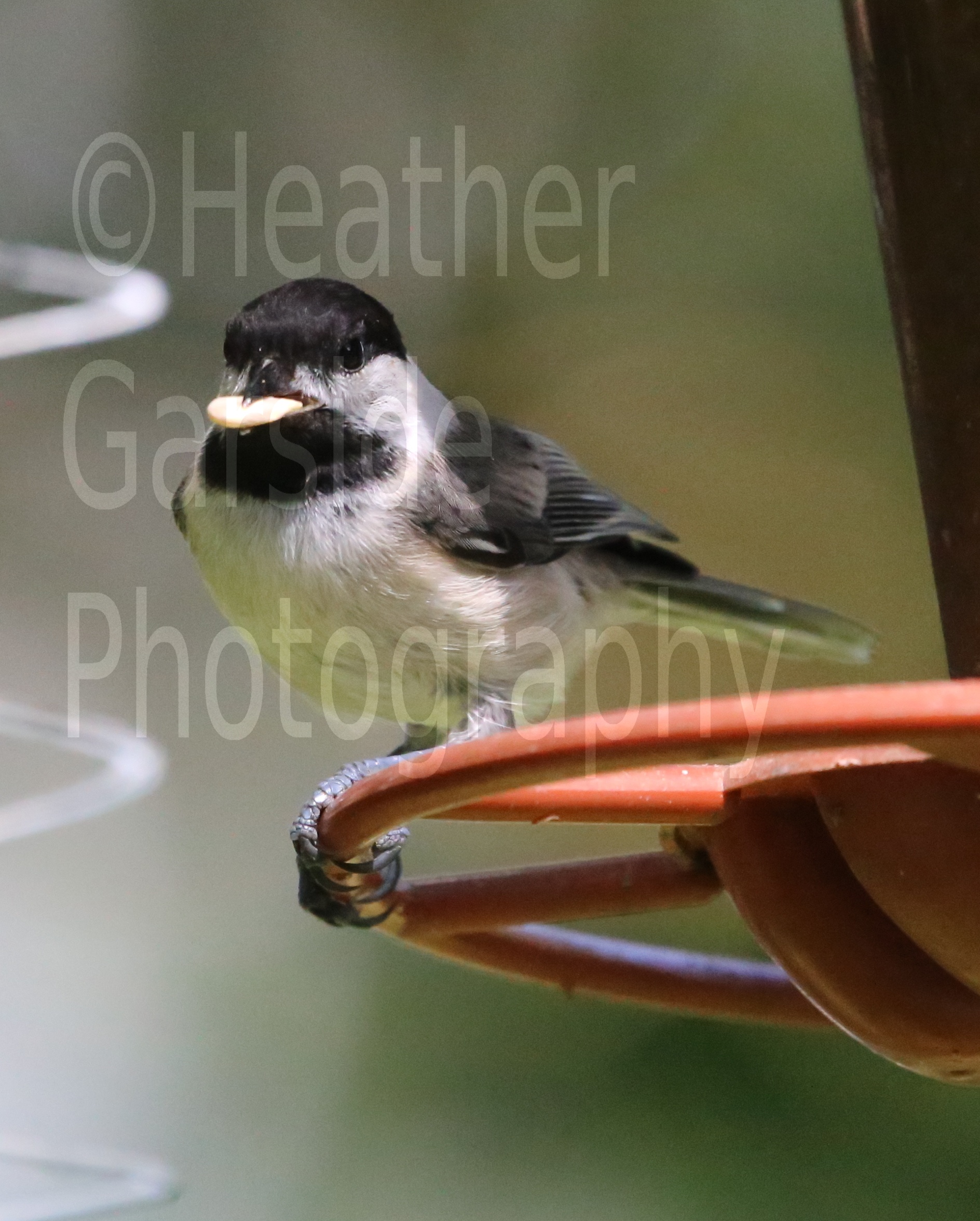
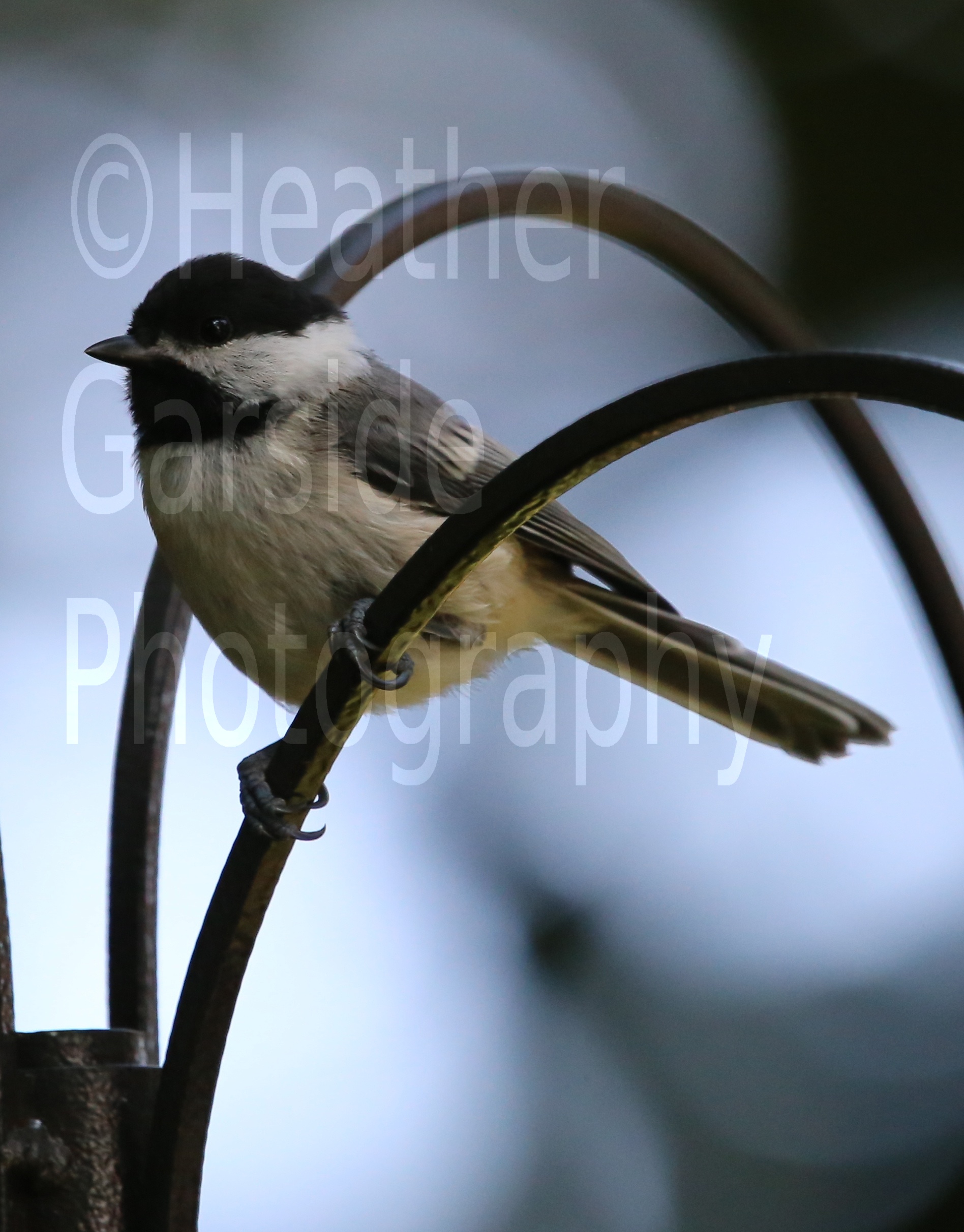
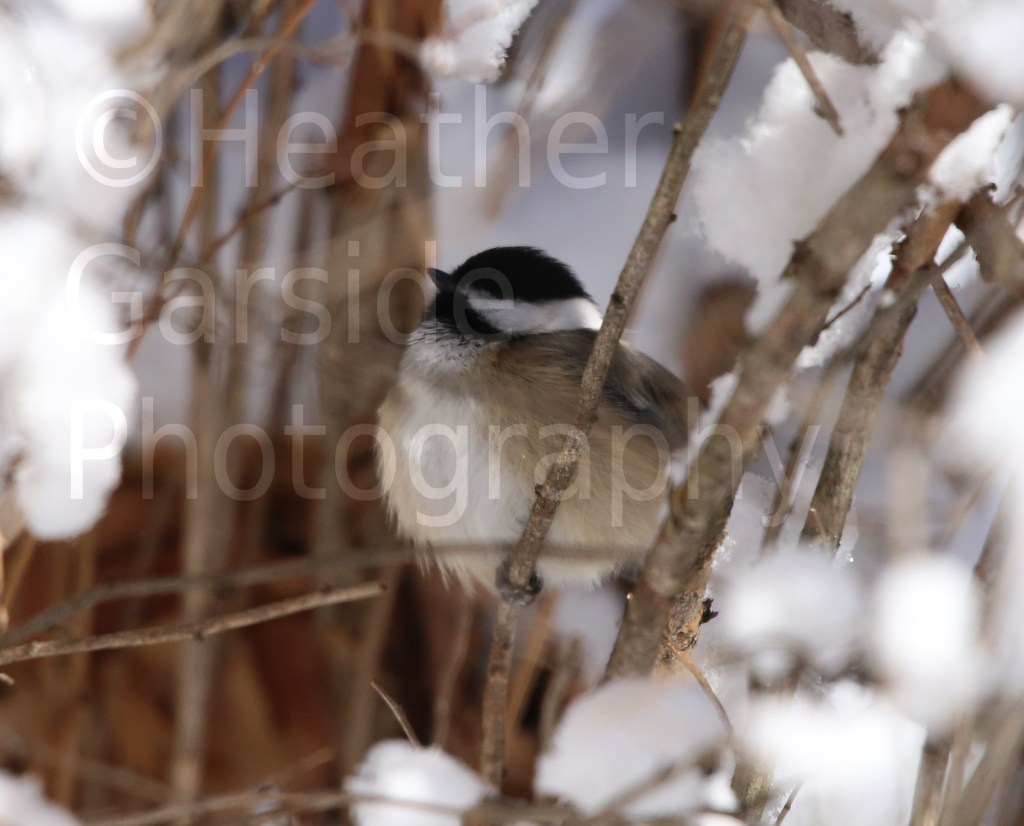
Black-Capped Chickadee’s are one of Northern New Jersey’s year-round residents. Small but spunky (they are only about 5 inches), the Chickadee tends to be a bit shy of other birds around the feeder and will often wait to have some alone time with the seeds. When they are feeding young, often the pair will visit the yard together, one keeping watch while the other gets seeds. Then they swap places before flying off to fill the empty bellies and gaping mouths of their little ones. But don’t let this behavior make you think of them as cowards. The are cautious adventurers. If you are just starting to feed birds or you put out a new feeder, it is very likely that the Chickadees will be the first to find it.

Besides their small stature, you will know the Chickadee easily. He has a black cap and neck, with a tan belly and gray wings. There is some white in his wings and a white section at the back of his neck. I say he, but in fact the male, female and juvenile Black-Capped Chickadees are all identical. Even if you can’t see a Chickadee, they tend to be very polite, and introduce themselves with their typical “Chick-a-dee-dee-dee” call that gives them their name (https://www.allaboutbirds.org/guide/Black-capped_Chickadee/sounds)

Attracting a Black-Capped Chickadee to your yard with a feeder is pretty easy. Their diet is varied enough with a mix of insects, seeds and fruit that they will come to seed or suet feeders. It is also pretty easy to convince them to become tenants. In nature the Black-Capped Chickadees like nesting in cavities, but they think the basic nest box is very homey. In my garden they have tried to move in for a few years now, however the Sparrows seem to intimidate them until they abandon their nesting activities. It takes them about 10-14 days to make their cavity homey, lining it with moss, feathers, hair and cocoons. They typically have one brood of 6-8 white eggs with red-brown markings. After three weeks the babies fly off make their own way in the world.

In the winter Chickadees have been known to flock in groups up to twelve. They like to roost in dense conifers for protection from the weather. They are easily spotted in the snow, foraging for food as they need to eat on a daily basis to survive. They must even brave the worst winter storms to search for food. So next time you look out your window into a snowstorm, spare a moment of thought for the brave little Chickadees.

A Wintry Walk in the Celery Farms

One of the things I like most about the Celery Farms in Allendale, NJ is that it provides an interesting walk, regardless of the season. I know I have said Autumn is my favorite season to visit, and it is, but winter is definitely nice as well. Especially if the weather is snowy and the lake has frozen. In fact many of the locals play hockey on the ice, so on an early morning winter walk (especially during the school break) one often finds the parking lot full.

Winter at the Celery Farms is not really for the unadventurous. If you think the path is muddy in other seasons, wait until you experience it in the winter. What makes it more interesting is that the mud sometimes freezes awkwardly making footing complicated. Definitely don’t forget your boots. Besides slip-sliding on the paths, the platform stairs can also be a bit slippery, so take extra care.

But this extra effort to walk safely around the trail only makes the few sightings you have all the more rewarding. Usually winter at the Celery Farms yields the sightings you would expect. All our year round residents are there including Sparrows, Mallards, Canada Geese, Northern Cardinals, Dark-Eyed Juncos and Woodpeckers.

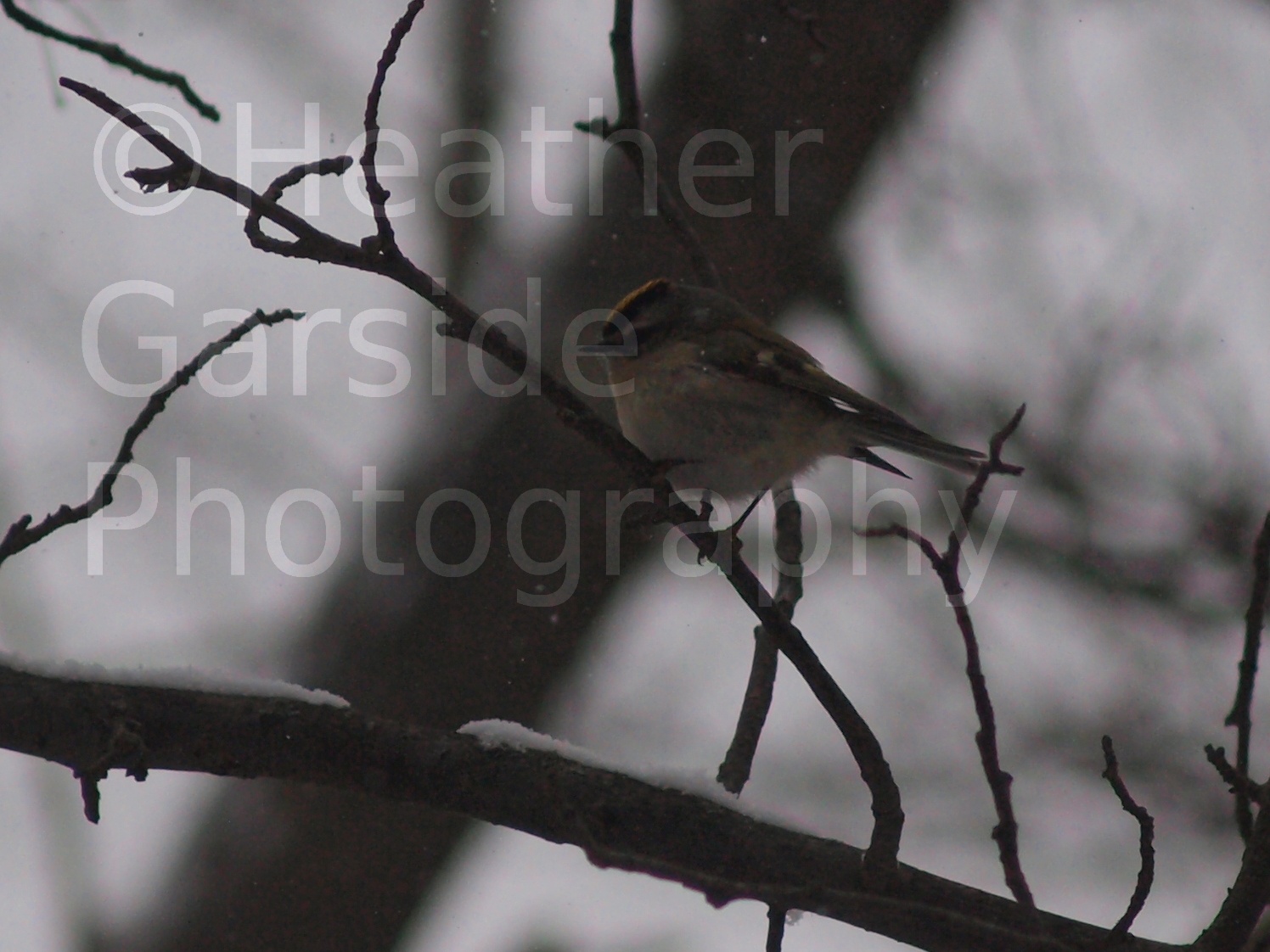
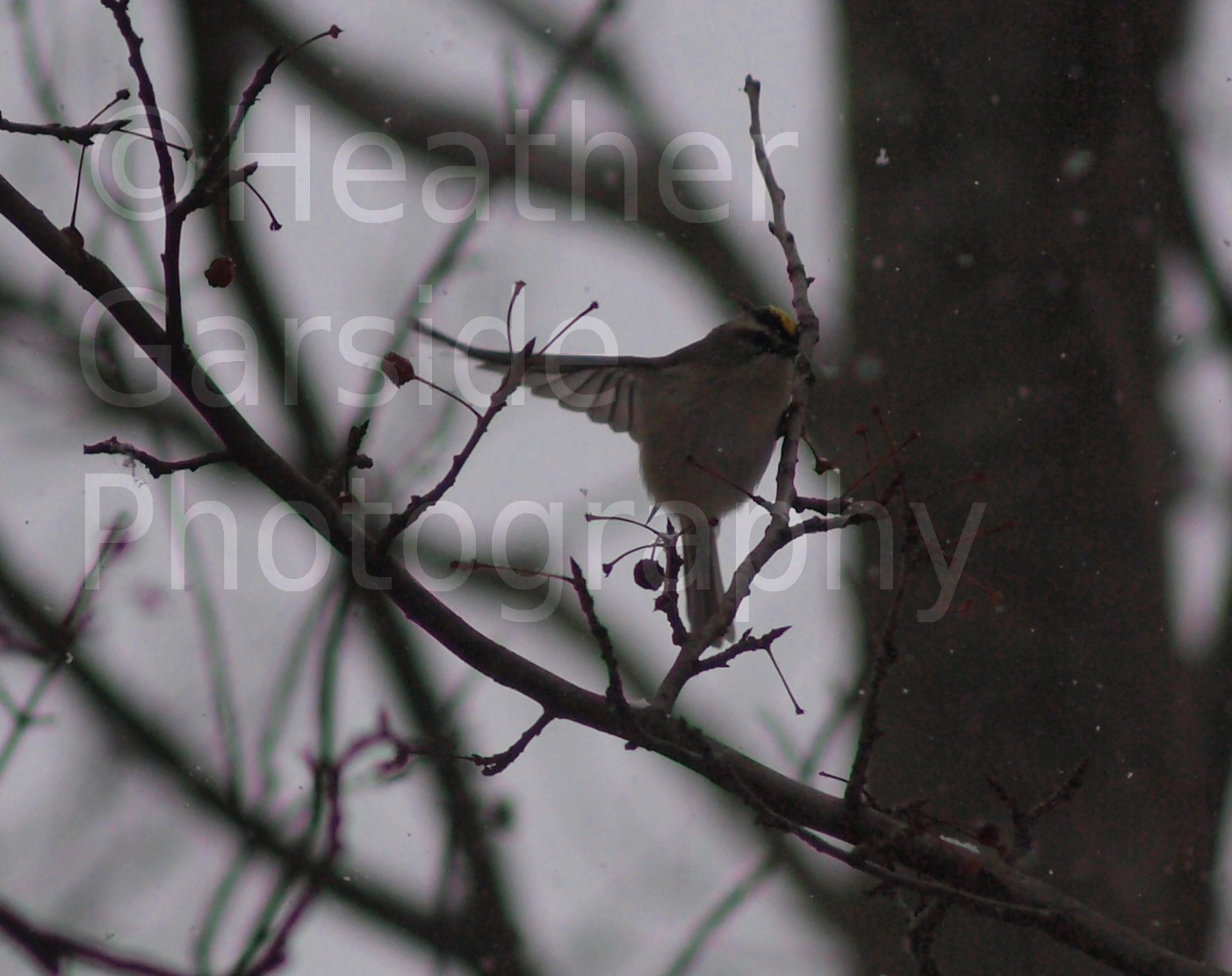
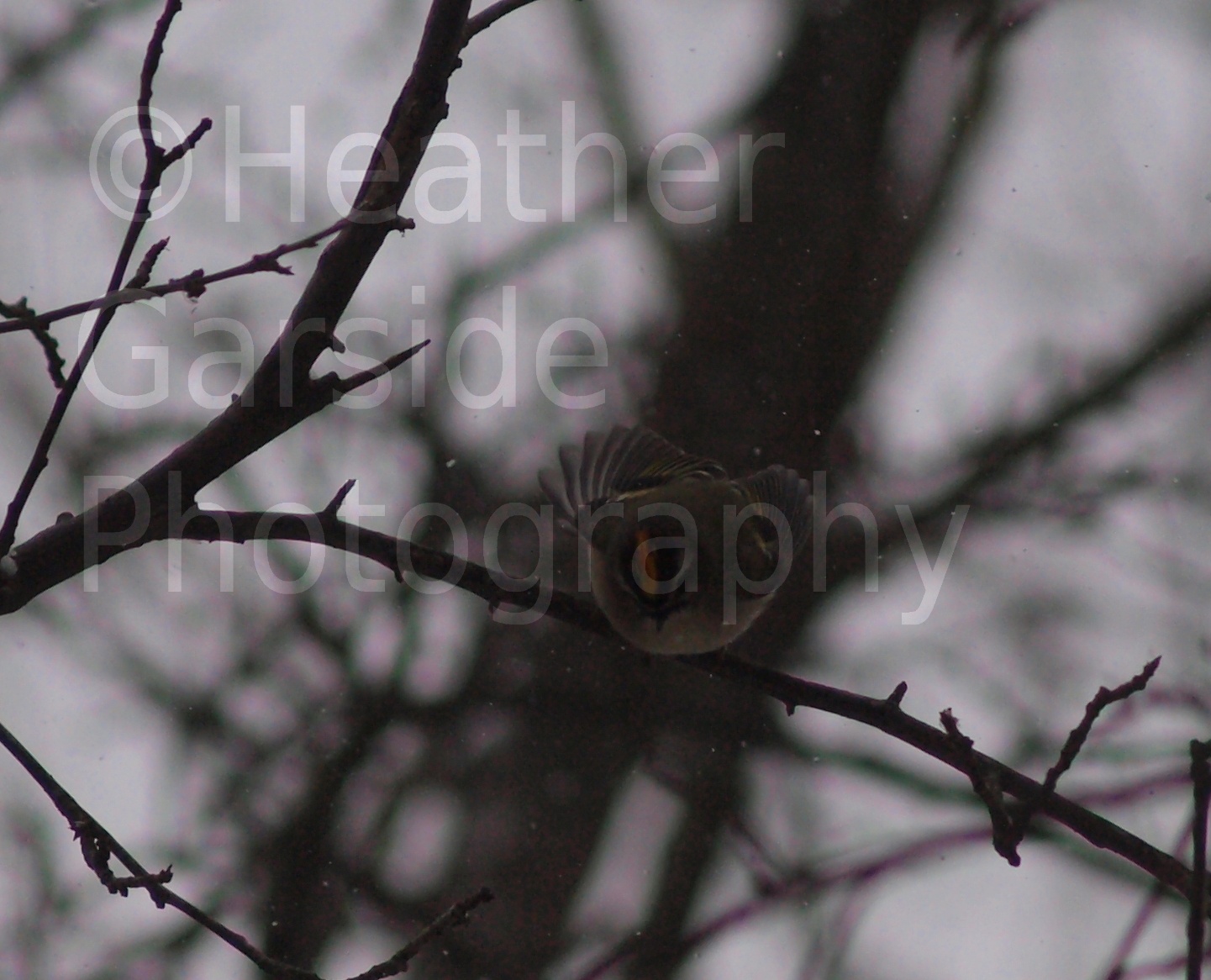
However, the lack of vegetation makes it possible to see some of the smaller birds that winter here, such as the Golden-Crowned Kinglet. The Golden-Crowned Kinglet is actually smaller than a Chickadee, making it really difficult to spot. But they have a tendency to flick their wings around as they hop from branch to branch, so the extra movement helps to attract one’s attention. They eat insects, fruit and drink tree sap (sans pancakes) as a part of a healthy balanced diet.

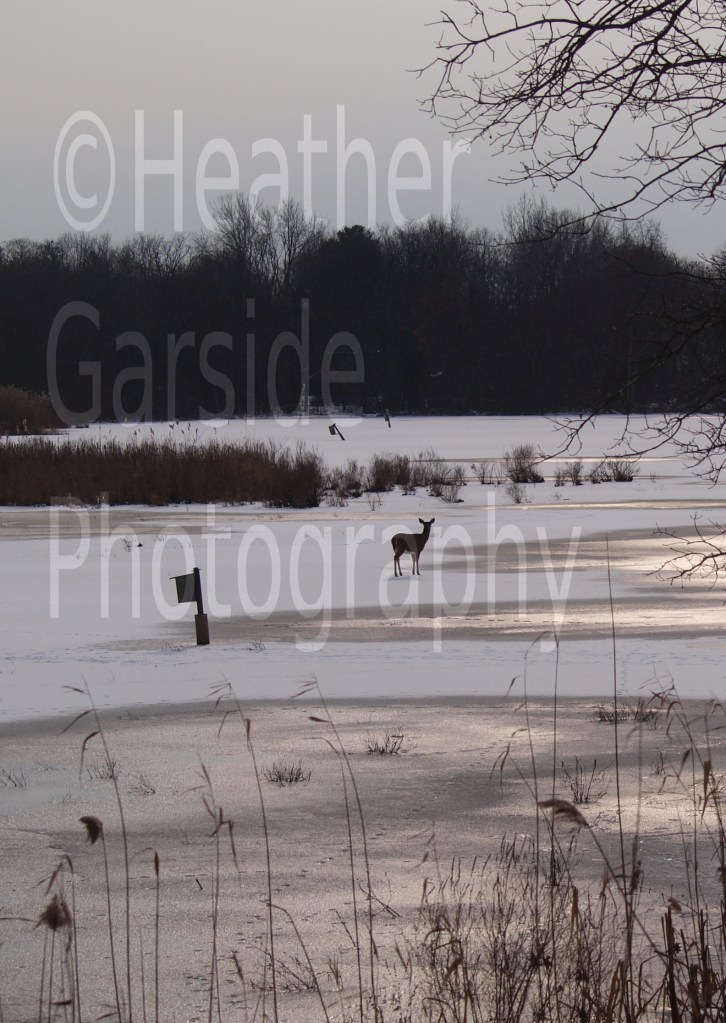
If you are having a particularly cold spell, you might see other birds and animals, flushed from discrete roosts to hunt for food. The deer are always foraging about and you never know if you will see other mammals wandering about.