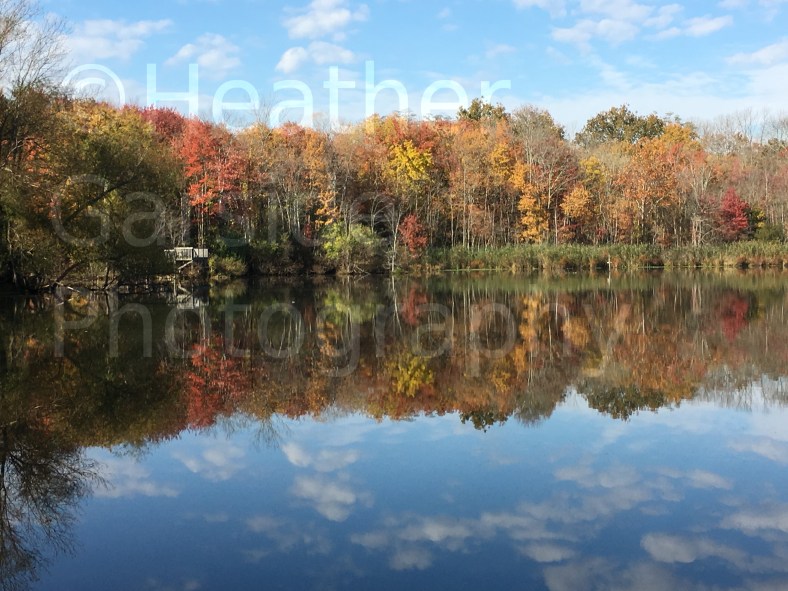
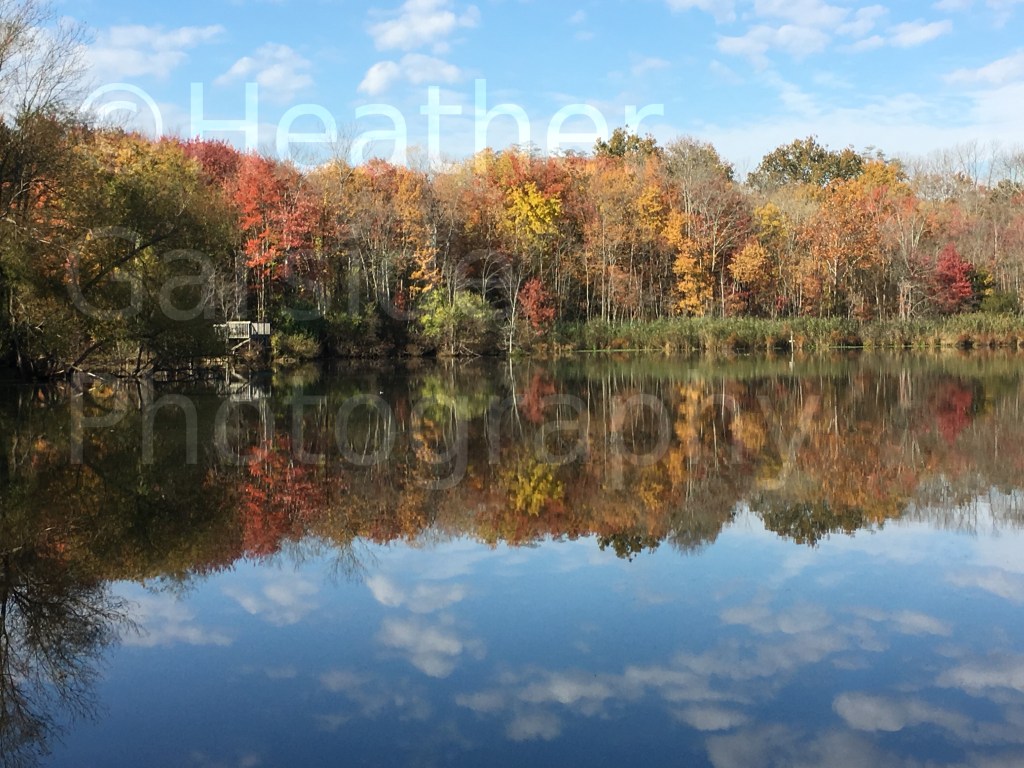
The Autumn is one of my favorite times to visit the Celery Farms. The
air is usually crisp, the temperate is usually perfect for a
leisurely stroll, and if you hit it just right, the trees around the
lake just explode with color.
Taking
advantage of a rare weekday off, I headed to the Celery Farms
mid-morning and had it more to myself than I usually do. The weather
and light couldn’t have been more perfect. I had all the time in
the world, so I sat on benches, went up every platform and even made
a second loop on the trail.
Waterfowl
was the main attraction. There were all kinds of birds taking
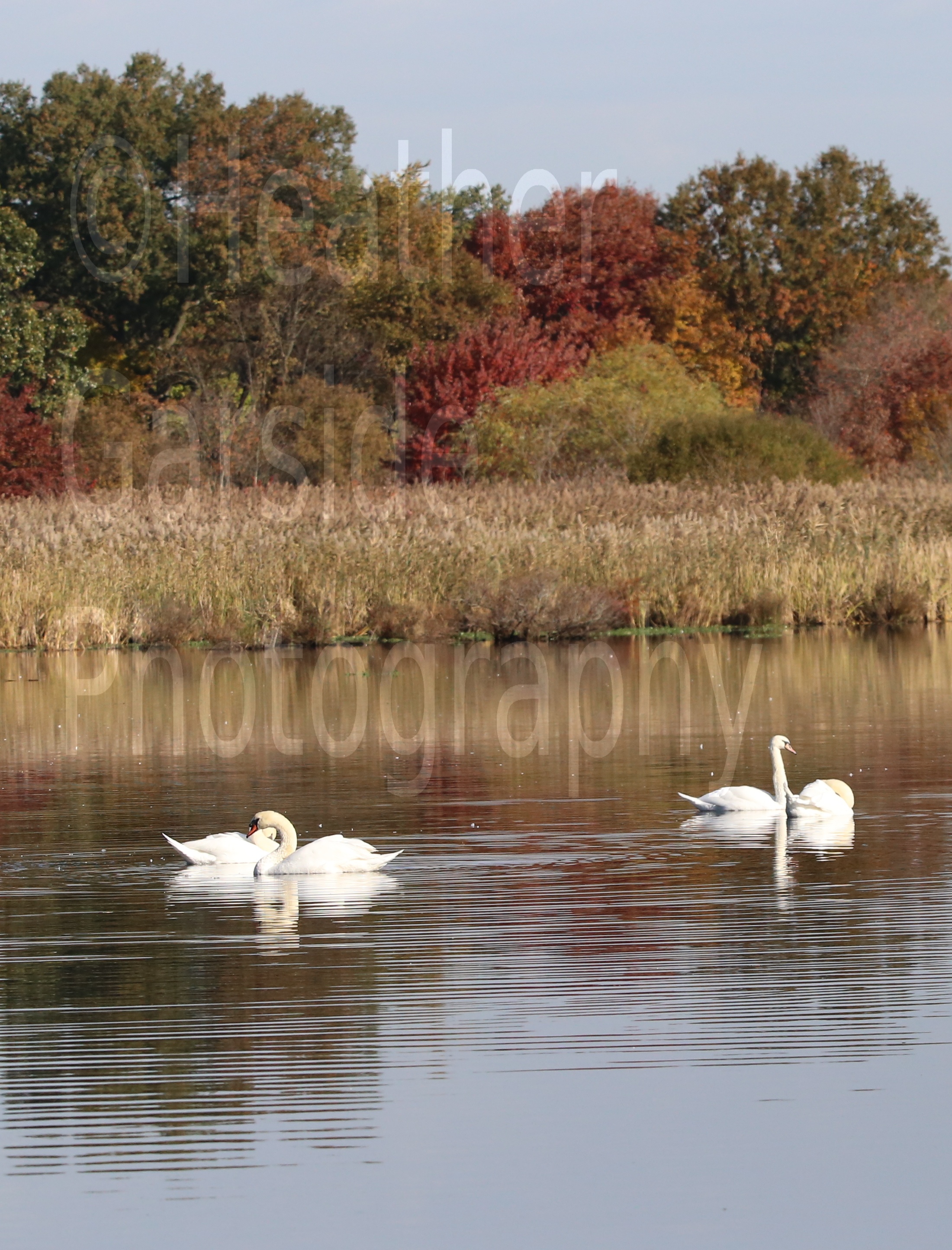
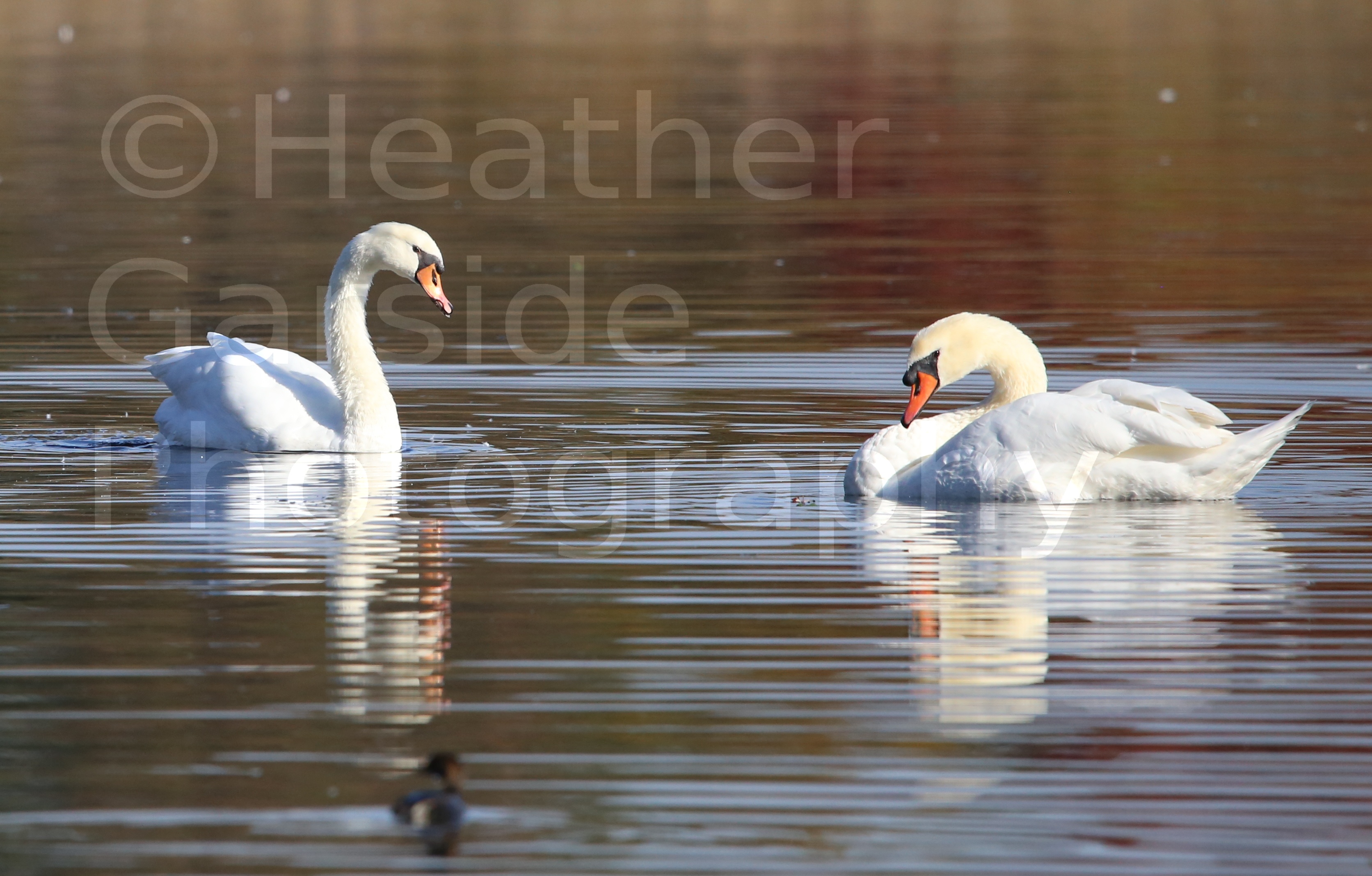
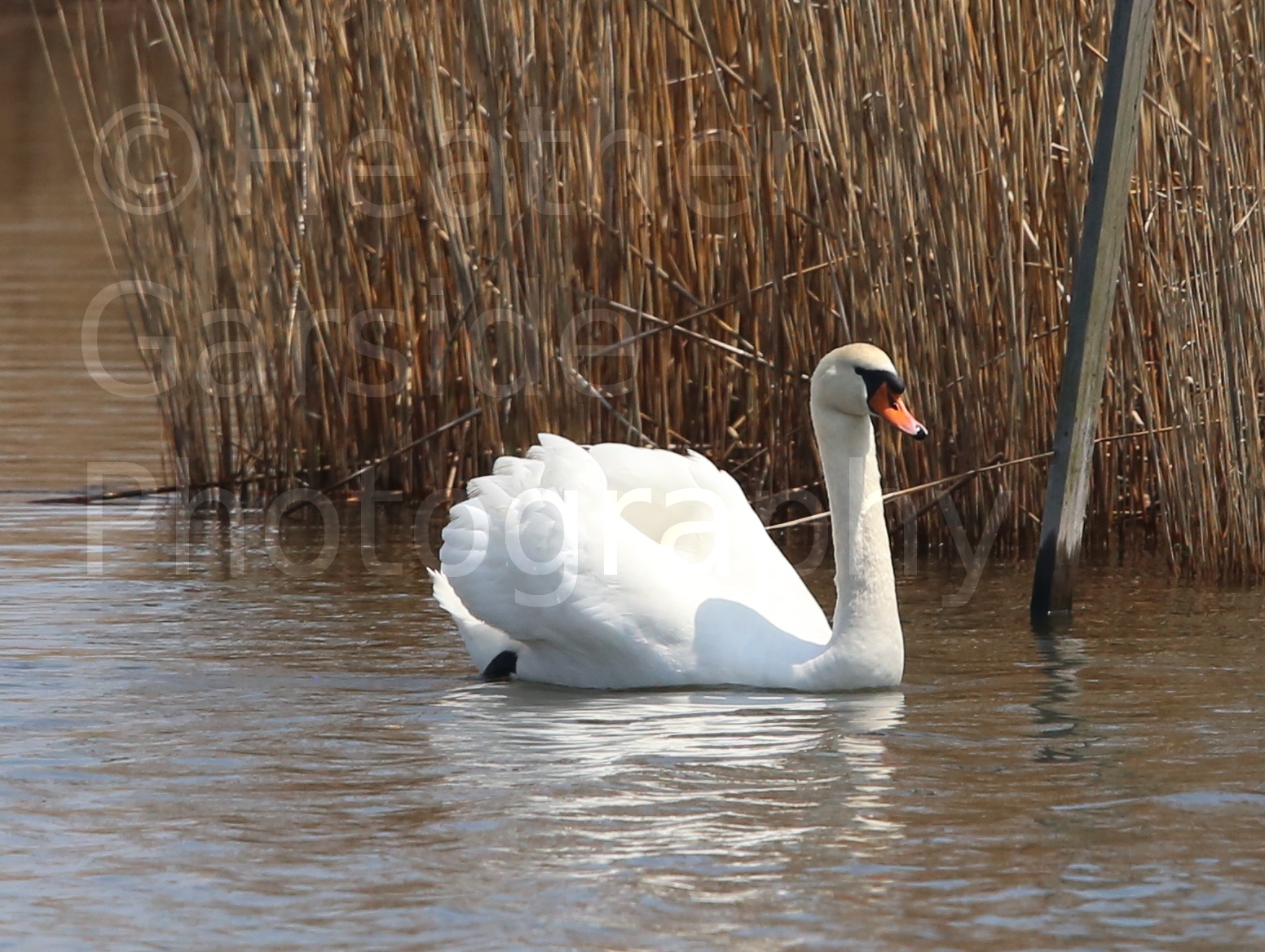
advantage of the water. Most prominent due to their size, were four
Muted Swans, whose pure white was such a stunning contrast to the
palette of colors behind them.
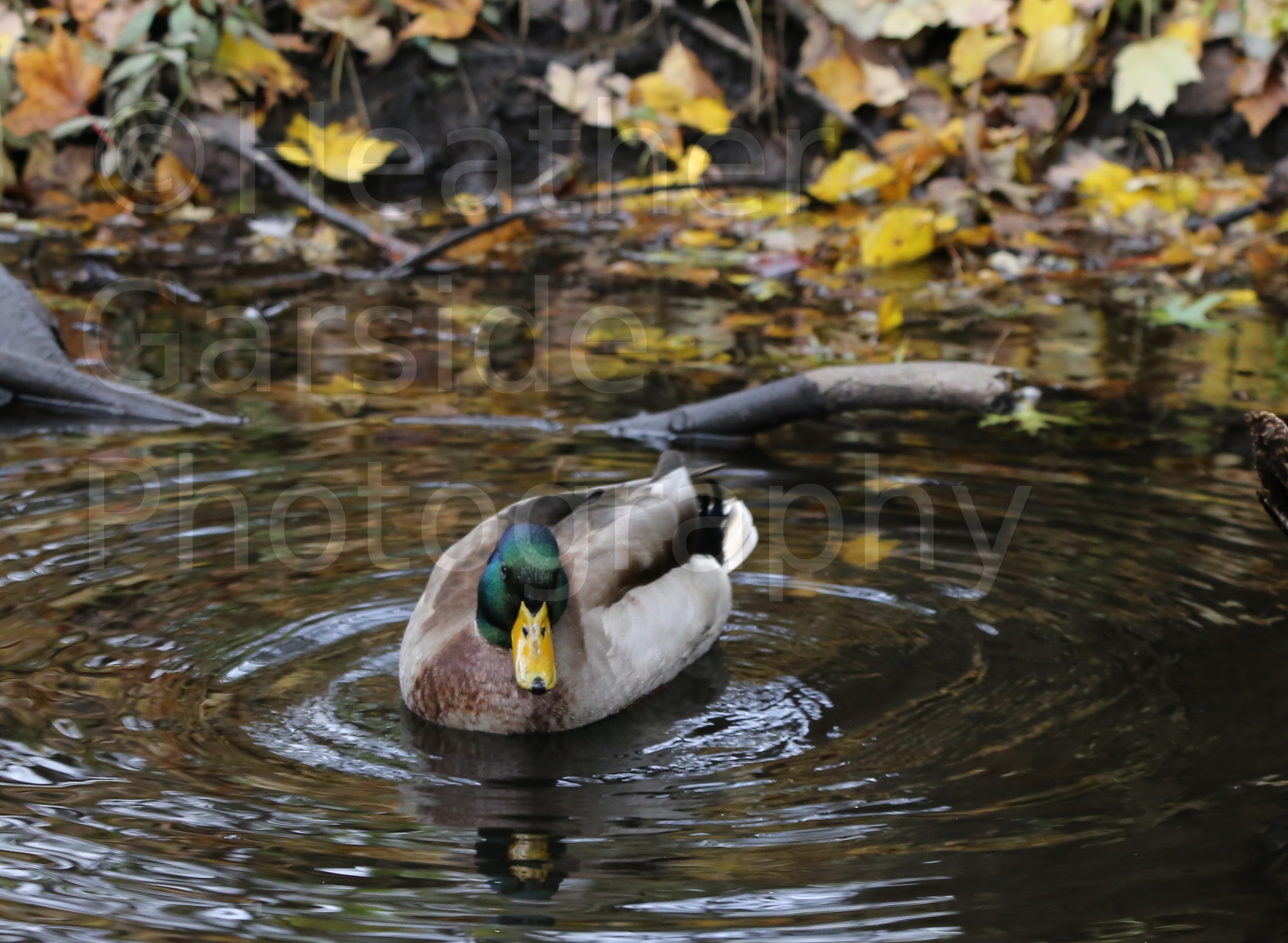
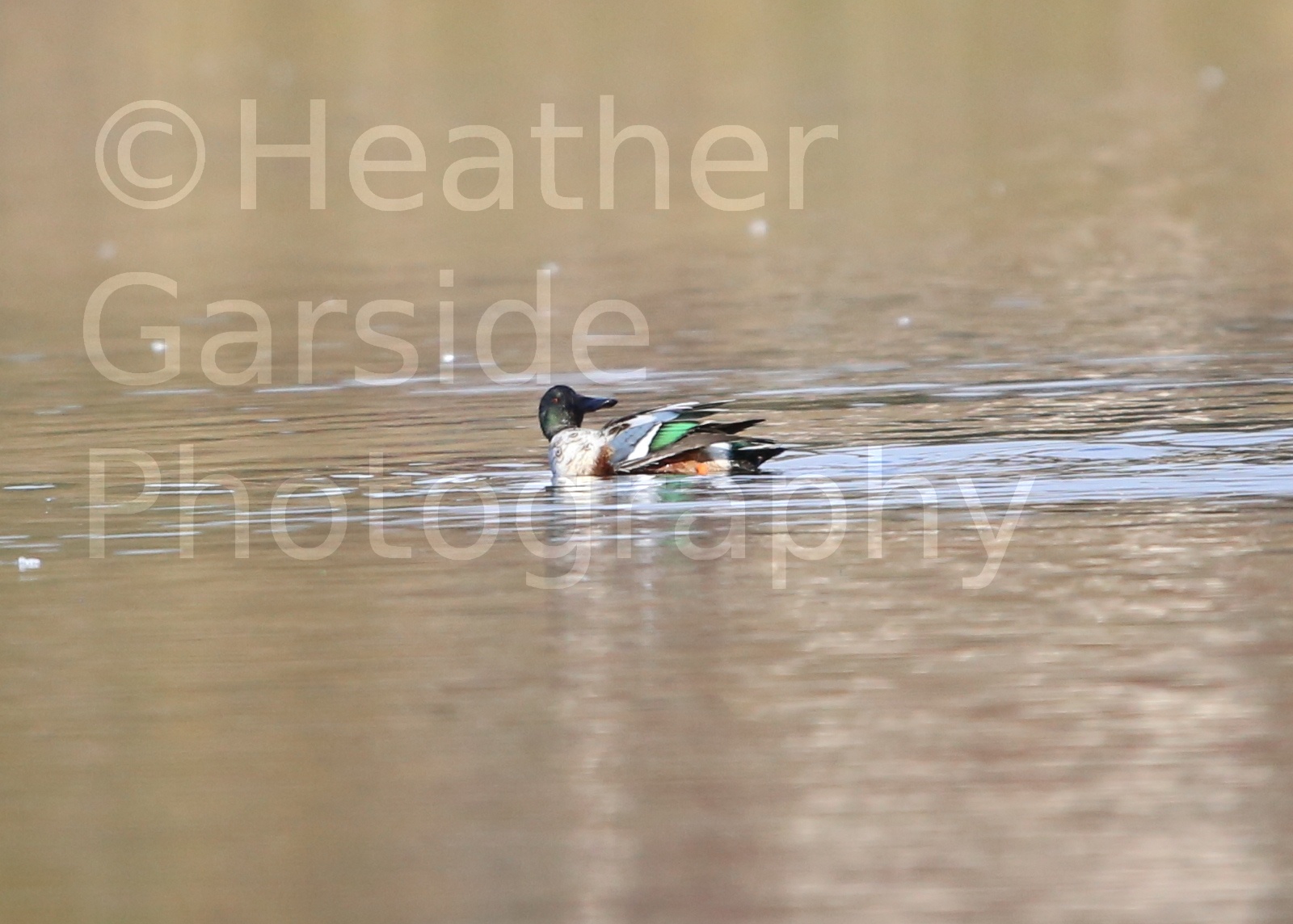
Canada Geese and Mallards were present, as they usually are, but with the aid of my telephoto lens I noticed that some of the ducks looked different, and their bills seemed longer. Once I got a good look at the male, I confirmed it, Northern Shovellers. It was really amazing I was able to see them at all, or their fronts at any rate. As soon as they got a breath of air, they were right back in the water, butts in the air. I can tell you, one duck butt looks much like the next.
Another smaller bird was also in the water. Swimming solo, it was so small my camera had trouble focusing on it. The largest challenge to photographing it was that it kept submerging and would pop up somewhere just beyond where I expected it to be. Quite the little swimmer. My photos didn’t come out as clear as I would have liked, but I am fairly certain it was a Pied-Billed Grebe.
Besides the water birds, I was able to spot several others as I made
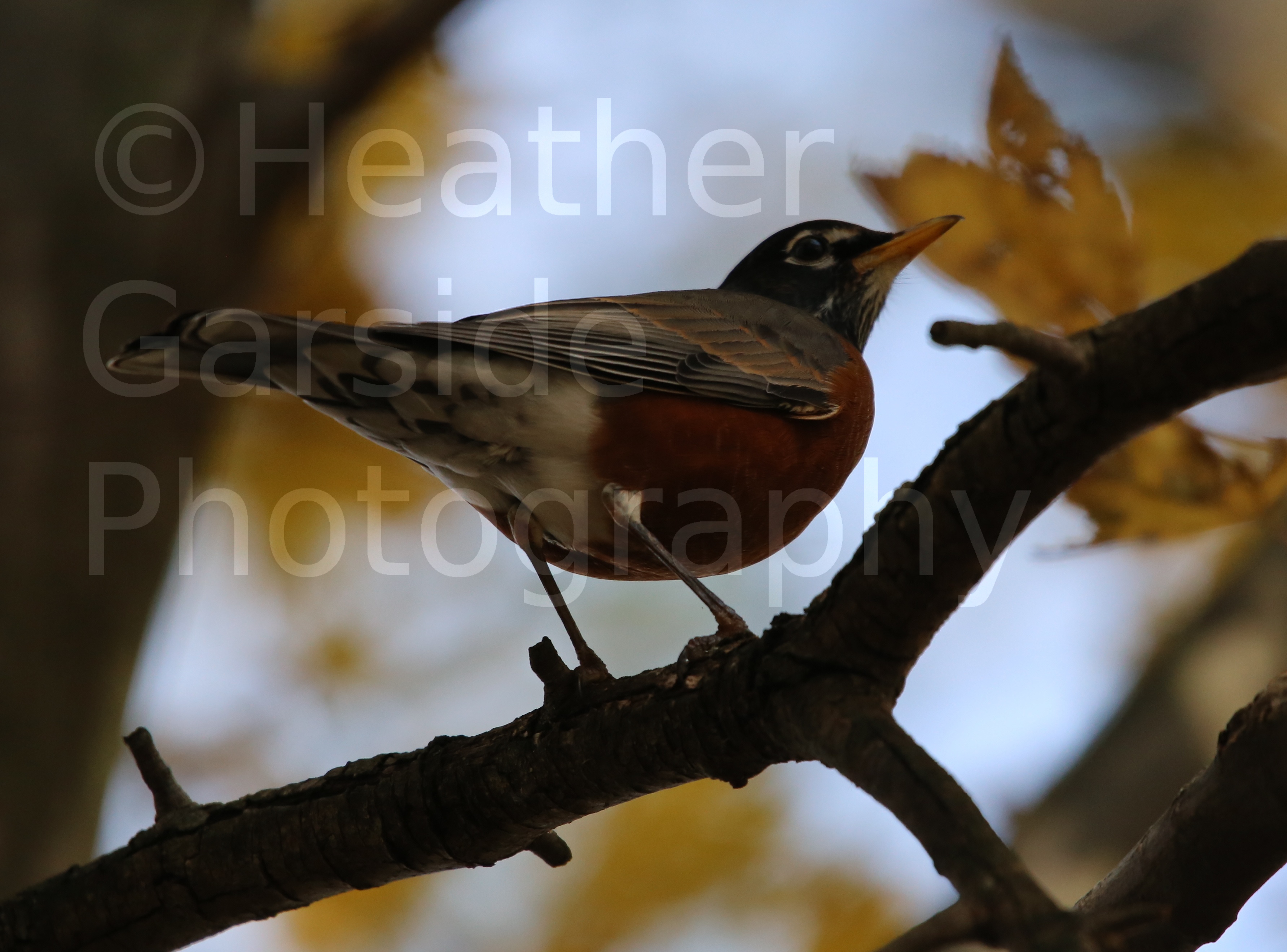
my way around the trail. One Robin even decided to pose for me,
changing the position of his head back and forth like a supermodel in
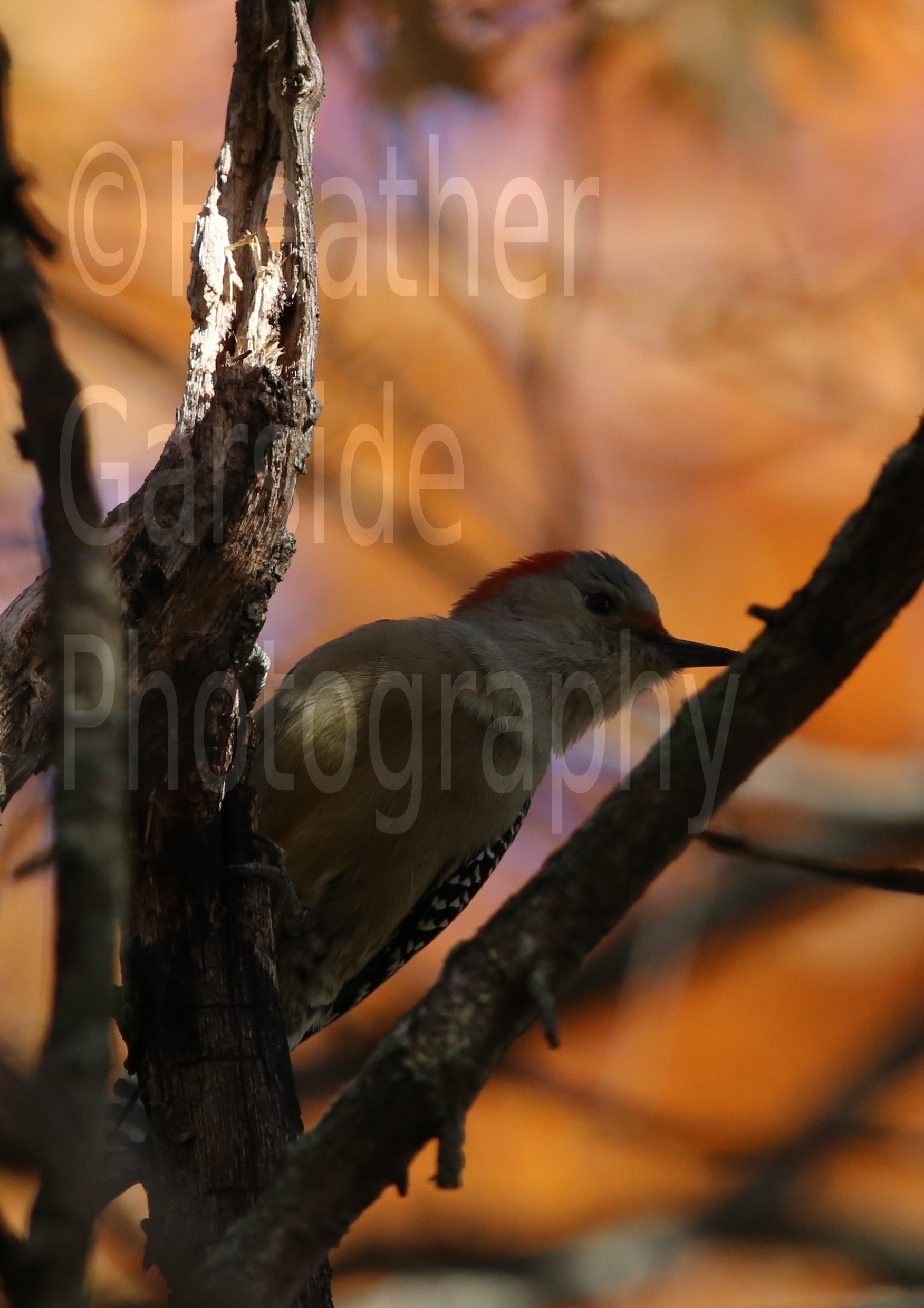
front of a lovely Autumn leaf backdrop. A Red-Bellied Woodpecker was
likewise inclined.
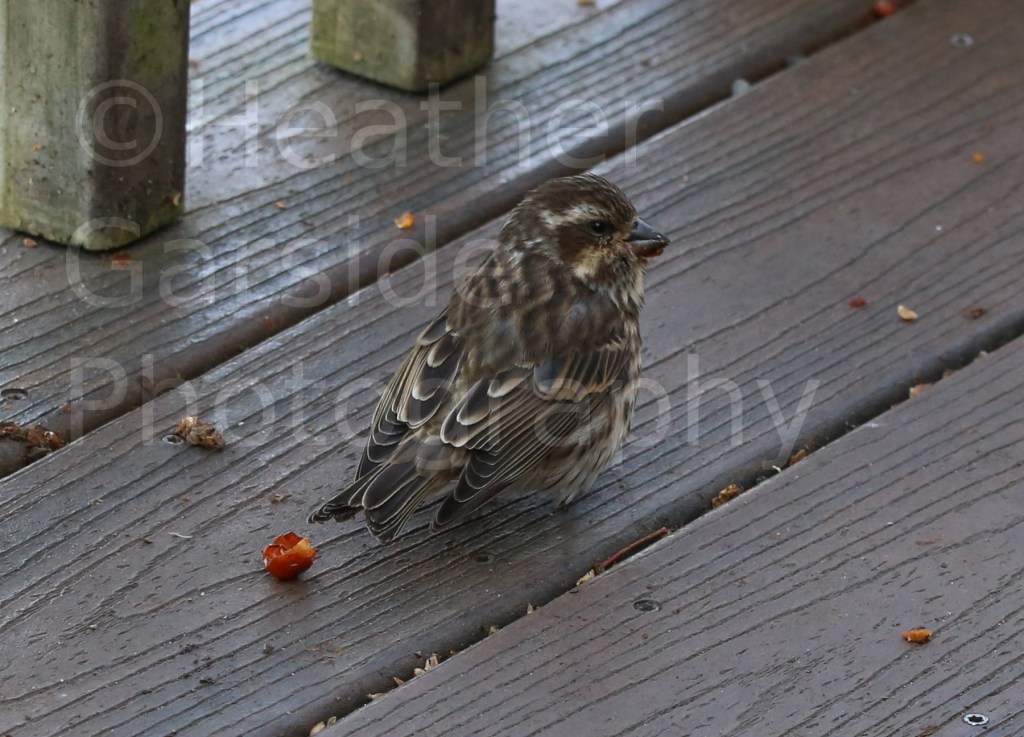
While sitting on one of the platforms, a very fluffy and slightly frazzled looking Sparrow (Song Sparrow I think) was so intent of getting all the berries on the floor that he came right up by me. I couldn’t even photograph him with my lens, he was too close. We hung out together for quite a while. He wasn’t phased by my presence in the slightest. You could almost hear his inner monologue, “…eat the berries…there’s a berry! Eat the berry…need some more berries…there’s a berry!” as he zigzagged along the platform floor.
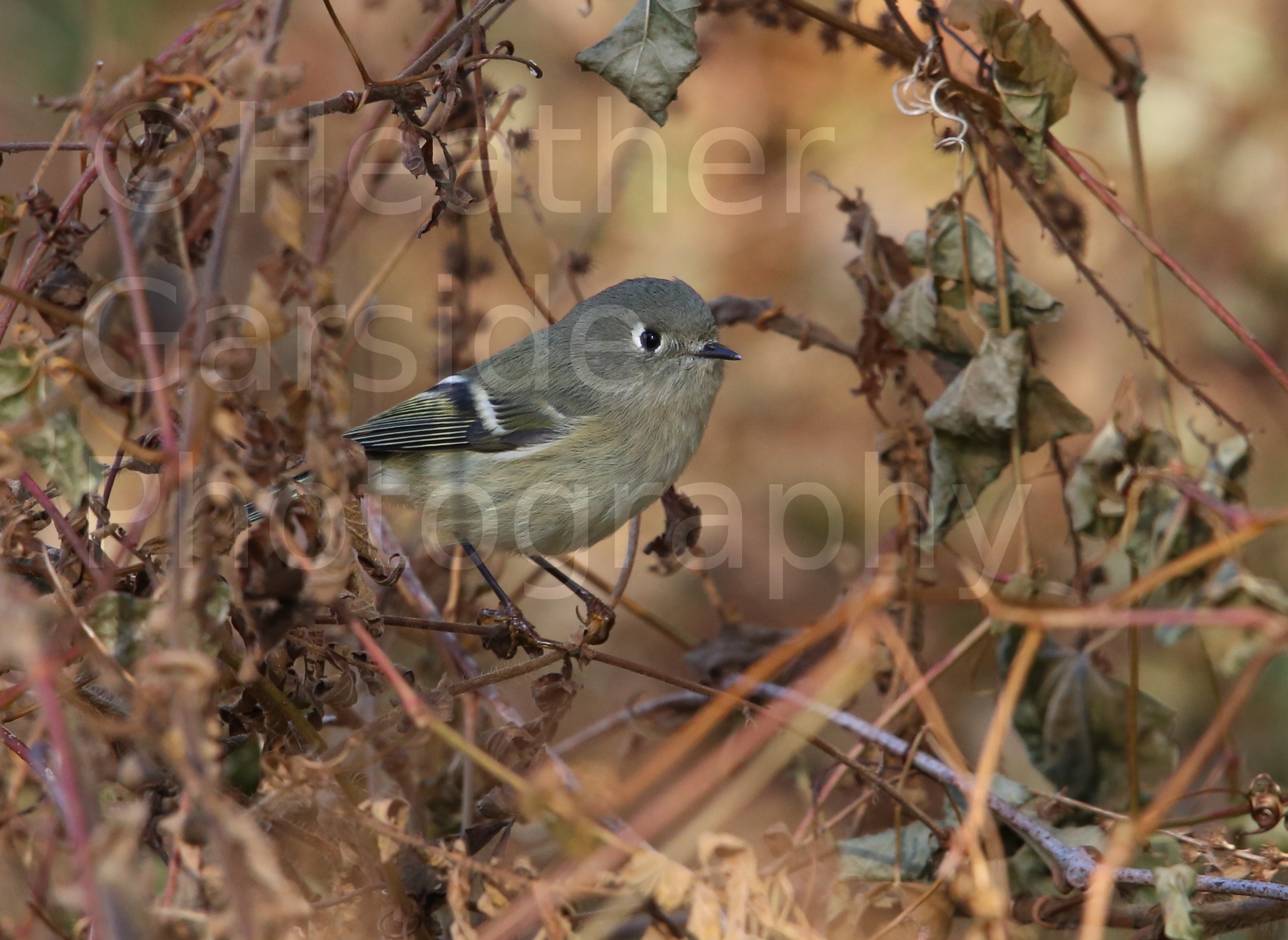
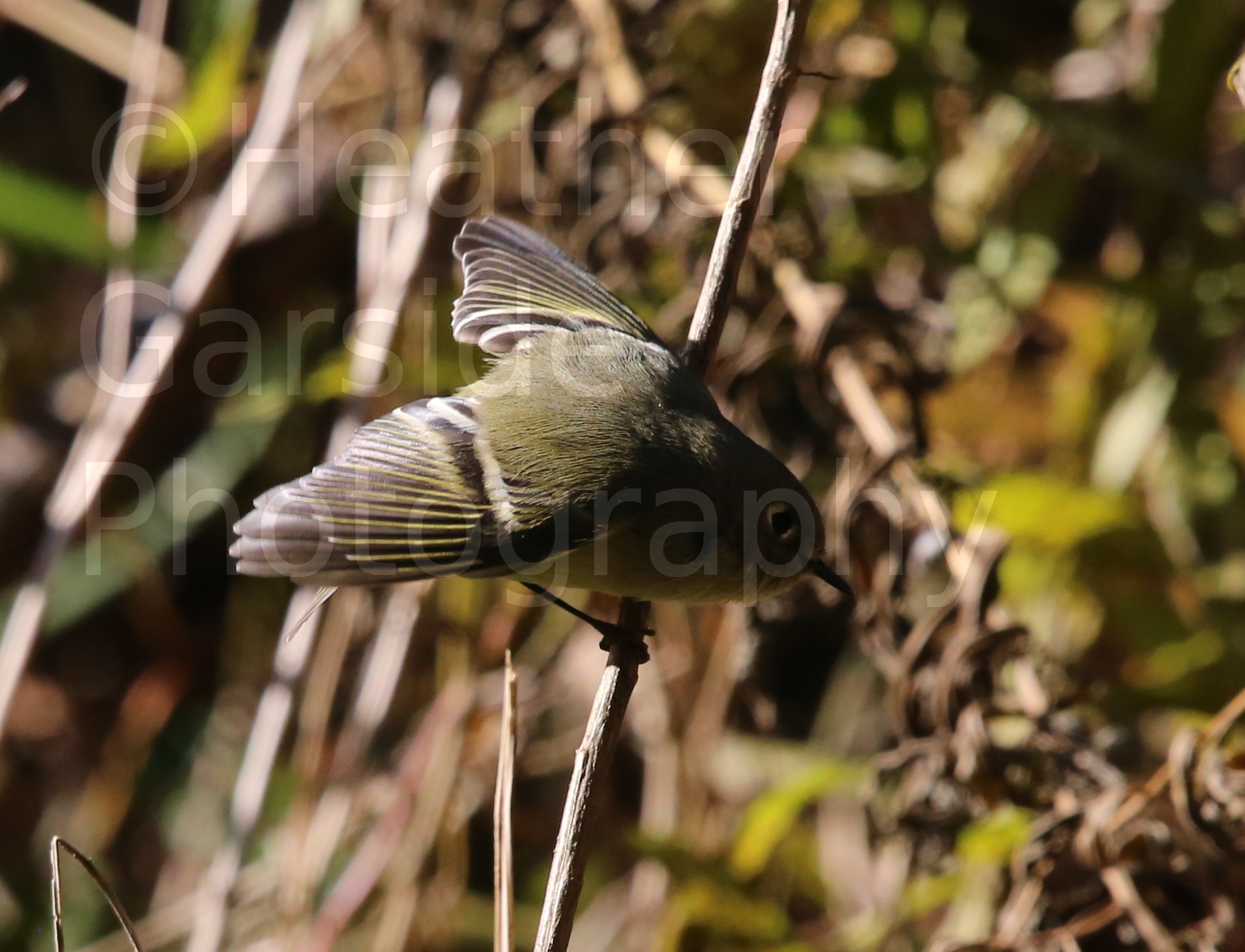
Some less common sightings for me on this particular walk were a female Ruby-Crowned Kinglet and a female Magnolia Warbler. I think both the decreased vegetation and my meandering pace helped me spot them, and both birds stayed in place long enough for a few nice shots.
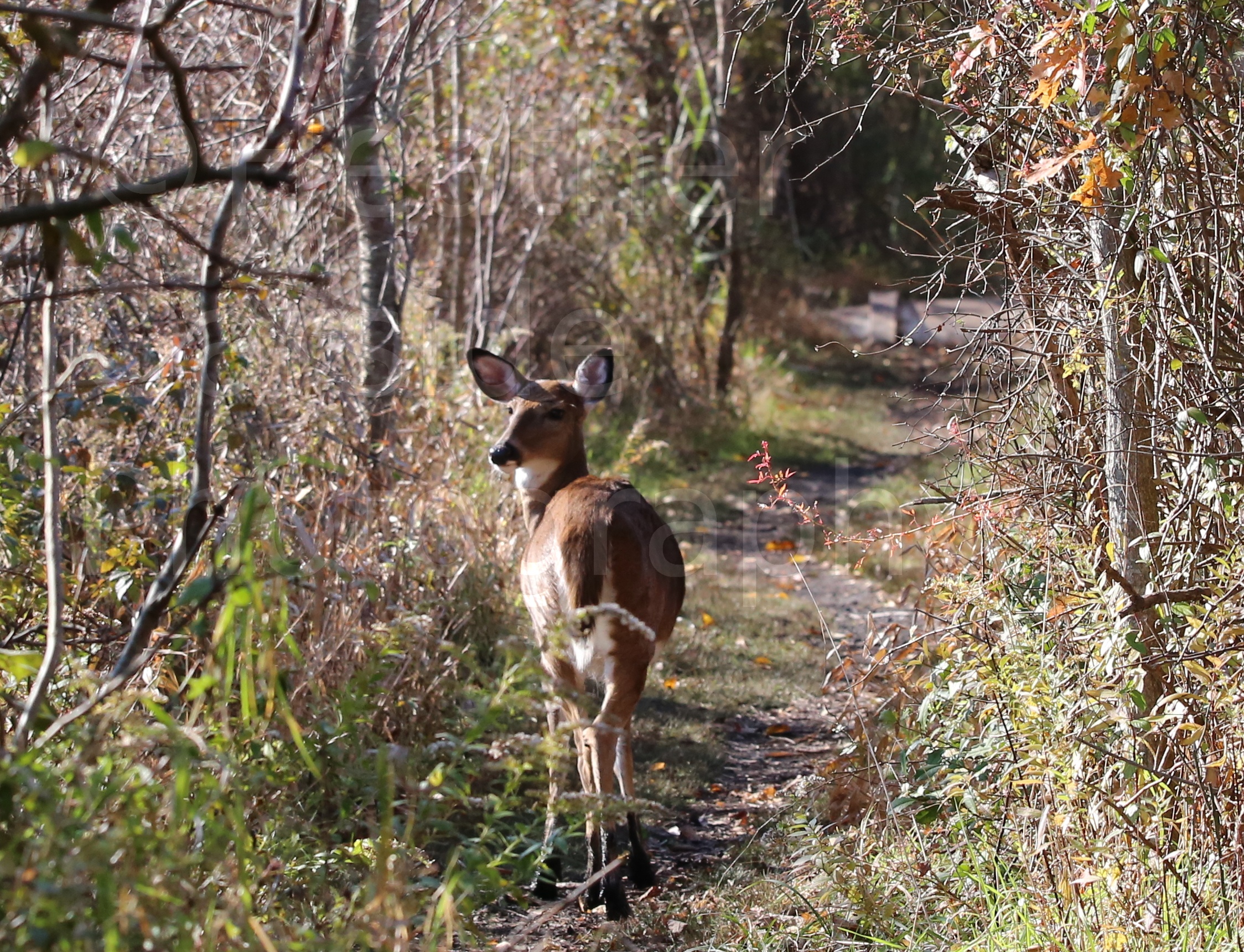
A deer crossed my path as well. It wouldn’t be a day at the Celery Farms, no matter what season, if you didn’t see at least one deer.
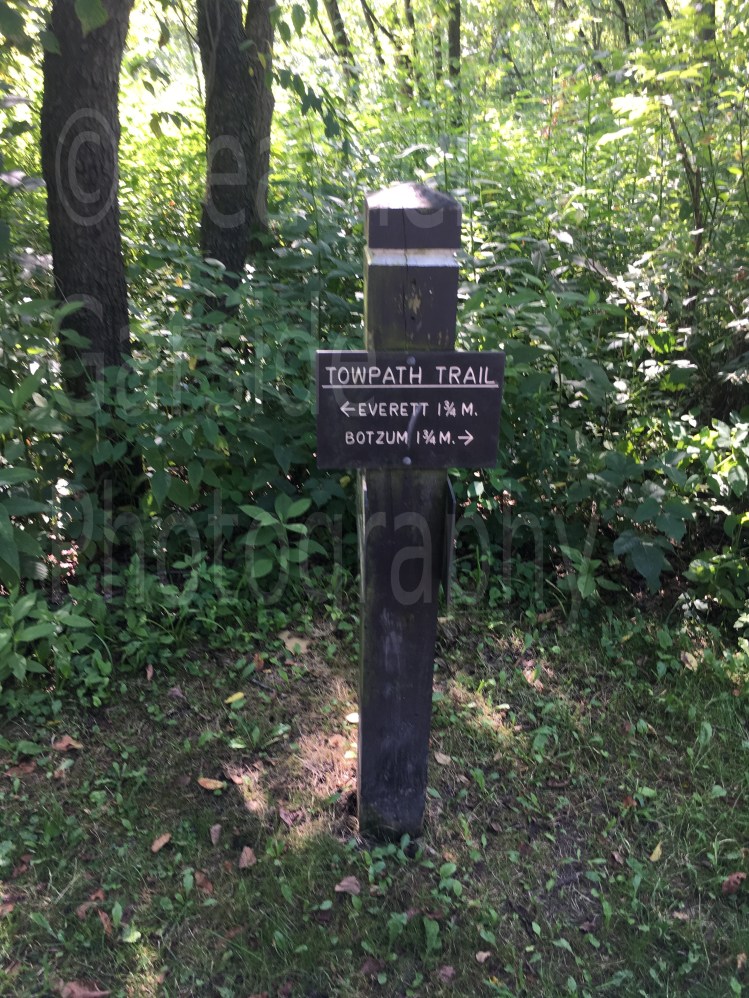
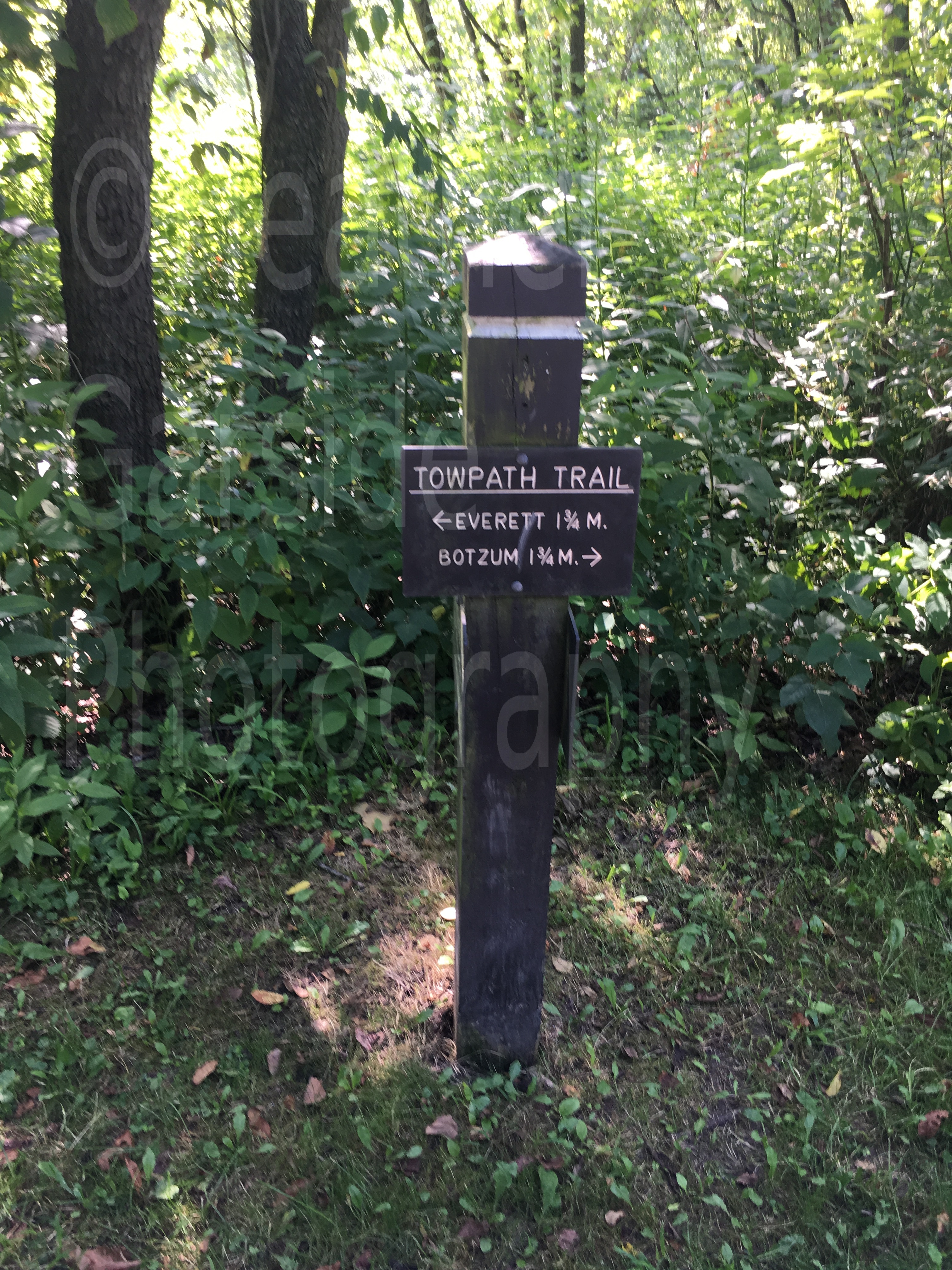
I happen to have a friend who lives in Ohio, which means that I have the pleasure of visiting Cuyahoga Valley National Park once or twice a year. A 33,000 acre park, Cuyahoga Valley has many lovely nature trails and waterfalls. I have had the opportunity to explore many of them on my various visits. However, my absolute favorite is without a doubt the Towpath trail through the Beaver Marsh. Although I have never seen a beaver here, this spot is always alive with activity. Previously I have visited in the early spring and winter but this year I had the opportunity to check out the Beaver Marsh in the midst of summer.
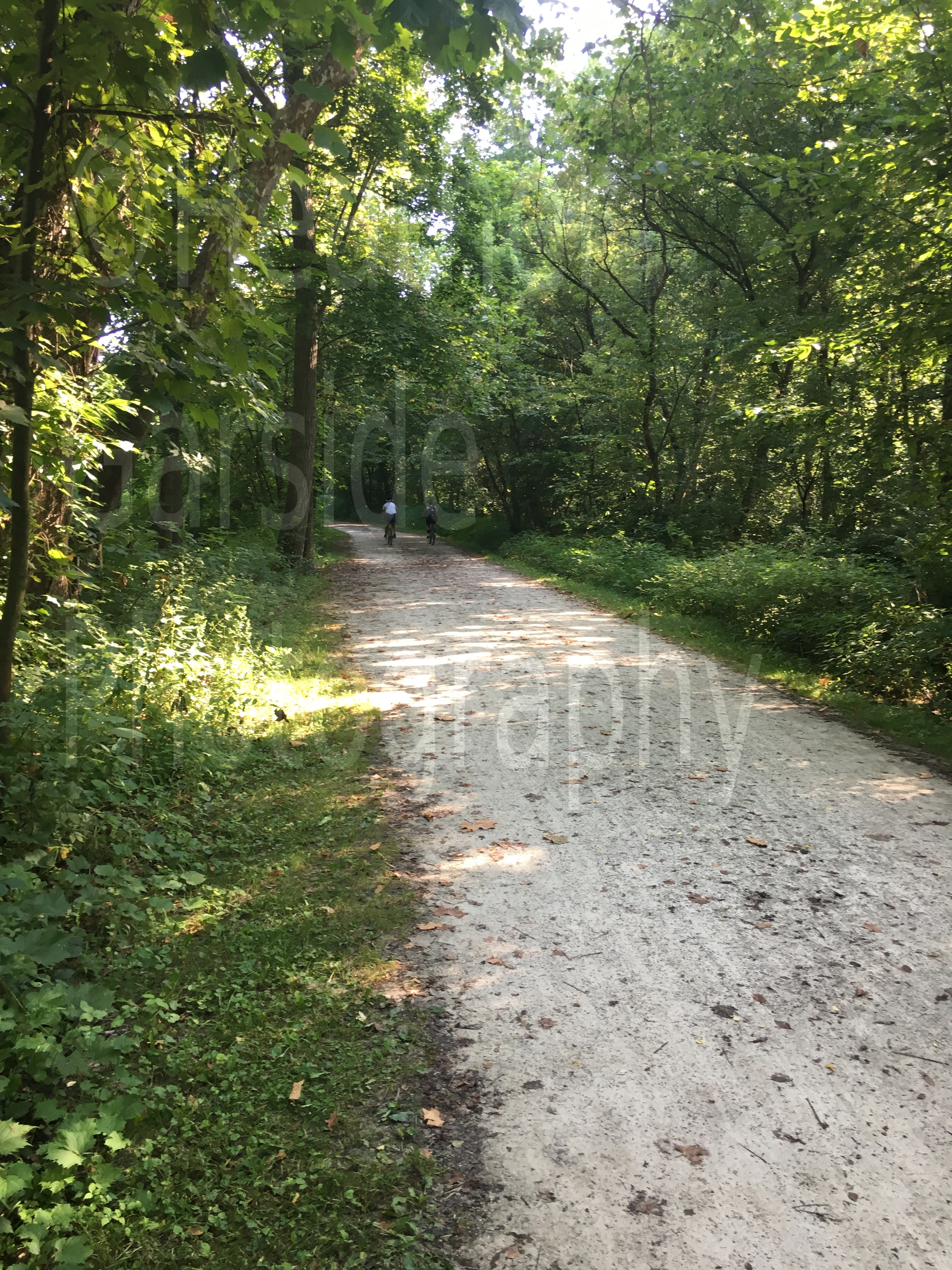
The Towpath starts
off as many do, a large even dirt path, fairly wide. This towpath is
a big favorite among bikers and the morning air was filled with the
friendly “tink-tink” of bicycle bells, followed by barks of “on
your left!” As you would expect, the towpath follows a stream of
water on one side, never particularly deep, but it provides a source
of flowing fresh water for the animals that live here. Not very far
from the Ira Trailhead parking lot is the remnants of a lock. Just a
bit further along the Marsh opens up on both sides of a lovely
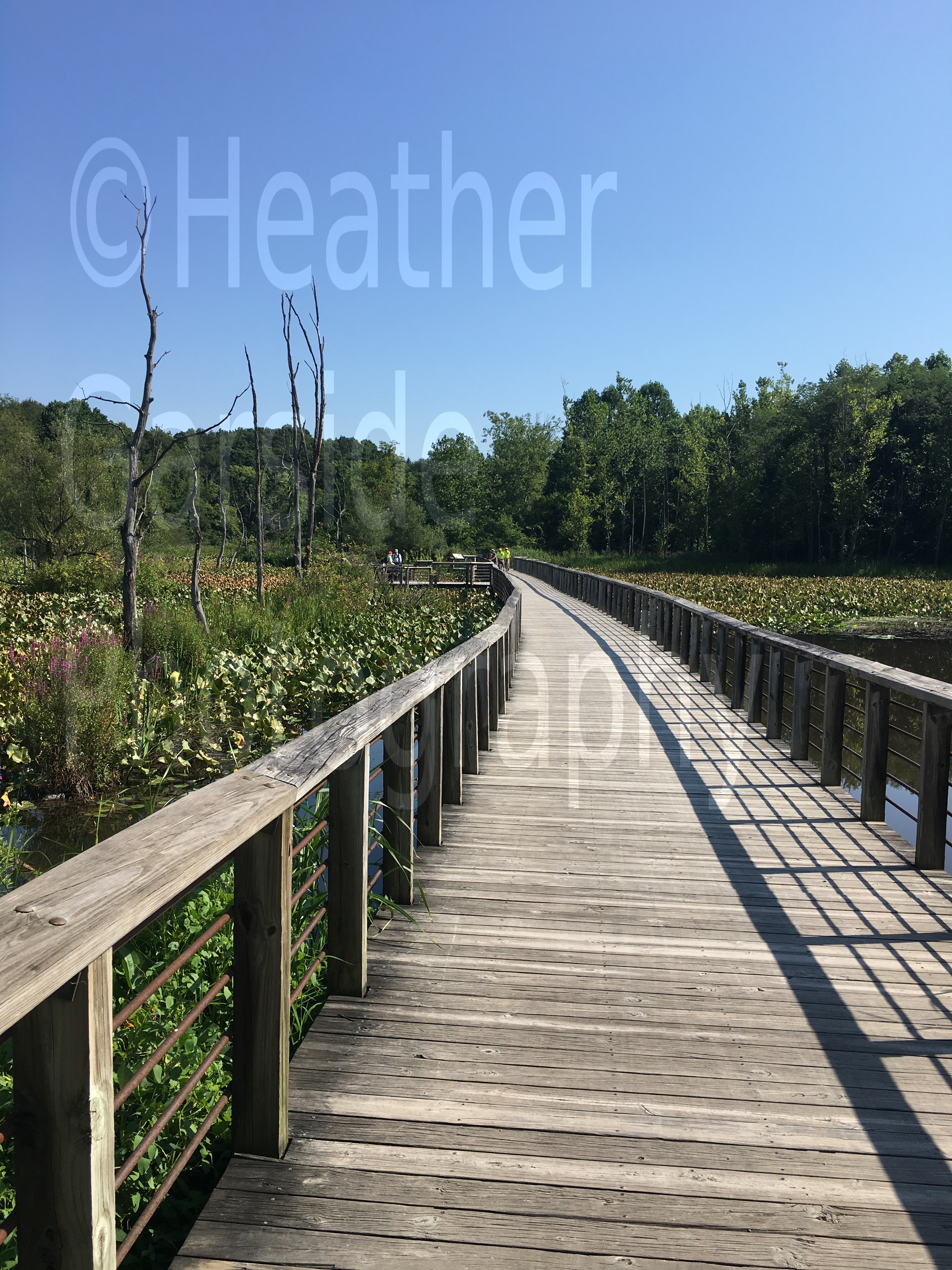
boardwalk and viewing platform. This is where most of the action is.
On this particular visit I was spoiled by nature. I had decided to
take an early morning hike before driving back to New Jersey, so I
headed out to the park around 9am. It was a beautiful, sunny morning
and a refreshing walk seemed like the perfect compliment to a lovely
and relaxing weekend with friends. I was pretty content, birds or no
birds.
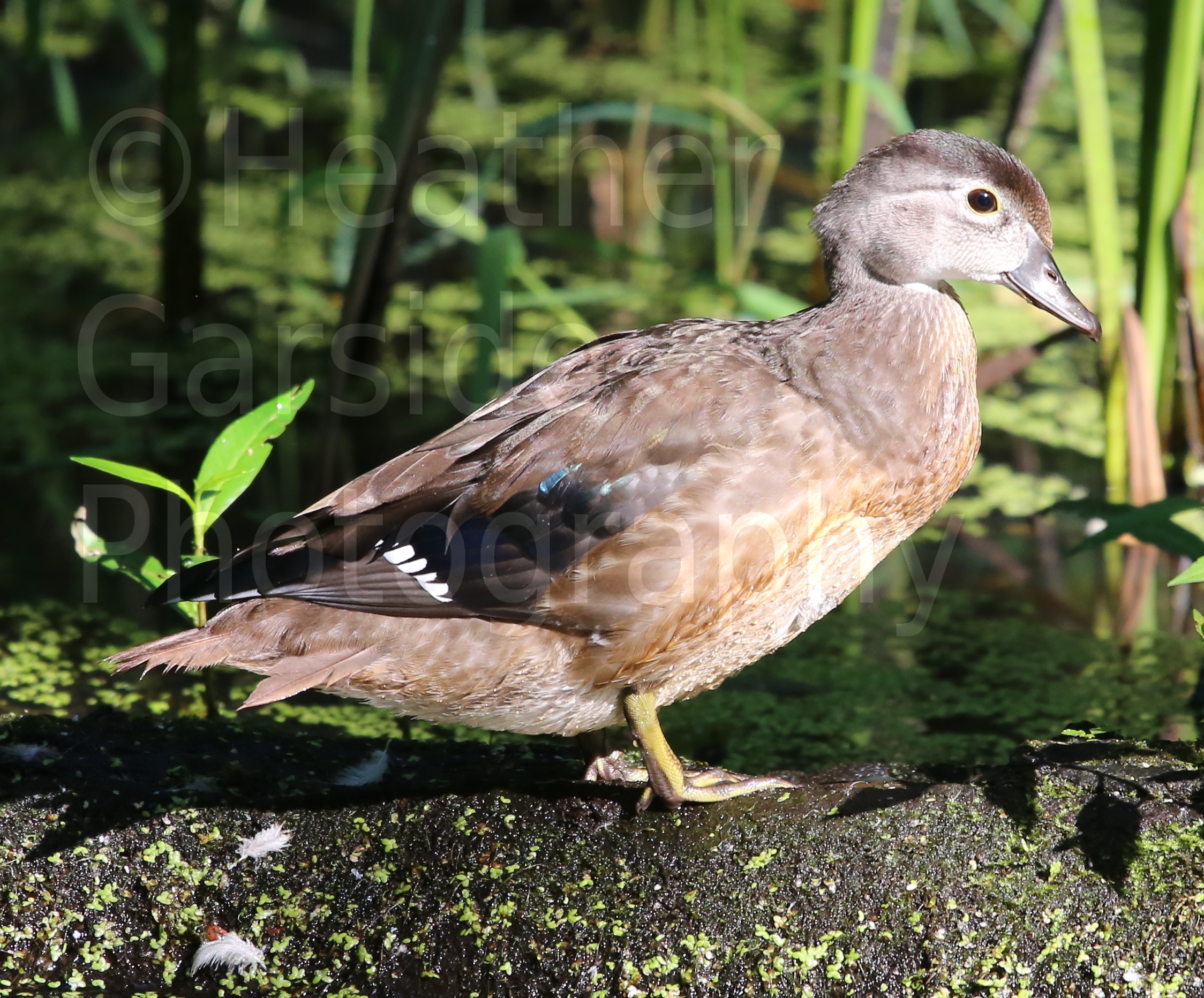
Before I even walked
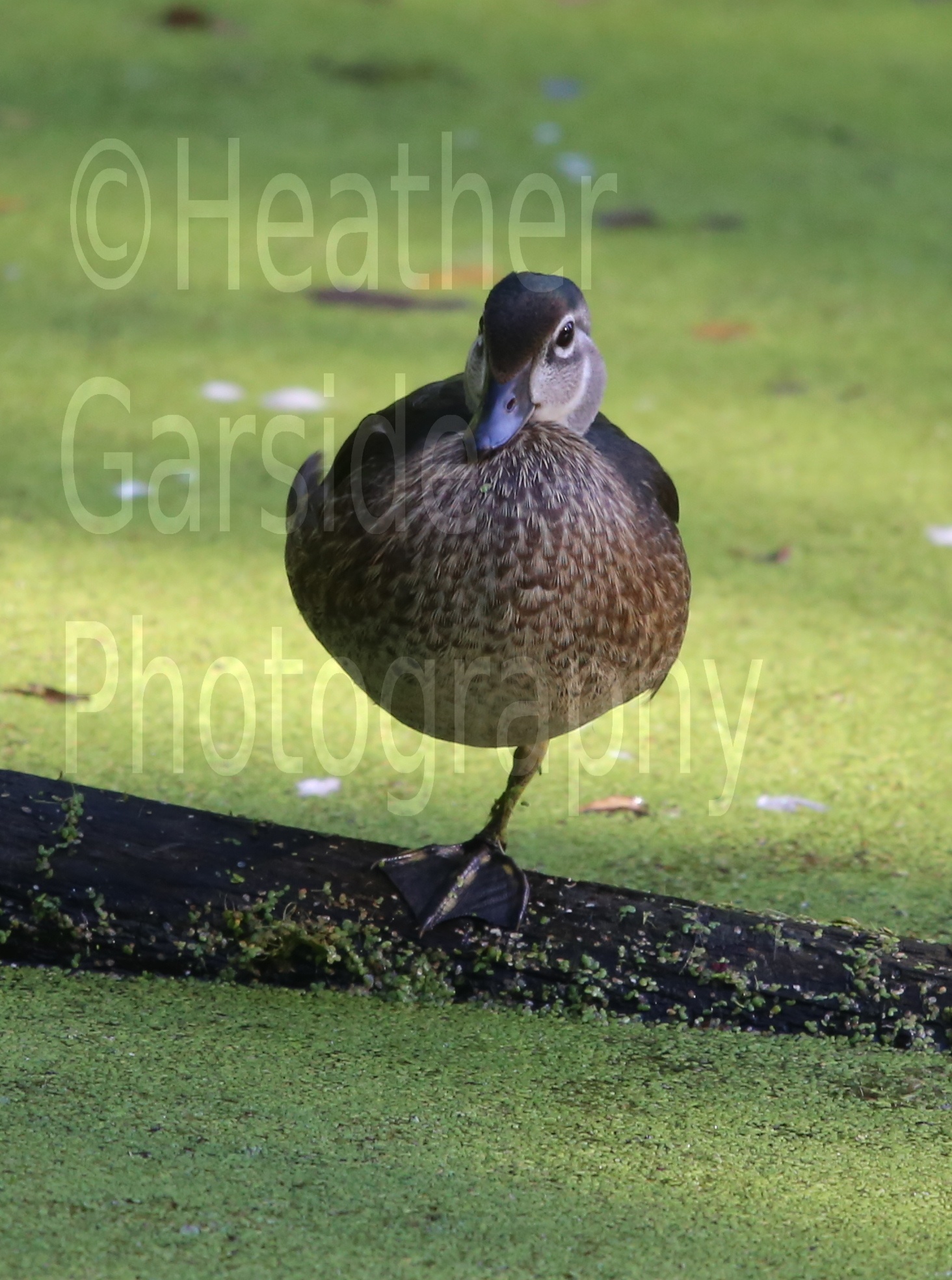
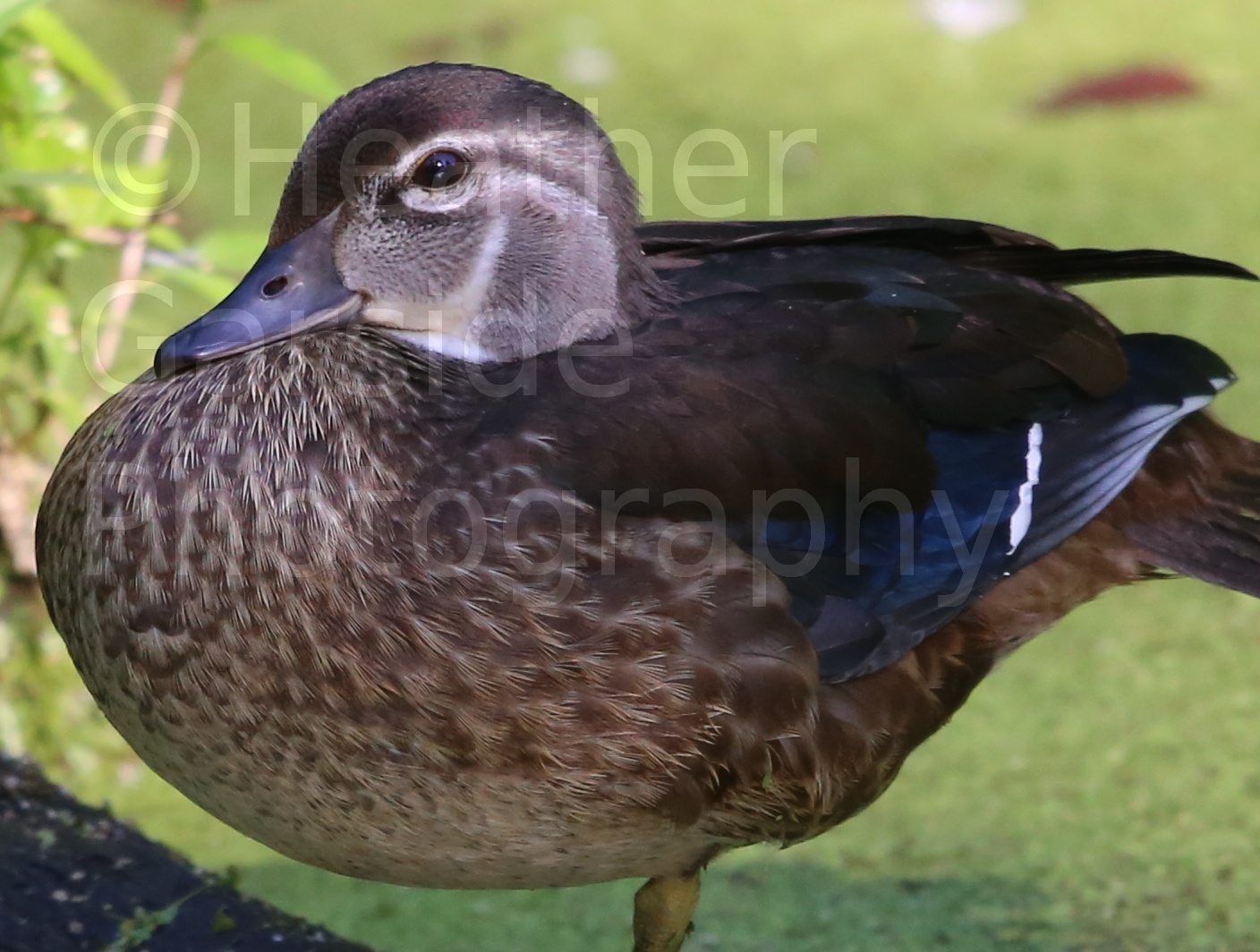
far enough down the trail to see the lock, I noticed a lone female
Wood Duck, standing on a log. I was pretty excited because this was
the closest Wood Duck I have had the opportunity to photograph, most
of them tending to shy away from paths toward more secluded sections
of water. I snapped some photos of her standing on her log and
continued along my way, even more perky.
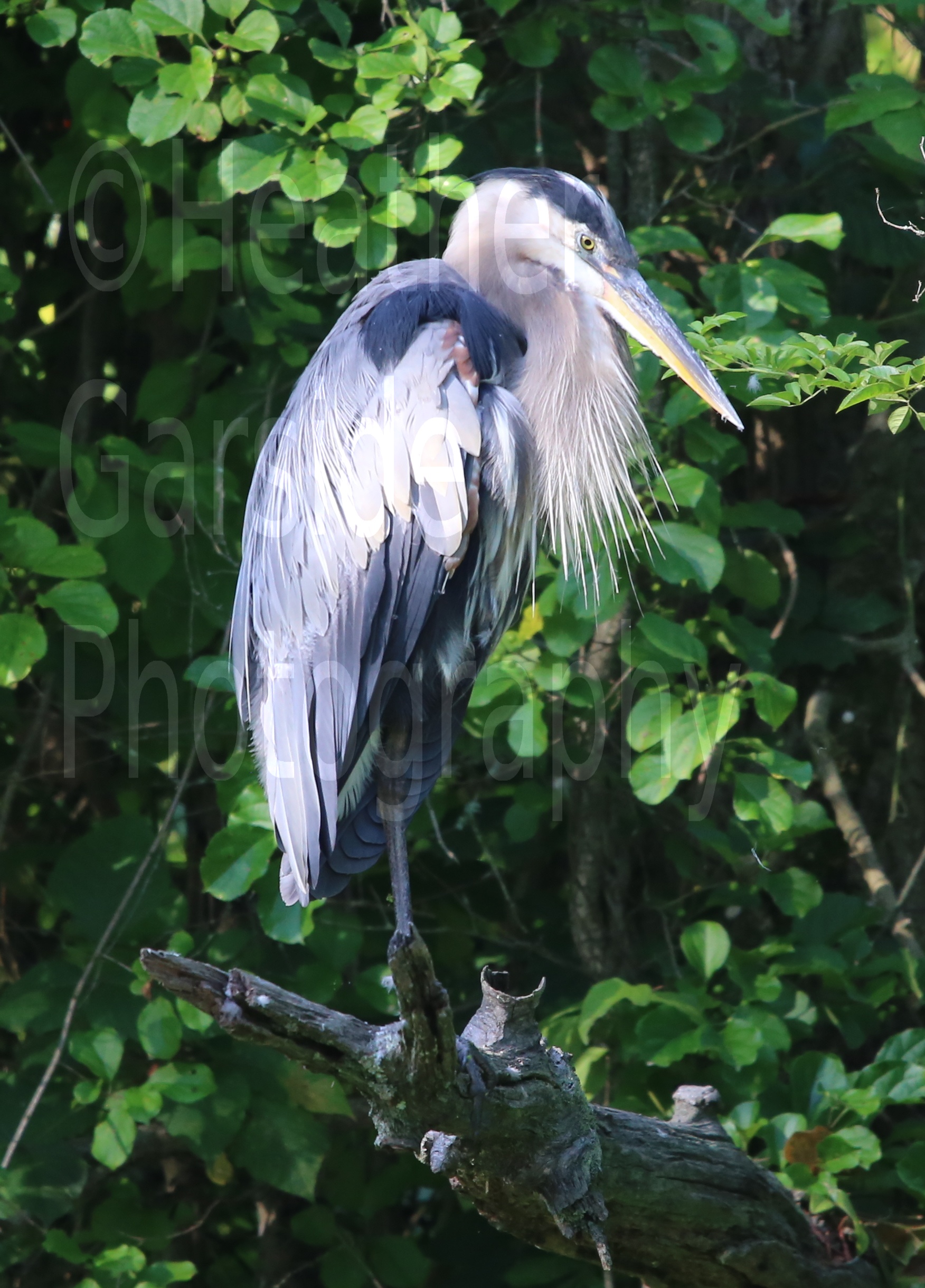
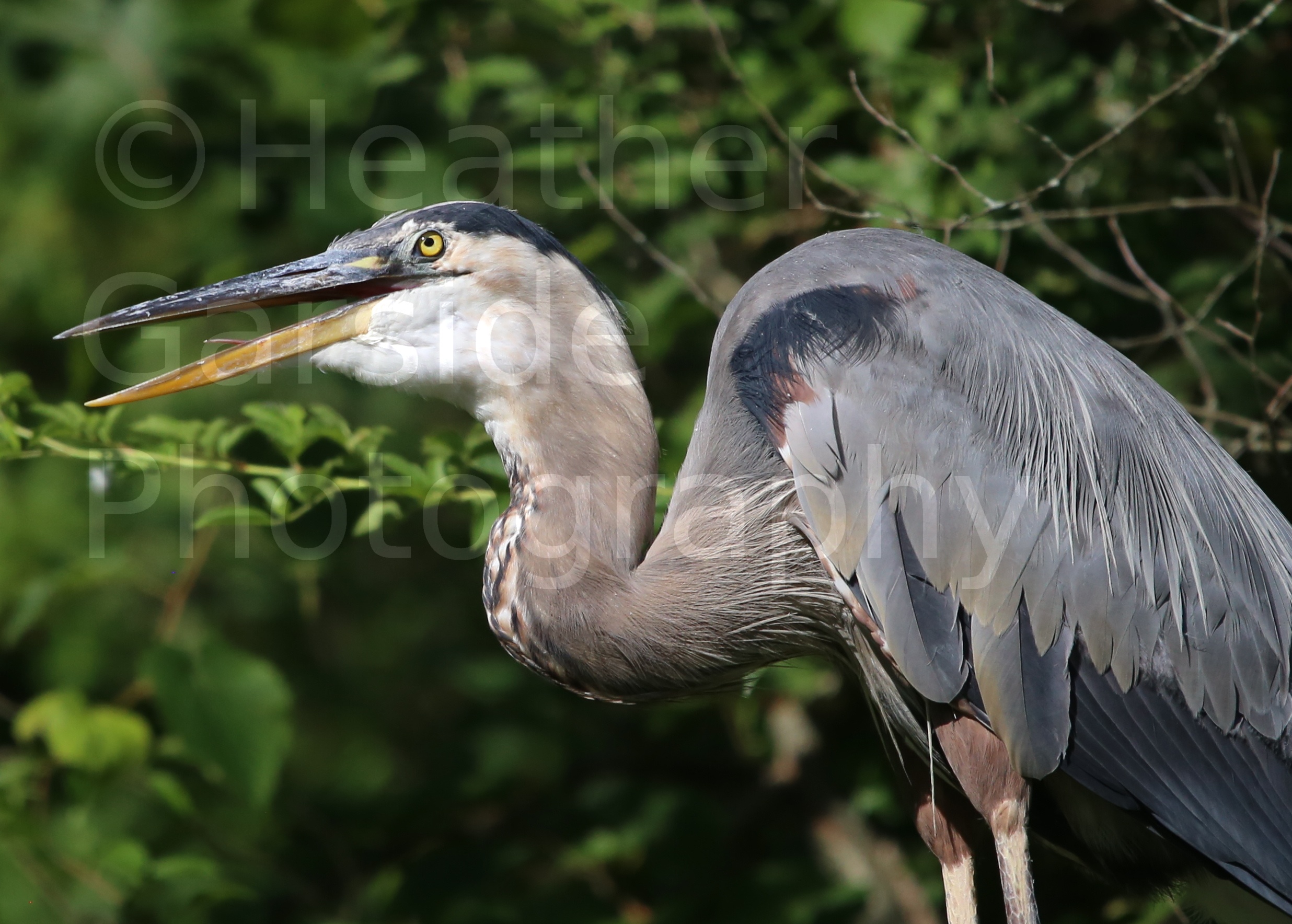
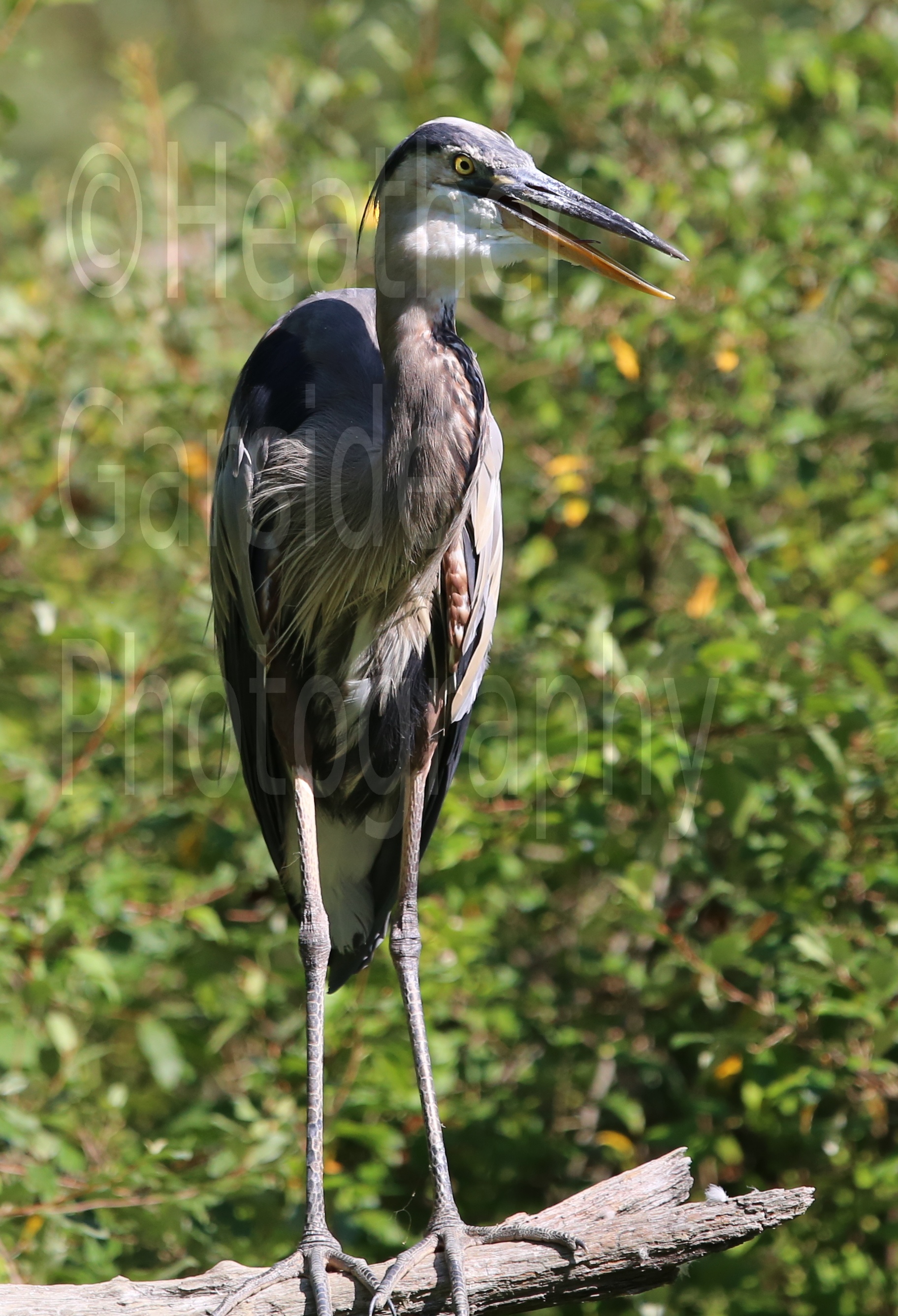
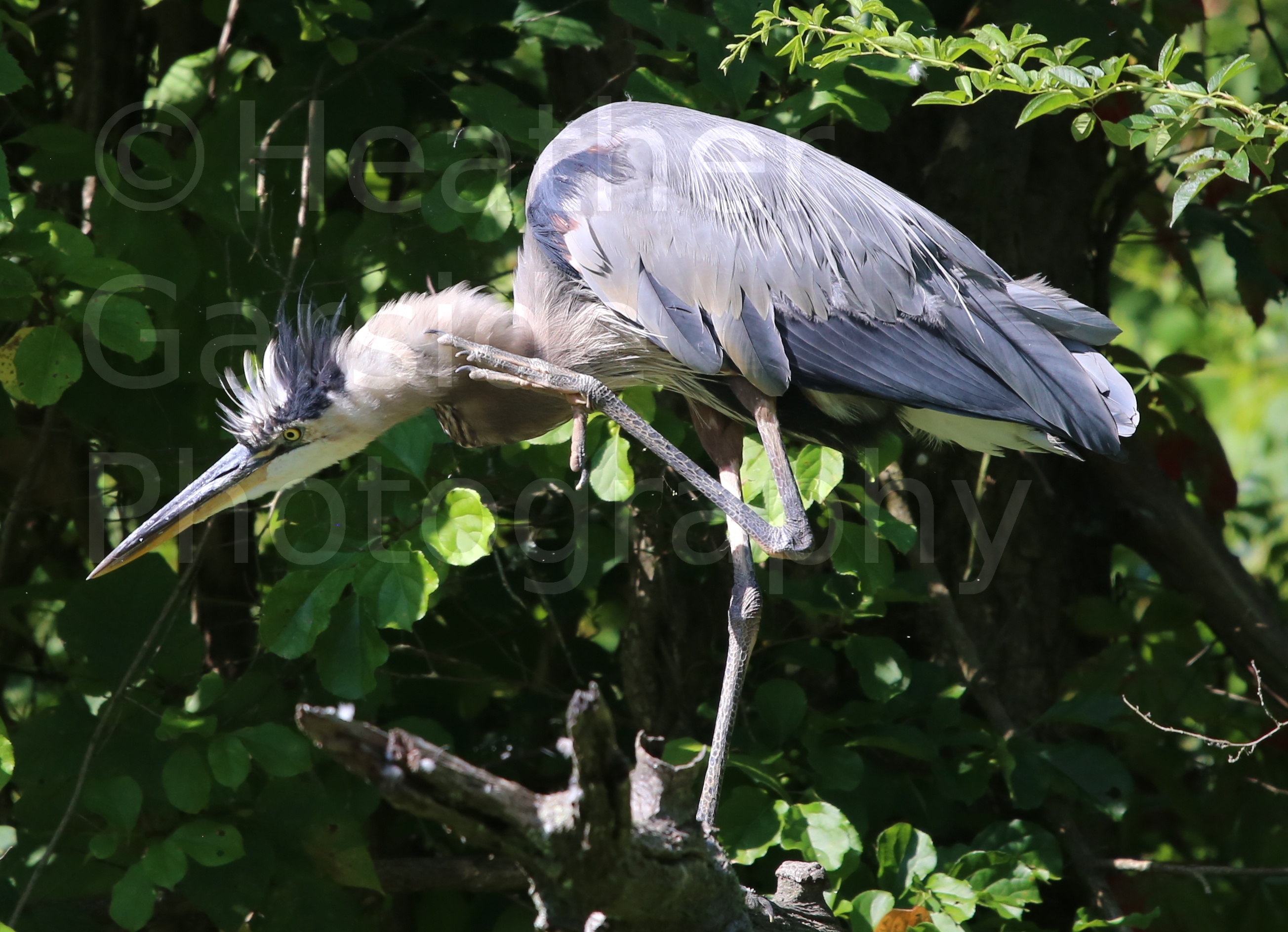
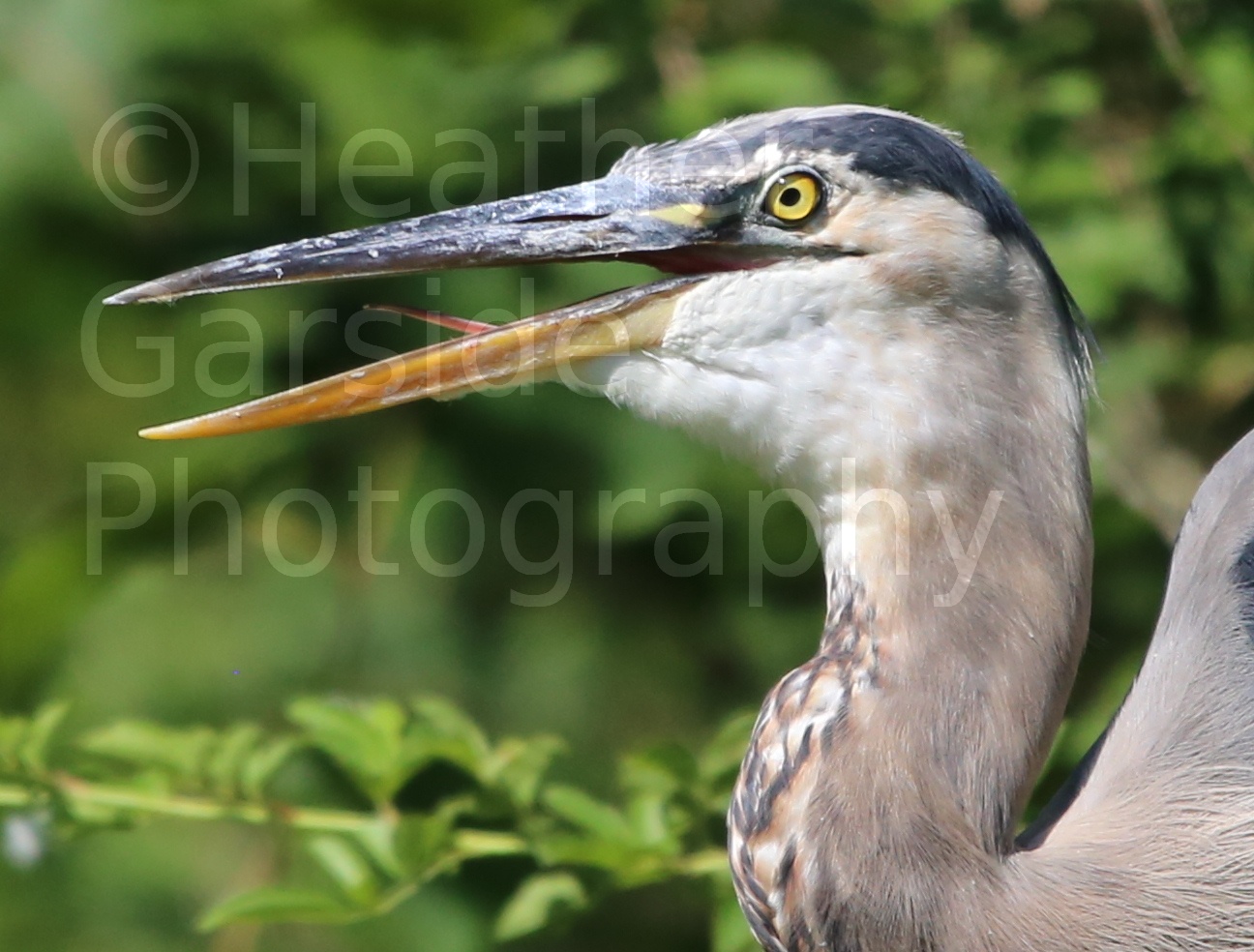
Little did I know, Cuyahoga had much more in store for me. I decided to divert from the trail and have a closer look at the lock, which is when I noticed my second great surprise. A Great Blue Heron, perched in a tree. It didn’t seem remotely bothered by my presence but just kept on preening and scratching its head. It seemed particularly itching and I had to wait a while before it settled down for me to get some full body photos.
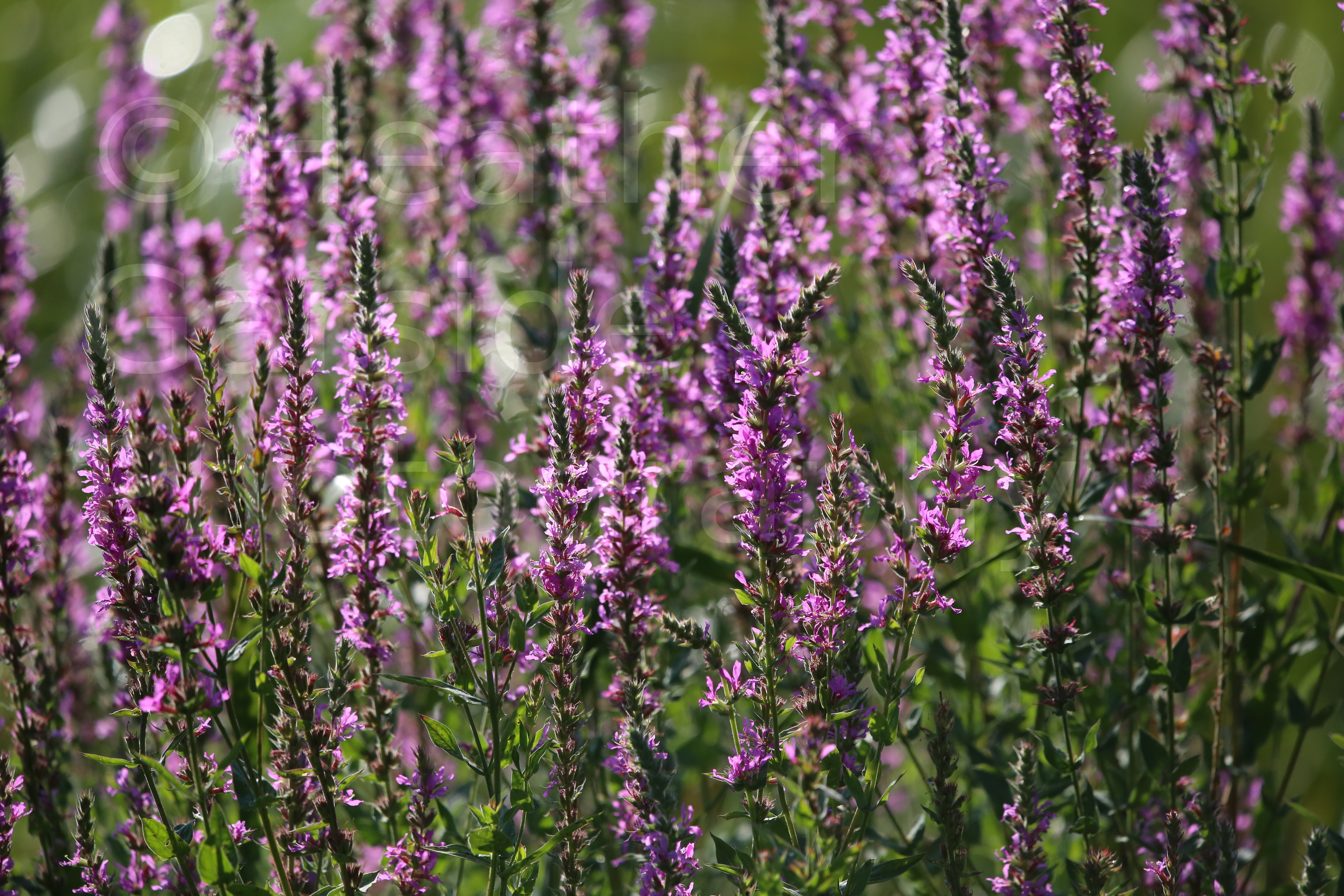
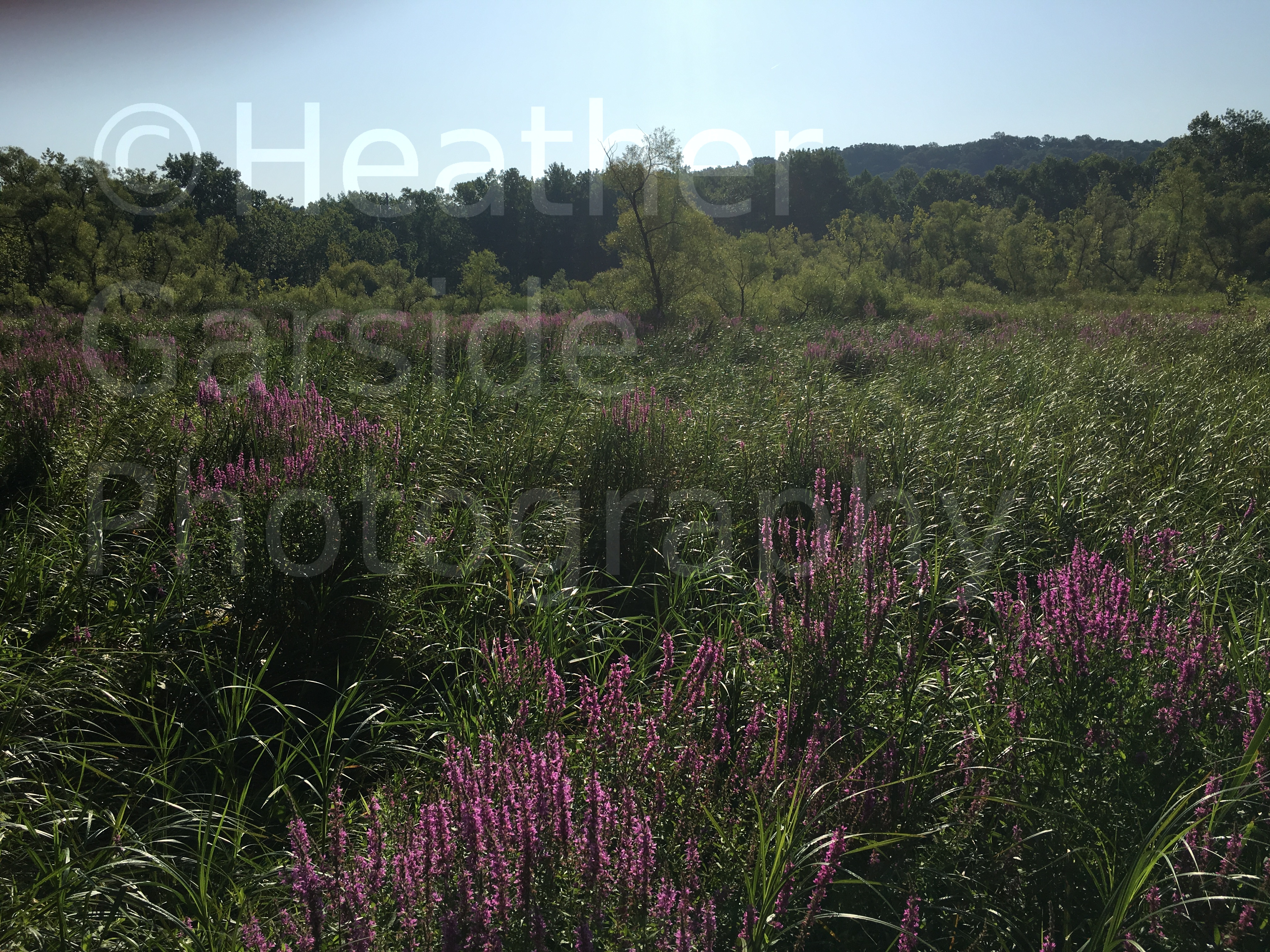
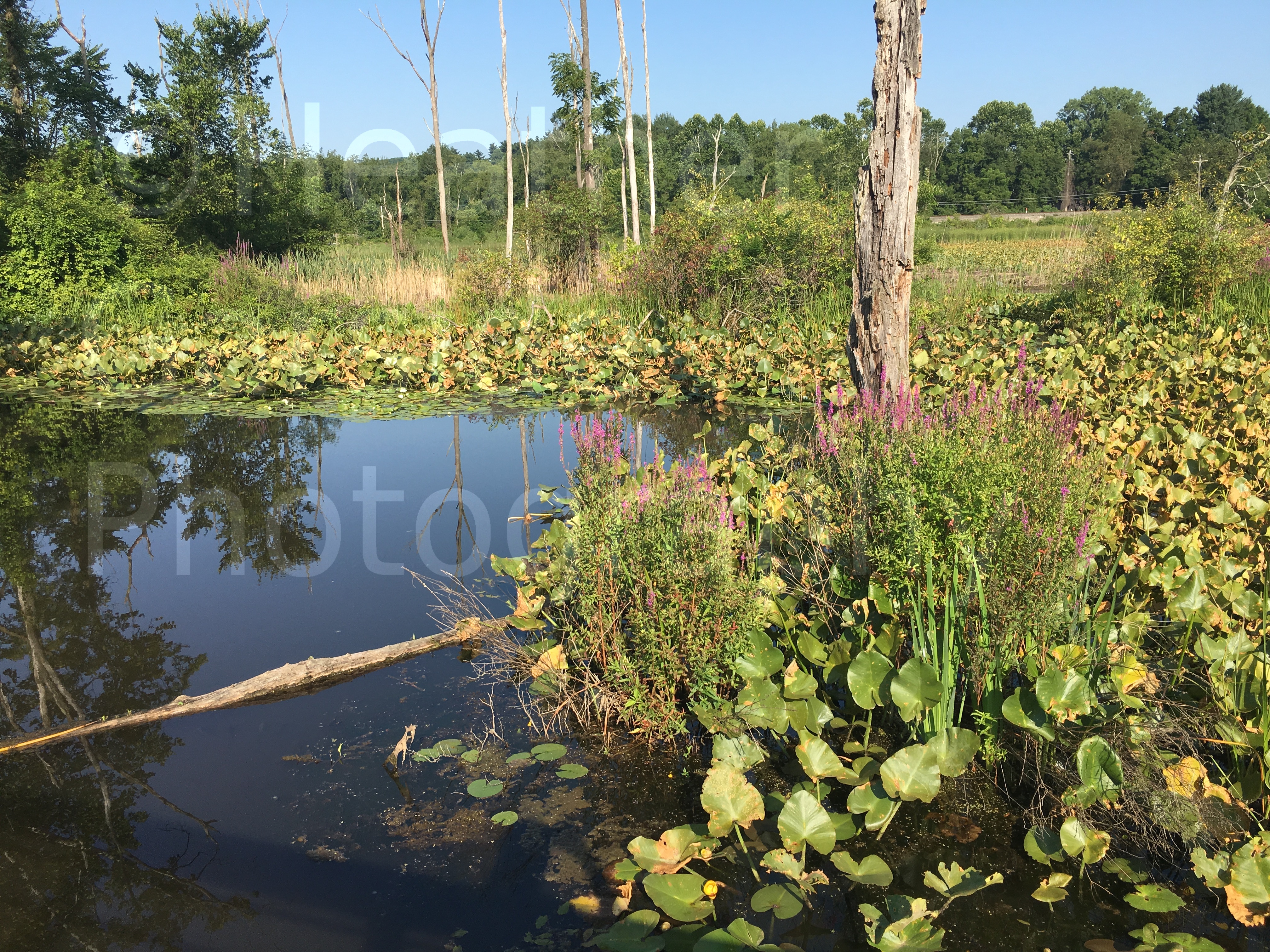
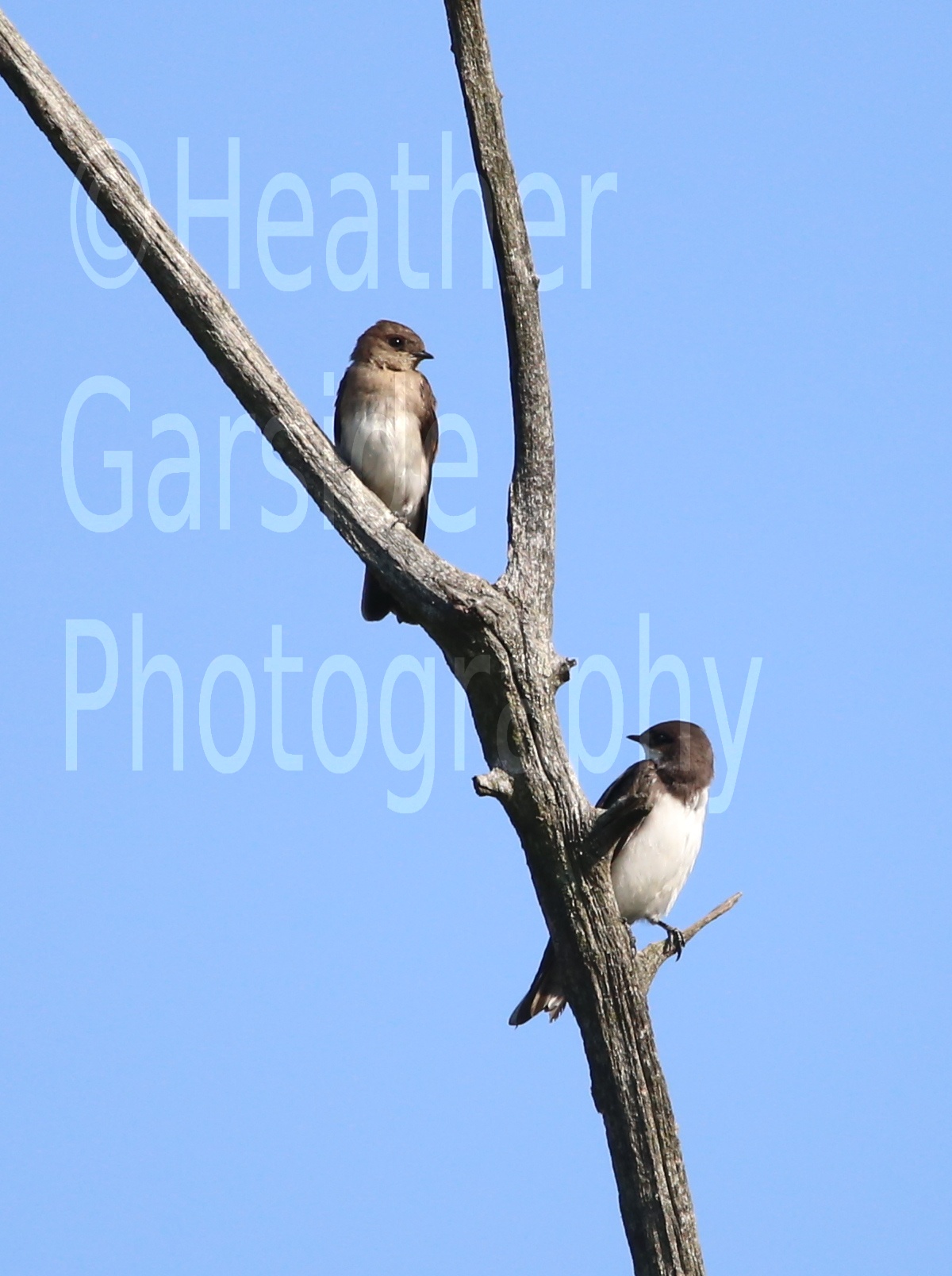
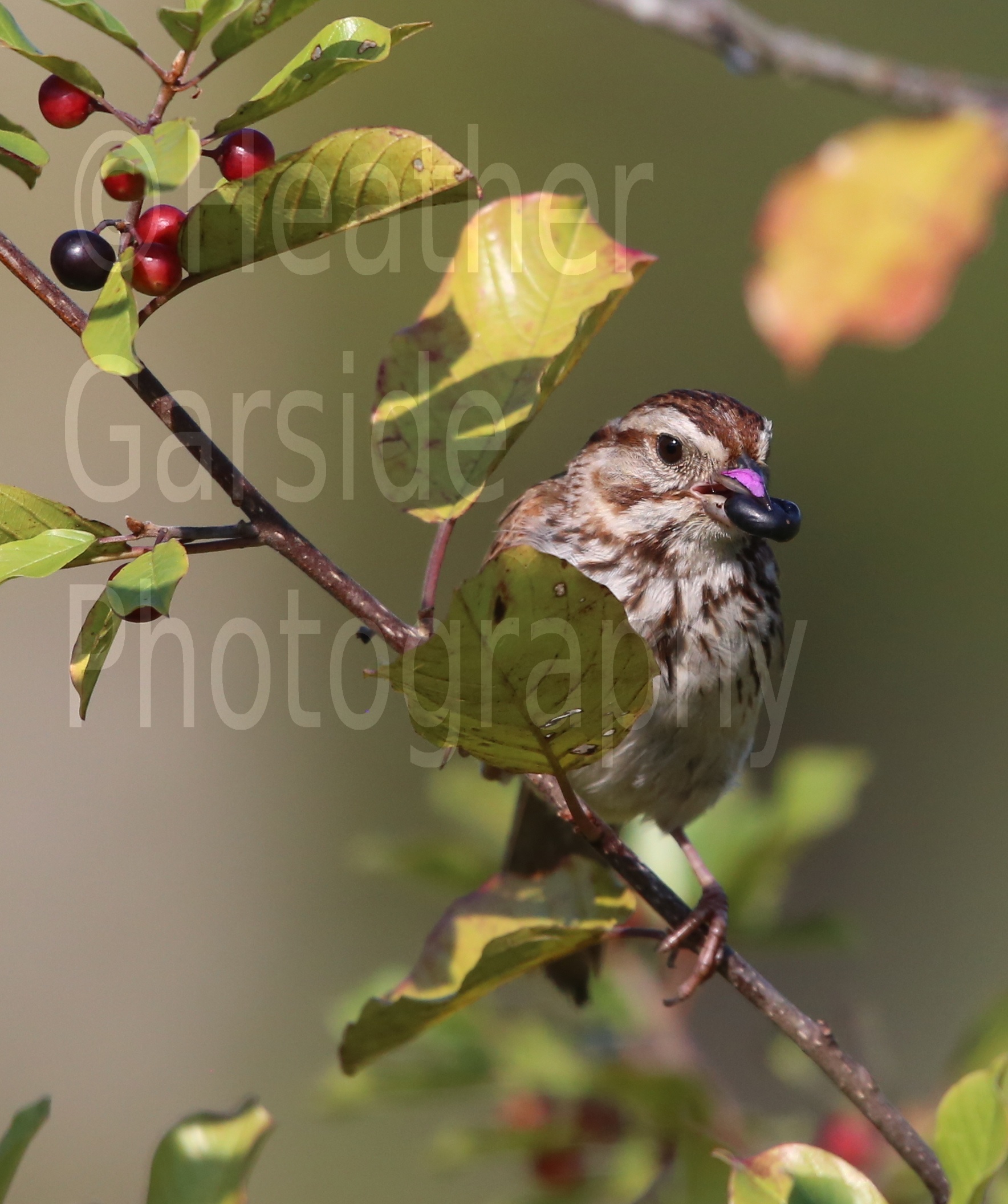
Next I walked out onto the boardwalk and was dazzled by the purple flowers growing in the marsh. Everything was green and purple. White water lilies with glowing yellow centers dotted the water. The air above the water was buzzing with activity as a colony of Tree Swallows flew overhead, swooping down on unsuspecting insects. A pretty gluttonous Song Sparrow landed on a bush full of berries. It hopped from branch to branch scoffing down the blue-purples spheres with great vigor. The only evidence of his over indulgence was some berry remnants stuck to the outside of his beak. The Marsh viewing area was pretty crowded, so I didn’t hang around too long, hoping to get ahead of the crowd and check the Marsh out on my way back to the car.
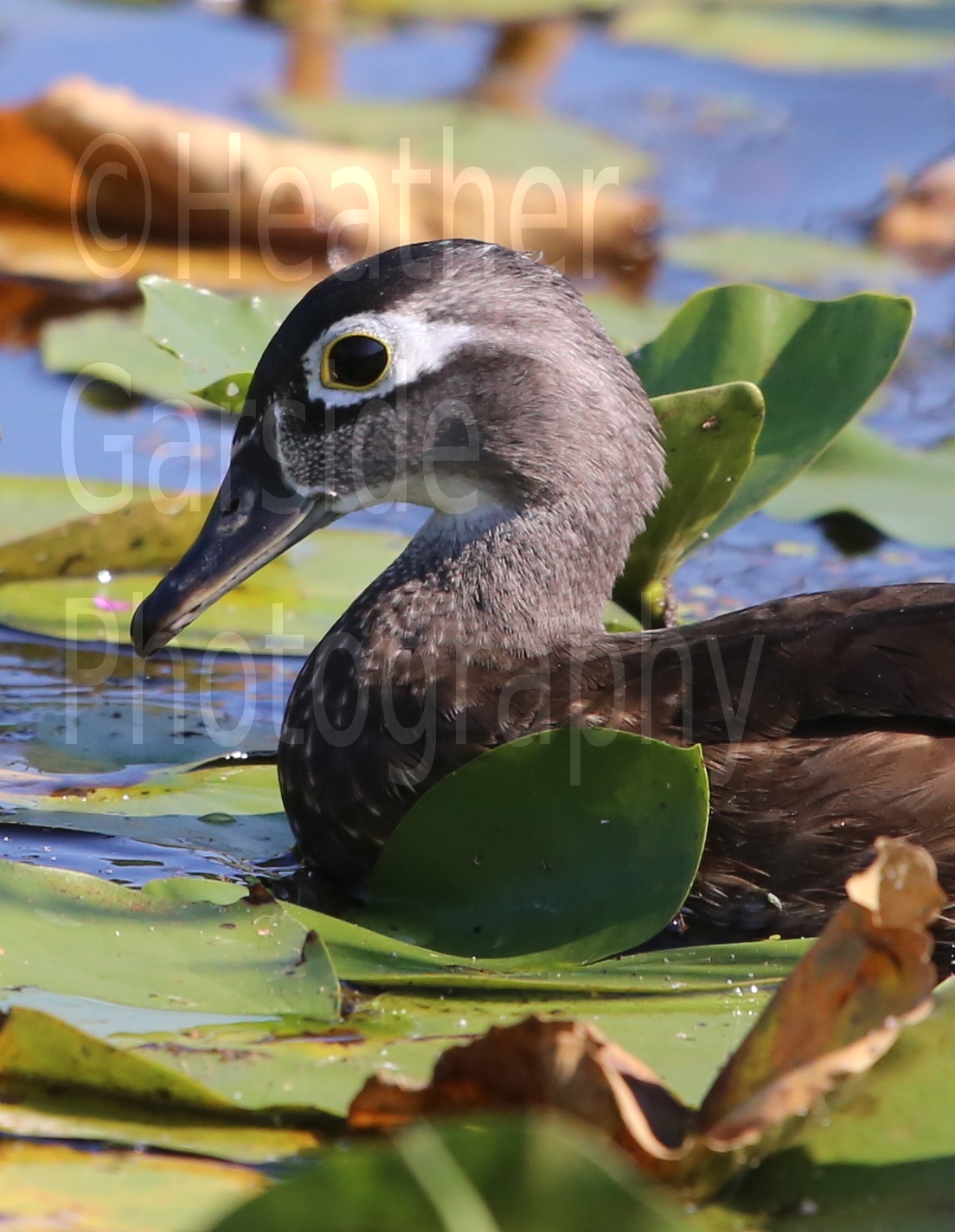
As I made my way from the Marsh, the stream went back to a small
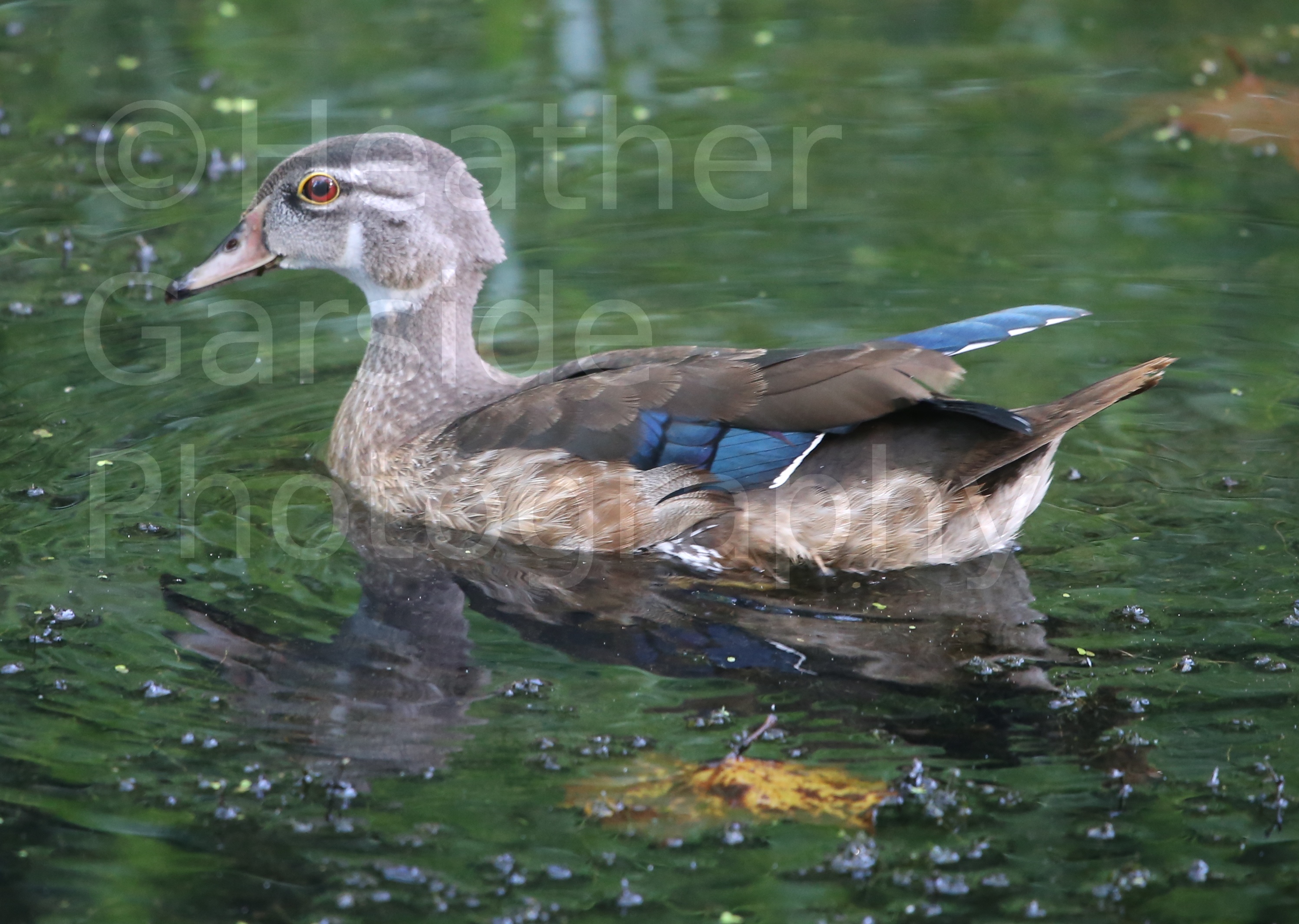
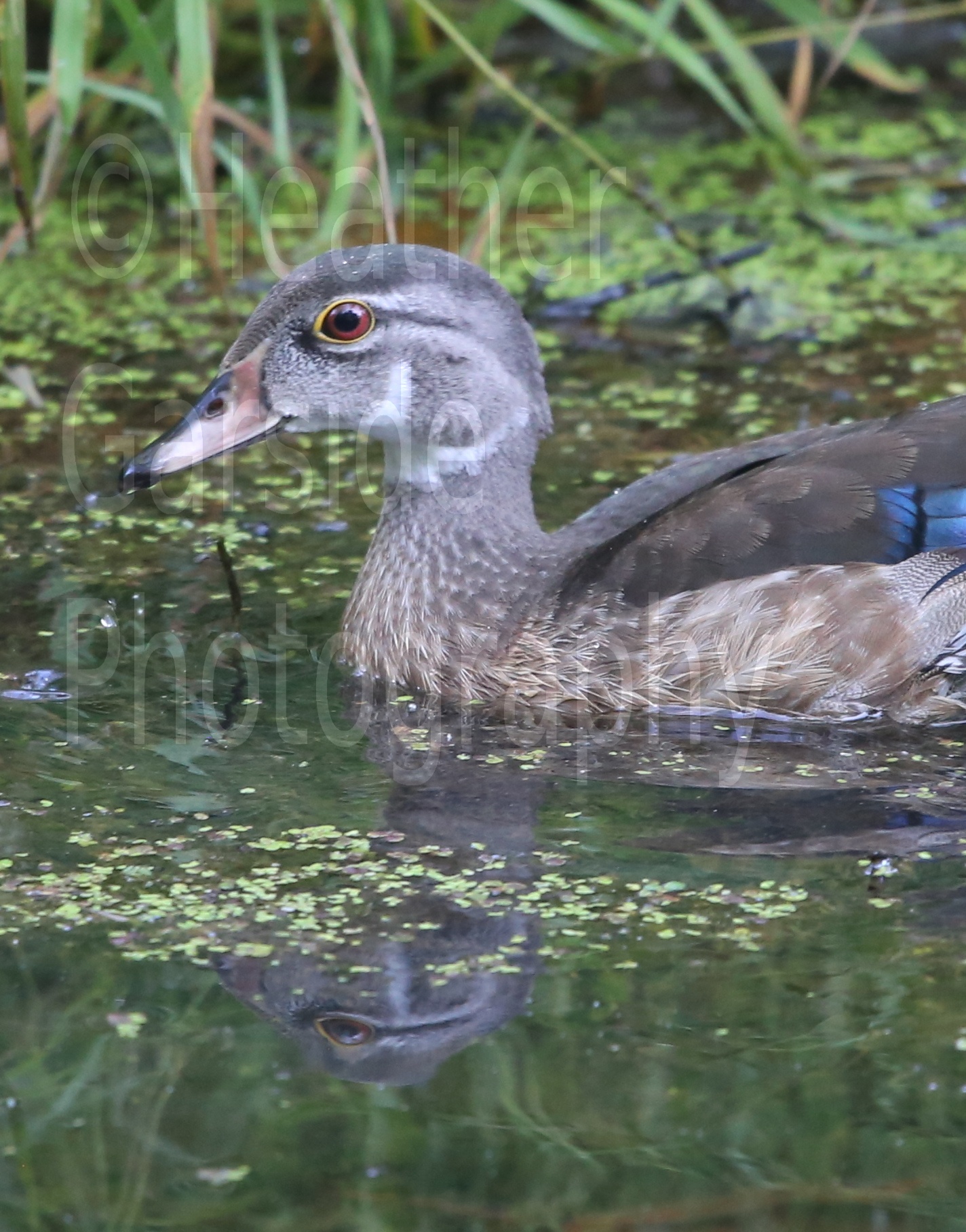
meandering vein flowing ever so slightly. Another Wood Duck appeared,
this one slowing swimming against the meager current. This duck
struck me odd. It felt different from the first Wood Duck I had just
seen, but it took me a moment to put my finger on it. While the
plumage was similar in coloring, the eyes were different. This ducks
eyes were blood red. What I had before me was a male Wood Duck
showing his non-breeding plumage. Like several other types of ducks,
the male Wood Duck molts his green head feathers after he has
successfully attracted a mate. Presumably the brown head allows for
better camouflage during the rest of the year.
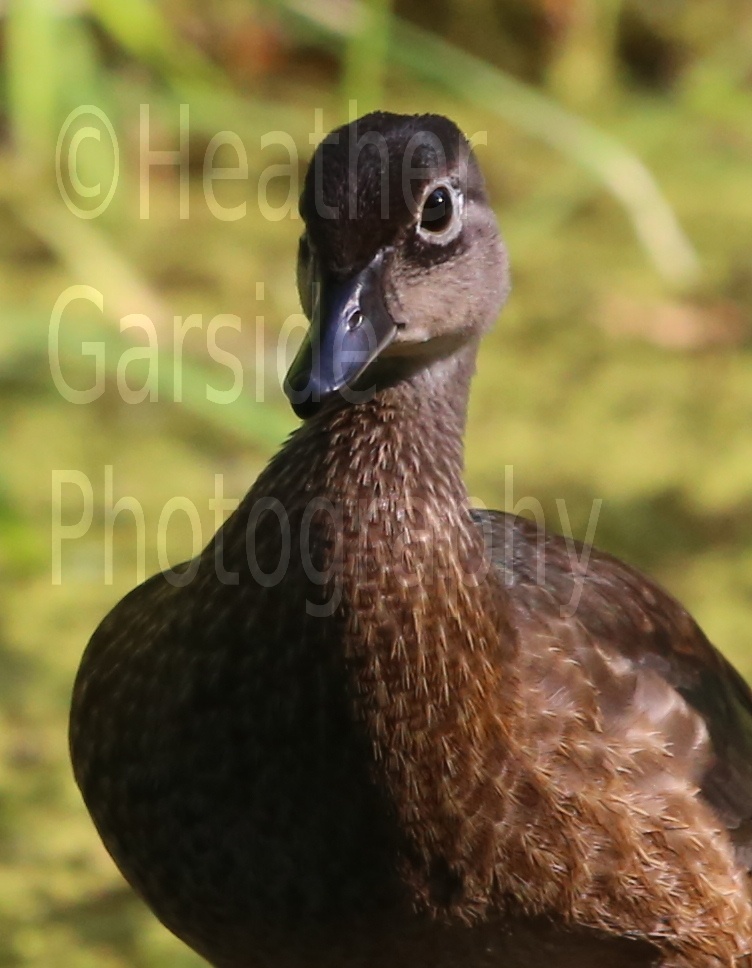
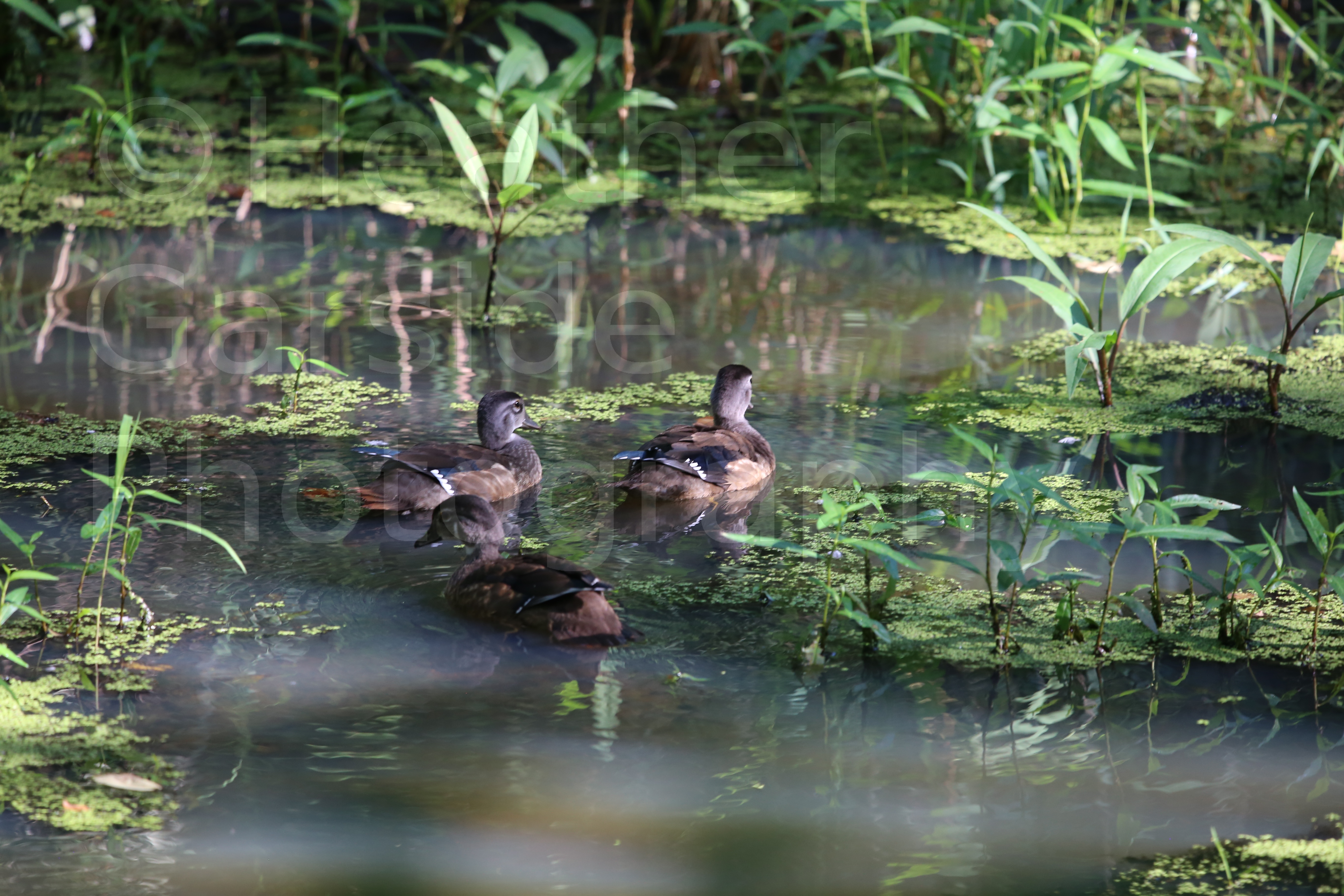
Only a bit further downstream I encountered still more Wood Ducks.
This time it was three juveniles hanging out together. They were
still a little fuzzy, a telling sign of their age and their overall
behavior seemed more hesitant. They swam for a bit before setting on
a log together.
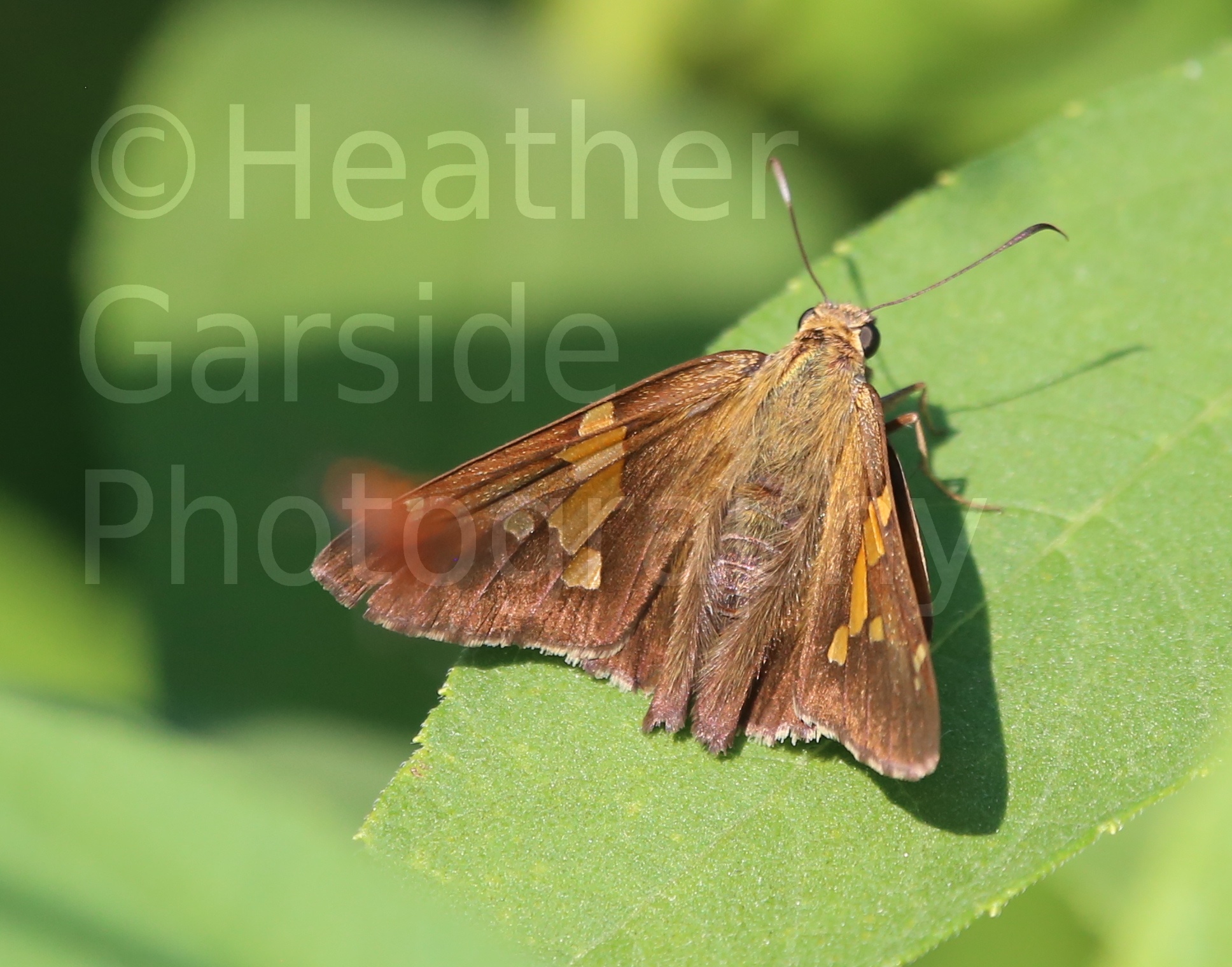
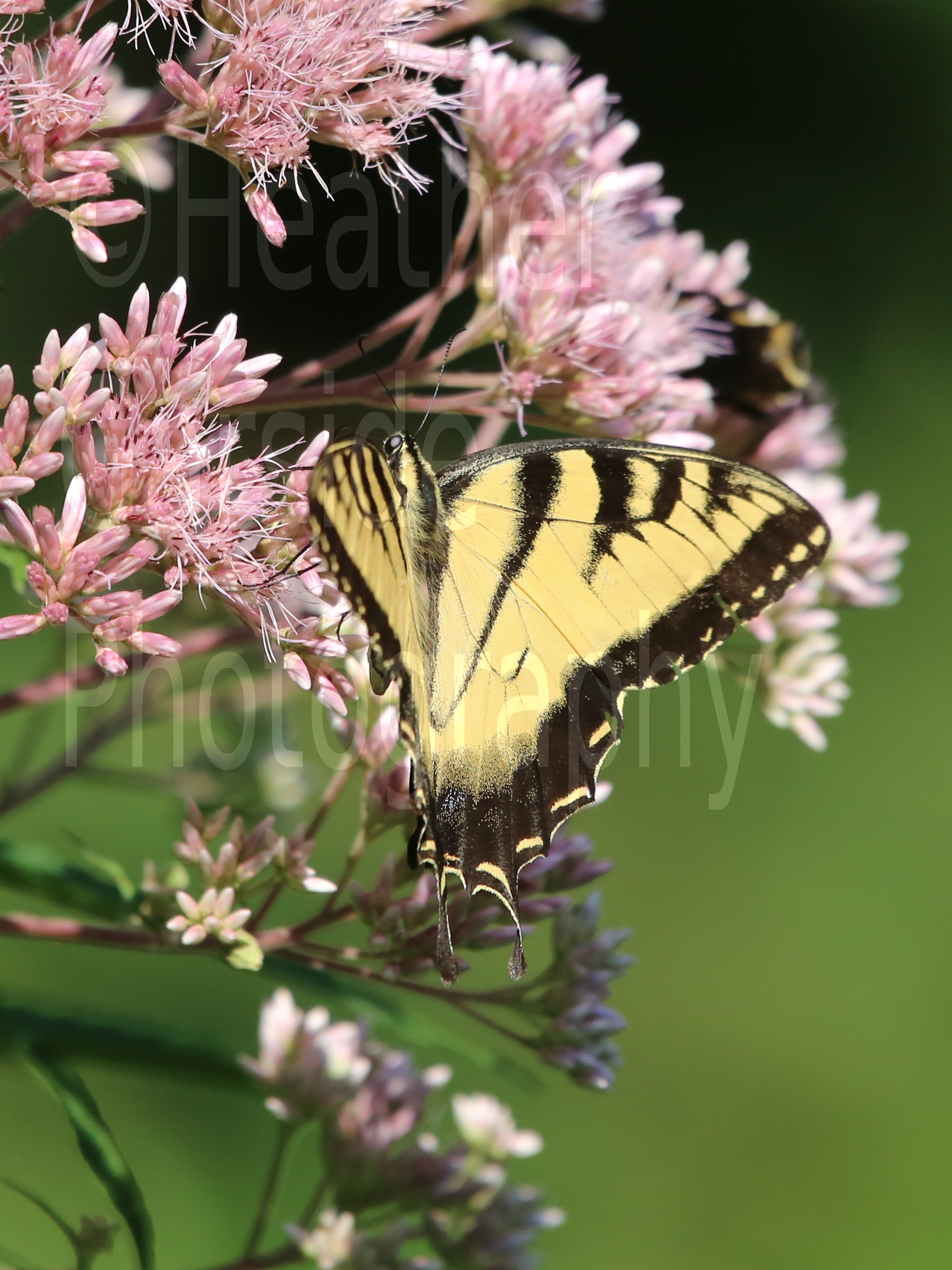
After the group of juvenile Wood Ducks the Towpath leaves the stream behind for a bit and is wooded on both sides. The air was punctuated by the calls of Catbirds and Blue Jays, but it was a different kind of wings that attracted me. Several moths and butterflies fluttered around, feeding off the nectar of various plants that grew along the side of the path. An Eastern Tiger Swallowtail was so focused on nectar extraction that it stopped moving its wings long enough for me to get some nice photographs. A rare opportunity as butterflies, like hummingbirds, seem unable to hold themselves still but are just bursting with energy and the need for flight.
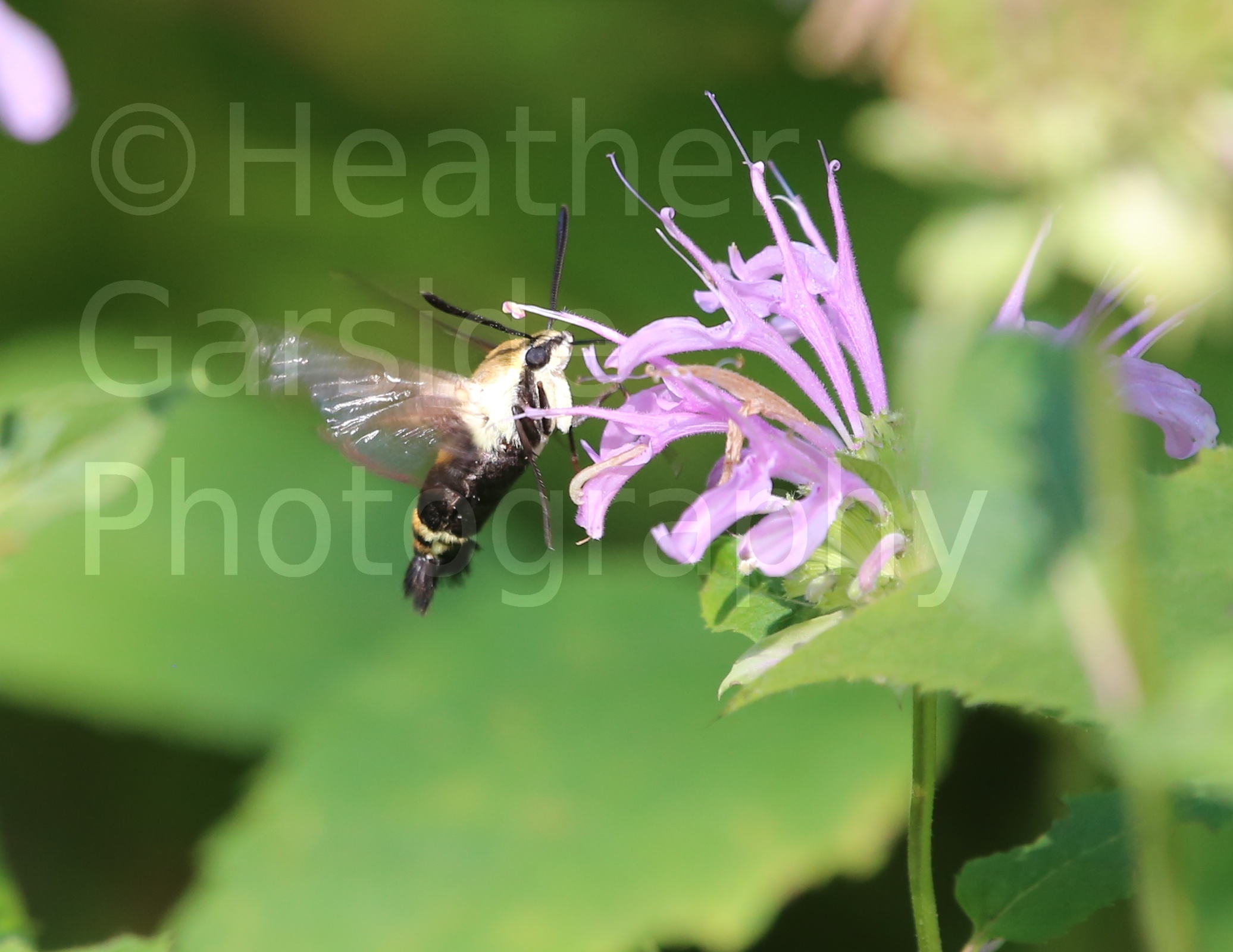
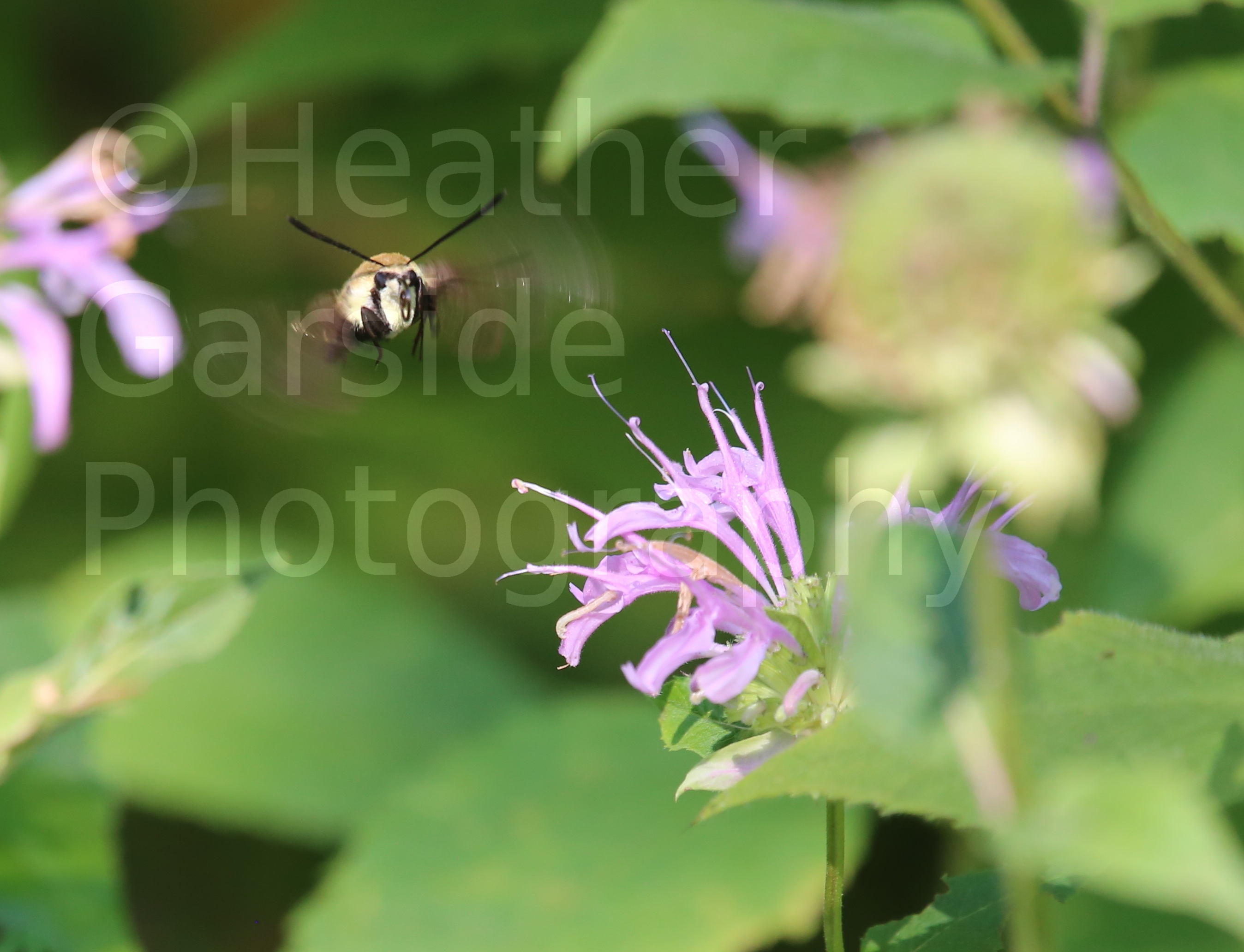
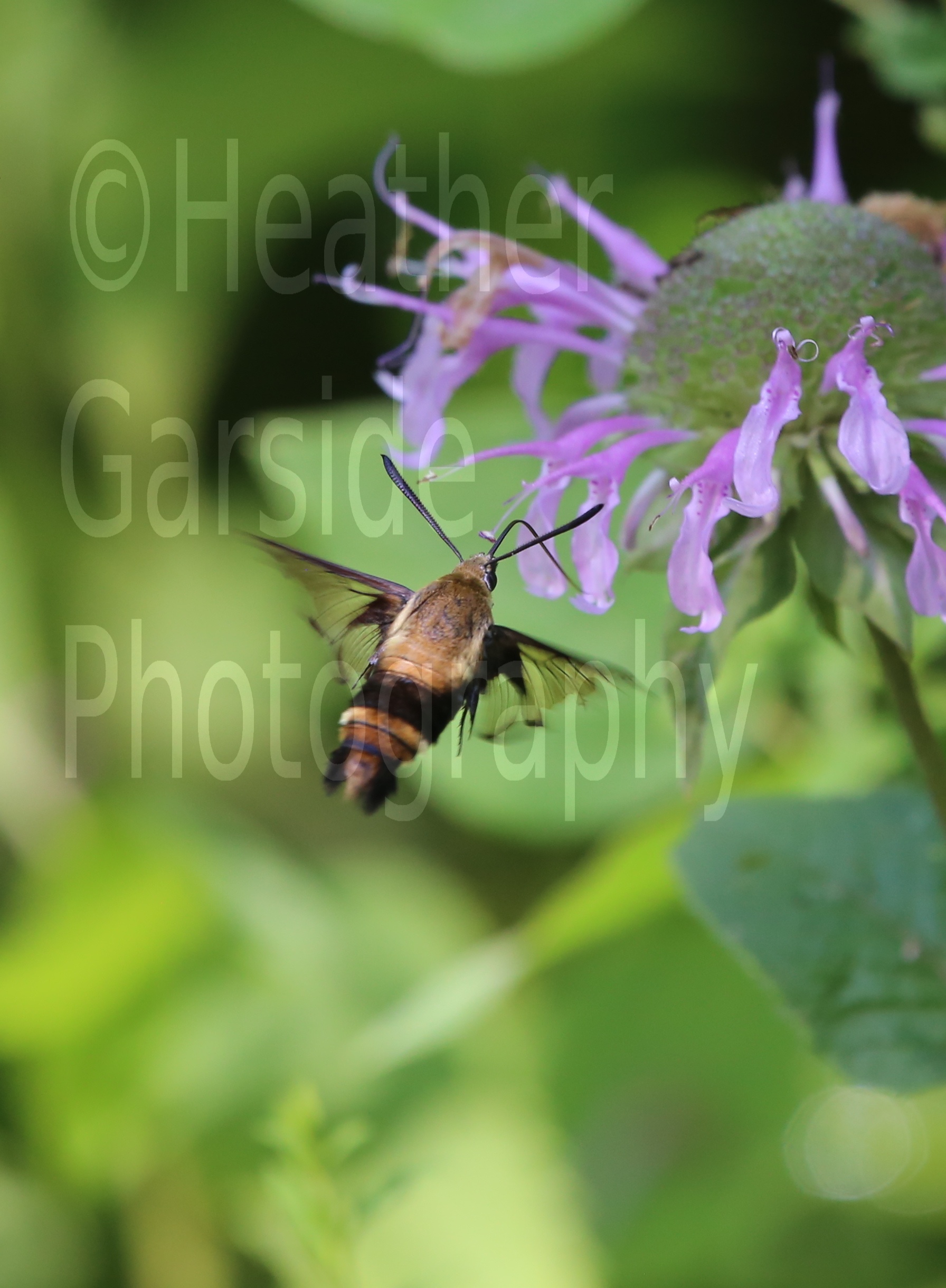
Speaking of hummingbirds, I also managed to spot and take a few
photographs of the Hummingbird Moth, a fascinating creature. As you
might expect, the Hummingbird Moth behaves similarly to the
Hummingbird, fluttering its wings to hover in the air over a flower
from which it drinks with its extended tongue-like proboscis. There
are many varieties of Hummingbird Moths in the United States and it
was really great to see one in action up close.
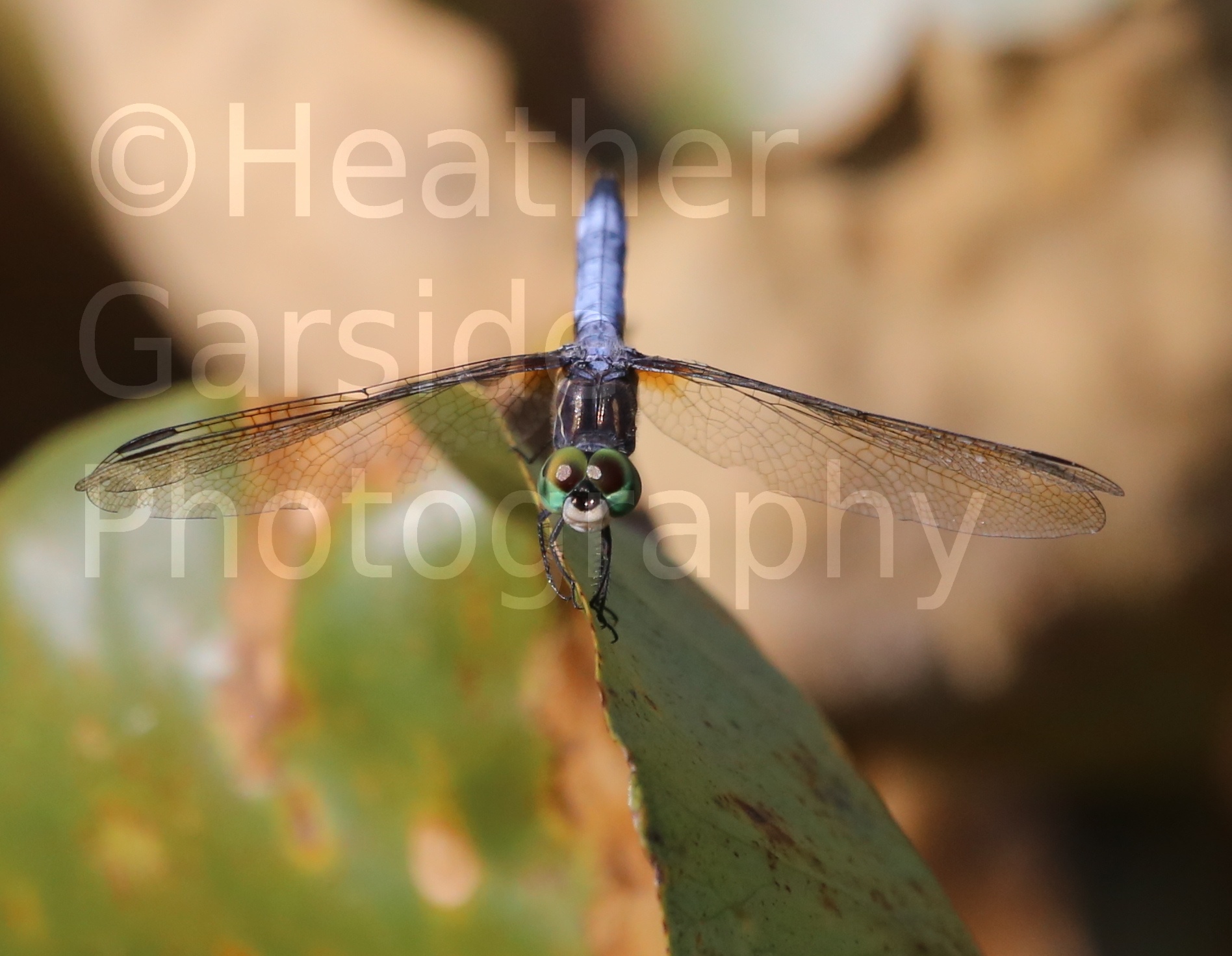
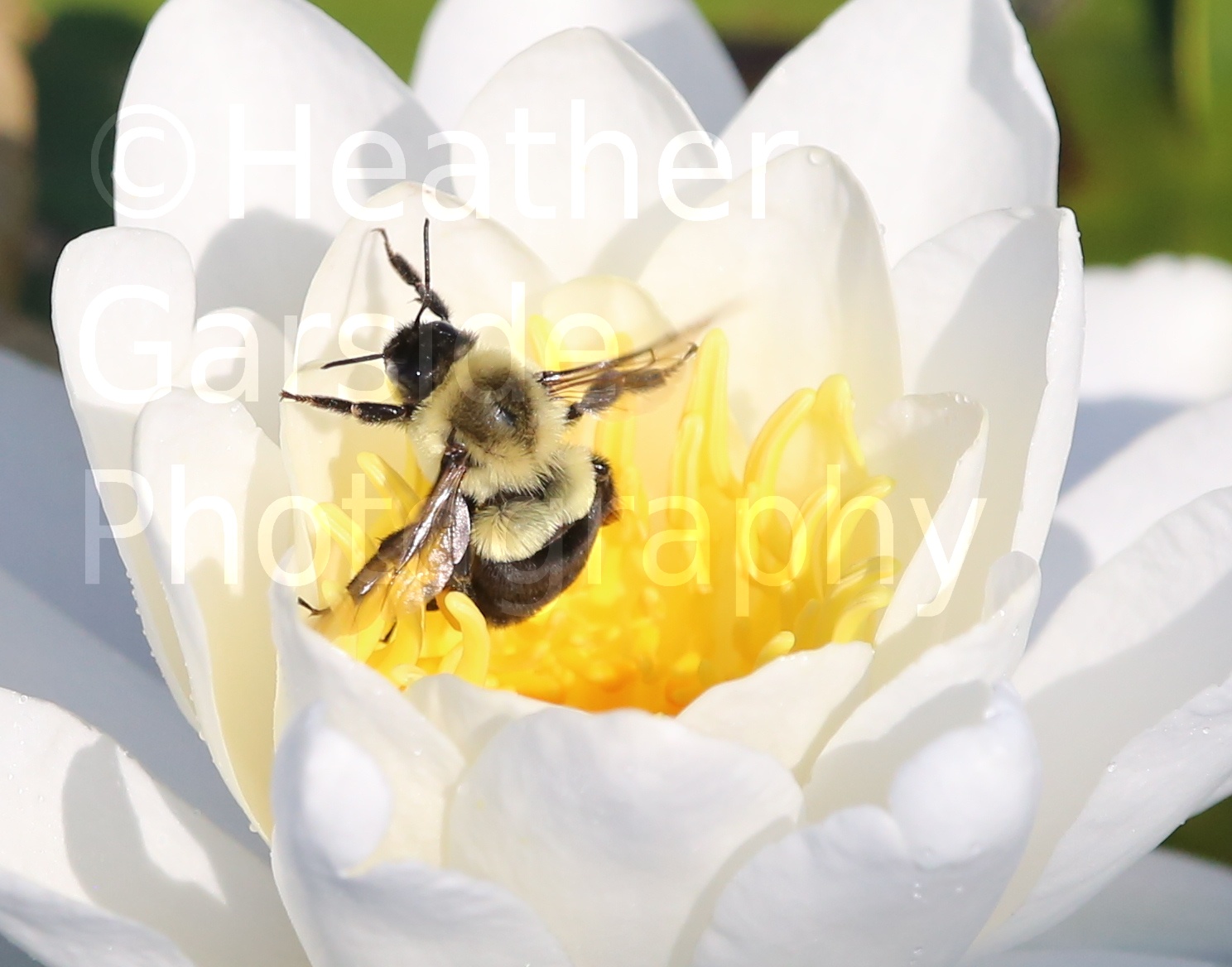
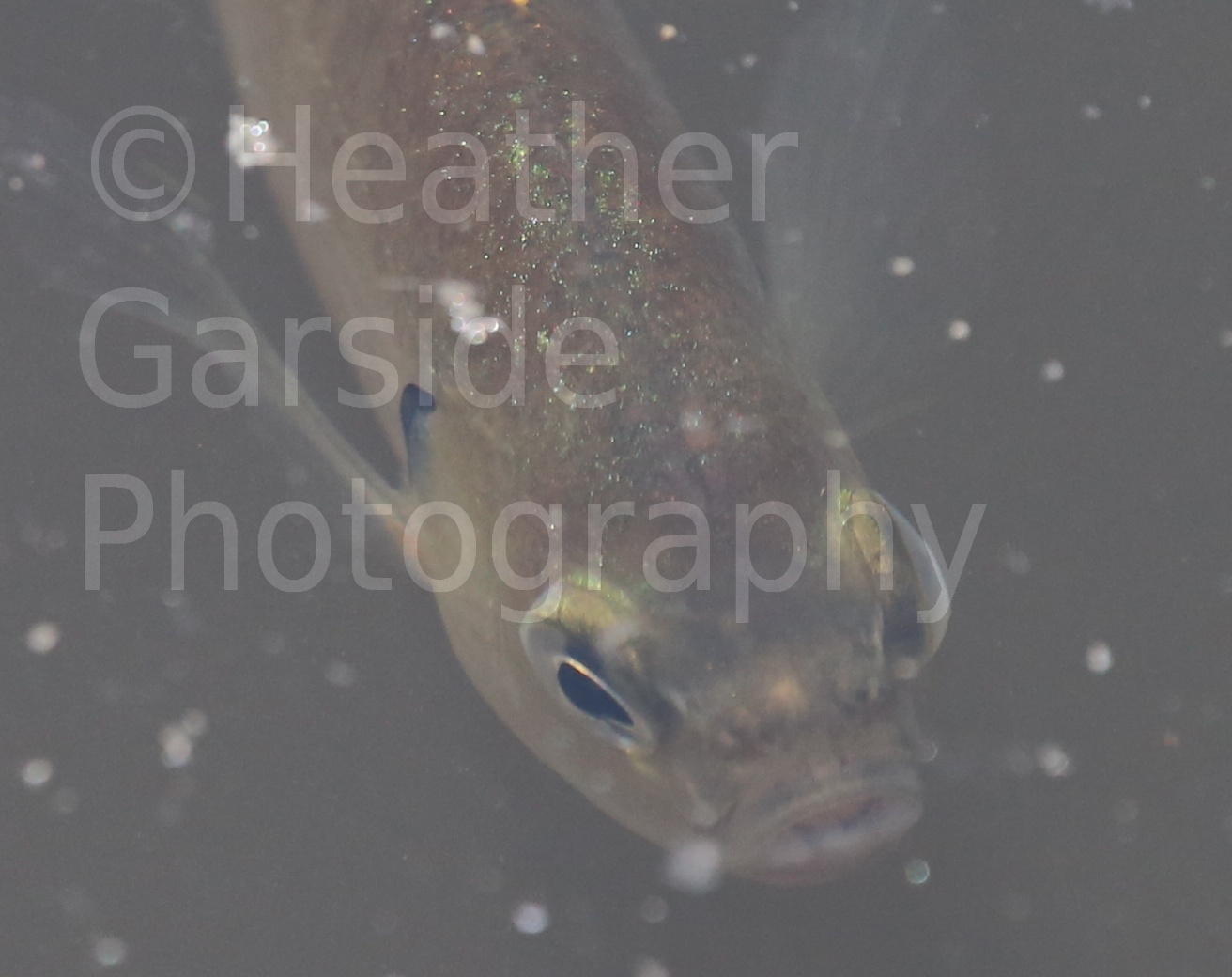
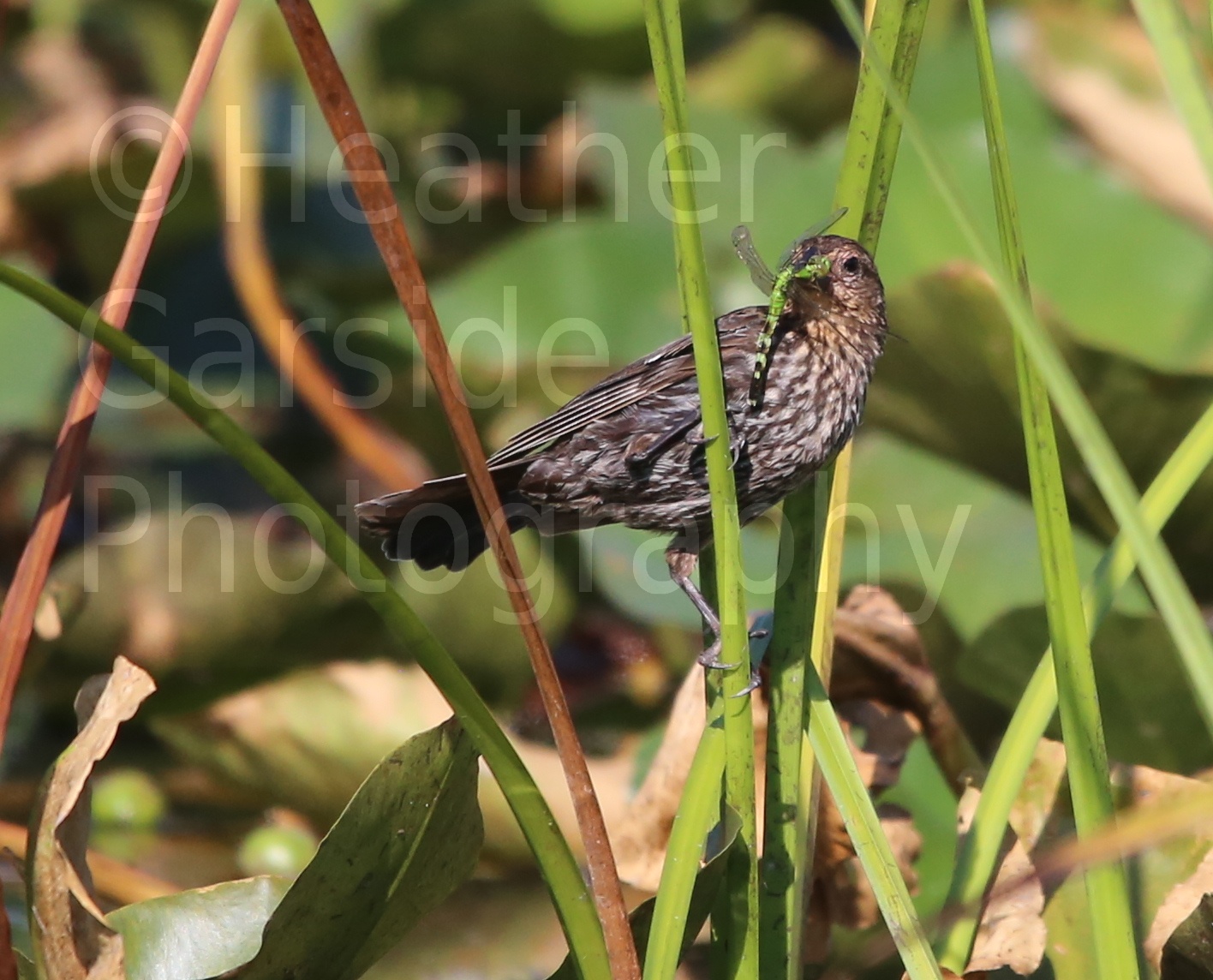
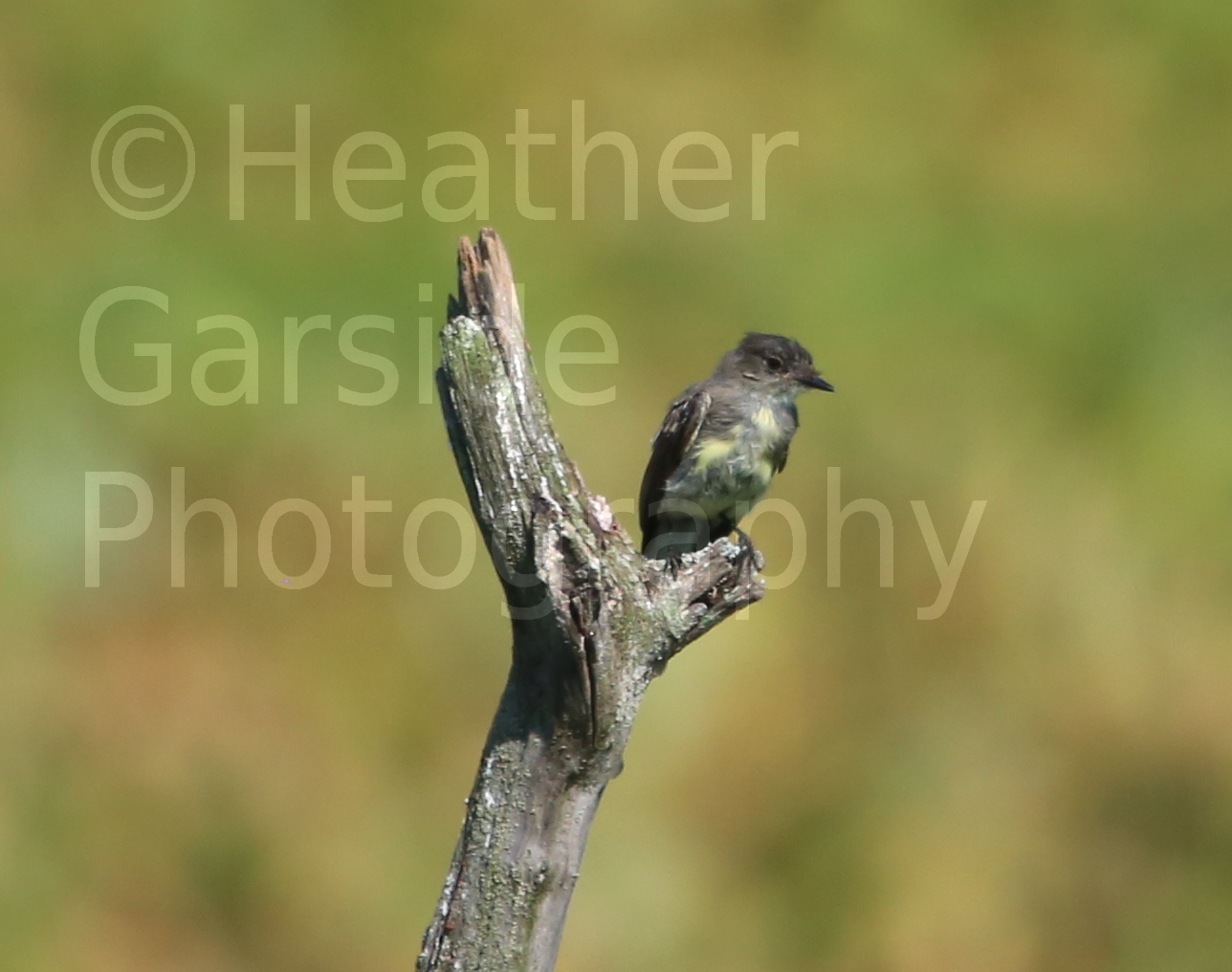
At this point in my walk I turned around and headed back to the boardwalk. As I had hoped, the crowds had all moved on and the space was pretty empty. I settled down along the rail at a good vantage point and scanned the water. Snapping turtles are among the wildlife I have seen here before, and I could hear frogs, so I was trying to notice any and all movement. A pair of Wood Ducks slowly swam among the lily-pads, searching for a nice snack under the leaves. In the relative silence, the buzzing of blue dragonflies created an audible current in the air. One of the dragonflies met a sad end and became dinner for a hungry female Red-winged Blackbird. The water lilies also humming with bees, busy pollinating. The fish were remaining pretty still, trying not to attract any attention as they waited just below the surface. Only their bubbles gave them away. A lone fluffy flycatcher sat on the branch of a dead tree, waiting for the next insect to come within reach.
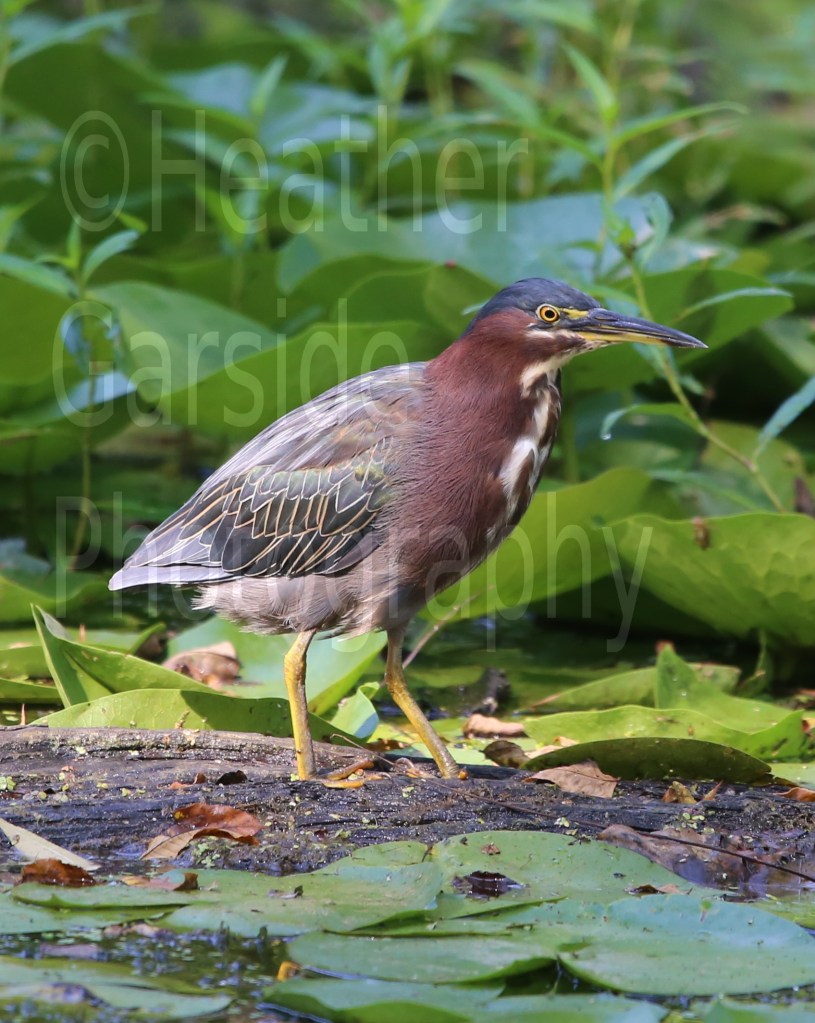
All too soon my time was up and I need to head back to my car and get on the road. It had been a great morning, so it was only with a tinge of regret that I pulled myself away from the railing and headed back to the towpath. But Cuyahoga Valley had one last surprise. Just beyond the lock and almost back to the parking lot, I noticed a Green Heron, slowly and deliberately making its way through the mud. Shorter than the Great Blue Heron by almost thirty inches, the Green Heron’s size also helps it to blend in more subtly into its habitat. With that final sighting I headed back to my car, already thinking about when my next trip to Ohio would be.
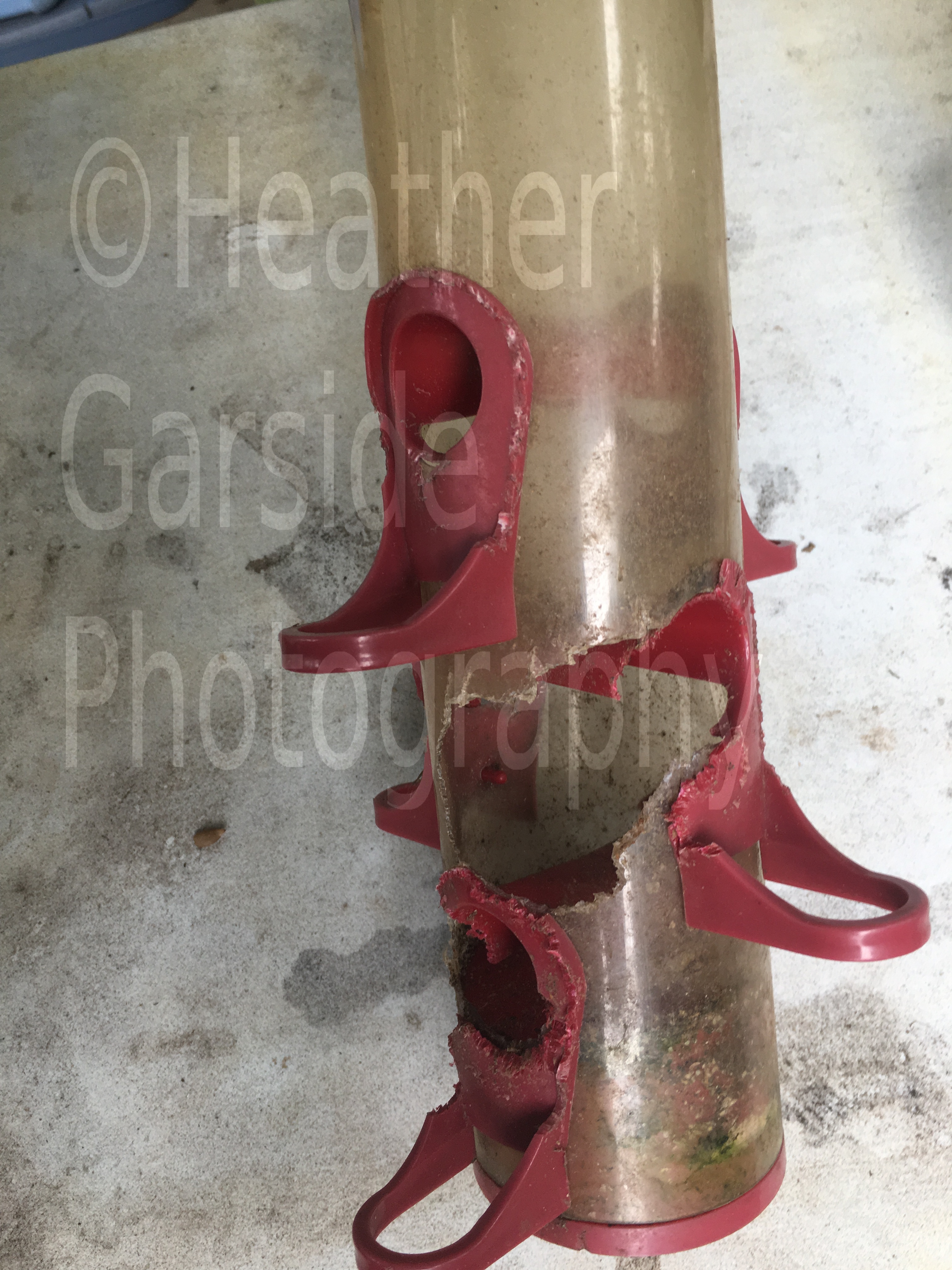
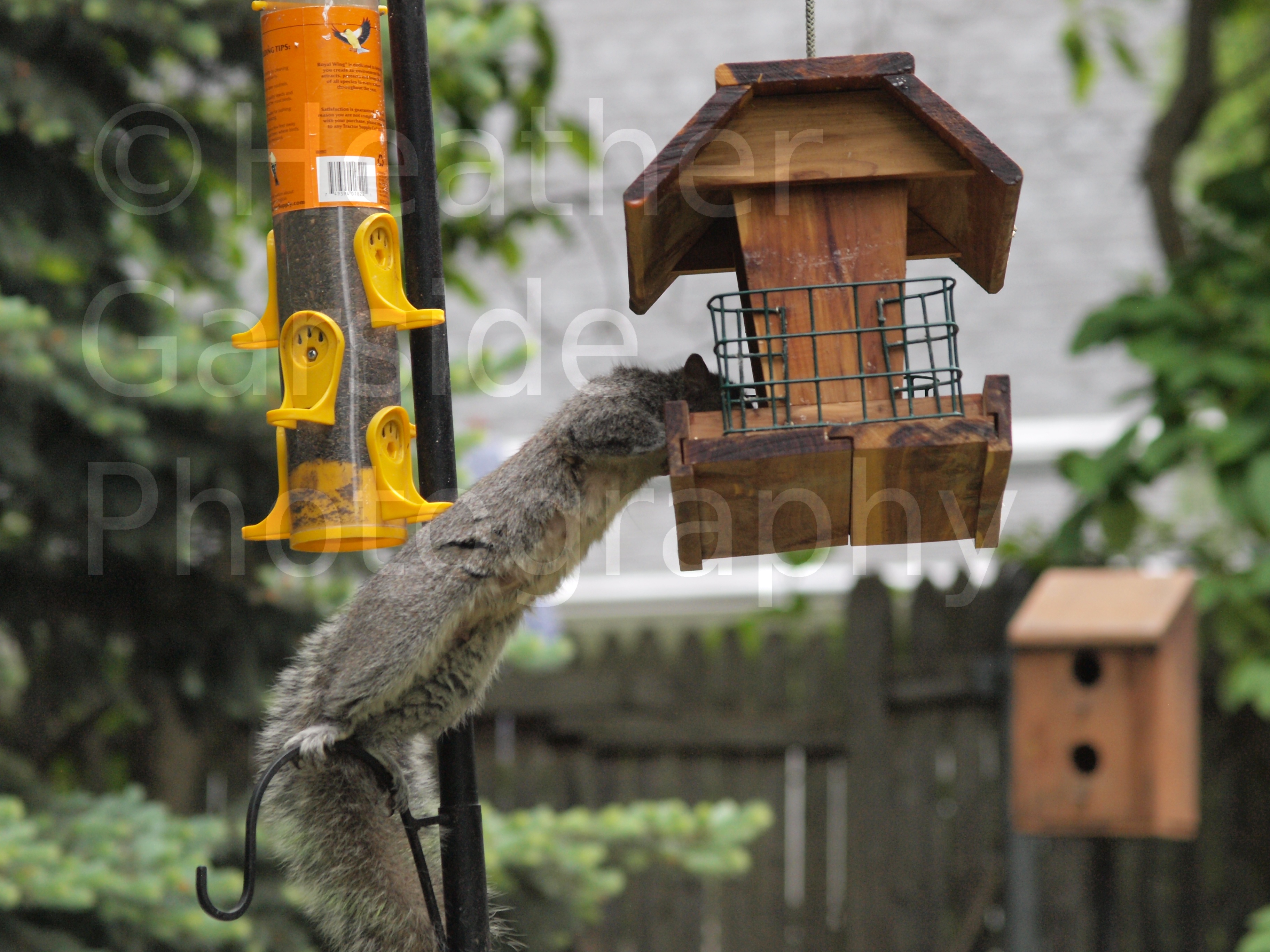
Bird feeders are not all created equal. Any squirrel will tell you this. I have been through many, many feeders at this point, but even the better made, better quality feeders will fail eventually. This is especially true for those made of plastic. Any plastic, even good plastic, will eventually perish when exposed to the extreme cold of winter. There are those people who bring their feeders in during the winter. But you are possibly hurting the birds to save a feeder. Summer feeding is much less important to bird survival. They have other sources of food and they can forage more easily. In winter, especially in snow, that is much more difficult. And remember, many fledglings were taught that your feeder was a food source. They will expect that to remain the case through their first winter. If you want to bring your feeders in, start to wean the birds of their dependence in the late summer and early autumn. Fill your feeders less often, or with less seed. If you have multiple feeders, remove one at a time and allow the birds to adjust.
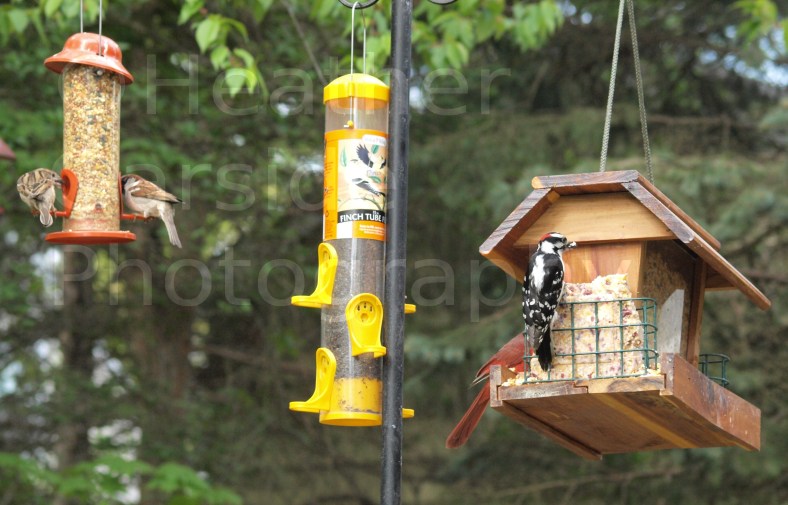
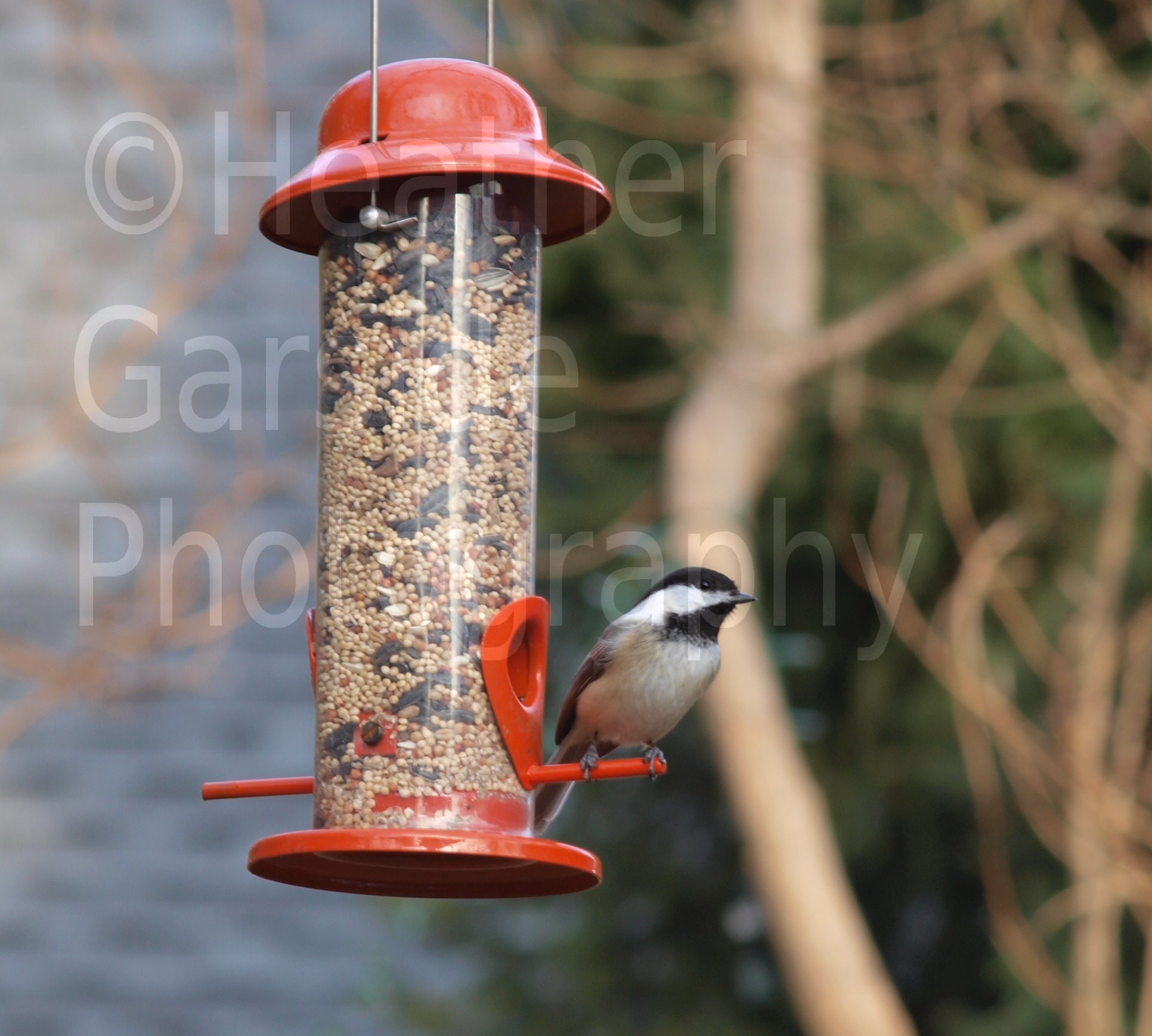
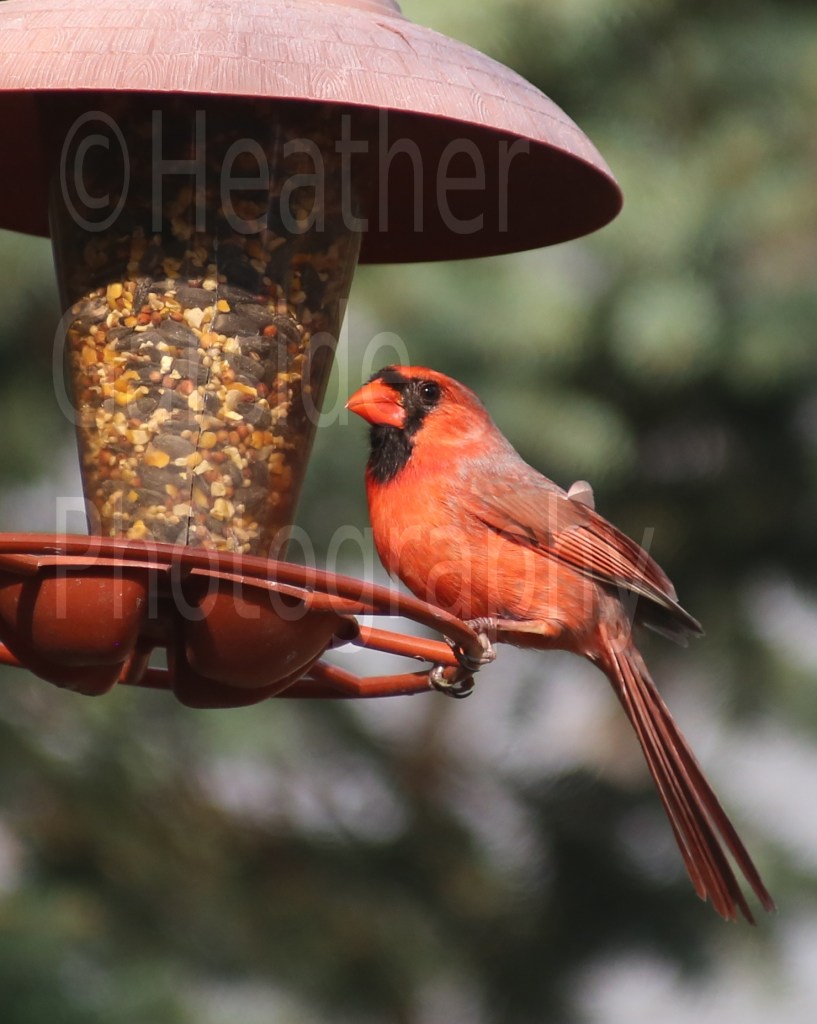
There are a variety of different bird feeders out there, and sometimes it is difficult to know what you want to buy. Seed feeders probably come in the largest variety of both shapes and materials. There are two important things to keep in mind when purchasing a seed feeder. #1 there is no such thing as a feeder that keeps out squirrels. It is definitely true that some feeders are more squirrel resistant than others. But the squirrels have all summer to figure out how to break into your feeders, and you can be sure, no matter how long it takes, one day one lucky squirrel will break the code. #2 the size of the access holes or slits in the feeder, and their corresponding perches are directly related to what birds will be able to use your feeder. Many cylindrical feeders are designed with smaller birds in mind. Larger birds, such as Cardinals, Blue Jays and Grackles, have a difficult time accessing food directly from these feeders They can’t balance and they often can’t get their beaks into the holes. That doesn’t mean they won’t come around. They may glean on the ground below your feeders, eating the seed that falls or they may rock your feeders to spill additional food. There are a variety of different bird feeders out there, and sometimes it is difficult to know what you want to buy.
The holes or slits on seed feeders are a really important consideration all around. Some feeders only have a few openings, while other have many. The question you need to answer before selecting a feeder is, do I want more birds, or do I want to buy bird seed less often? There is really no right or wrong answer. Seed feeders with slits are the most expensive as seeds can easily be spilled or knocked. The summer I used a slit feeder, I filled it only about half as much as I filled my other feeders, simply because it was so often empty merely hours after I filled it.
Materials used to make seed feeders is another large consideration.
They can be found in wood, various grades of plastic and metal. Often
a feeder will have a combination of materials. I have remained on the
cheaper end of the spectrum, often buying “good” plastic feeders
and I have been fairly happy. I have also used several feeders that
have come free with my bird poles, most of which have been totally
crap. One was so flimsy I put it up in the morning, had to throw it
out when I got home from work…totally ripped to shreds by the
squirrels. I was honestly not surprised in the least. So thicker
plastic is better. But it is important to keep in mind that hard
plastic also runs the risk of cracking if it falls to the ground
(squirrel or high wind), especially after a season of two of
weathering has made it more brittle.
Besides
my many plastic feeders, I did inherit a lovely wooden feeder, which
remains my favorite. However, I have stopped using this feeder
because its weight (especially when holding a whole squirrel) was
having a very negative effect on my feeder pole, bending it down and
tipping it to one side. In a sturdy tree I have no doubt I would have
fared better. The large ledge on this feeder was both a positive
attribute and a negative. The larger birds really loved this feeder,
but the ledge also made life much easier for squirrels and chipmunks
to not only get at the seed, but to sit on the ledge and eat
themselves silly. I went through a lot more seed when I used this
feeder, and that, along with the damage to the bird pole, is why I
retired it to my basement.
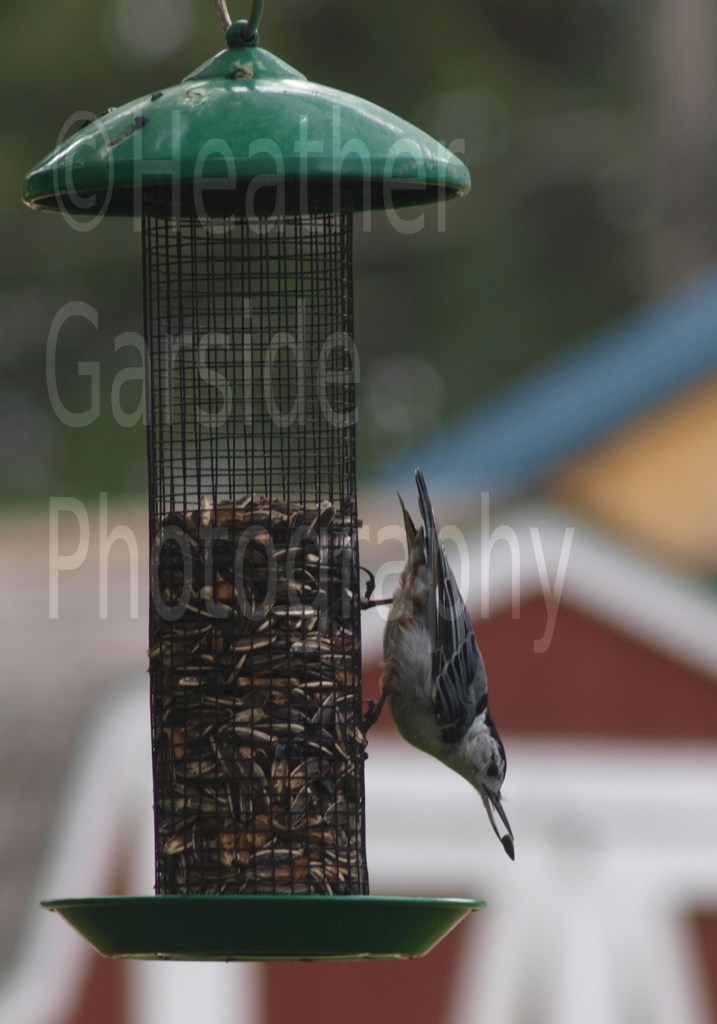
I have also had the opportunity to watch several metal feeders in action. Most metal seed feeders have a cylindrical, chicken wire style body, with a series of rectangular or triangular openings. They usually have a ledge at their base and the top usually unscrews to allow filling. These types are really popular among both the smaller birds (sparrows, finches, chickadees) and woodpeckers, nuthatches, cardinals etc. The larger tree climbing birds, such as the woodpeckers and nuthatches are really able to hook into the holes, balance and peck, similar to their natural stance on a tree. One major drawback with metal is weather exposure. If you have a very windy rain storm your seed will get wet. As wet seed can grow mold and potentially make birds sick, I always try to dump out my feeders after a very wet storm, so that the seeds don’t have time to mold and harm the birds.
I think, considering all the pros and cons, metal feeders are really
the way to go. They withstand the elements better. They are less
likely to be damaged from falls. They are no more difficult to fill
than other feeders. They represent the best balance of durability and
lightweight. Some manufacturers try to add metal components to
plastic feeders, which sometimes serves to make them stronger, but I
still think all metal is the best move.
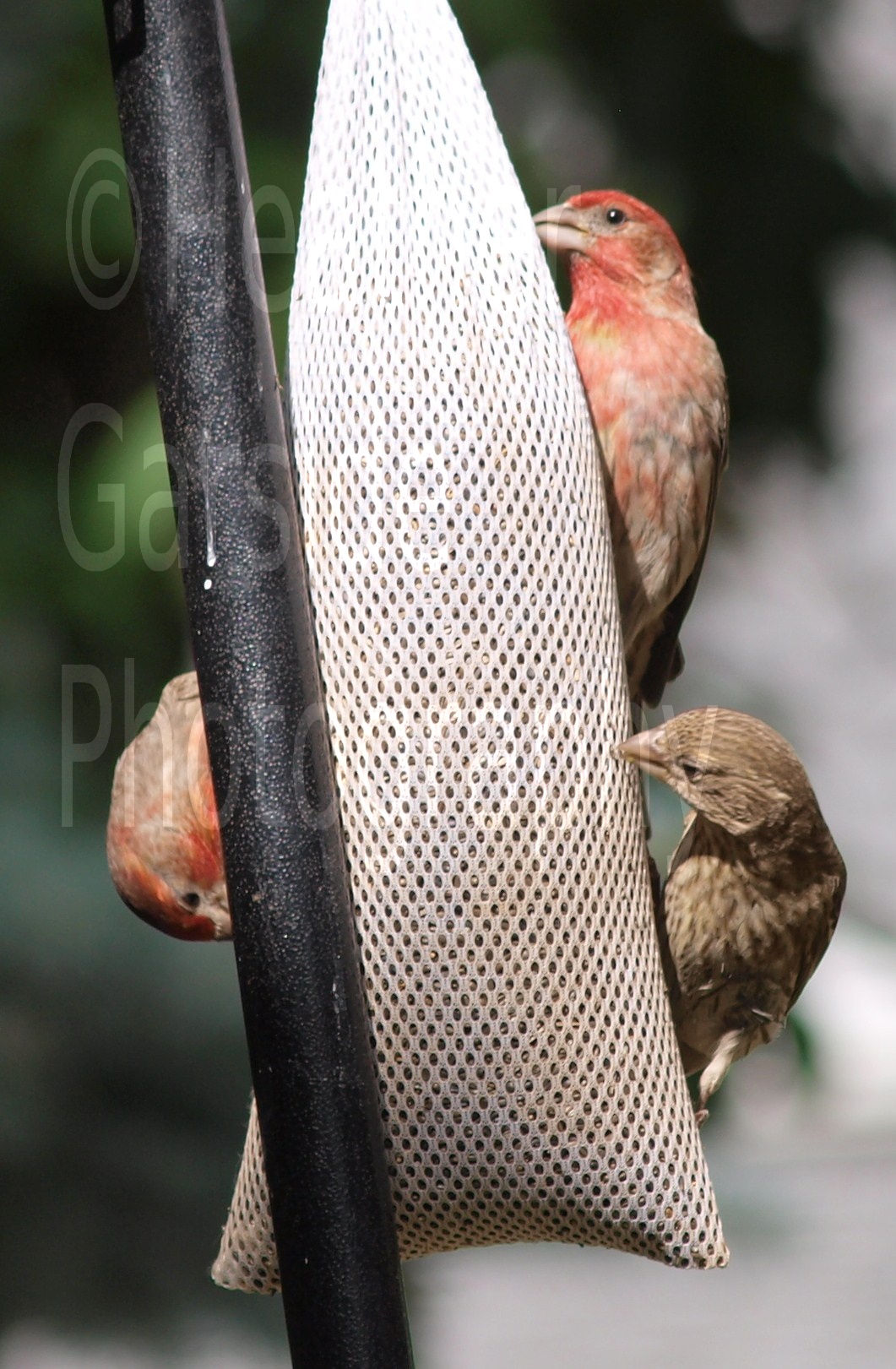
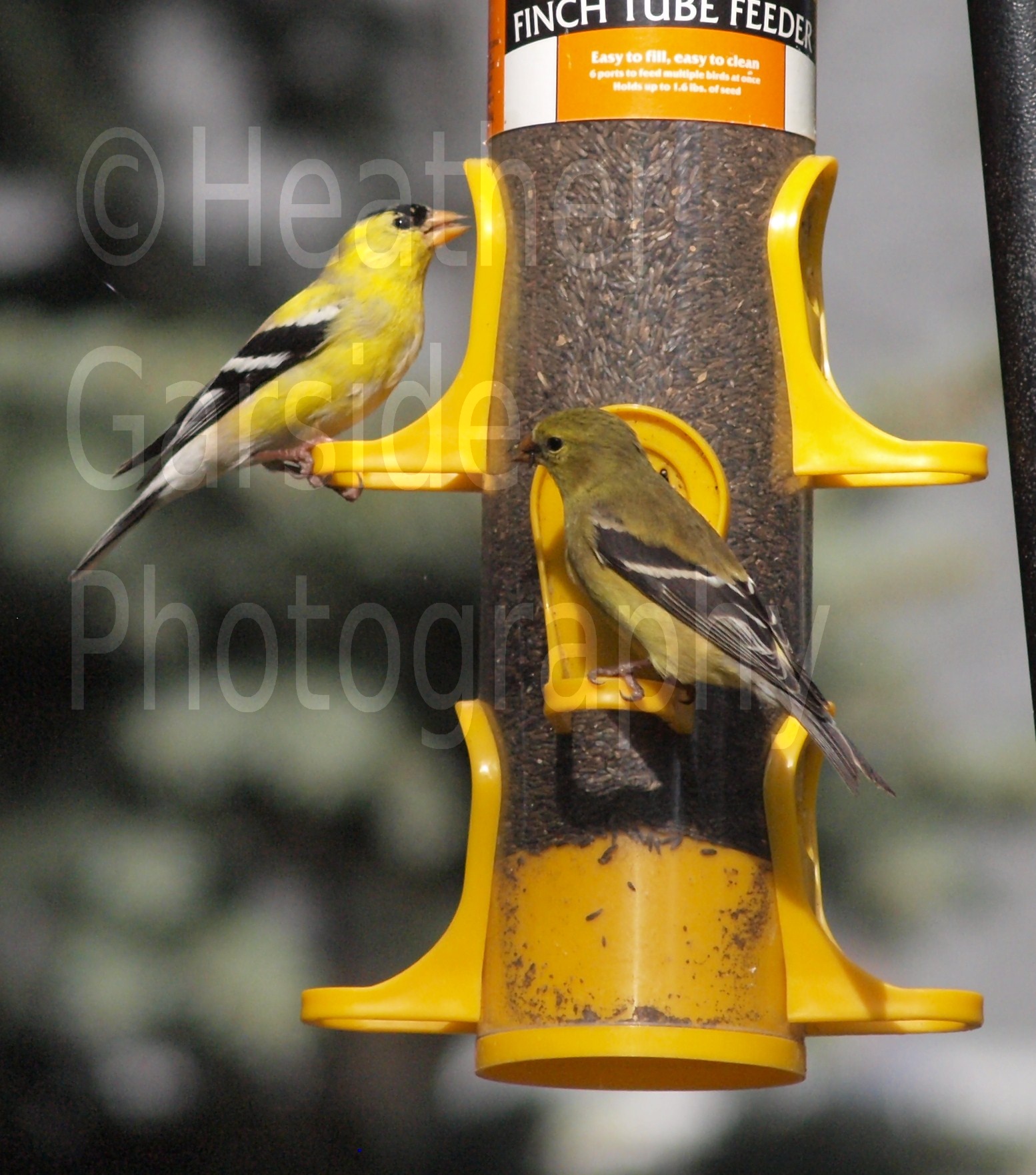
Before we can completely move away from the topic of seed feeders, we must also consider finch feeders. Like the popular girls at school, everyone wants to catch the attention of finches to their gardens. And because the finches are so special, they get their own special seeds and their own designated feeders. This is because nyjer seeds, the finch food of choice, are much thinner than most other bird seeds. They tend to slip out of normal feeders. As a result finch feeders have most of the same qualities as all other seed feeders, with the exception that they all have much smaller holes. If you aren’t sure you can attract finches, you might want to start with a finch sock. Inexpensively found where most bird feeders are sold, the “socks” are thin cloth bags with very small vent holes. They are usually refillable, with a drawstring top. While they are very inexpensive, I have found they do not withstand the elements. Especially if you do attract a lot of finches, expect to replace your sock once or even twice a season (at least). Being such thin material, they are very easily torn. Once you have a hole, you are done, because those thin nyjer seeds just spill out and the finches rarely, if ever, will go looking on the ground. If you decide to graduate from a sock to a more substantial feeder, you will find a variety of metal and plastic finch feeders, all identified specifically as finch feeders due to those smaller openings. Like with all seed feeders, if you want longevity, go with metal.
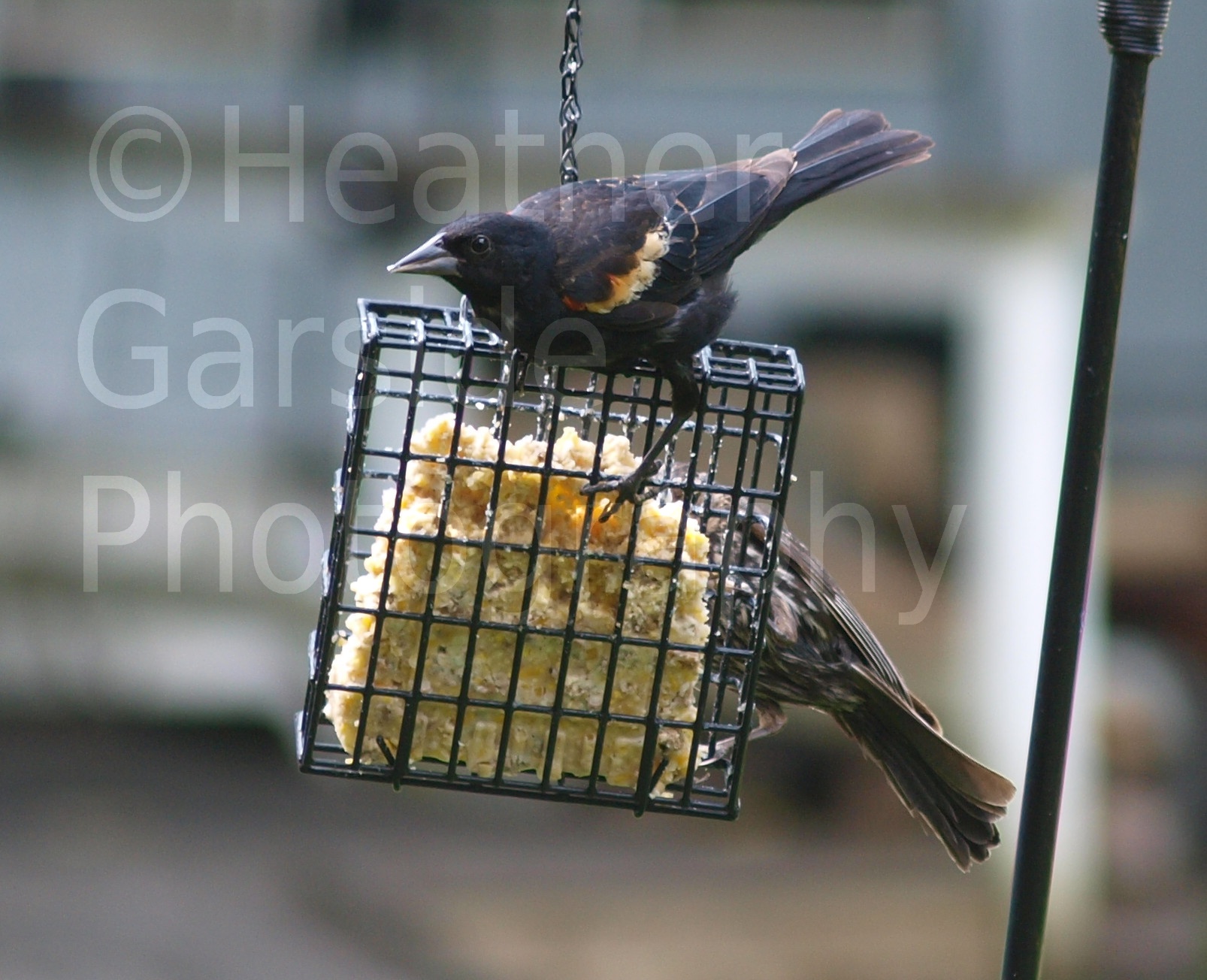
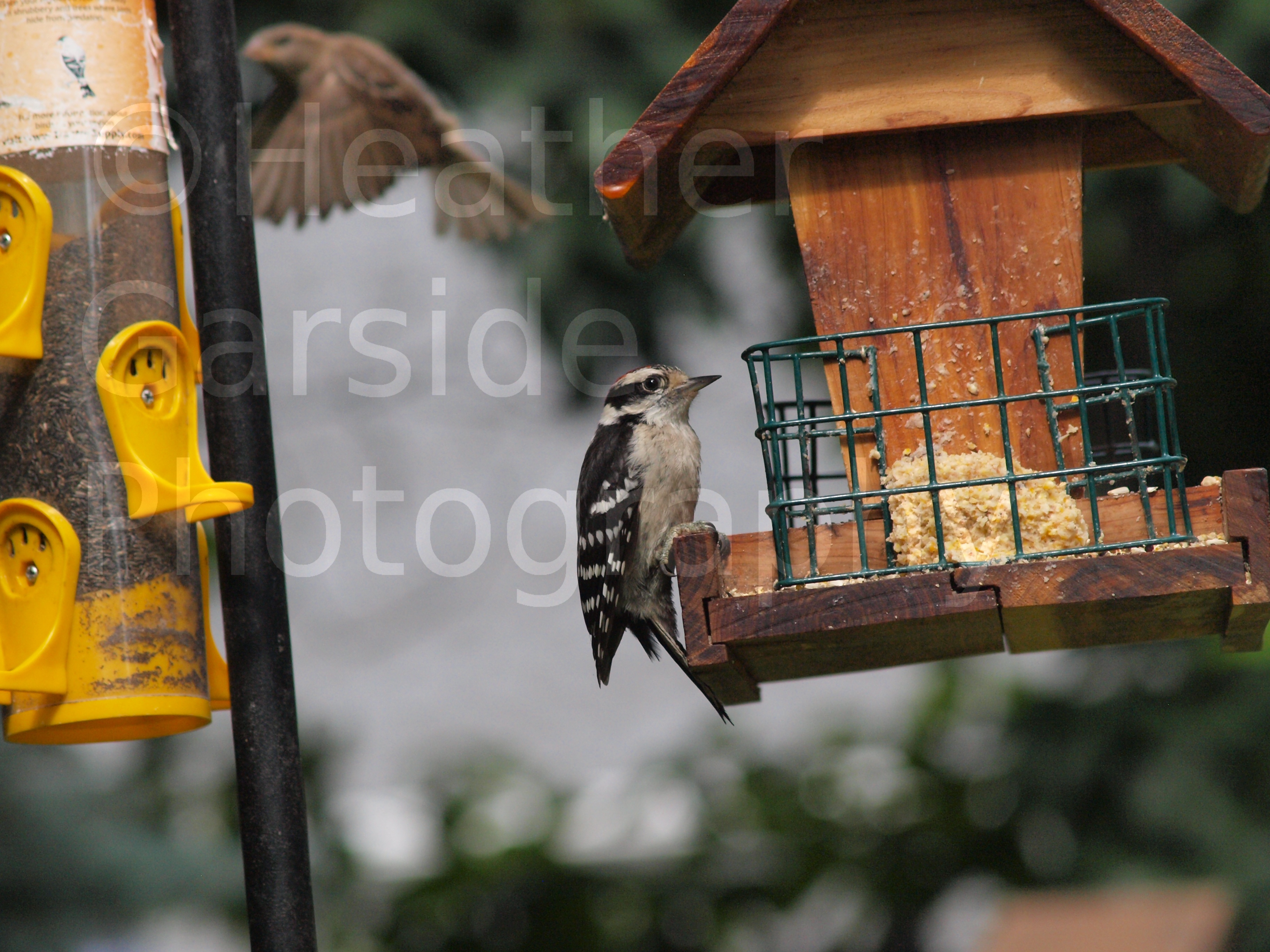
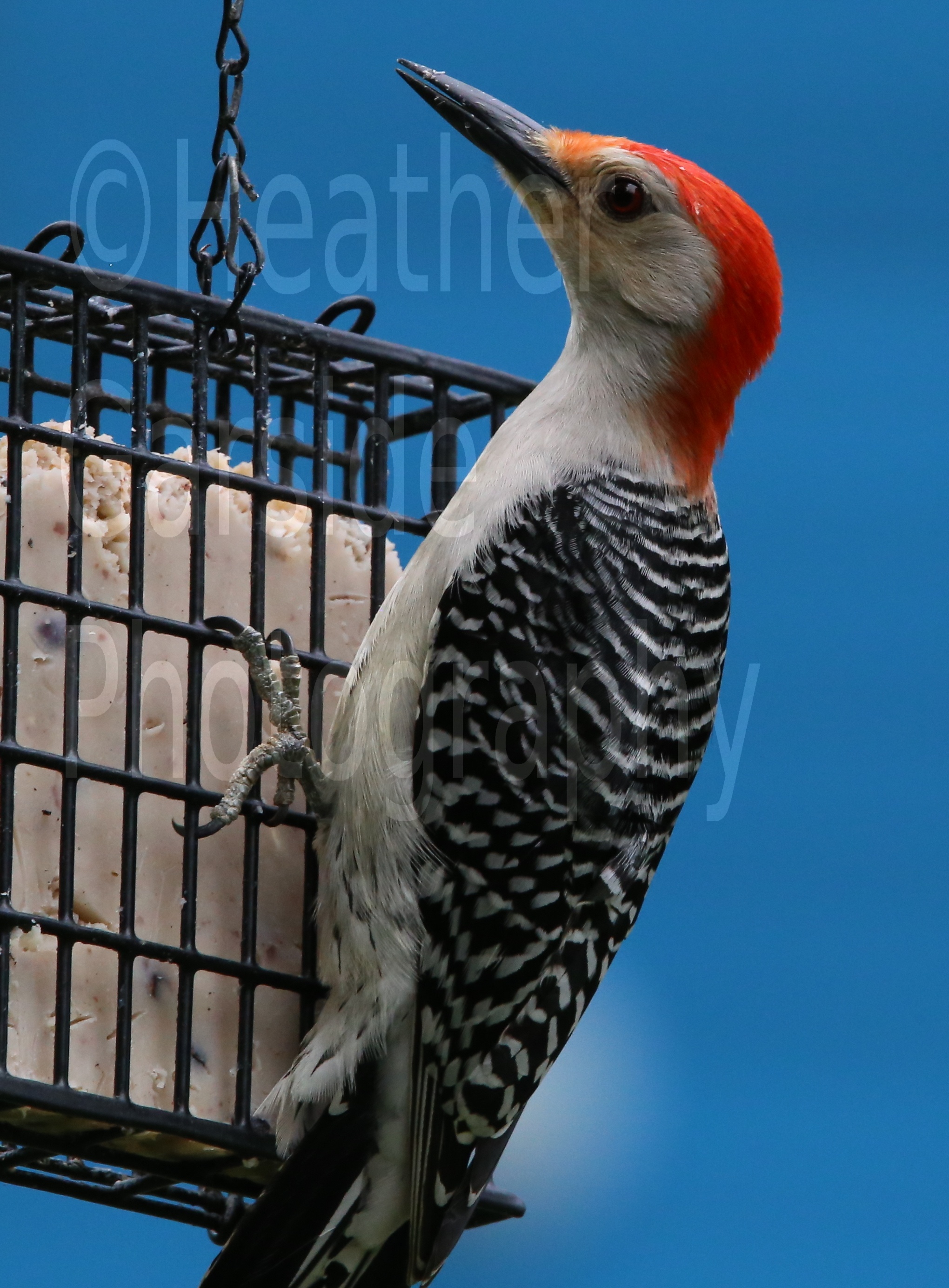
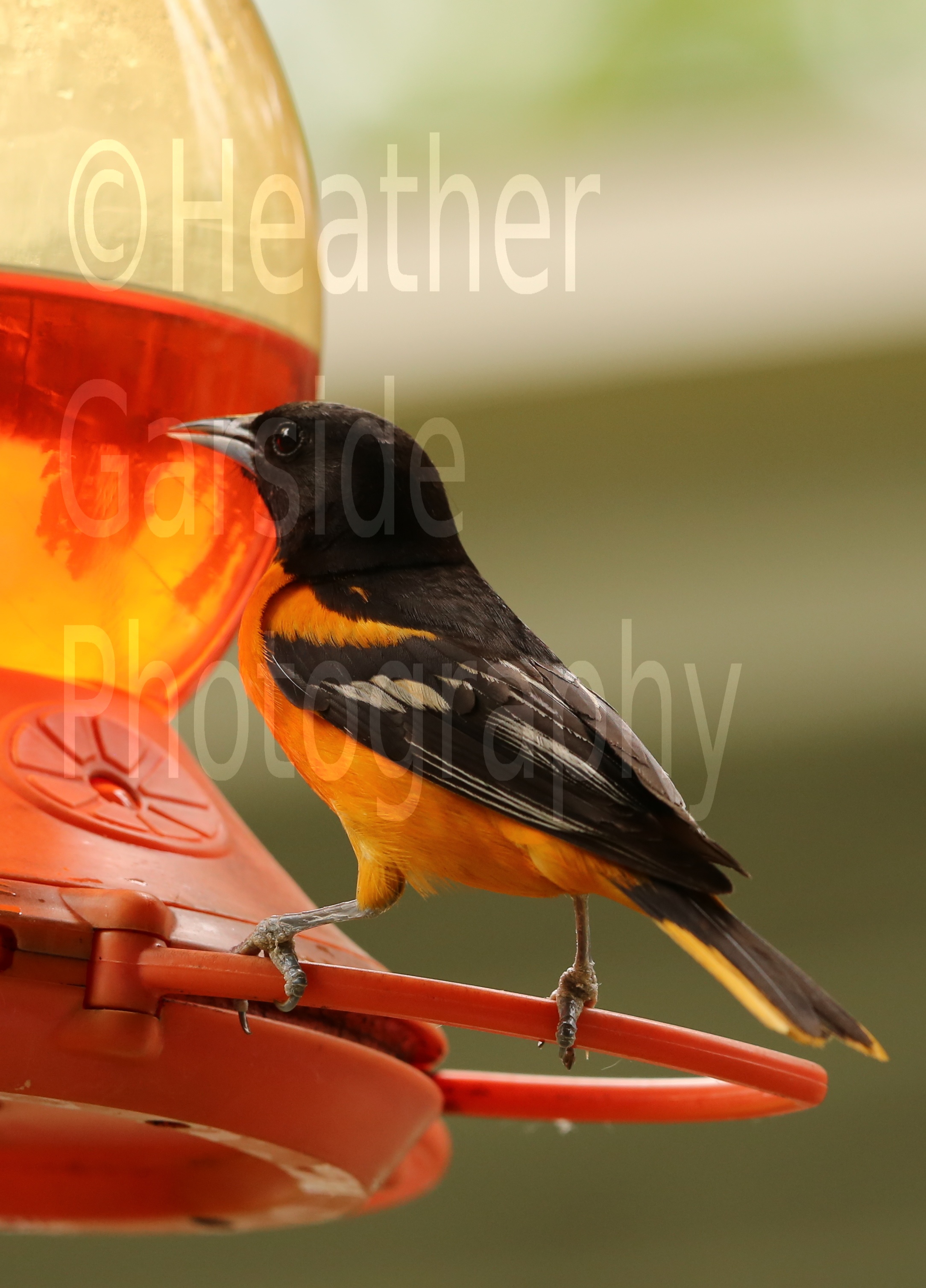
In comparison to seed feeders, suet feeders are pretty straightforward. Yes there is occasionally a fancy wood and metal suet feeder available, but the basic square metal hinged cage seems to serve just fine. I have inherited several since I started feeding birds and I haven’t needed to throw any away due to damages. The biggest area of concern is where the two halves close. A lack or loss of tension and the suet feeder will pop open easily. Suet feeders are also relatively inexpensive compared to other feeders, so no real worries there. I highly recommend that everyone consider having a suet feeder. The suet is a bit gross at first, but you soon get used to it and you will find they attract a greater variety of birds. Larger birds like suet and can use suet feeders. With a suet feeder I have attracted woodpeckers, red-winged blackbirds, grackles, cardinals and catbirds. I have also seen Baltimore Orieles, nuthatches and other birds drawn to them. Weather is the big drawback with suet. A rainy day and your suet dissolves. I have started checking the weather for the next few days before refilling my suet. Sometimes manufacturers will combine seed feeders with suet feeders, which is a nice way to save space. My wooden seed feeder was a combination feeder and I saw no disadvantages. The birds weren’t bothered by each other, and sometimes they would switch from suet to seed or seed to suet depending on what other birds came to the feeder.
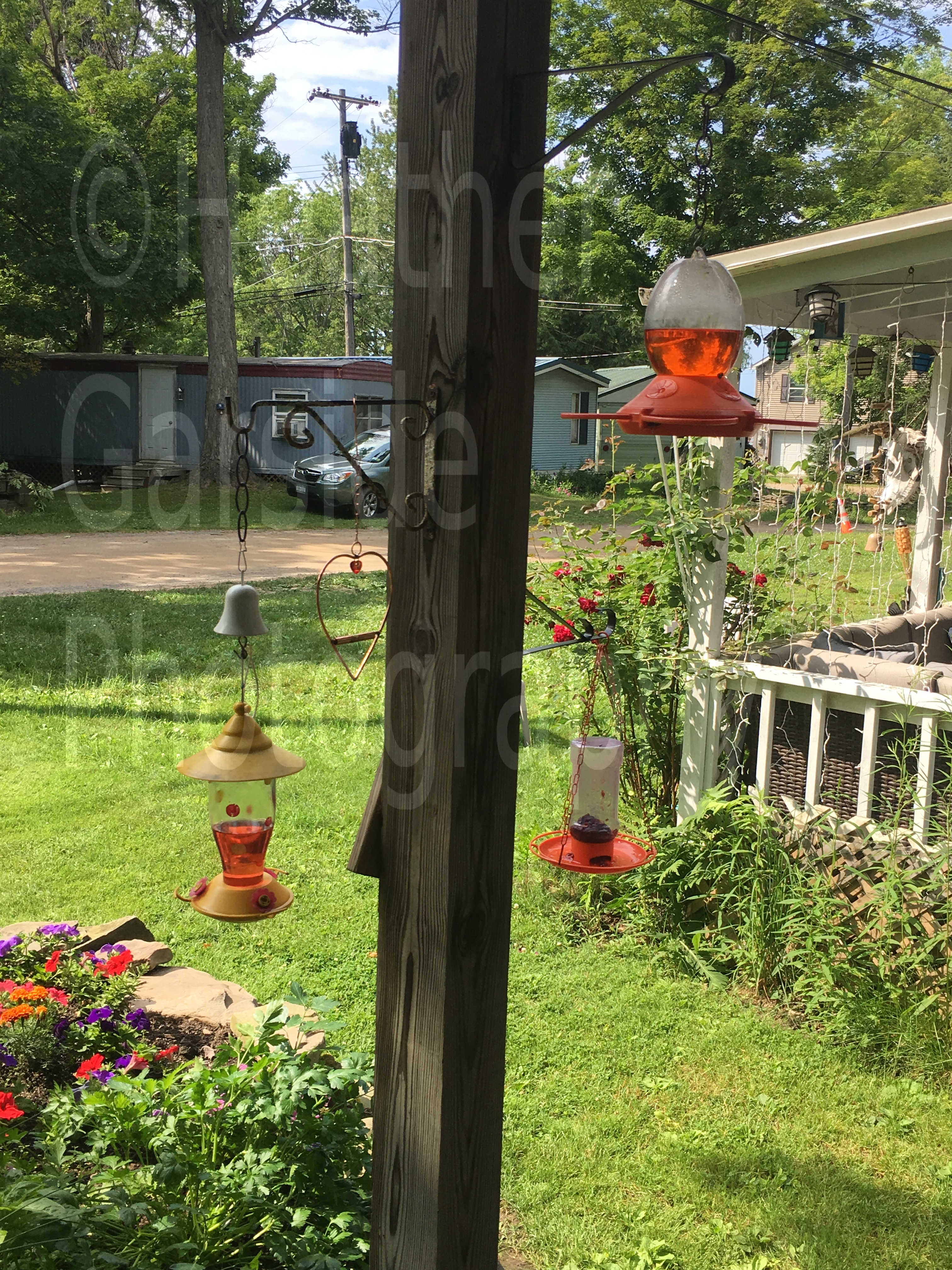
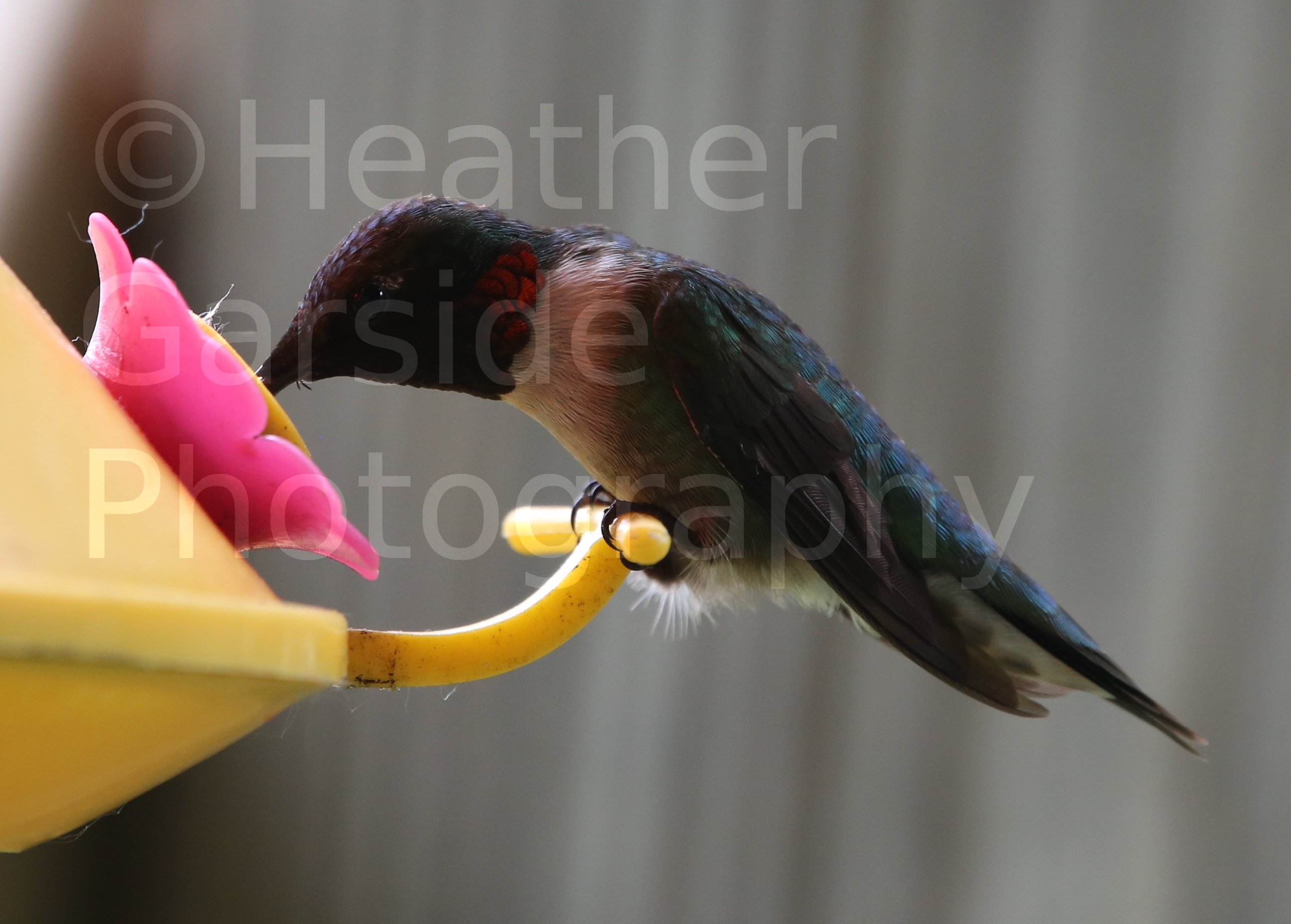
Not unlike finch feeders, hummingbird feeders and Oriole nectar feeders are a bit more specialized. While Oriole feeders tend to hold more nectar and be larger, with larger perches, they are in essence very similar. They are usually a bottle like shape on top with the perch base usually doubling as a threaded lid, when flipped upside down. When right-side up, the base has holes where the birds can reach in to drink the nectar. Depending on the quality of the feeder’s plastic (they are pretty much all plastic) cracks or damage to the thread or seams are your major concern. You will have a sticky mess! Nectar food, often dyed red with food coloring, can be easily made at home with boiled water and sugar. It is important to know that if your feeder is not frequented by a lot of birds (my parents probably have 50-70 hummingbird’s perch in their feeders daily) you need to dump out the nectar every few days, regardless of how much has been consumed. This is particularly true if the nectar is in direct sunlight. Old nectar can harm or even kill hummingbirds. If you are having trouble with ants (or uncles) getting into your nectar, you can buy a smooth ceramic, bell-shaped attachment which goes between your hook and the string of the feeder. Apparently the ants can’t get purchase on the surface, so they cannot crawl down to the feeder.
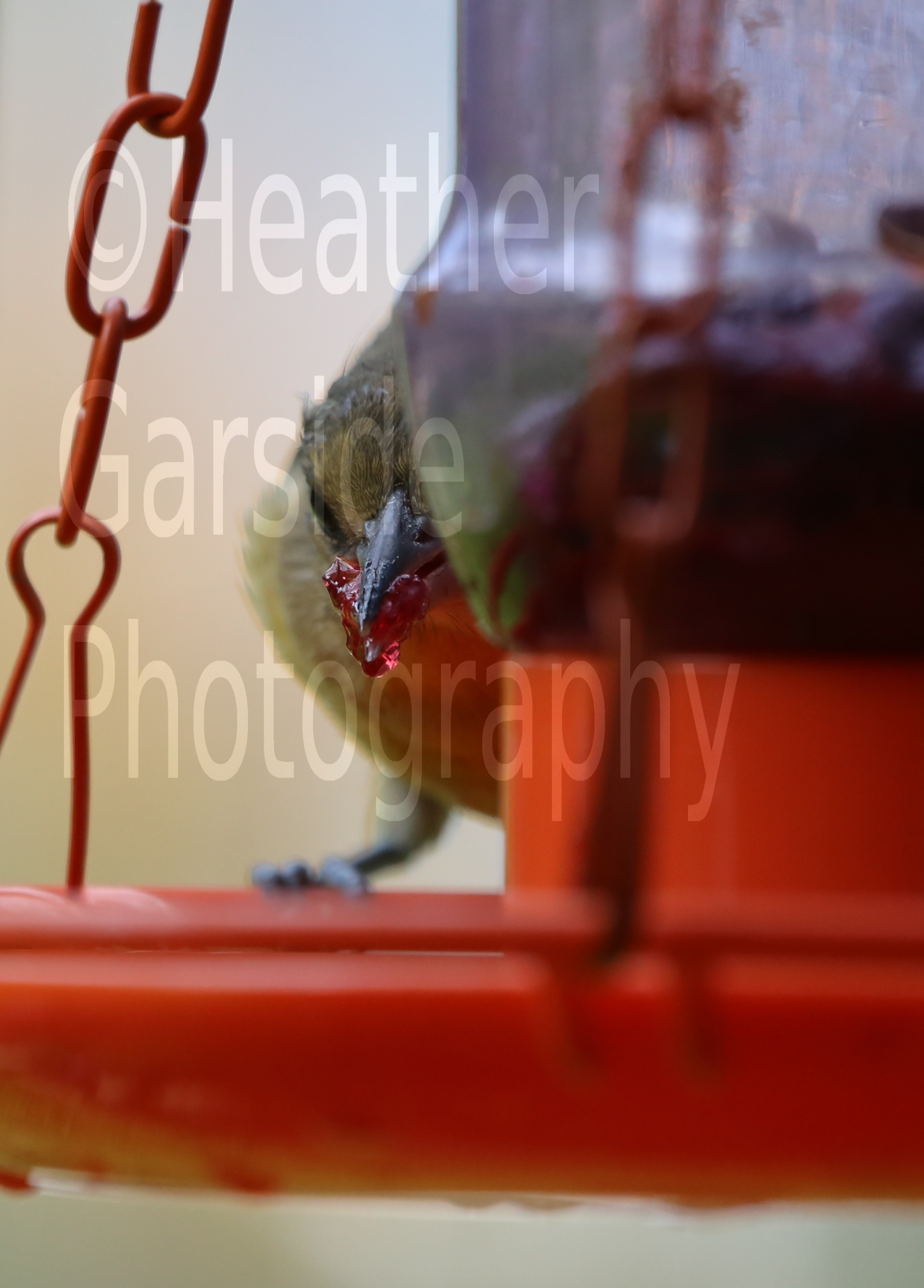
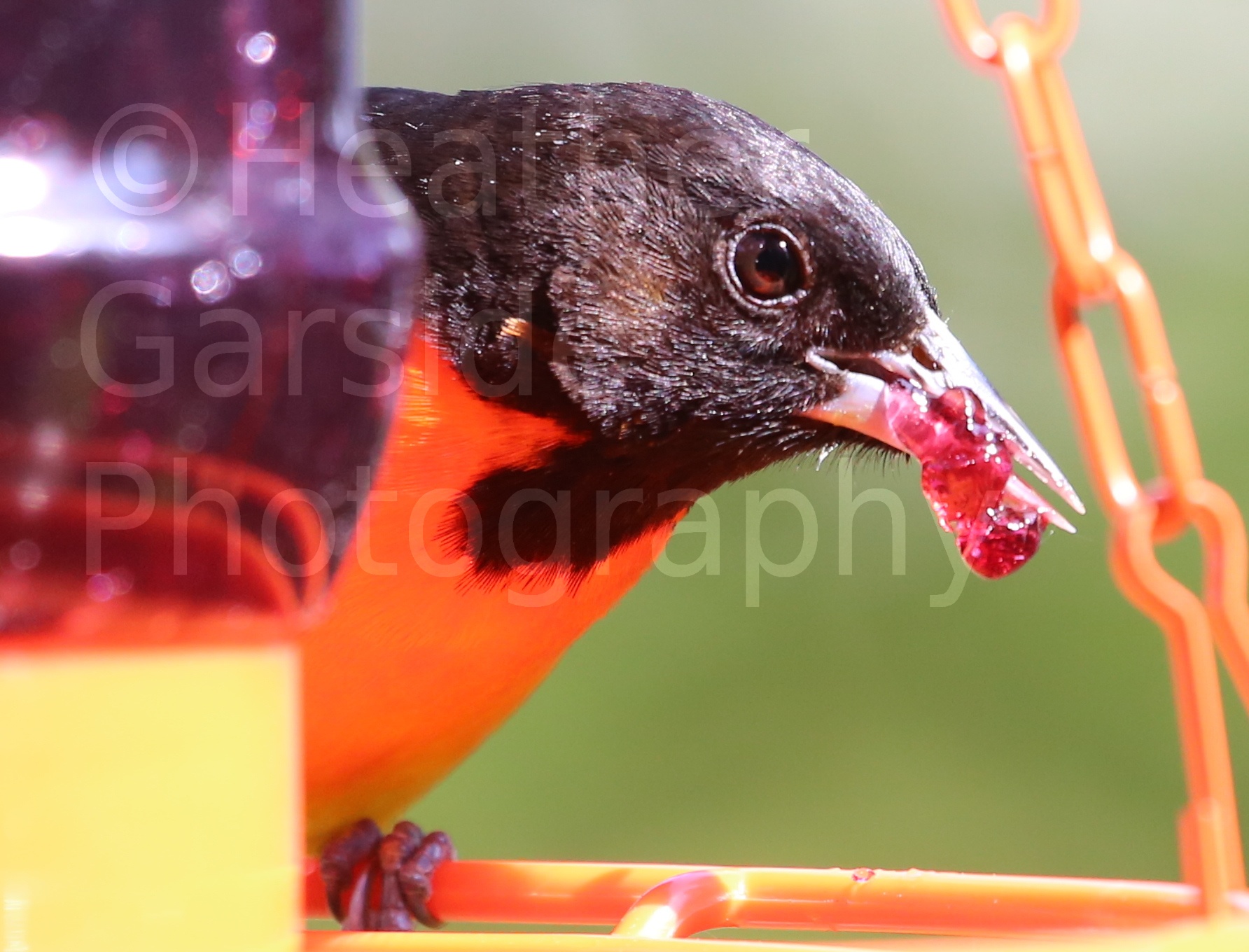
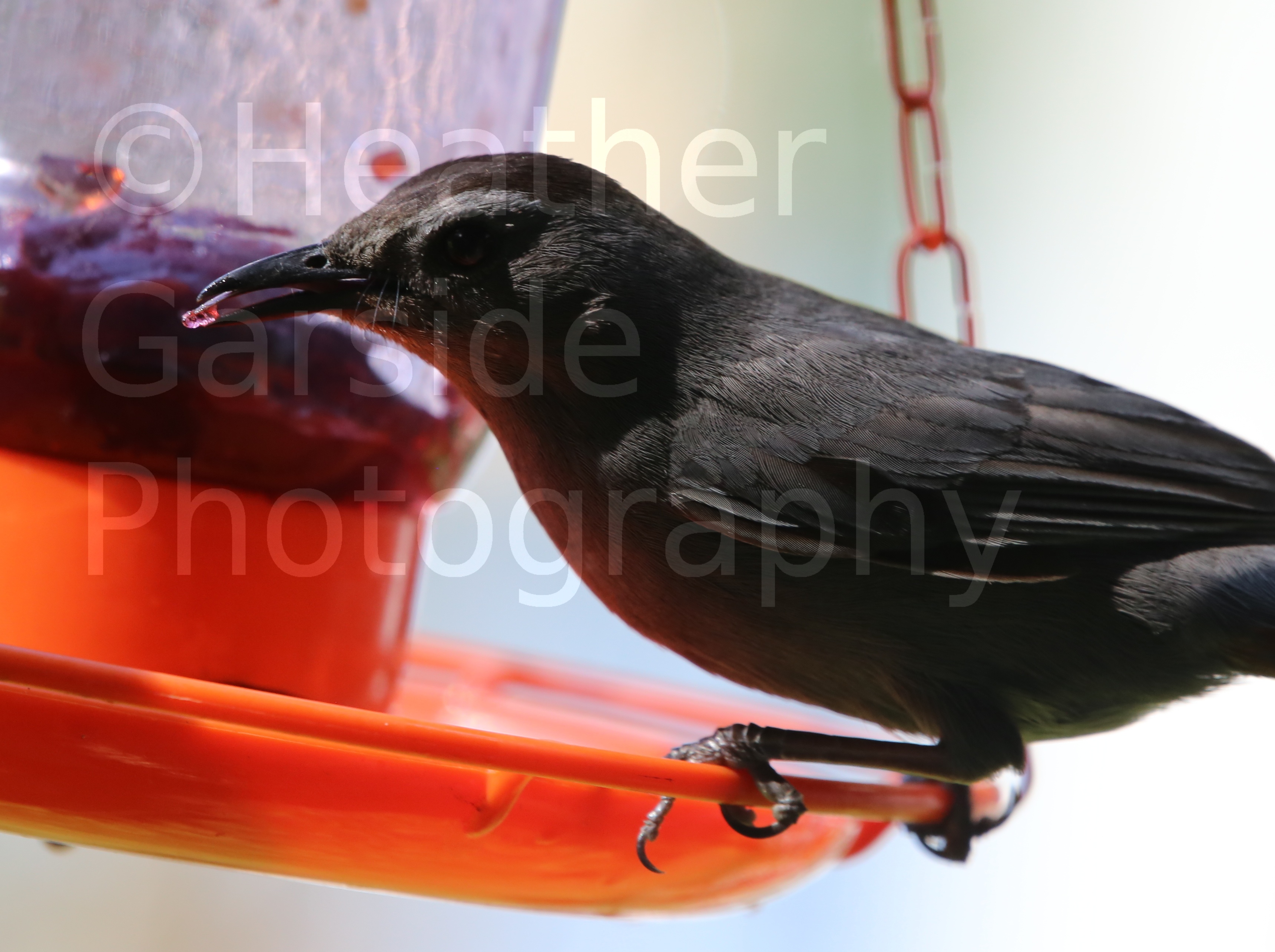
I have saved jam feeders for last because they are my new favorite. Jam is a favorite among Orioles, and we have also discovered some Catbirds are also big fans. The feeders follow the same basic design as a nectar feeder, upside down jar or holder, with a threaded base that doubles as the lid. Potentially very sticky, but also a lot of fun. The one my parents have has a build in arm which scrapes the jam off the sides of the feeder so that it will drop down for the birds to more easily access.
There are a lot of feeder types out there, and this article is really
only just scratching the surface. I have not discussed meal-worm or
orange feeders because I don’t personally have much experience with
either. My general advice is to test things out before you buy an
expensive feeder of any kind. Observe what the birds like, what they
seem hesitant of etc. Then you can make more expensive purchases with
insider knowledge. The last thing you want to do is buy an expensive
feeder the birds don’t like. Another aspect of feeder shopping to
consider is that unfortunately a lot of stores seem to be under the
impression that there is a feeder season. Yes places like Home Depot,
Lowes, and Walmart sell feeders year round, but they often get a
greater supply in the spring. So if you are looking to replace a
feeder in the winter, there are often slim pickings. If you know what
you want, you might be better off online, but I like to look at the
feeders in person.
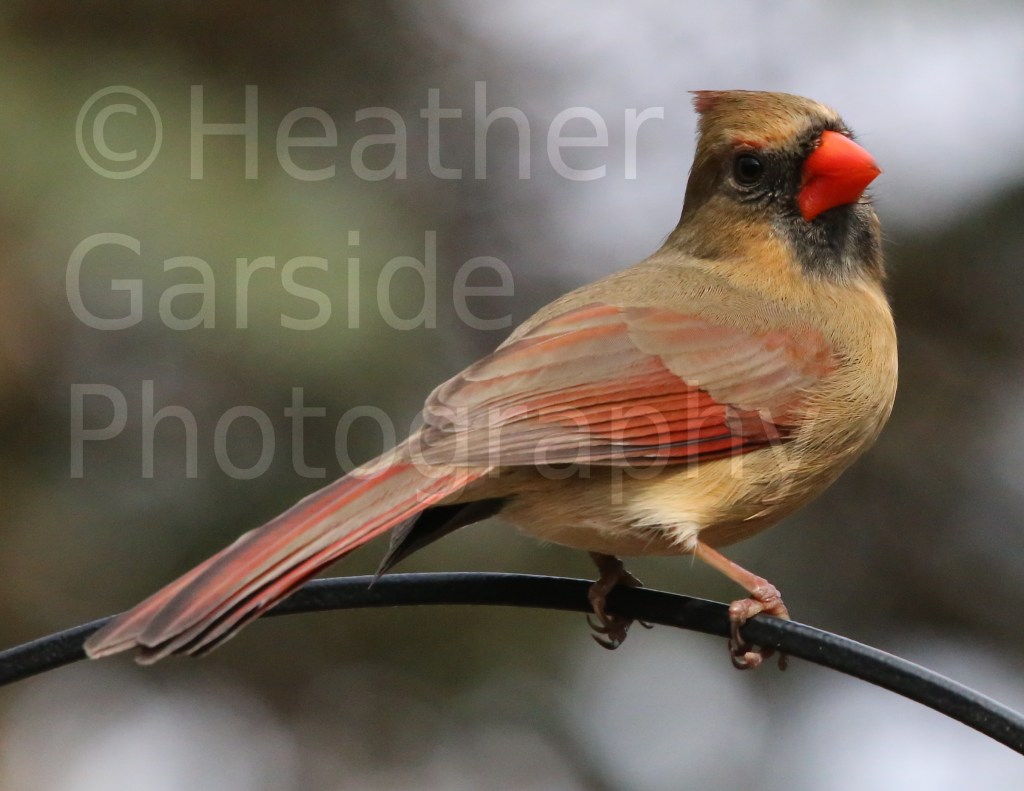
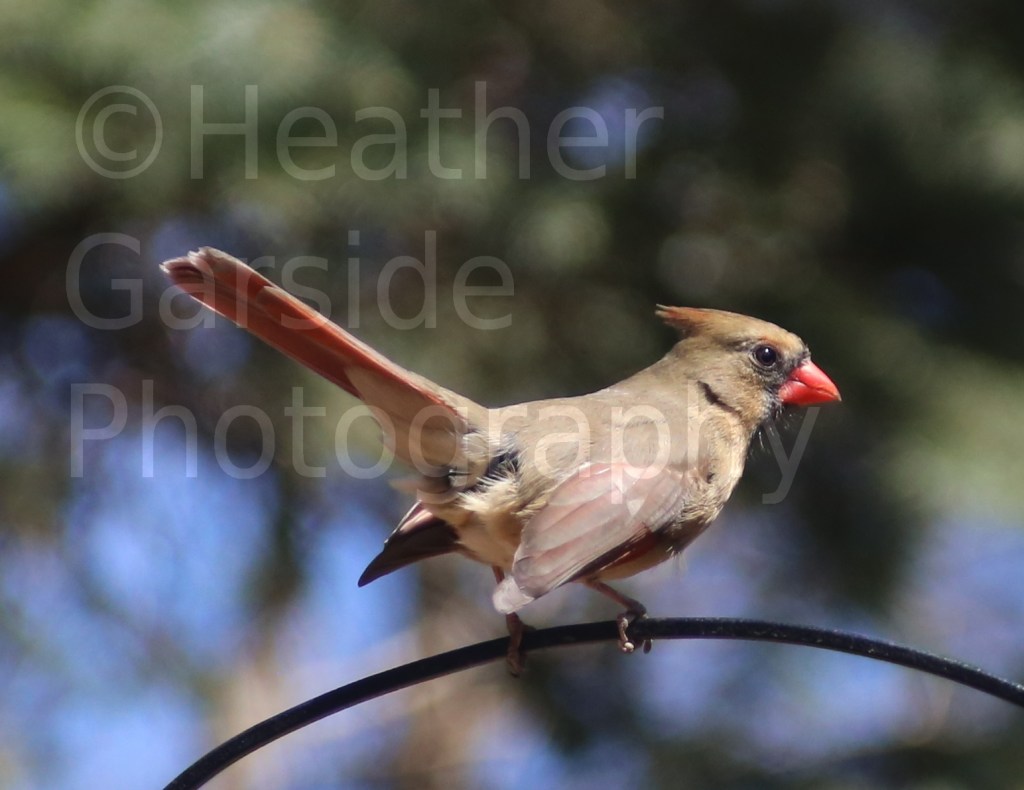
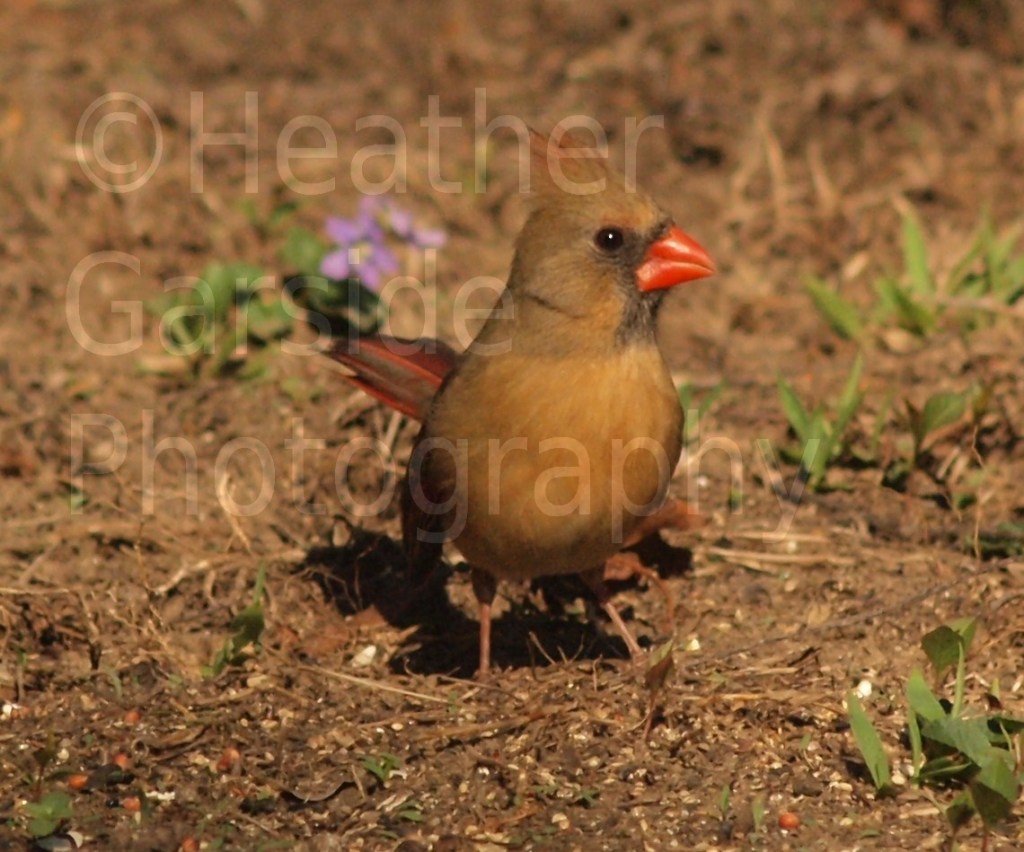
I know that I have already written about Northern Cardinals, but I
feel that the female Cardinal deserves some special attention. As I
mentioned in an earlier post, because of the bright red color of the
male Northern Cardinal, the females are often overlooked. But they
are really just as interesting to watch and, in my opinion, their
subtle hints of red are more striking than the bold display presented
by their male counterpart.
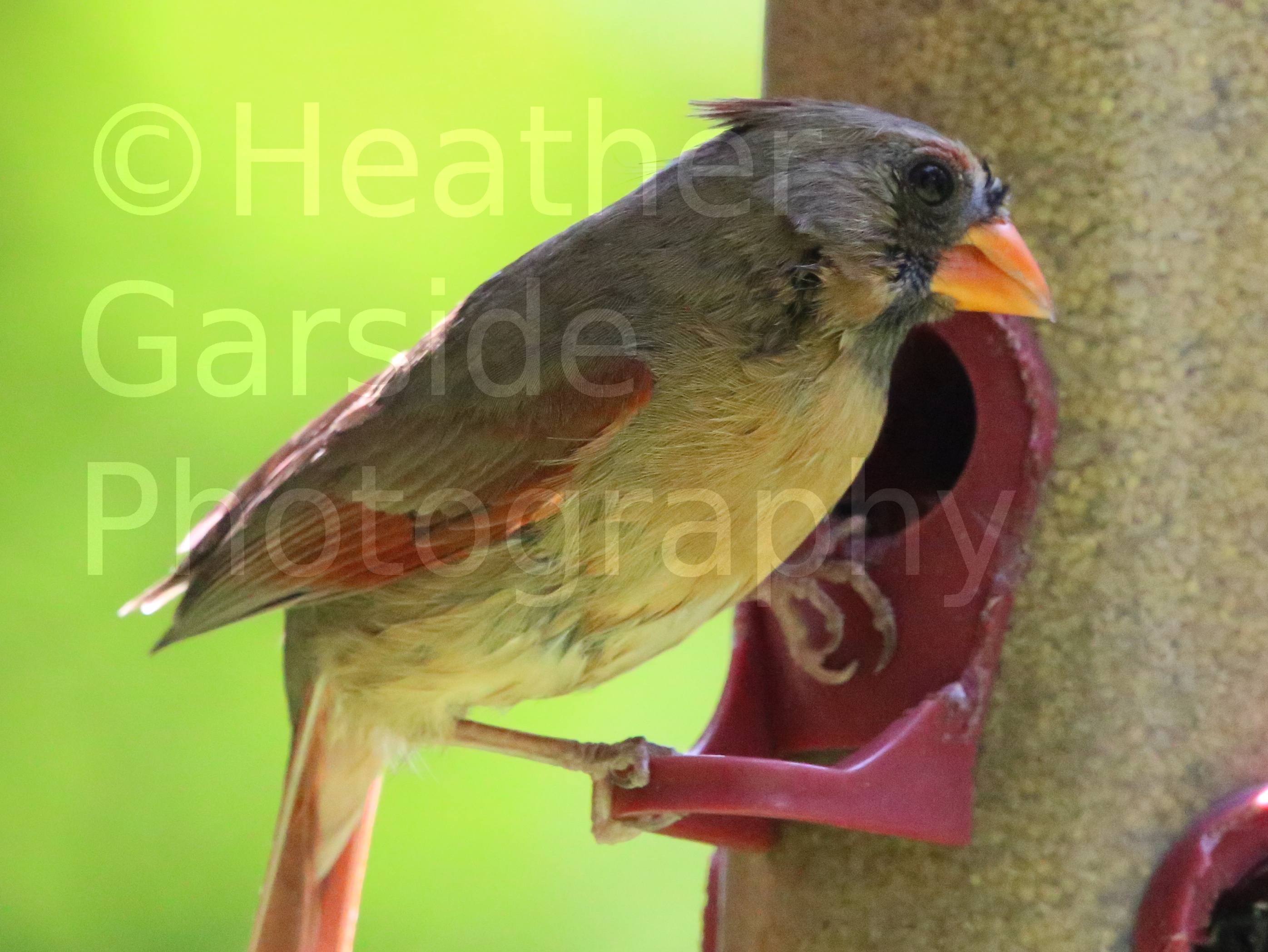
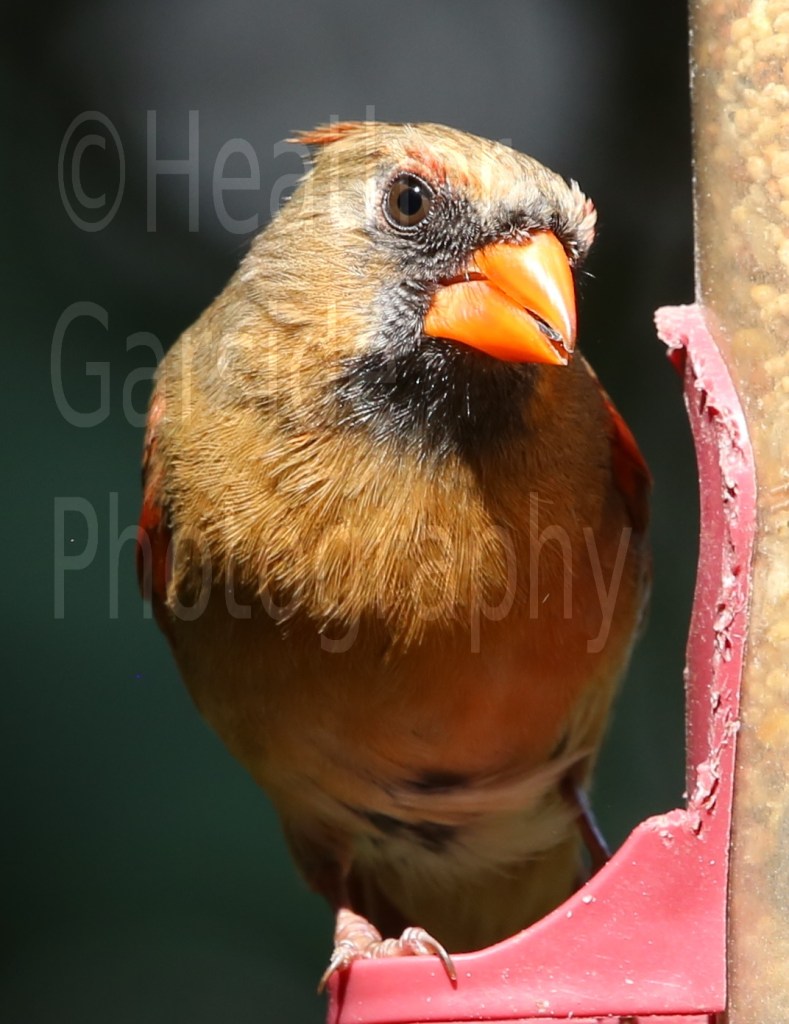
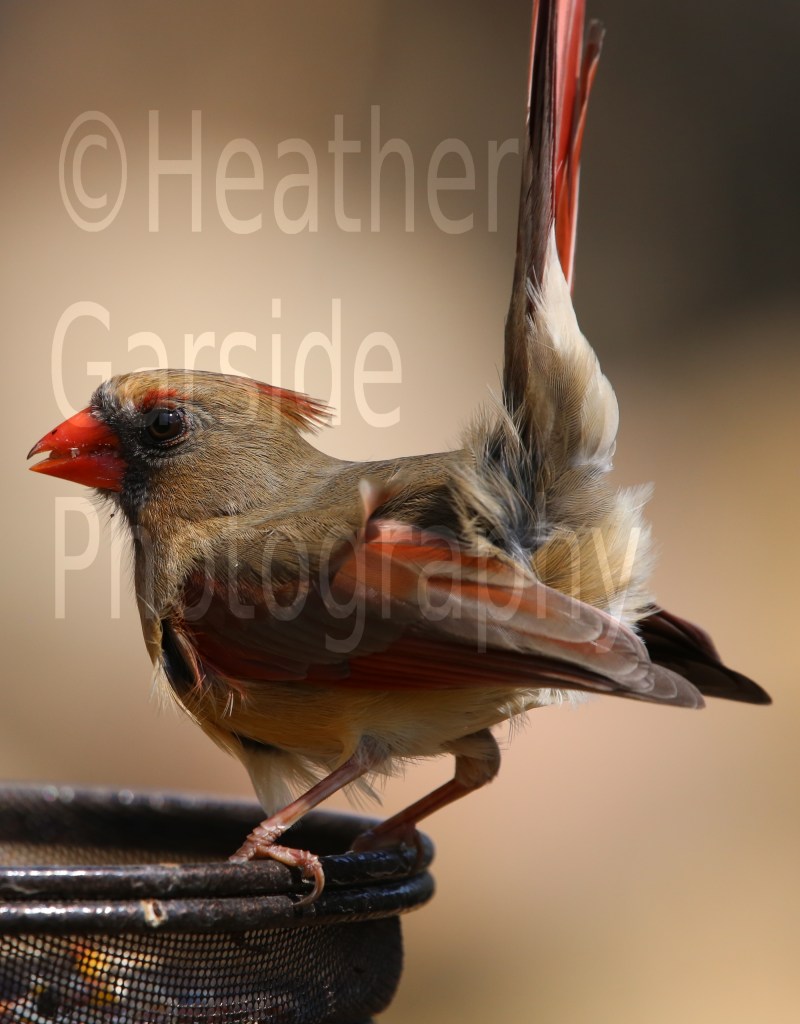
The
female Cardinal is the same size as the male, 8 ¾ -9 inches. She is
a golden brown color with some red highlights on her tail, wings,
crest and above her eye. She has a red beak, the same as her male
counterpart and she has the same black mask on her face, though
usually her mask is smaller and more subtle.
What I love most about the female Cardinals that visit my yard is their sassy attitude. They are just as likely to be aggressive with other birds as a male Cardinal, and there is nothing timid or passive about these ladies. Cardinals are usually one of the larger birds at my feeders and the females have no problem throwing their weight around if need be.
The female Cardinals I have been watching seem more adventurous than the males. The female Cardinals are often balancing on the feeders designed for smaller birds, and figuring out how to perch. Sometimes it takes a few tries, but they usually figure out a good, if awkward, way to balance. The males, either don’t have the patience or maybe have a bit more weight to them making this less likely.
Cardinal couples are monogamous for at least one breeding season, sometimes more. Bird monogamy, and the cheating therein, probably deserves a whole post of its own, and we won’t go into the genetics discussion right now. In one season they will have usually two or three broods. Once the first group have hatched, the male feeds and cares for them while the female goes off to lay and incubate the next clutch.
I took a trip to Charleston, South Carolina with my mother late one
February. If you like history, you cannot pick a better place to
visit. We had a wonderful, warm time. It was just the break we
needed.
Due
to a basic economy ticket with intense baggage restrictions, I had
decided not to travel with my then almost brand new telephoto lens. I
had a few moments to regret it, but I have no doubt someday I will
find myself back there, camera at the ready.
Of
course, just because I wasn’t ready for a photo shoot, doesn’t
mean that all the animals stayed away. We spent the day at Fort
Sumter, which requires a boat trip that starts at the mouth of the
Cooper River and proceeds out into the harbor. The water is brackish
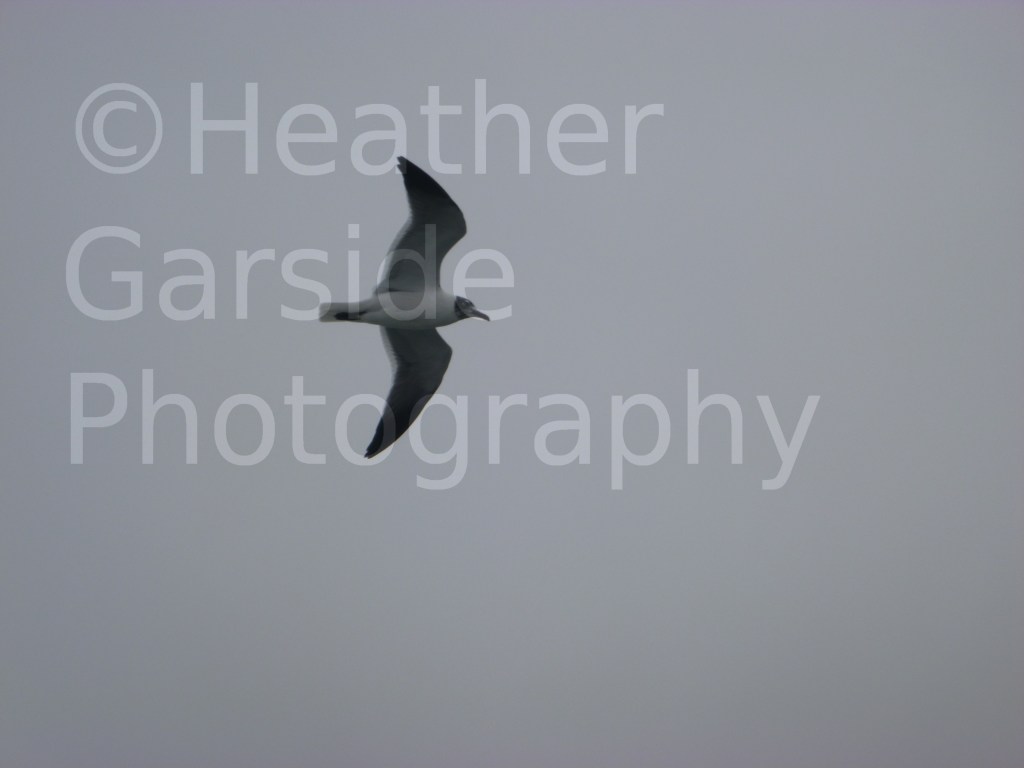
and somewhat tidal, so dolphins are very common, as are Seagulls,
Cormorants and other waterfowl.
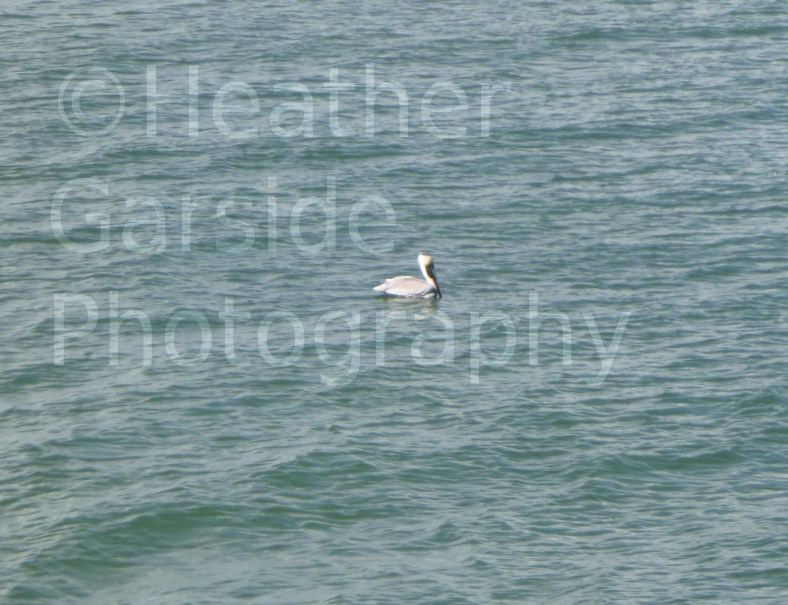
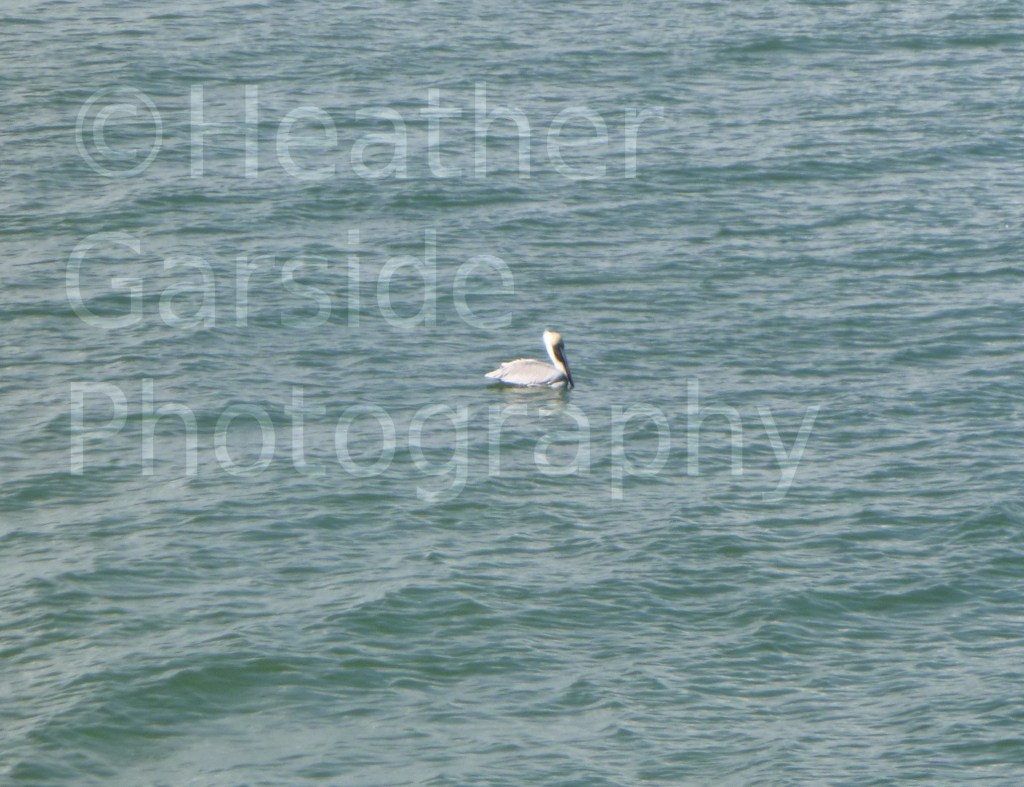
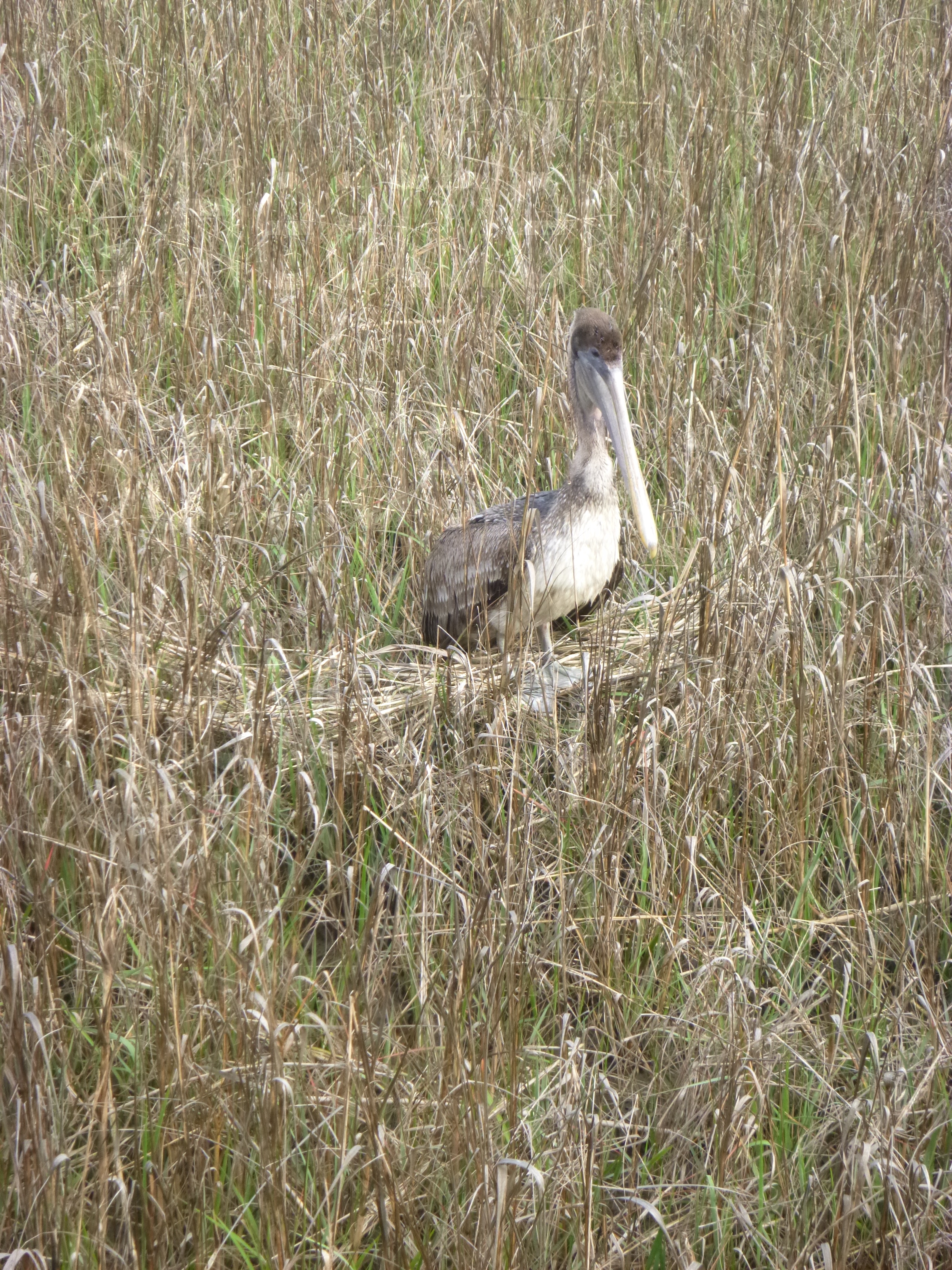
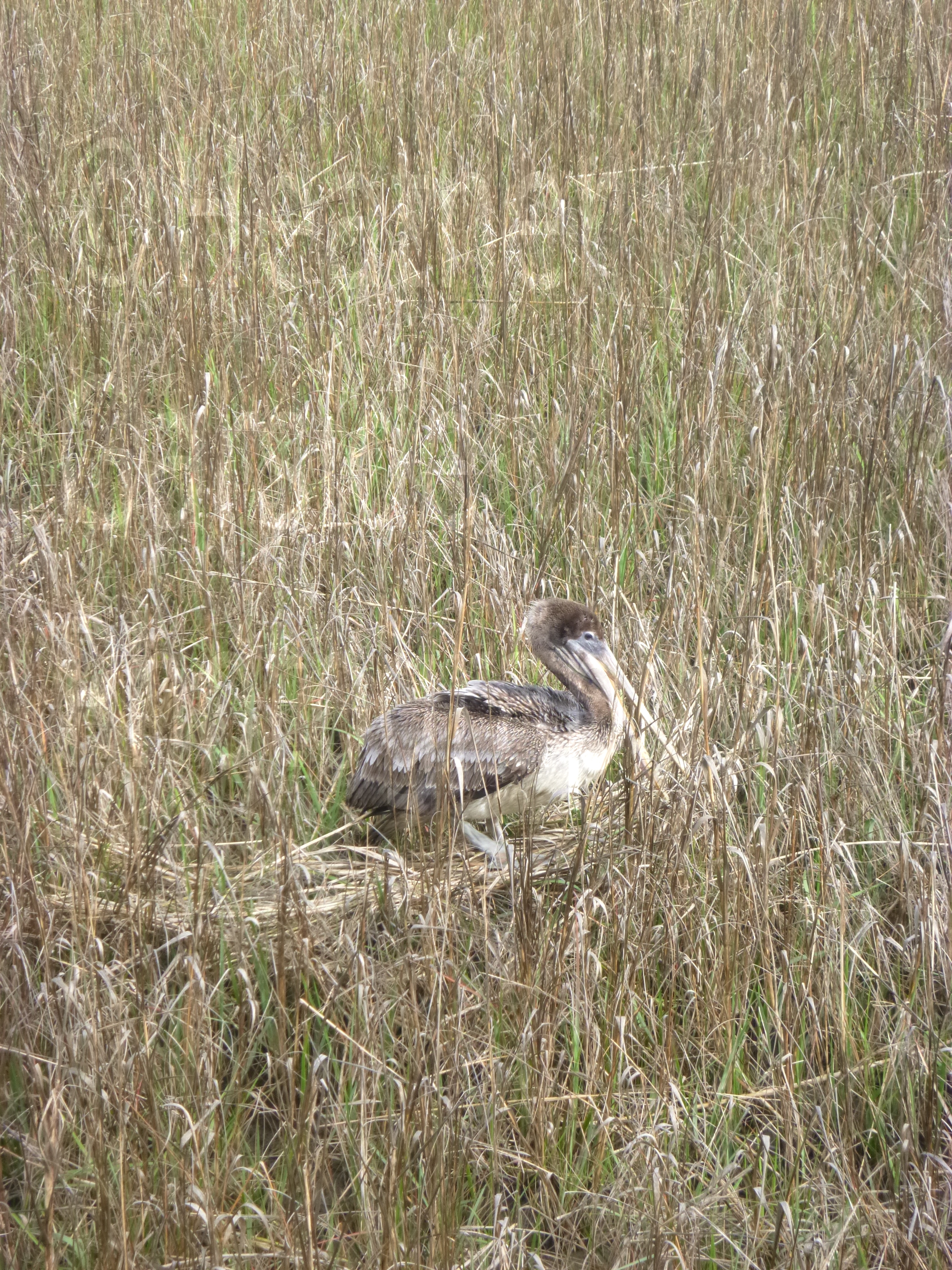
For me, the Brown Pelicans stole the show completely. They are common, at least part of the year, on both coasts of the United States. But I don’t believe I had ever seen one in the wild before this trip. Between 48 and 51 inches, they are so strange and somewhat awkward looking as they stand or float. Yet when they fly, it is with an unexpected grace, sleek and agile.
For me, the dive was the best part of all. There is this large bird, gliding through the air with ease, getting closer to the water with every second and then kurplunk! Forget about grace now. The splash of the biggest belly float you have ever done erupts from the water. Seconds later a pelican pops up and floats along the water’s surface, like a buoy, bobbing in the waves. Totally unphased.
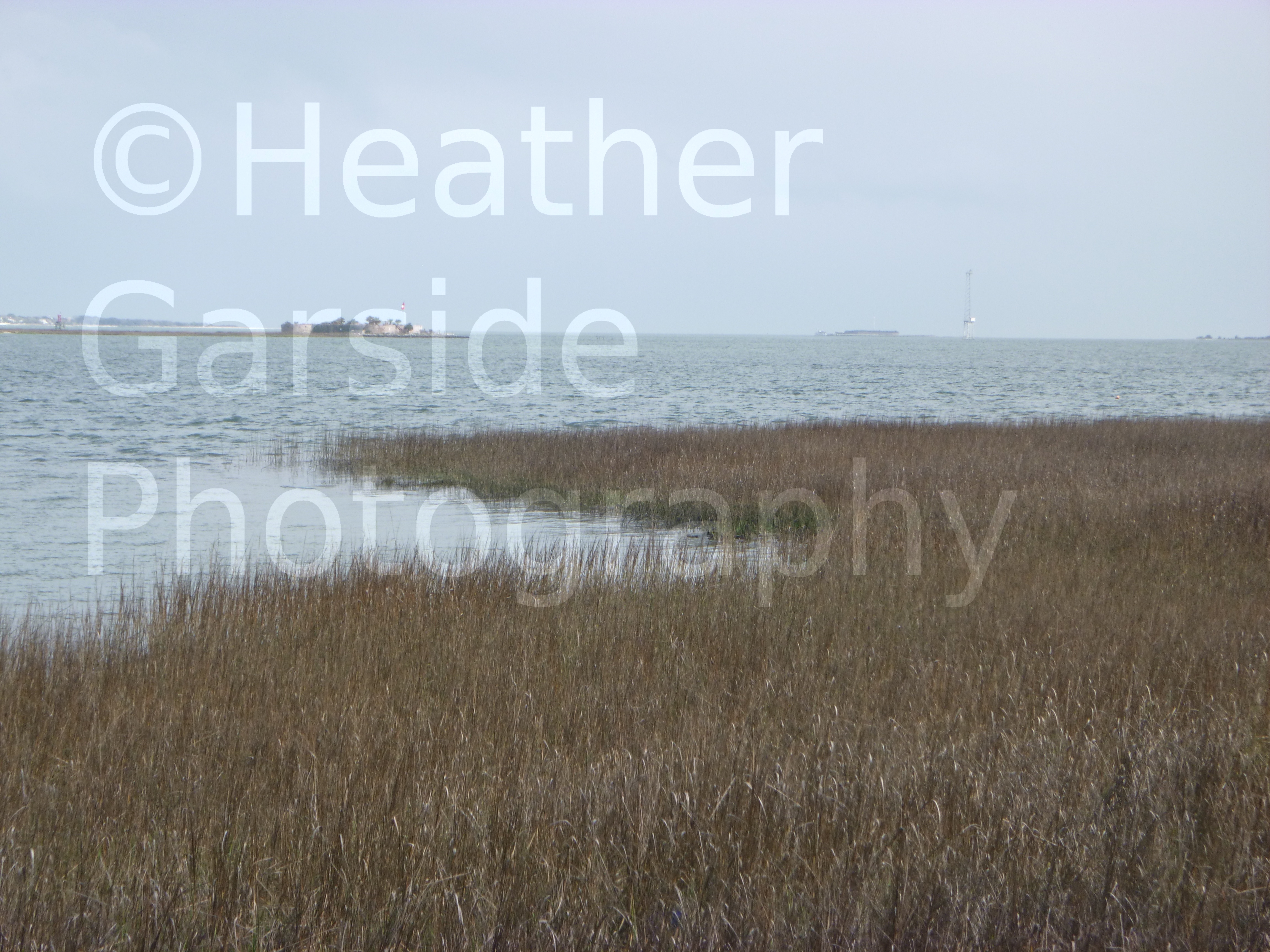
While I was watching the pelicans from a distance, I never dreamed that I would shortly have the opportunity to see one closer up. Following our boat trip, we had decided to meander down the boardwalk in Waterfront Park. They have a pineapple shaped fountain there which my mother was particularly keen to see. The park did offer a lovely vantage from which to gaze out into the harbor.
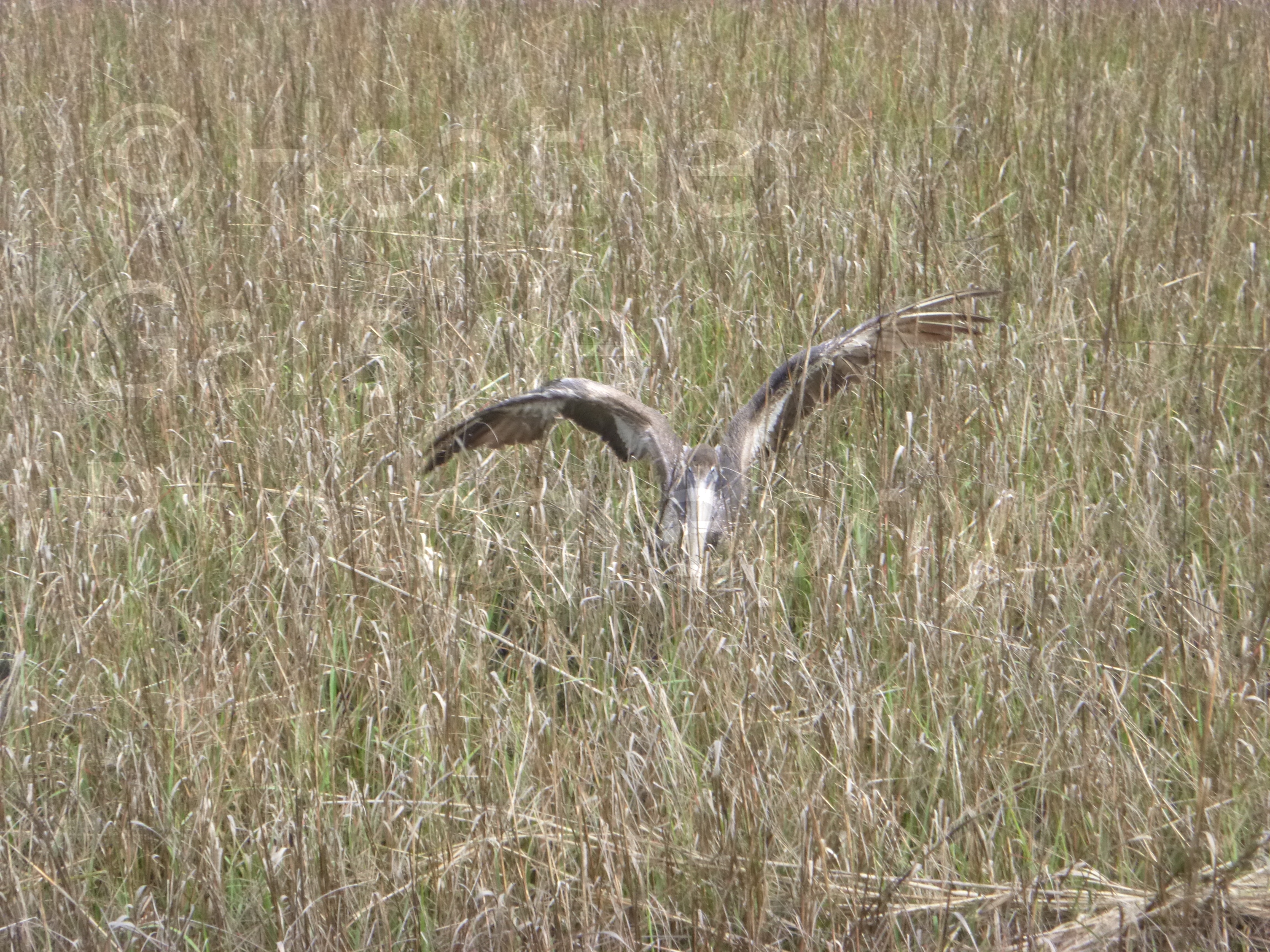
As we were looking out over the harbor, we noticed the reeds on the water’s edge were moving. There seemed to be a lot of commotion. We stopped to watch, and finally made out the shape of a Pelican, half hopping, half walking through the reeds. It continued toward us at its rambling pace. We halted our walk and leaned on the railing, wondering just how close it would get. Its movements seemed really odd, and for a while we were concerned it was injured or tangled in line or rope. Finally it emerged from the reeds at a close distance, and we got a good look at it. Not injured at all, we were looking at a juvenile Brown Pelican, unsteady and unsure about the world. It [we decided it was a she and named her Frances] rested for a while in the reeds near the boardwalk, close enough for us to get some decent photos with our point and shoot cameras.
I hope one day to have the opportunity to observe Brown Pelicans more closely, perhaps with a longer lens. However, Frances will always be my favorite Pelican.
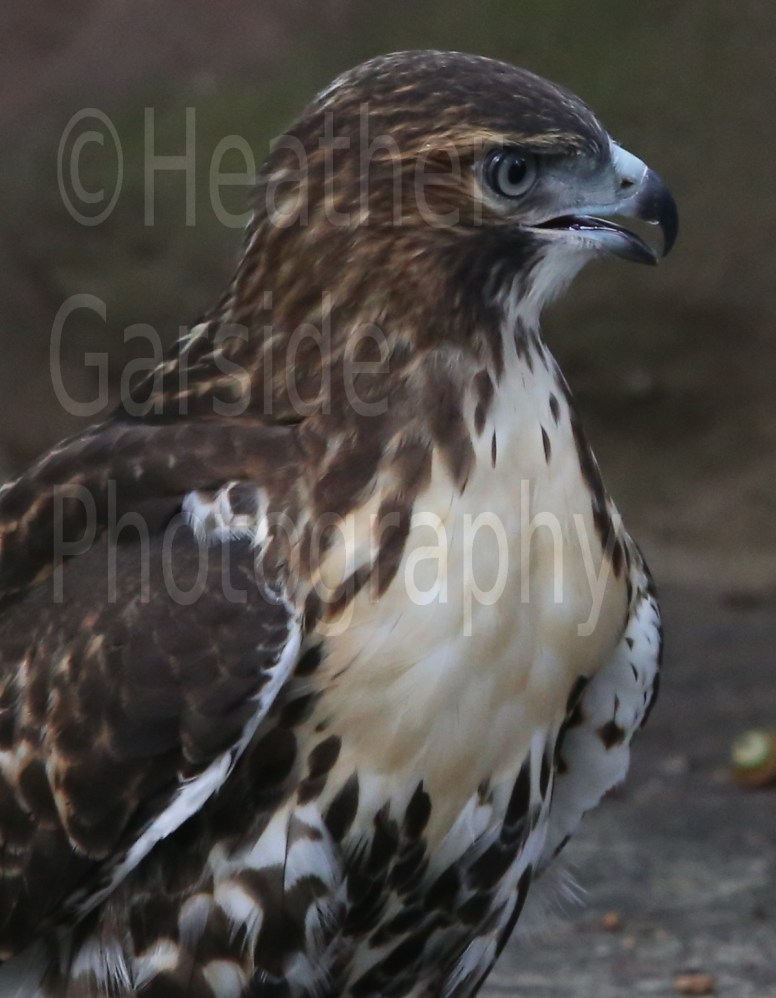
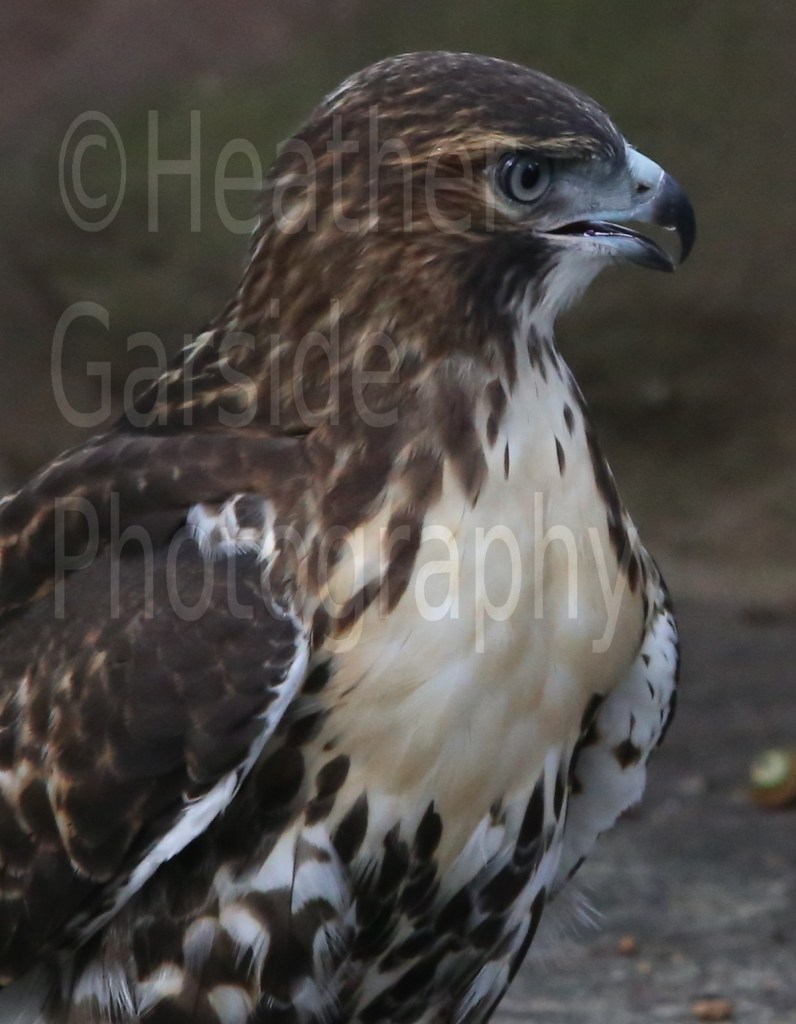
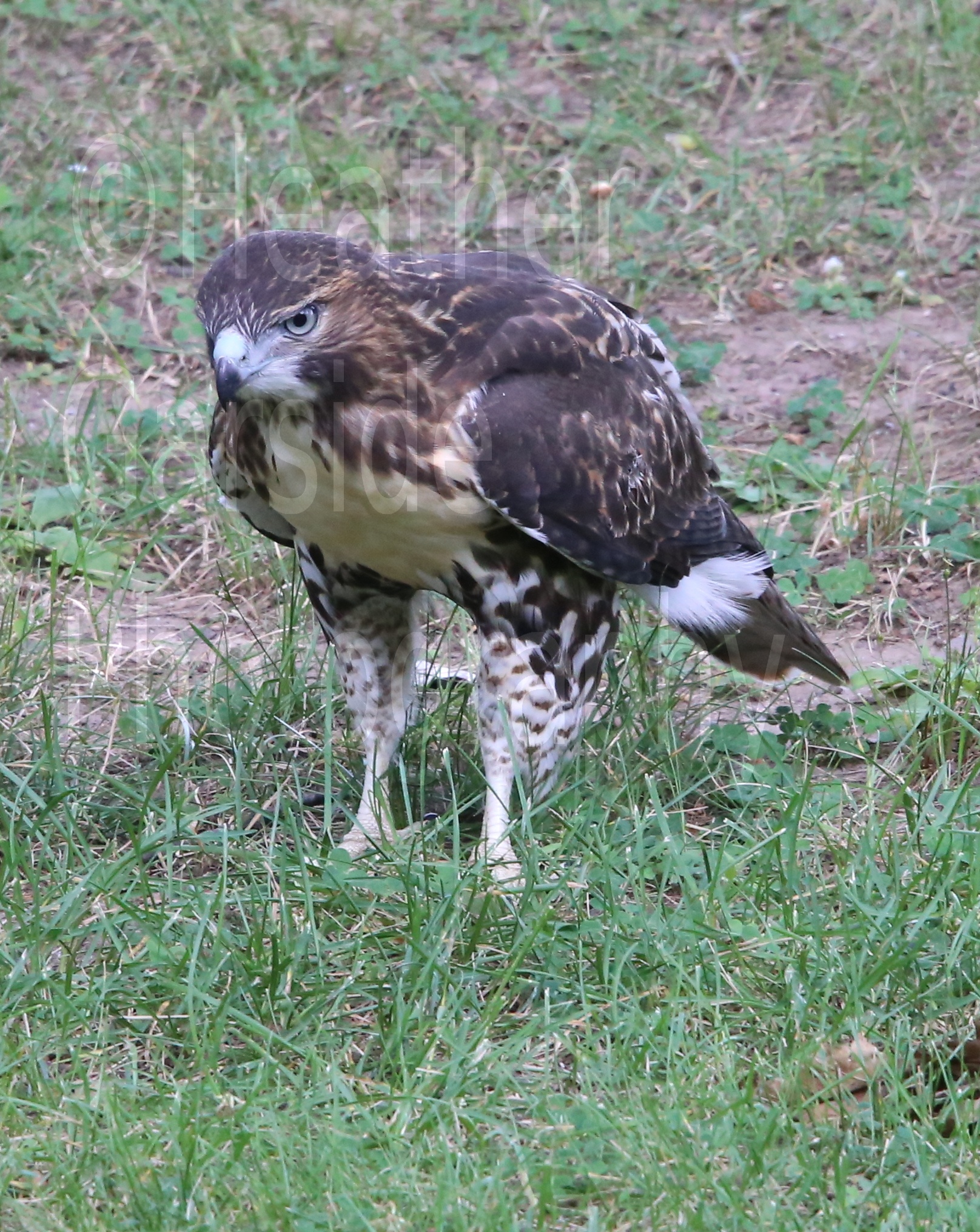
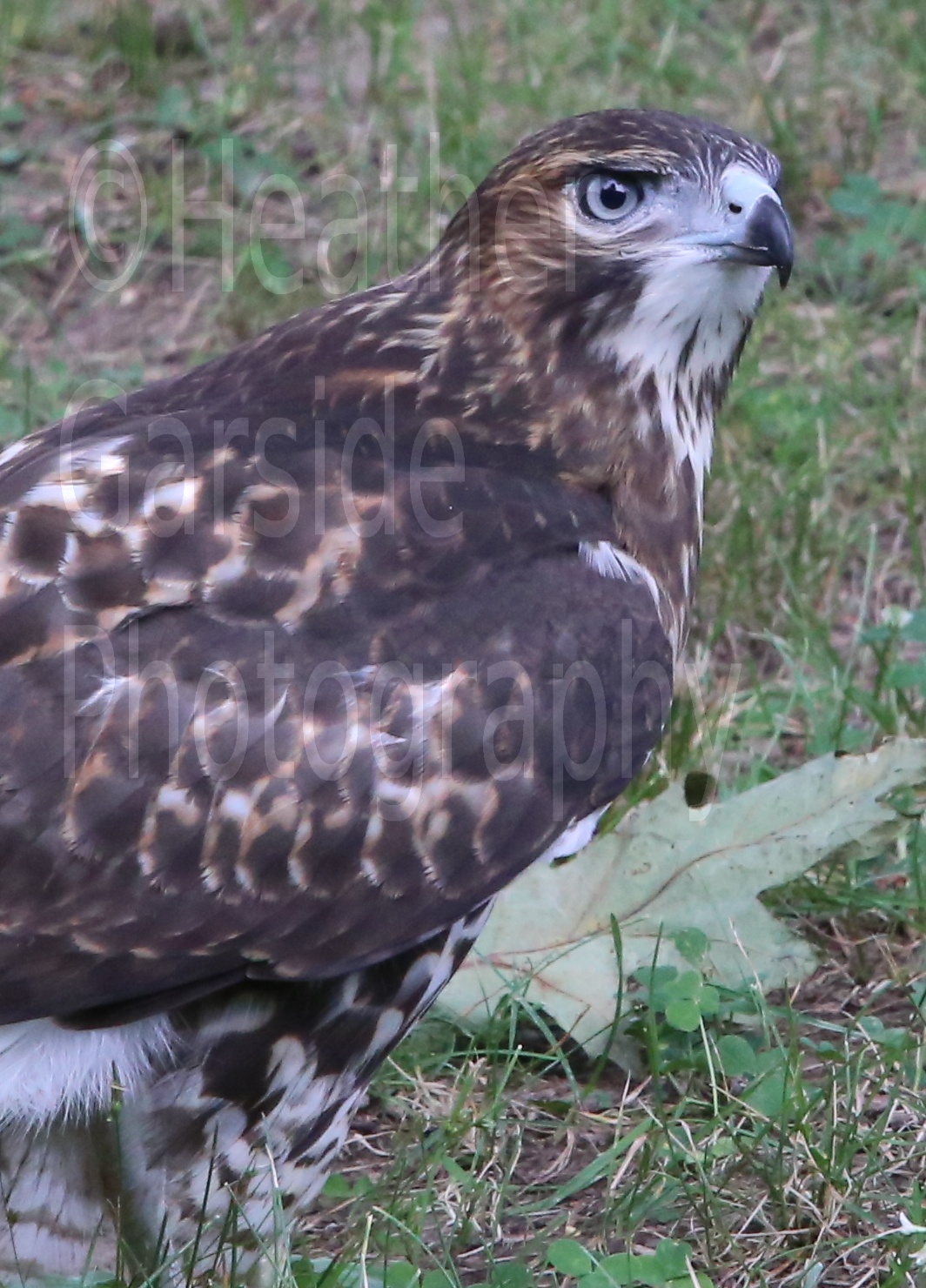
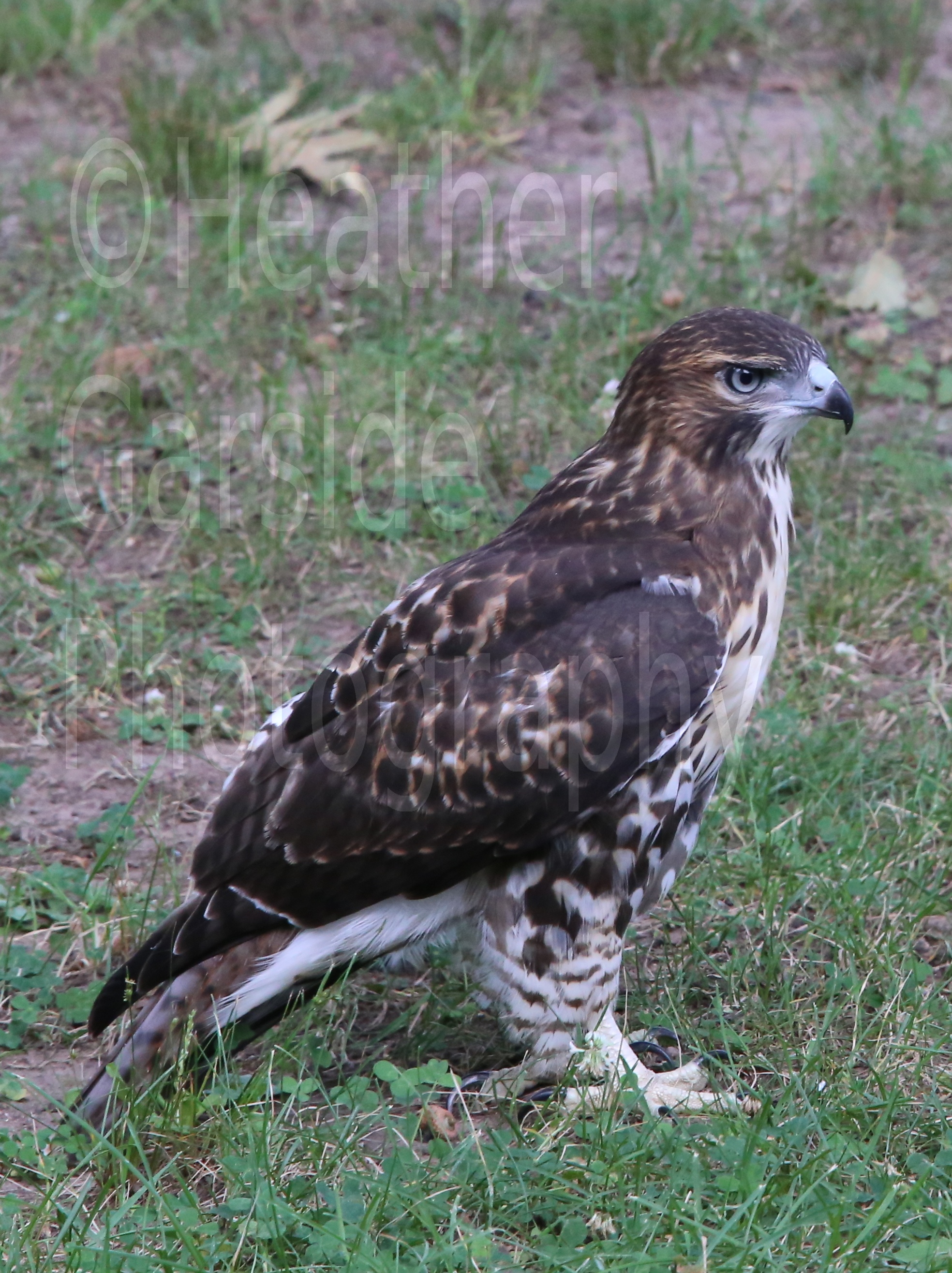
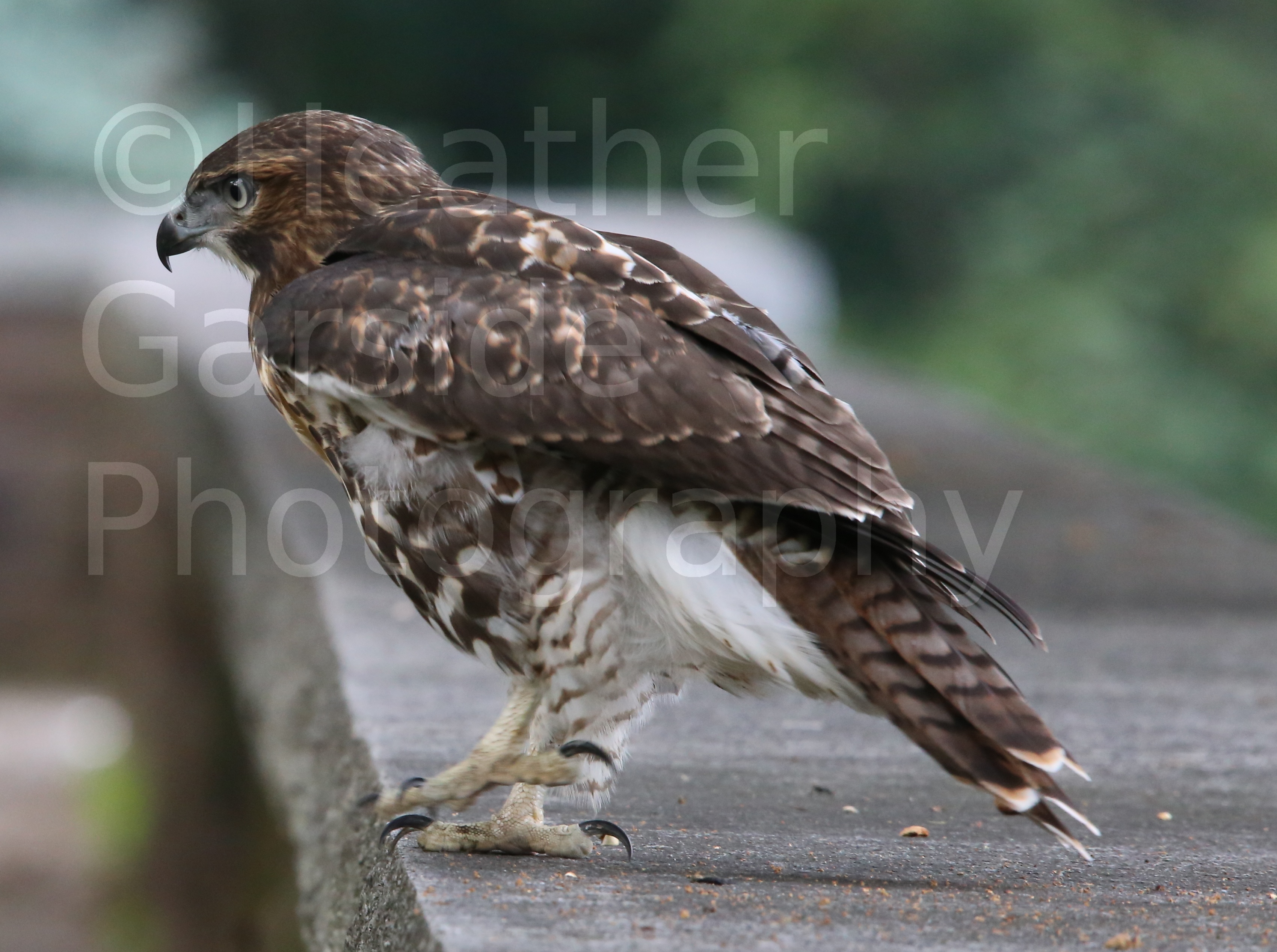
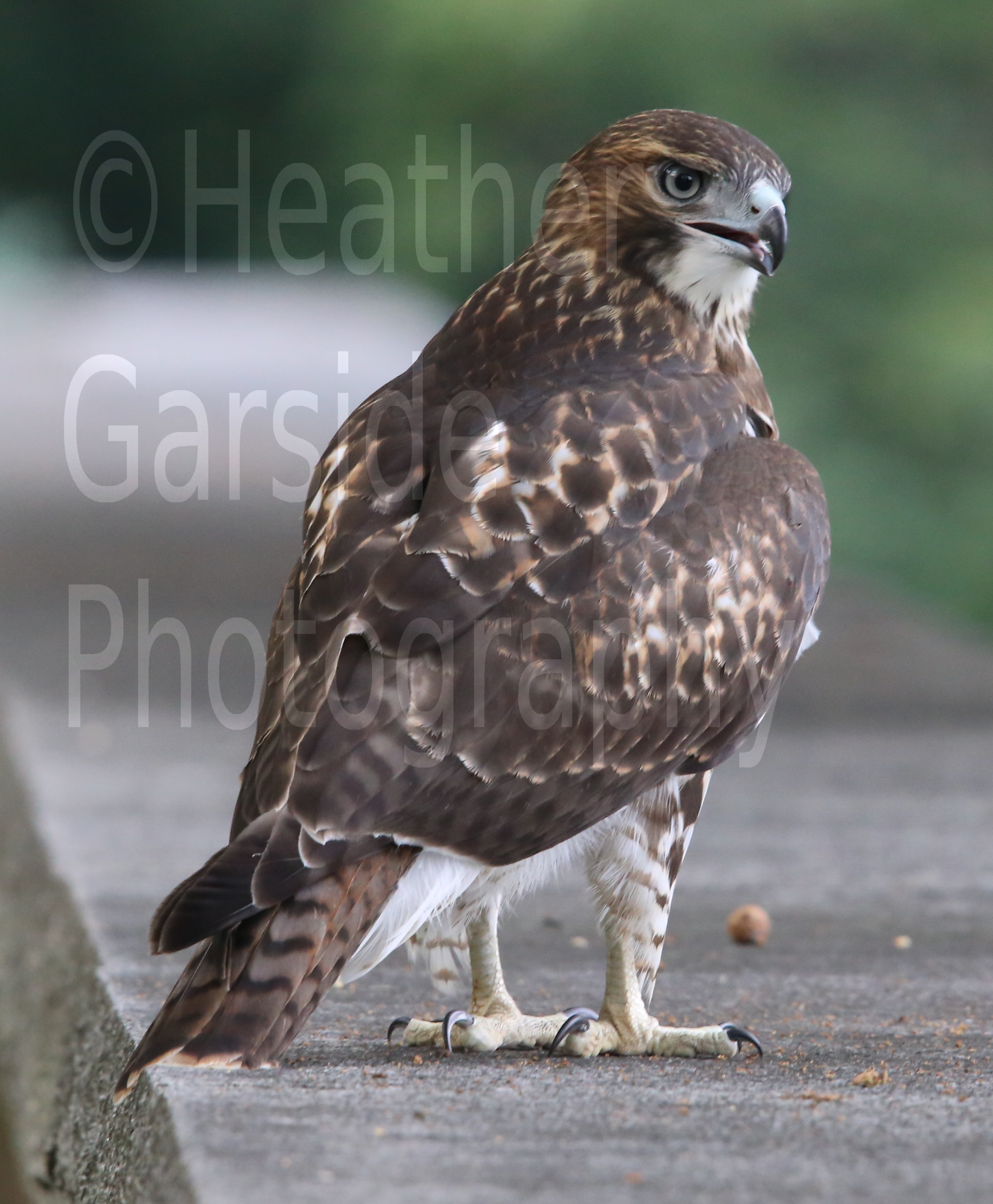
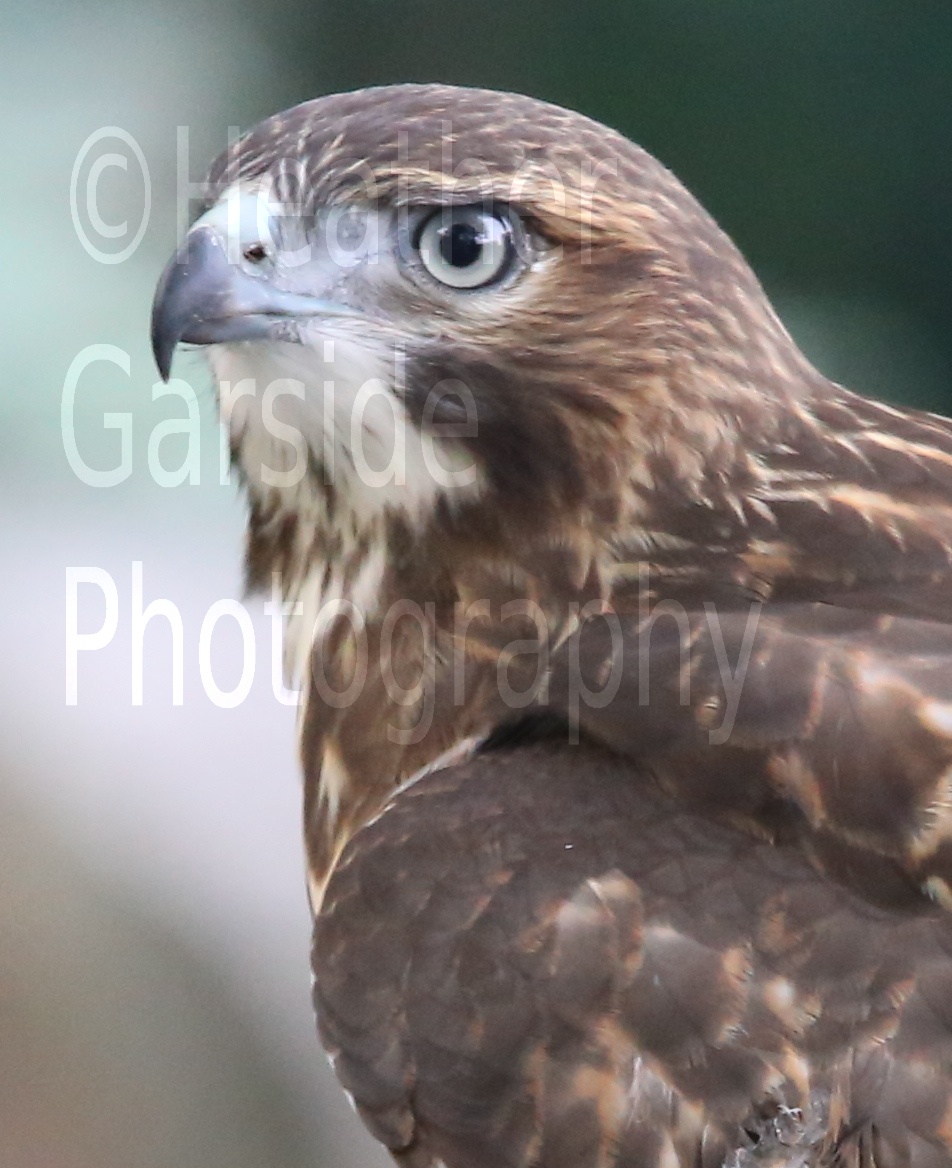
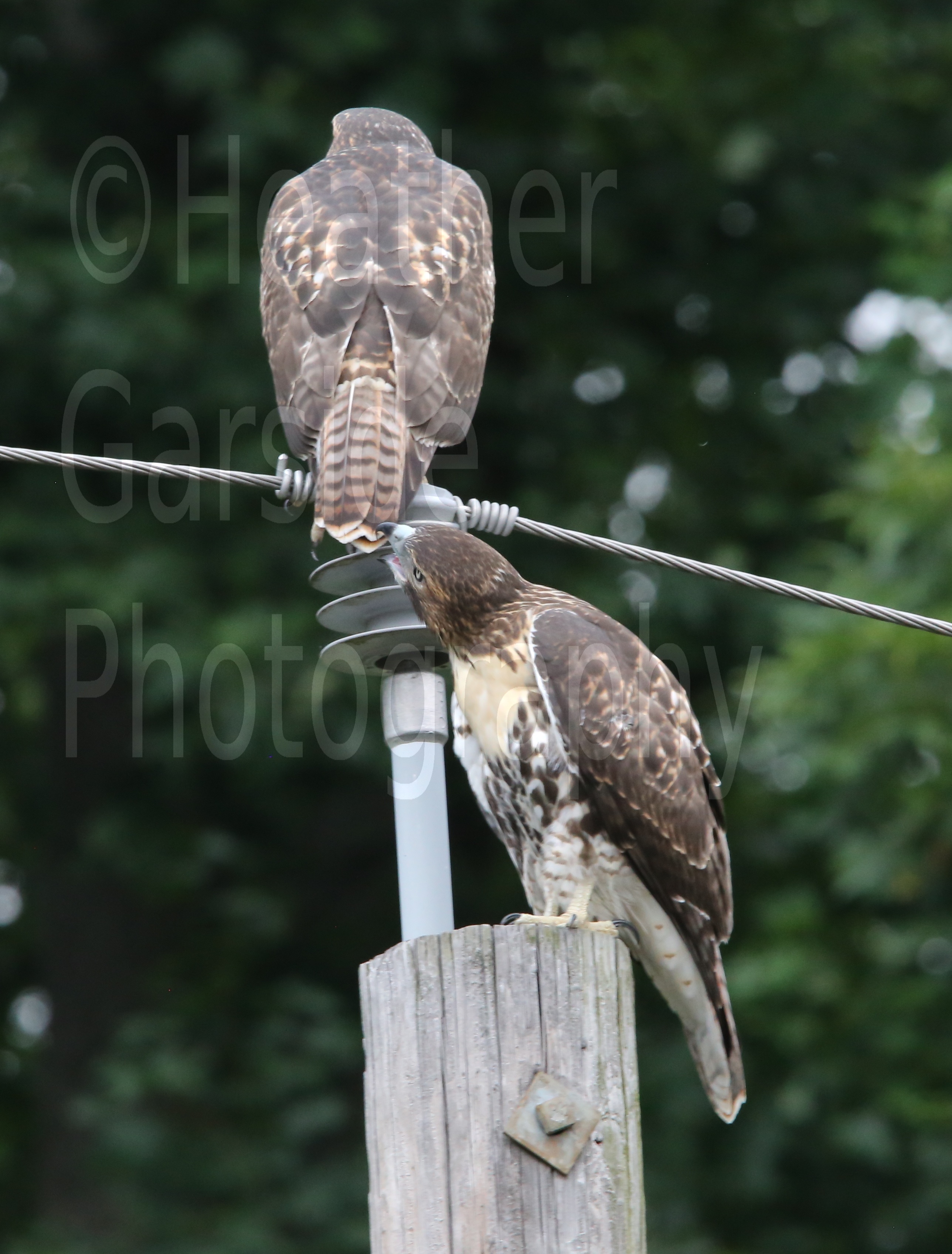
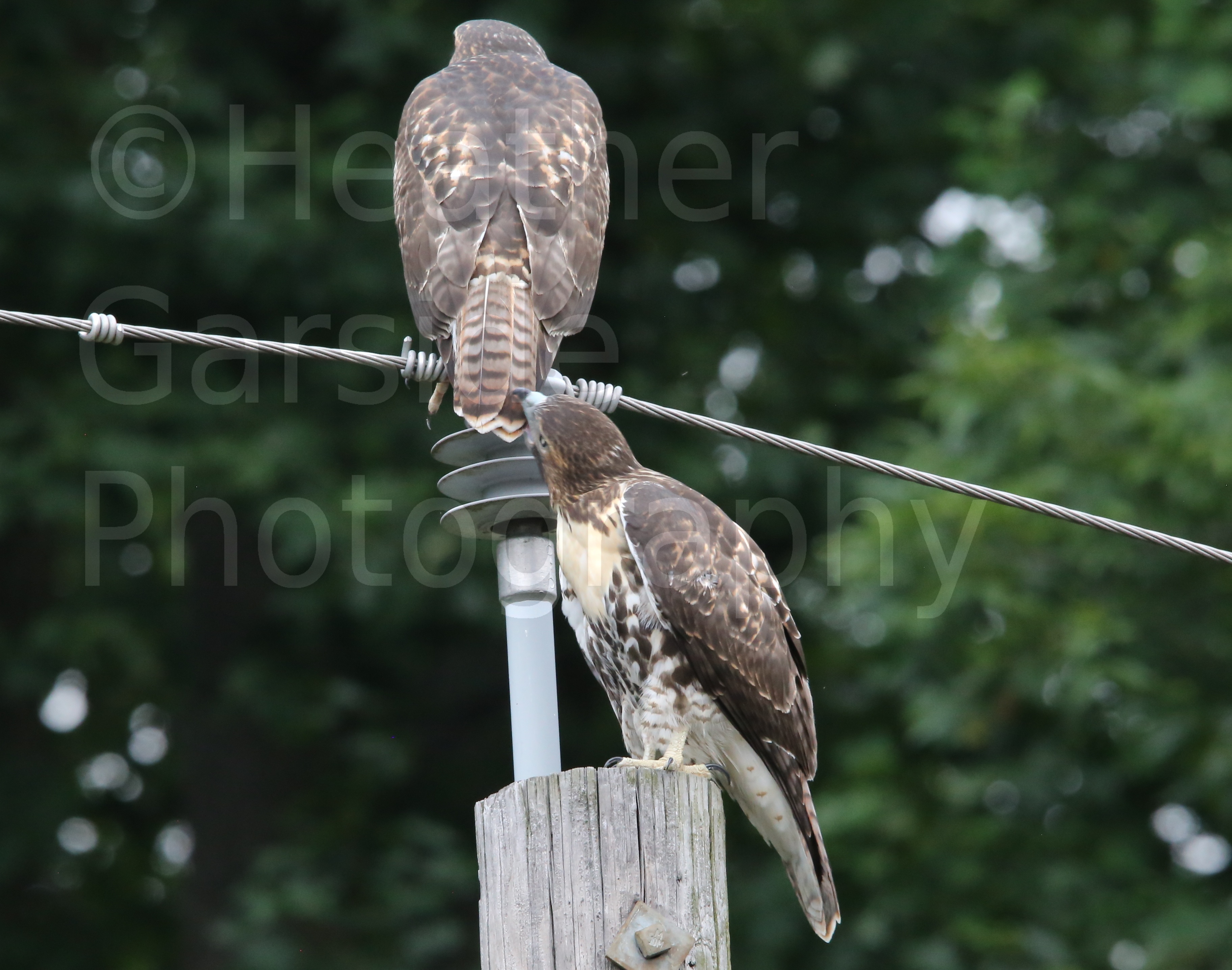
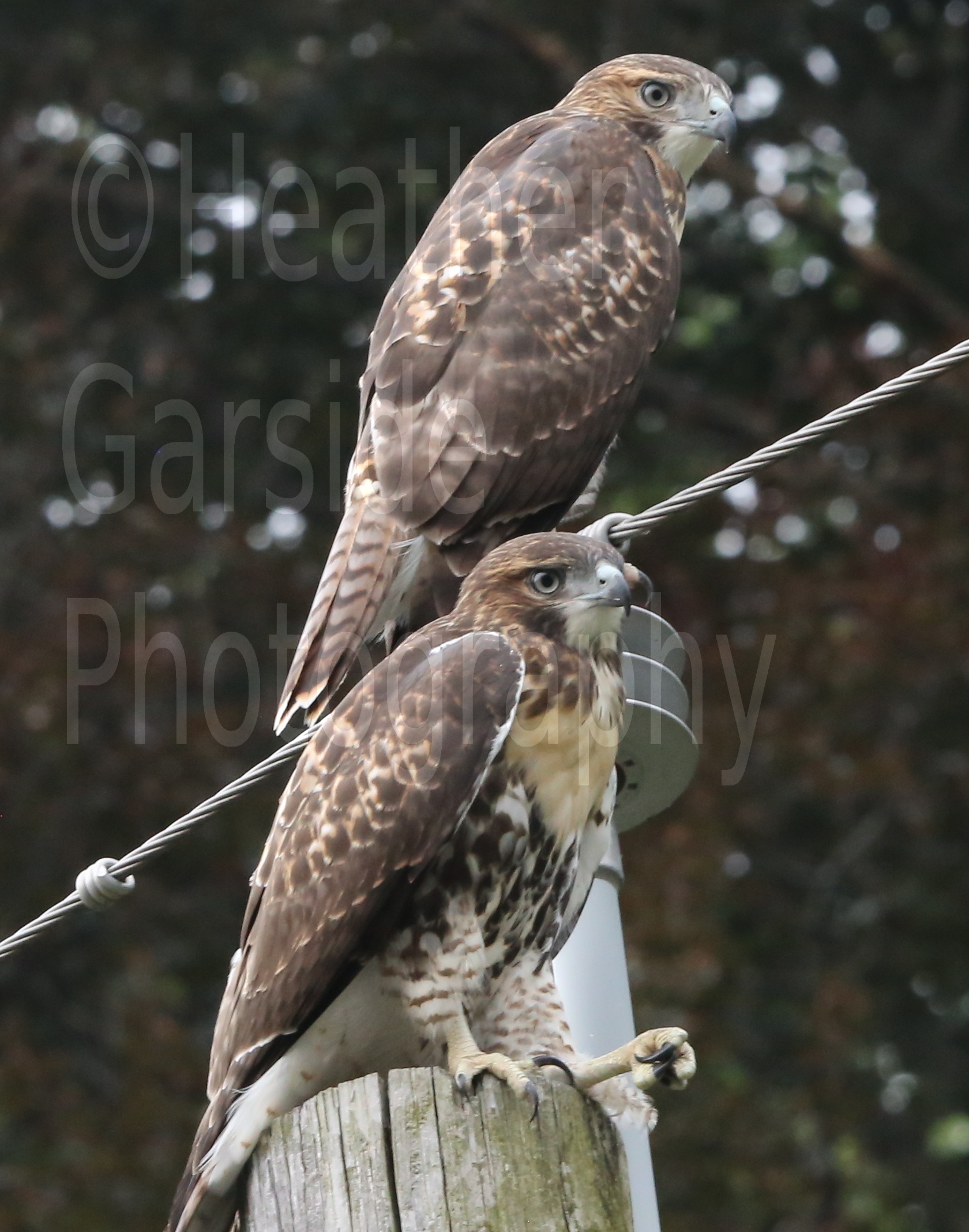
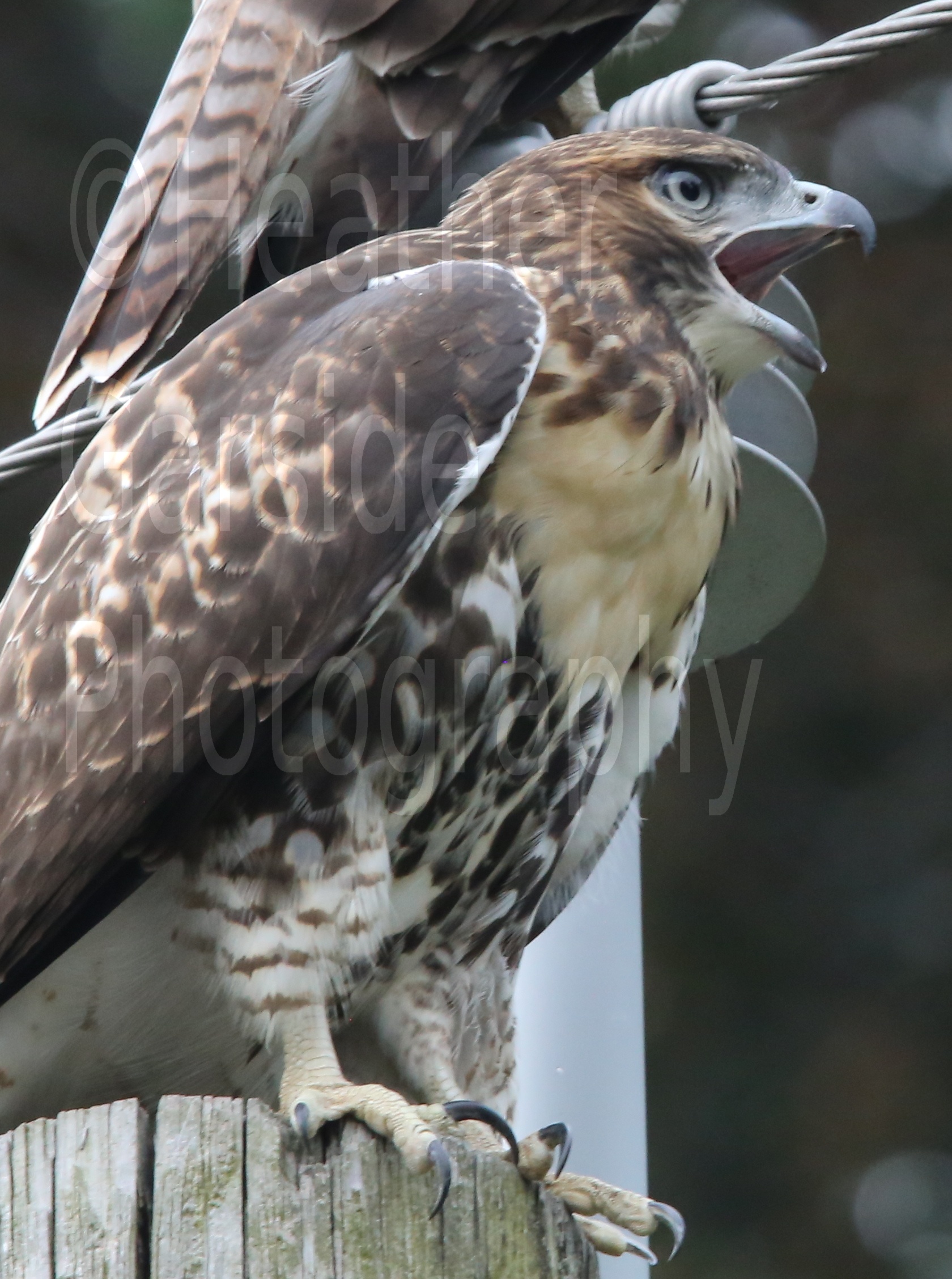
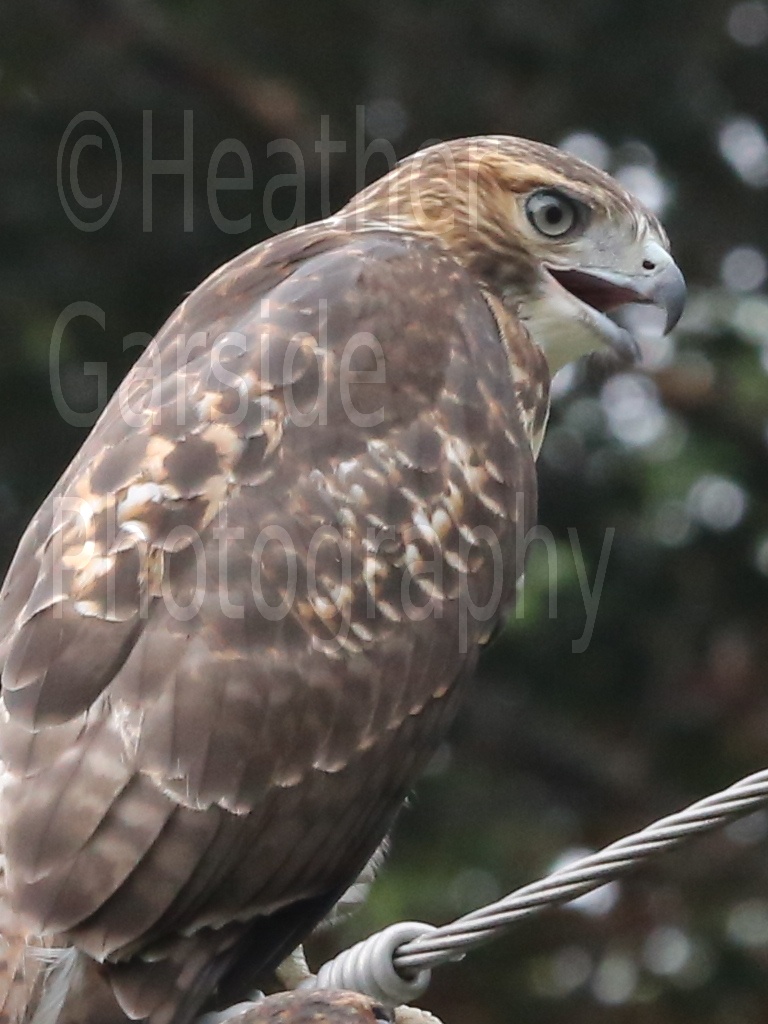
This past July I had an accidental encounter with a pair of young hawks, who I believe were siblings. I had just tucked all my camera equipment away when I noticed a very large fluffy lump on the grass. I was in the parking lot of Lambert Castle, which is terraced above the lawn, so it was a level below me. I crouched down to see what it was. That was when I realized it was a Red-Tailed Hawk, awkwardly strutting around on the ground. Cursing my luck for putting the camera away so nicely ten minutes earlier, I rushed to my trunk to put my lens back on the camera. The Hawk didn’t seem to notice my movement in the slightest. So far, so good. I got a few photos from where I was, still with the Hawk not even seeming to notice me. So I decided to test my luck and I made my way to the stairs for the lower level.
I approached the stairs slowly and took a few more photos. The Hawk still seemed completely oblivious to my existence. So I continued down the stairs. I used the fountain as a blind to get even closer to the Hawk undetected. It finally did seem to notice me, and hopped up on the wall. I decided to continue trying my luck, and I slowly approached the wall, staying far enough away not to really panic it. The Hawk decided to show off, turning around in slow circles, so we had ourselves a little photo-shoot. At this point I knew I had tons of photos, so with nothing to lose, I began to slowly walk closer.
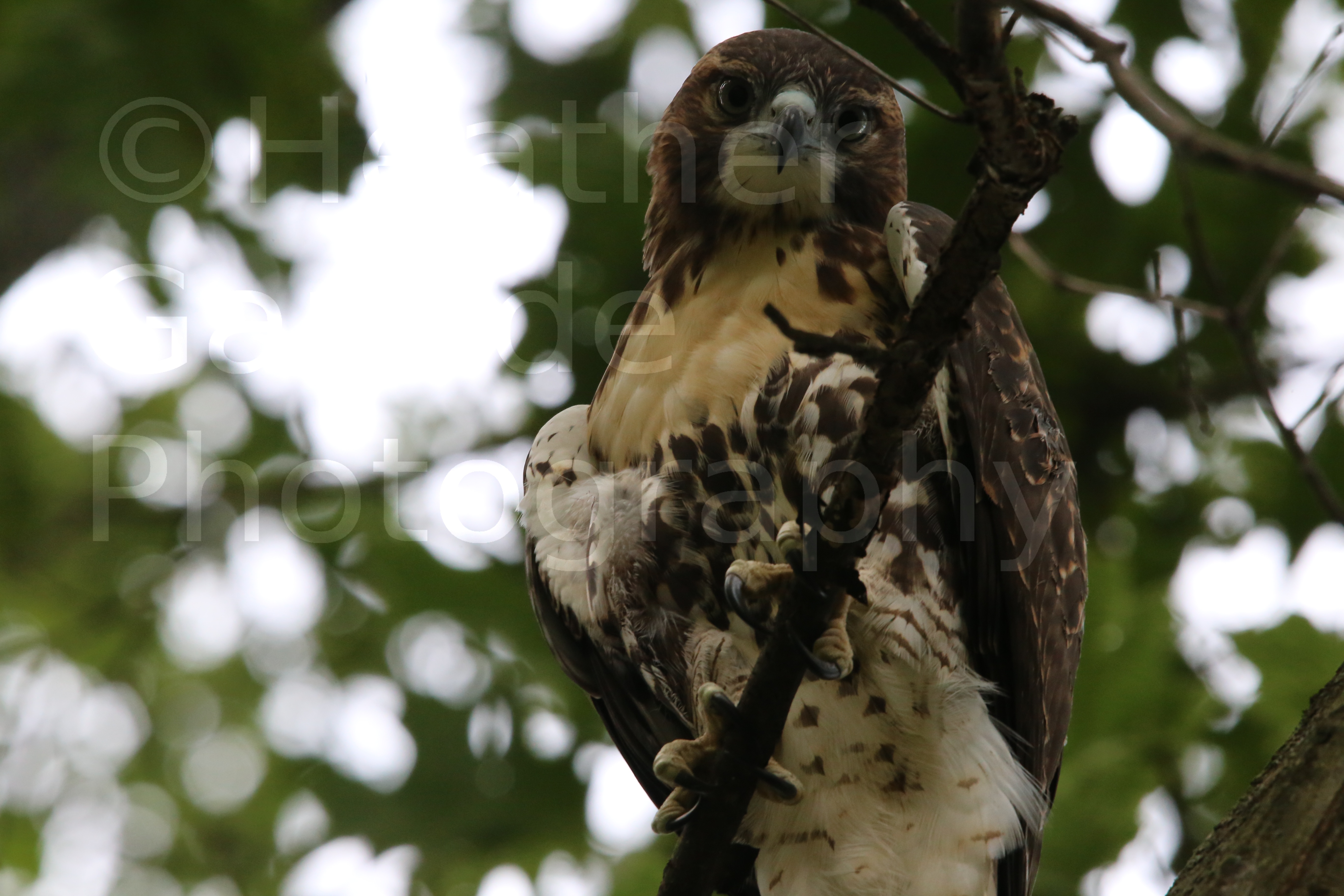
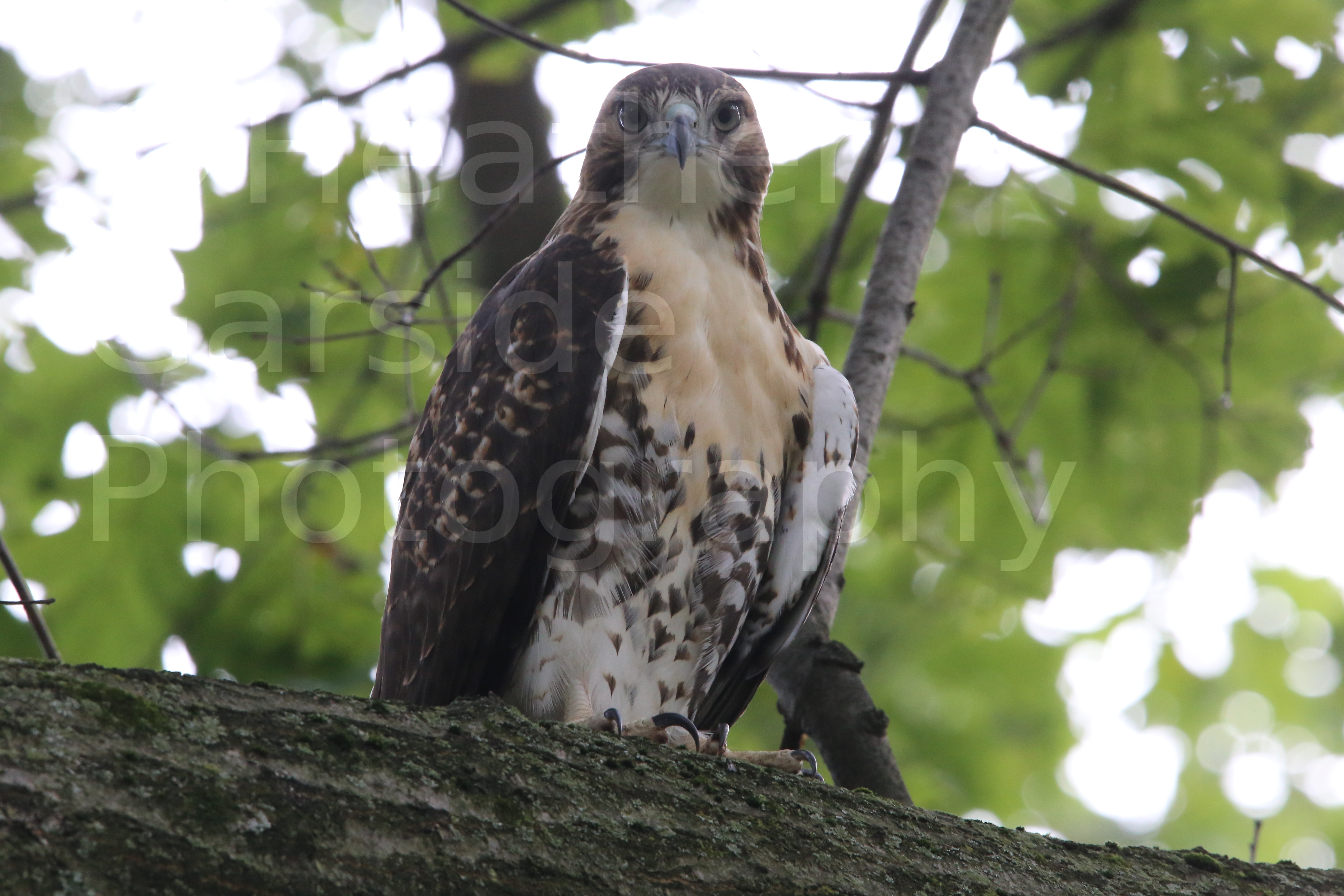
That was when the Hawk decided it had had enough of me. Off he flew. I kept my eye on him, figuring he would head for the trees, way up on the mountain. Instead he headed for a tree at the other side of the lawn, so I decided to follow for some “Hawk in tree” photos. I approached the tree at a slow walk, keeping my eye out for him as he wandered around the branches. I noticed he had very quickly ended up on the opposite side of the tree. But nope… there he was on the lower branch he had flown too….oh my, two of them!
While they were in the tree I was able to get a very close look at their bodies and it was then that I determined they both had enough downy white belly fuzz that they were probably both juveniles, probably siblings, rather than parent and child.
Eventually I decided
I had been bothering them enough and I walked off. I didn’t make it
to my car before the two of them whistled at each other and then flew
to a telephone pole in the parking lot. So I swung my camera around
again and decided to take some photos of the two of them together. It
was then that the most amazing thing happened. They were seated on
two tiers of the same telephone pole. The lower bird turned its head,
saw its companion’s tail feathers and chomped down! He held on for
a few minutes before he finally decided to let go.
They then proceeded to turn toward the trees on the ledge above the parking lot, calling expectantly up. My guess is that they had been permitted a small excursion as a learning experience, but now they were done exploring and playing and expected their parents to fly down and collect them. Right now! When I finally got tired of waiting for something to happen and headed back to my car they were still sitting there, anxiously watching the treeline.
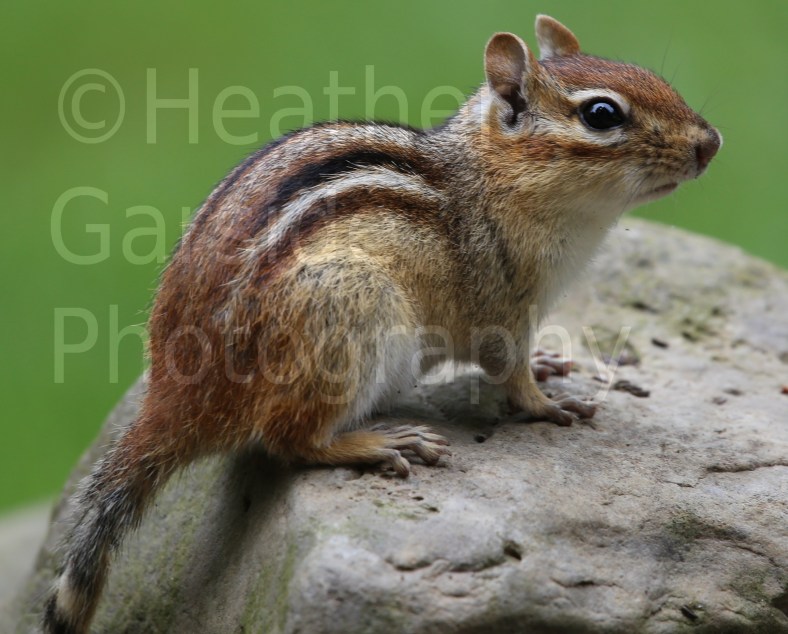
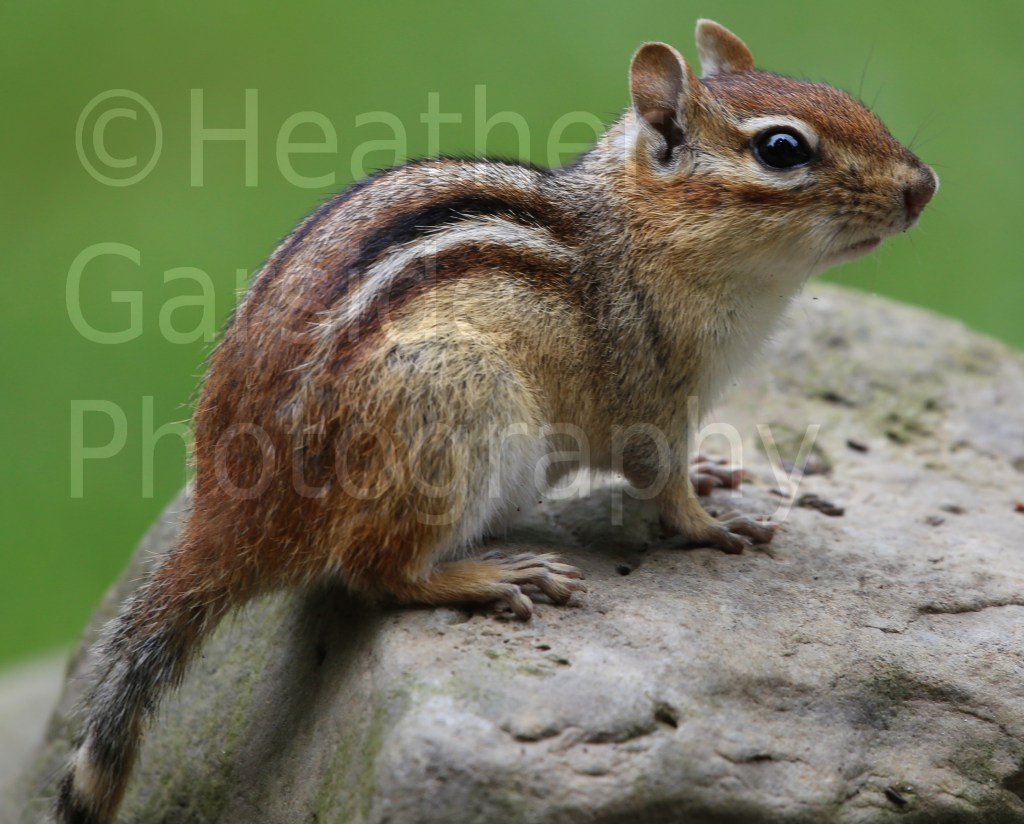
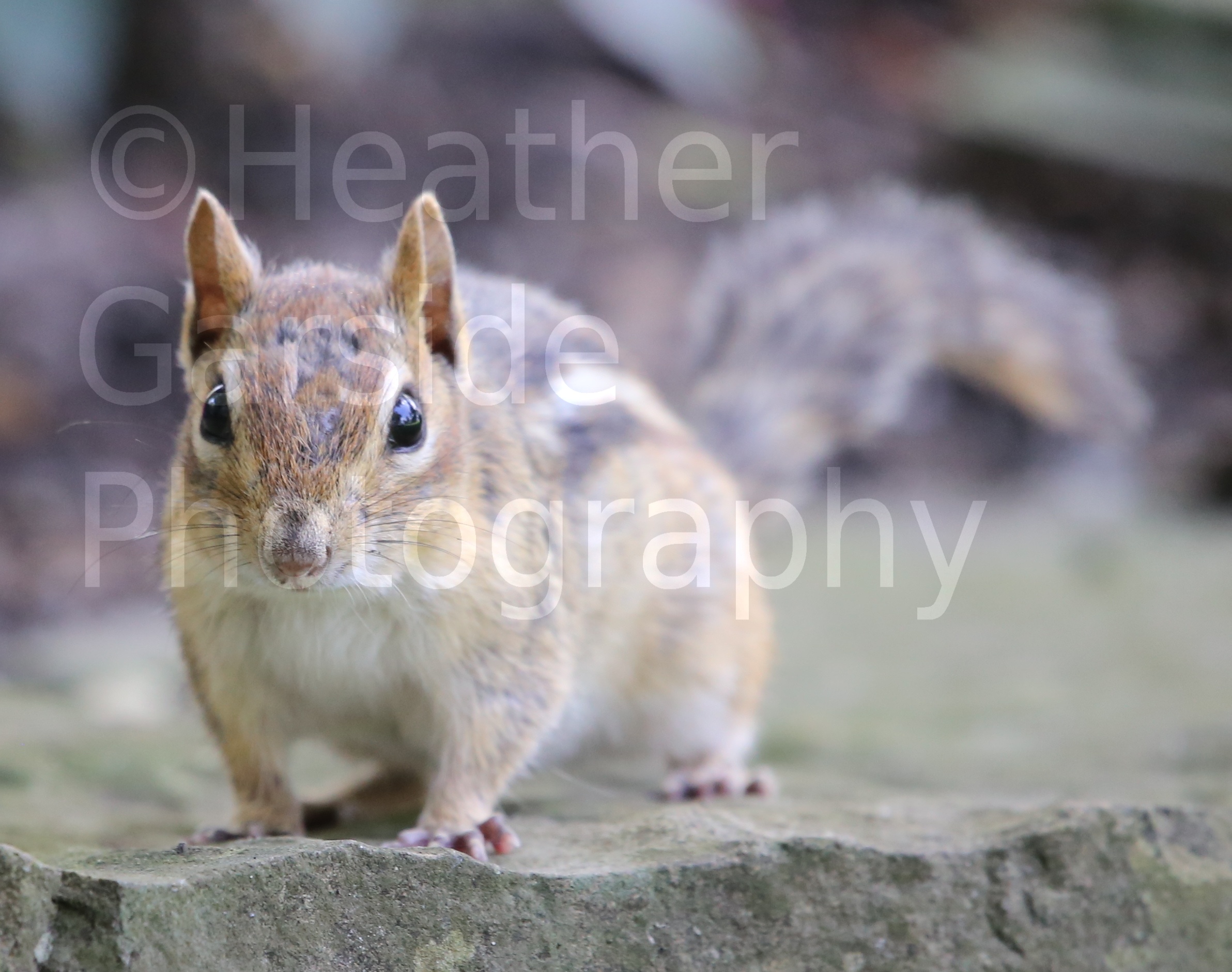
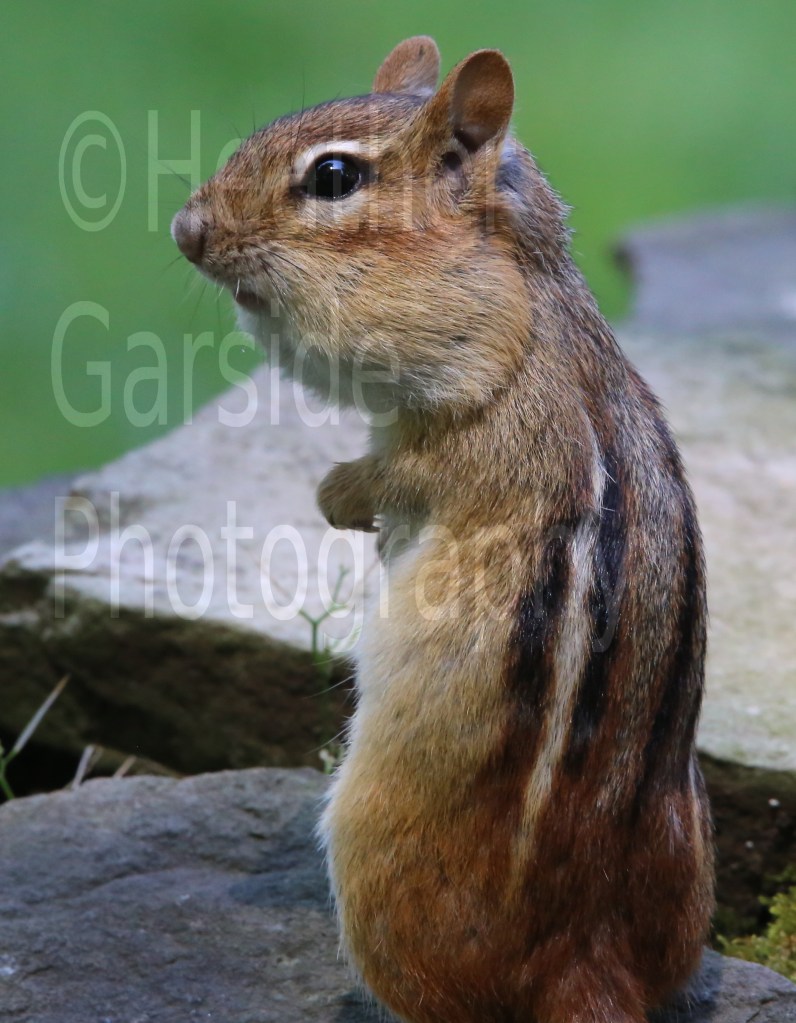
In my bird watching pursuits I often encounter and observe other animals and insects. One mammal that I happen to have frequent encounters with is the chipmunk. Like squirrels, they are attracted to my feeders and they come from all around the block to collect seeds in my yard. Unlike squirrels they give off a series of chirps or chips that can be mistaken for birds. You can watch a video with several of these calls at, https://www.nationalgeographic.com/animals/mammals/group/chipmunks/ scroll down to about halfway and look for WATCH: A Short Guide to Chipmunk Noises.
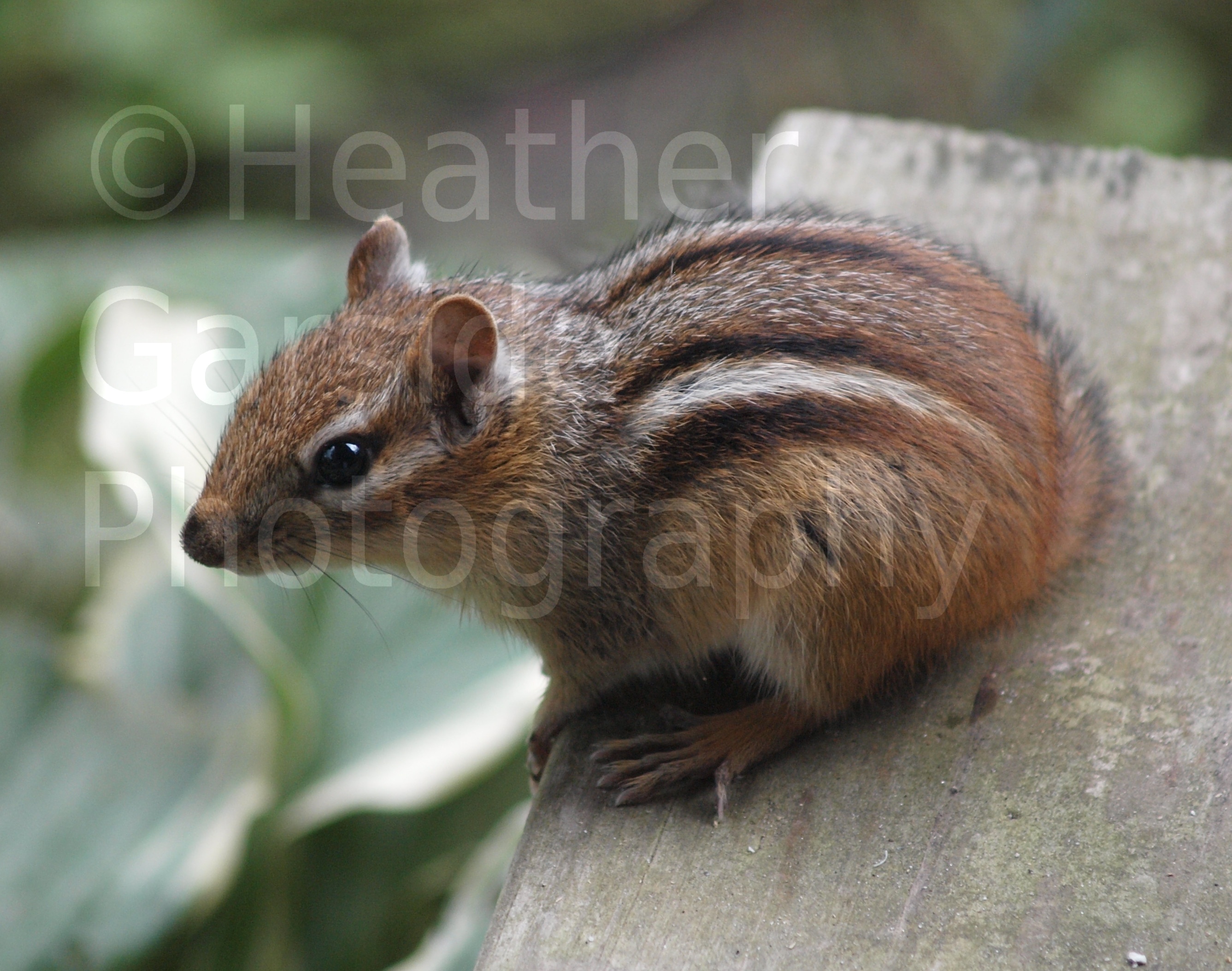
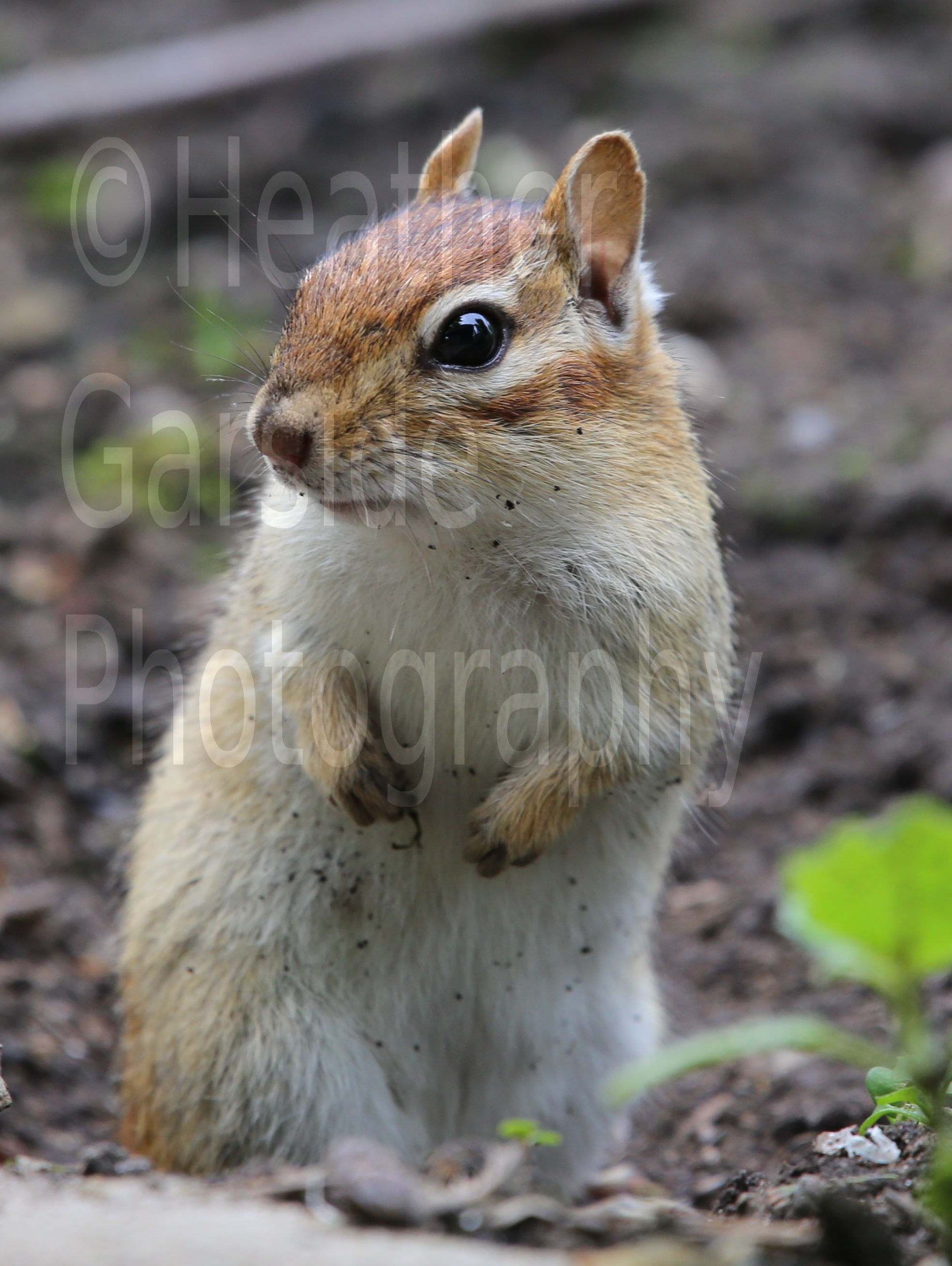
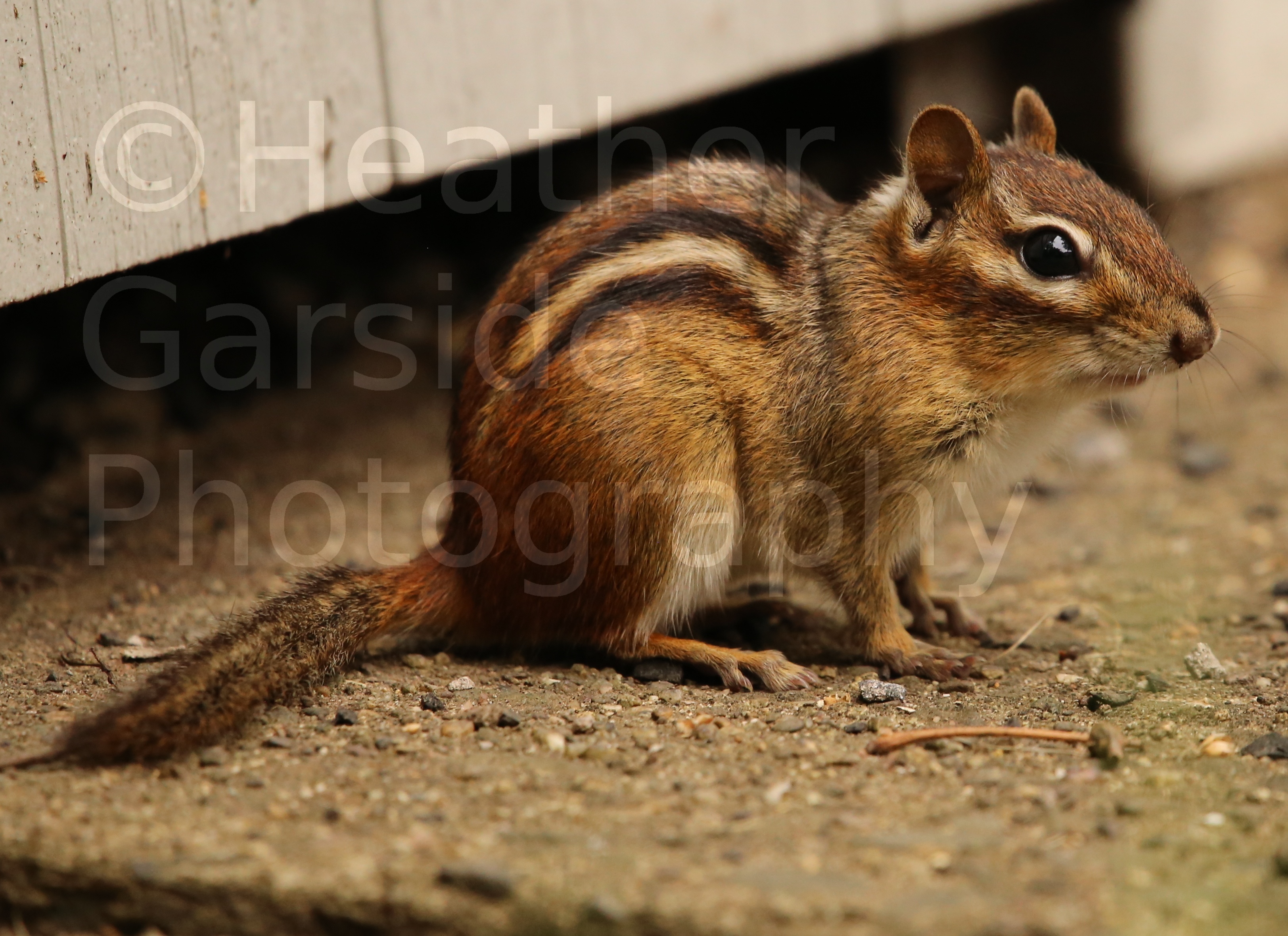
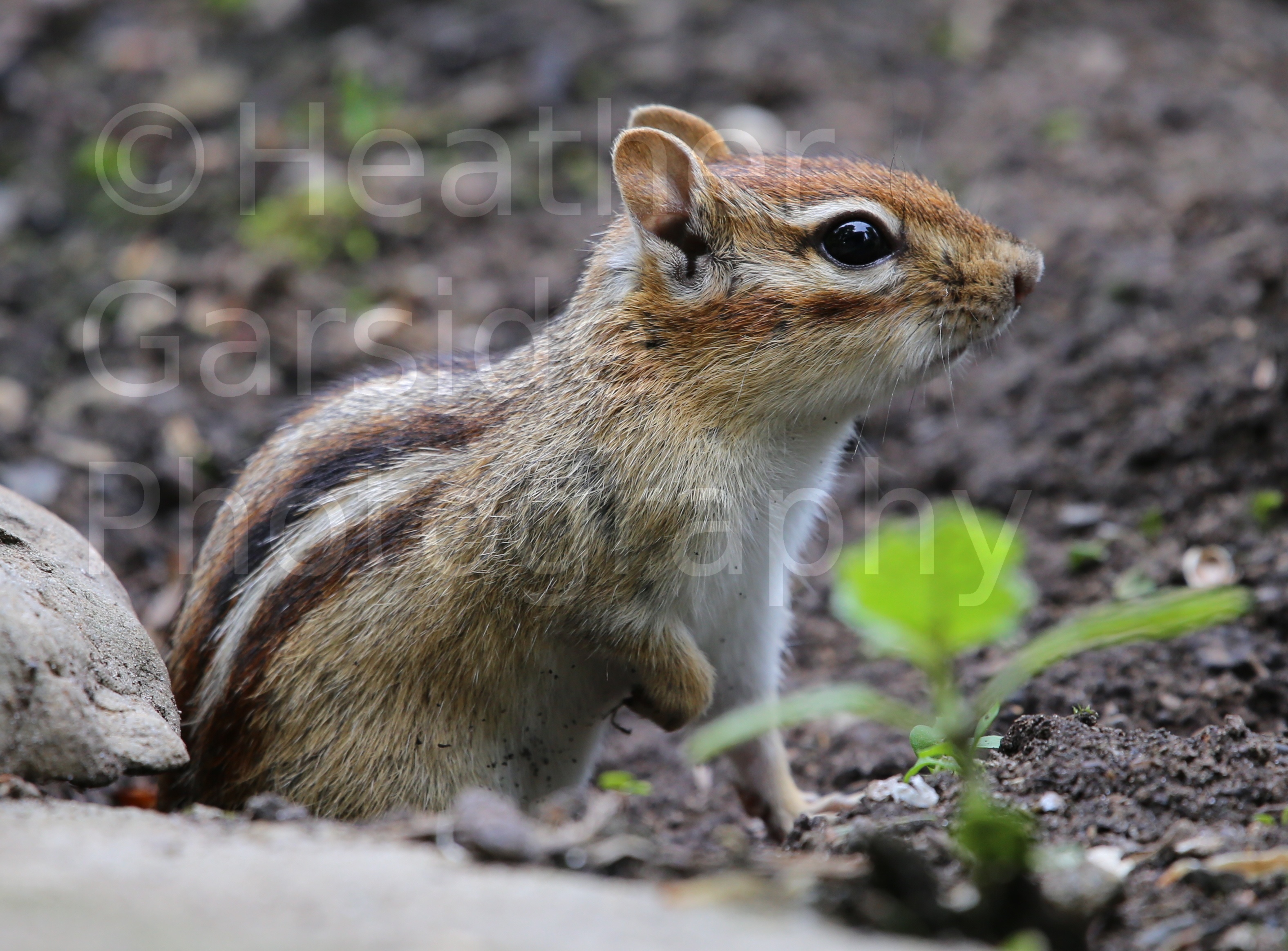
Despite encyclopedia Britannica’s description of them as “basically pygmy squirrels,”you will know a Chipmunk from a Squirrel instantly. Besides being much smaller in body than a squirrel and significantly less fluffy of tail, the chipmunk is chestnut brown, with two groups of stripes, black-white-black, down its back (left and right).
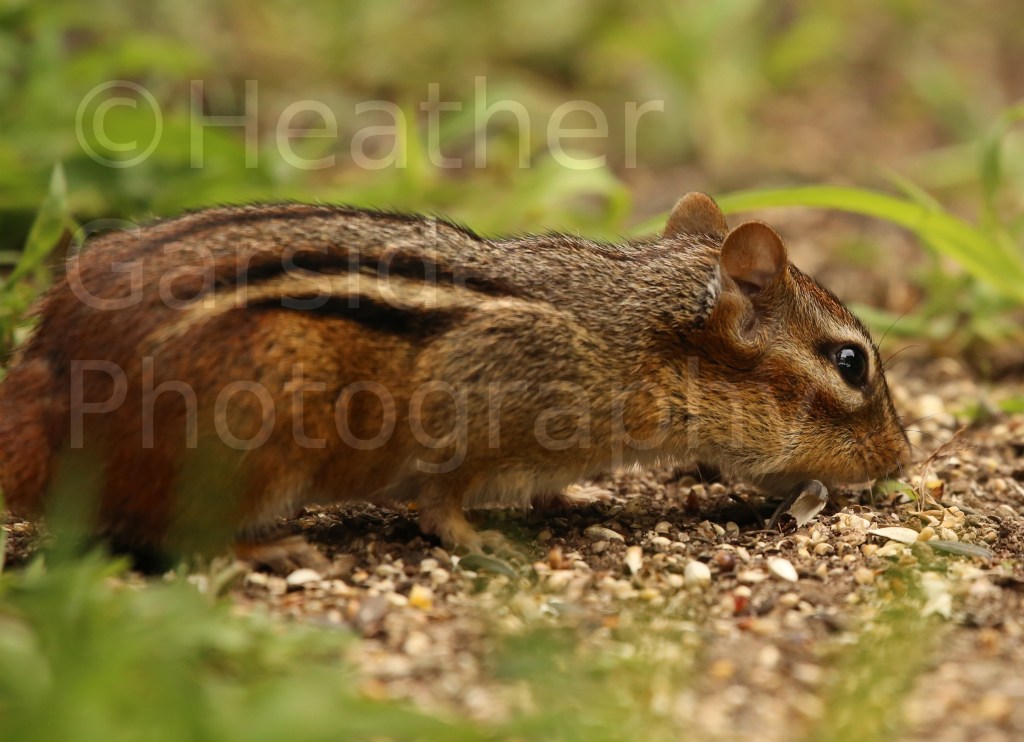
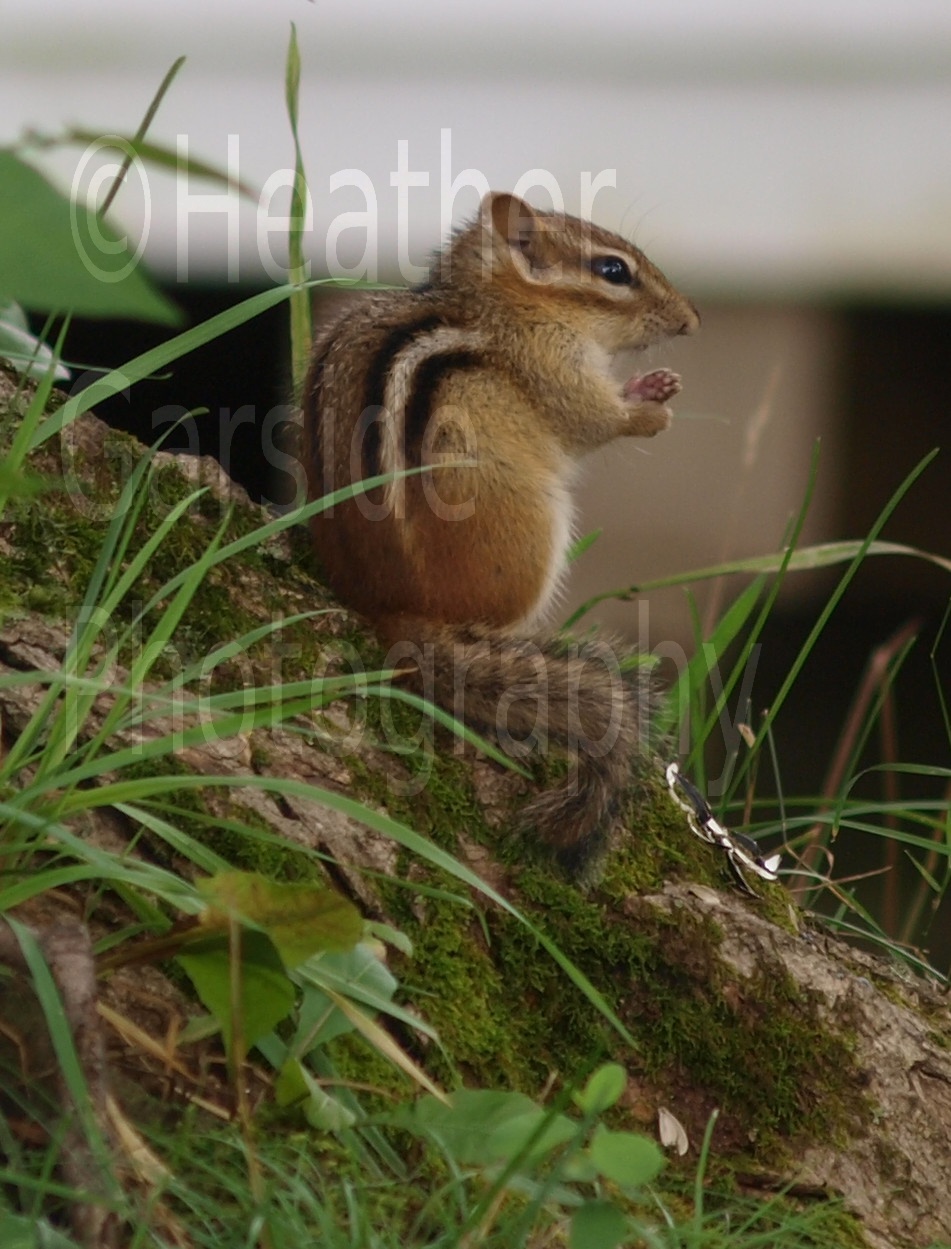
Unfortunately for squirrels, Chipmunks have been classified by society as the cute rodent. And I will say, they have been less disruptive to my feeders than the squirrels. Chipmunks in my yard tend to stick to the ground, gathering what seeds have fallen from the feeders. Only on occasion have I found a chipmunk actually up the feeder pole, which is surprising considering they are very good and quick climbers.
I think it is a combination of their large soulful and innocent black
eyes, along with their pudgy overstuffed cheeks that make us
associate them with all things cute and childlike. Like a greedy
child at the candy store, if they feel safe, they will sit and
rearrange the contents of their cheeks until they can maximize
capacity. Perhaps we must also factor in the influence of Chip, Dale,
Alvin and his brothers into our culture’s fondness for Chipmunks.
Most Chipmunks in the wild will live for about two or three years.
There are twenty-four species of Chipmunk in North America, but if
you live in the Northeast, at a lower altitude, you are probably
coming face to face with the Eastern Chipmunk, the largest of the
species. A daytime mammal, Chipmunks spend all of their time
gathering and storing food for the winter months. They have a varied
diet which includes not only nuts, berries, fruit and grain, but also
insects, tender plants and fungi. They have gotten into my garden
more than once and chewed up my young plants and I think, though I
haven’t seen them in action, they sometimes take a bite out of my
green cherry tomatoes.
Understanding the
mad dash for winter provisions makes the life of a Chipmunk all the
more transparent. Chipmunks hibernate through the winter. However,
they don’t always sleep straight through and, more importantly,
unlike bears, they can’t store fat to live off of in their sleep.
Instead they need to have ready food available in their winter
hideaway for a mid-winter snack.
Chipmunks only stop
collecting winter provisions long enough to procreate. The female
Chipmunk is pregnant for about a month before she gives birth to
anywhere between two and eight babies. The babies are only with the
parents for two months before they are sent packing, so that they can
gather their own winter cache. Chipmunks can have two broods a year,
usually in the spring (April or May) and summer (July or August).
Besides mating and baby rearing, Chipmunks usually hang solo and they
also tend to be fairly territorial. I will sometimes have two or
three gather around my feeder at one time, but they avoid each other
and once they have stuffed their pouches, off they go, beating the
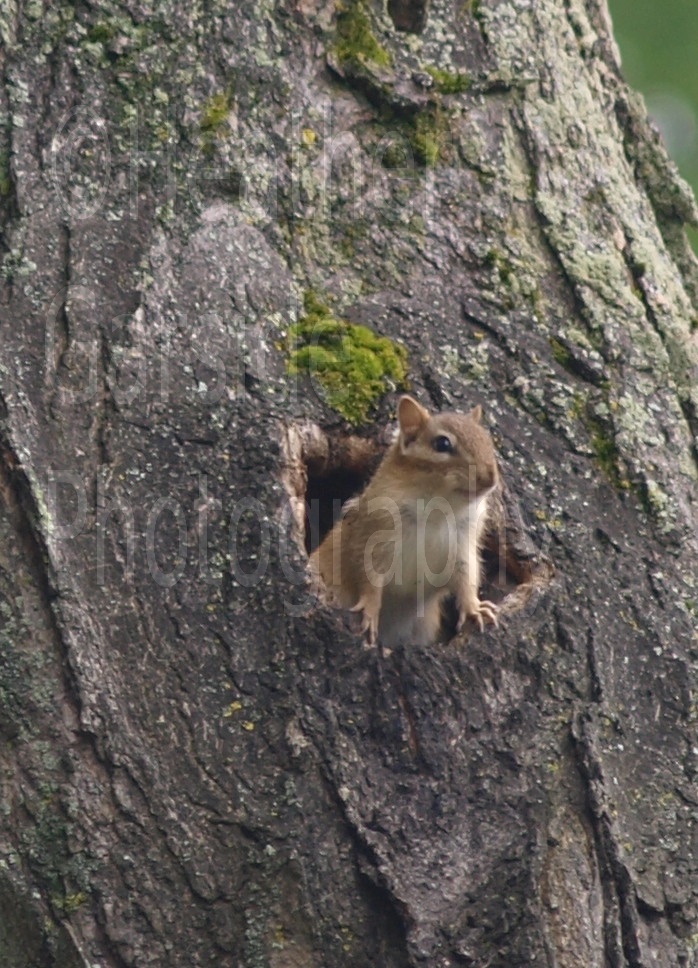
same path they took to the feeder. They like cover for their burrows
and nests and you will often find them living near bushes, stumps,
woodpiles, rock walls or, in more populated areas, under porches,
plantings or ever sidewalks. In my yard, one definitely lives under
the garage and another lives in the rock wall that represents the
property line. At least one tunnels in my garden…I think he may be
akin to Charles Bronson’s character in The Great Escape,
because he has undermined almost my whole raised bed.
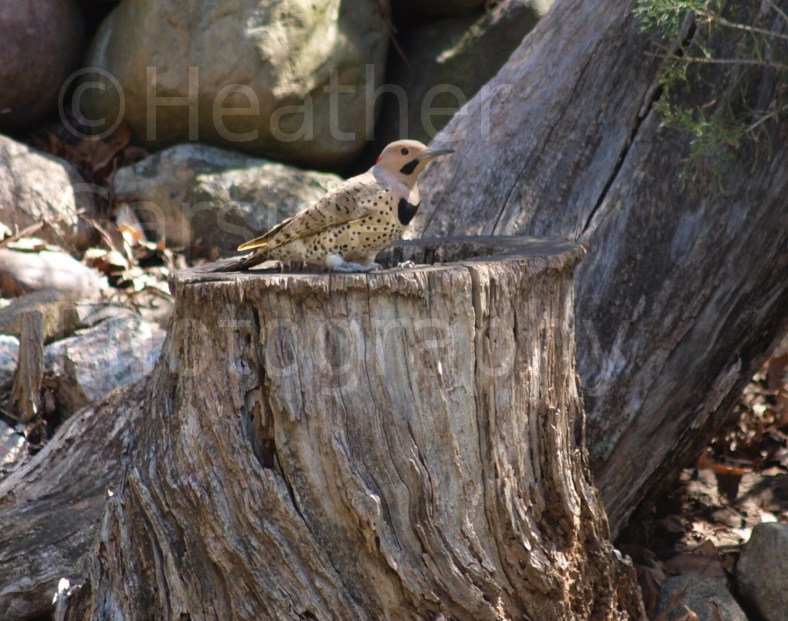
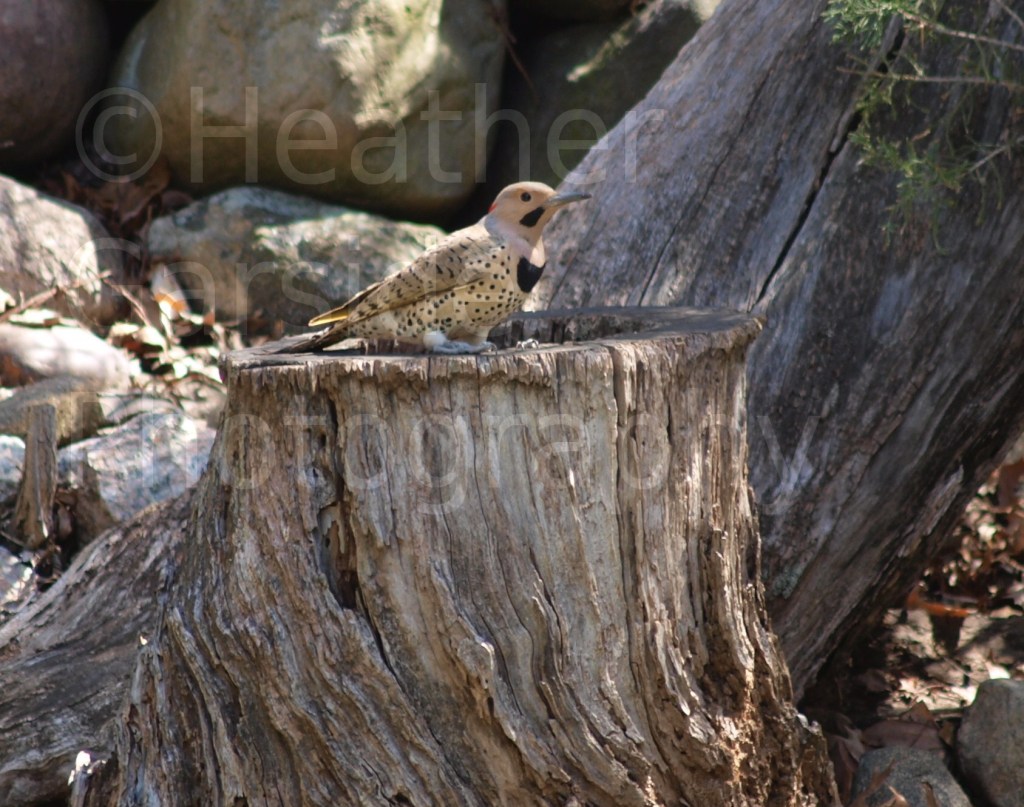
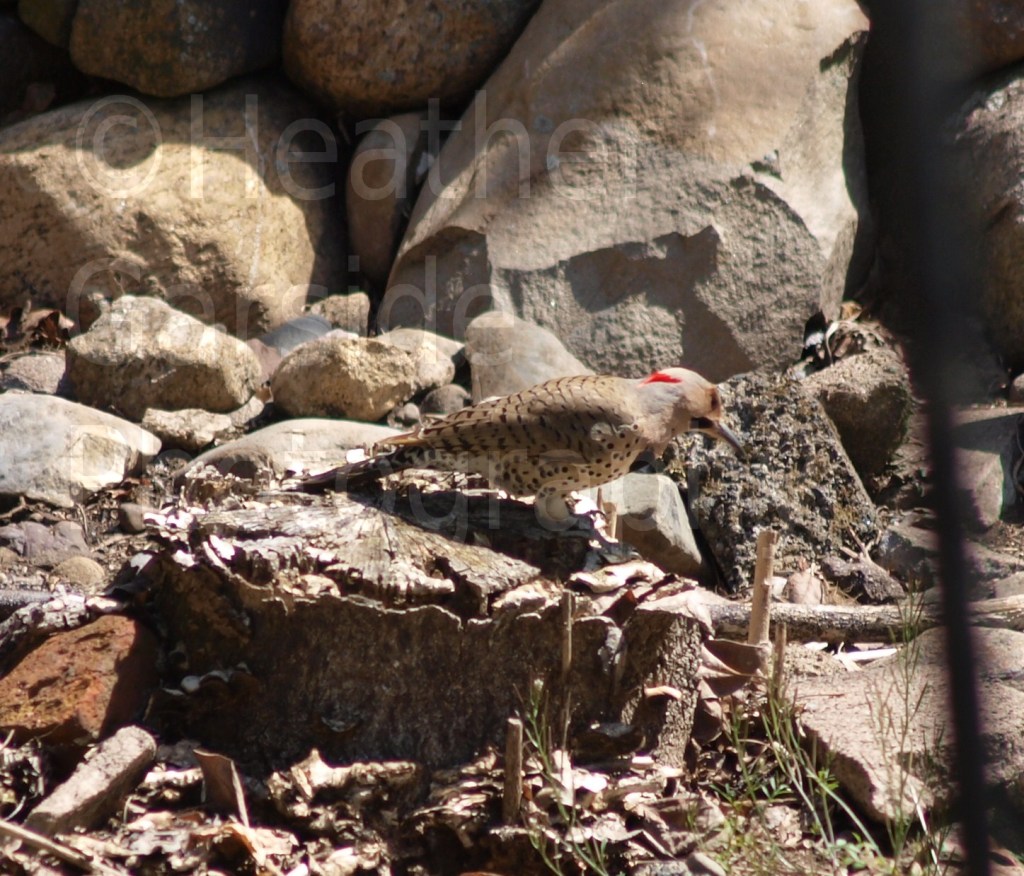
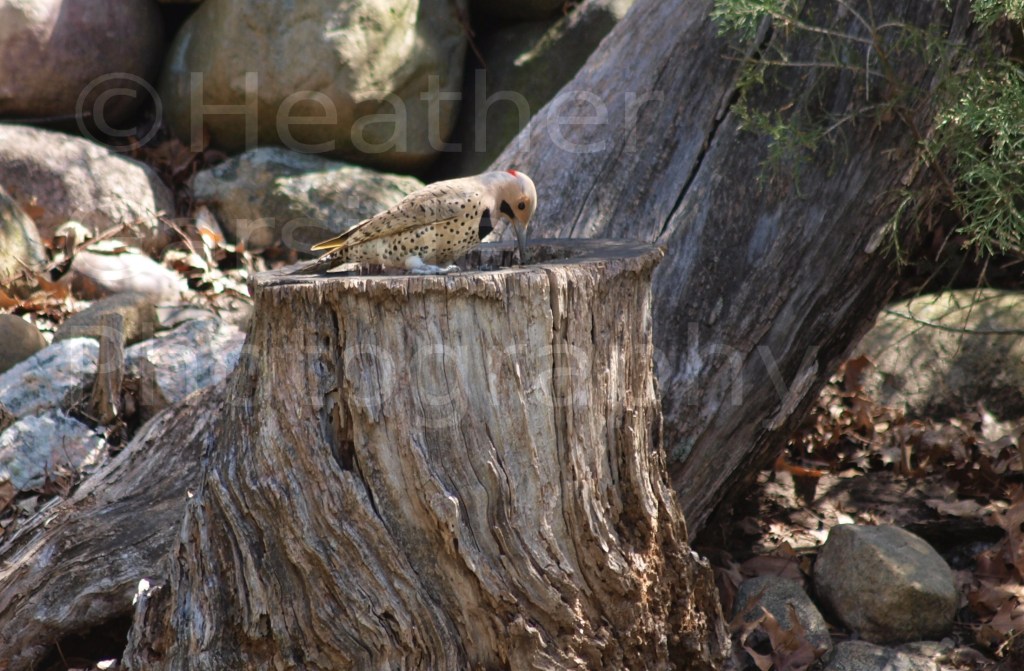
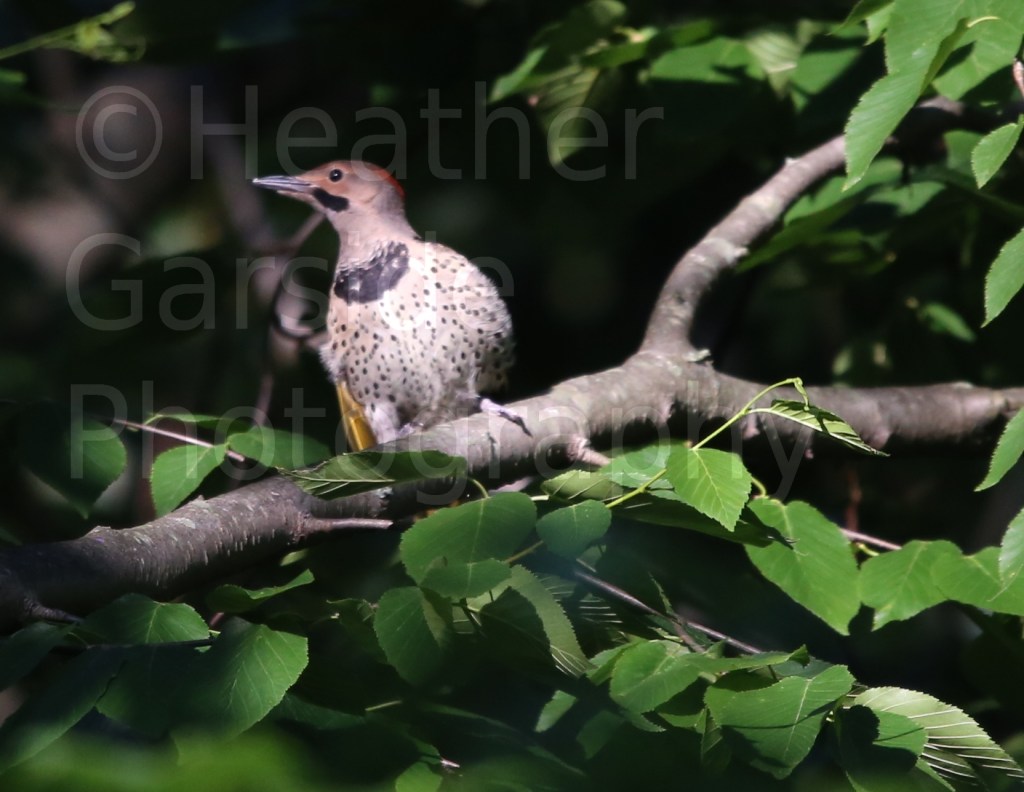
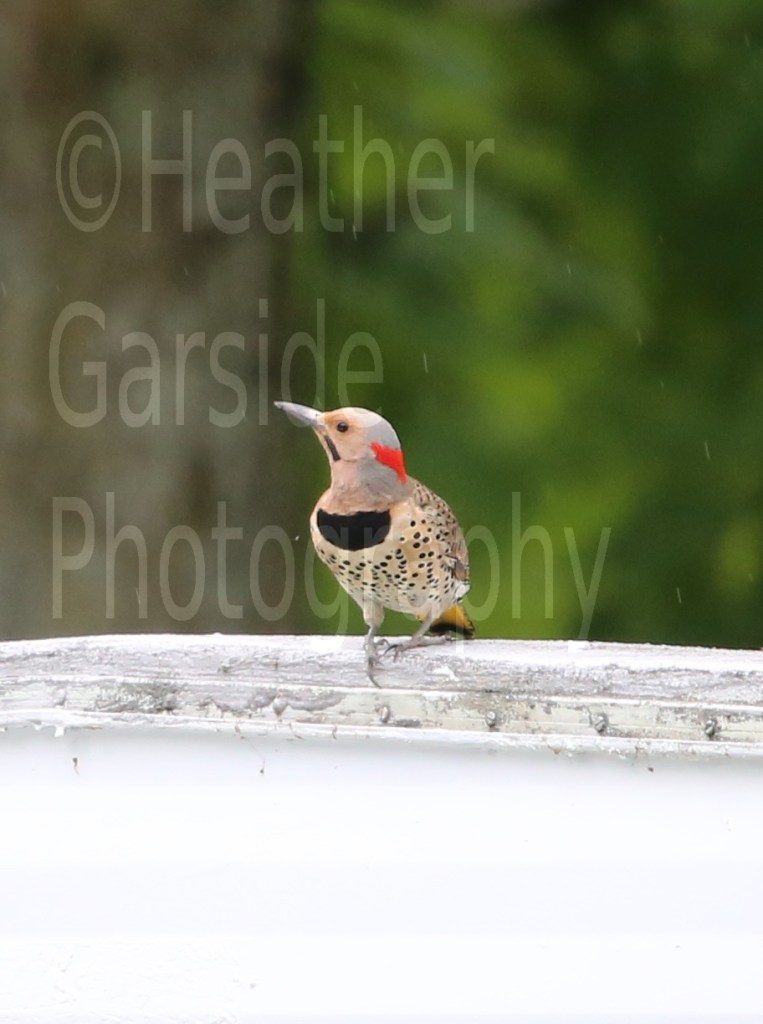
Common year round throughout most of the United States (with the exception of parts of Southern Texas, New Mexico and California), the Northern Flicker is not a regular visitor to my yard. Despite a limited number of sightings, I know Northern Flicker are in the neighborhood, as I can hear their distinctive, hyena like call: https://nationalzoo.si.edu/scbi/migratorybirds/education/nasongkey.pl?bird=Northern+Flicker
As a result of their scarcity in my yard, I am very excited whenever one makes an appearance and I can get a good photo. When I have sighted a Northern Flicker, in my yard or out on various walks, I have noticed that they seem more shy and skittish than other species of woodpecker. If you are lucky enough to be sitting, with a camera nearby, as I was for some of these photos, then you are golden. Any major movements, and the Northern Flicker will bolt. Not necessarily very far, but you will inevitably lose it in the chase.
While technically a woodpecker, you often see the Northern Flicker on the ground or very low to the ground, on stumps etc. This is due to their great affinity to ants. They eat primarily insects, so don’t expect to see them at your suet or seed feeders like many other woodpeckers. In a pinch they will eat nuts or grain, so you might get lucky if food is scarce. Due to their shorter legs, they hop around rather than walk.
Compared to other woodpeckers with their black and white patterning, the Northern Flicker is a bit more subtly feathered, with a golden-brown back, which often blends in to the background more effectively. In my region, the Northeast, the yellow-shafted sub-species is most common. There is also a red-shafted Northern Flicker, the shaft in both cases referring to the flight feathers. If you are looking at the Northern Flicker from the side while stationary, the only hint of yellow can be detected at the very edges of the wings.
All of the photos on this page depict male Northern Flickers. The most distinct difference between the male and female is the male’s black markings on his cheeks. While one of my field guides calls it a mustache and another refers to it as “black malar stripe,” it always reminds me of eye black glare, like football players use.
Other aspects of the appearance that help to identify a Northern Flicker from other woodpeckers are the spotted belly, as I mentioned the golden-brown coloring, and a gray head with a distinctive red patch.
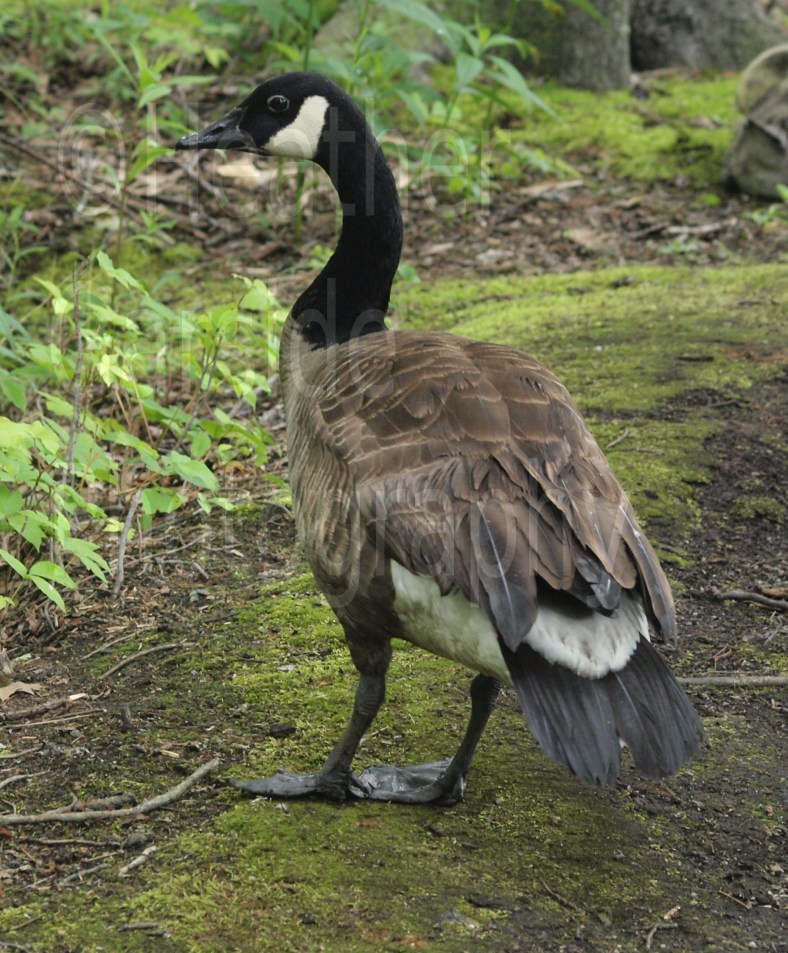
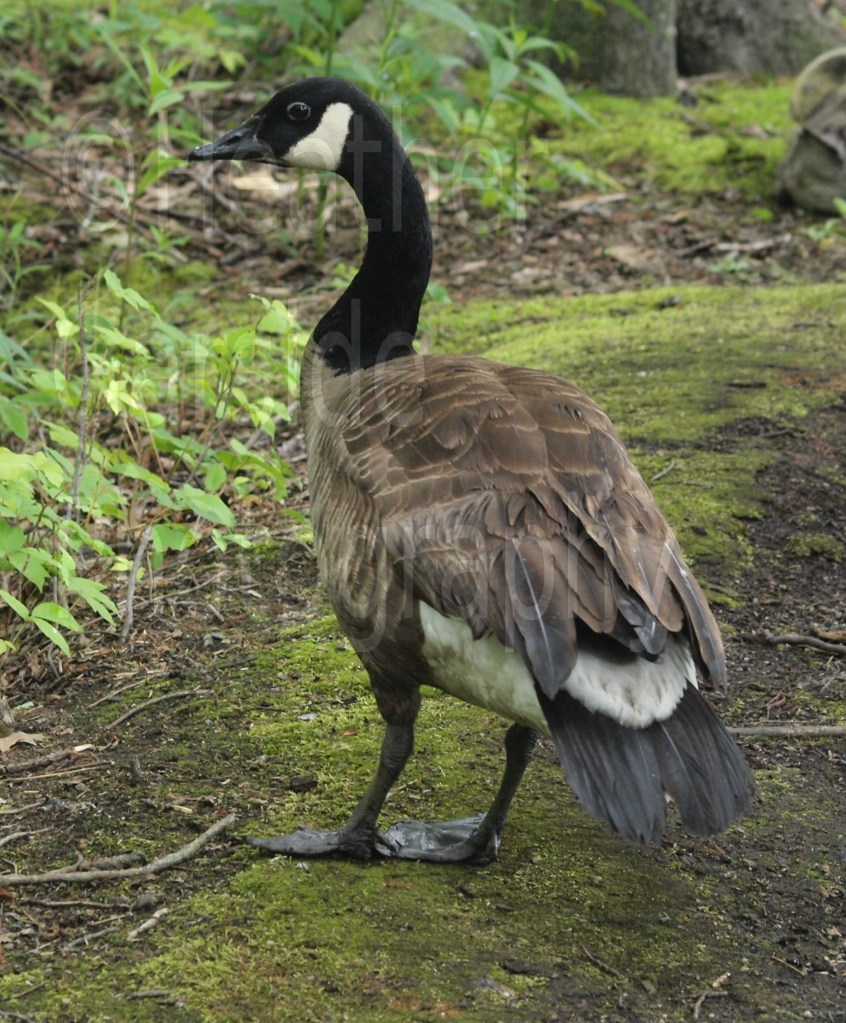
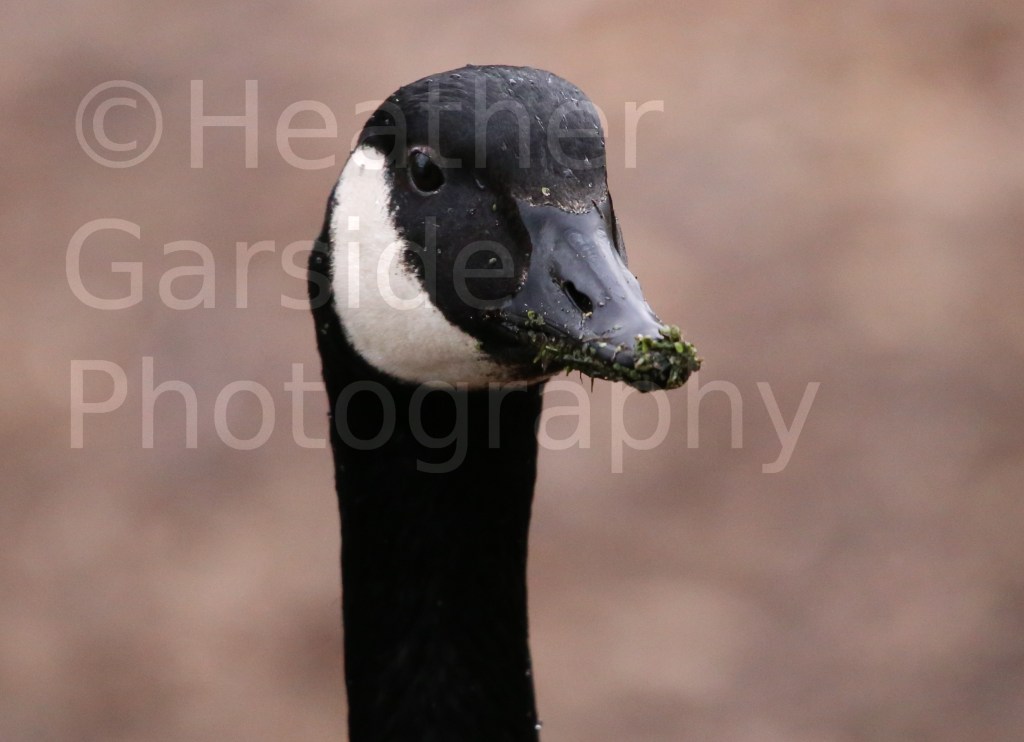
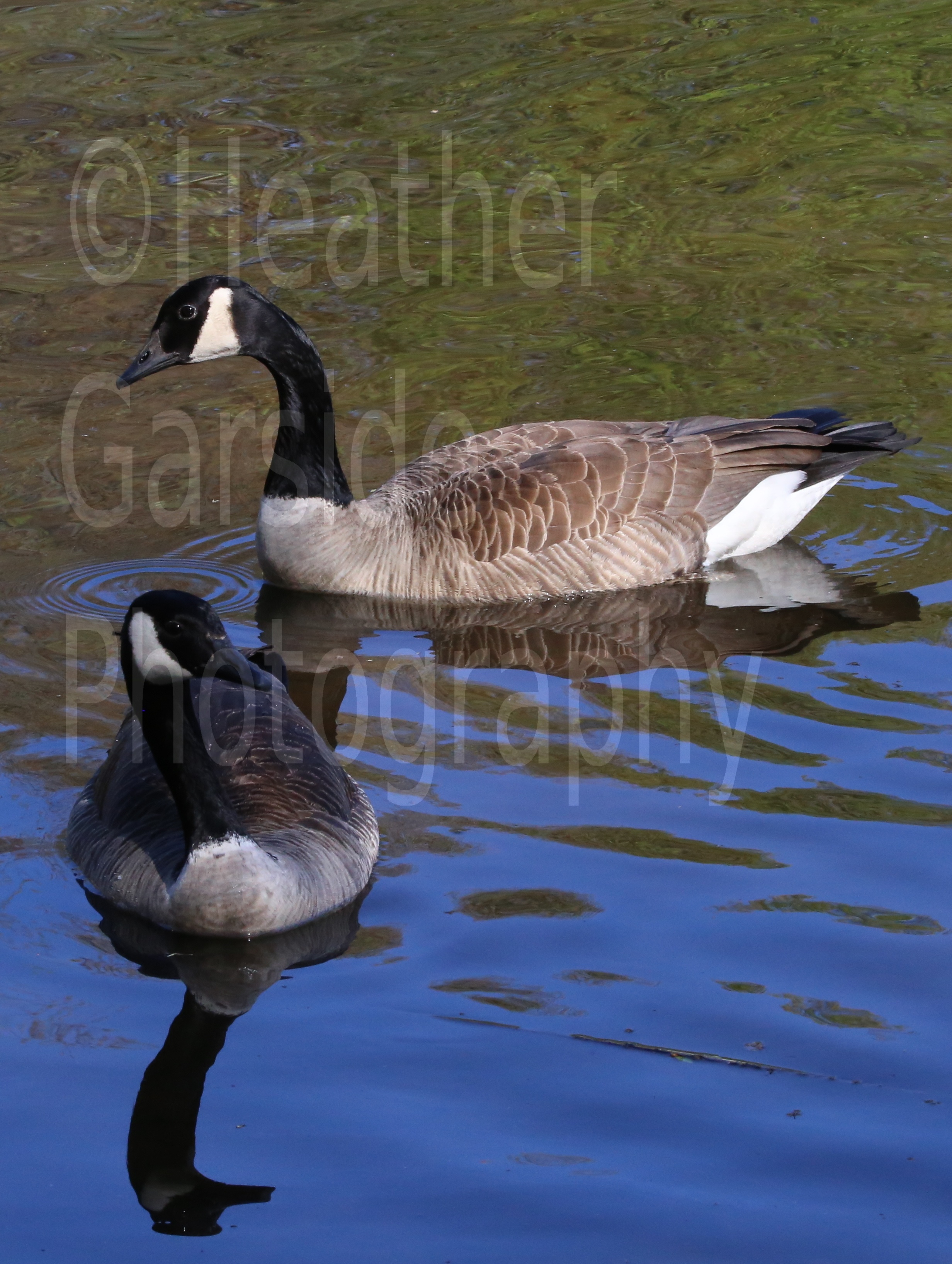
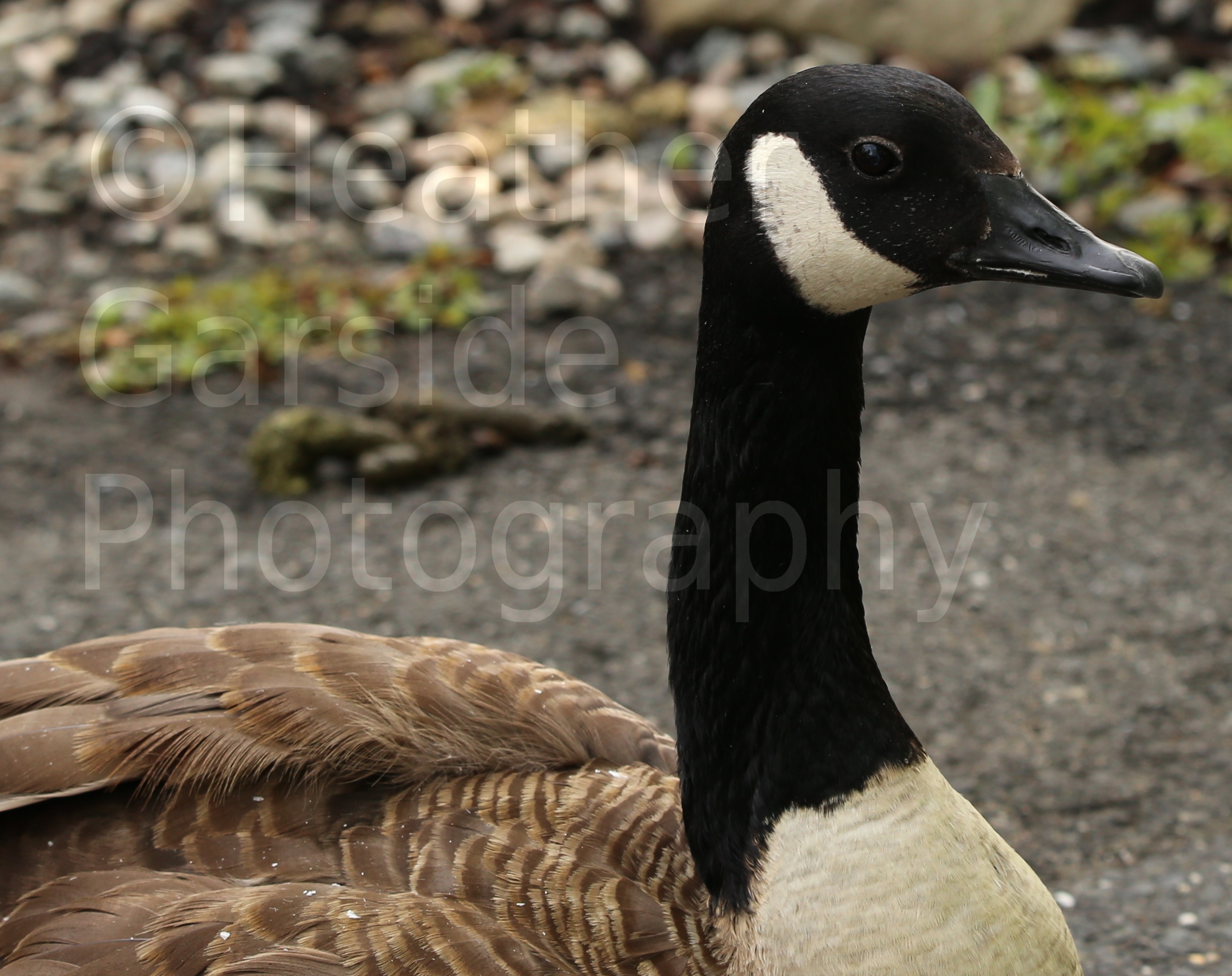
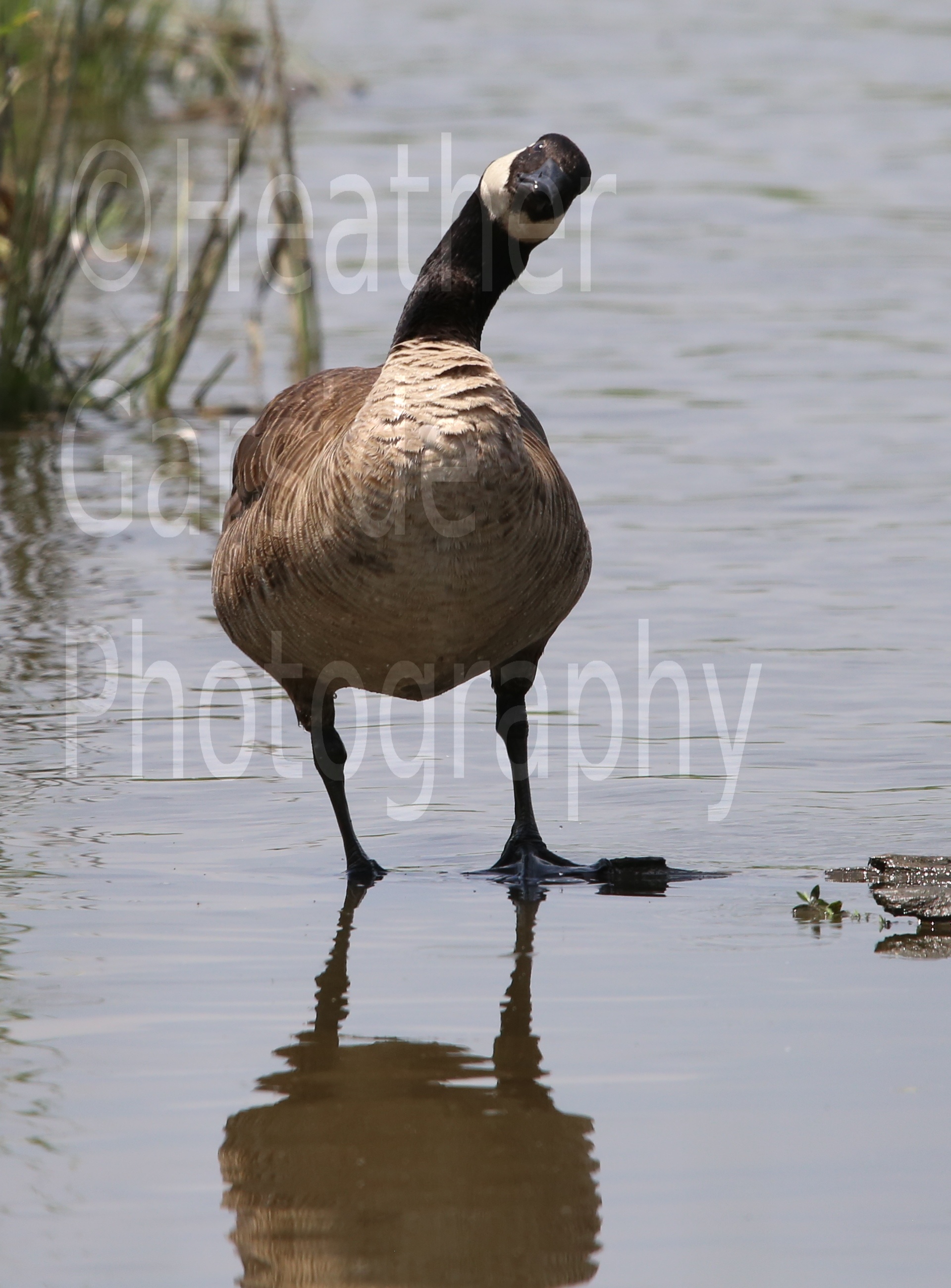
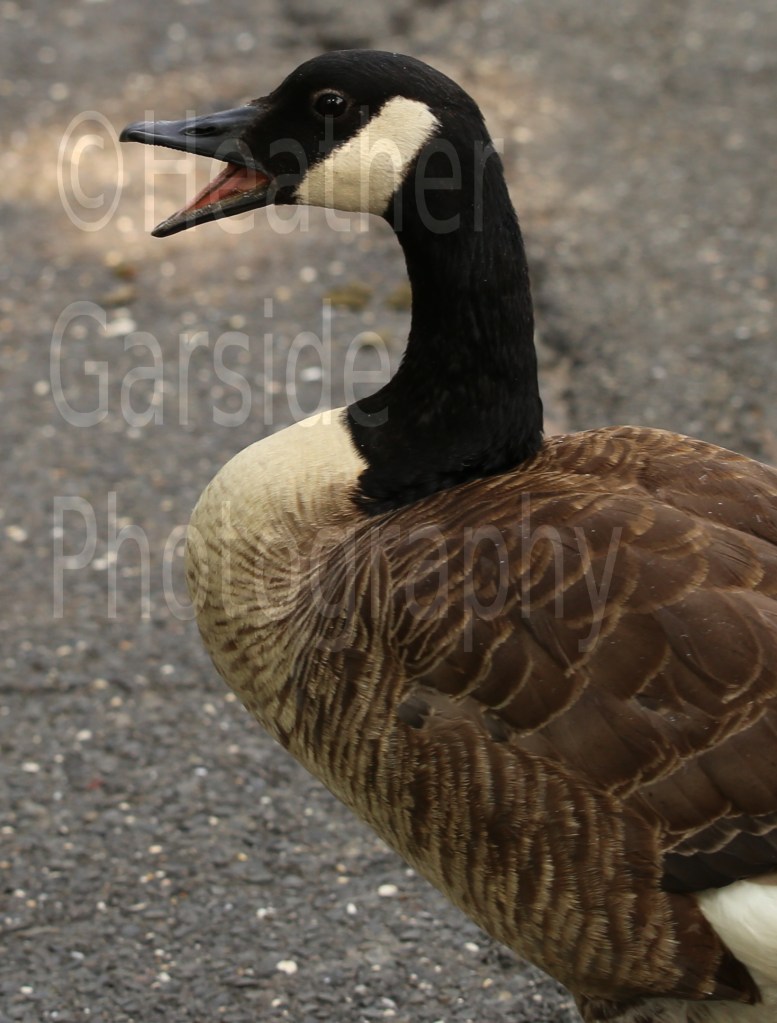
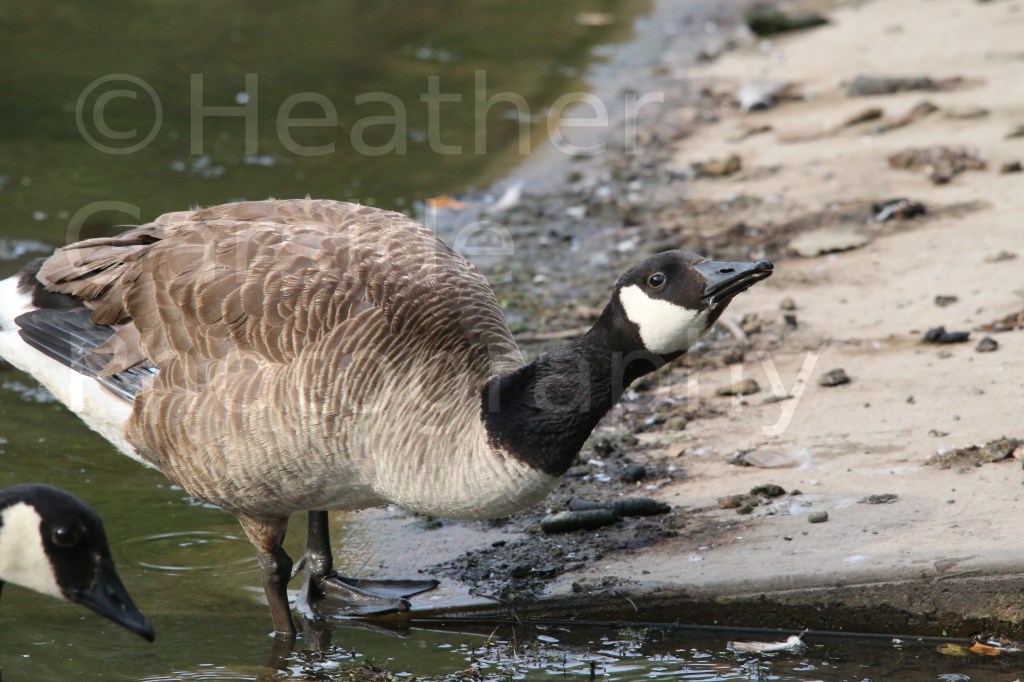
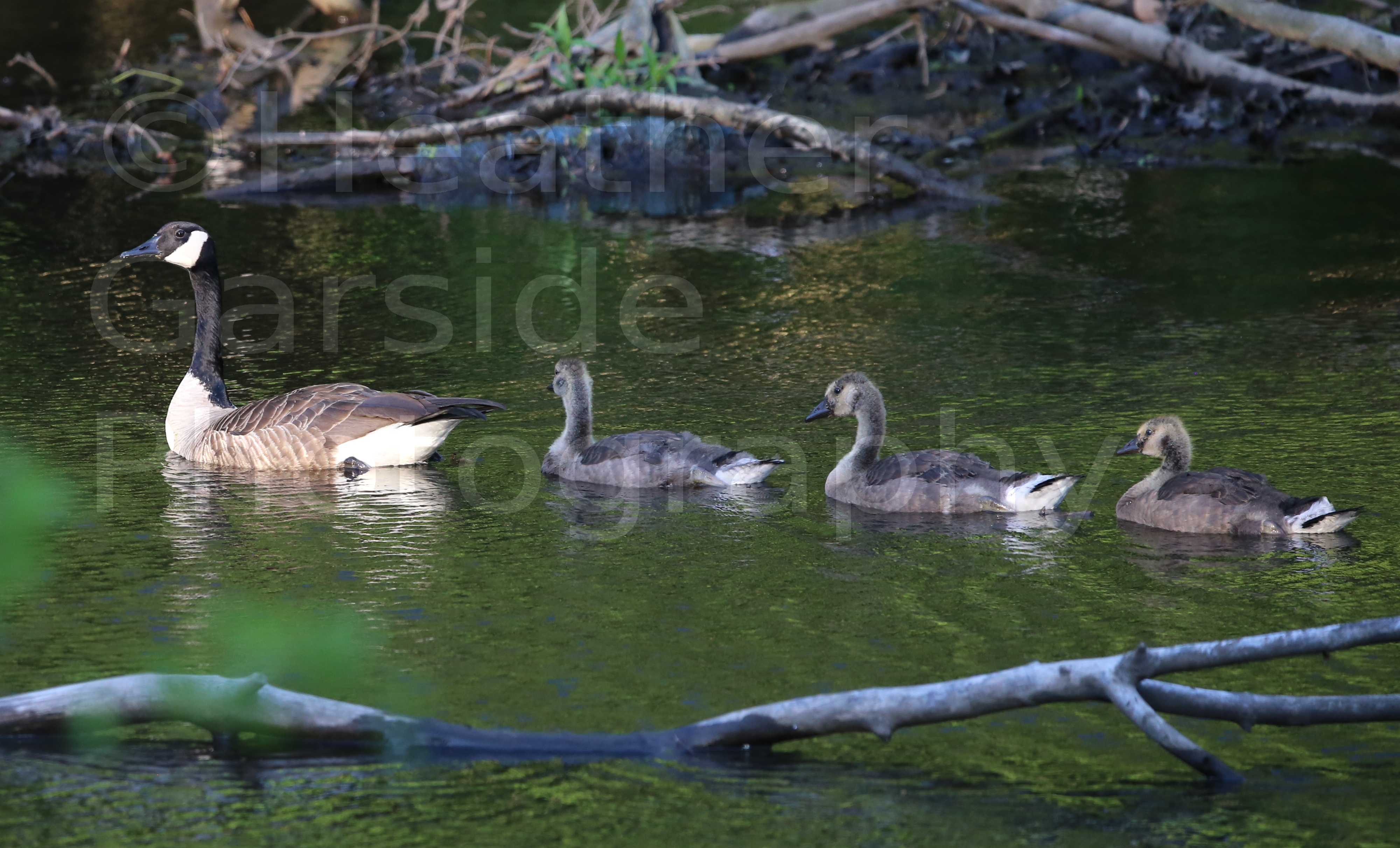
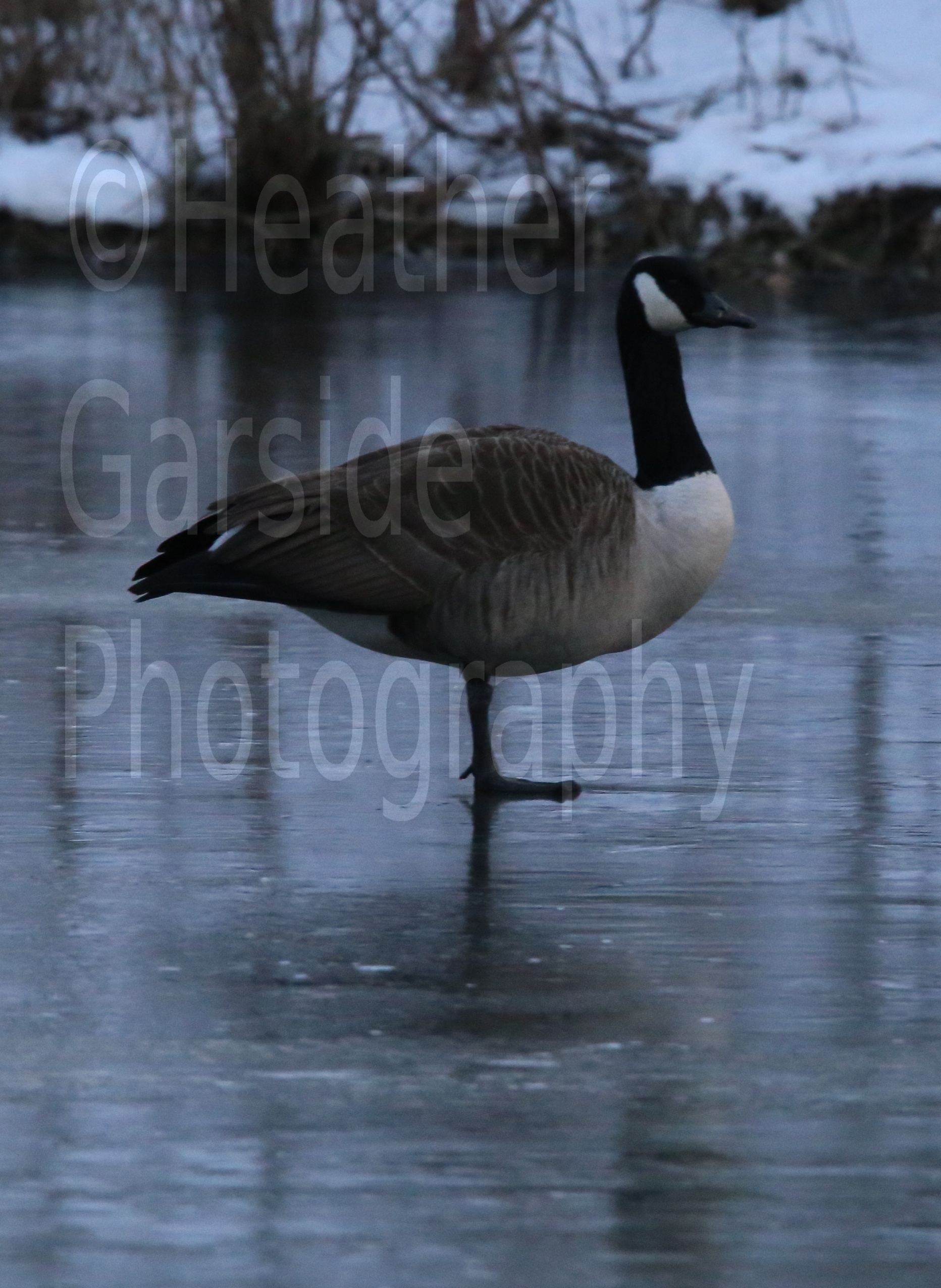
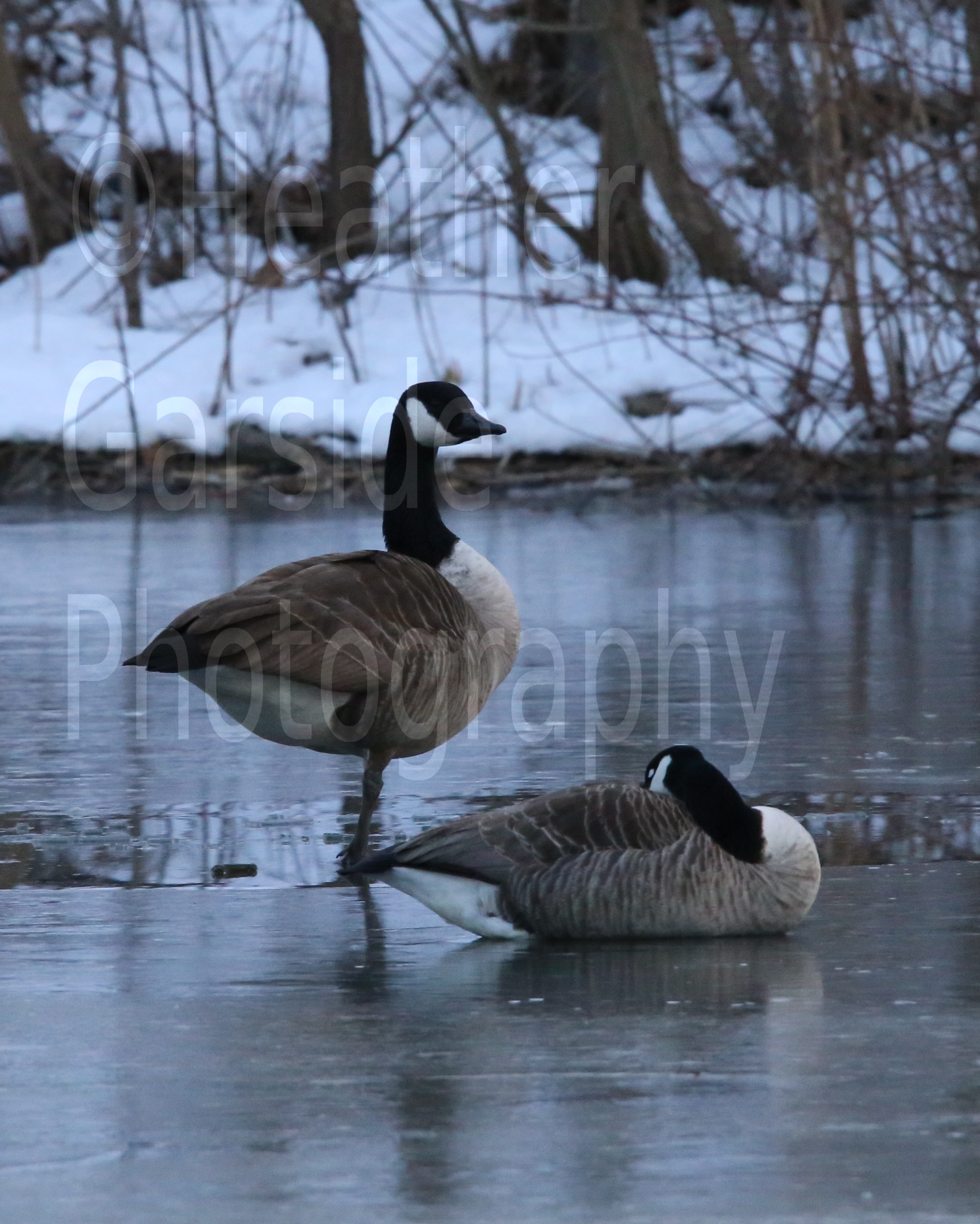
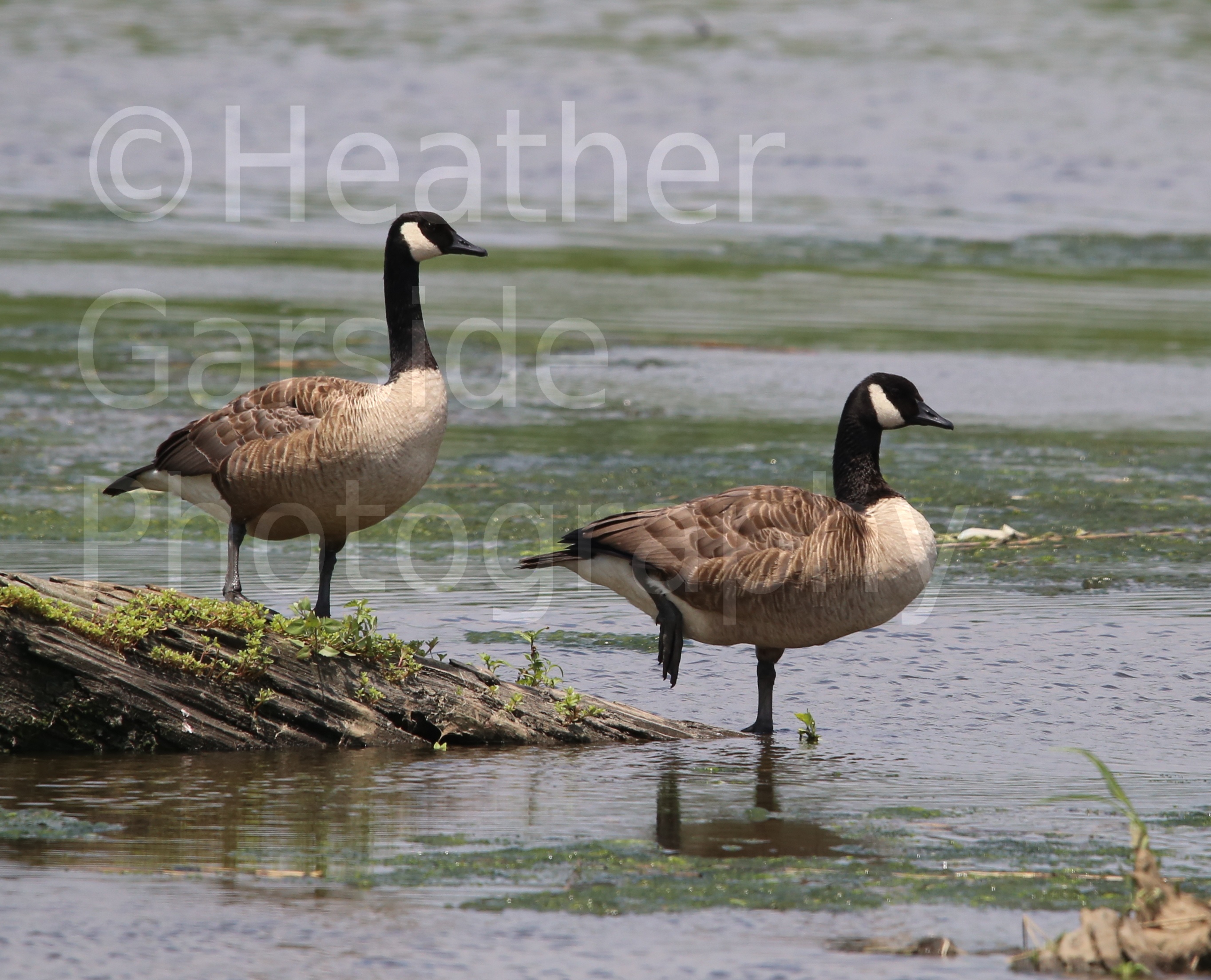
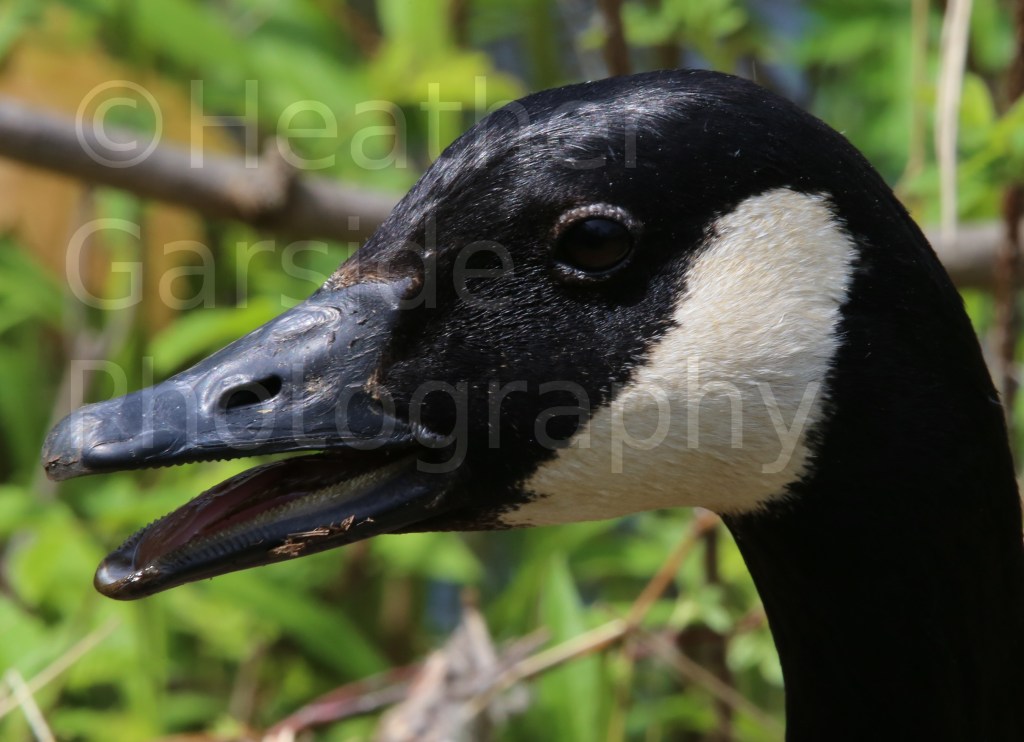
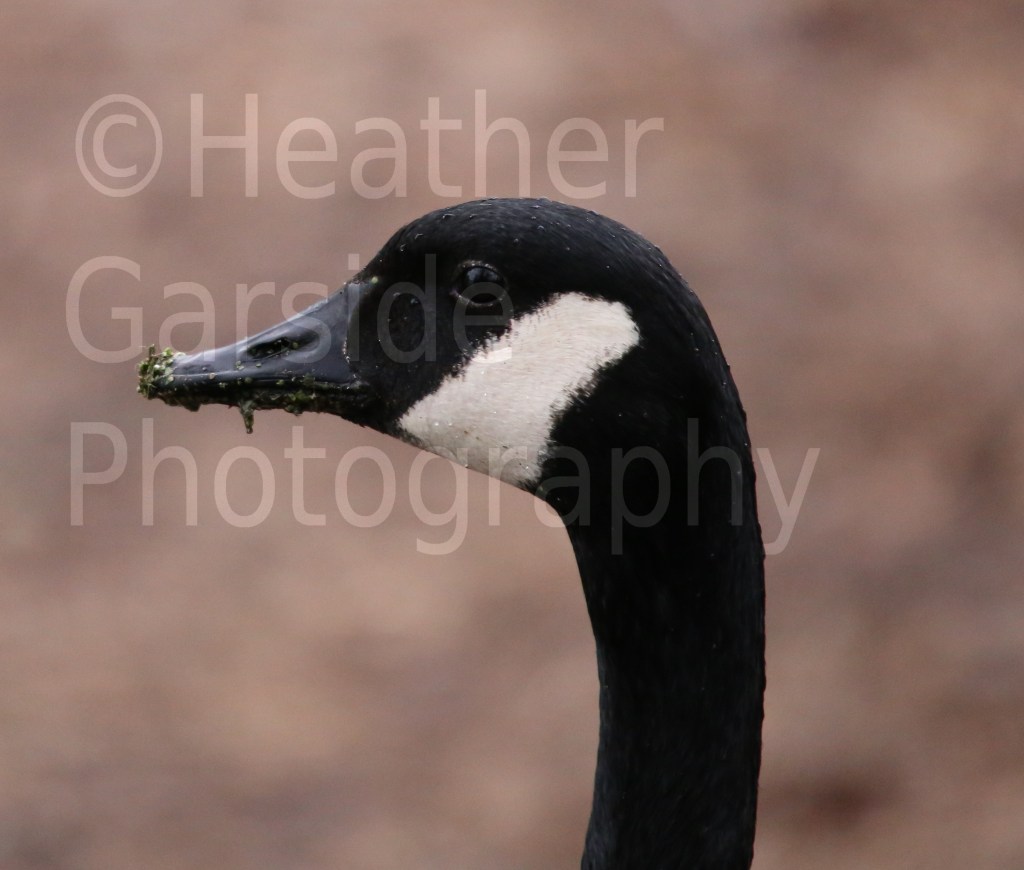
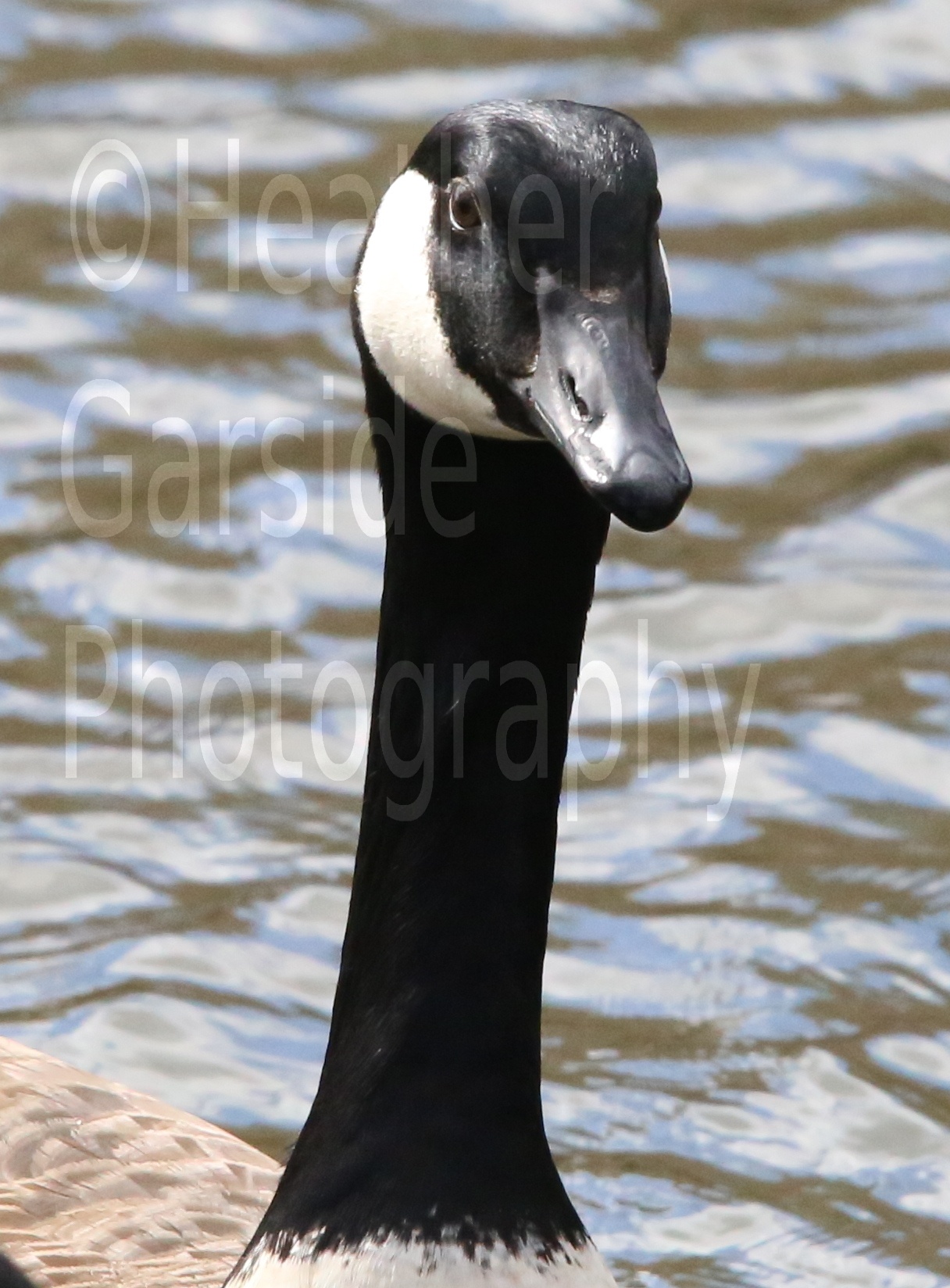
I want to take the time in this post to talk about a less respected bird, the Canada Goose. Most people choose to write off the Canada Goose as a nuisance. They make a mess in parks and nature preserves. They don’t tend to be friendly, especially in the spring. They don’t have a nice song, and they aren’t pretty to look at. So what’s to like?
Perhaps one of the reasons they aren’t liked is that they are not native to many of the places they now call home. However, despite making the invasive species website- which was somewhat akin to America’s most wanted for our animal friends- being invasive was not really their idea. It is hard to believe today, but the geese population was actually failing in the 1950s. Because of this decline, they were moved to urban and suburban areas where they would not naturally have occurred. They have now thrived in those areas for generations, creating the overpopulation problem we are familiar with today.
Due to the abundance of Canada Geese in my area, I have had a lot of
opportunity to photograph them and observe them closely. I think that
they have a strength and an intelligence that I truly admire. They
also have strong family ties. They are, and this is incredibly
impressive, adaptable. One of the reasons we see so many Canada Geese
is that they have learned to live in many different situations.
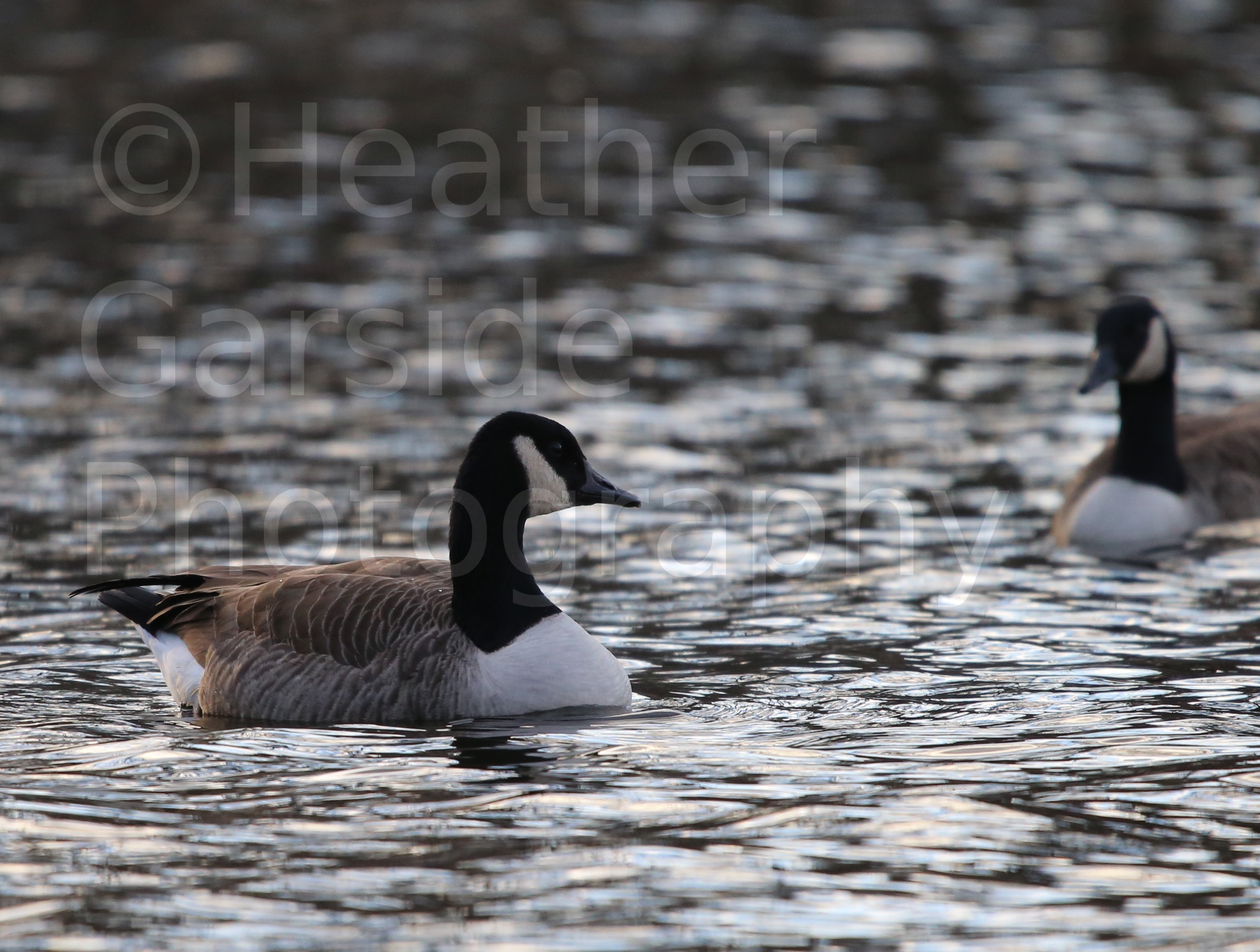
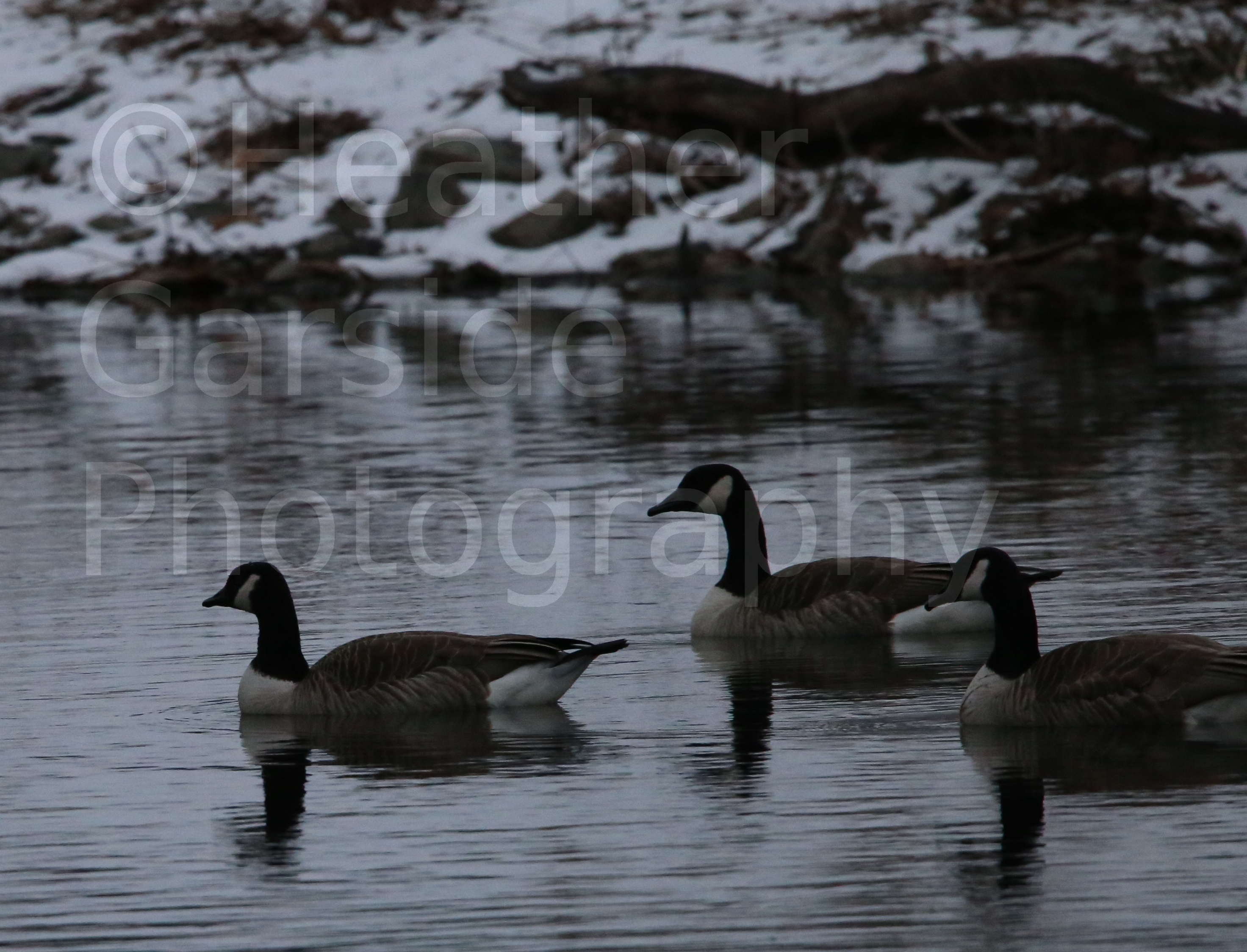
Apparently, Canada Goose identification can actually be more of a challenge than you would think. They are several subspecies, no doubt a result of that adaptability in their nature. All are basically the same to the untrained eye, with the black head and neck, a gray-brown body and white highlights on the chin and backside. Most measure about 36-46 inches, making them much bigger than most ducks but not quite the size of a swan.
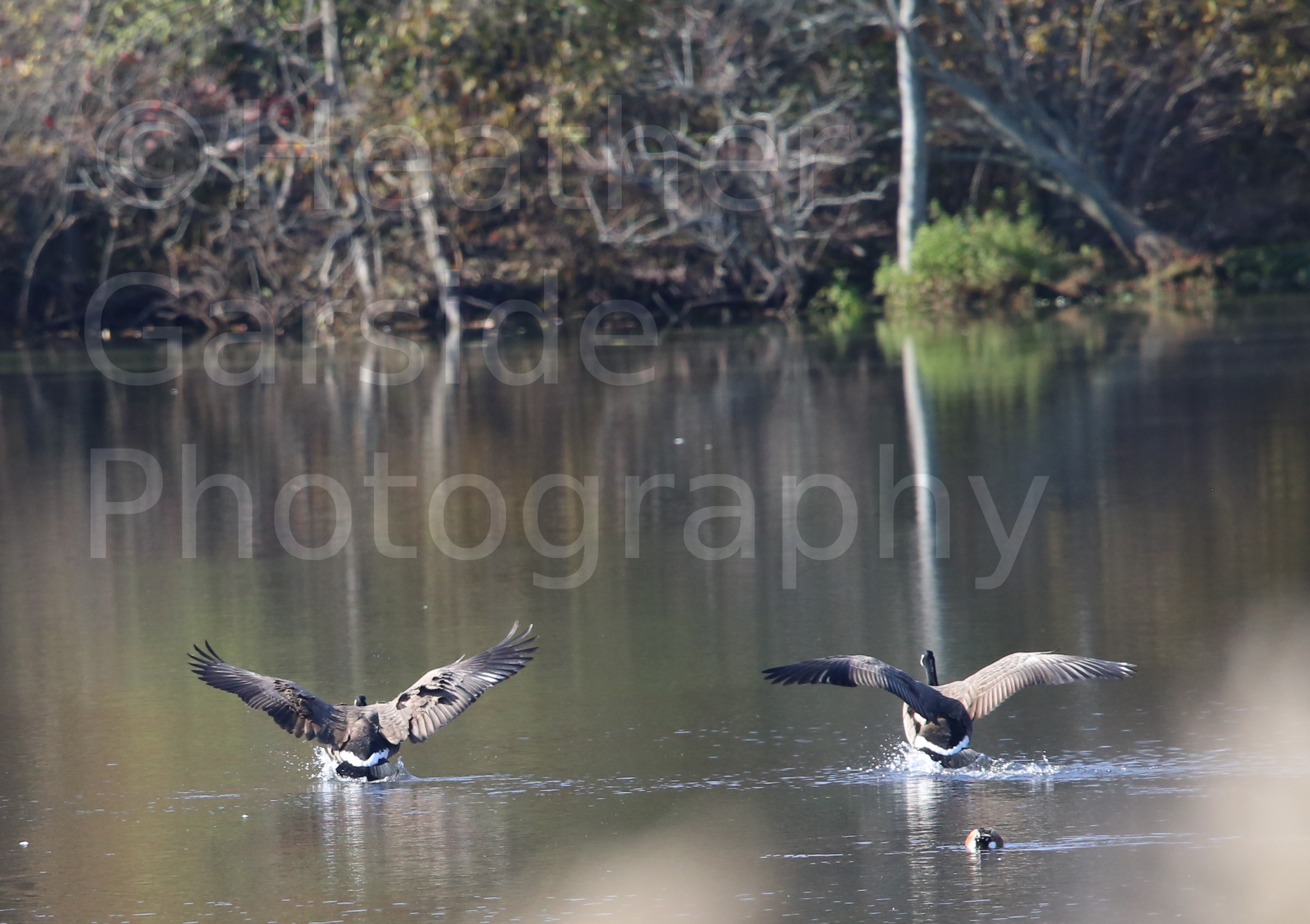
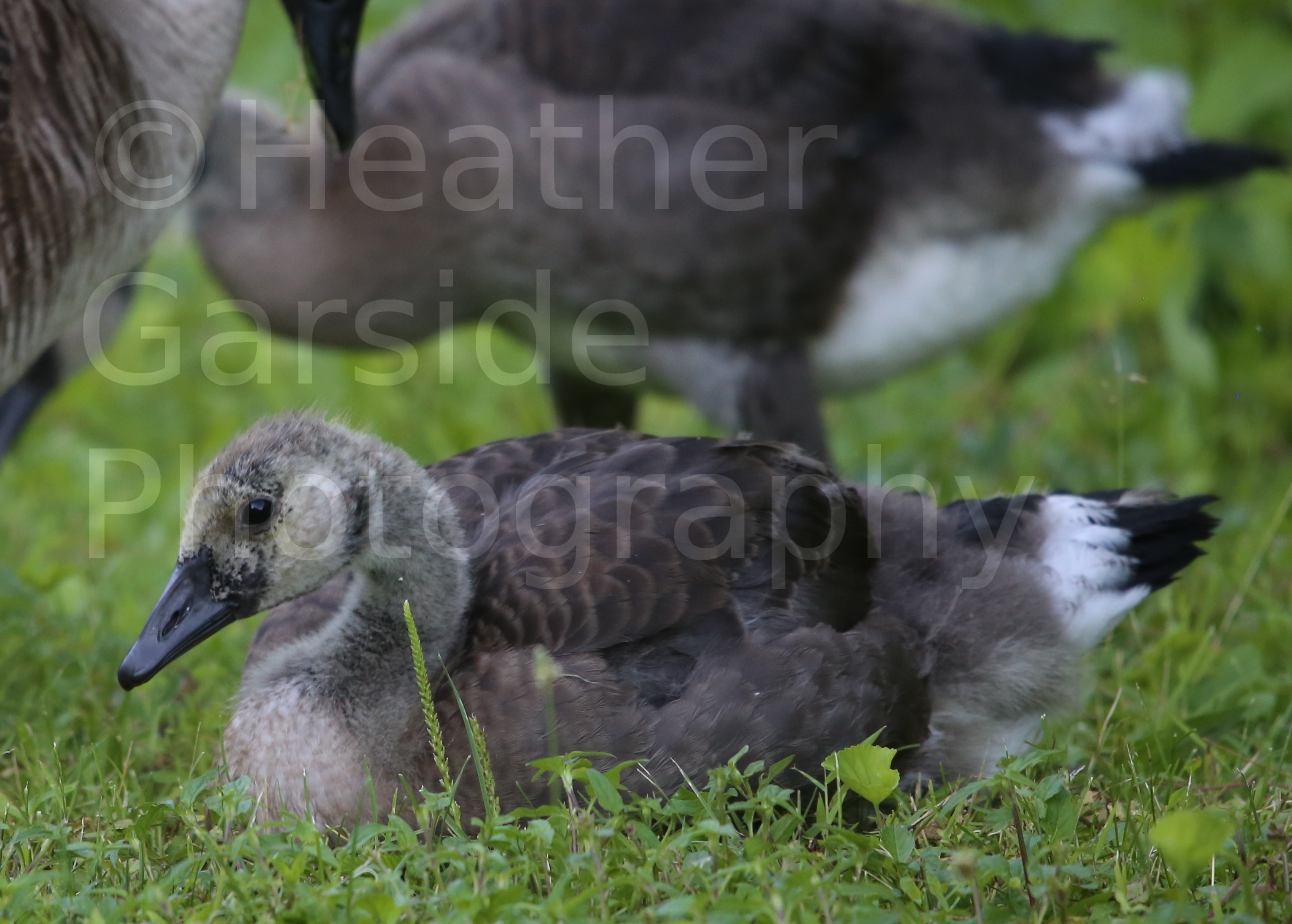
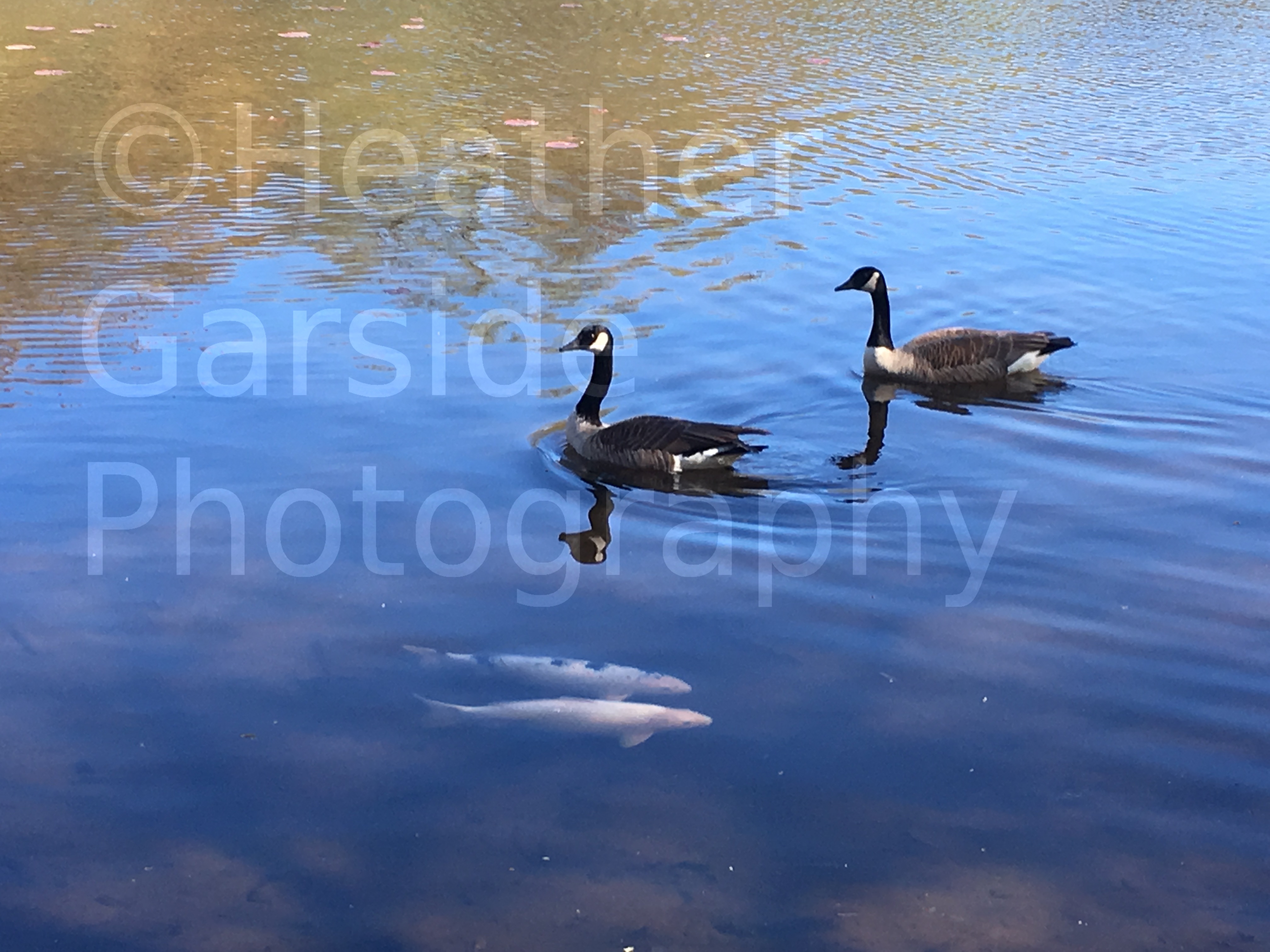
One of nature’s first signs of Autumn, the Canada Goose’s V- formation is iconic. The V is also symbolic of the strong family and group ties these geese have. Like Muted Swans and several other waterfowl, Canada Geese mate for life. They also have strong attachment to their nesting locations, and return or remain in the same territory every year. A pair will only have one brood a year, in a nest located near the water. They can have anywhere from five to ten eggs, which incubate for about a month. According to PETA, parent geese can communicate with goslings while they are still in the egg, but I didn’t find any other reference to this in my research. Both parents watch and teach their young for about two months.
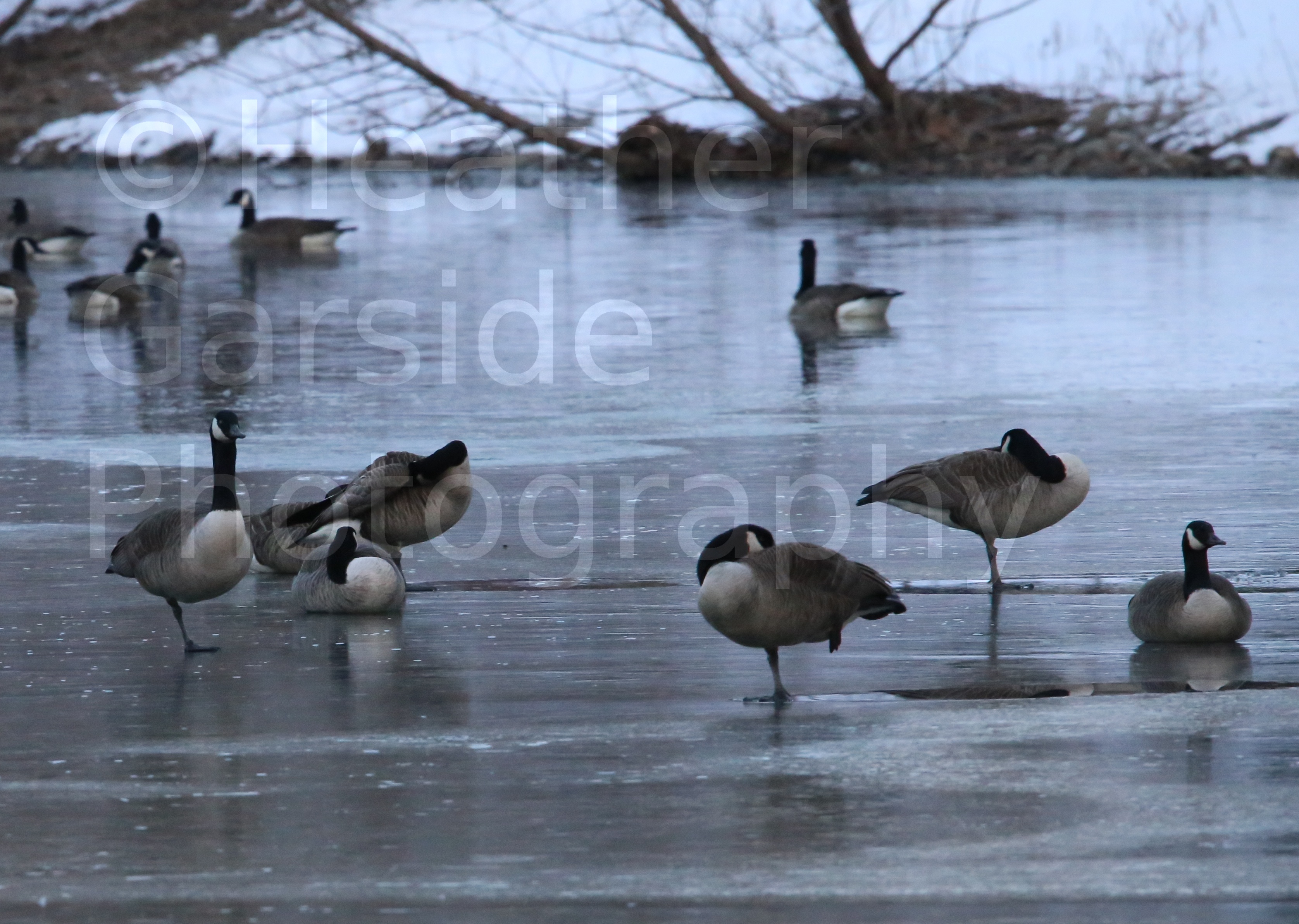
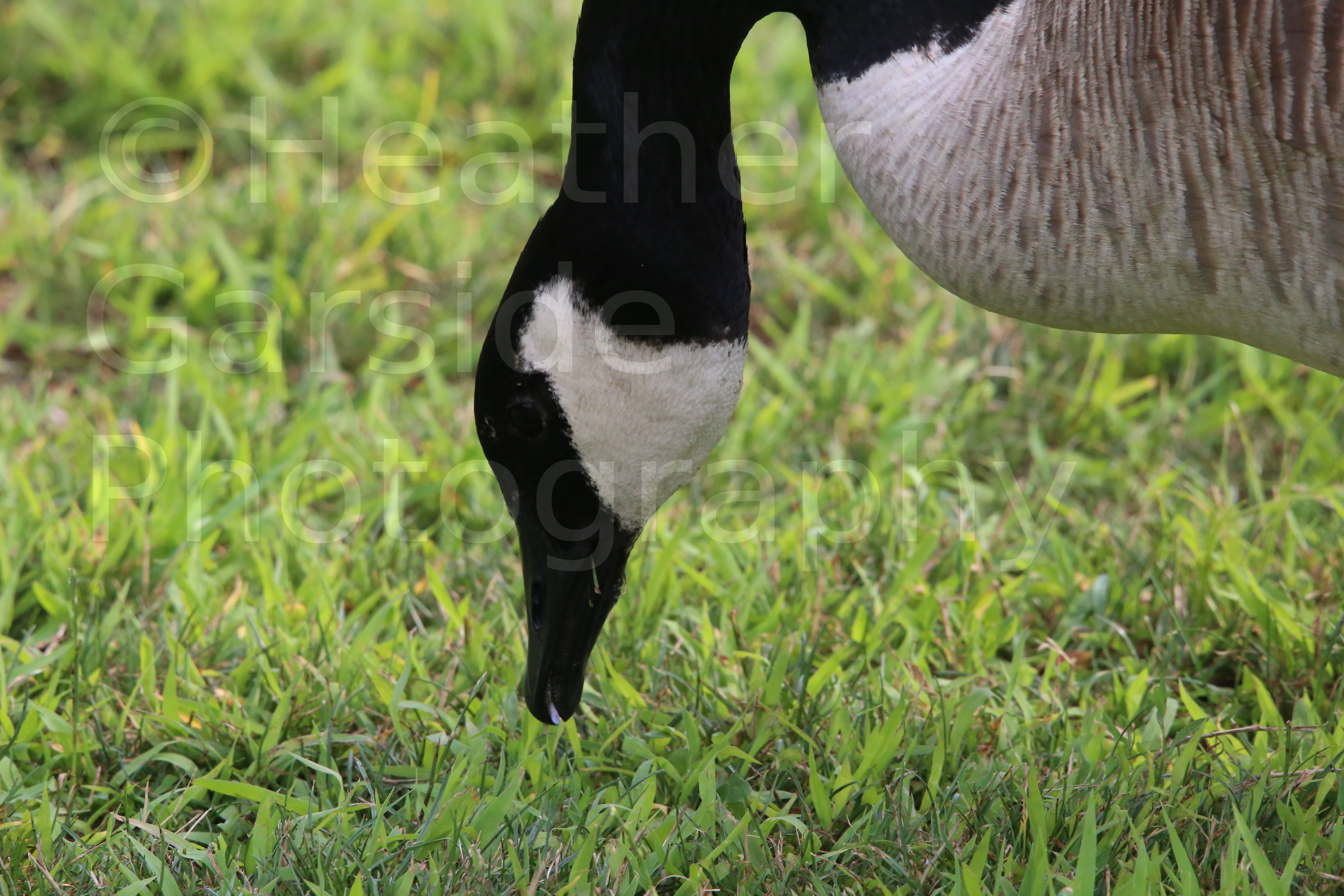
In the non-breeding months, Canada Geese join a larger flock or community. They are very protective and territorial all year round, but this is particularly true when they have young or eggs. While other members of the flock search for the aquatic plants, insects, seeds, crustaceans, or berries which make up a goose’s diet, one member of the flock stands guard. The sentinel is easy to spot, usually the only one with its head up, searching the area like the periscope on a submarine. Upon the approach of danger, he or she will honk a warning to the others. The protective nature of Canada Geese extends to the sick or injured birds within a flock, whom the Geese will protect until death or recovery. Suffice it to say, community spirit runs strong in the Canada Goose. And they are very orderly. They always cross the street in a straight, line. A few times I could have sworn the leader looked both ways before starting across!
That is not to say that their overpopulation is not a problem. Human feeding, among other factors, has encouraged too many geese to reside in parks and other recreational areas. In these places they lack many natural predators and can have an impact on the water and vegetation through both their presence and microbes in their feces. An overabundance of Canada Geese has had a negative impact on many wetland habitats in particular.
One human attempt to control the rampant numbers of Canada Geese is through licensed hunting. In New Jersey geese can be hunted in the Fall. And yes, you can eat Canada goose. If you are interested in recipes, this might be a good website to check: https://honest-food.net/cooking-my-goose/ But even hunting Canada geese is more complicated that it first appears. New Jersey lies in the flight path of several different groups of Canada Geese. The New Jersey DEP Fish and Wildlife have identified three separate populations of Canada Geese: Atlantic Population, North Atlantic Population and Resident Population (no-migratory). Of these three, the Resident population is the group that has fewer natural predators however, hunting birds that live in suburban and urban areas creates problems. Hunting regulations have been designed to target the groups with highest populations. Bag and time limits are determined based on the variable populations of the migratory groups.
Outside of hunting seasons, some communities, including Greenwood Lake, have conducted culls against the geese populations in the past. In 2019 they canceled their cull for alternative, humane measures including noise, lasers and dogs. Egg addling, or stopping the grown of embryos younger than fourteen days is another method employed to keep the population down. I don’t envy those who undertake these measures, especially as the Humane Society’s Canada Goose addling guide warns “addling active nests is not a solo activity.”
So there you have it, the Canada Goose. Far to complex to fit into a nutshell. Tenacious creatures with endearing family instincts that happen to be overpopulating our parks due in part to first human intervention and human encouragement.
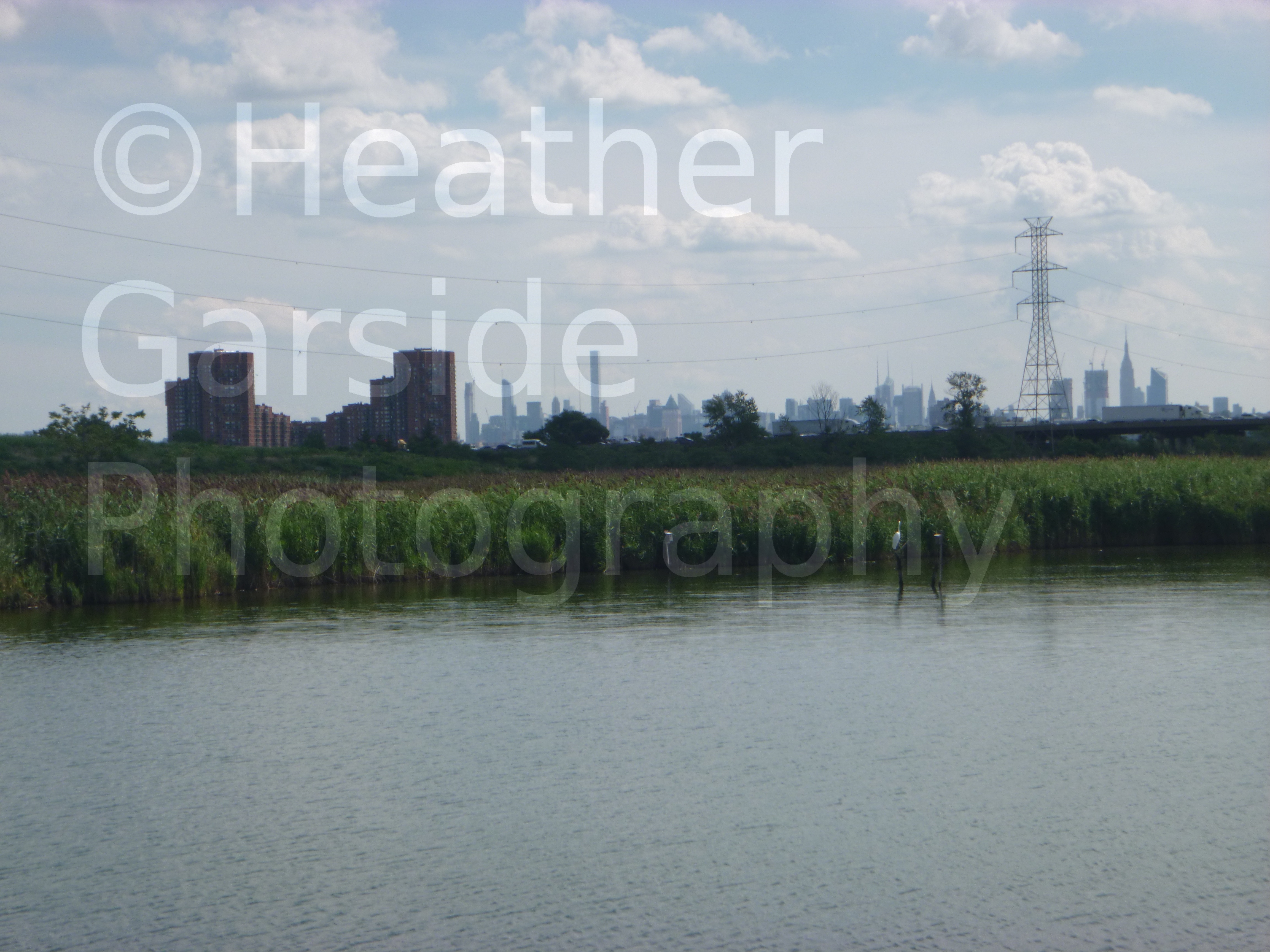
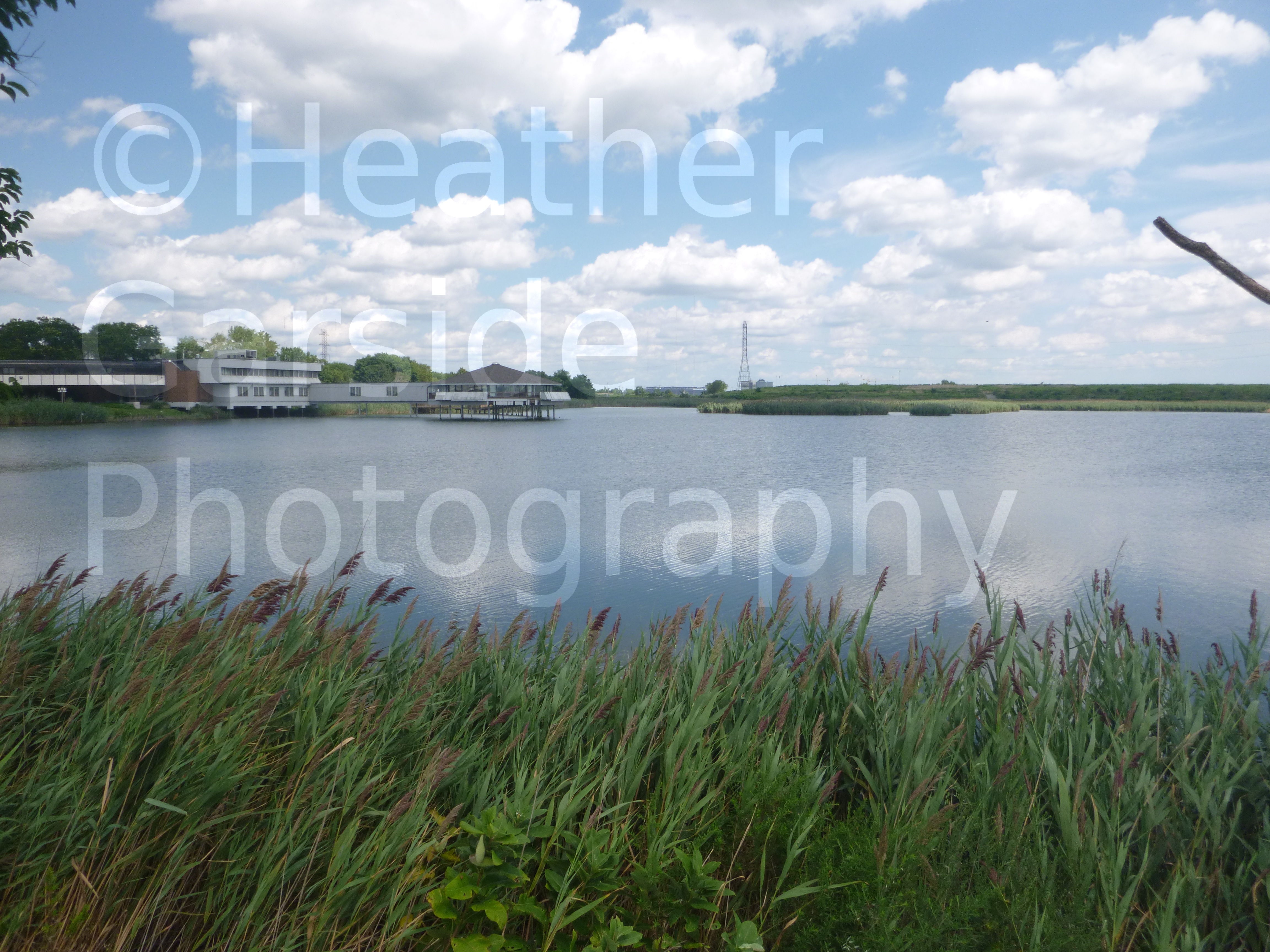
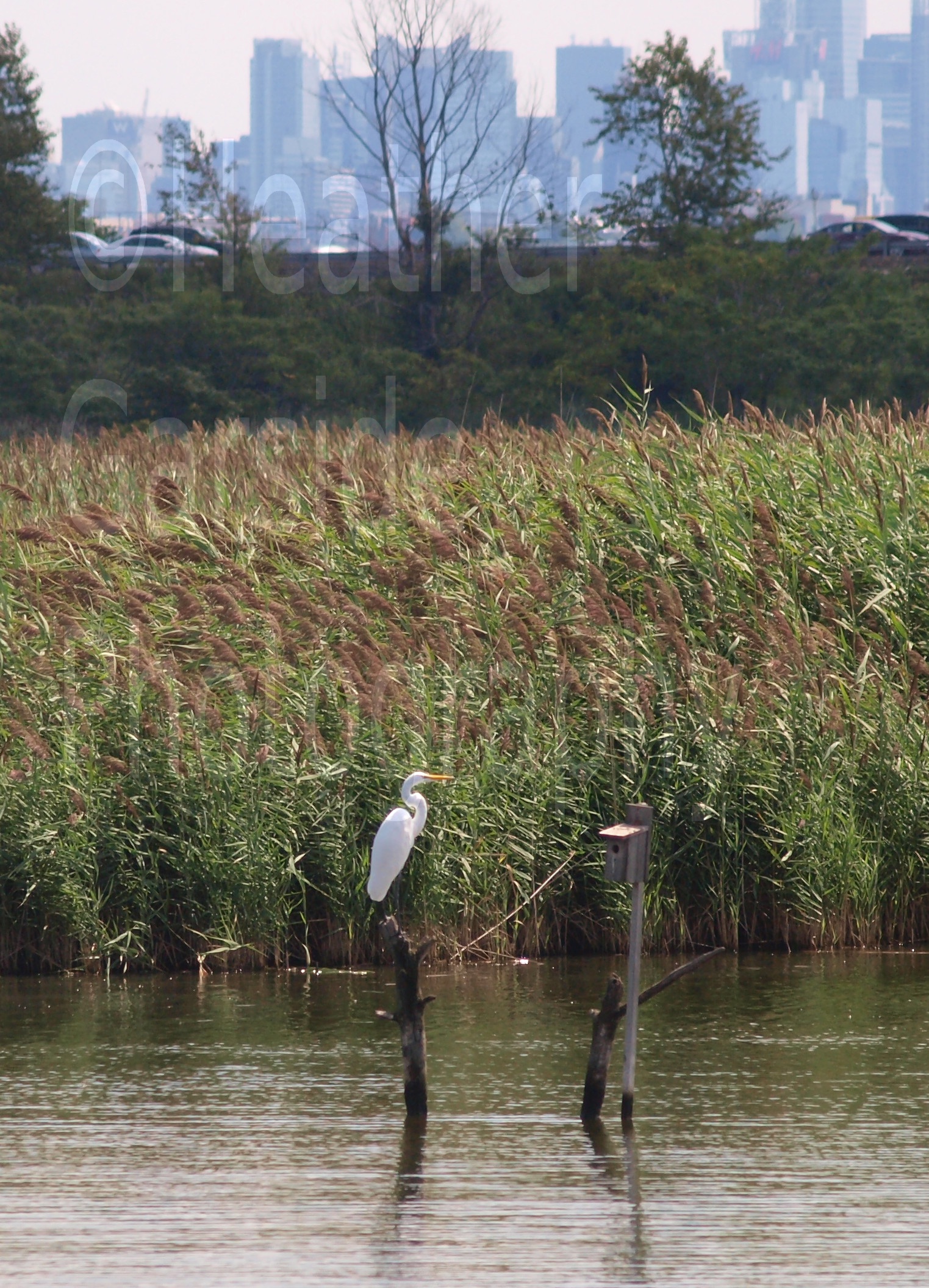
Another of the twenty parks managed by New Jersey Sports and Exposition Authority, Richard W. DeKorte Park (https://www.njsea.com/parks-and-trails/ ) was one of the first locations I ventured to when I started birding. It probably wouldn’t be a stretch to say that this park inspired me to become a bird watcher. We would pass it on the train and I kept wondering what this amazing place was, and how could I get there. One day I finally tried it, and it didn’t disappoint. I still go there regularly, and it never fails to amaze. In the heart of New Jersey’s Meadowlands, this wetland habitat is visited by over 285 different species. The 3.5 miles of trails include a boardwalk through the wetland area itself, as well as some grassy, treed areas. The Manhattan skyline is visible in the background with the highway and train line. Nature truly co-exists with man in this spot.
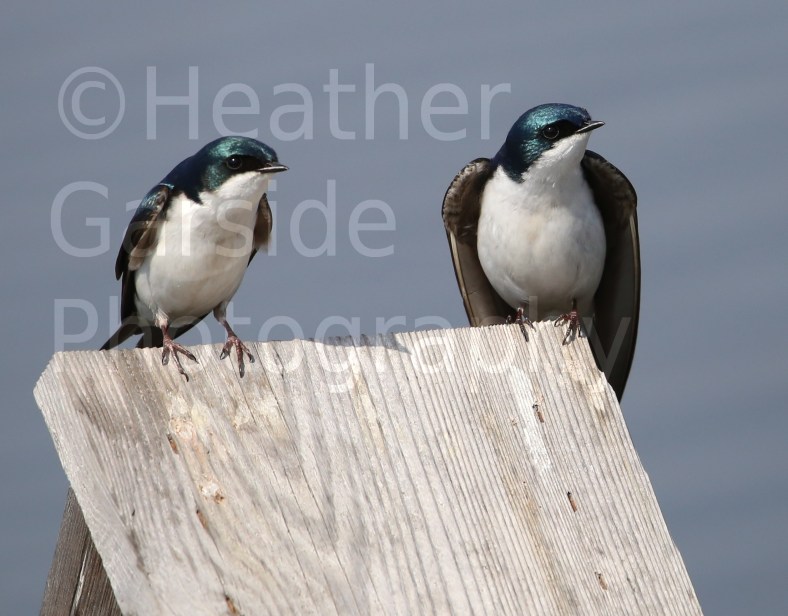
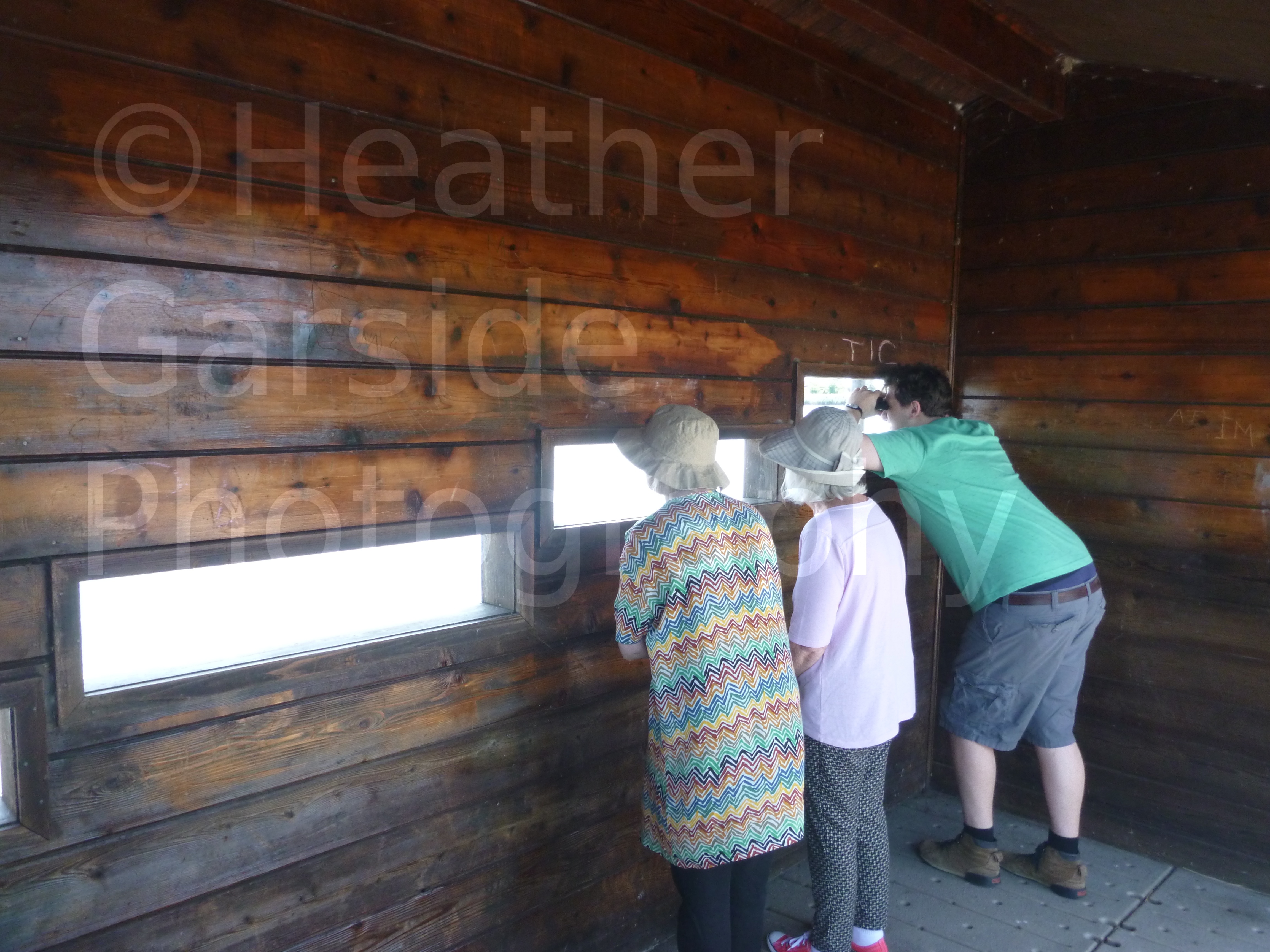
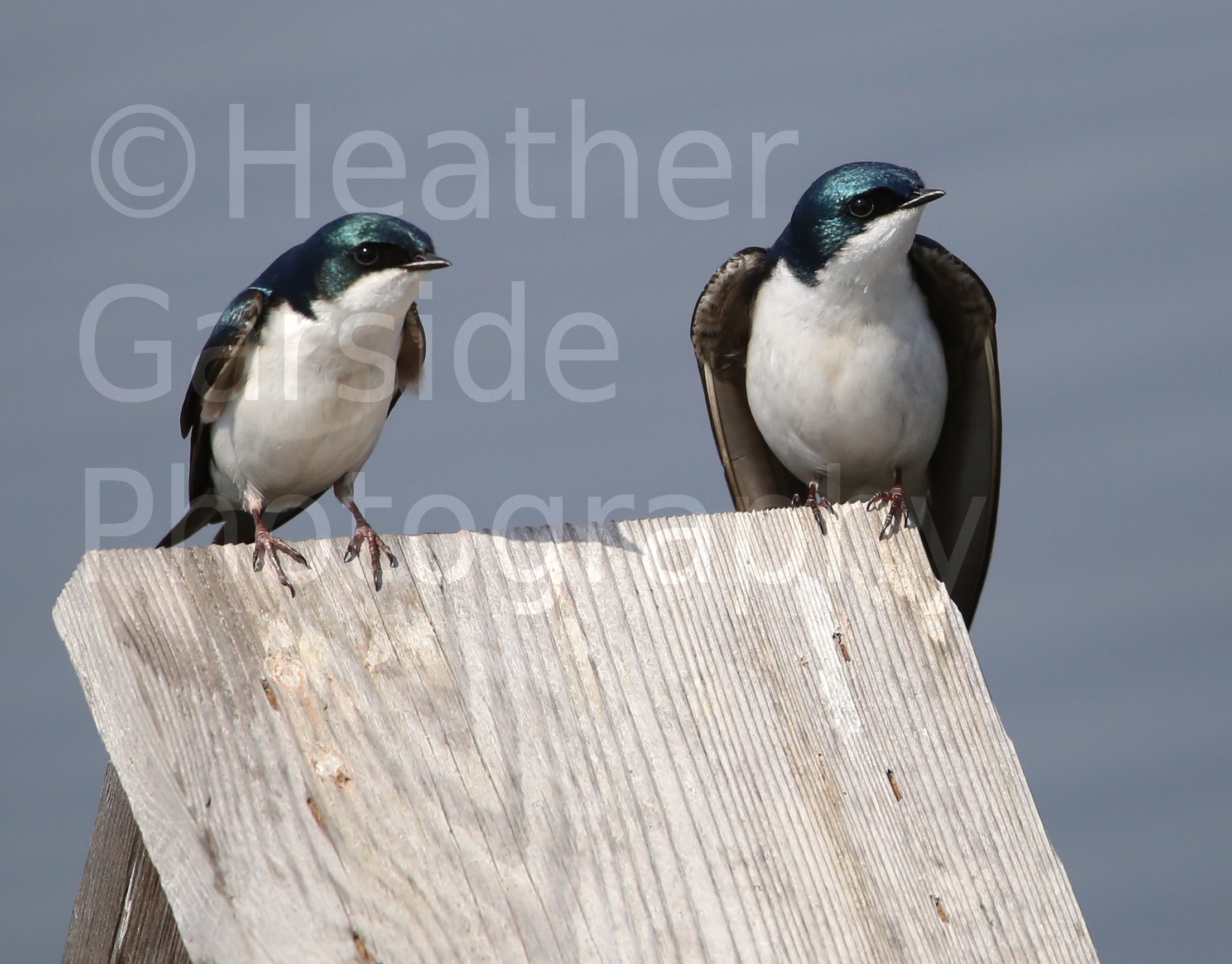
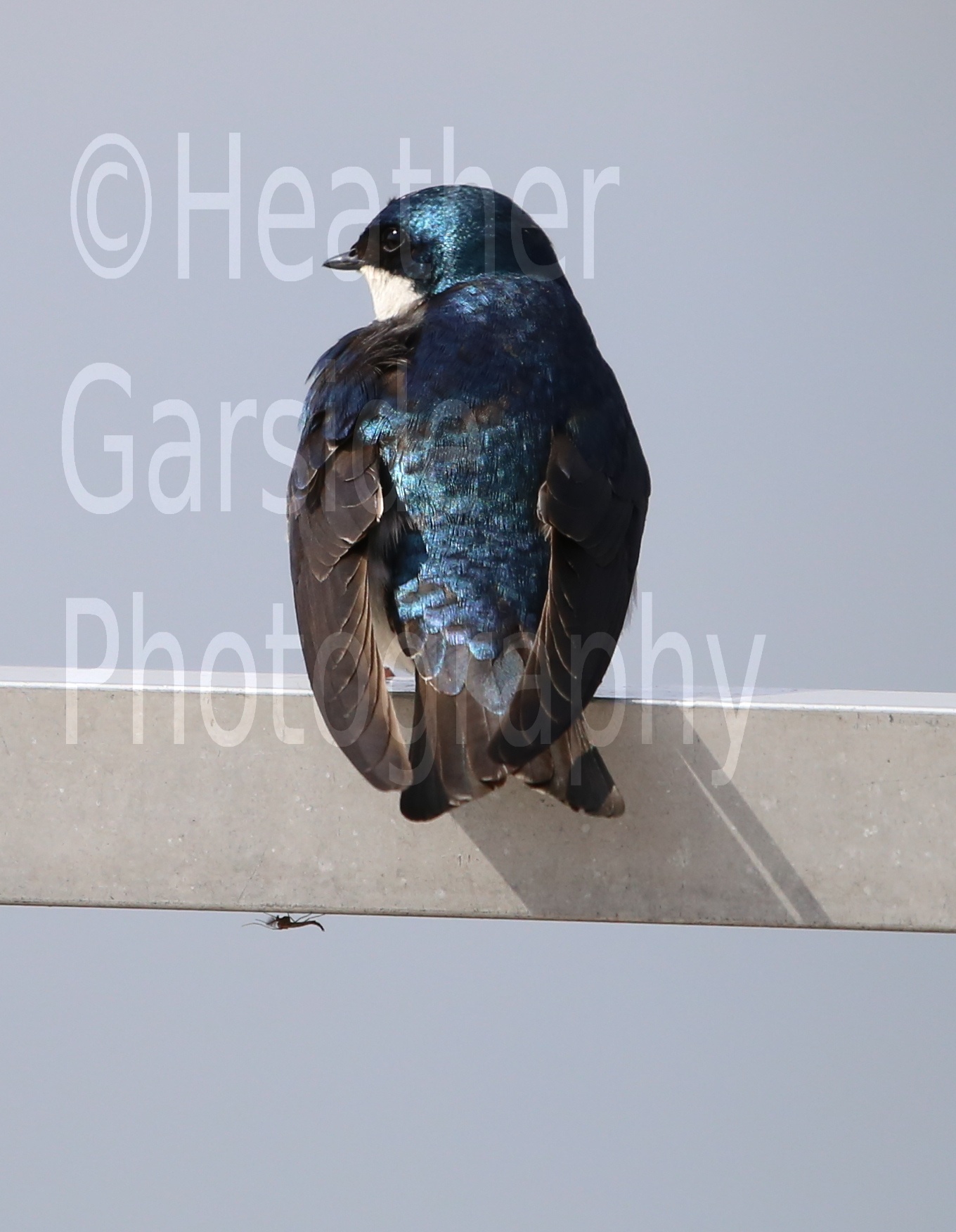
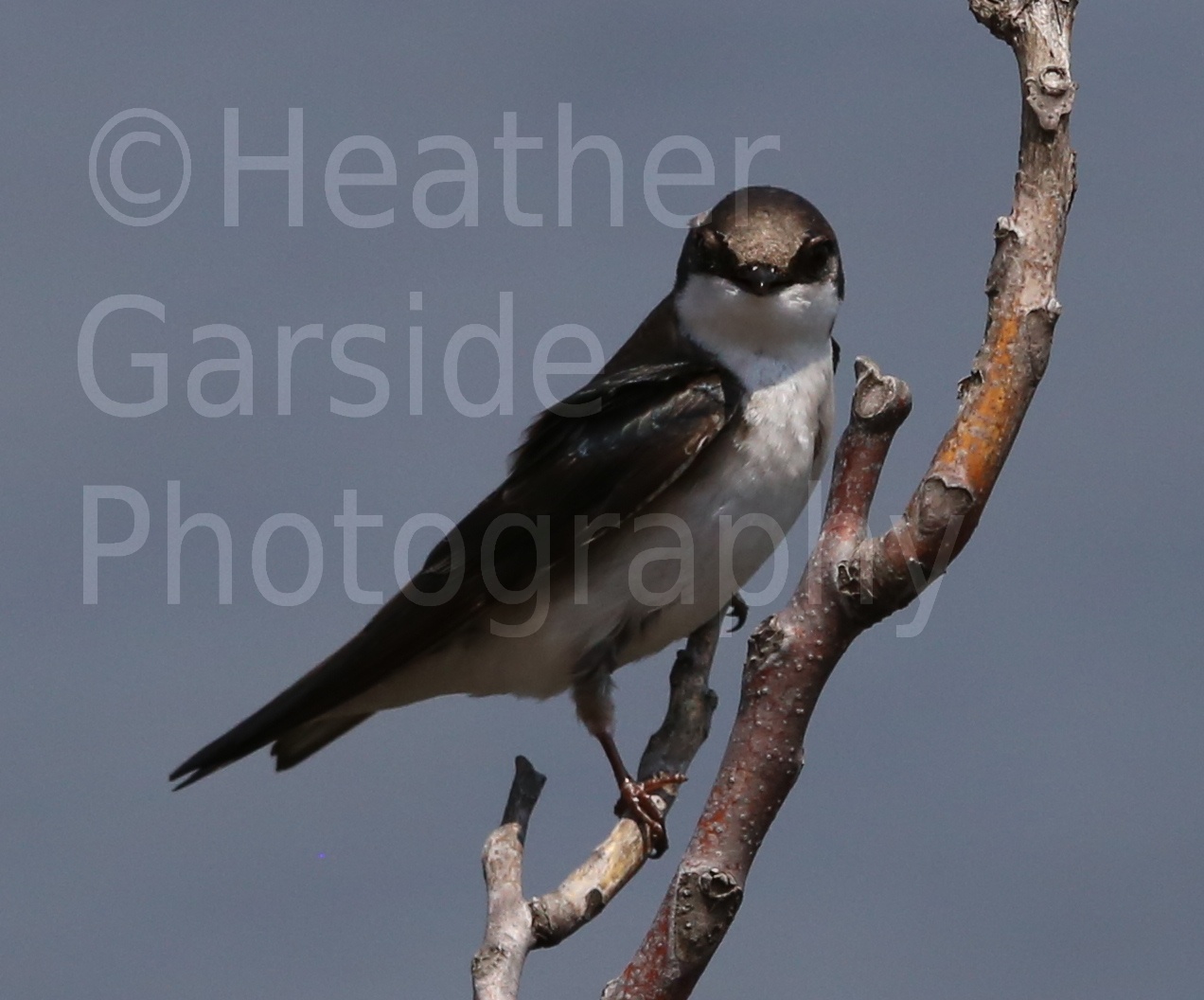
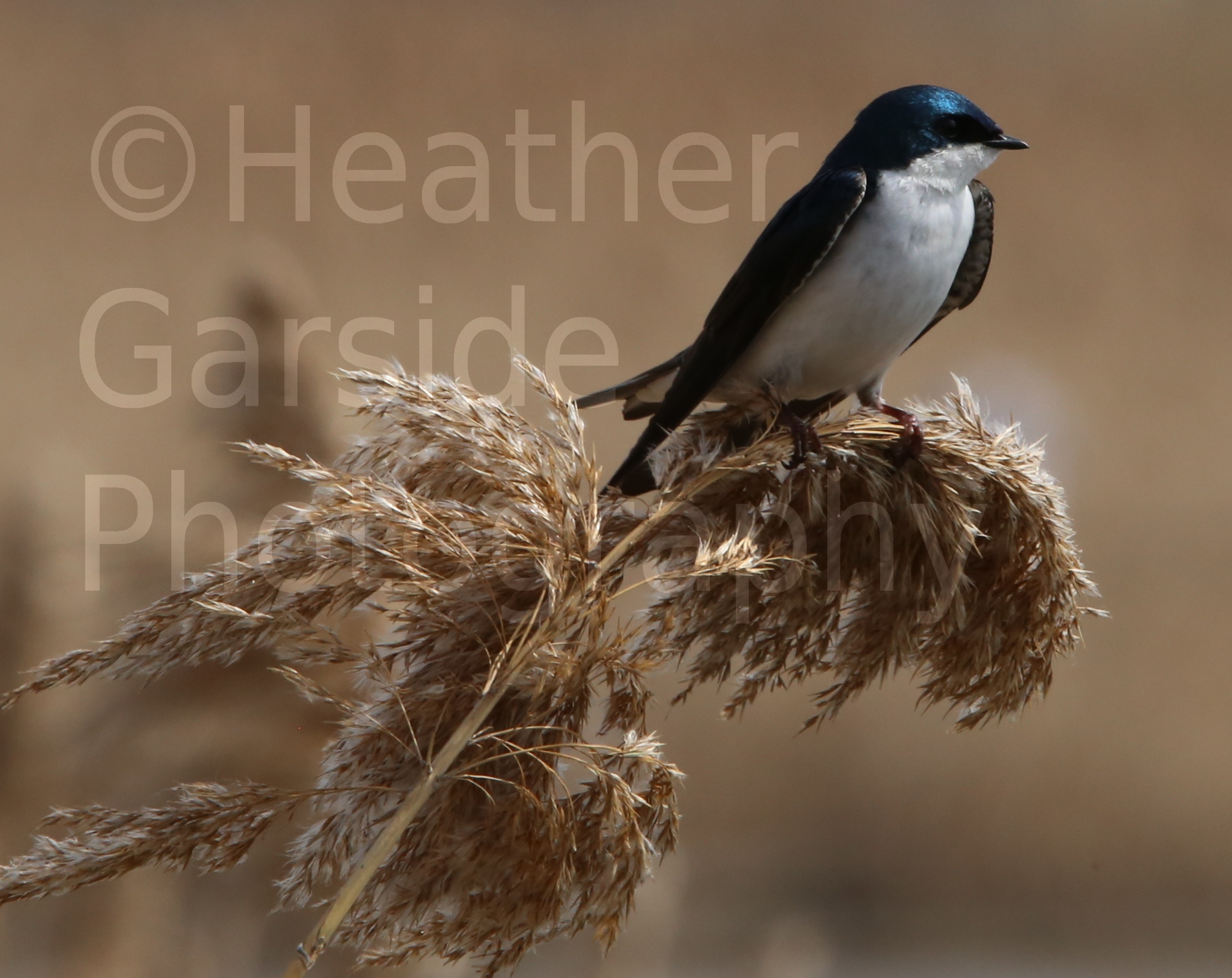
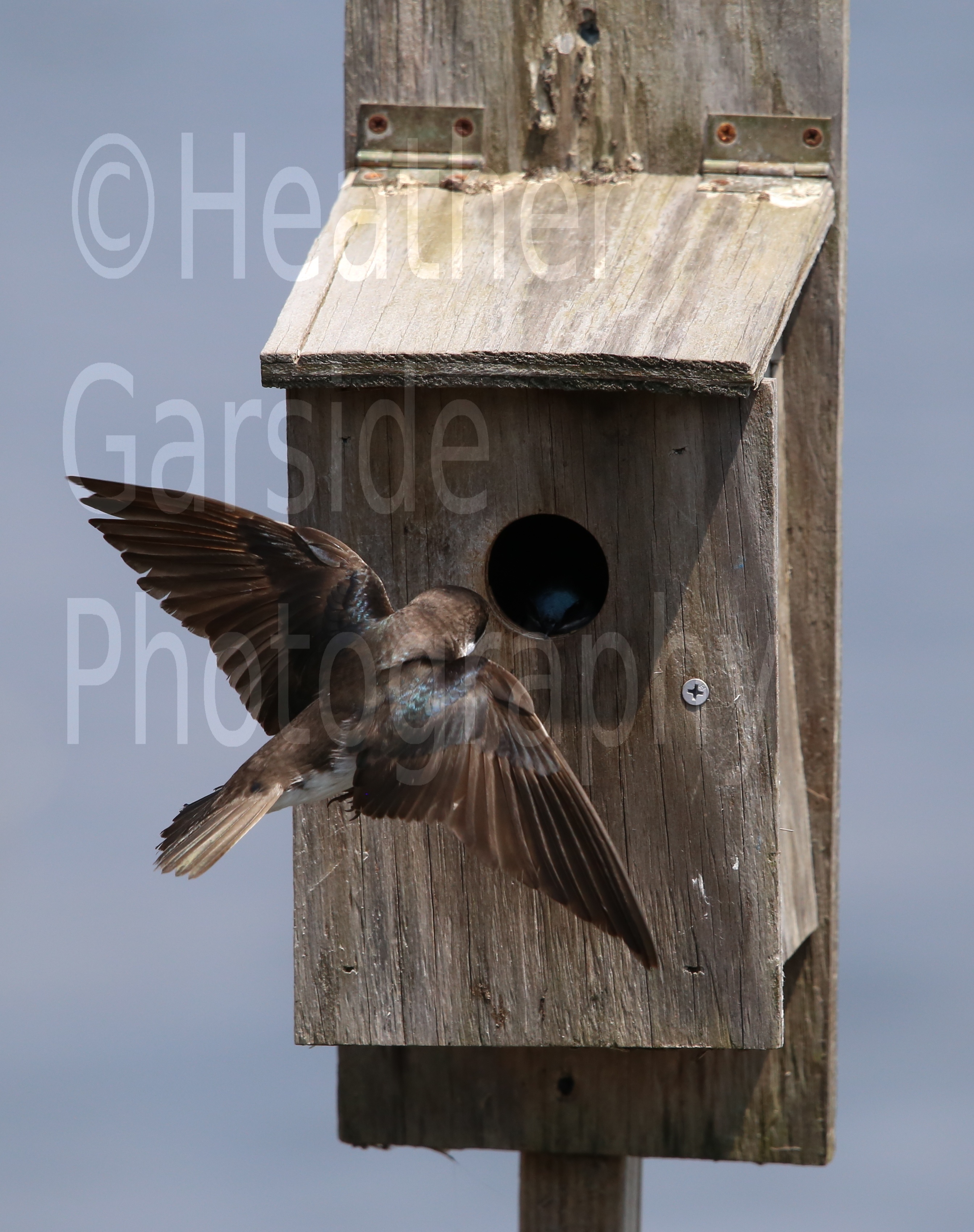
I always start by heading out on the Marsh Discovery trail with its boardwalk and bird blinds. There are many birds that you are sure to see here in the summer months. Top of the list is tree swallows. They truly dominate the area. Little wonder really. The whole habitat has been populated with tree swallow sized nest boxes, out in the middle of the marsh. They are constantly gliding overhead and chirping to each other in their hyper-active way. They do settle on banisters, nest boxes and vegetation if you are patience enough to wait. I can never get enough of photographing them. The sheen of their feathers in the direct sunlight is one of the most beautiful things I have ever seen.
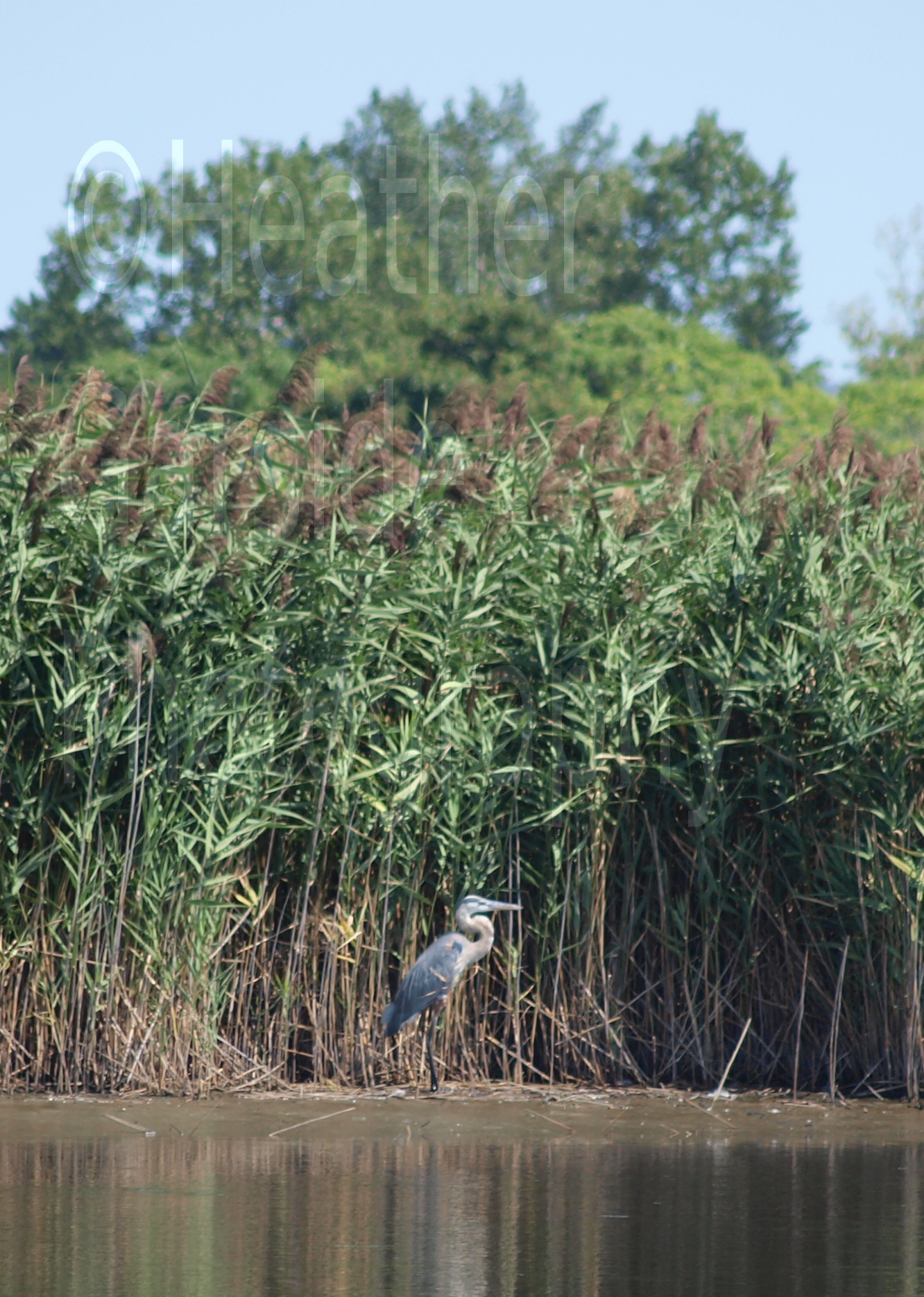
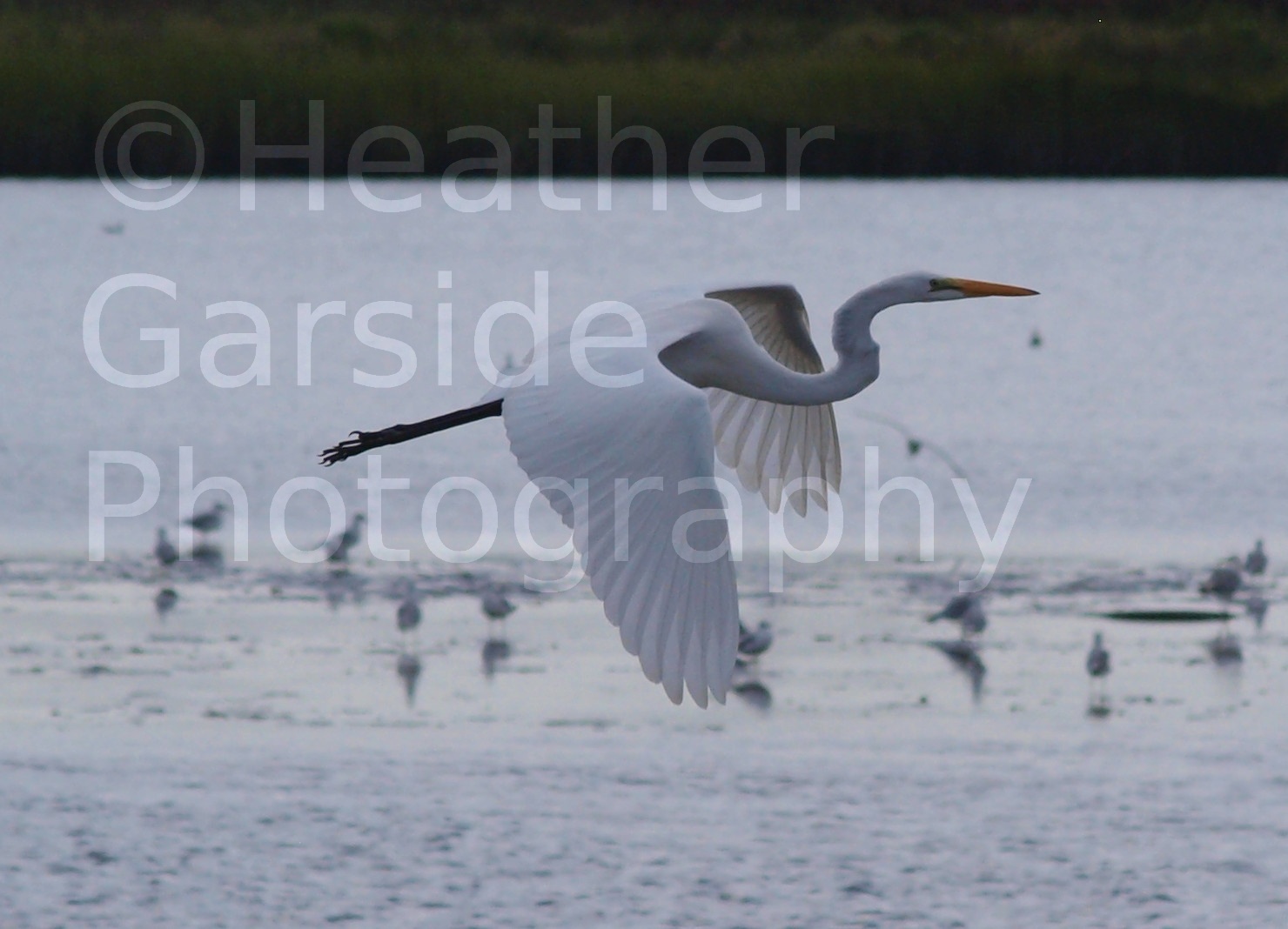
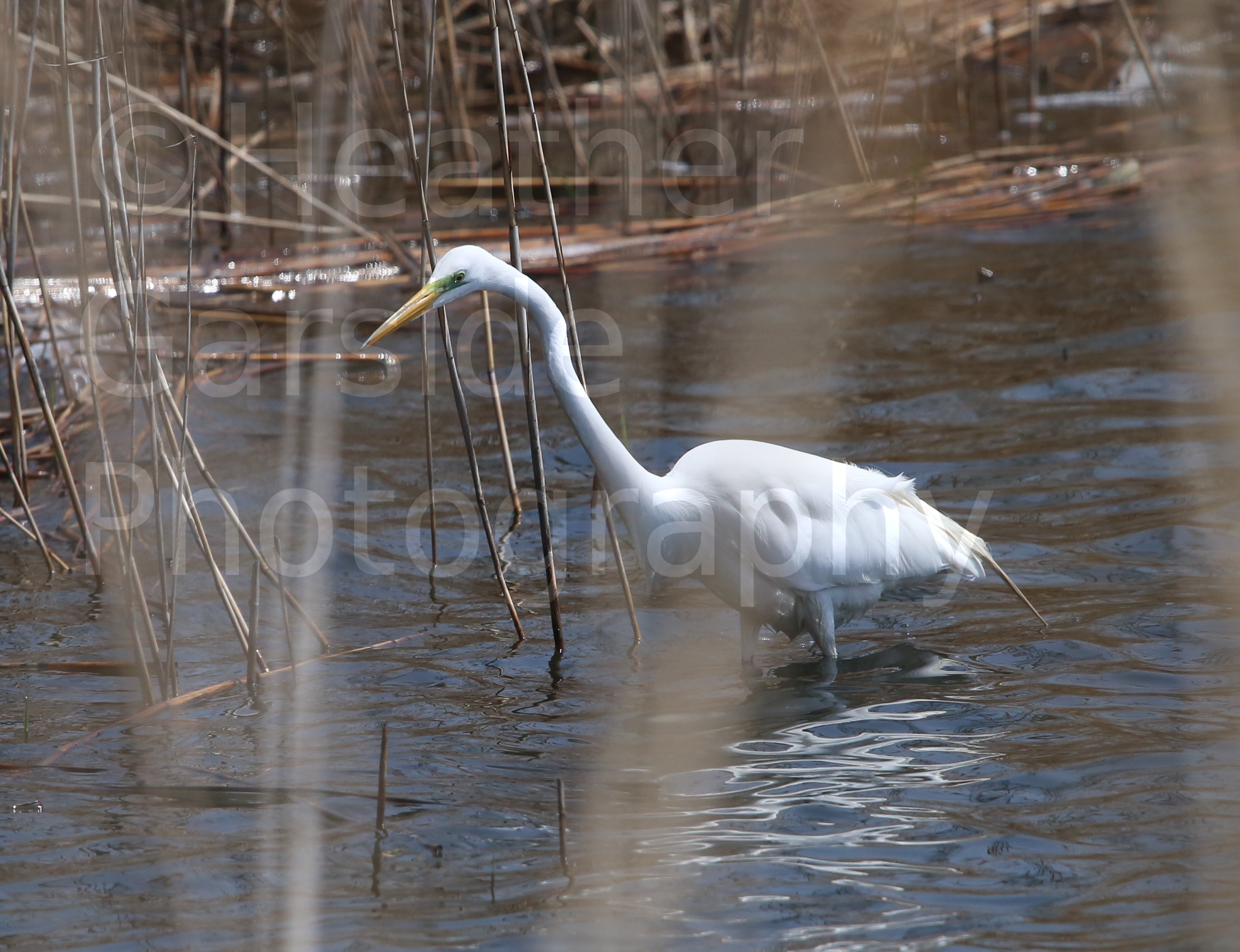
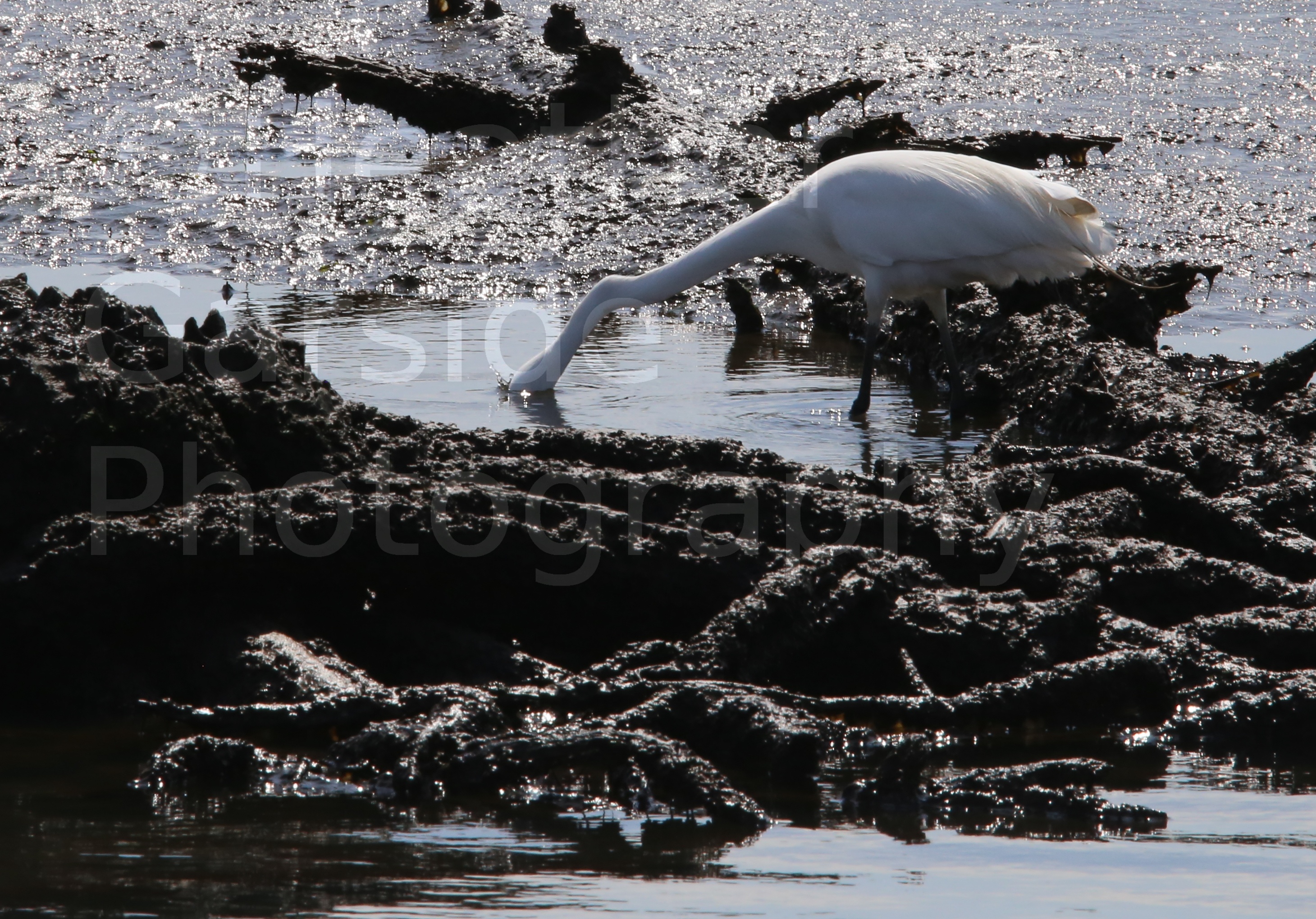
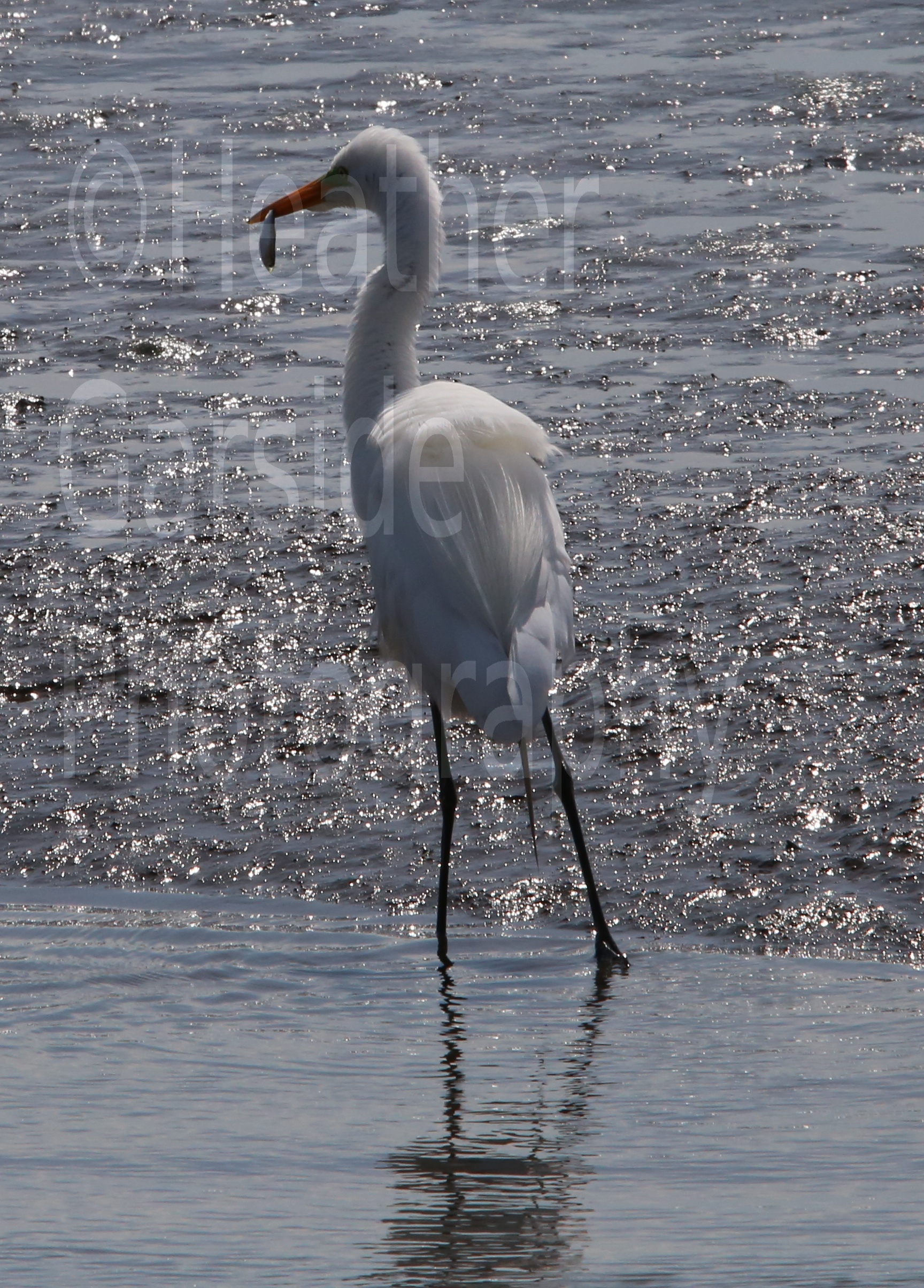
After the tree swallows, it is Great Egrets and Great Blue Heron you should expect to see. Sometimes, especially in spring and summer, there will be dozens of them, slowly making their way across the marsh, with their steady, exacting steps, heads down watching for anything tasty they might flush out of the mud. It is actually the Great Egrets that first attracted me to this place.
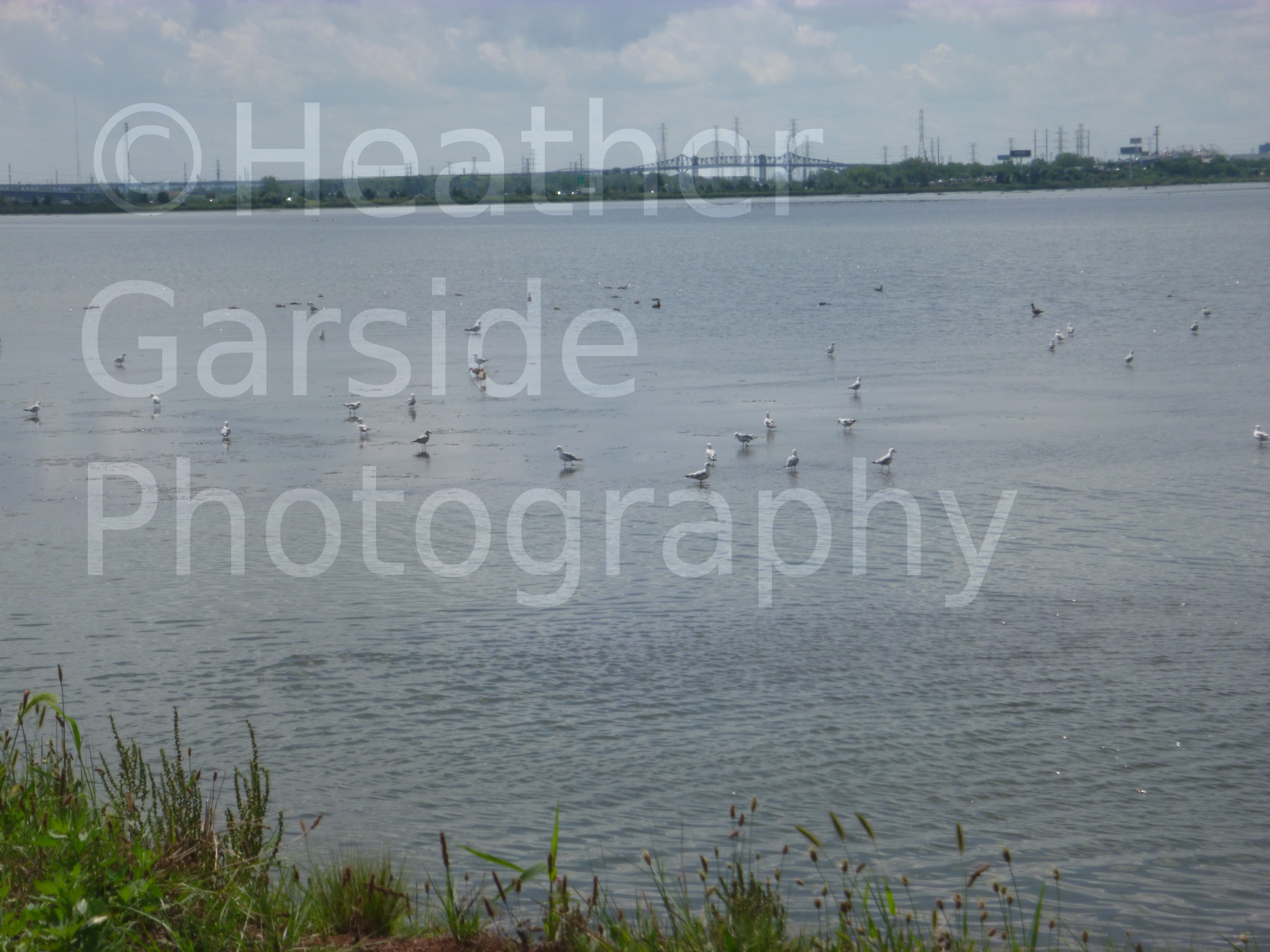
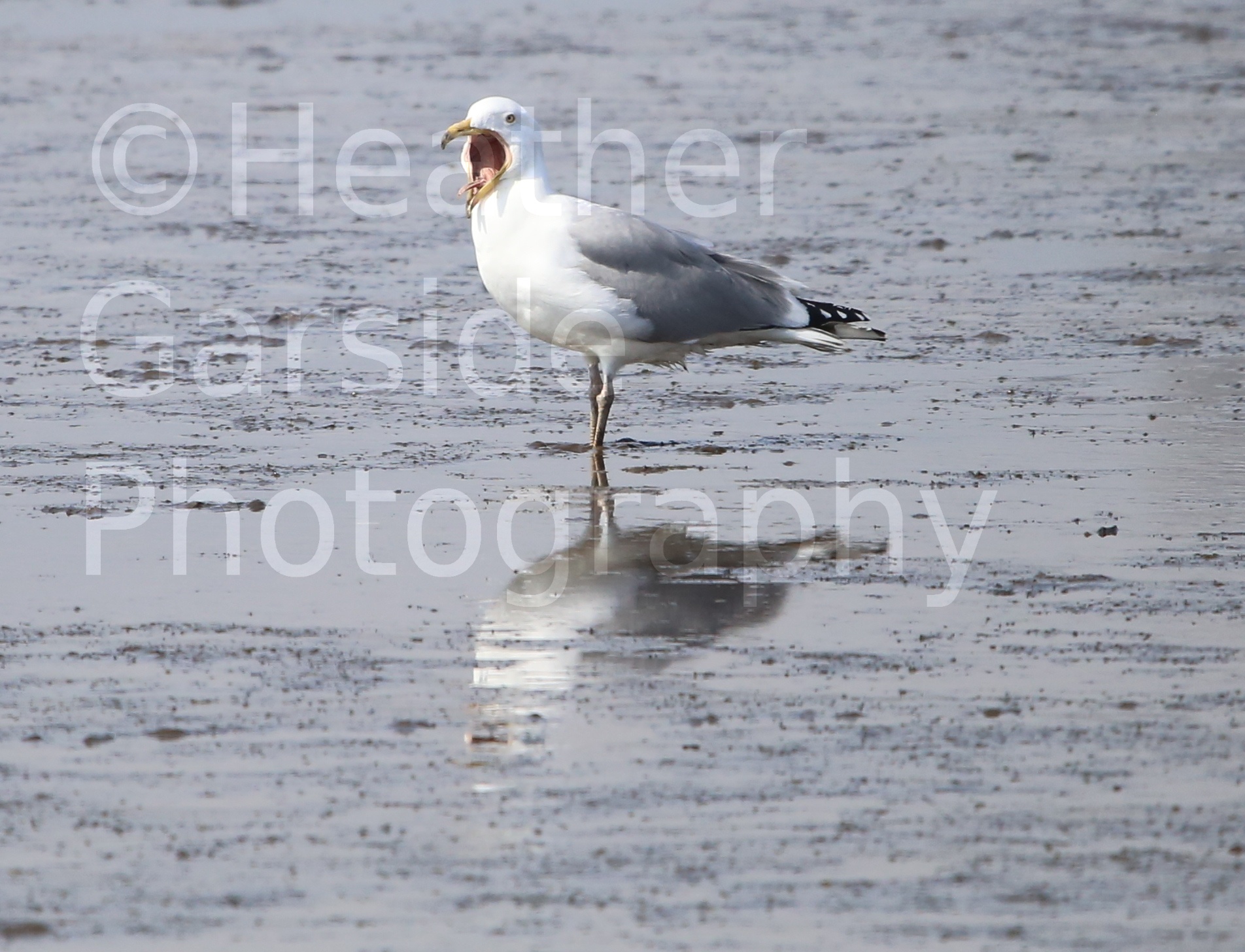
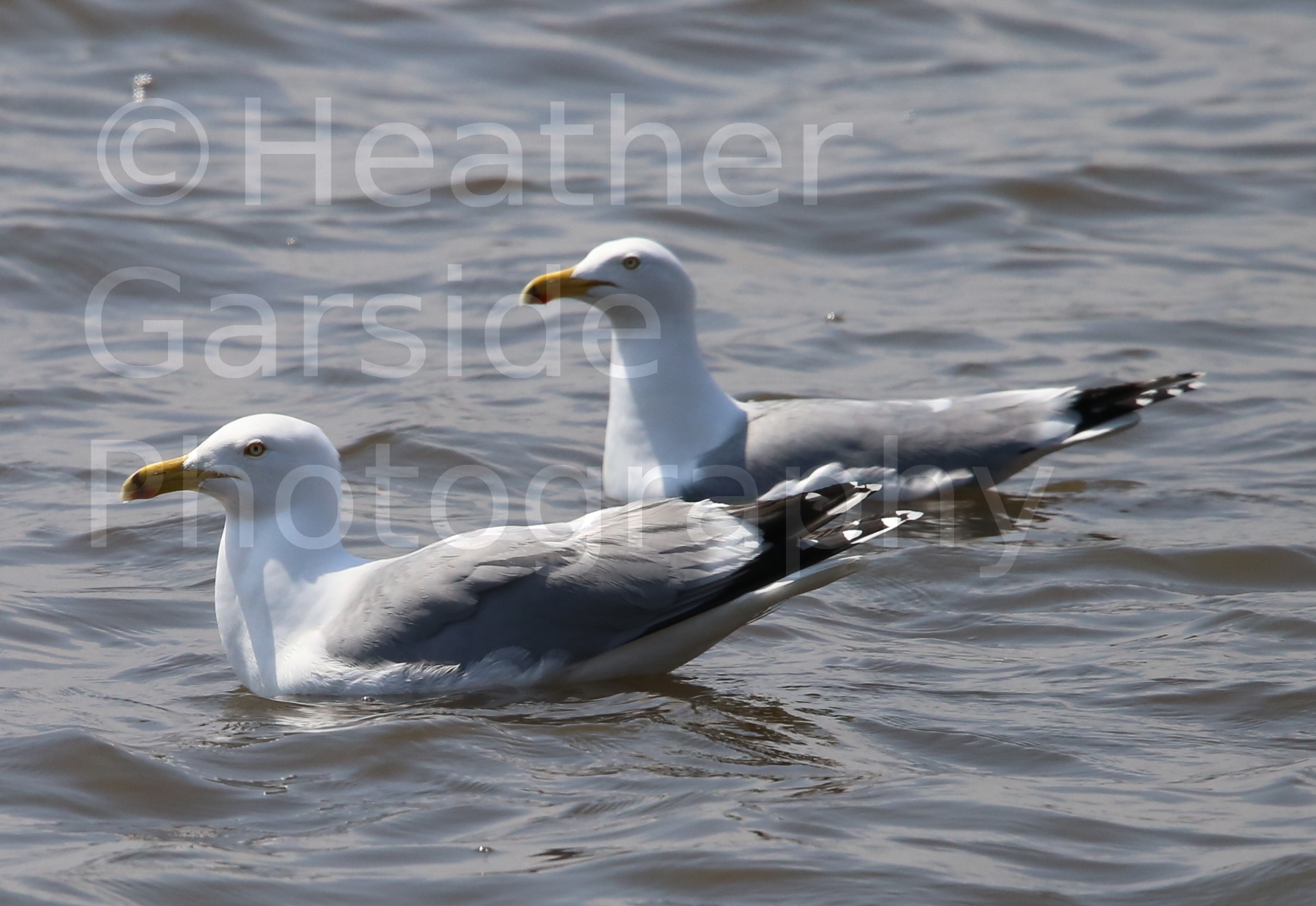
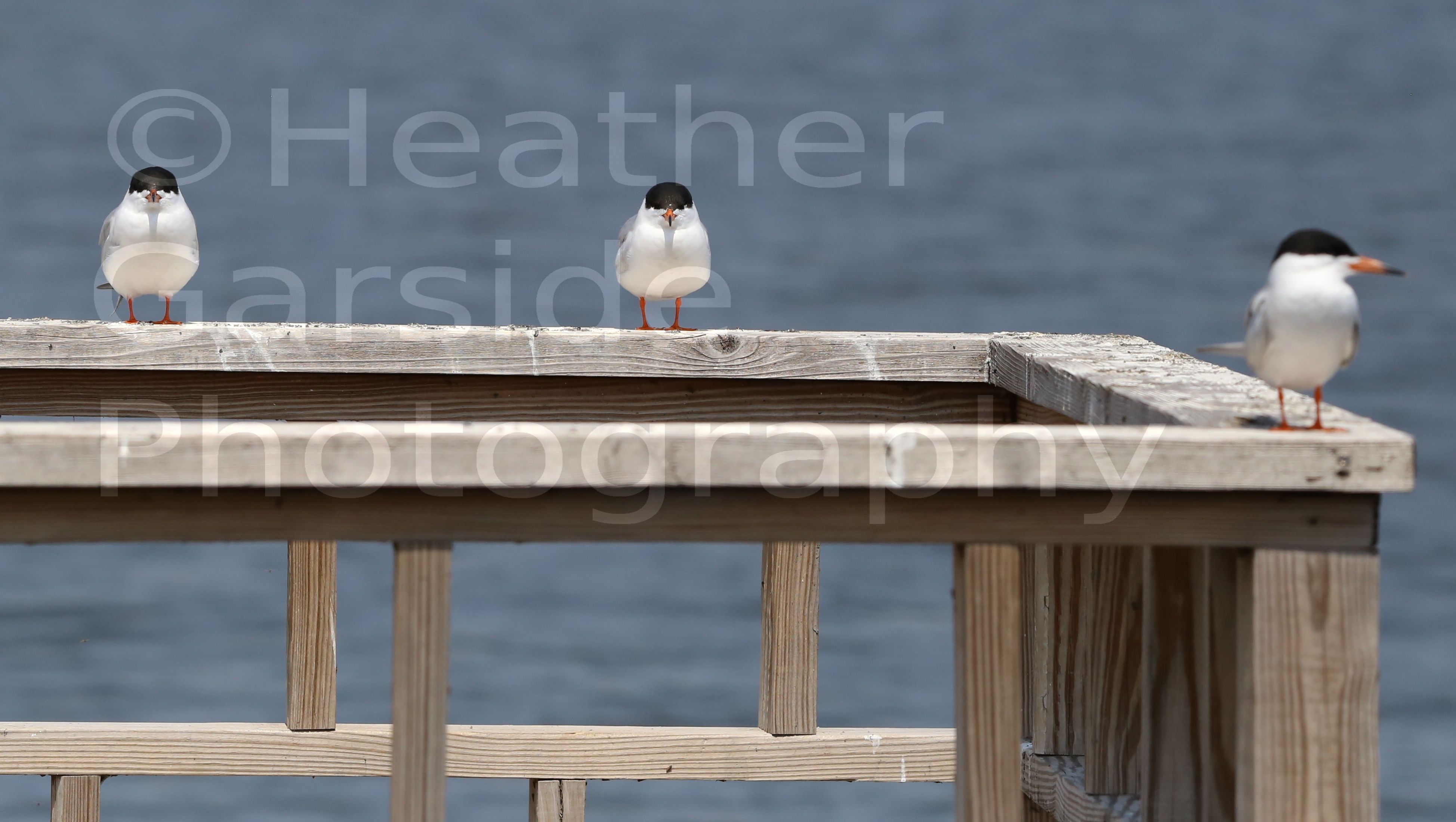
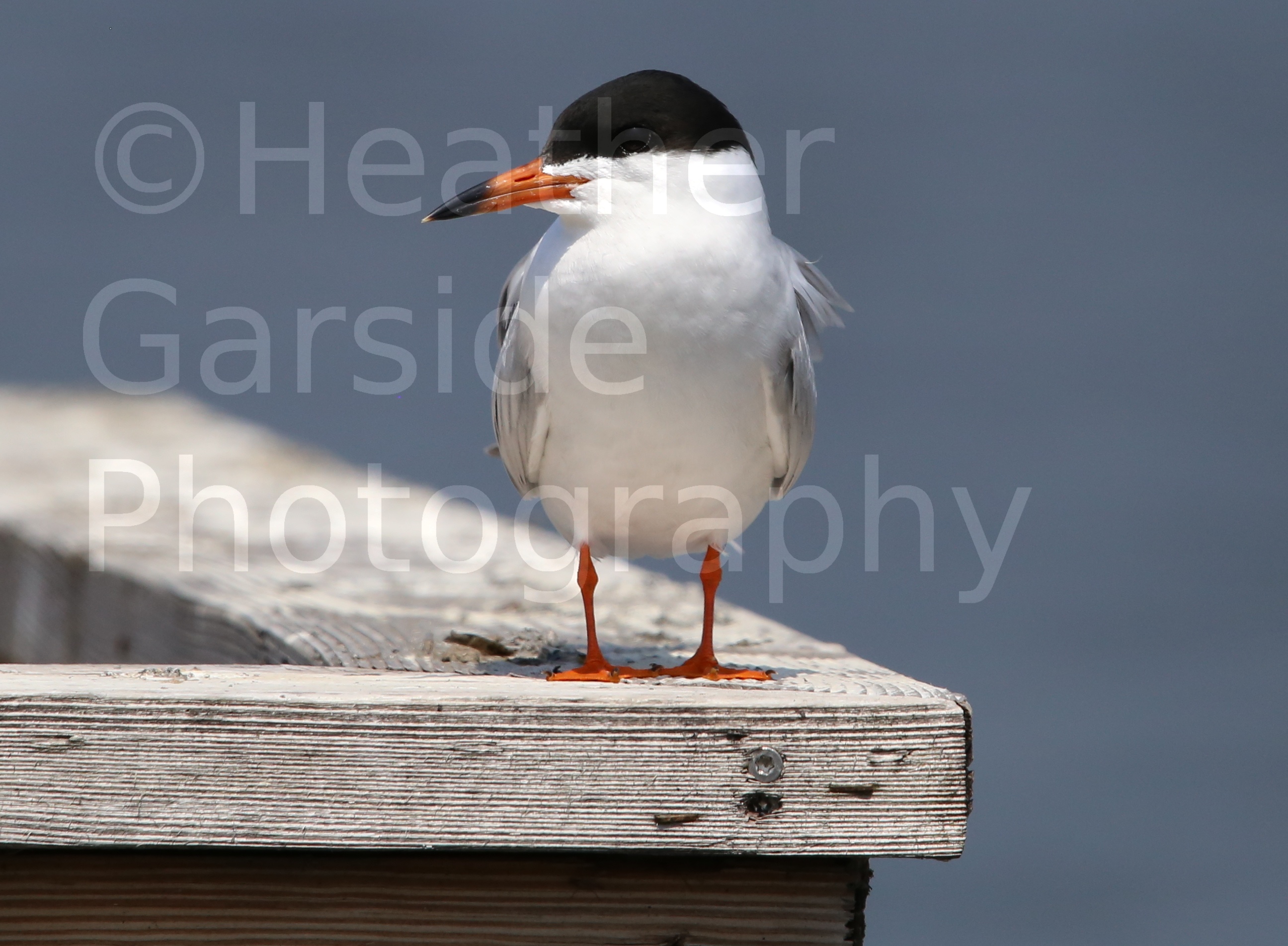
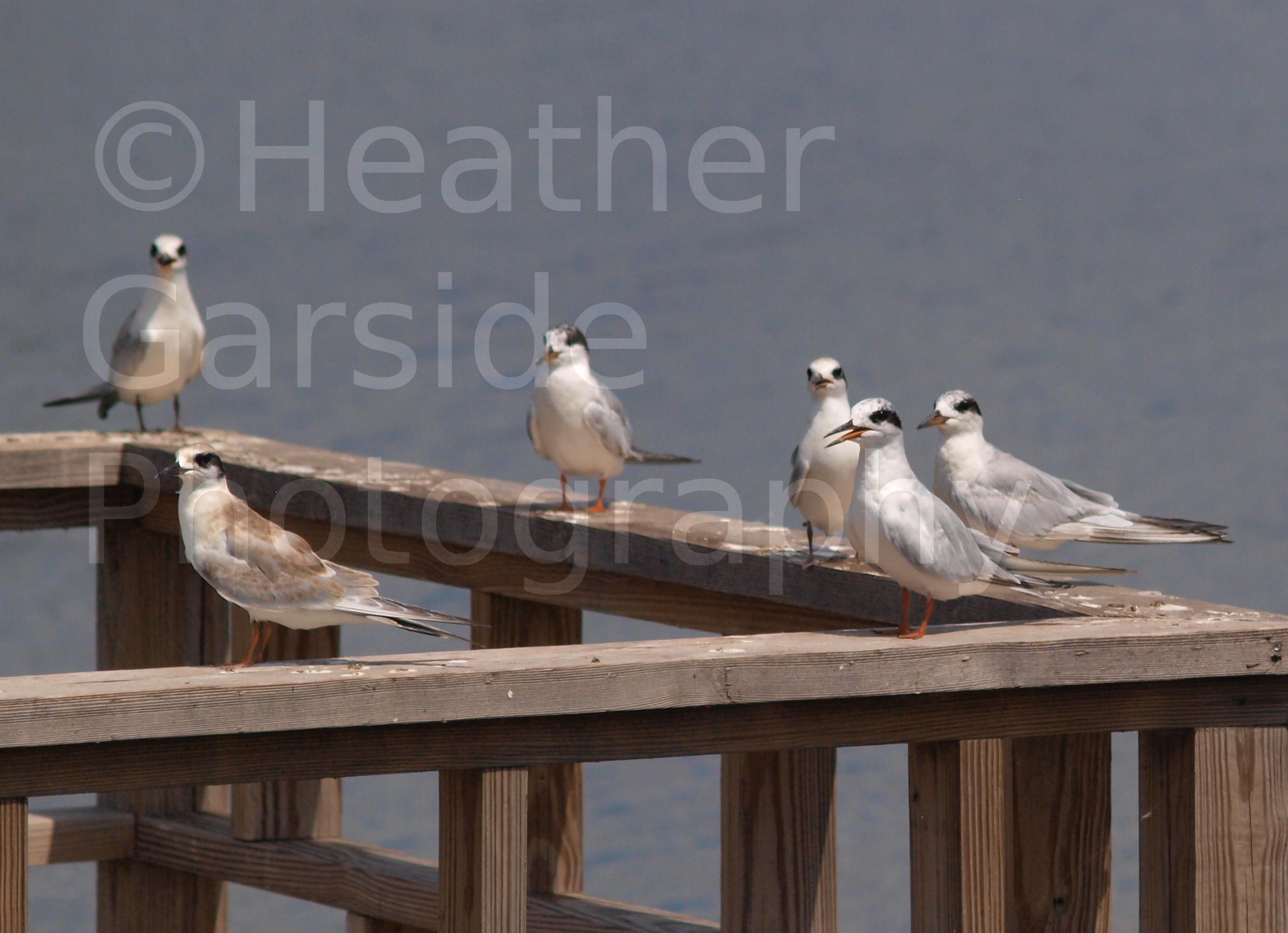
Being a marsh, Seagulls and Terns are also species you are likely to encounter on a walk here. The Seagulls tend to congregate at the mudflats, while the Terns like to explore the whole area. Their antics are more than a bit amusing. The Terns often remind me of the Three Stooges (even when there are more than three), as each of their actions always seem to be a direct reaction to some action another in the flock took. He hops away, I hop after. He flies up and lands, I fly up and land a little farther. These waterbirds are some of the only birds who remain on this spot through the winter, not a light-hearted prospect. I give them a lot of credit for braving the exposed waters, especially when the icy winter wind blows.
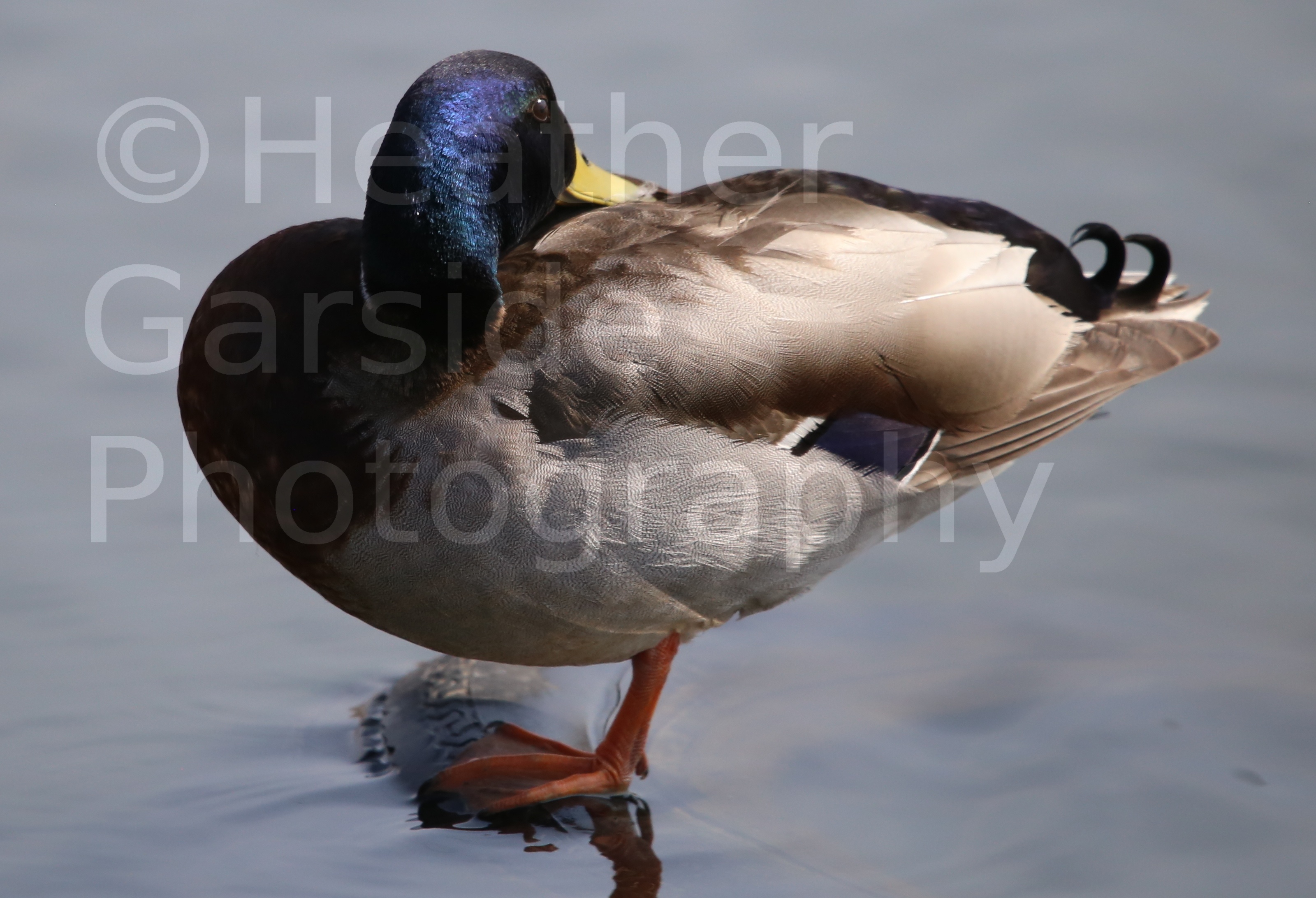
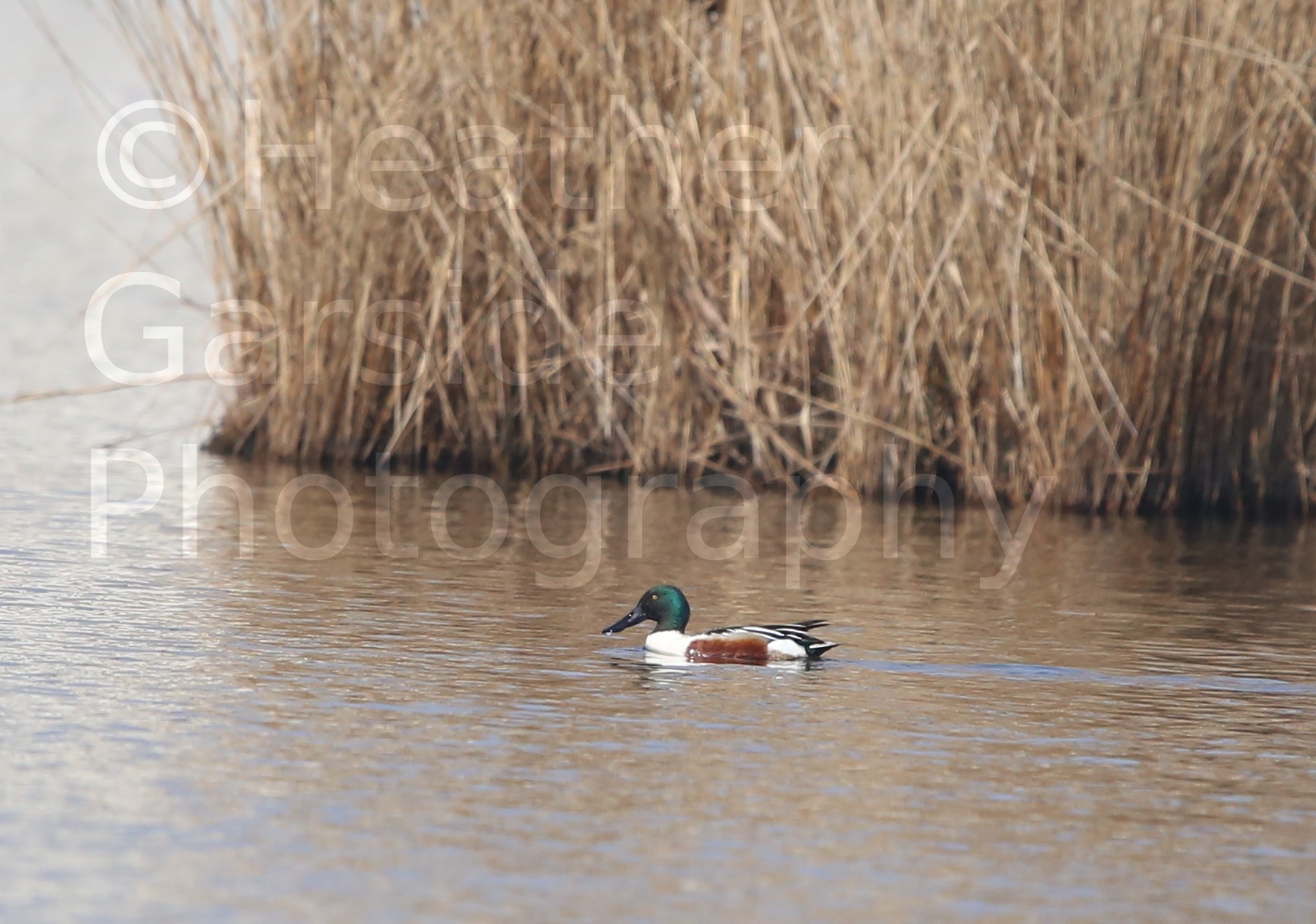
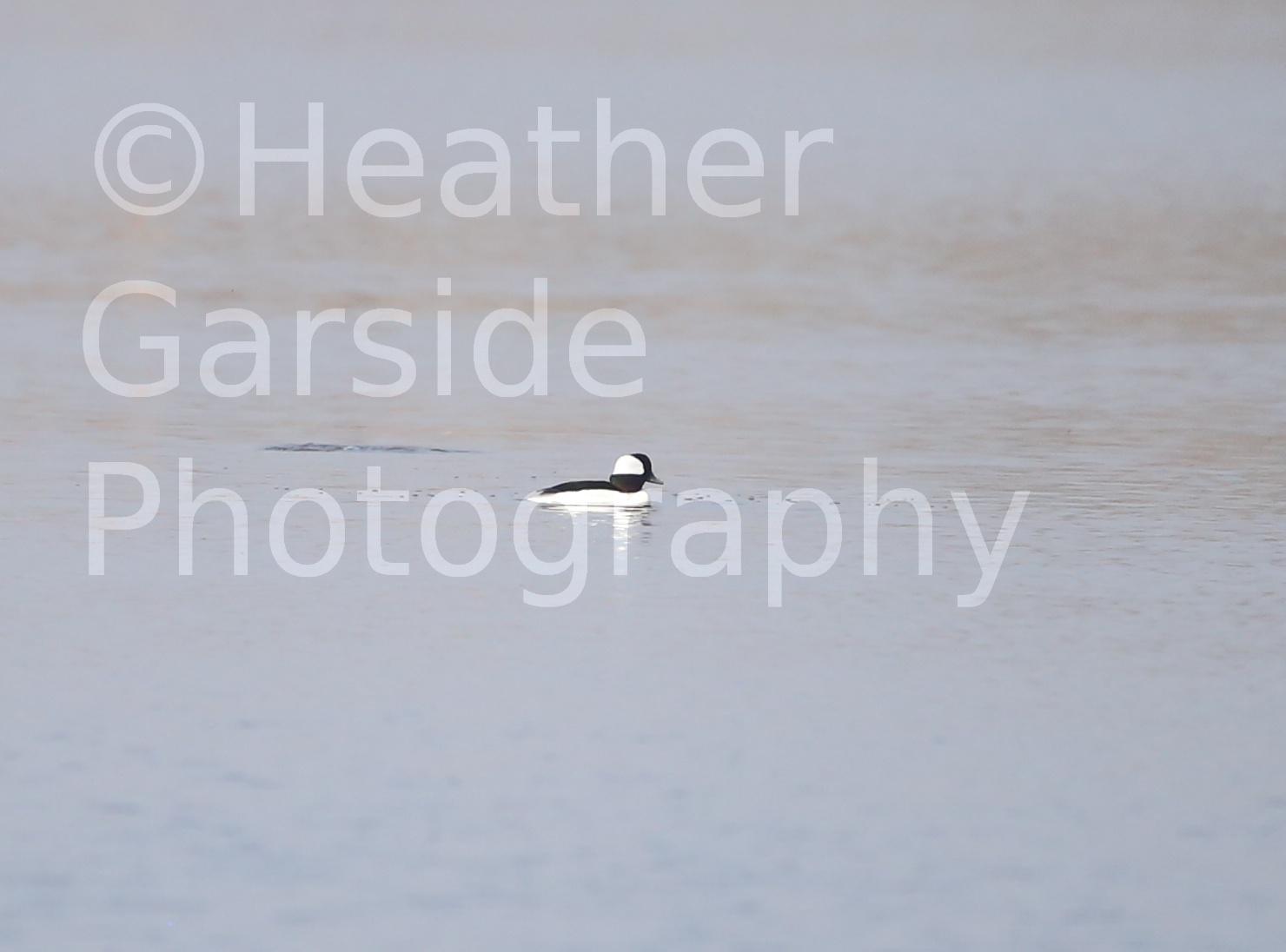
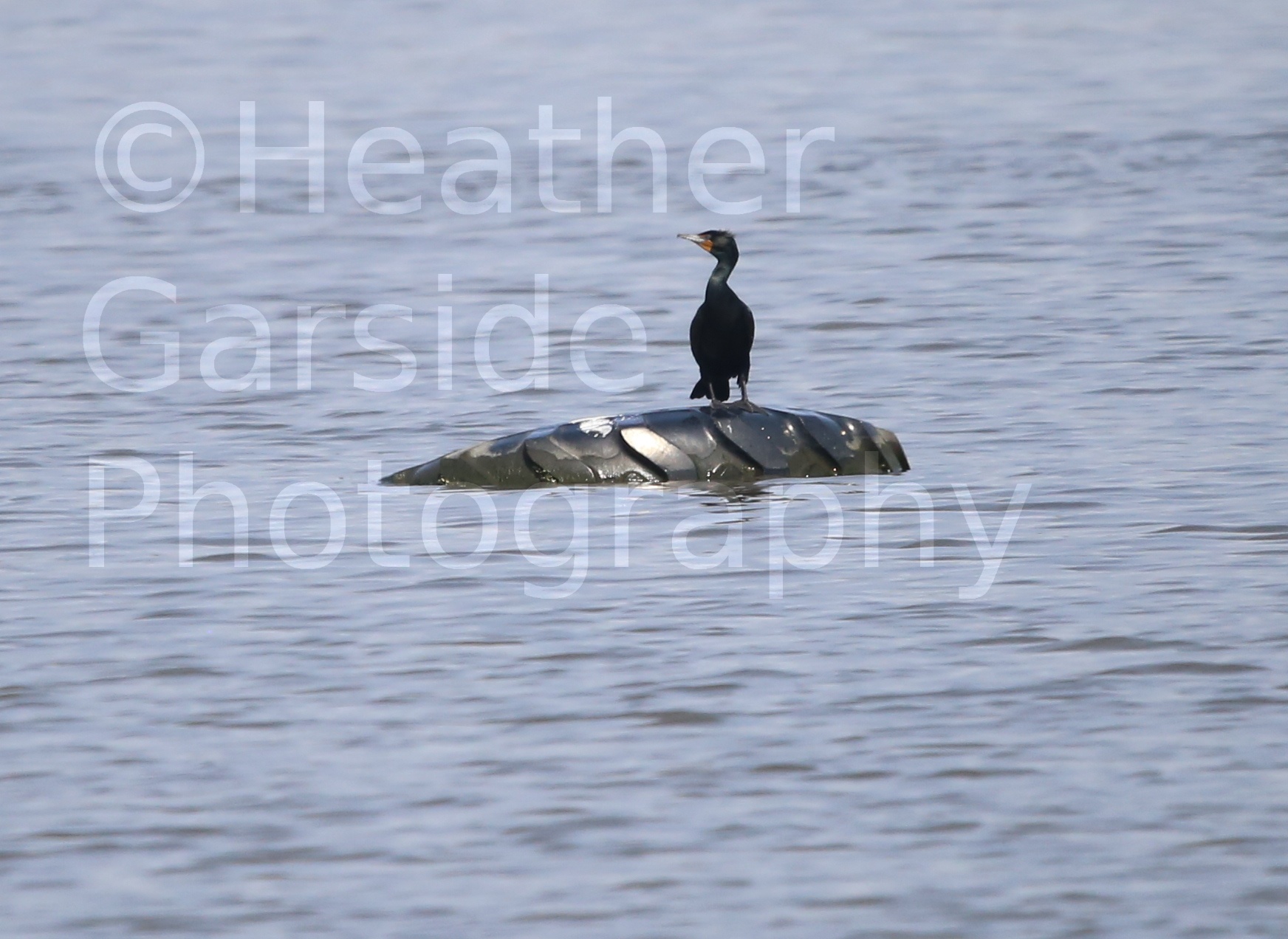
Other waterfowl can also be seen and at some points, such as early spring, you can see five or six different kinds of ducks. Mallards are usually abundant, but I have also spotted Northern Shovelers, Bufflehead and Greater Scaup. Canada Geese are sometimes here and the occasional Muted Swan can also be found floating around. Double-Crested Cormorants really like the mudflats. They usually congregate their in large groups, but you can sometimes see a lone Cormorant drying off its wings in the sunshine.
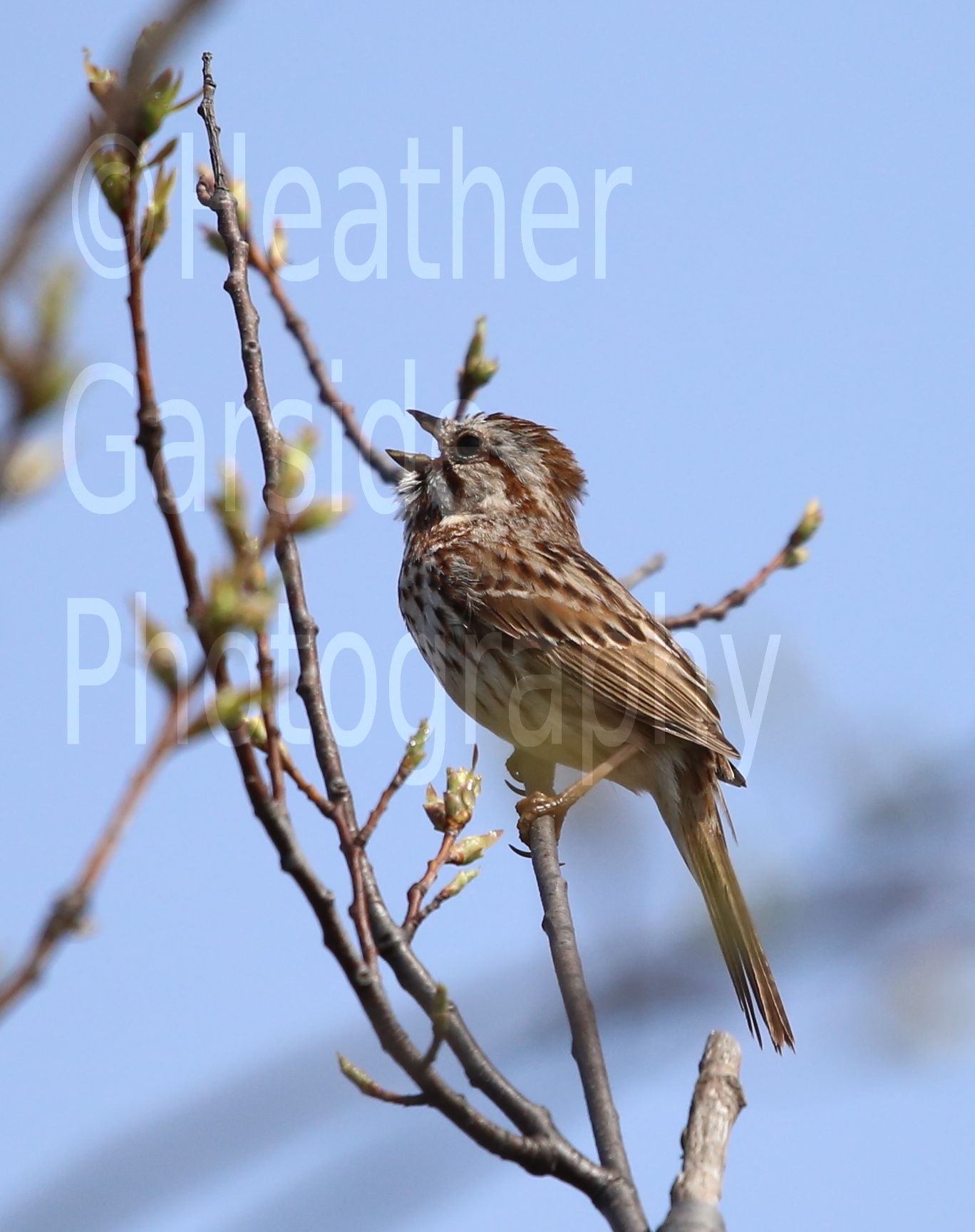
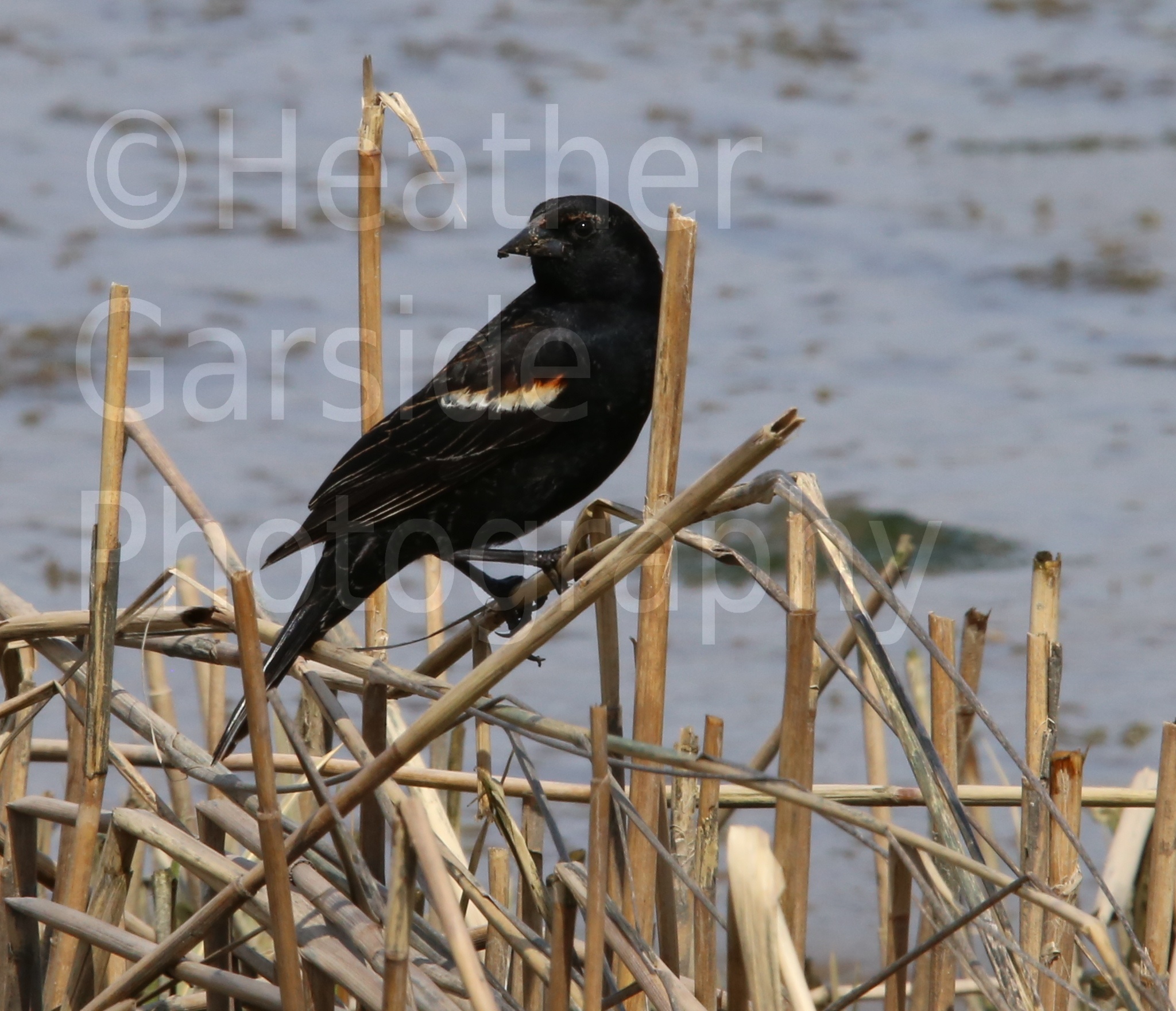
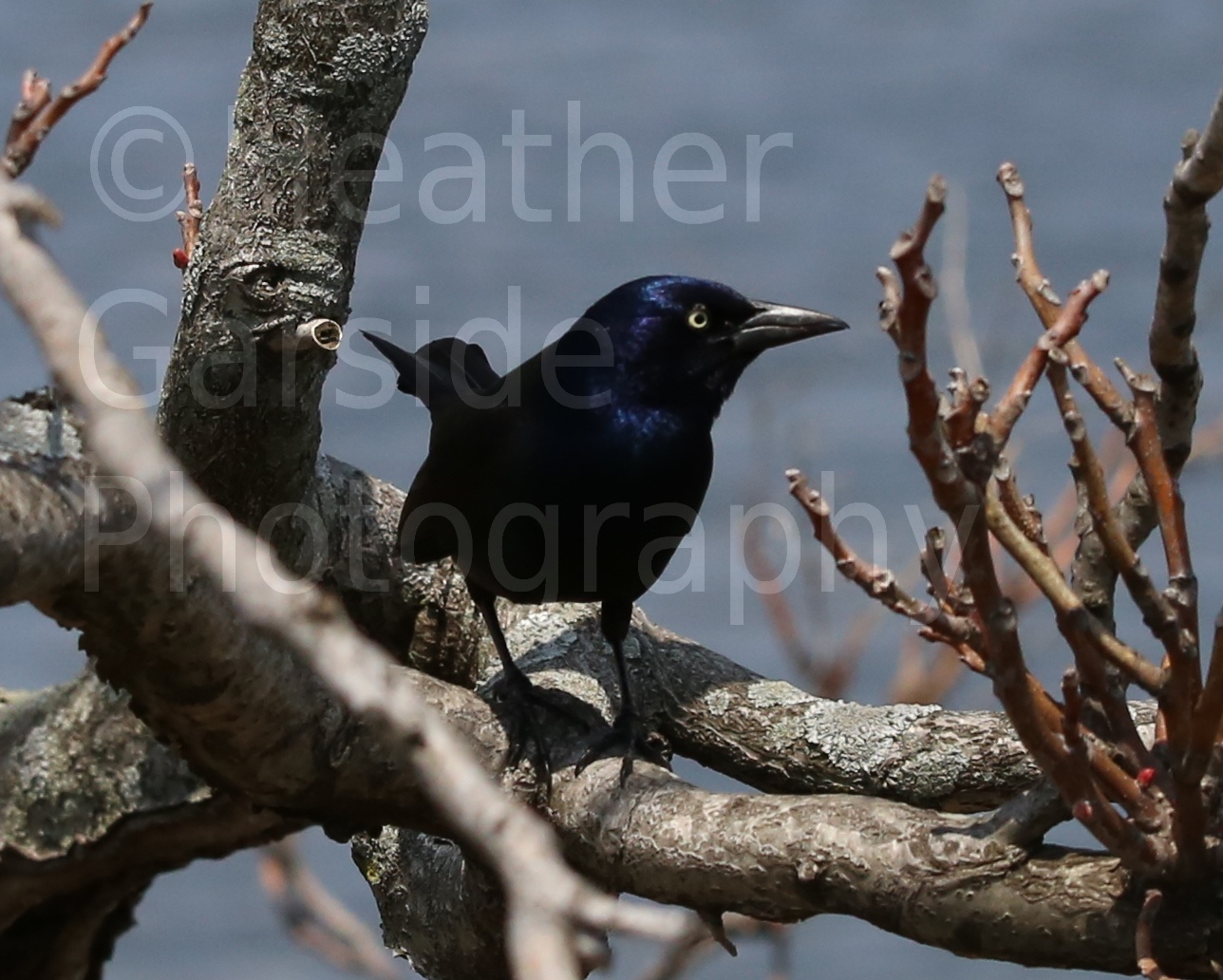
The song birds need their acknowledgment as well. Song Sparrows and Marsh Wrens fill the air with their songs. Red-Winged Blackbirds also make their presence known either with a loud call or a sudden appearance in the reeds. Catbirds, Robins and the occasional Grackle also like this spot, particularly the more forested areas.
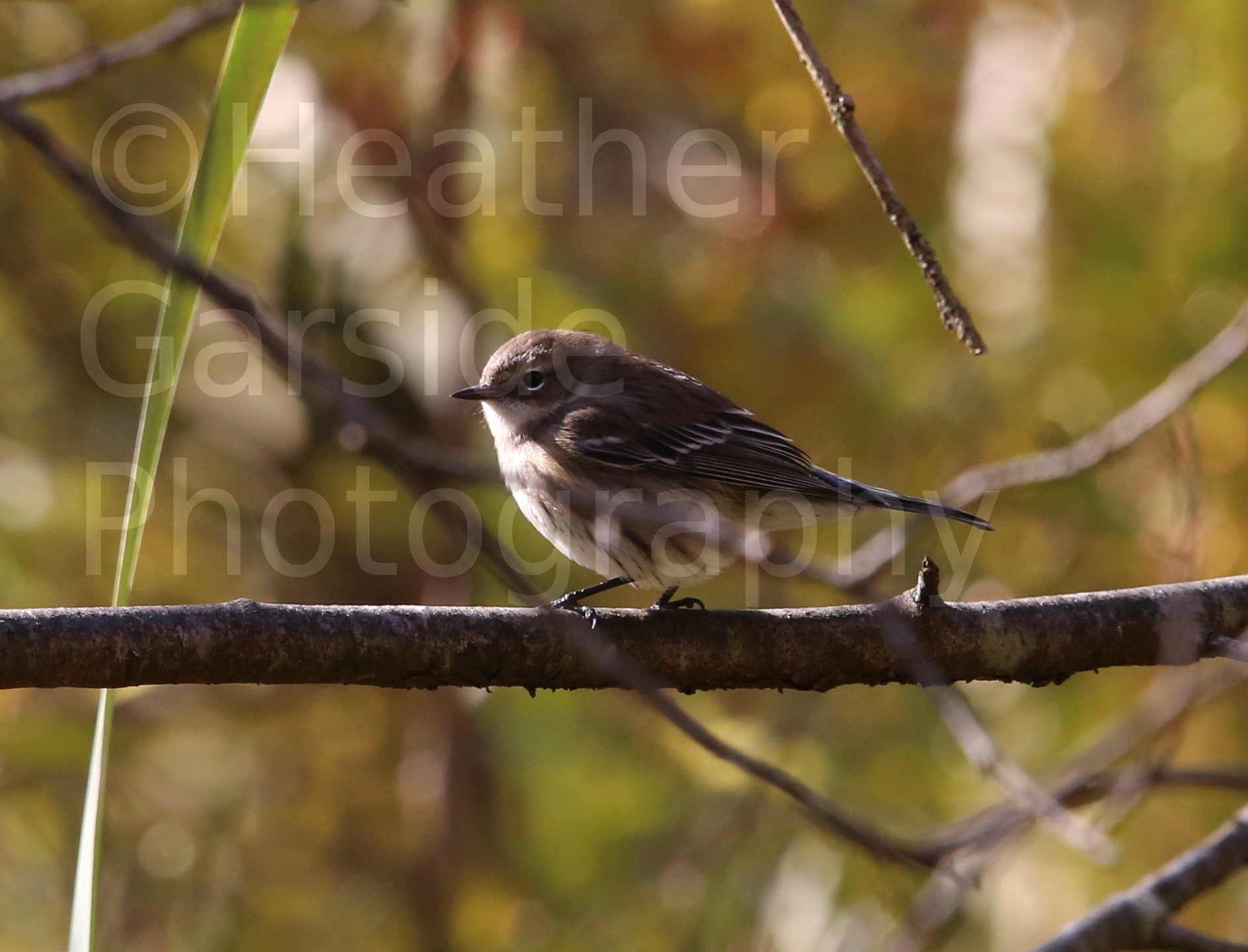
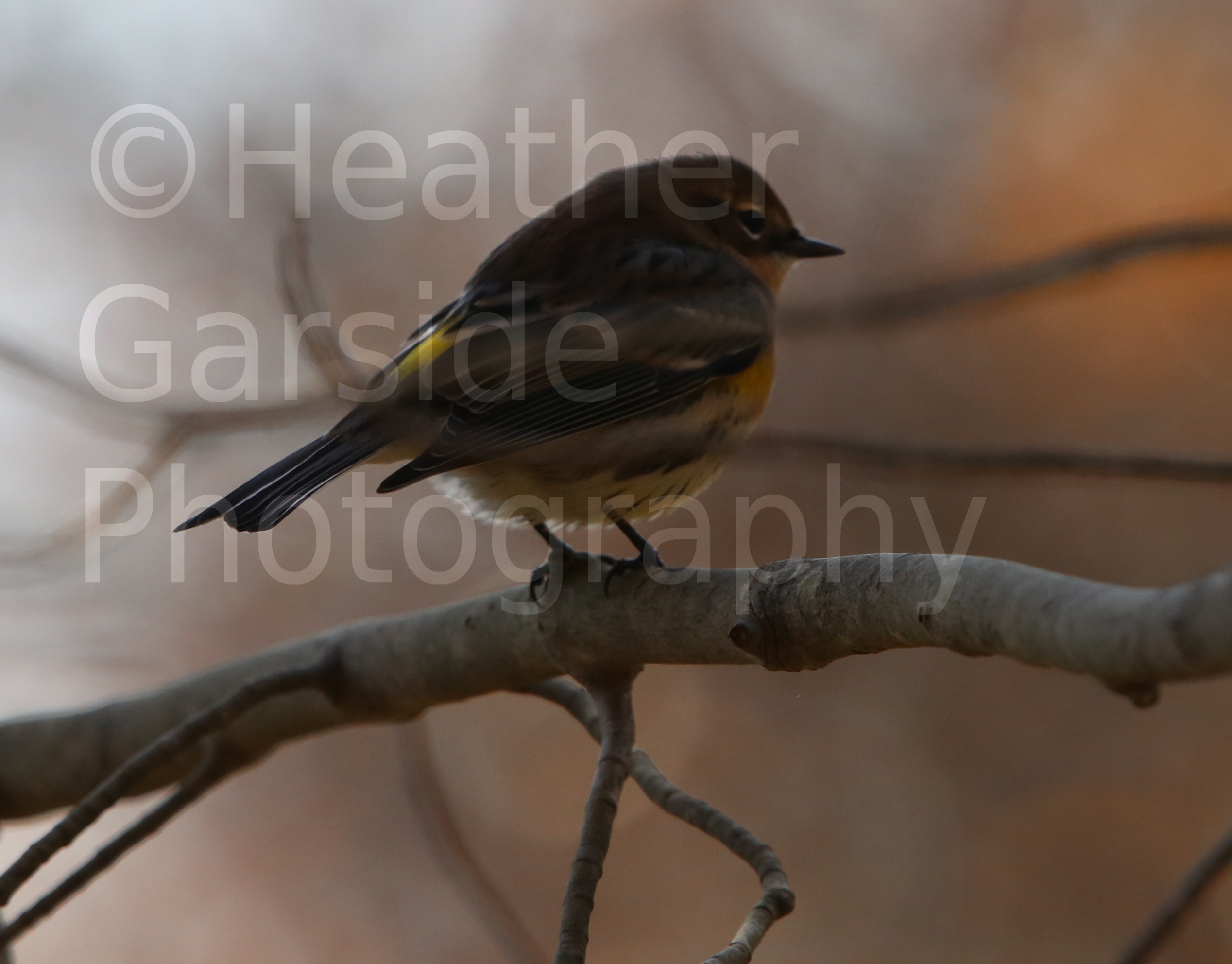
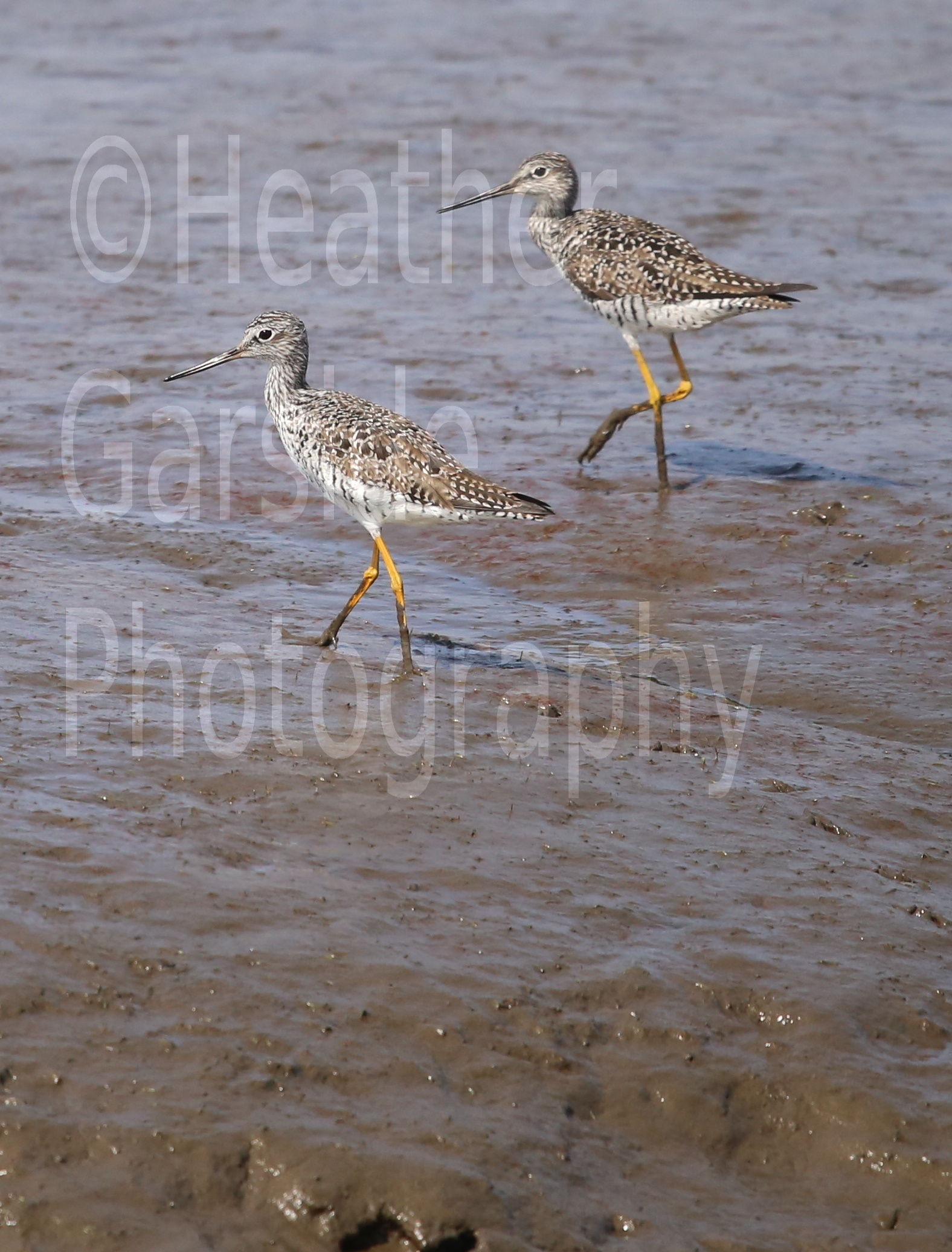
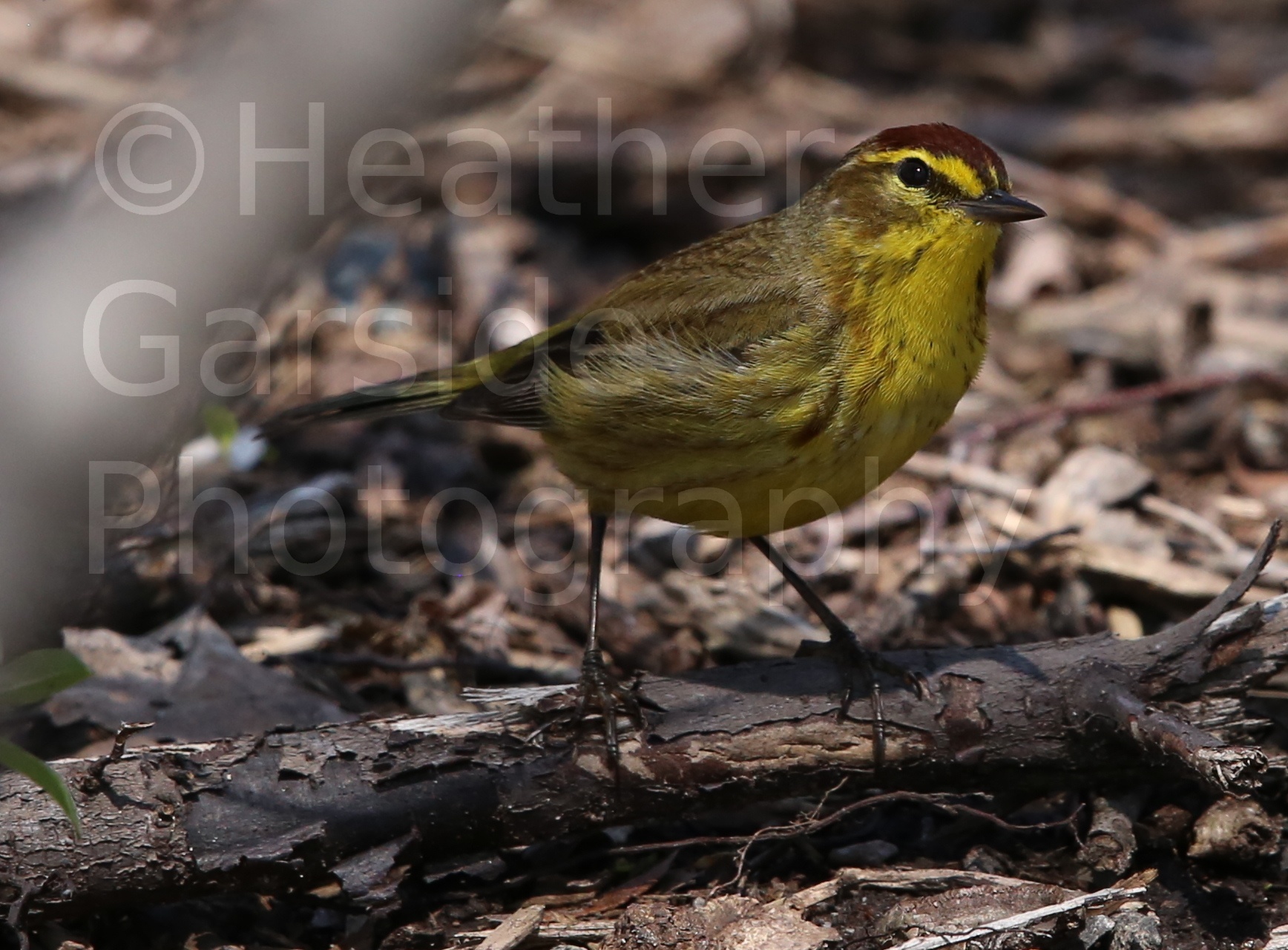
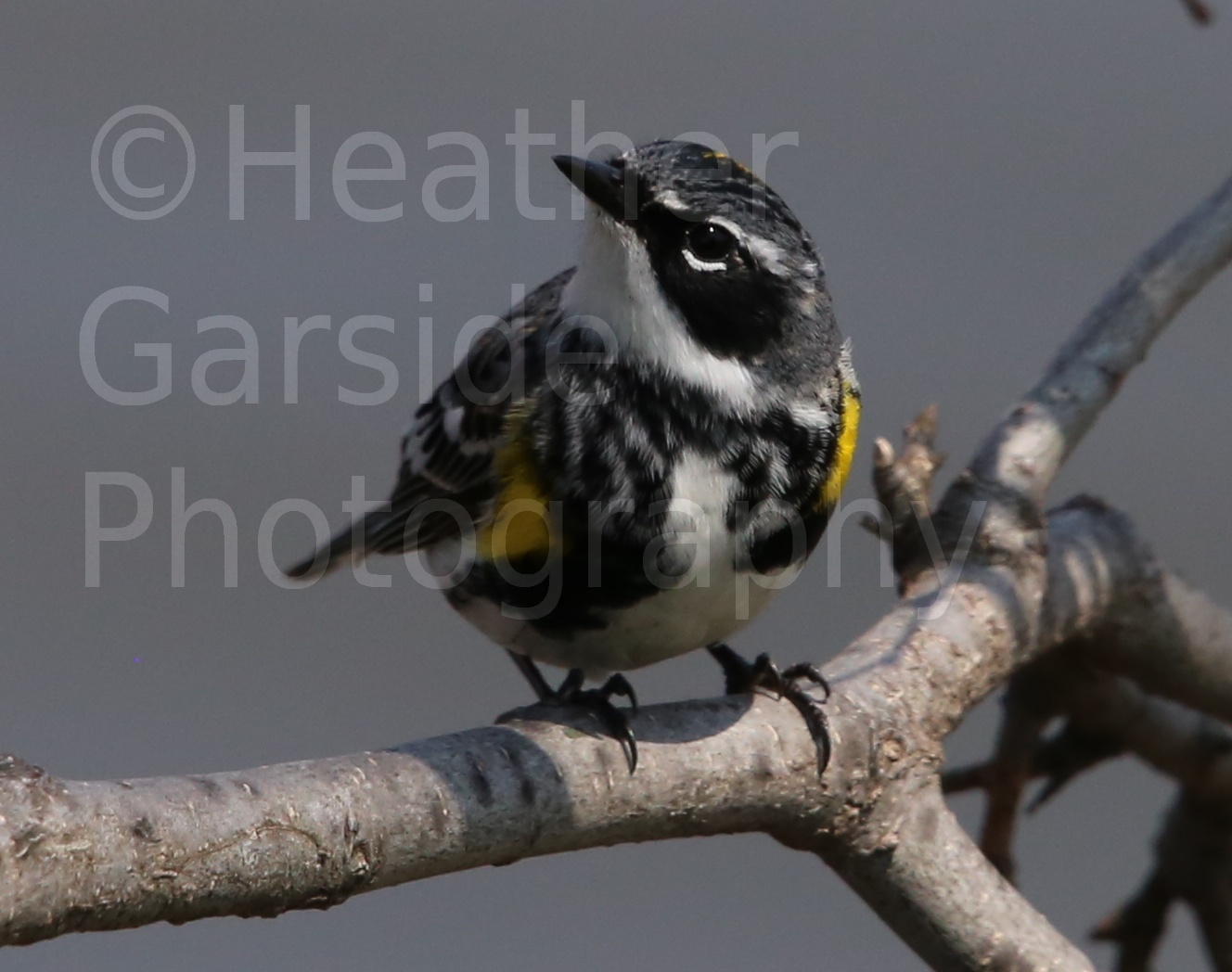
One of the things that keeps me coming back to this location is the surprises that seem to be waiting at every turn. Yes, I see a lot of the same birds each trip, but I never know what other birds and animals might be waiting around the next curve in the boardwalk. I have seen woodchucks, painted turtles and so many lovely butterflies here. Some of my other favorite rare encounters include a pair of Lesser Yellowlegs wandering in the mudflats, a bright yellow Palm Warbler and a Yellow-Rumped Warbler.



 Tails of a Twitcher