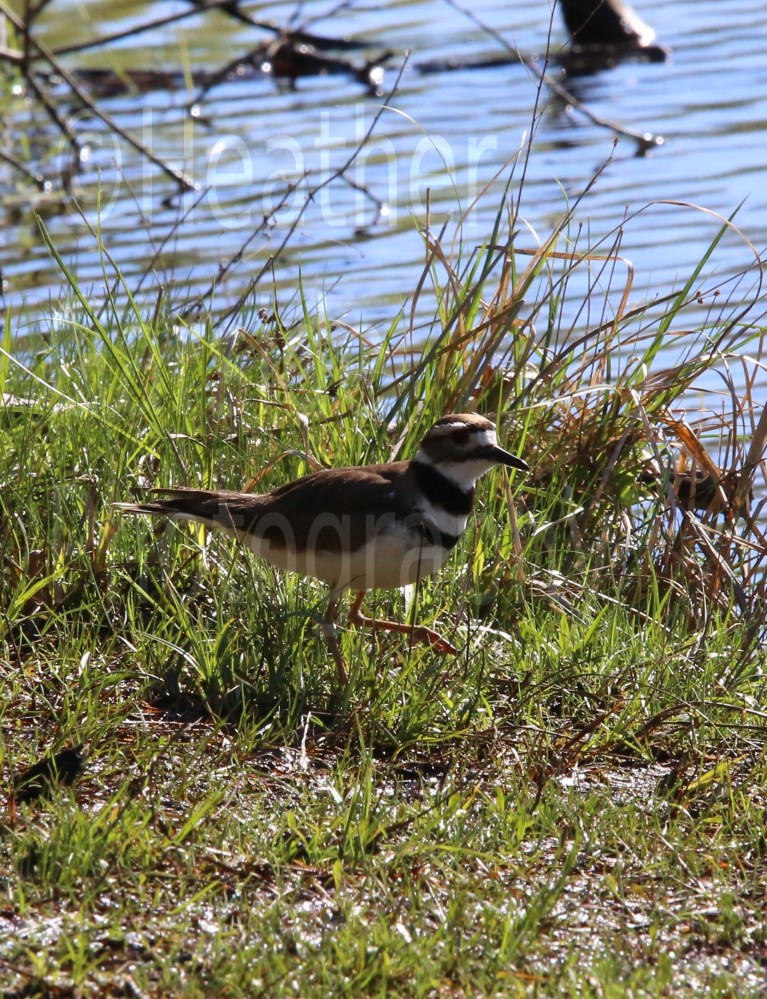
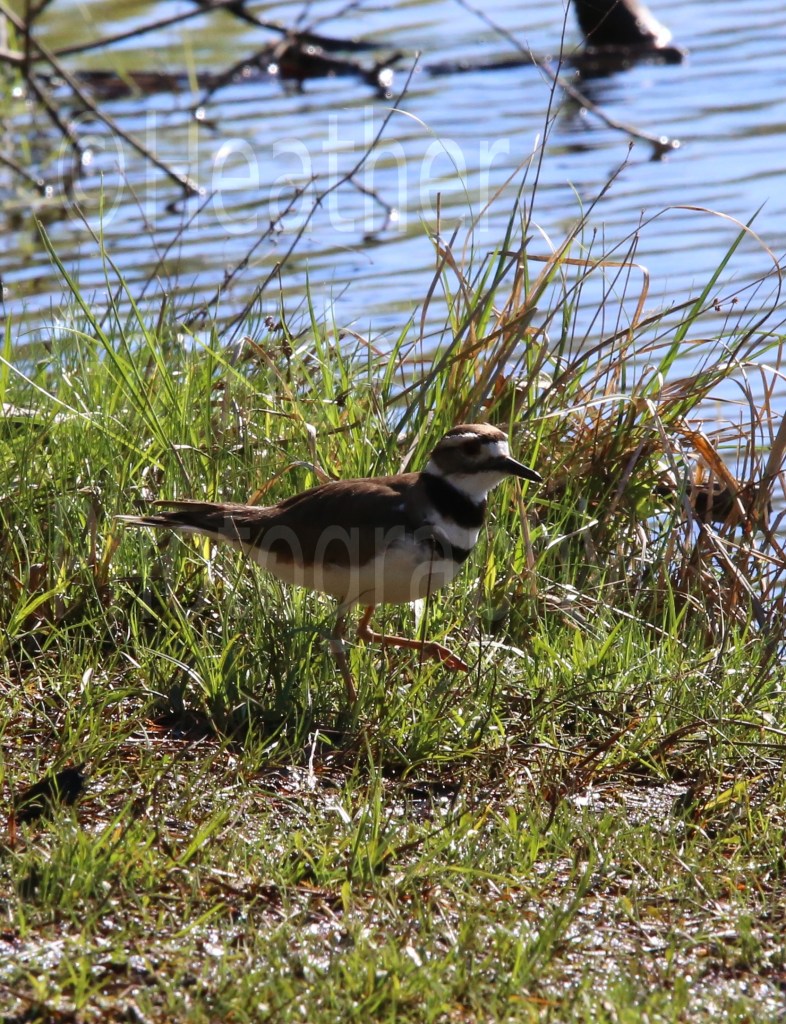
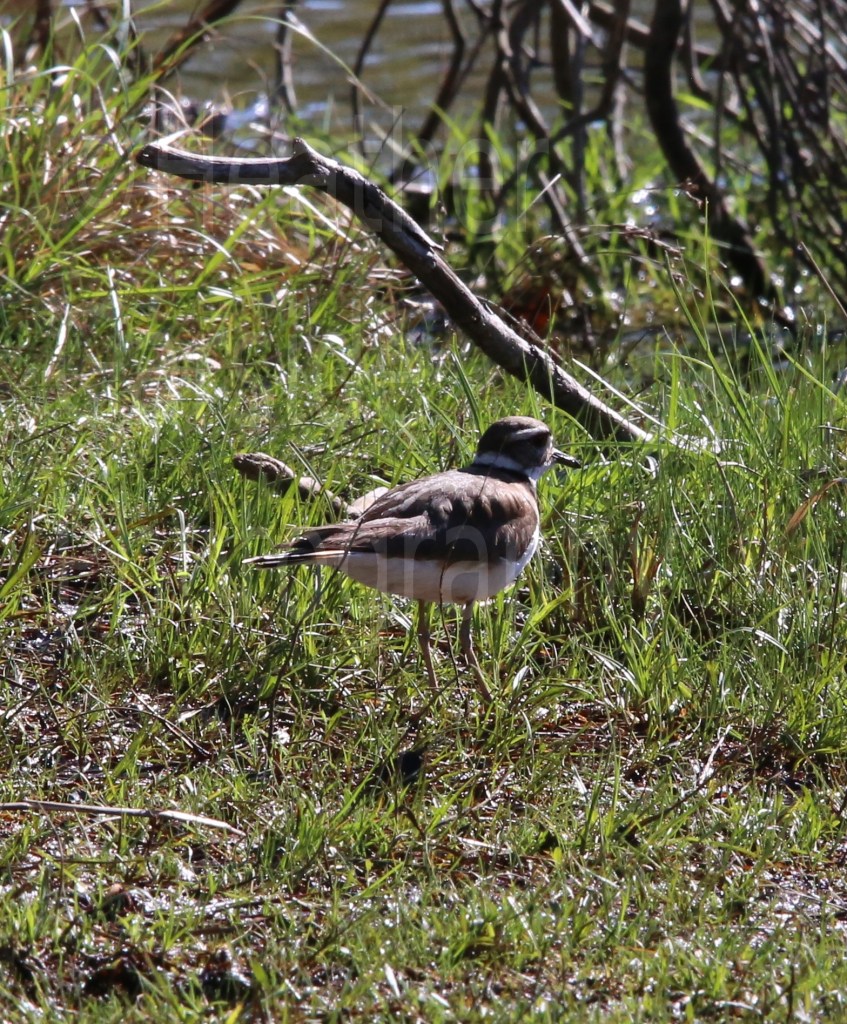
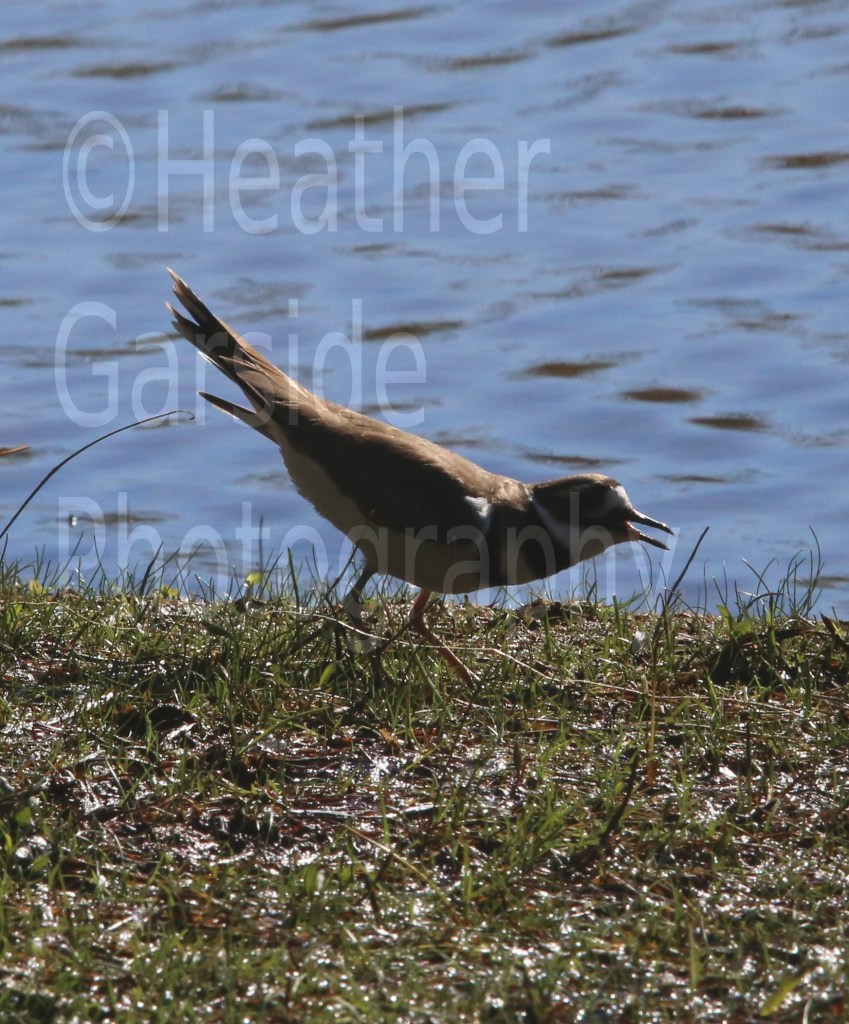
I have only had the opportunity to see Killdeer in the wild once. I came across a pair this spring, on the side of Barbour’s pond. They were enjoying the soggy ground near the water’s edge. No doubt it was in the perfect condition for rooting out tasty insects and other invertebrates to eat. As the only “shore bird” that doesn’t really like the Jersey Shore, Killdeer are commonly found by fresh water ponds or lakes, in parks and even golf courses.
They struck me instantly as very comical to watch. A more nervous and neurotic looking bird I have never seen! Even its high-pitched call of “Kill-deer” seems fraught with anxiety. They sprint short distances, in the most awkward (one of my field guides referred to it as clock-work) style, halting suddenly and then remaining incredibly still for a moment before reaching down to take a bite of something. Their movements are perhaps more exaggerated by the shape of their bodies. Eleven inches long, they still seem to be too tall on their thin, stilt legs. Strangely disproportionate.
The Killdeer is not a particularly pretty bird. Both the males and females look the same, having a dull brown back with a white neck and belly, as well as some accents of white on the face. The most important and distinct feature of the Killdeer is the two black rings around its neck. It is the presence of two rings that differentiates the Killdeer from other Plover species, which all possess only one. If you are able to get close enough, you may also notice the eyes of the Killdeer. Large black pupils surrounded by a thin yellow-red iris, add to the appearance of nervousness and anxiety.
Killdeer
are apparently most well-known for their distraction techniques. They
are in fact, a primary example. When predators approach a Killdeer
nest, one of the adults will act wounded, favoring a wing and lead
the danger away from their nest. Once they are free and clear, they
fly away to safety themselves. I hope that one day I will be able to
observe more Killdeer and perhaps even witness this textbook maneuver
for myself.
As many readers may have realized by this point, I am not one of those bird watchers out only to spot a rare bird. No ticking boxes for me. I appreciate and enjoy all the birds I observe. But that doesn’t mean I don’t get excited when I happen upon something unusual or unlikely.
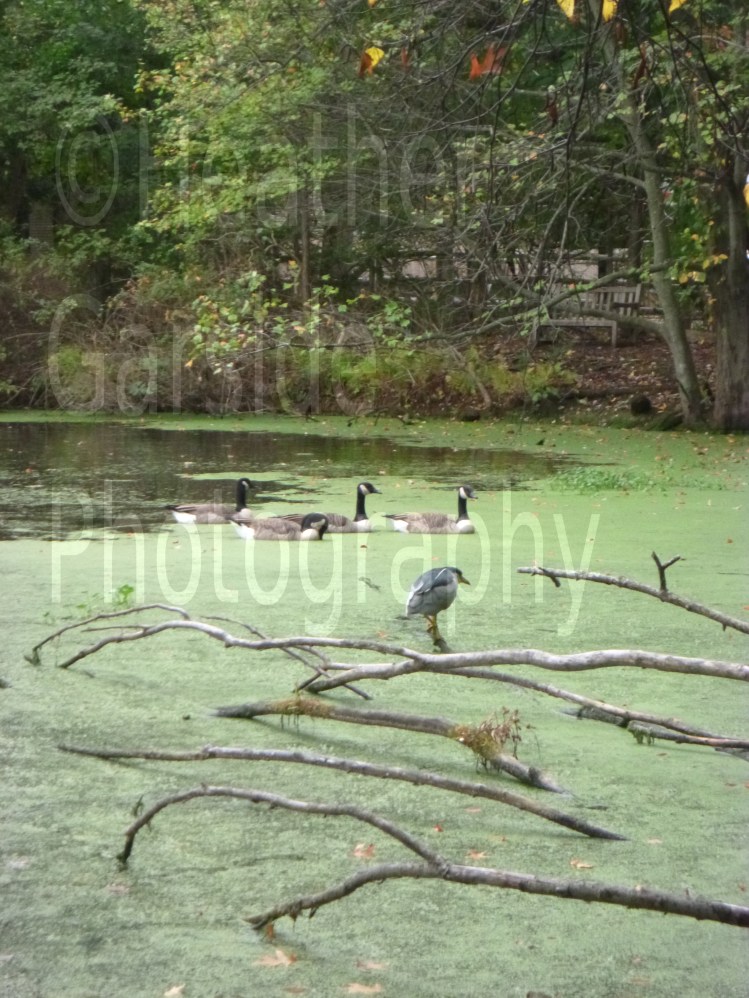
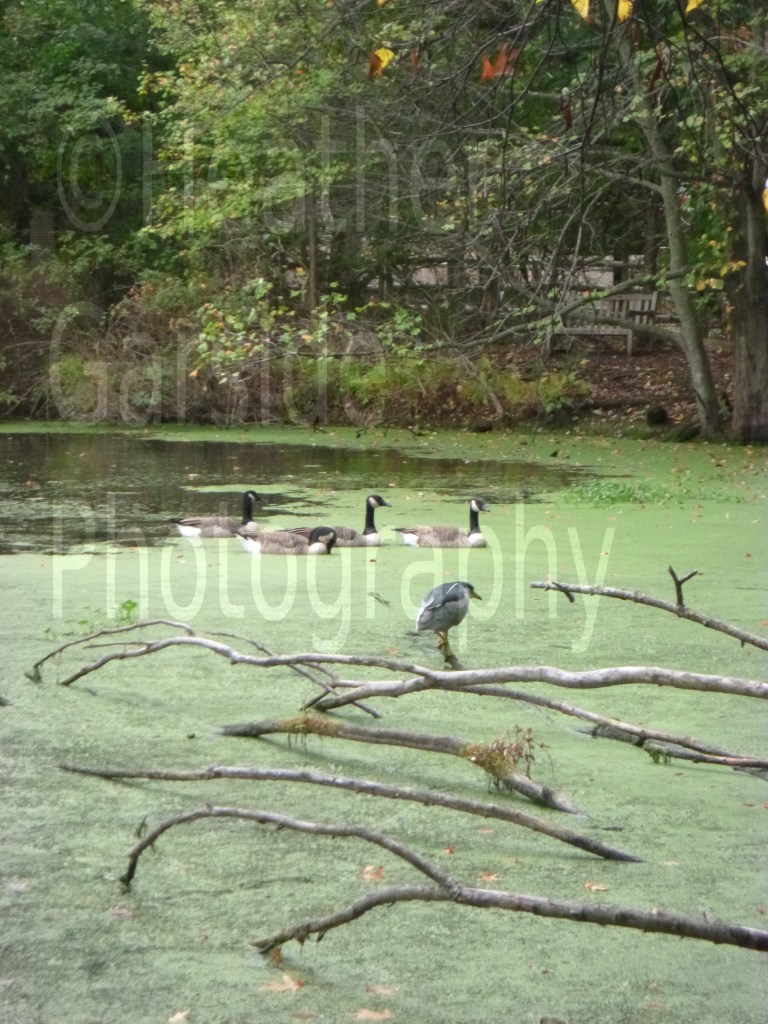
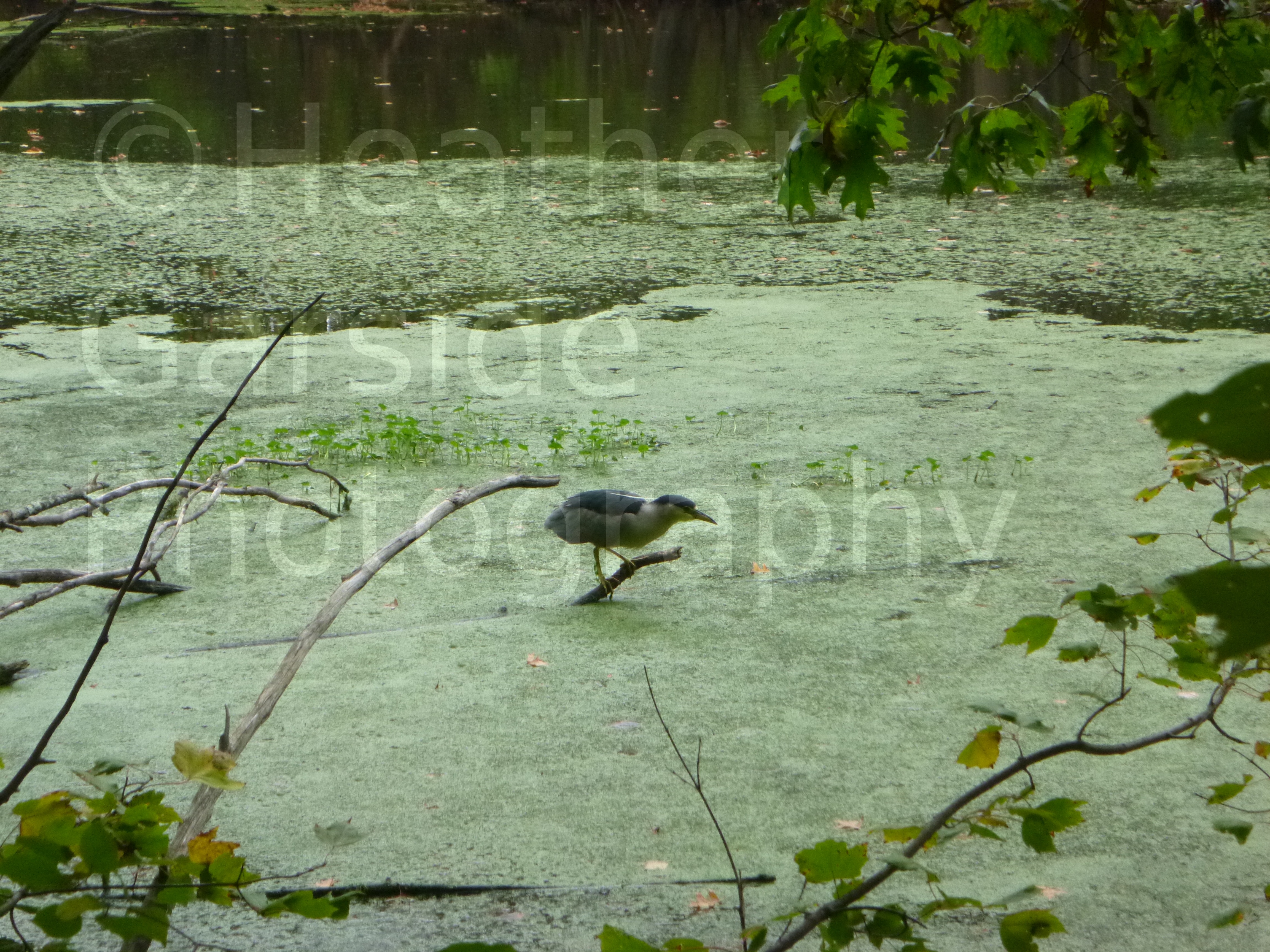
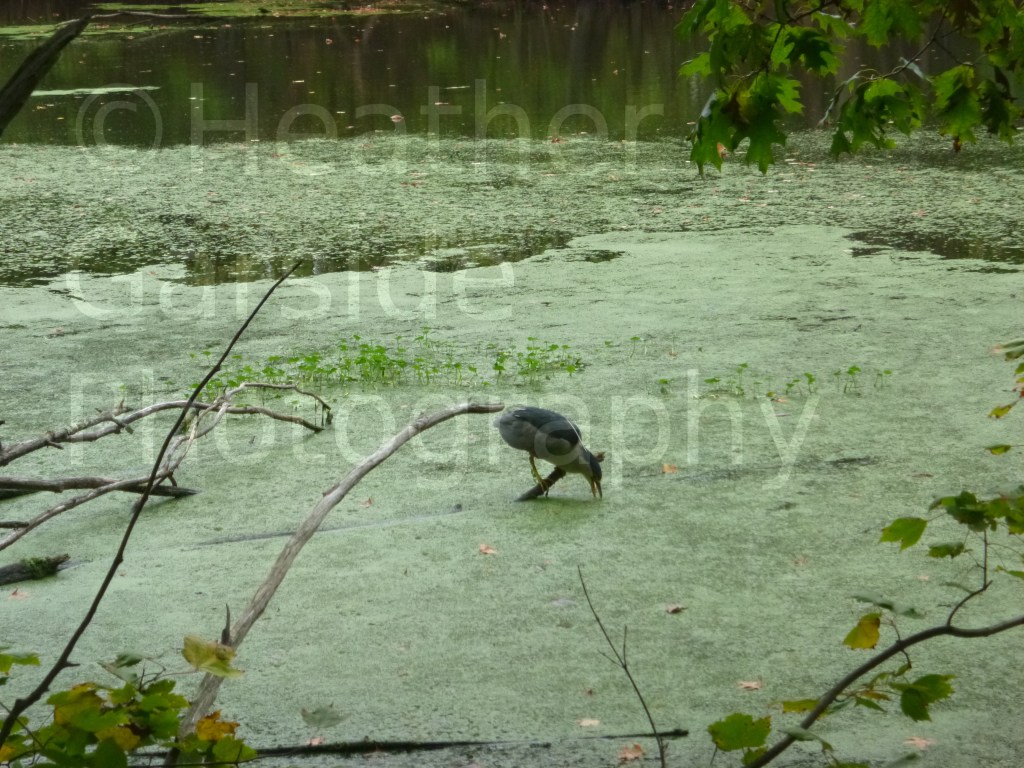
One weekend morning in mid-October, on a walk in the Celery Farms (Allendale NJ), I had a lucky sighting. Not far from the parking area the path turns around a small, narrow extension of the lake. This is usually where the turtles hang out on overturned logs. And that is where we saw it, standing on a log and peering into the algae covered water. I knew it was a small heron of some kind, but it wasn’t until I had time to compare my photos to my books that I realized it was a Black-Crowned Night-Heron.
What makes this so excited is that, as its name suggests, Black-Crowned Night-Heron aren’t usually spotted at 10am. They are 3rd shift birds, sleeping during the day and feeding at night. The best time to see them is usually dawn or dusk. Yet there he was, hunting. The coloring was unmistakable and the white plumes on the head are clearly visible in my photos, despite using my phone camera. The Heron seems tiny at 24-25 inches when compared with the Great Blue Heron at 45-47 inches.
Garret Mountain Reservation is a wonderful urban park. Located in
Woodland Park, New Jersey, the park has at least two different
vantage points where visitors can look down/out at the city of
Paterson and beyond. Along with the paved paths frequented by walkers
and joggers and the many picnic areas (some recently updated) with
grills and picnic tables, there are also hiking trails. According to
Passaic County’s website, the park welcomes over 150 species of
birds throughout the year and the County sponsors Bird Watching
meet-ups throughout the summer. While they are not as intense, nor as
remote as the Appalachian Trail, they do provide good terrain for a
short walk. I typically do not follow the whole trail (which
basically works its way around the outer edge of the park. Instead I
usually walk an easier and shorter loop around Barbour’s Pond.
Well
shaded, the trail at Barbour’s Pond has lots of lovely ledges to
sit on and watch the swallows. There are also many outlets to the
water’s edge, though you often have competition for these spots
from fishermen. In the many times I have walked this loop (often my
go to spot between the end of the workday and an evening activity)
many times and seen a great many birds. Most are the common New
Jersey birds you would expect, but I have also seen a Palm Warbler,
Killdeer, Ovenbird and what I believe was a Yellow-Bellied Sapsucker.
On
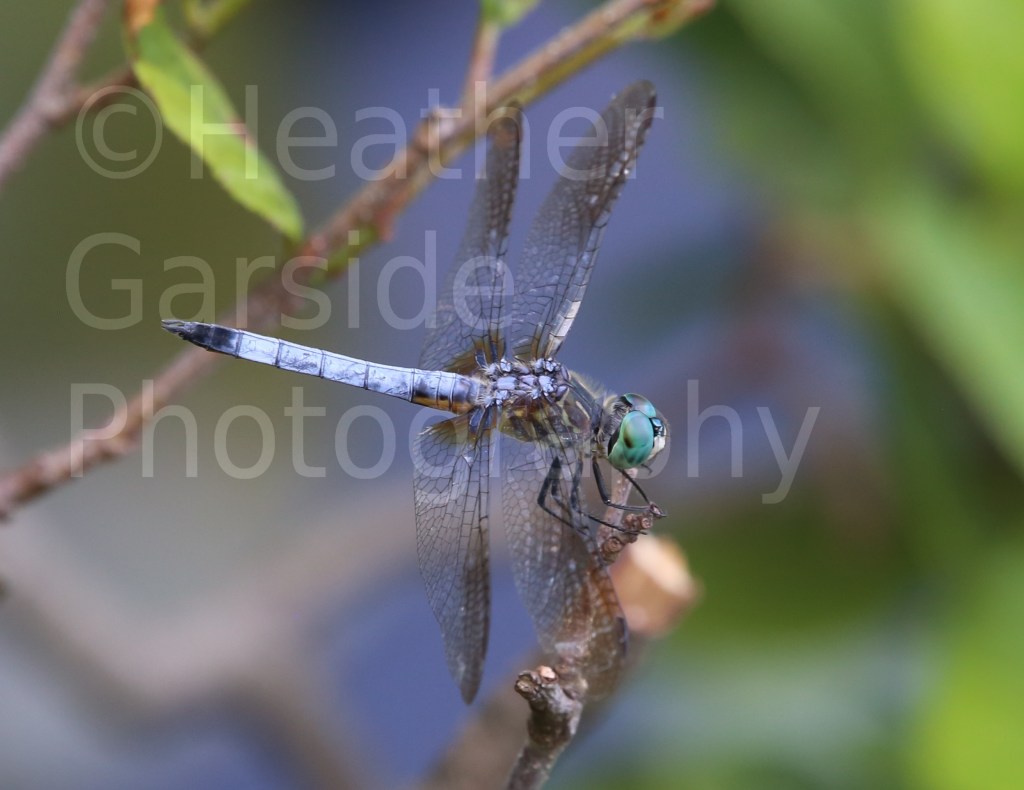
one particular summer afternoon in July the landscape was dominated,
not by the flapping of feathered winging, but rather the flitting of
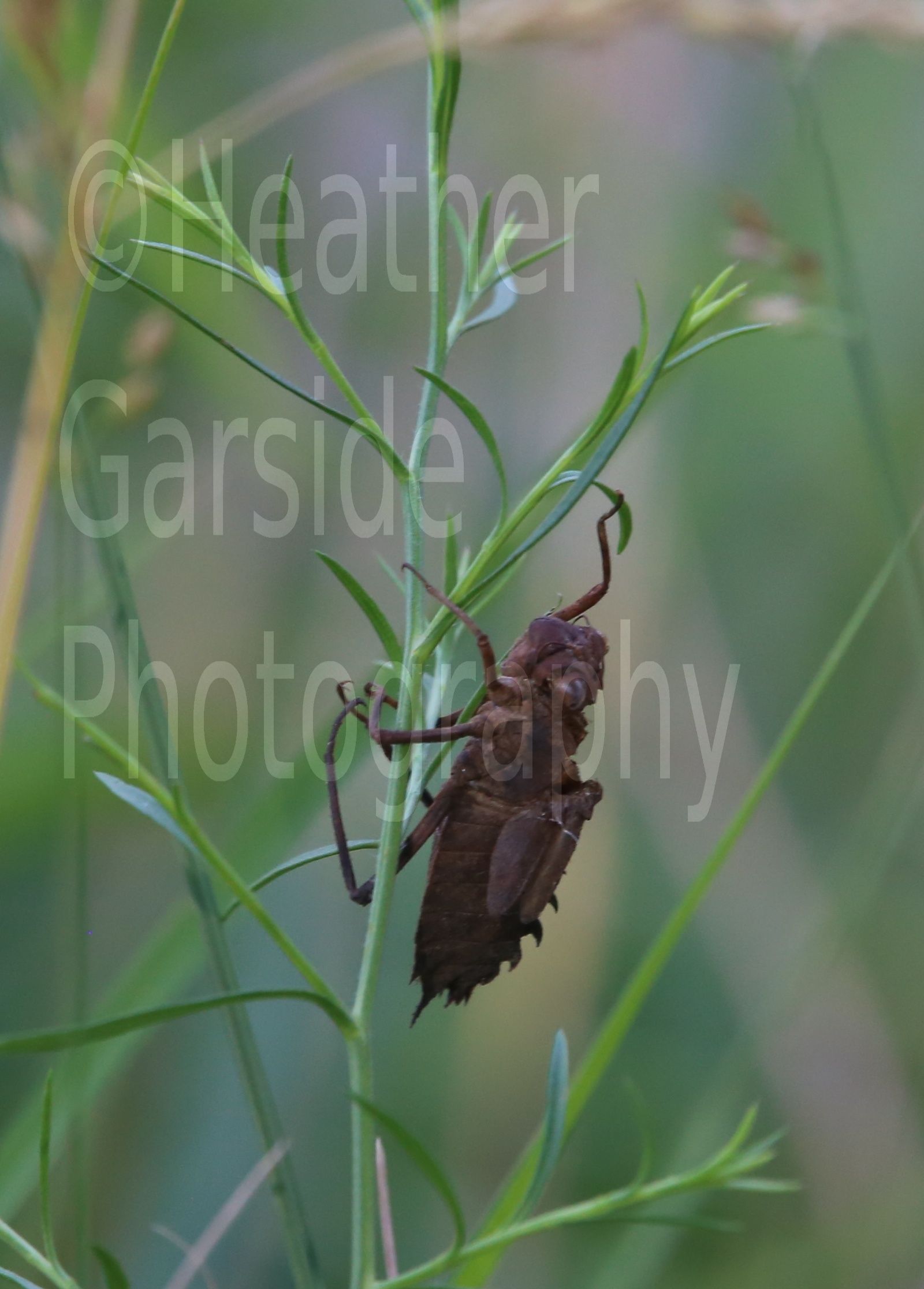
an army of blue dragonflies
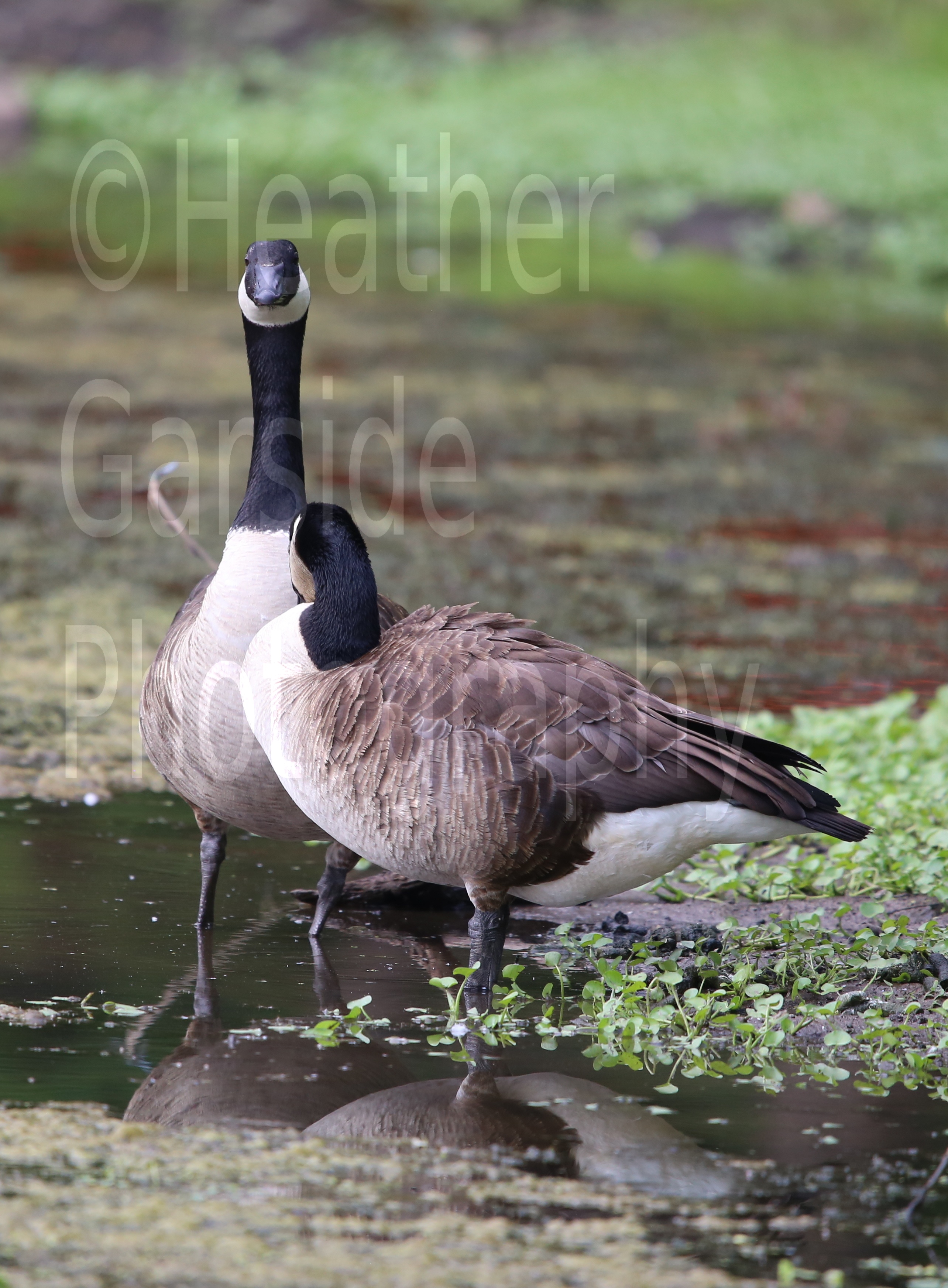
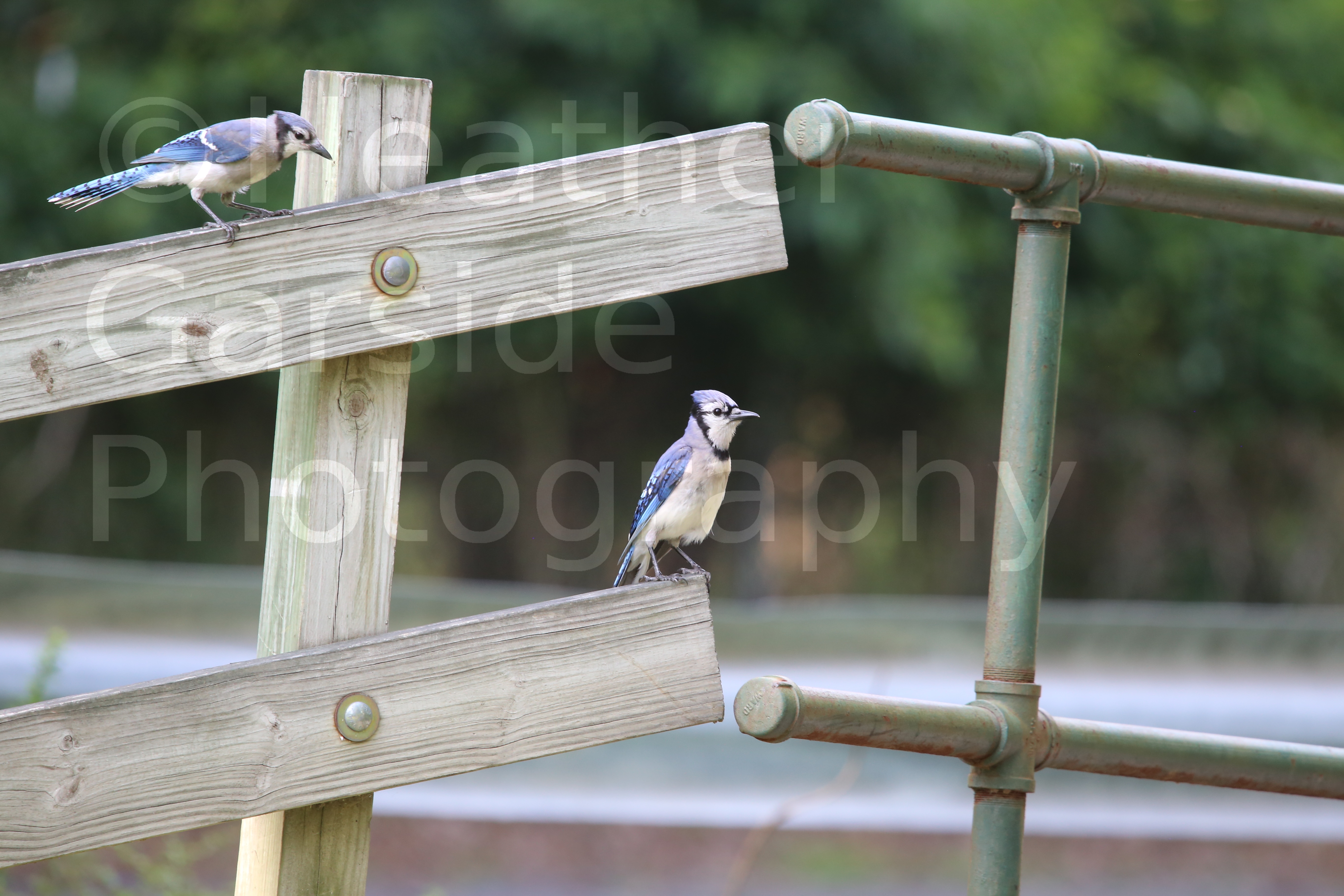
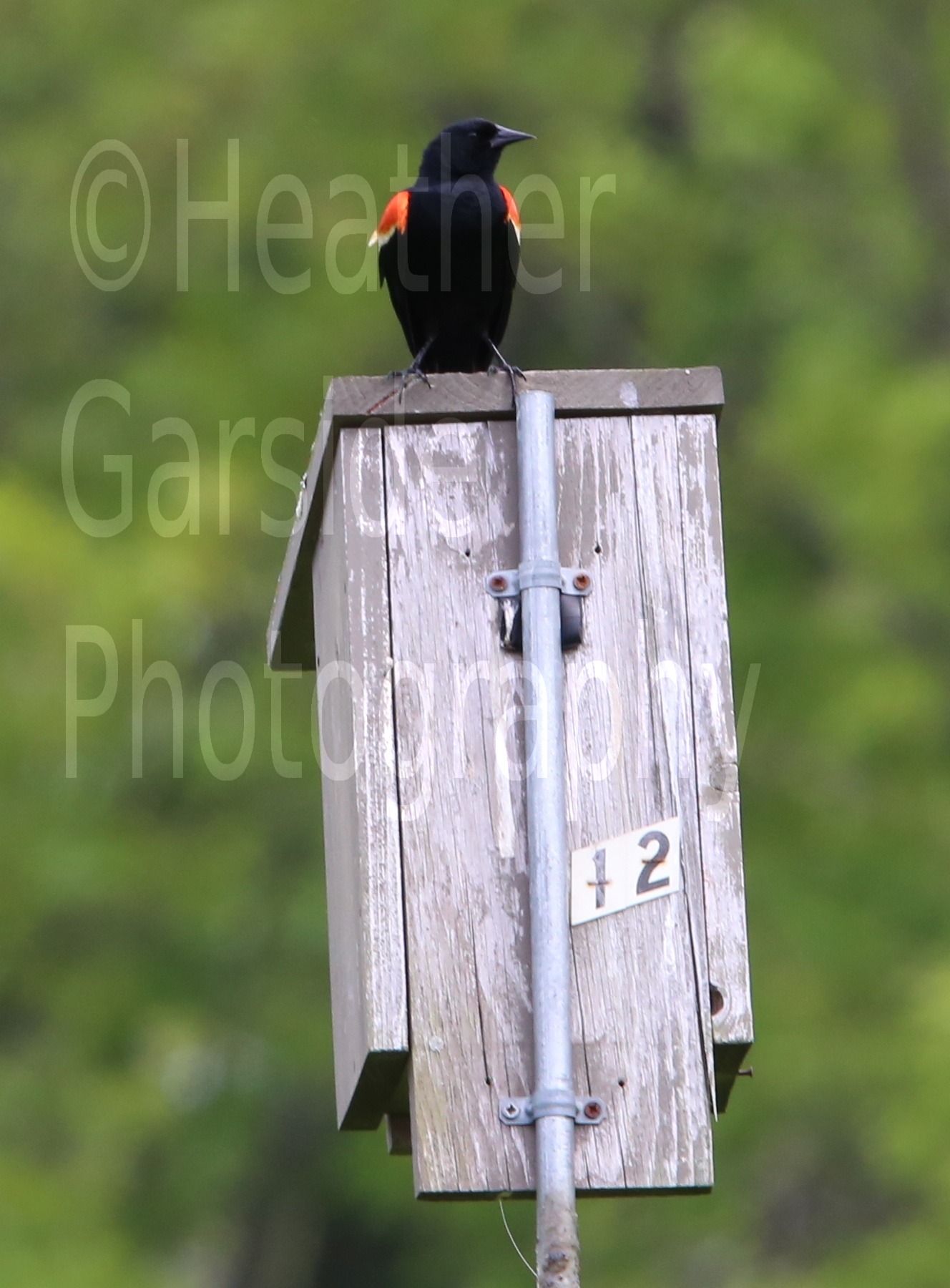
While the dragonflies stole the show, there were also Robins, Grackles, Red-Winged Blackbirds, Catbirds and mourning doves around and about. A pair of Canada Geese were surprisingly the only members of the species near the water. At one point I came across three Blue Jays, all a bit unsure of themselves. Upon closer inspection, you could see a few downy feathers still among their mostly adult plumage indicating that they were juveniles. The shrill of a baby Blue Jack was gone, but they still made a racket.
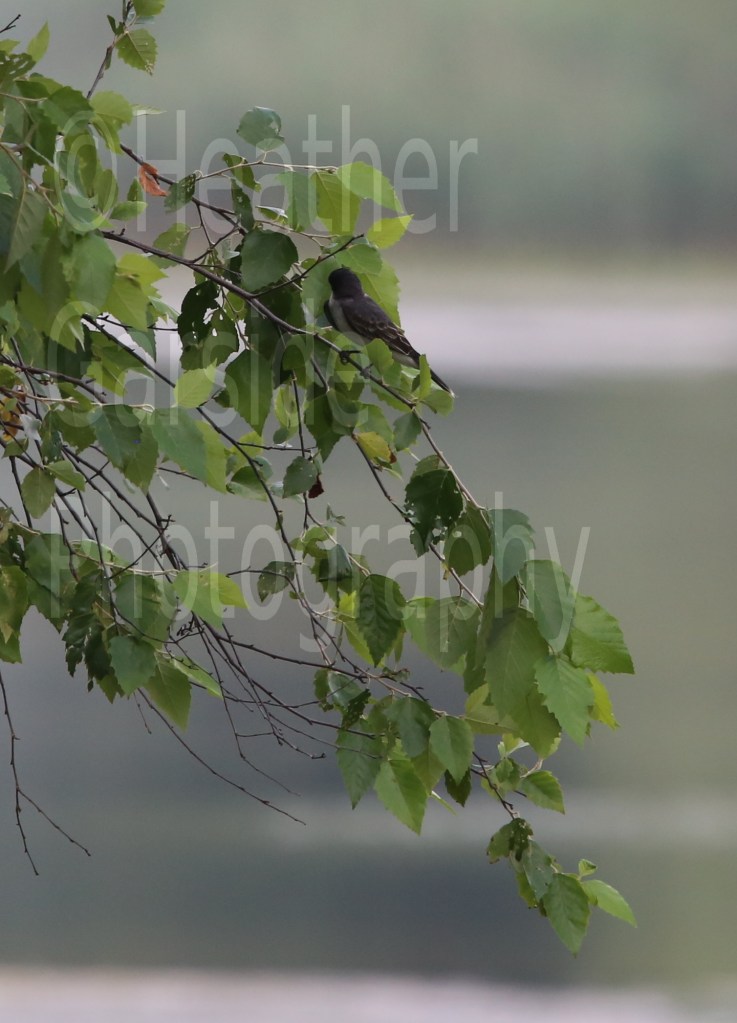
The swallows at Barbour’s Pond are usually far too busy to stop and pose for photos. One did land on a tree. Being darker blue/black, I believe it was a Bank Swallow. Bank swallows sometimes nest along stream bank and I think in the case of Barbour’s pond, they like the rock ledges which line one whole side of the pond. I have also seen Tree and Barn Swallows at the pond, but not on this occasion.
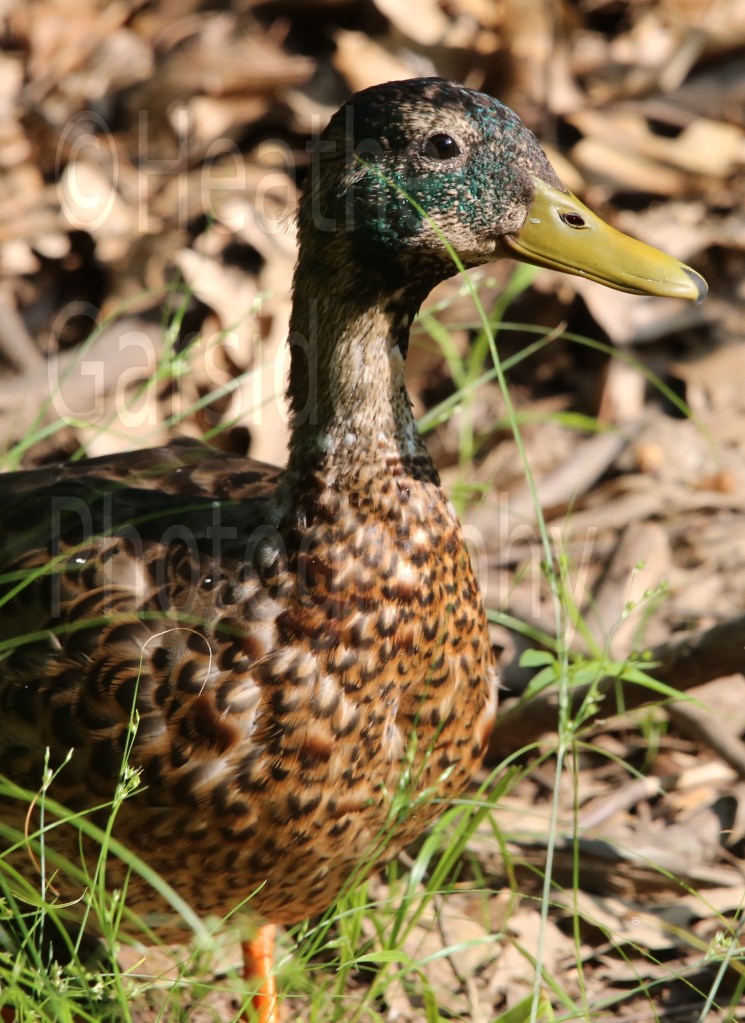
There were three Mallards hanging out in the shade by the edge of the pond, two males and one female. The males were between feathers, just molting into their breeding plumage. Their partially green heads were particularly odd to see. There are apparently six different plumages for the Mallard, four of which are different phases of the male’s feathers. You can see am great image of them all together at: www.washingtonpost.com/wp-srv/special/metro/urban-jungle/pages/110830.html?noredirect+on&noredirect=on
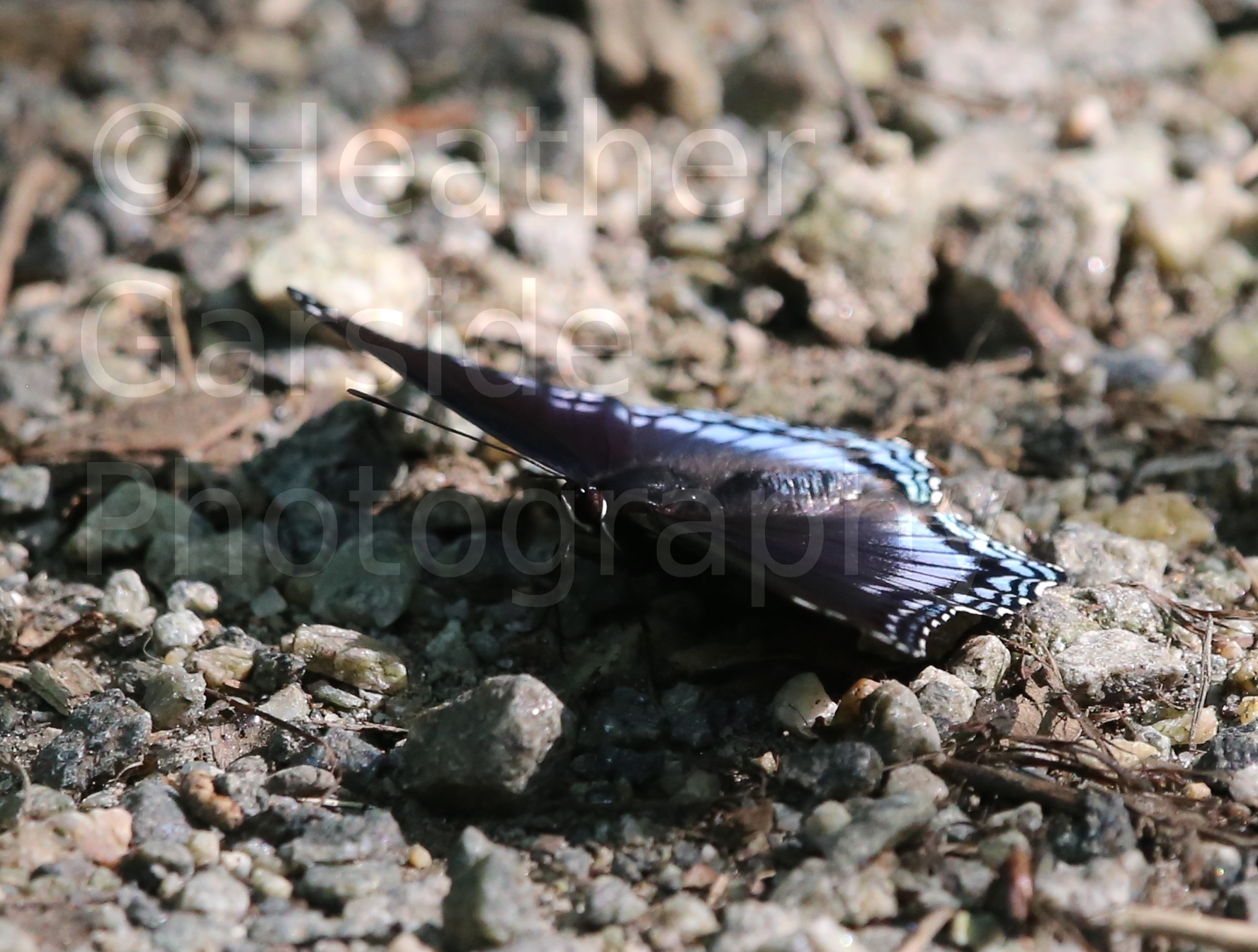
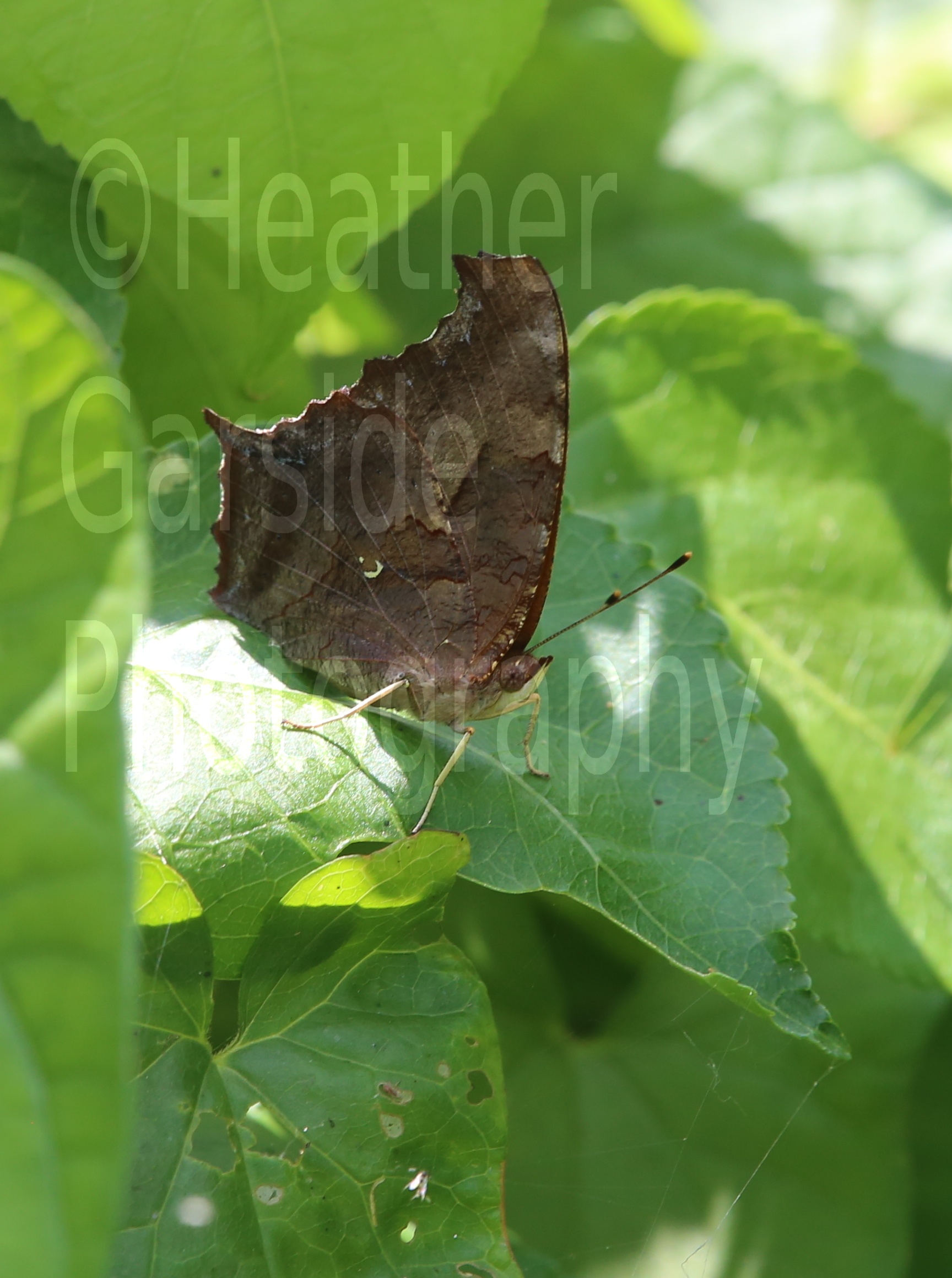
Besides the dragonflies, there was a lot of other interesting insect activity. Moths fluttered around and one beautiful blue-black butterfly. I didn’t get an amazing photo of it, but I can see enough of the wings with their iridescent blue to determine it was a Red-Spotted Purple. You can learn more about this butterfly at the North American Butterfly Association’s website: https://www.naba.org/chapters/nabanj/butterflies/red_spotted_admiral.html
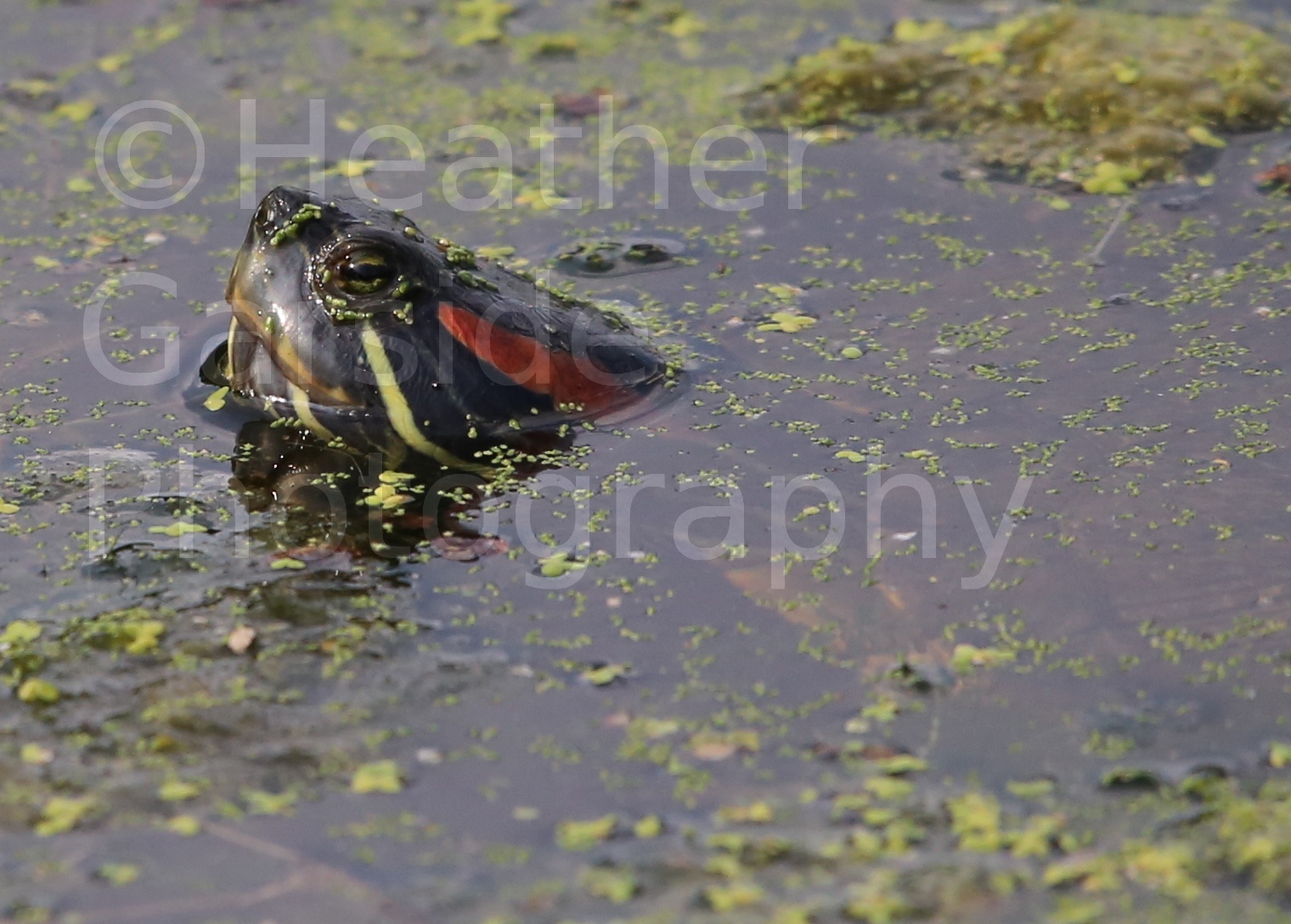
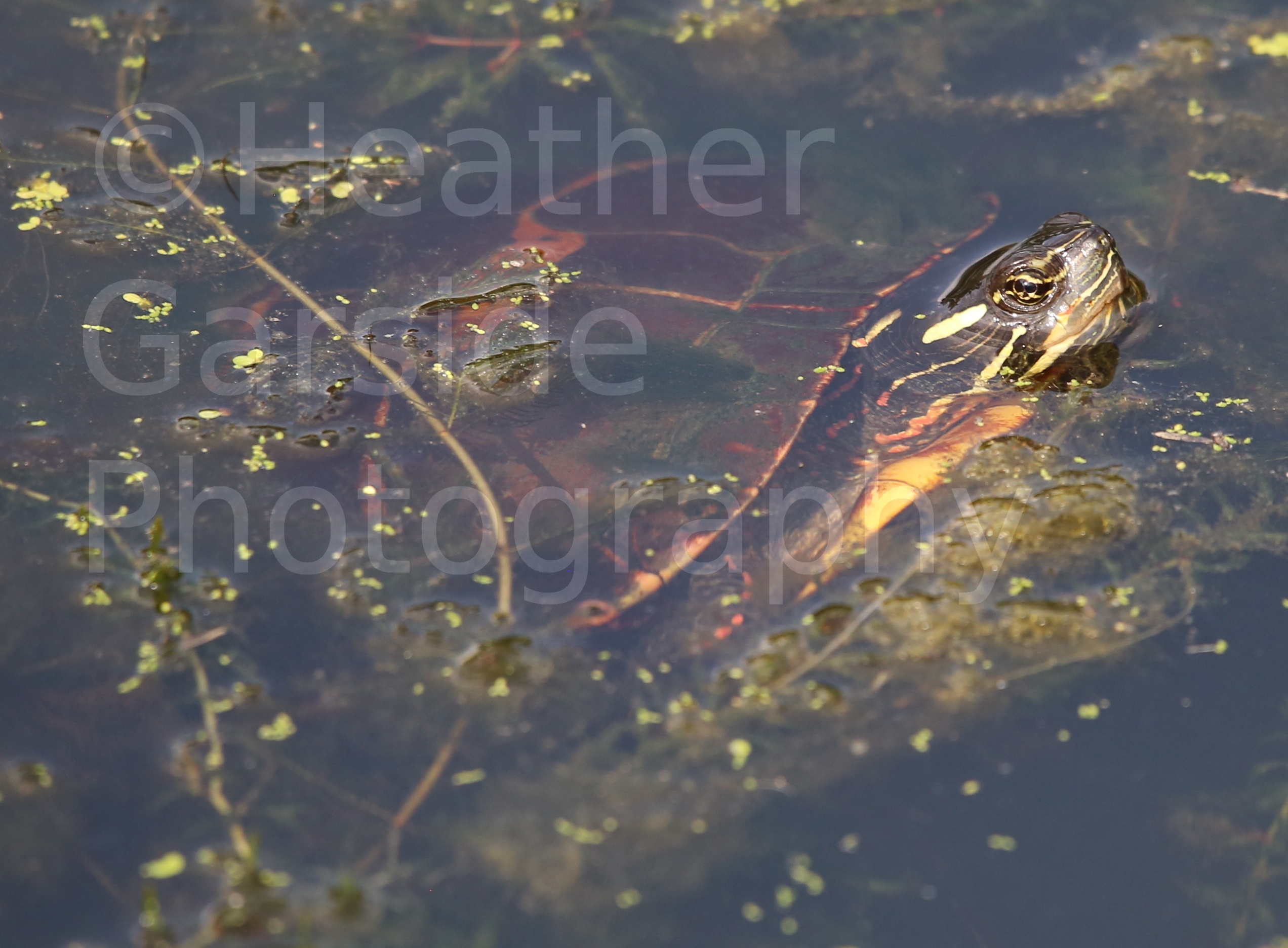
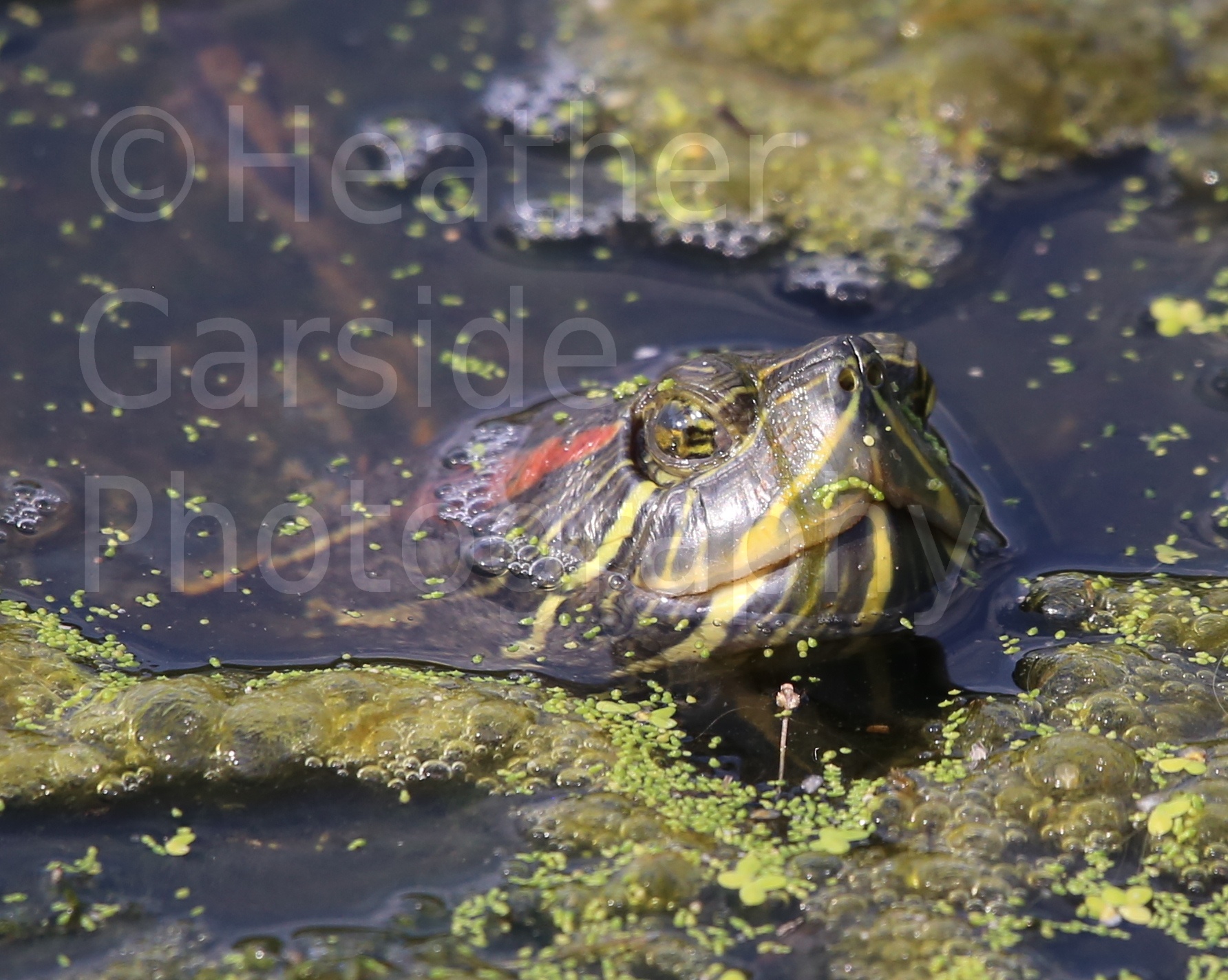
Painted turtles were also everywhere, particularly in the algae
covered edge of the pond directly in front of the boathouse. At first
I didn’t realize quite how many there were. Most weren’t moving
an inch. Rather, they were perfectly still, mostly submerged with the
exception of just their heads popped up above the blanket of green
algae. At first I thought they were the ends of sticks or maybe
jagged rocks, but I knew I hadn’t seen that many rocks here on
earlier visits. There were at least seven or eight turtles in this
concentrated section, floating along, just chillin’.
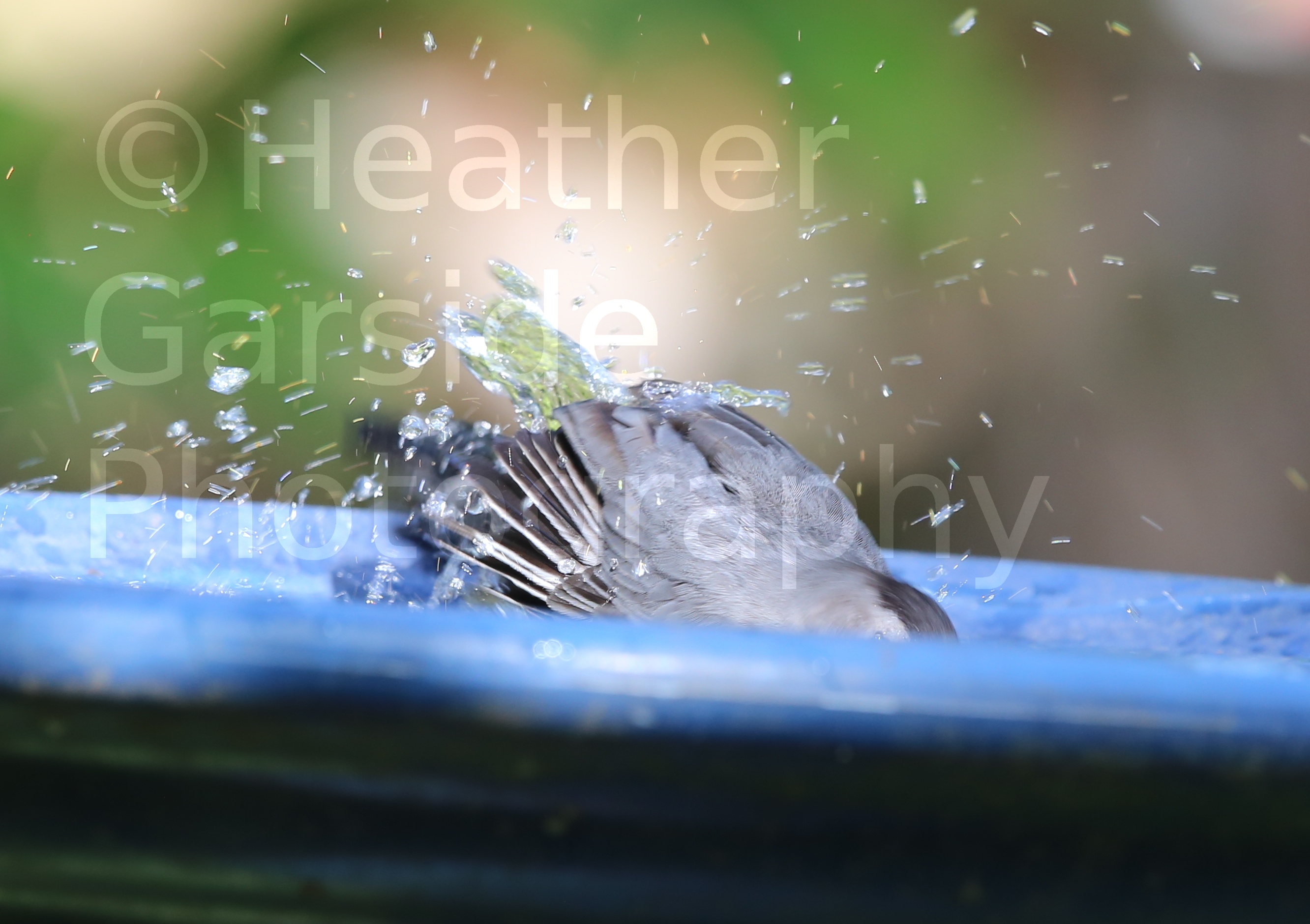
I was in search of the ideal bird bath for almost two summers before I finally settled with the weighted plastic model I bought from Lowes. Despite the fact that it wasn’t exactly the bird bath I had designed in my imagination, I was very happy to both provide my feathered friends with water and, of course, to observe and photograph their aquatic-antics.
So I
did some bird bath research, made sure I was dumping the old water
regularly and refilling it with fresh. I even converted a kitchen
brush for scrubbing dishes into a bird bath scrubber to get rid of
anything gross growing along the edge of the bird bath (I guess I
used a bit to much elbow grease because after about three months of
cleaning the bird bath, the finishing paint started pealing off the
basin).
So
my bird bath was in place, clean and welcoming, safe and ready to
provide refreshing baths for hundreds of birds.
And
they just never took a bath.
They
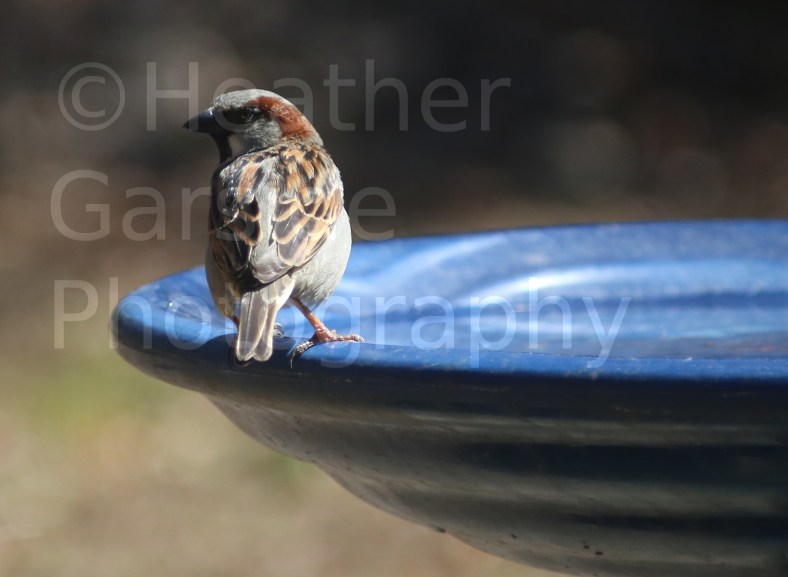
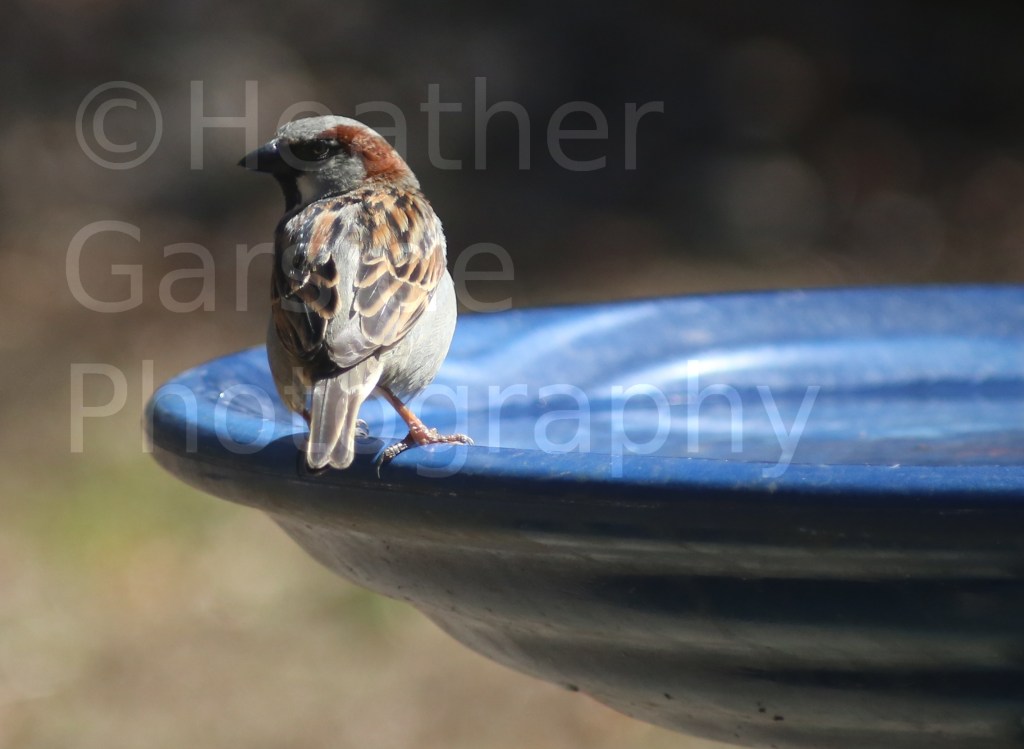
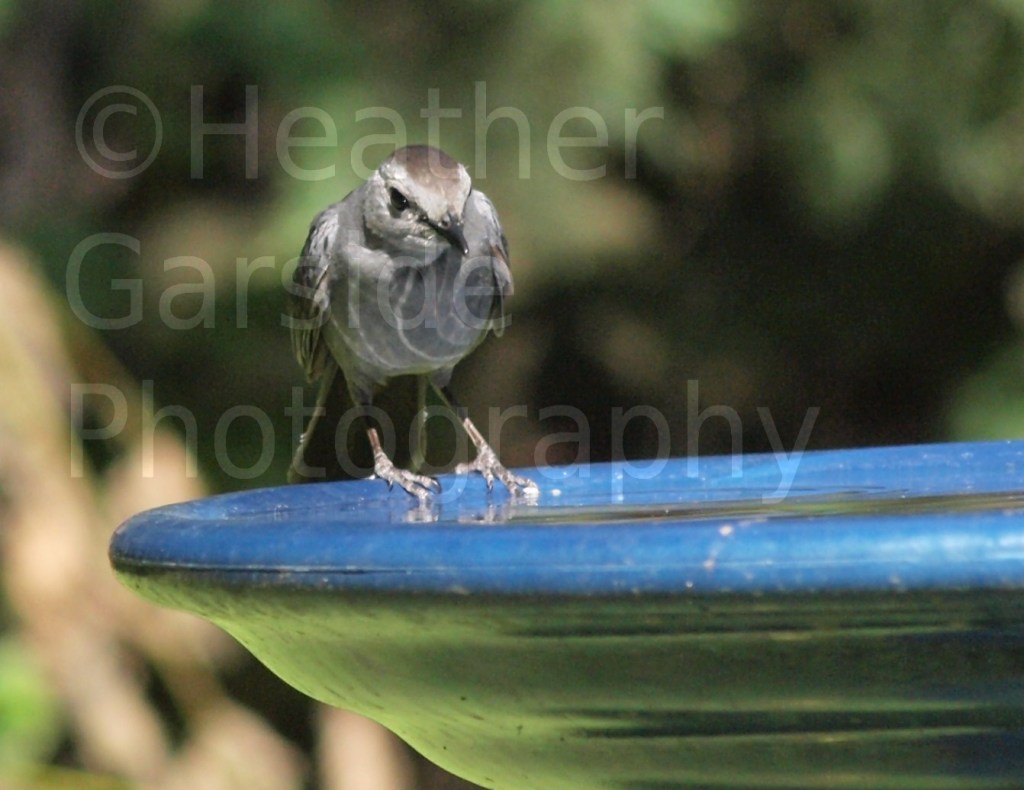
did use the bird bath as a convenient ledge to rest on.
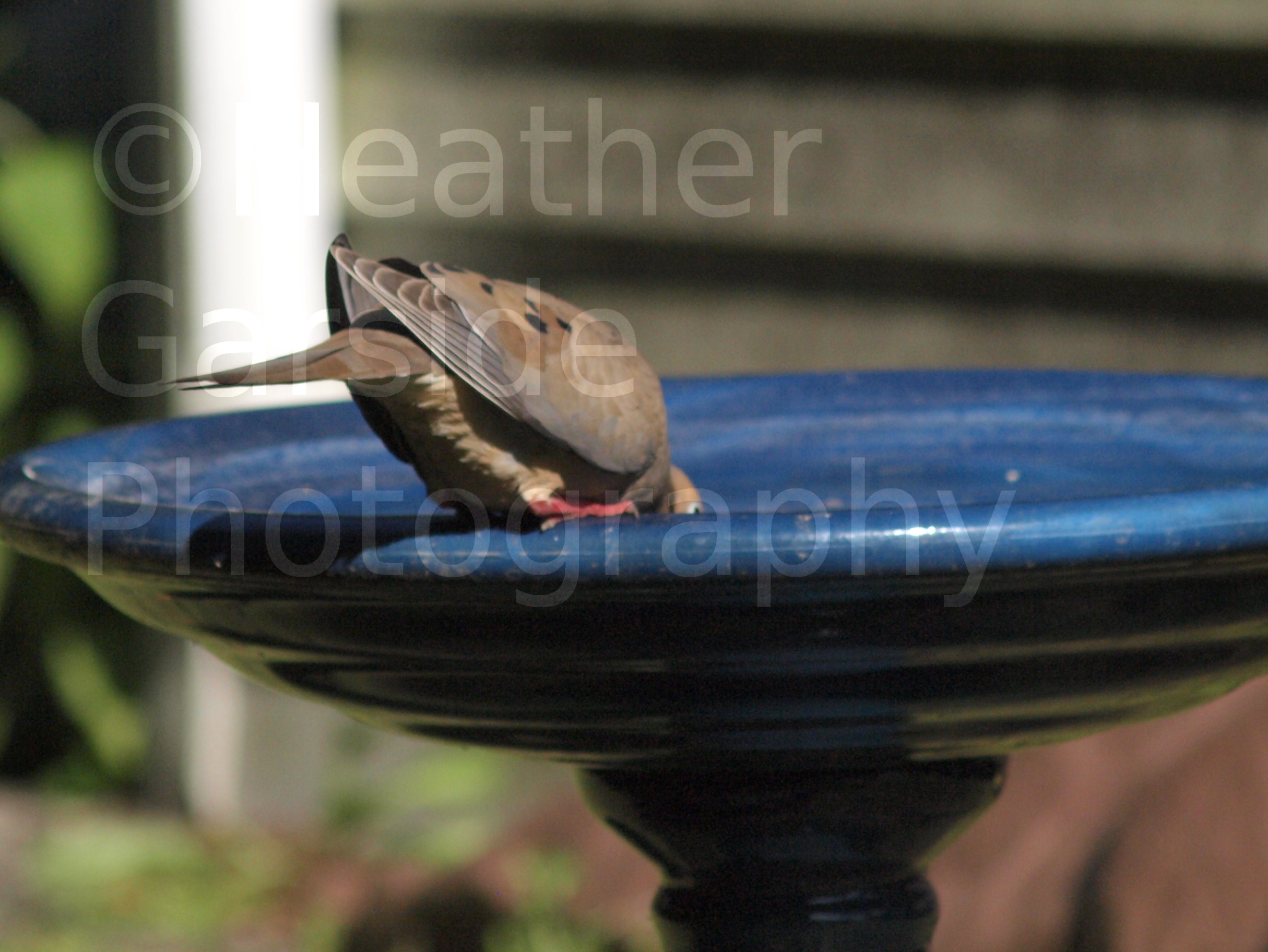
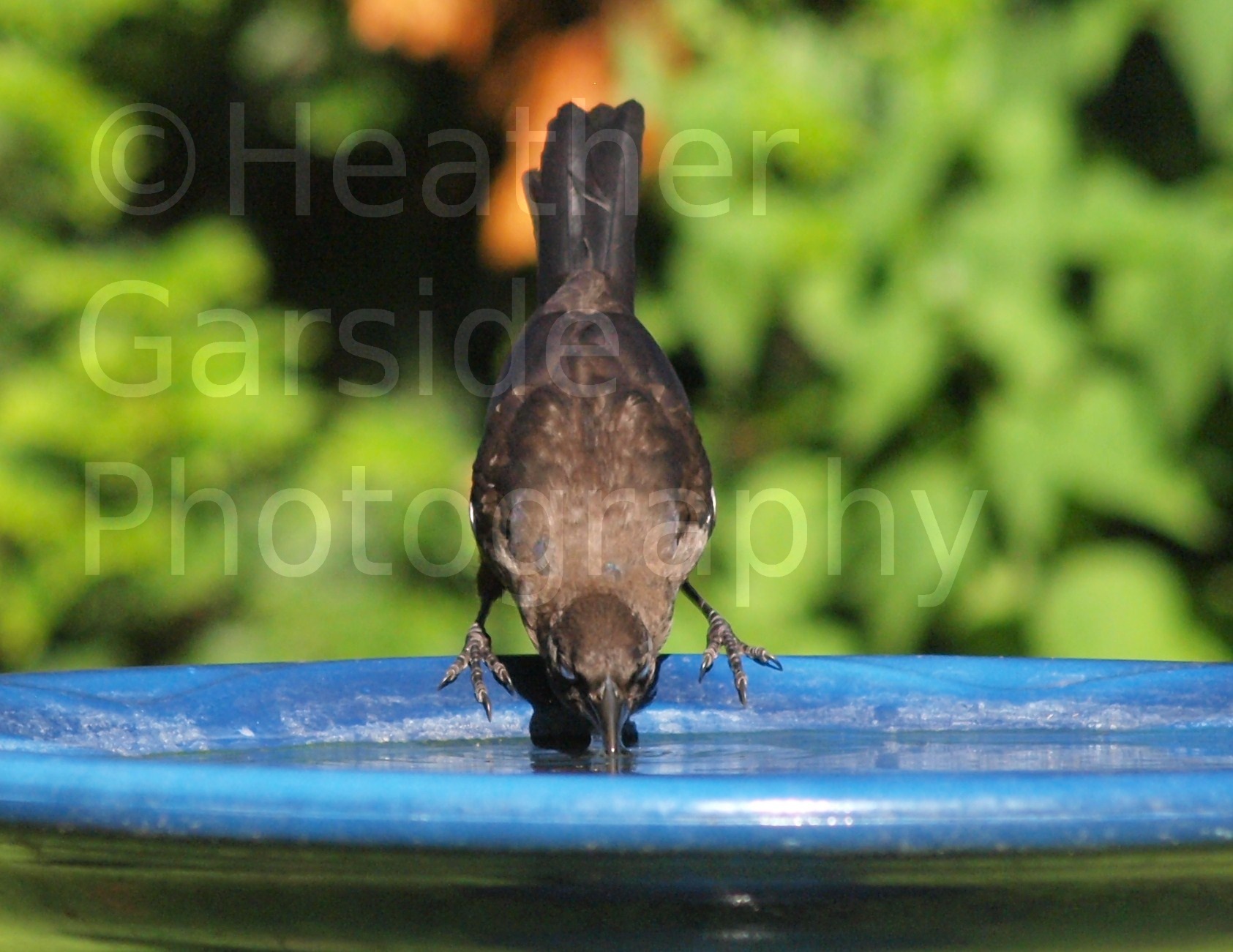
Sometimes they even decided to drink out of it.
Sometimes they even seemed to be scrying the future in its surface.
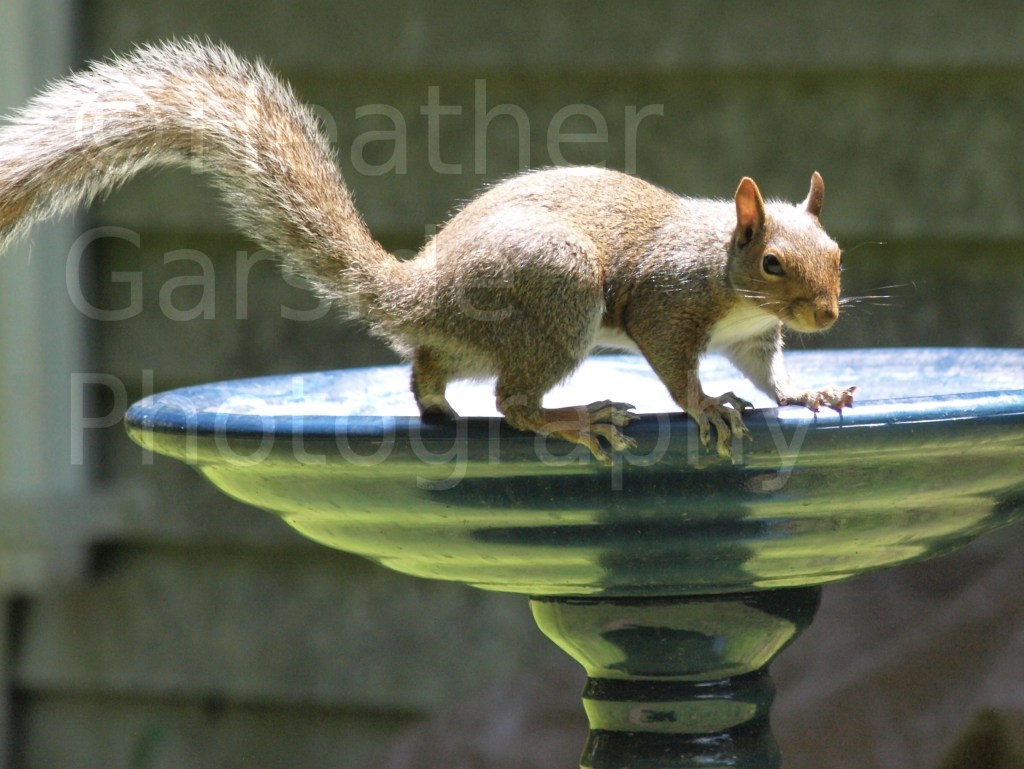
Even the squirrels were drinking from it…and using it as a jumping point onto my feeders whenever they were feeling particularly bouncy.
But no baths, or at least no baths while I was in the yard. Occasionally I would pull in the driveway and there was a bird looking wet and hopping out of the bird bath. But when I am in the yard, armed with my camera and ready for the water droplets to fall, nothing. Maybe they were shy. I don’t know.
Then
one summer day, we had locked ourselves out of our house after an
afternoon of grilling and sitting in the yard. I was frustrated with
the situation and tired of standing over my husband as he tried to
break in to our home, so I took my camera back out, turned my back on
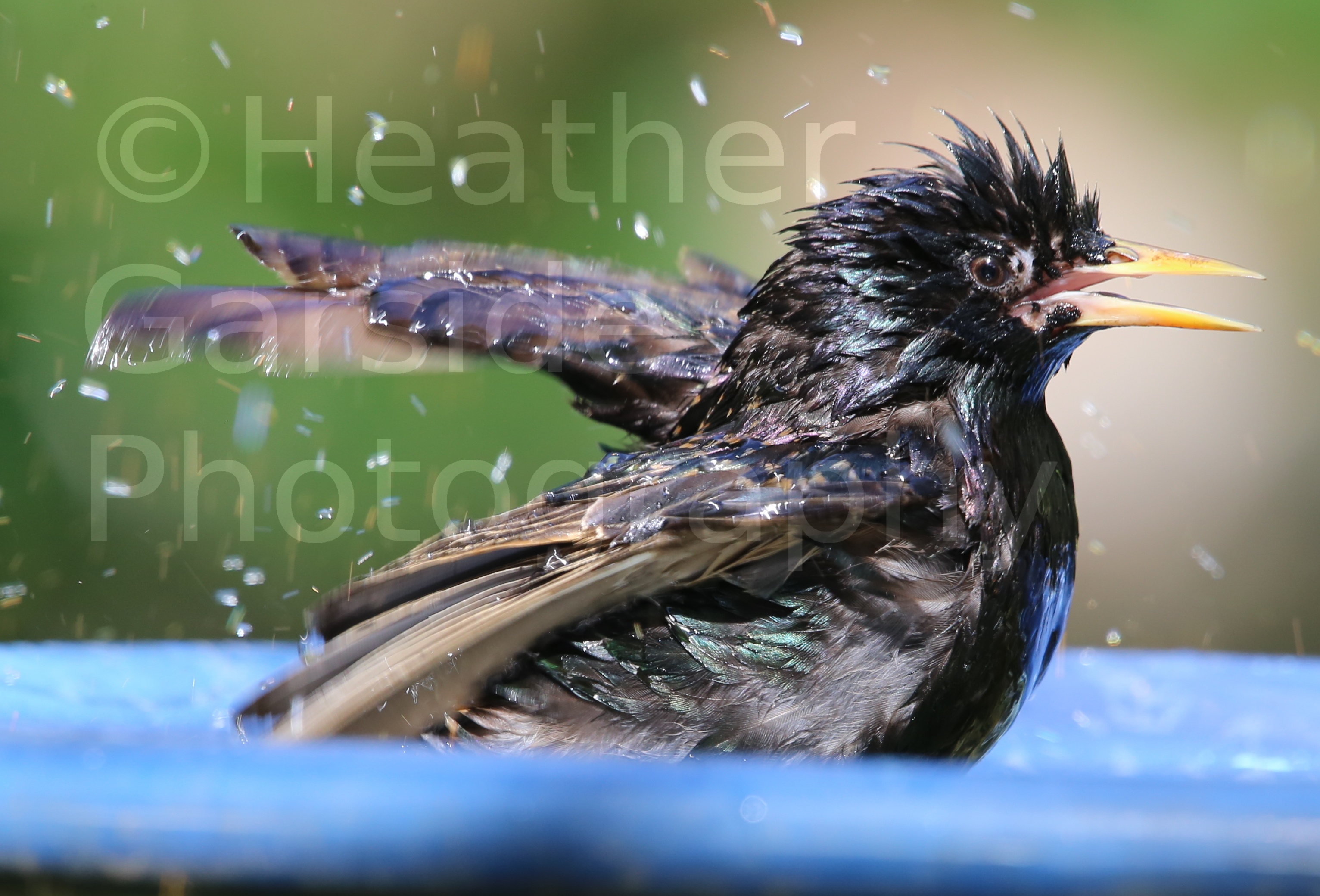
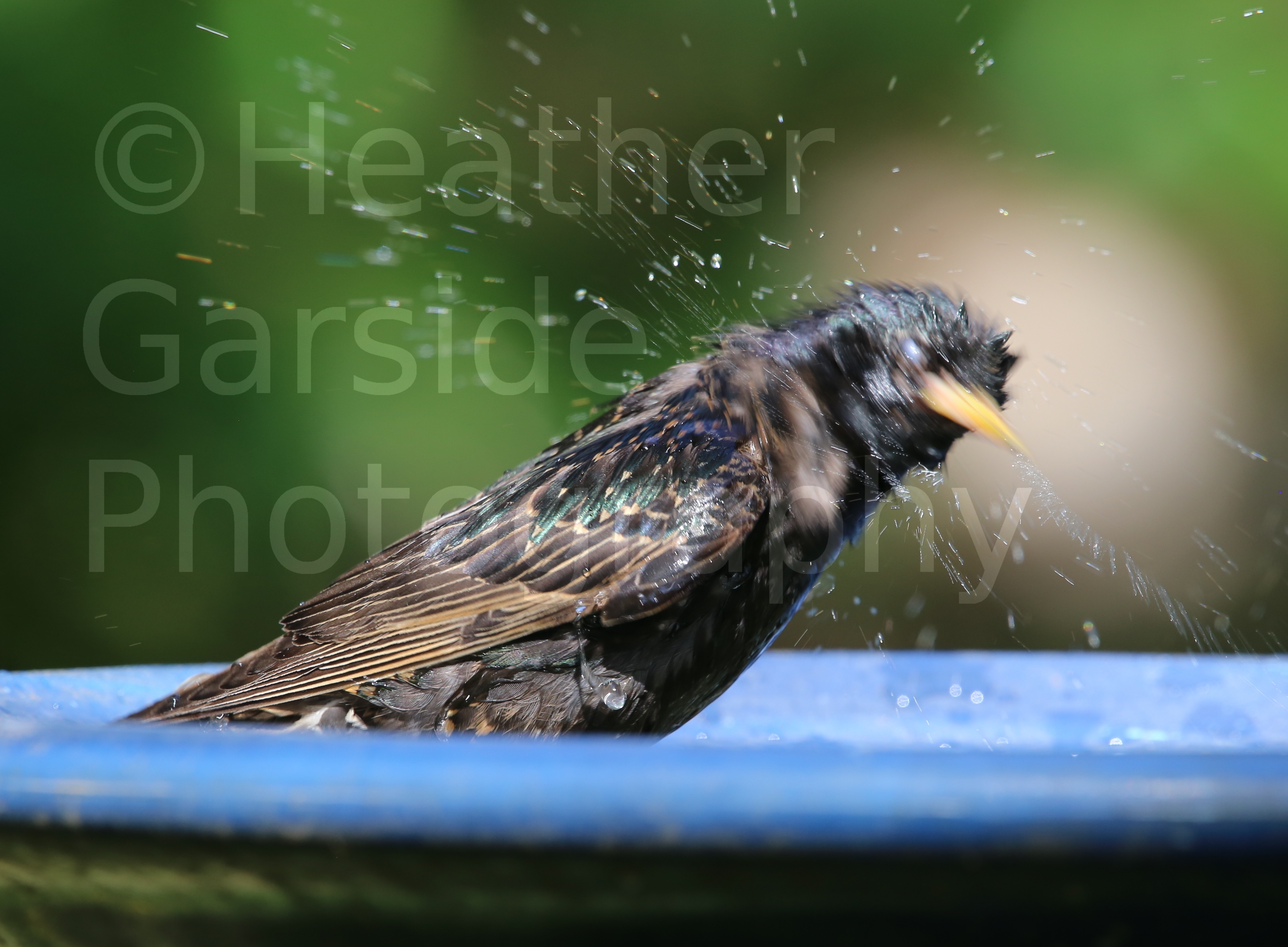
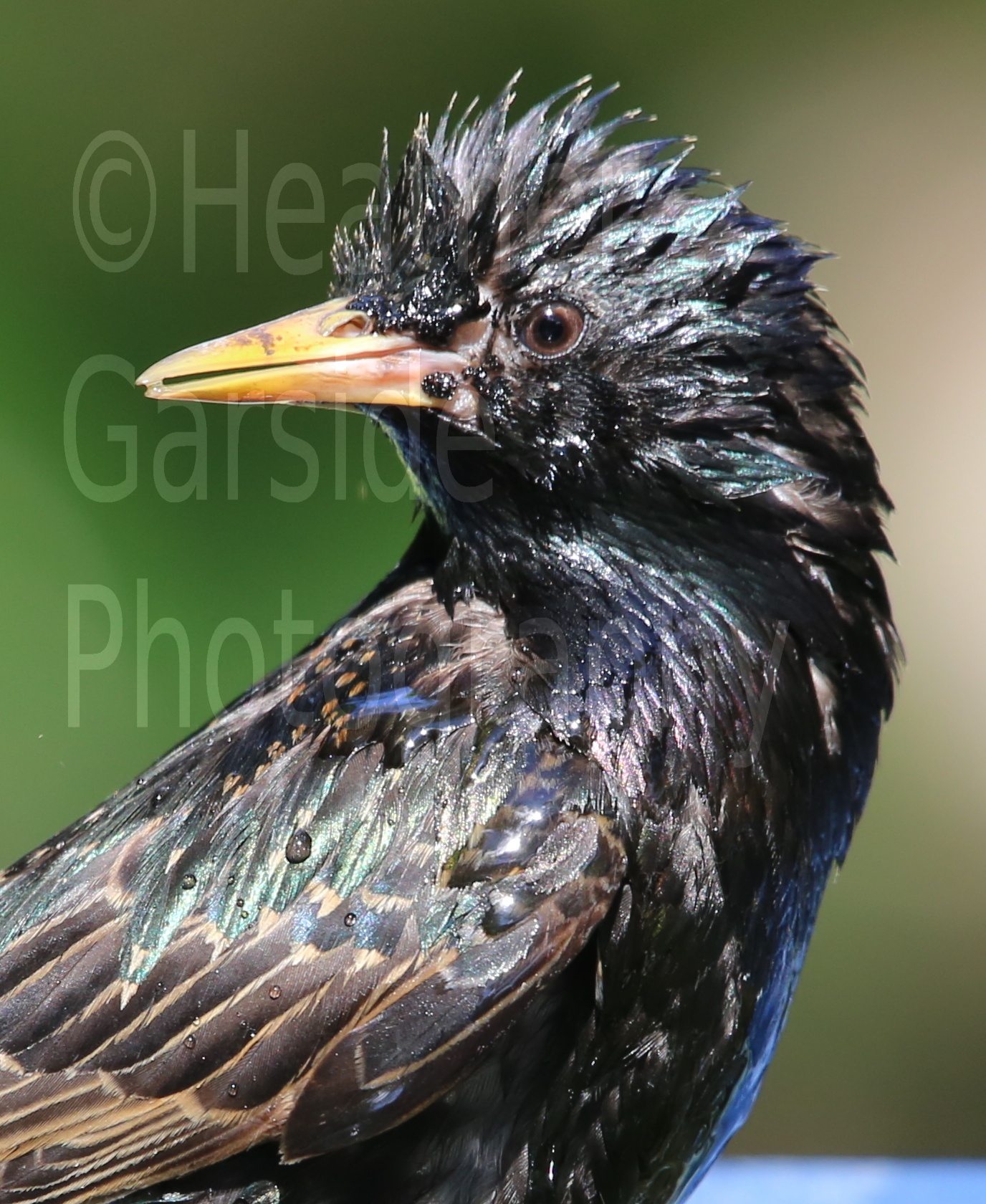
my problems and watched the feeders. Within minutes a Starling landed
on the bird bath. At this point I had been two years with a bird bath
and I knew better than to hope for an actual bath. But I figured if
it perched long enough I might be able to get some interesting shots.
And then it did the unexpected. It stepped off of the ledge, entered
the water and actually bathed. A bird used my bird bath to take a
bath! Amazing!
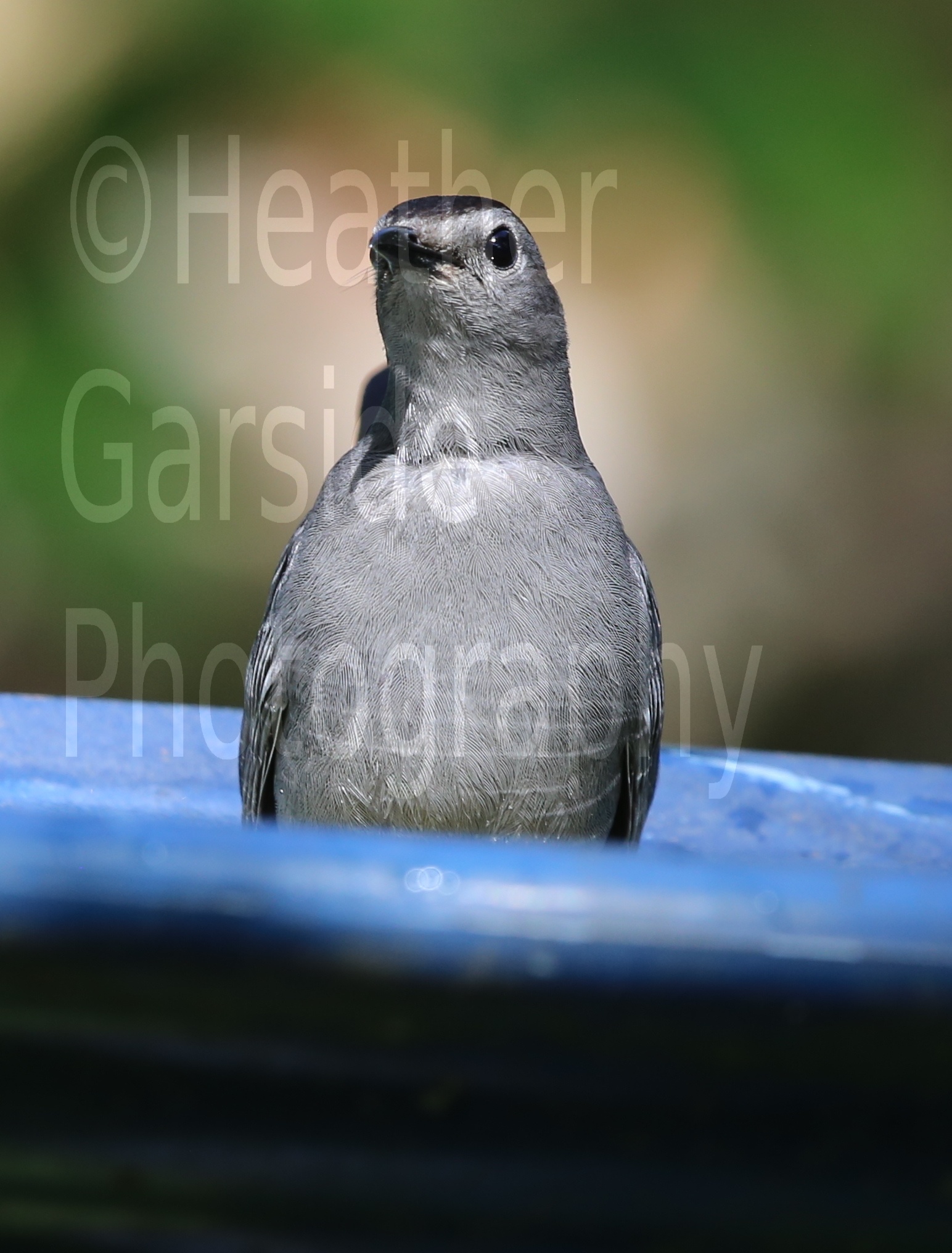
I was so shocked that my frustration with the locked door vanished. My husband didn’t seem to understand the monumental level of excitement about a bird taking a bath in a bird bath, so I left him to his task, feeling great satisfaction that after two years my investment had paid off. I settled back down to watch the feeders some more, assured that we would soon be back in the house, when a Catbird landed on the bird bath. And then he walked into the water. And took a bath.
It is really the little things in life. And the funny part is, if we hadn’t been locked out, I would have been inside cleaning up or something equally mundane and I never would have witnessed these two stupendous baths.
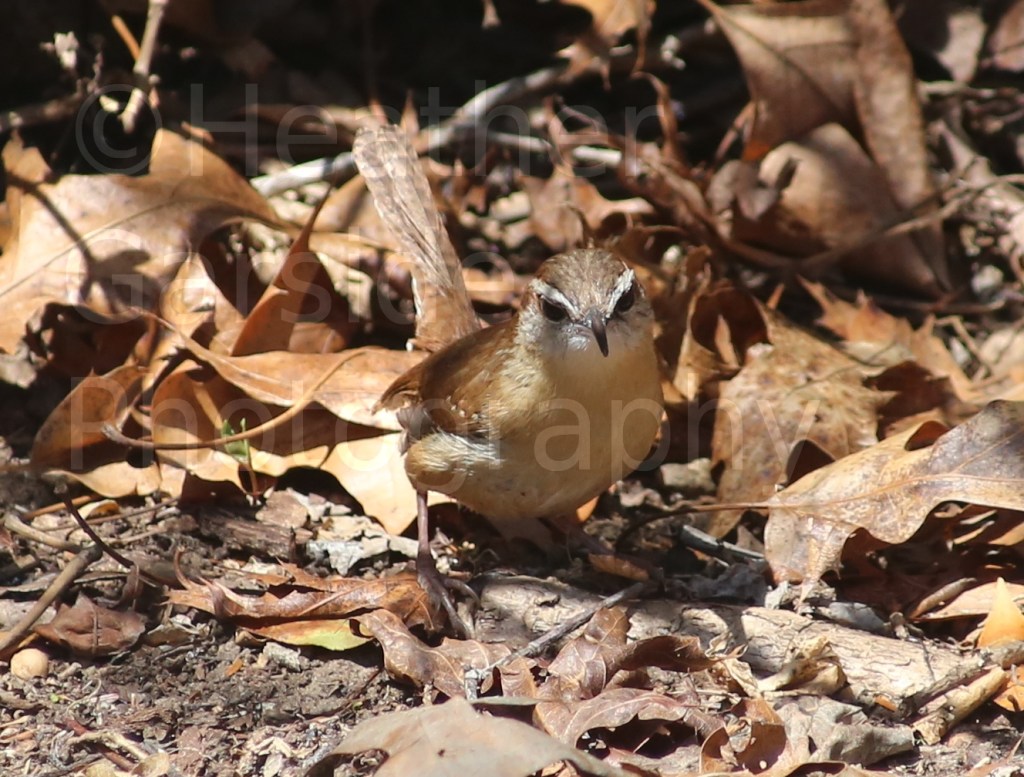
Their small size and general lack of interest in seeds and feeders makes spotting a Wren in the garden more than your run of the mill day in the yard. Not that I wish to imply that Wrens are uncommon. They are pretty common in yards, or at least their songs are. If you don’t know where to look and who you are looking for, spotting a Wren could be a bit of a challenge. Following their song is always a good place to start.
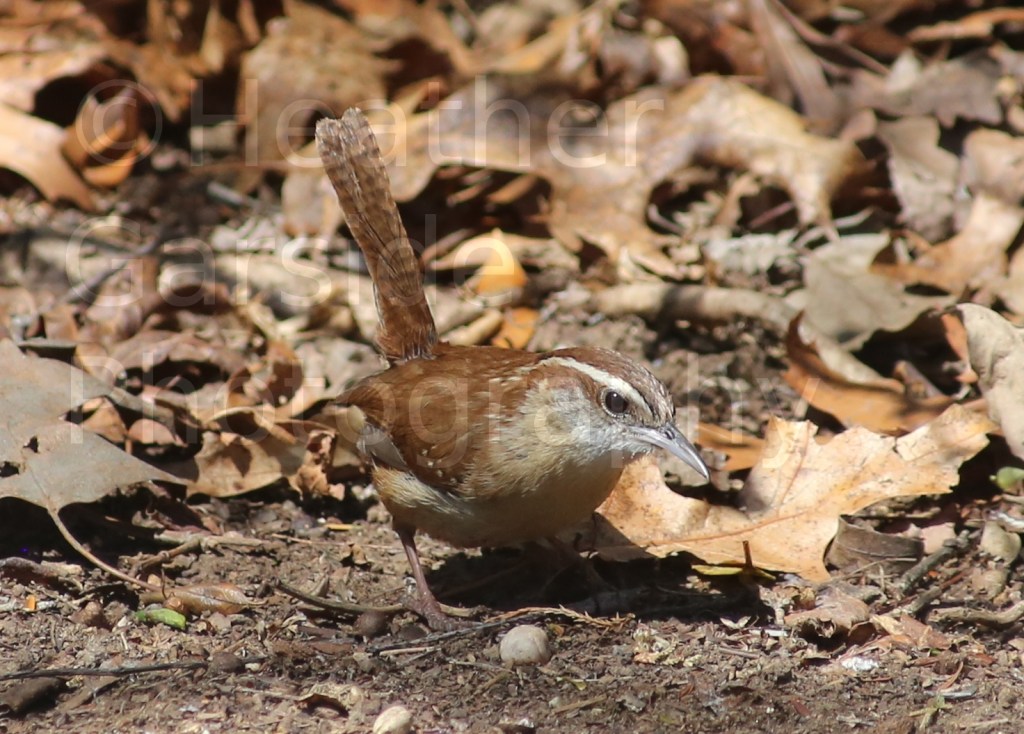
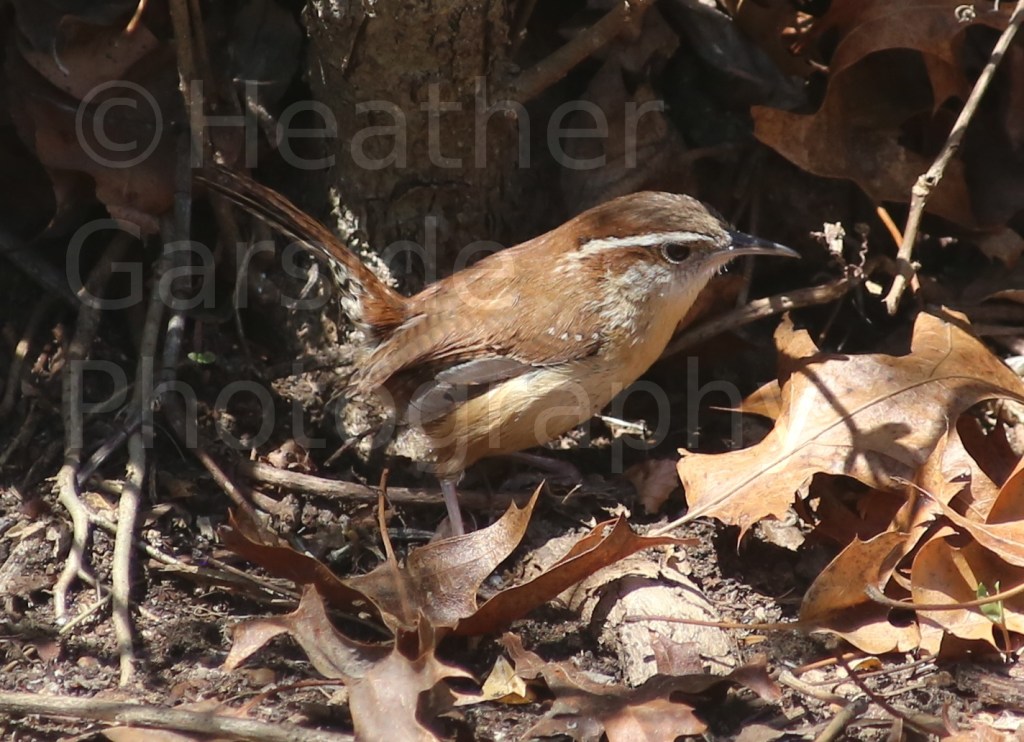
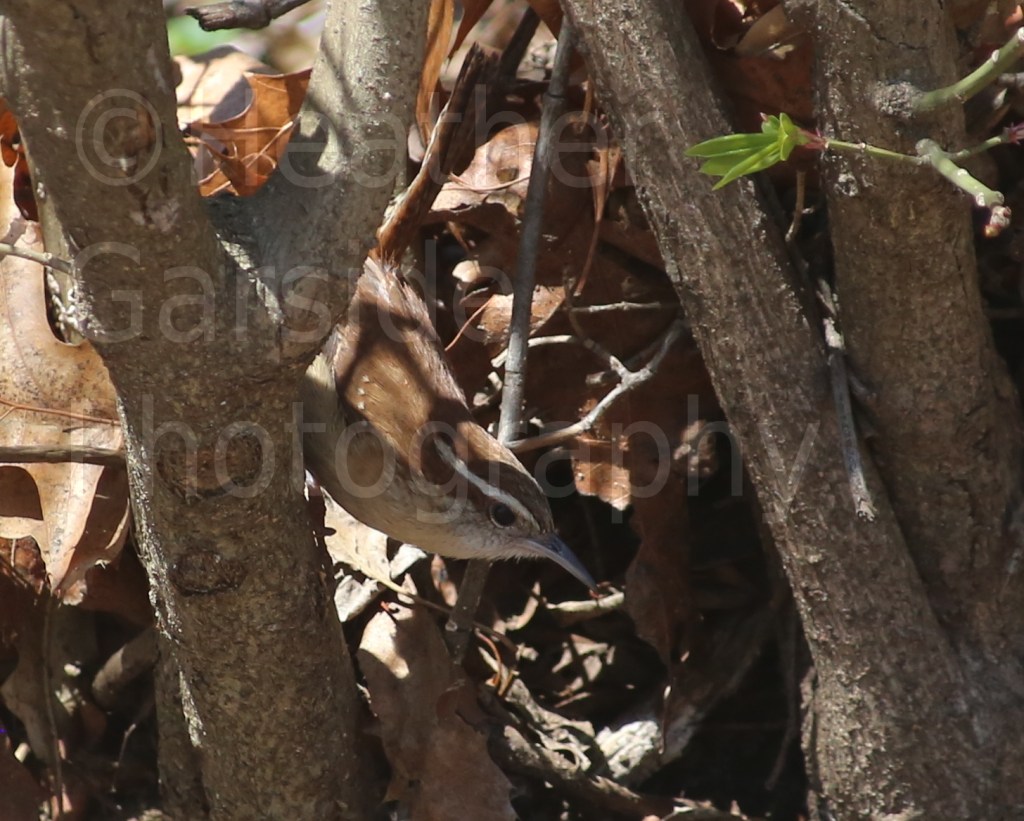
One of six wrens common to the Northeastern United States, the Carolina Wren is easily the most distinct. They are the same size as their fellow Wrens and have a similar body type, including a brown body and down-curved beak. However, what sets them apart is their distinct white eyebrows. Their chest is also brighter than other Wrens, starting white toward their heads and fading into yellow halfway down their chests.
Carolina Wrens prefer good cover in bushes or shrubs, but these songbirds can’t help themselves, they keep bursting into song. Each male sings between twenty-seven and forty-one songs and the males and females have been known to sing duets. The pair will mate and remain monogamous for an entire breeding season, having two broods. Due to their need for cover, they tend to look for natural cavities in which to create a nest.
While they will occasionally eat fruit or seeds, this is rare. Their
primary diet is insects. This interest in bugs makes them a common
ground hunter. Look for them around leaf piles and tree roots, poking
around and searching for insects.
Occasionally we get bored with walking the same trails all the time and we seek a new adventure a bit outside our normal realm. One weekend we decided to check out Tourne County Park in Morris County New Jersey (https://www.morrisparks.net/index.php/parks/tourne-county-park/ ). Overall, I think it was a lovely park, nice trails and very well marked. We decided to hike to the top of Tourne, (in the process I was lapped by a group of seniors, literally walking up the hill with their canes….I don’t really like hiking uphill) where the overlook was completely blocked by vegetation.
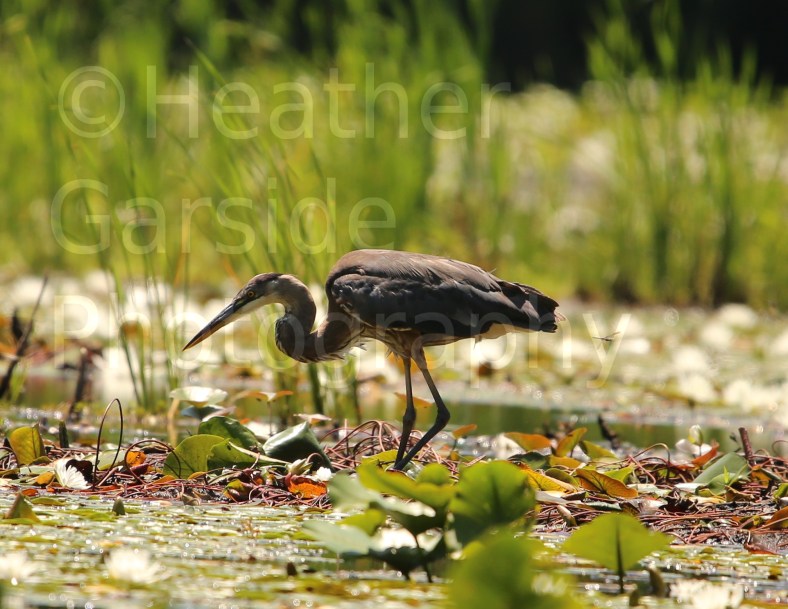
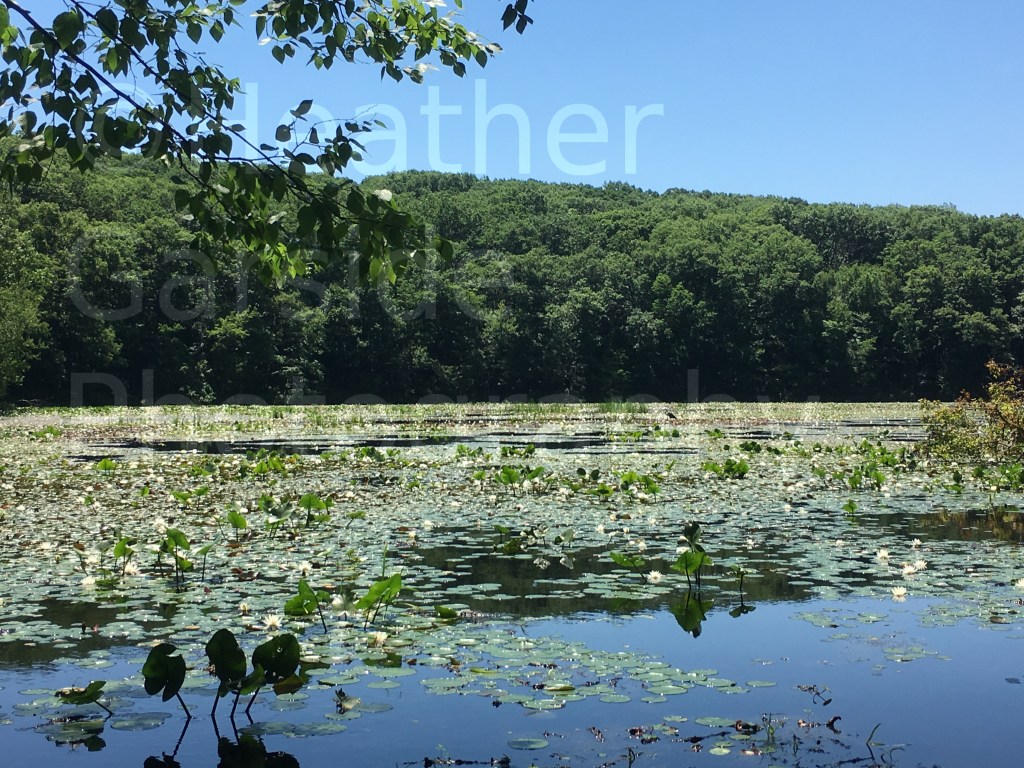
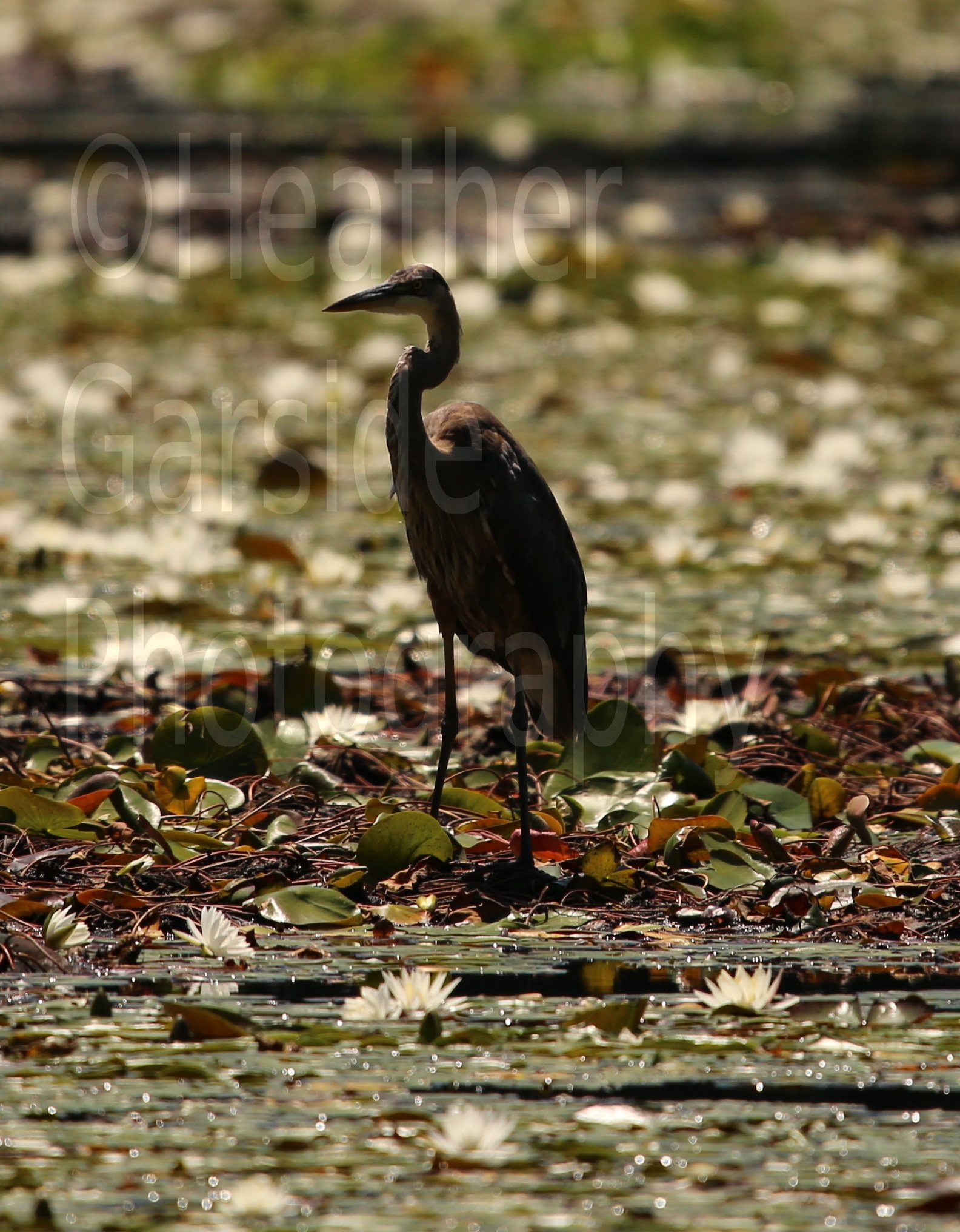
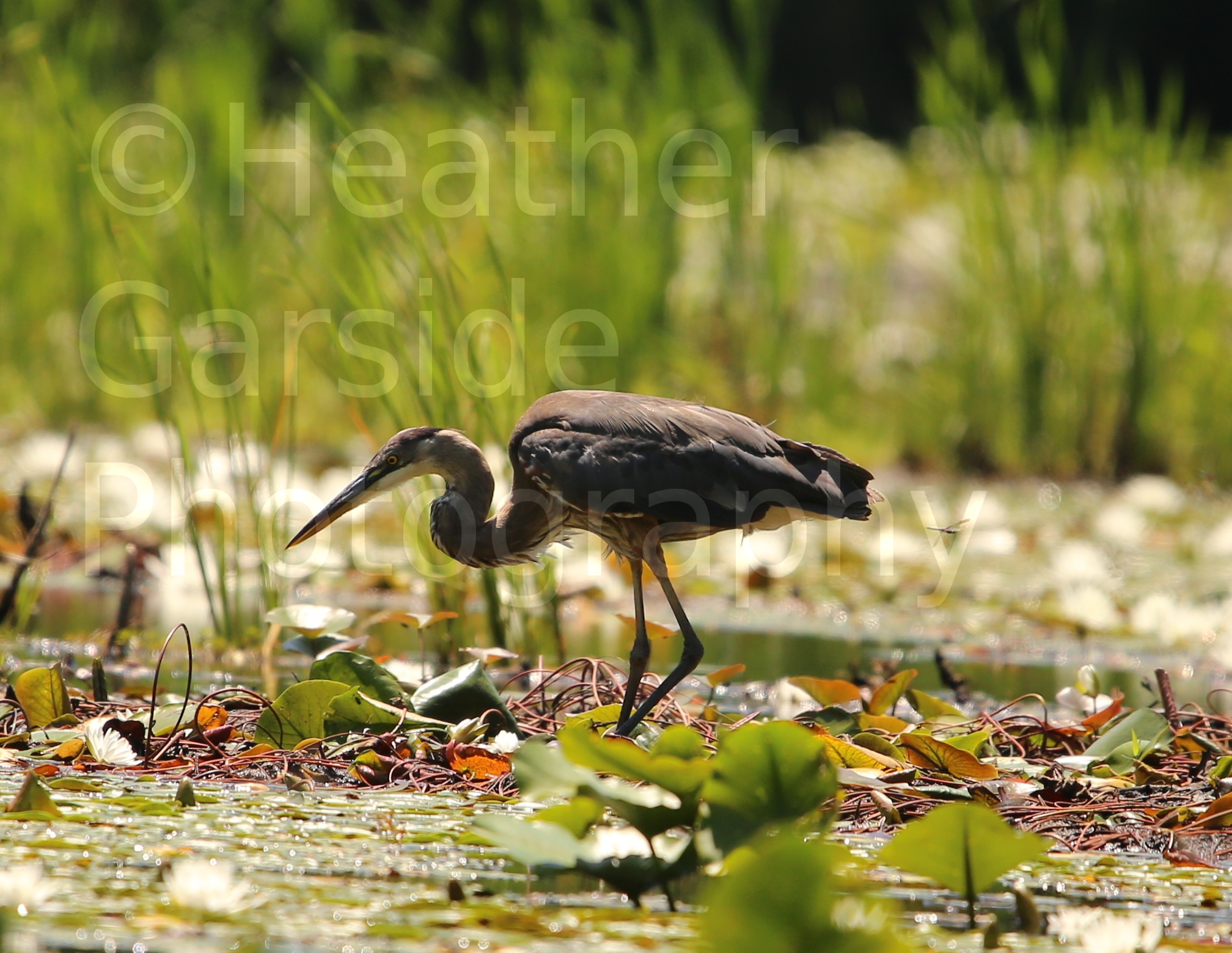
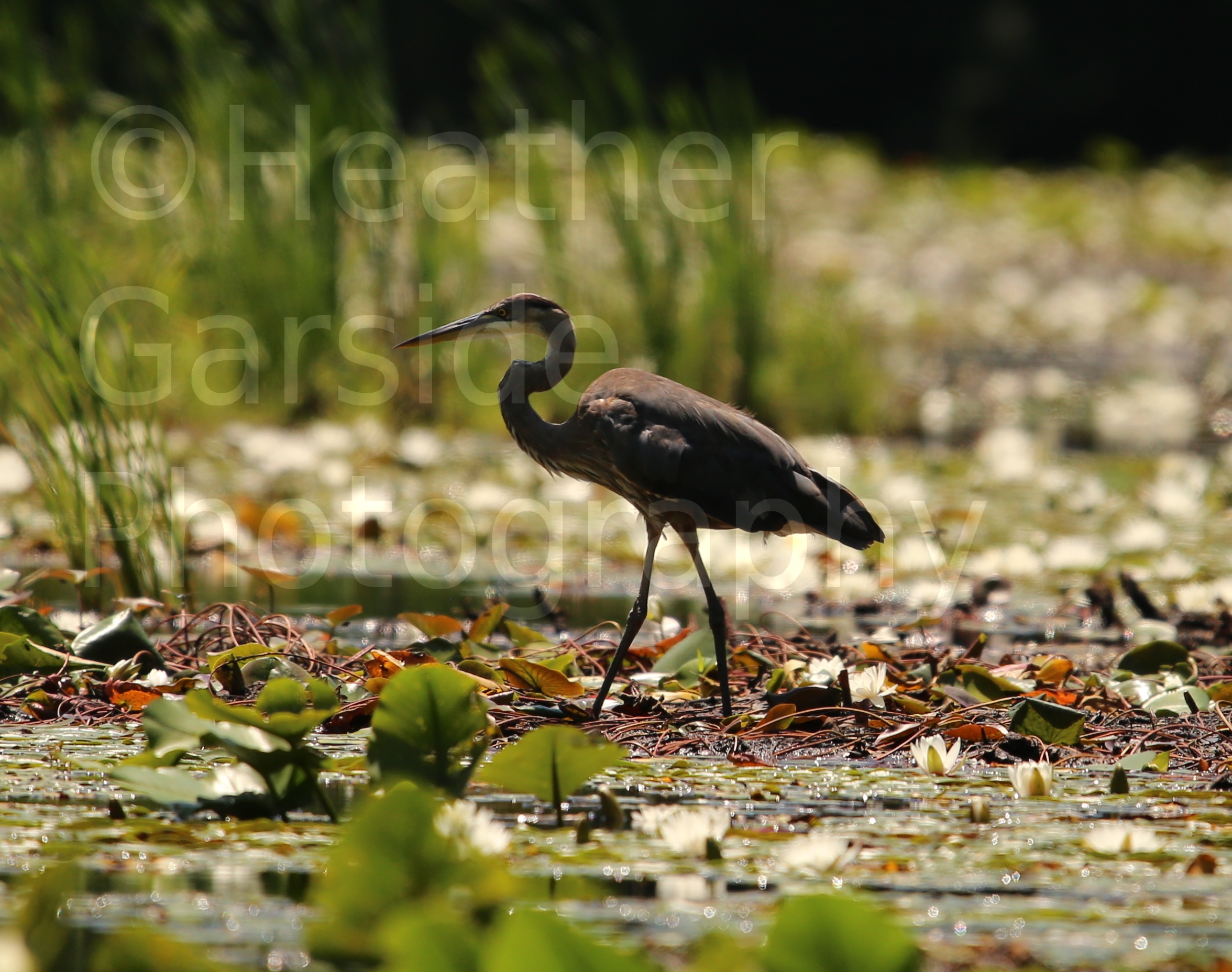
After that minor hiccup, we took the Red trail which walked us around much of the perimeter of the park. It was all very nice and enjoyable (if a bit muggy) but the highlight was Birchwood Lake. We had stopped to admire the water lilies and the dragonflies. A juvenile Great Blue Heron came to do a bit of fishing, so we sat by the side of the pond for almost a half-hour, to see what he would catch. Great Blue Herons don’t need to see their prey. When they place their bills in the water, they just try to touch prey. Once they touch something they have a rapid reflex which snaps their bills closed. Unfortunately for this guy, he didn’t seem to be very successful.
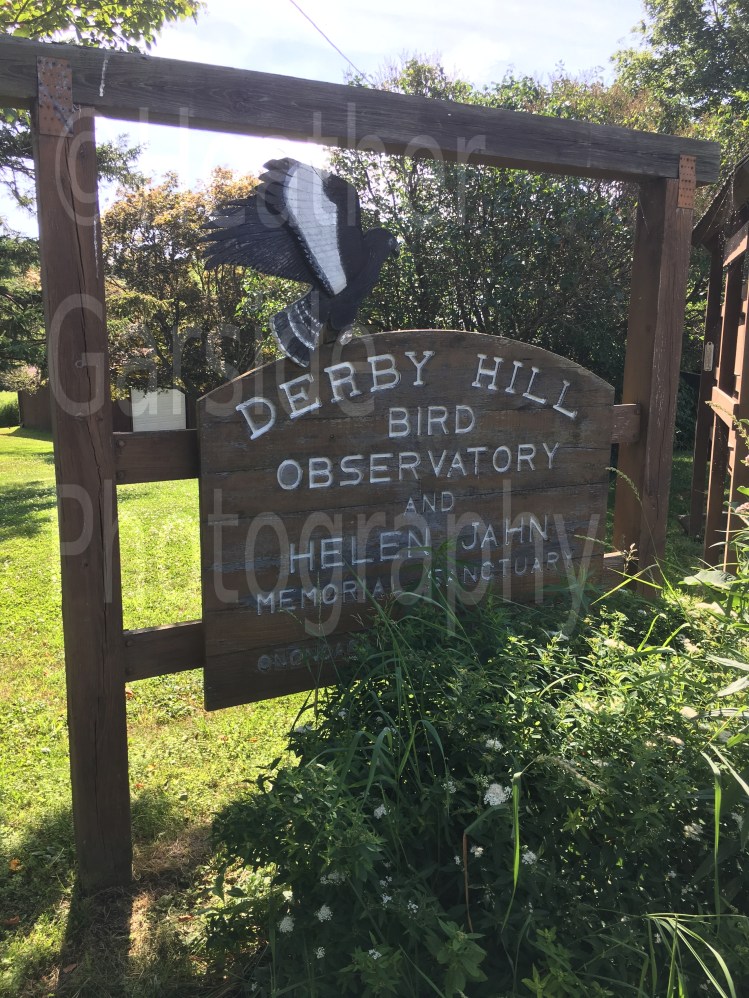
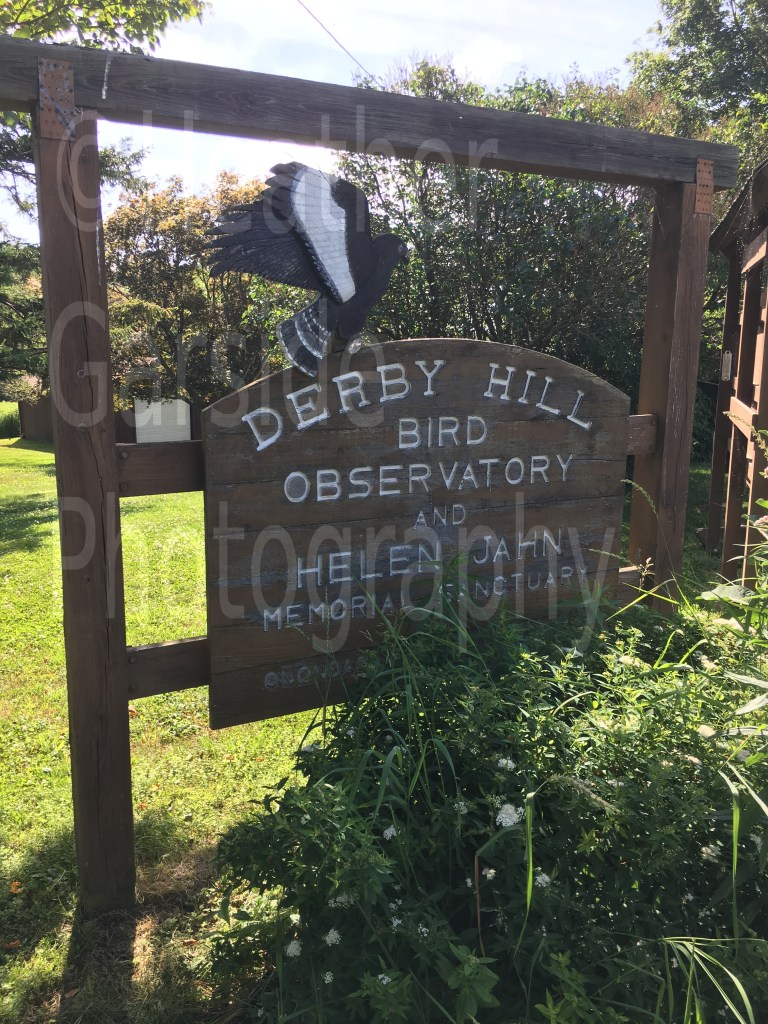
“Oswego is where we go…” Most of the summers of my life have been spent, at least in part on the edge of Lake Ontario. Yet, considering all that time, I discovered the Derby Hill Observatory only a few years ago. I guess I needed the extra interest in birds to motivate me to turn down the dead end road and find the Observatory.
Operated by the Onondaga Audubon, Derby Hill Observatory has a strong
focus on watching birds of prey. Their website claims they count
about 40,000 raptors each spring, so I guess the focus is justified.
(https://onondagaaudubon.com/derby-hill-bird-observatory/)
The observatory’s lands include a small strip of cliff at the
lake’s edge, a true novelty as the rest of the road is crammed with
homes along the water’s edge. This, especially given its height,
provides a great vantage point to observe fishing osprey and other
birds of prey. In fact, the first time I visited, we were meandering
over to the edge and there was a flash of Bald Eagle. By the time I
ran to the edge, it was out of sight. I haven’t seen another Bald
Eagle in any subsequent trips (I have only visited about 3 or 4
times), but I keep hoping!
The
Observatory is actually split up into about four or five sections,
but the main parking area provides you access to the lake overlook,
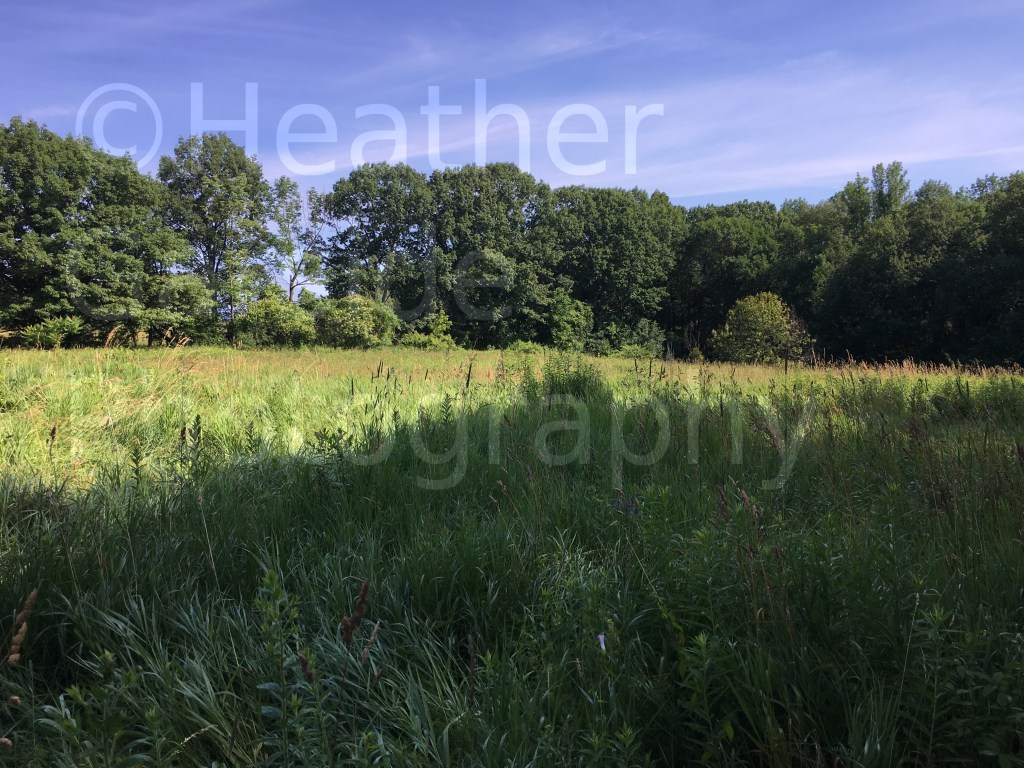
as well as four fields (with a mowed perimeter) and a woodland trail.
If you follow the meadows down the road, you can also cross over to
the marsh space, but it is a very small section, better for watching
than walking.
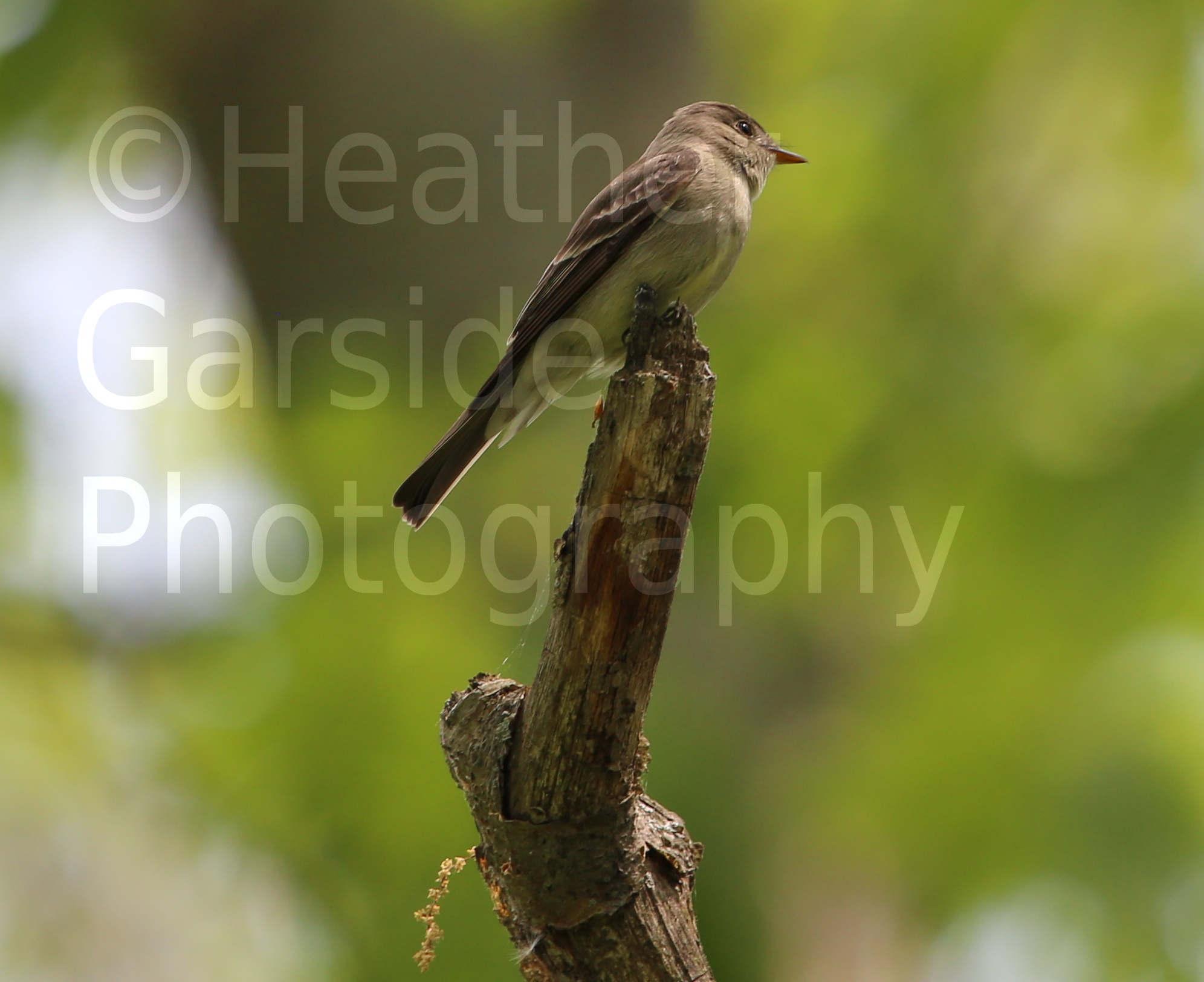
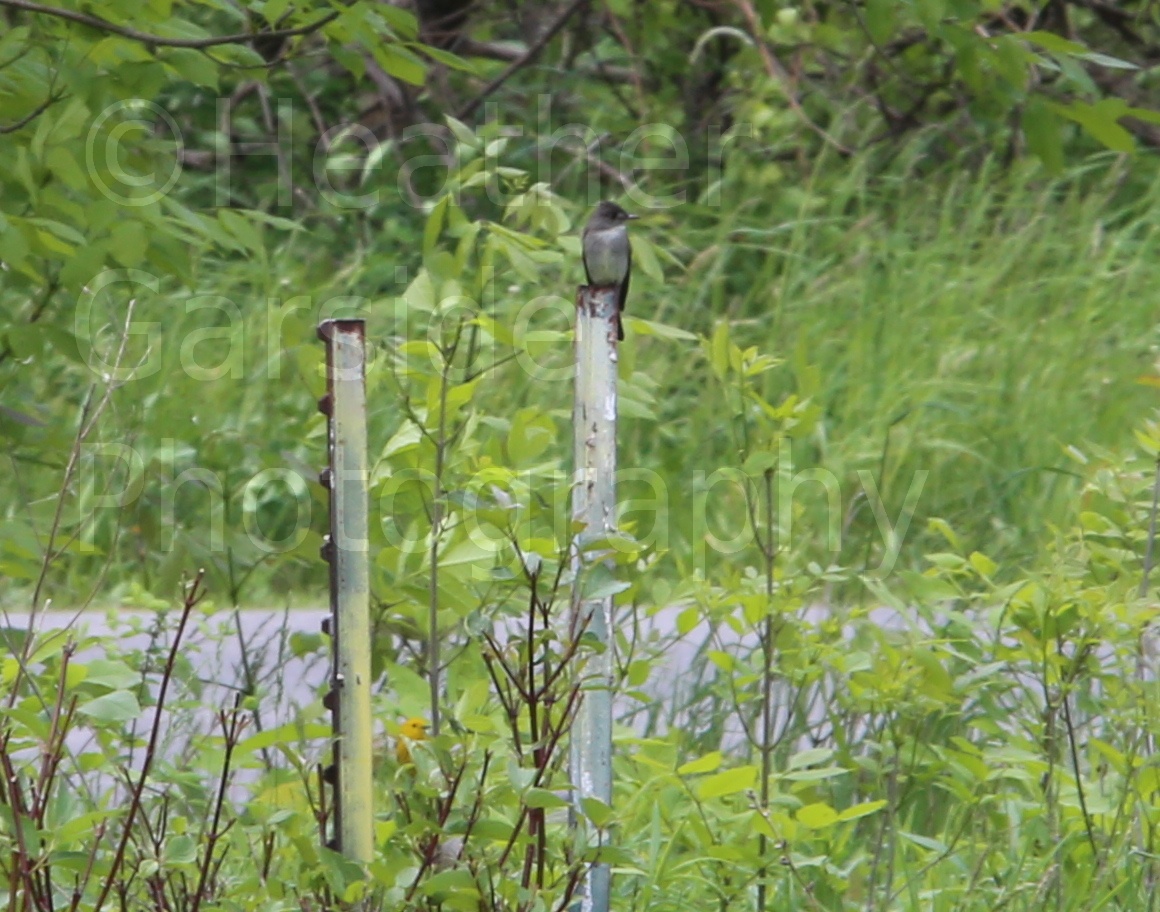
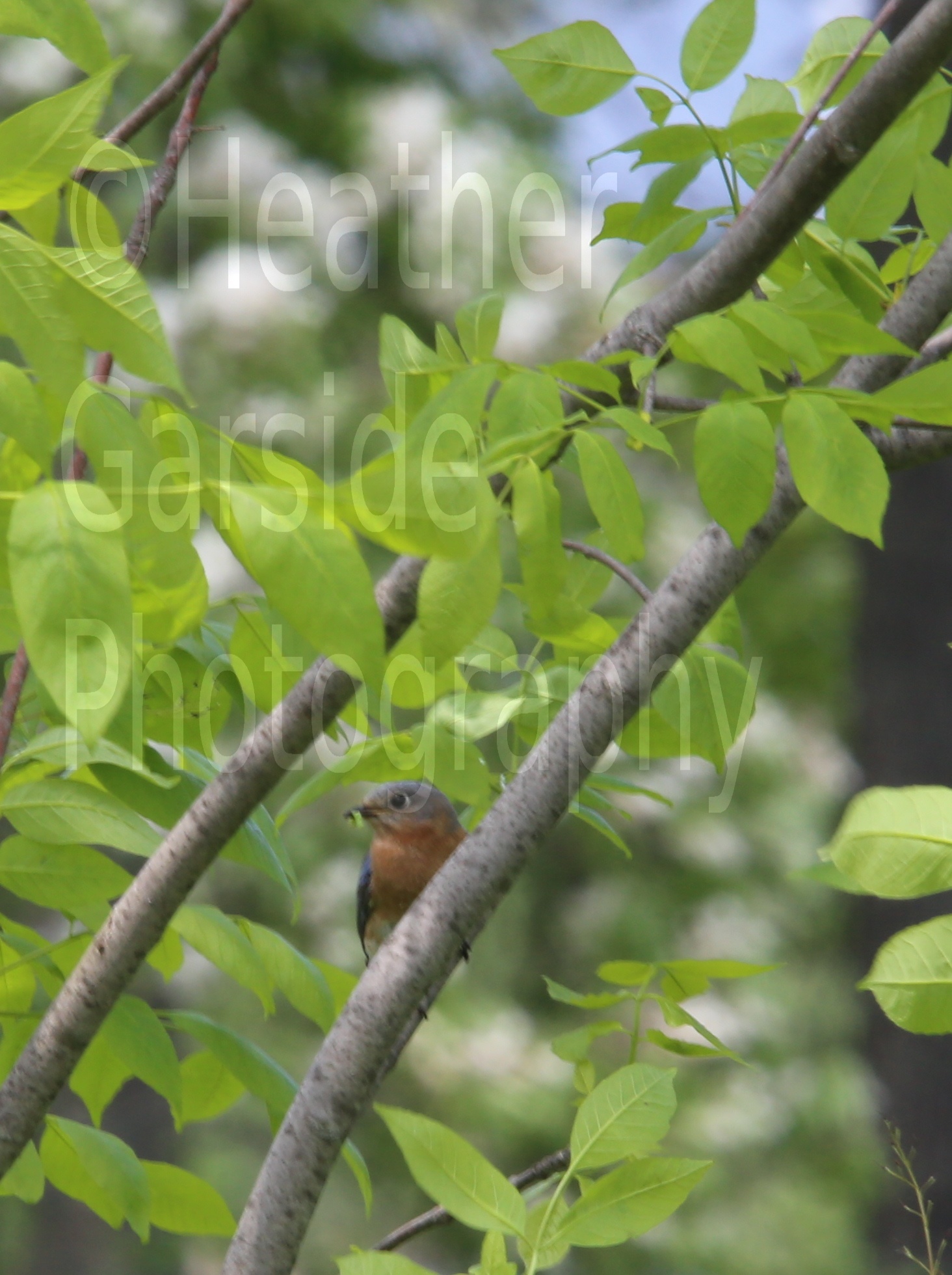
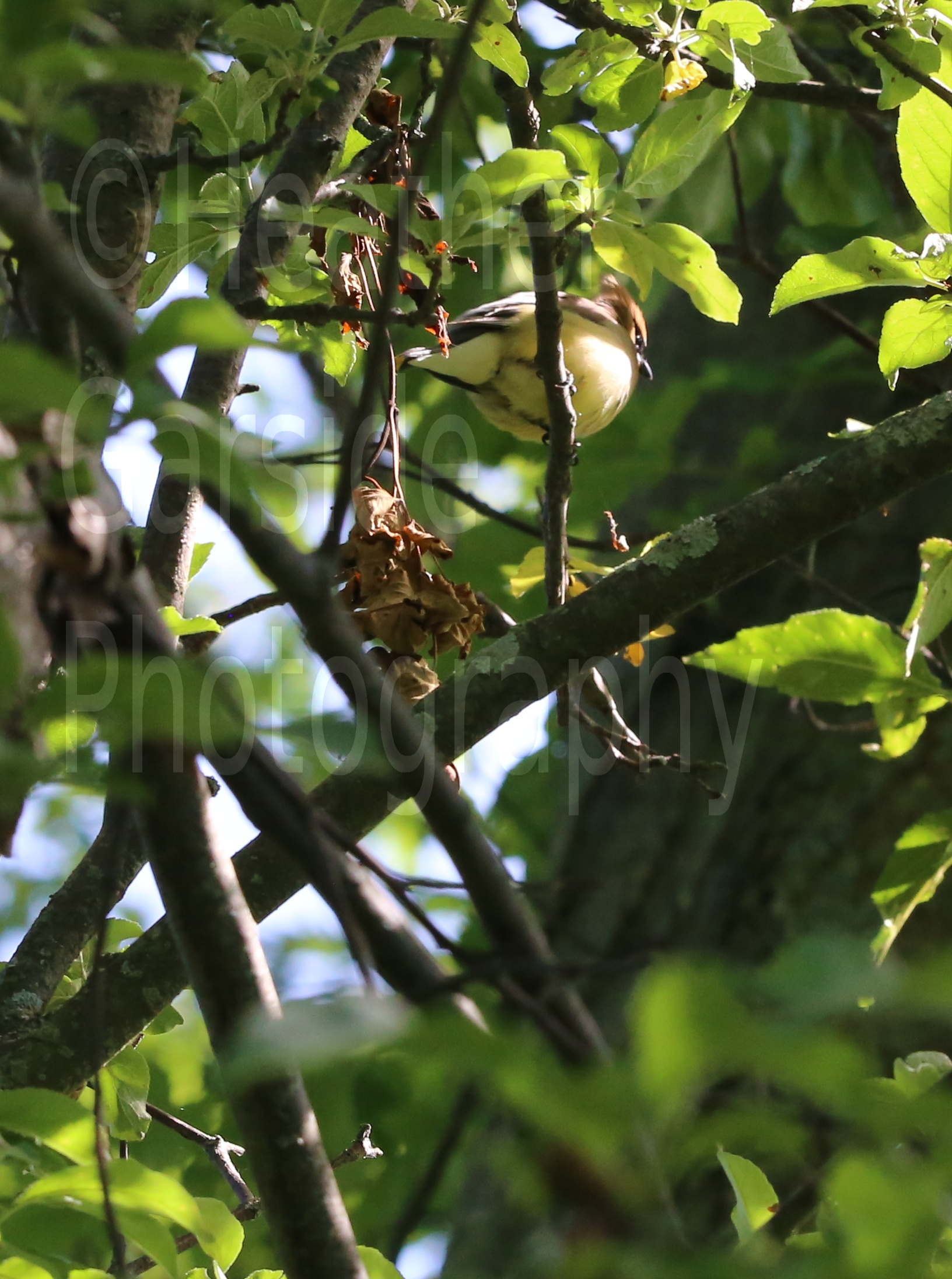
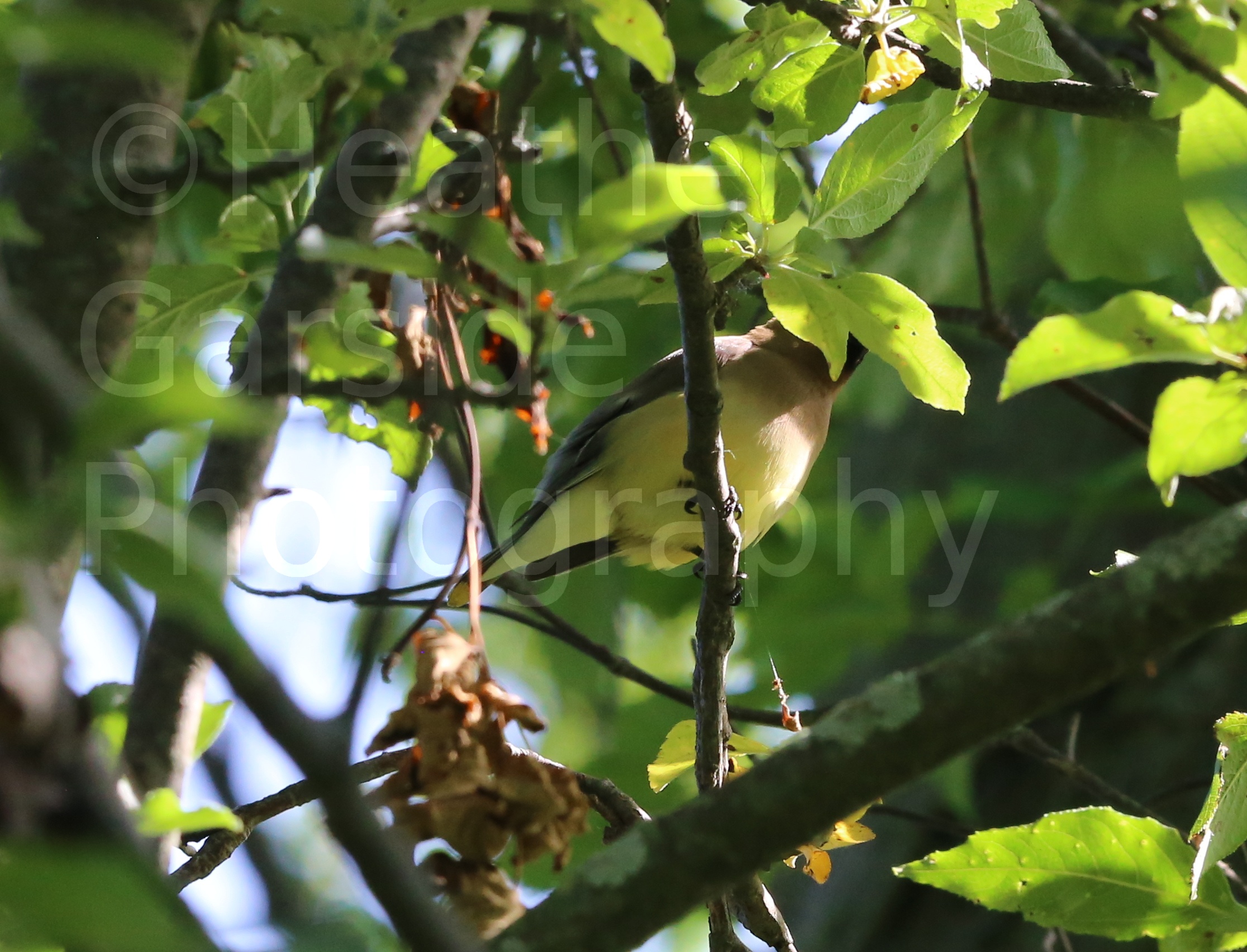
There is no doubt that there are many birds residing in and around the Observatory. The trees just reverberate with bird calls and chirps. But I have never been very lucky at spotting many birds when I visit. The Scarlet Tanger manages to be particularly elusive, but I have seen a few other birds that are outside of my regular milieu. This included an Eastern Bluebird, Eastern Phoebes (juvenile as well as adult) and a young Cedar Waxwing, chowing down on some berries.
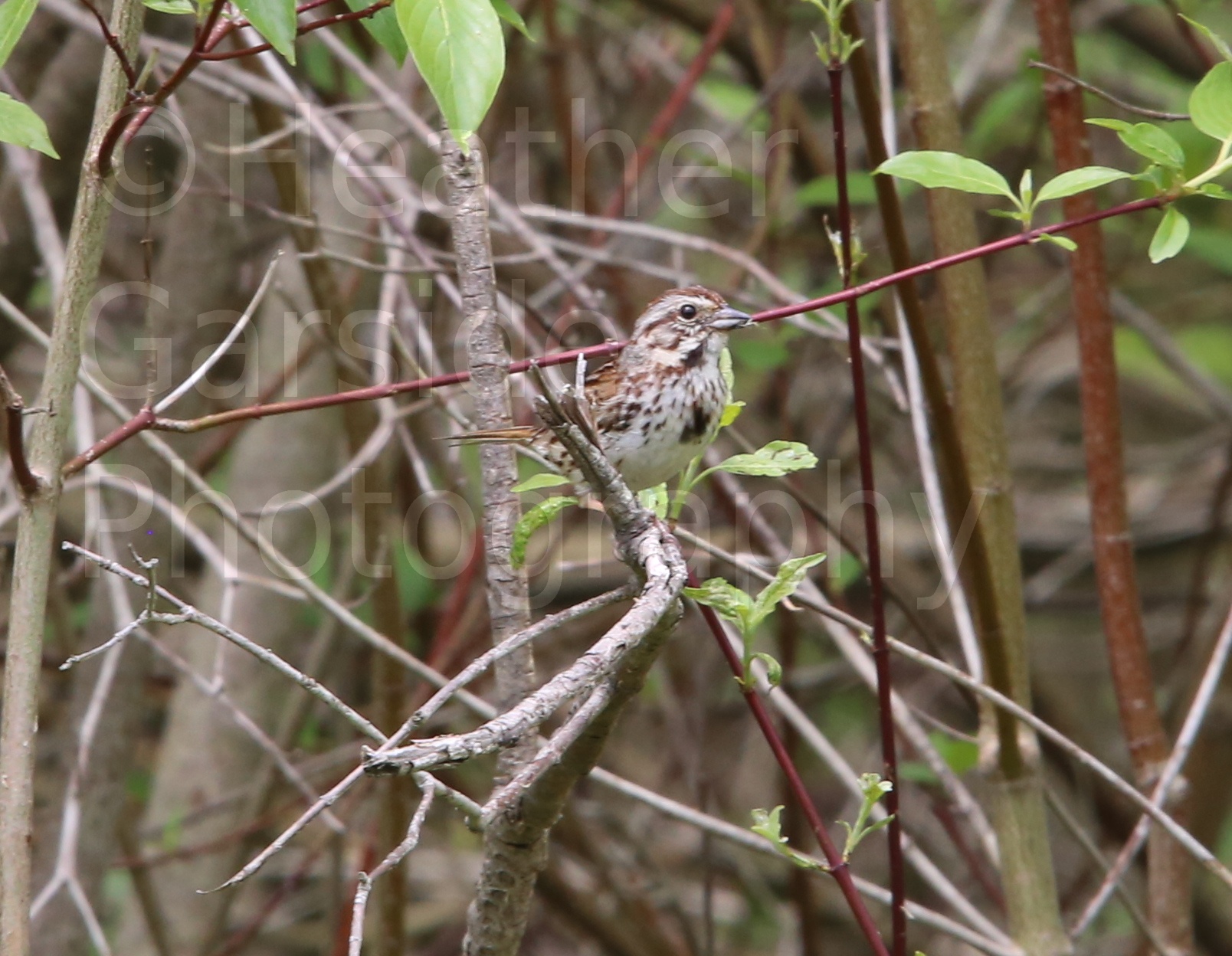
Along with some birds I am more familiar with, including Robins, Red-Winged Blackbirds and Song Sparrows.
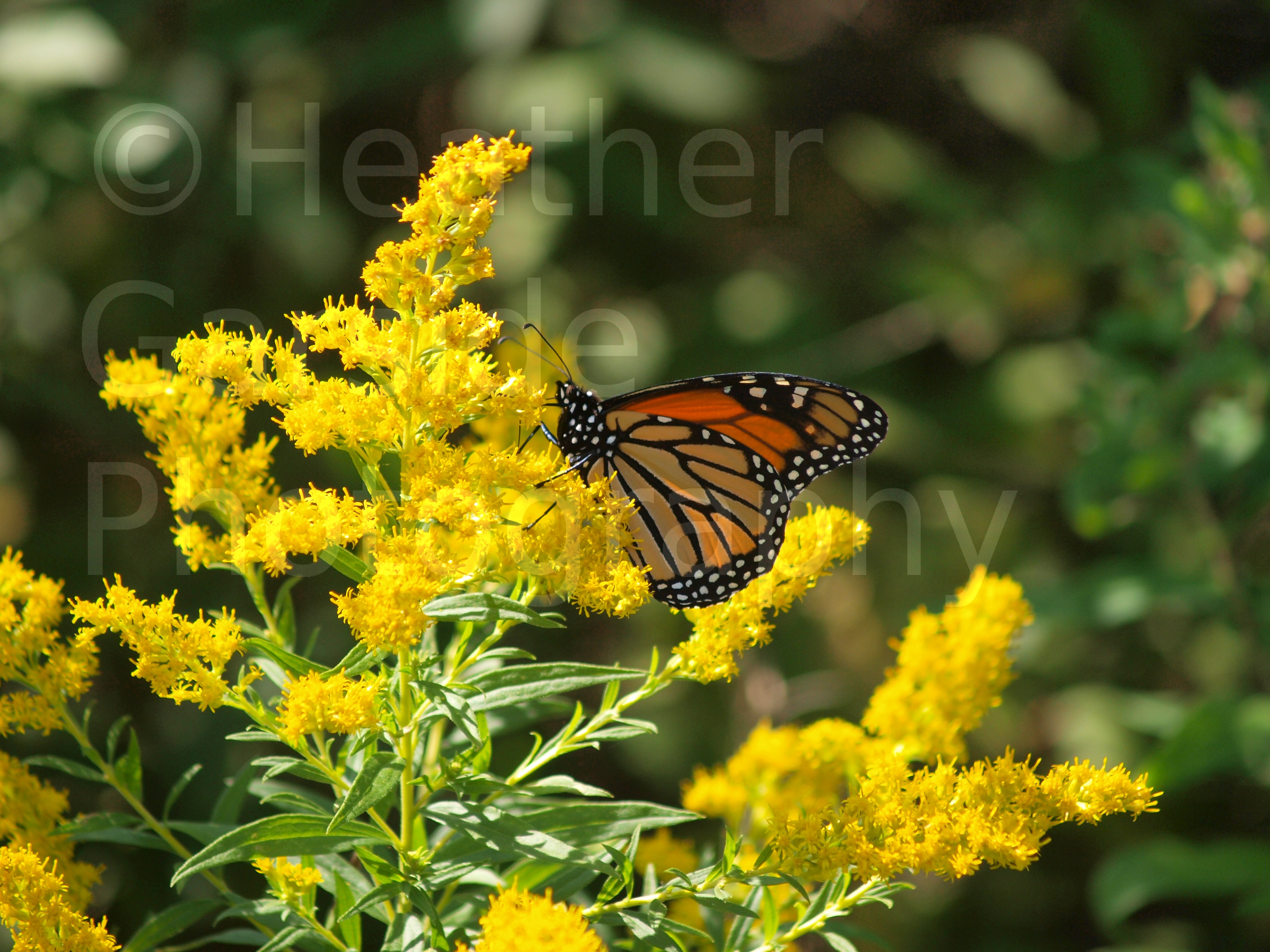
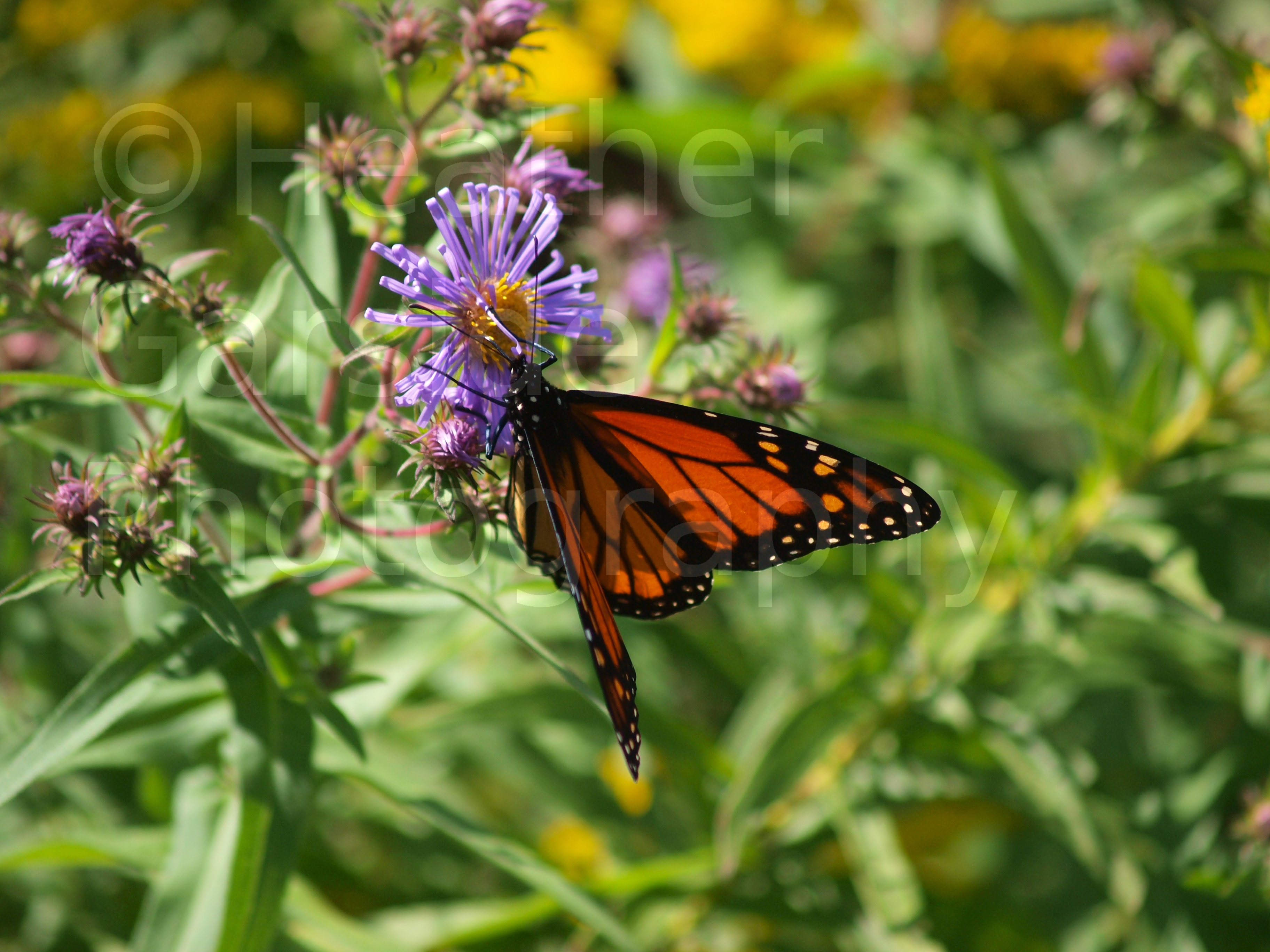
The meadows do have another big perk… butterflies are everywhere! You also see some great frogs and other woodland creatures if you are lucky.
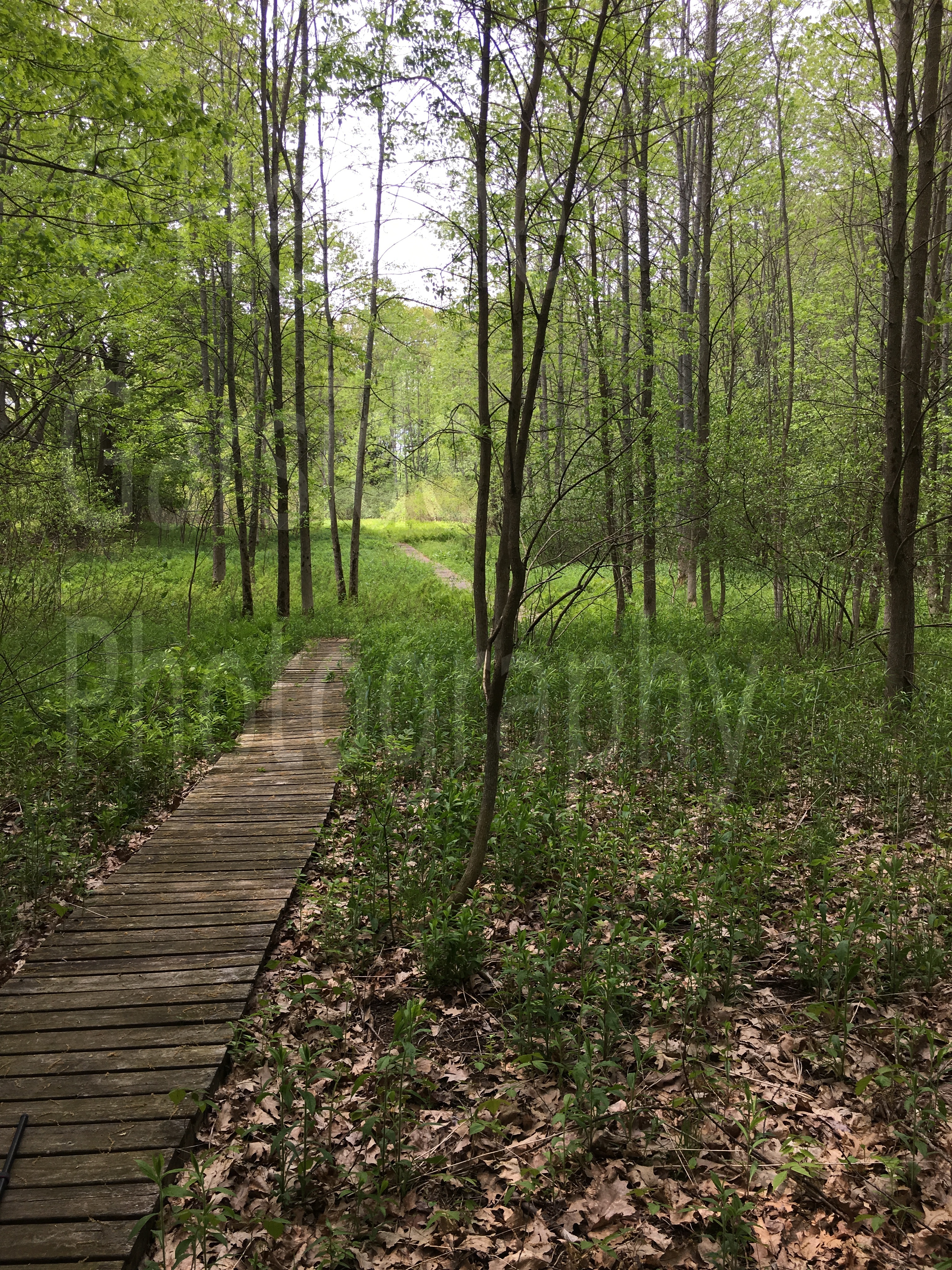
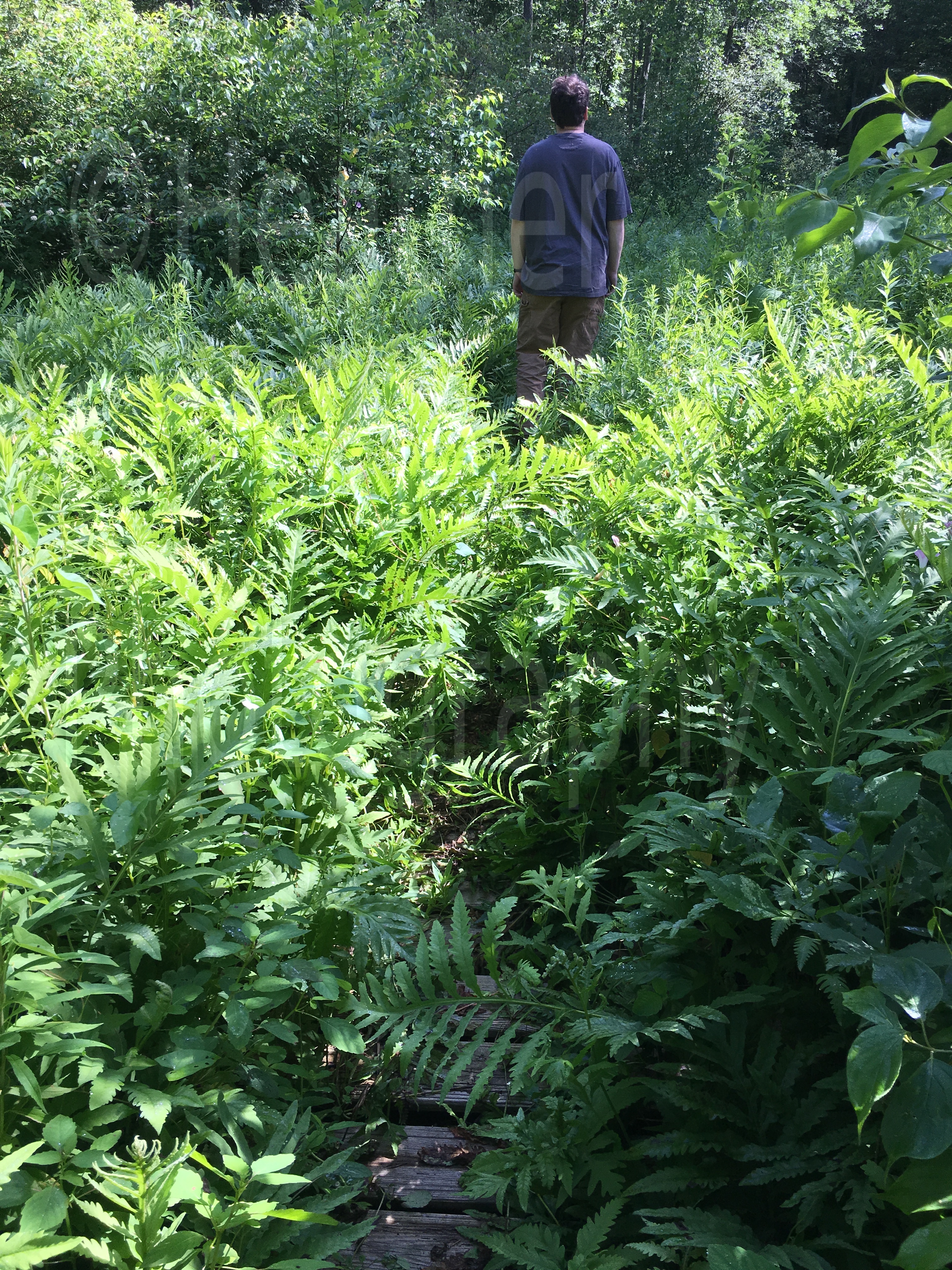
On my most recent visit, earlier this summer, I was disappointed by the obvious lack of trail maintenance of the woodland trail. Not only was vegetation overtaking the boardwalk, but the trail markers were all over the place. After tromping around in the woods with very little guidance, hoping the trail would become more clear, we made our way back, getting turned around more than once. Painted trail markers are far superior to the signs, which fall off trees, or get moved around. I know there has been a lot of rain and flooding in the area, but they should still try to maintain what they have, before it deteriorates further. Compare the difference between 2018 and 2019.
Another issue I have with the Onondaga Audubon is their website and that it lacks even a basic trail map for the Derby Hill Observatory. I know I did find one once, after some extensive googling, but it really shouldn’t be that hard. I don’t even think the map was on their website, but on another birder’s private site.
Despite
the disappointment of my last visit, I will doubtless give Derby Hill
another chance. It does provide a nice excuse for a stretch of the
legs, and statistically, if I go enough times, I will get another
view of my bald eagle.
Once you become a bird watcher, you become aware that many facts you took for granted are not 100% accurate. For example, “call a spade a spade” or “call a sparrow a sparrow.” Not necessarily untrue. However, there are twenty-one different types of sparrows listed in my Eastern North America bird book. So “sparrow” is clearly not specific enough.
I
want to take some time in this post to point out of the differences
between some of the most common sparrows, so you can begin to notice
them yourselves. I am going to focus on four: House Sparrows,
Chipping Sparrows, Song Sparrows and White-Throated Sparrows.
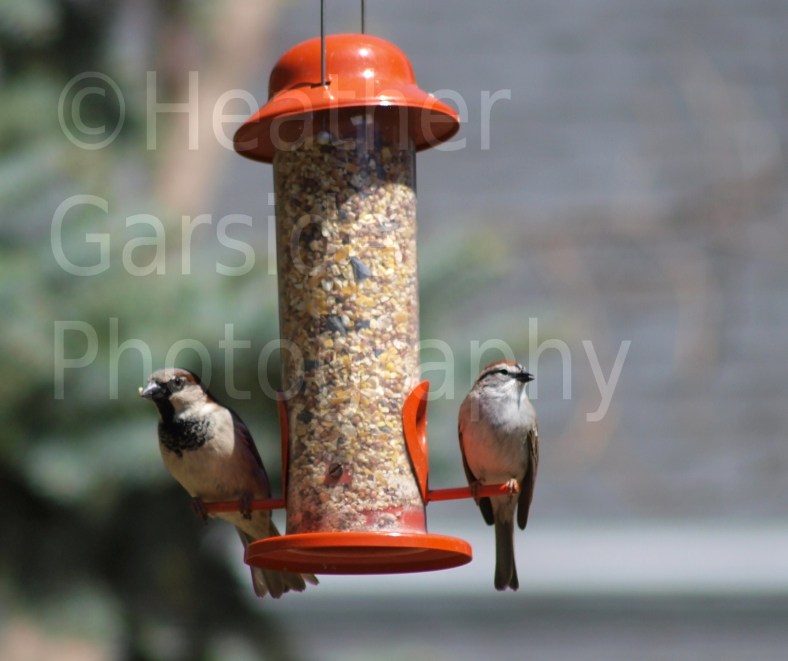
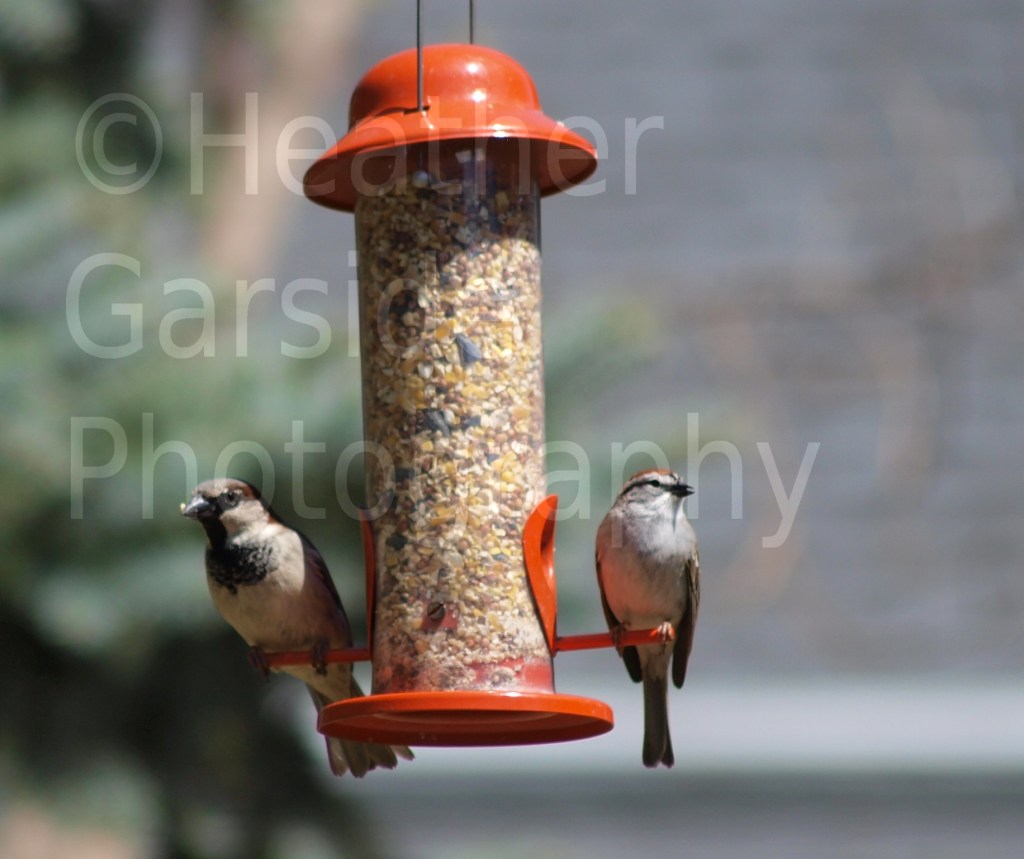
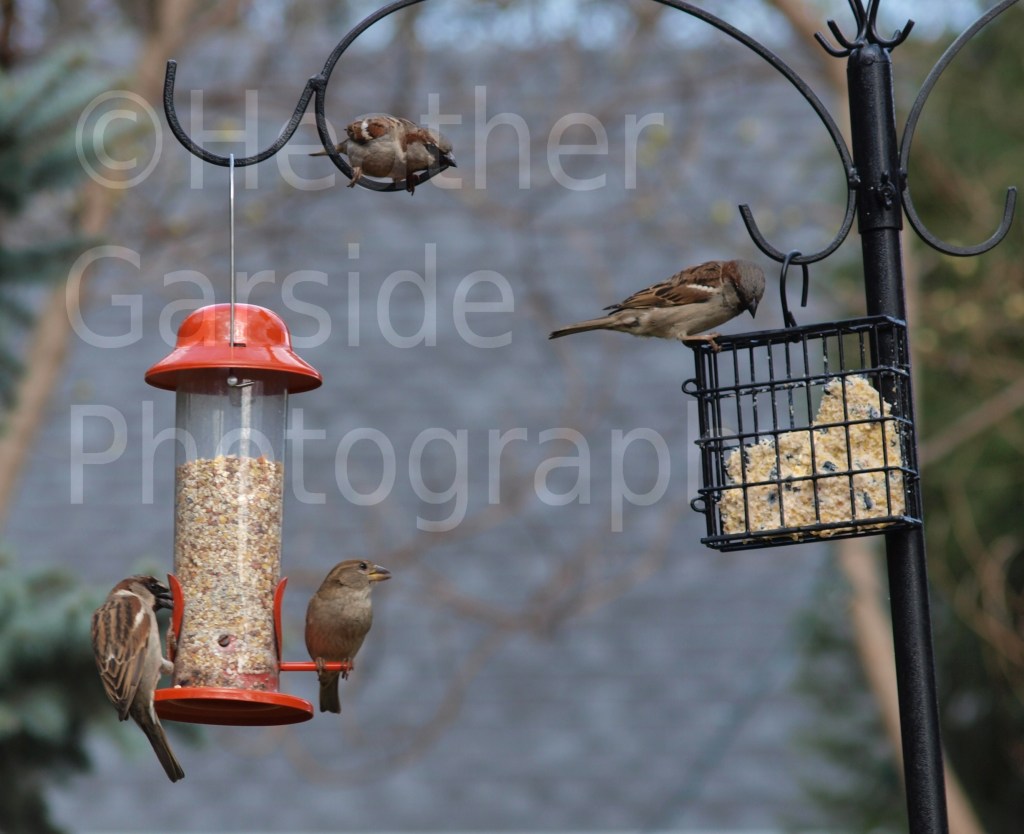
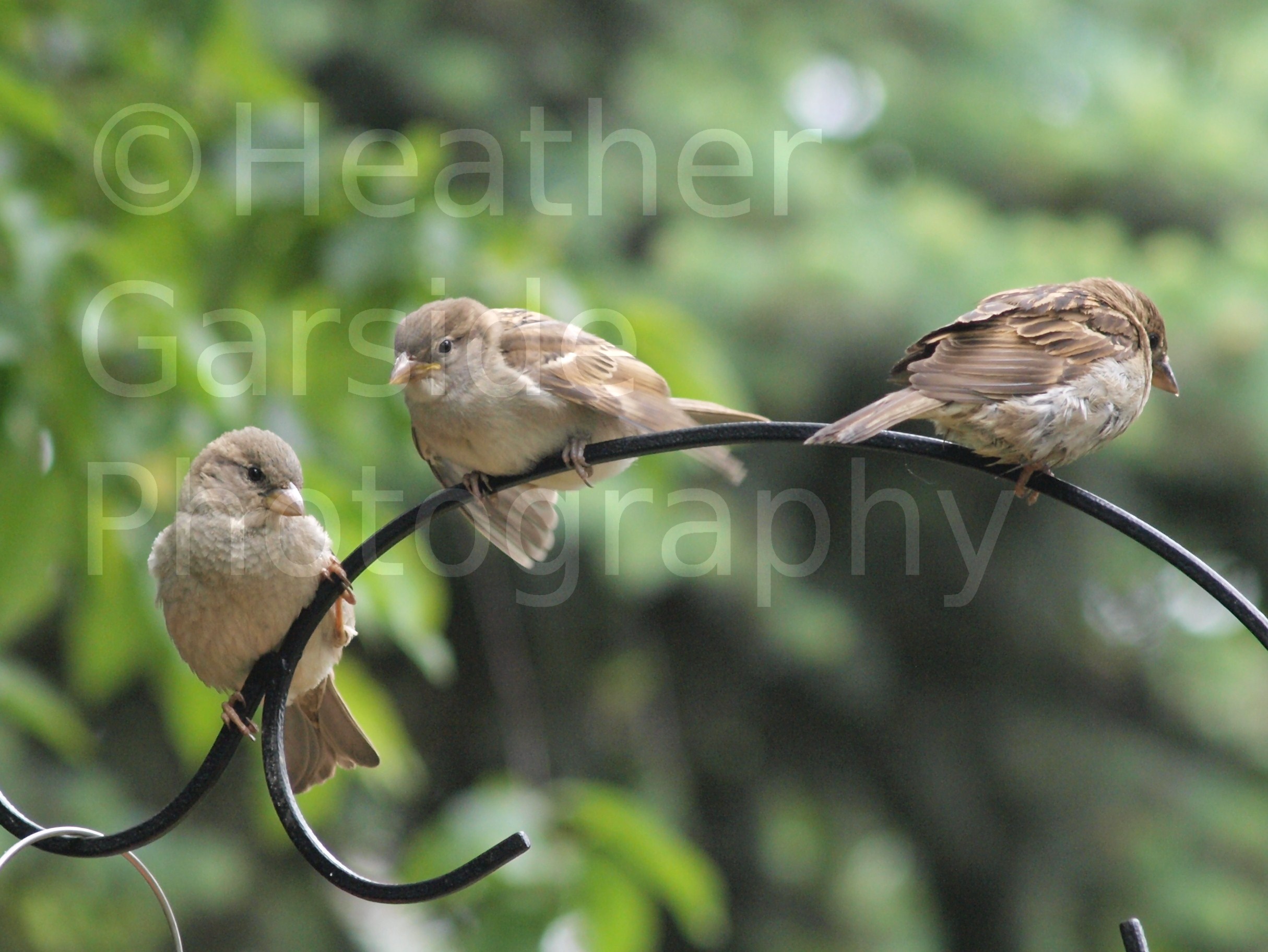
The House Sparrow is the most obvious starting point. Ubiquitous, especially whenever food is out for the taking, you see them in yards, woods, parks and city streets. I have so many of the little guys in my yard at this point I think they may have started having extra broods just because of my feeders.
Male
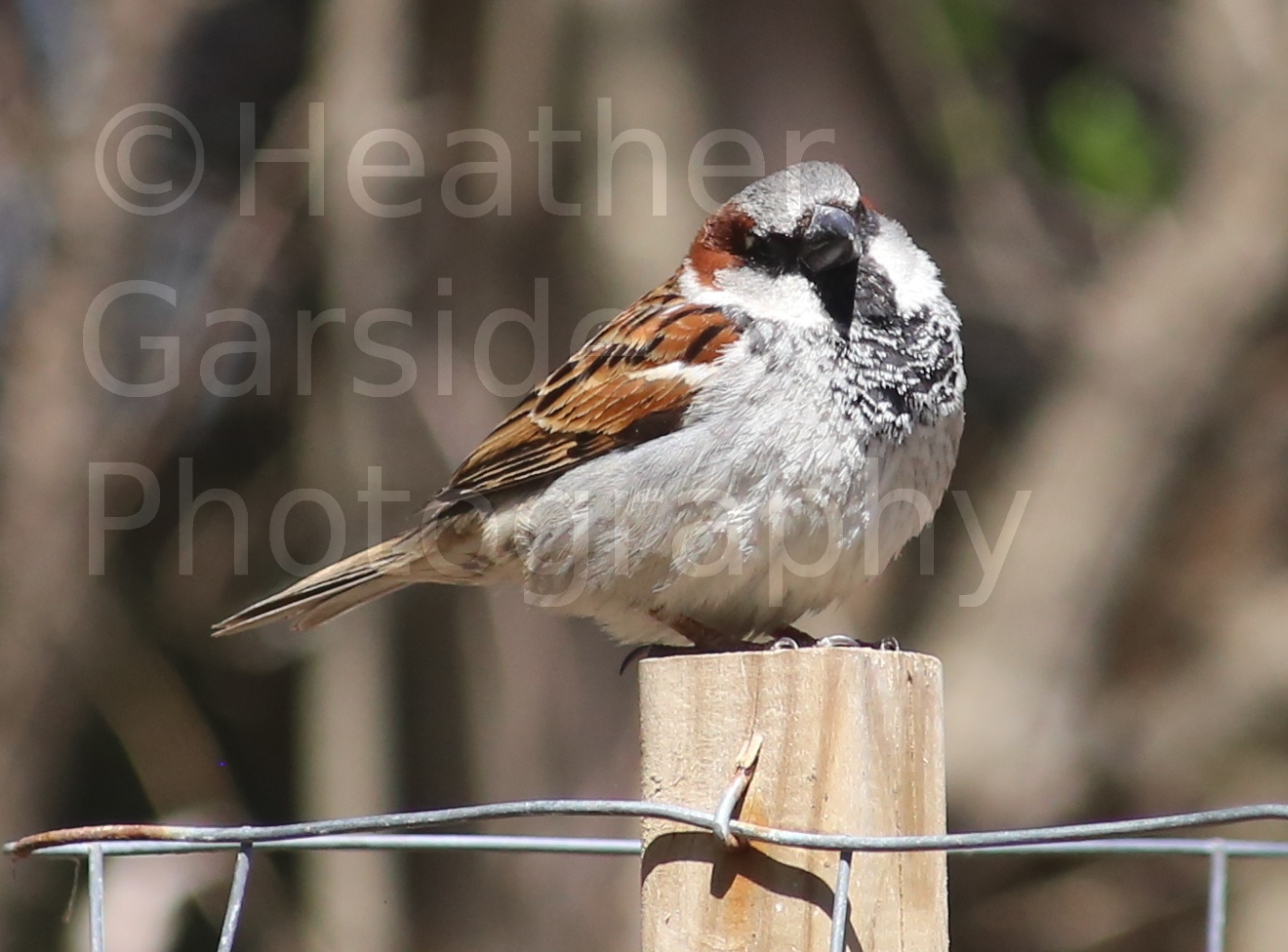
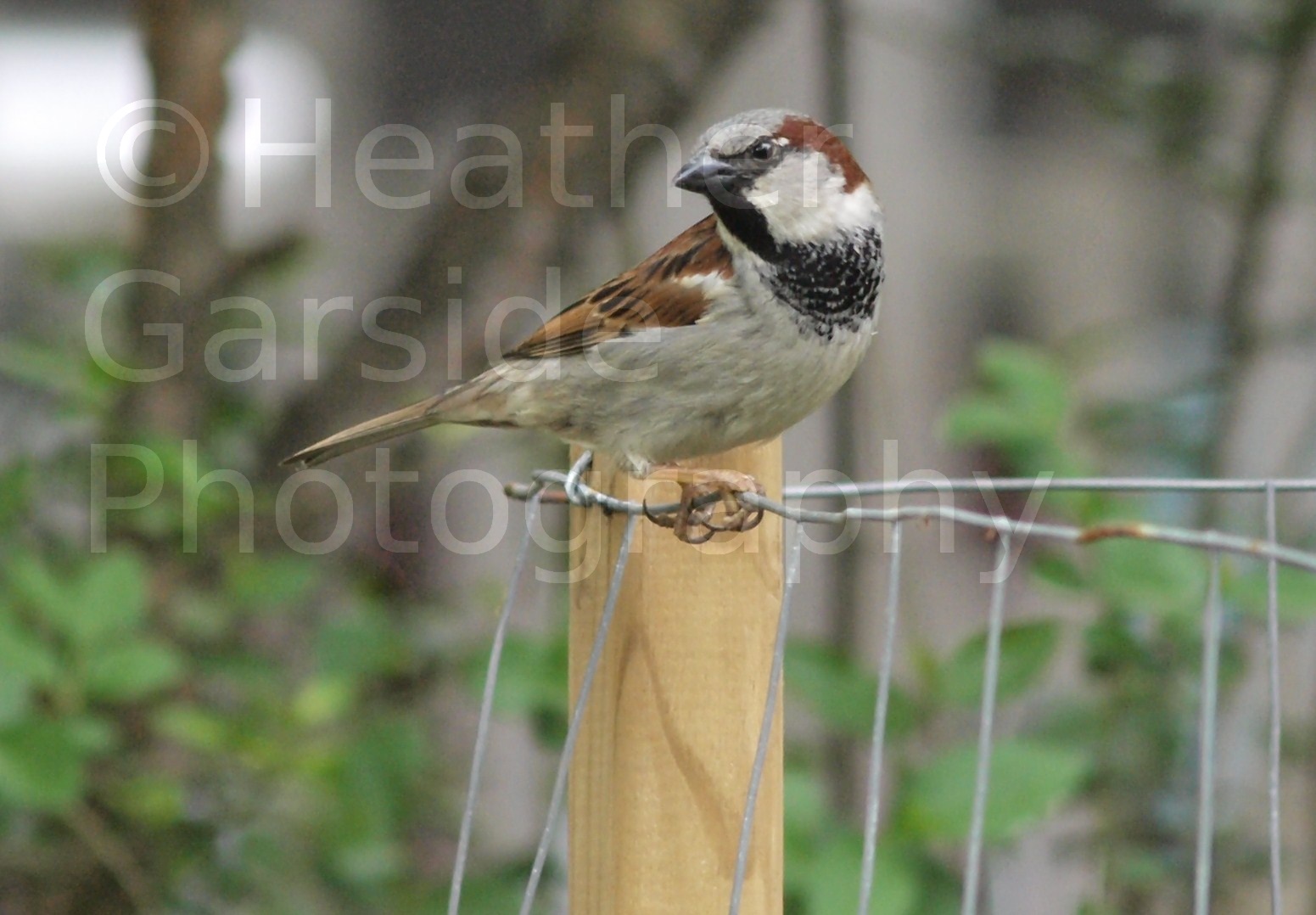
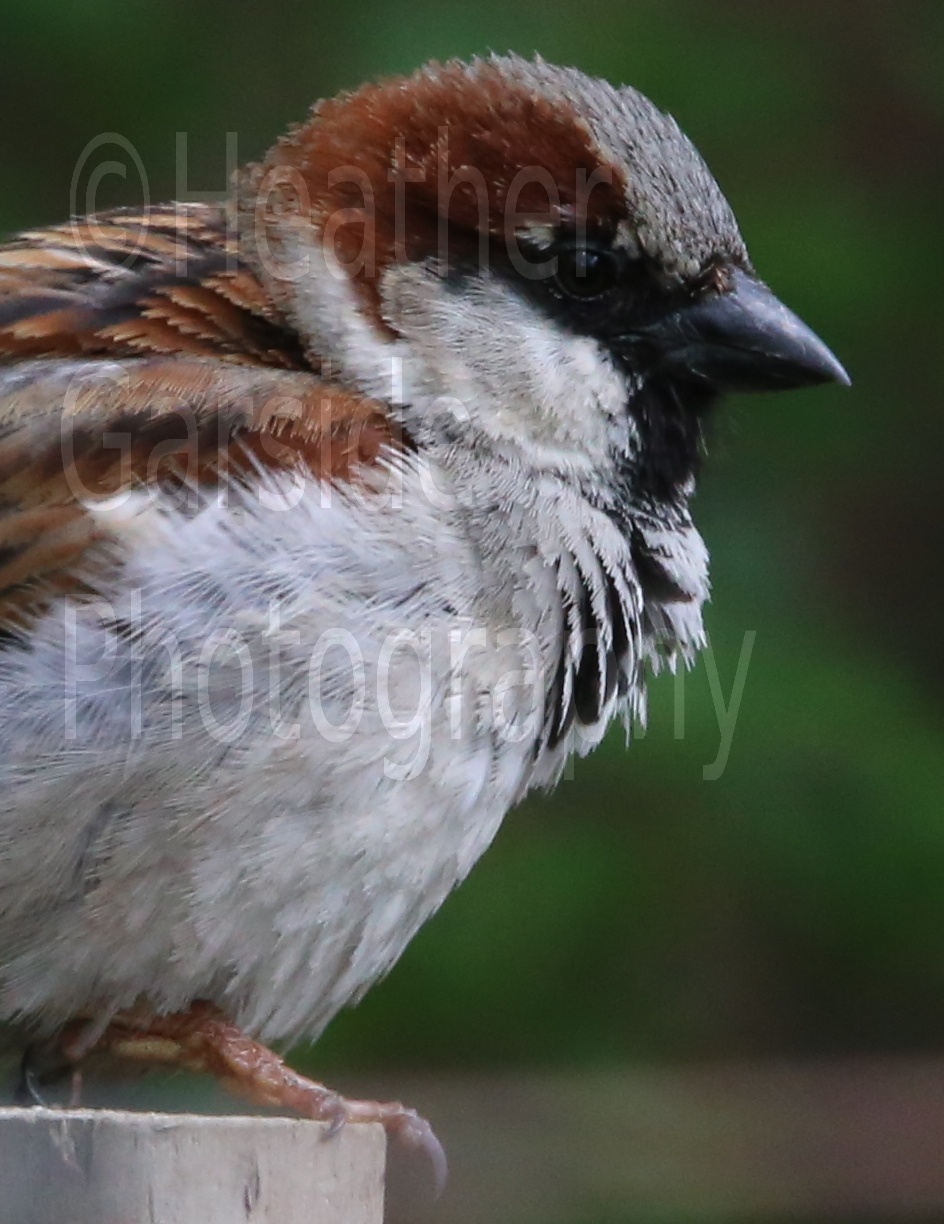
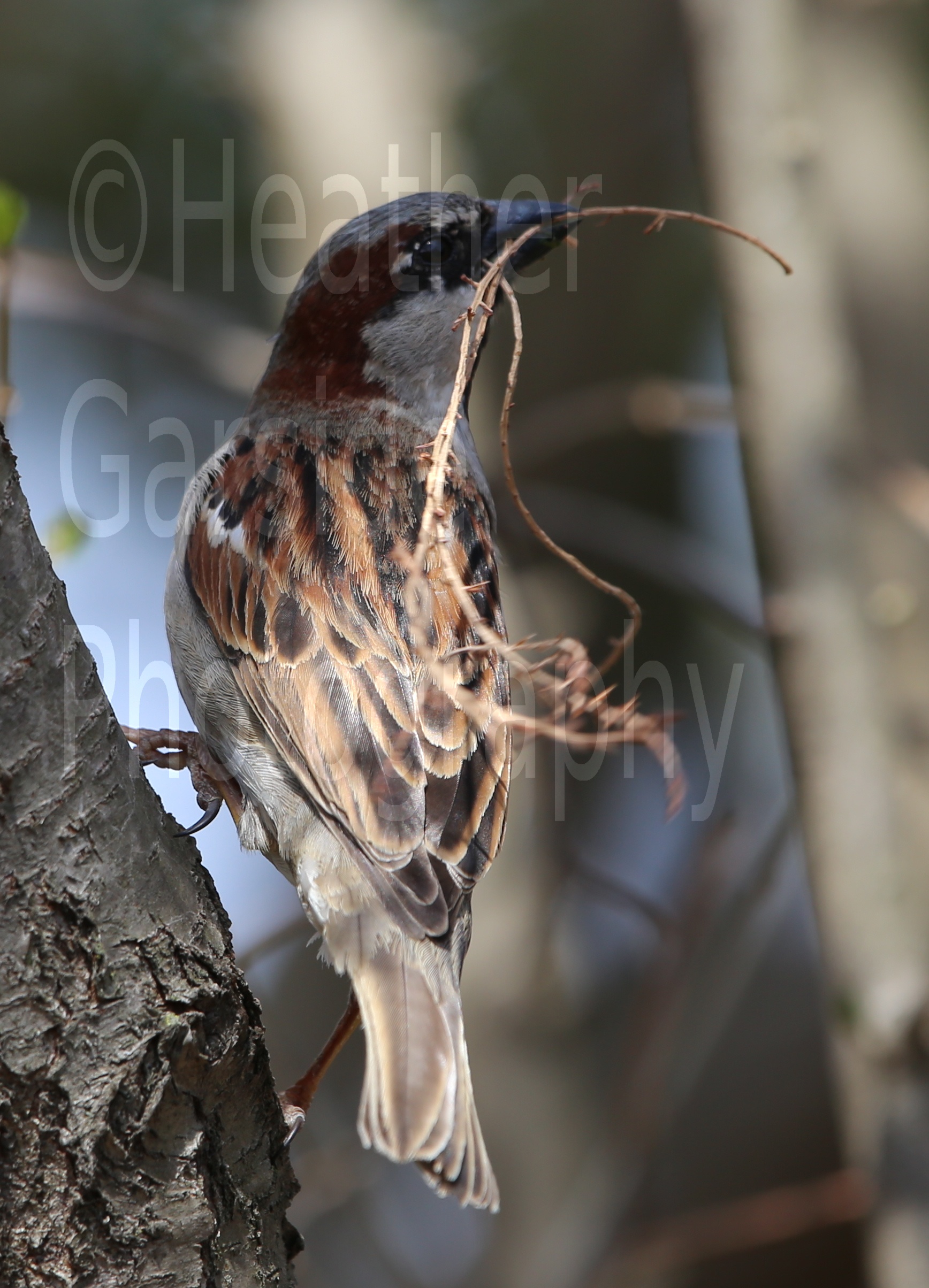
and female House Sparrows look different. The males have a
whitish-gray belly with a black bib on the upper chest, flanked by a
white patch on either side. The black from the bib carries up their
neck to under their eyes. A gray cap sits on top of their heads, with
two patches of brown running from the sides of their heads into their
brown wings, back and tail feathers. The brown on their wings, back
and tail is broken up with thin stripes of black.
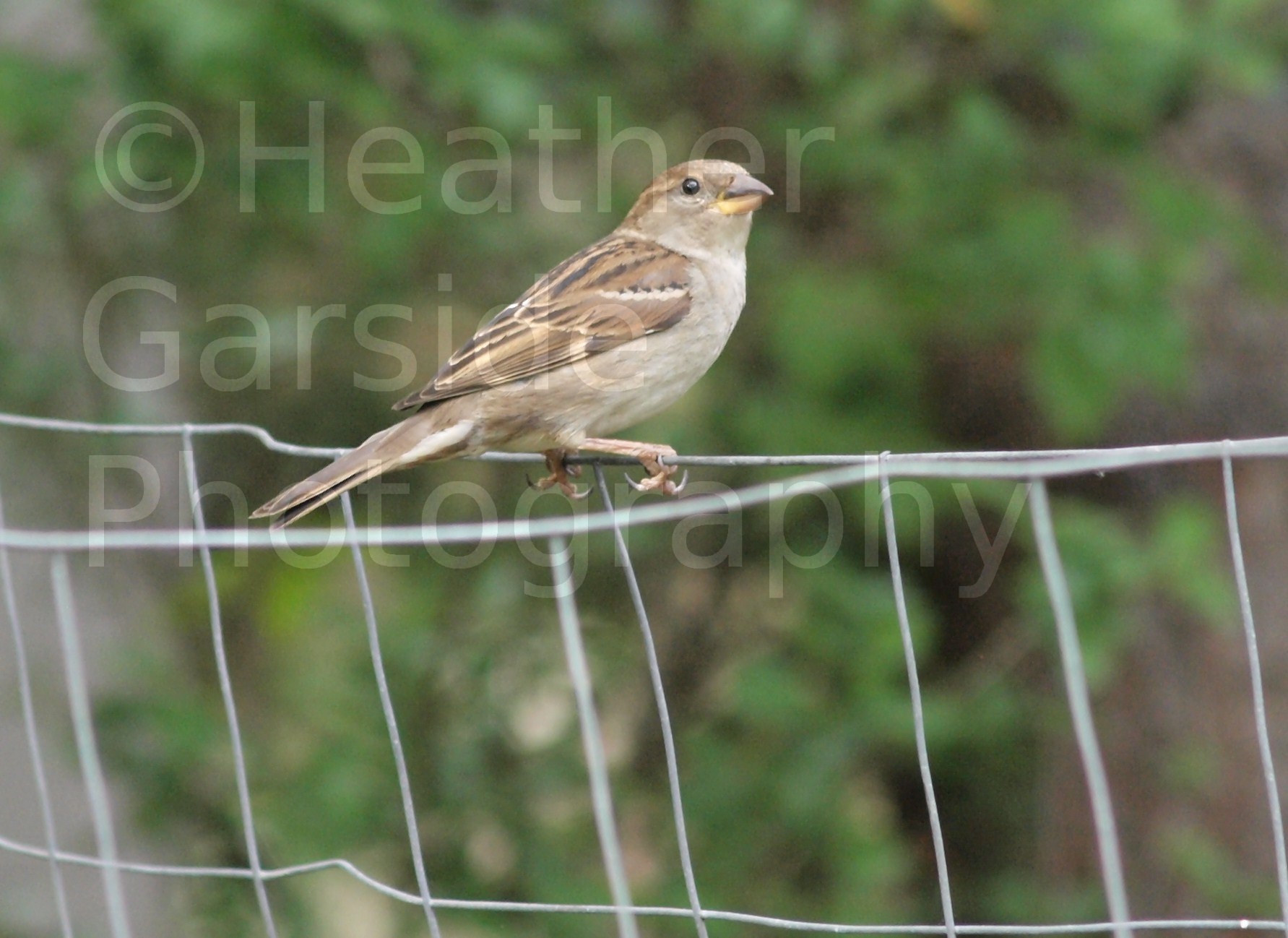
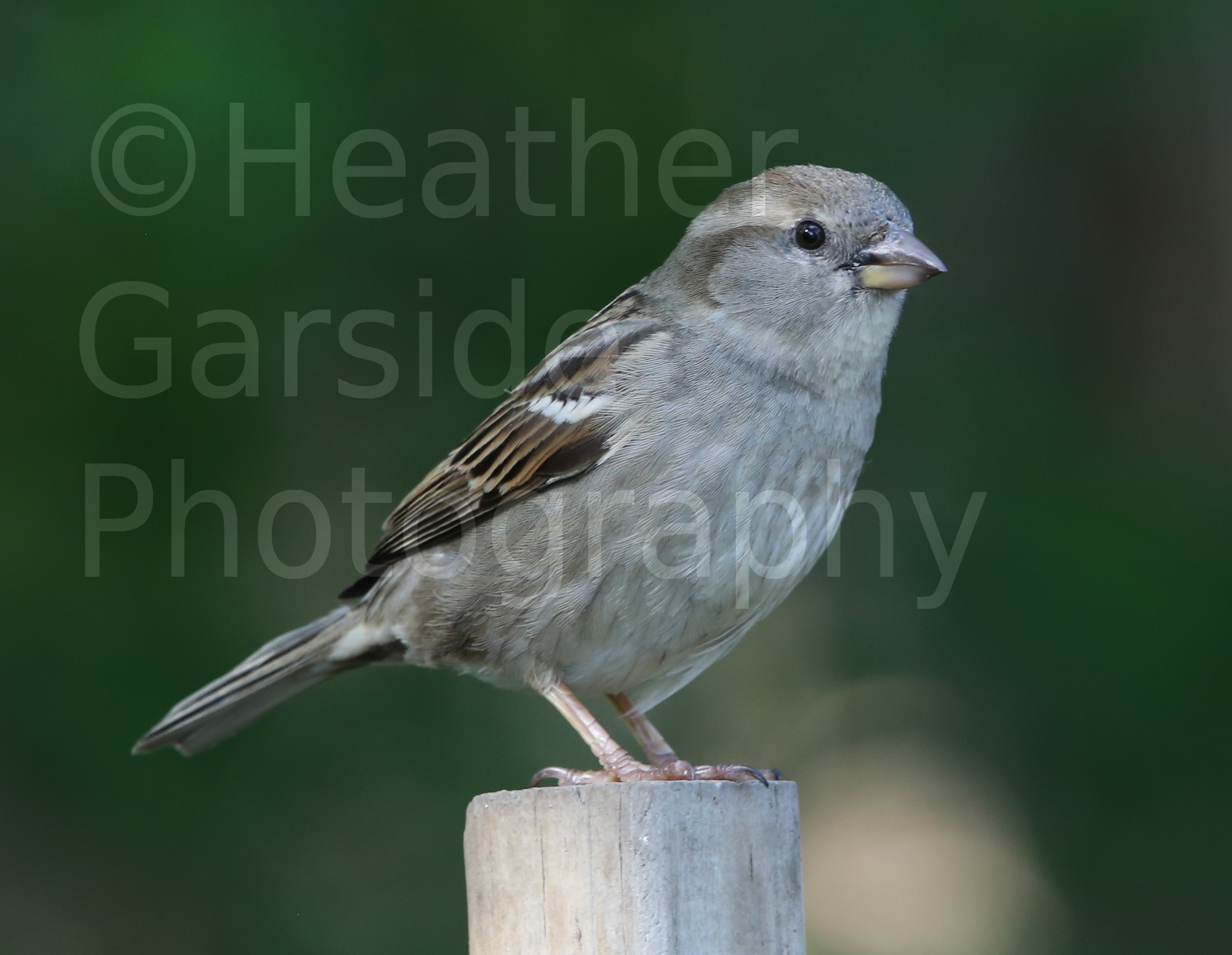
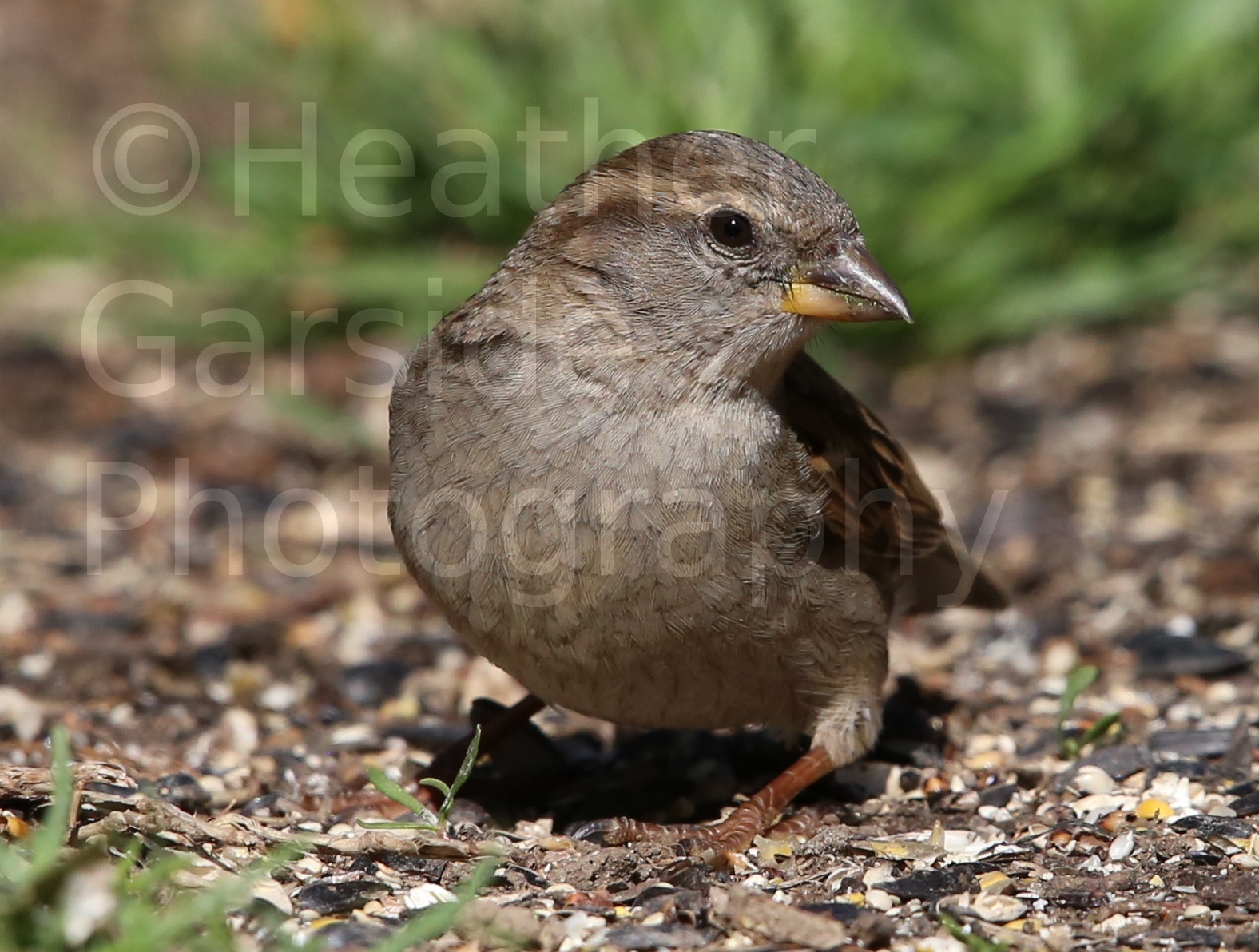
The females are a bit more muted and boring, but if you look closely their feathers have a few secrets to share. The female’s feathers are mostly tan, with her underbelly being lighter than the feathers on her head and back. If you look closely you will notice she has a light stripe on both sides of her head which include her eyes. The wings of the female are similar to her male counterpart, being a darker brown, with stripes of white and black mixed in.
The House Sparrow is in fact not a sparrow at all. Introduced to North American from Europe in the 1850s, they are actually from the Weaver Finch family. Their populations thrived in their new home and today they can be seen throughout the United States all year long. They are also a common sight because they are not remotely scared of people. Much less skittish than other birds, they have the advantage for scavenging food in busy areas.
Food isn’t the only thing they scavenge. Their nests have been known to incorporate paper and even plastic into the weave. They usually have 4-6 eggs each nesting, with two or three broods in a season. They are at it like rabbits! They like cavities to nest in, so they are big fans of bird houses.
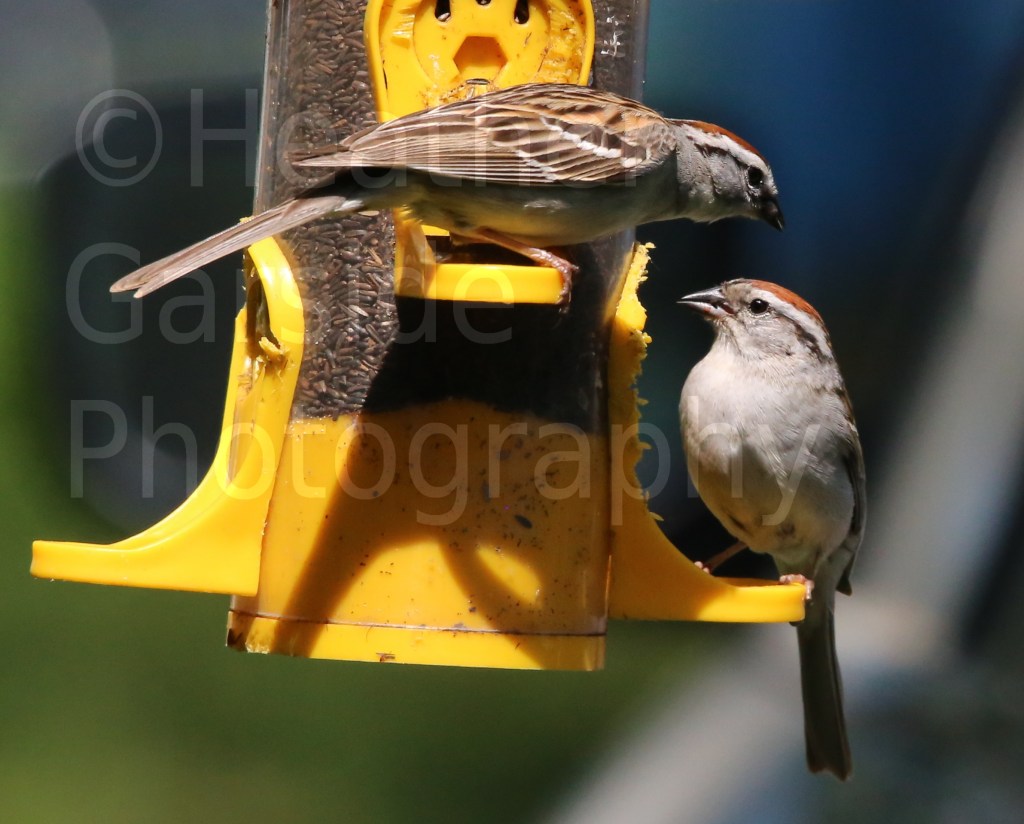
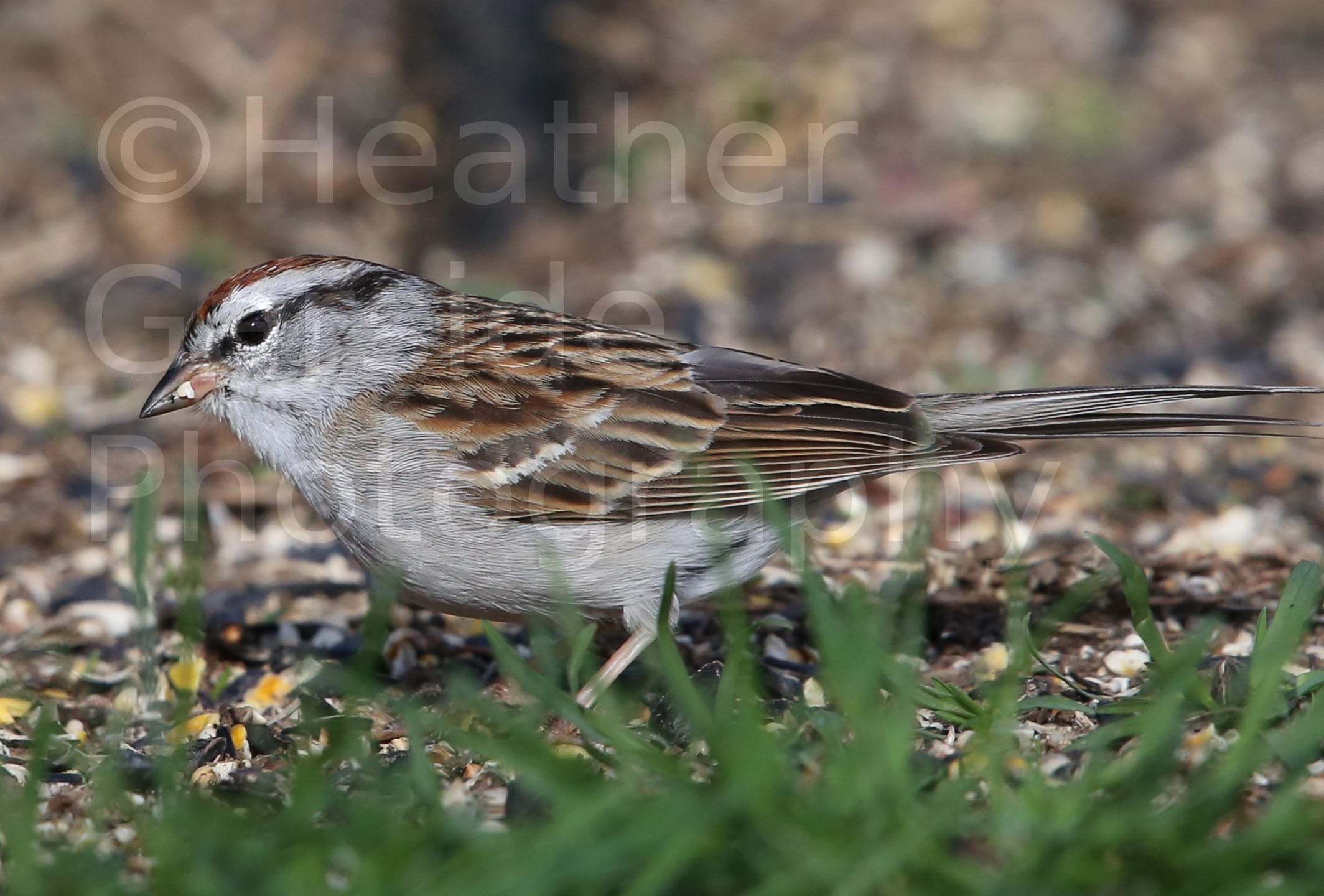
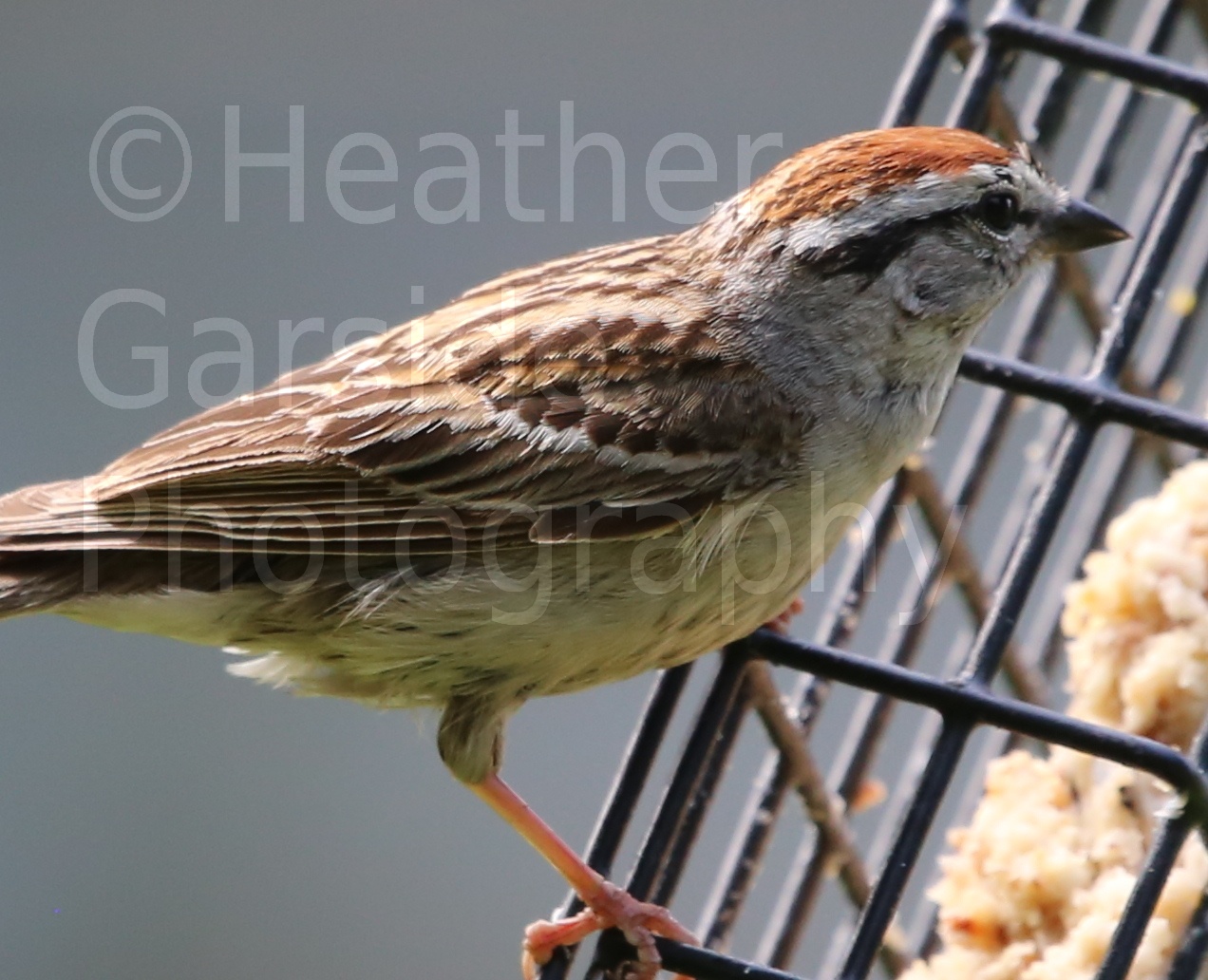
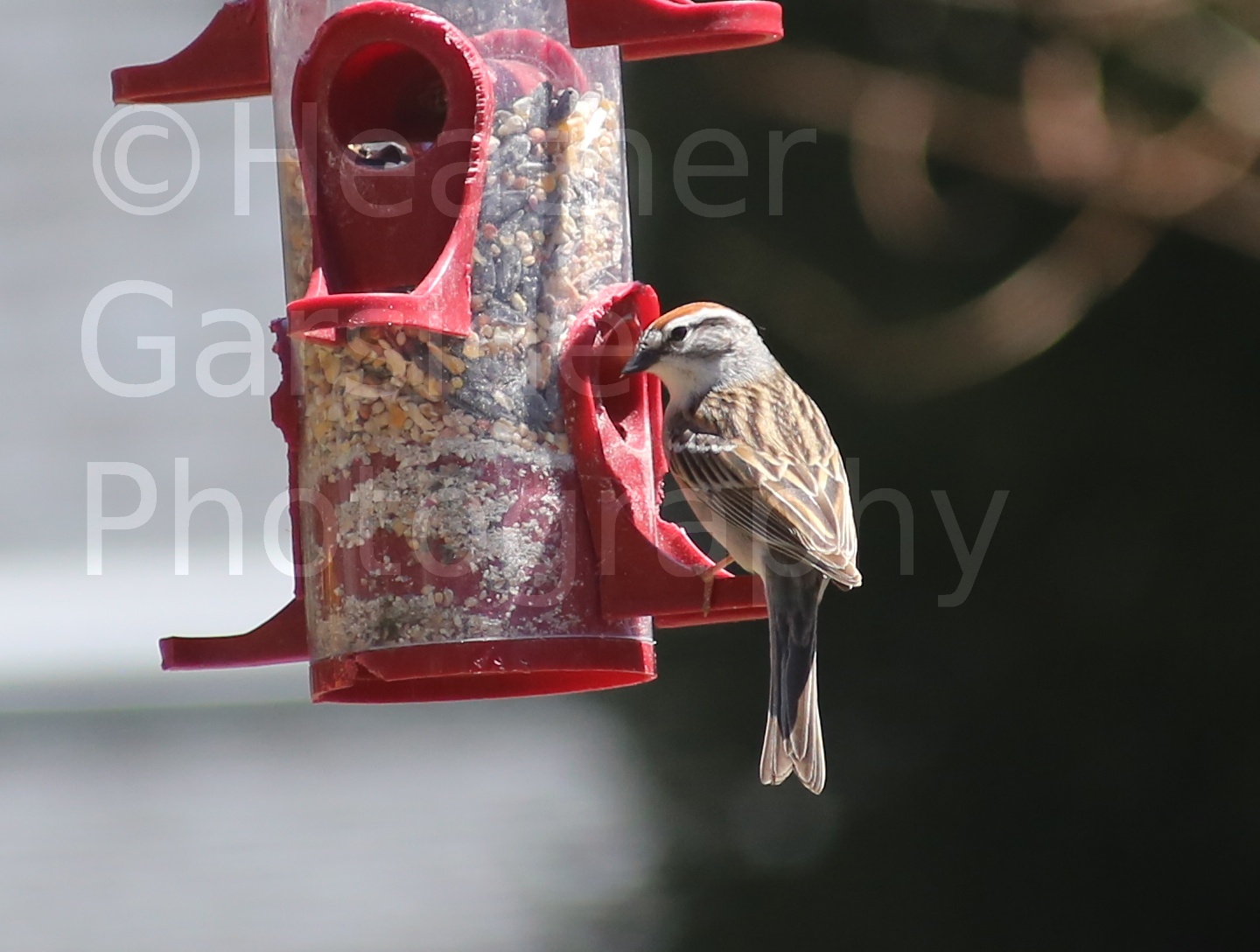
Chipping Sparrows are also fairly common to my yard in the summer. They visit feeders and they forage the ground around them, so you can easily spot them hopping about. One of the biggest physical differences between a Chipping Sparrow and the other three species I am discussing, is that the Chipping Sparrow is smaller. The Chipping Sparrow is five inches to the House Sparrow’s six inches and when you are that small, one inch does make a difference when it comes to aggressive behavior at the feeders.
Unlike the House Sparrow, all Chipping Sparrows look alike, regardless of gender. The Chipping Sparrow’s most defining feature is its light brown or chestnut cap. Its chest is gray and it has dark, streaked brown wings with hints of white. If you are able to see one of these little guys close enough (probably not with the naked eye) you will also notice a black stripe going across his face, in line with his beak and across his eye. This black stripe created a gray stripe above it on both sides, which separates the black from the edge of the brown cap.
Chipping Sparrows may be little, but don’t underestimate their toughness. They can survive without a drink for three weeks. They don’t try to brave a northern winter though. Instead they head to Mexico for the winter months.
Chipping Sparrows typically have about four eggs per nest and they usually have two broods each season. The female is the primary caregiver, incubating the eggs and feeding the new hatchlings. During the female’s incubation of the eggs, the male Chipping Sparrow will try to find additional mates.
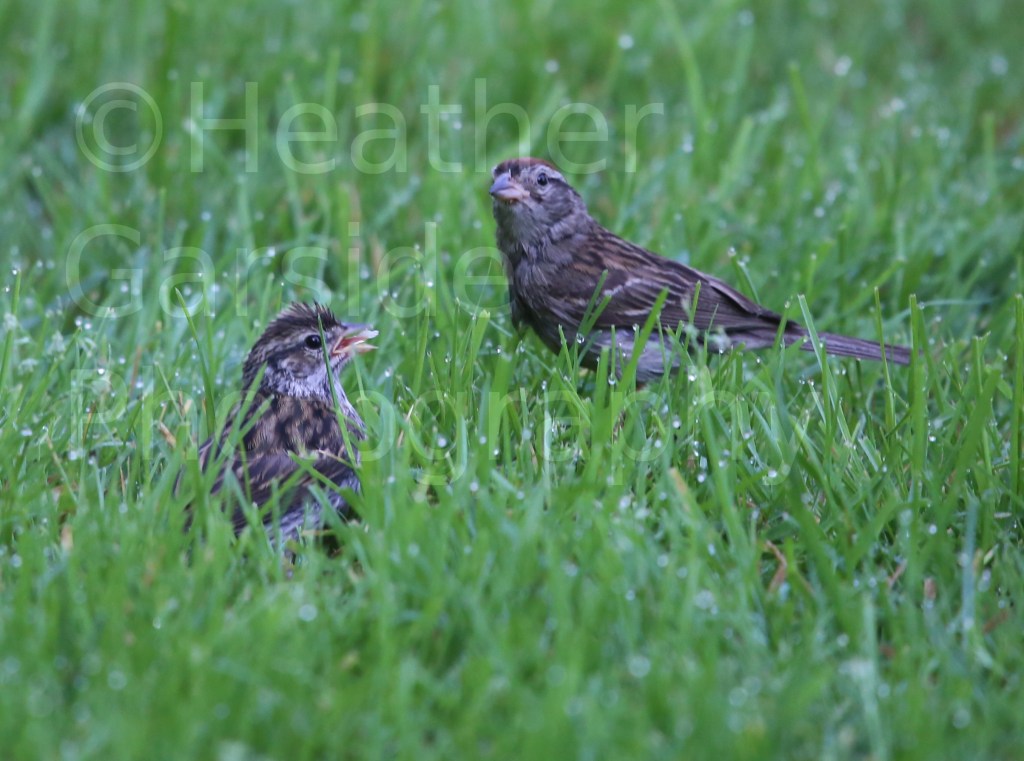
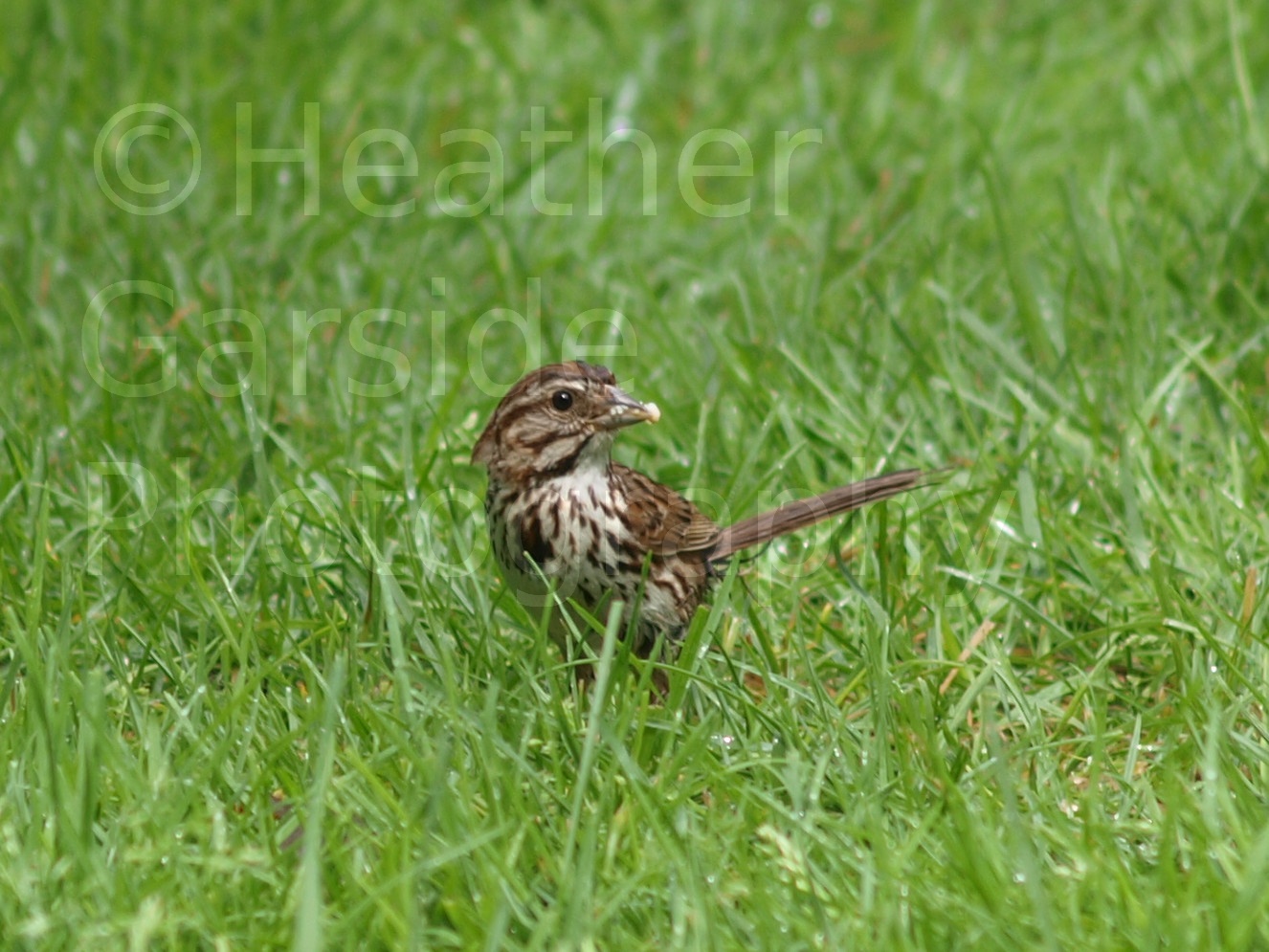
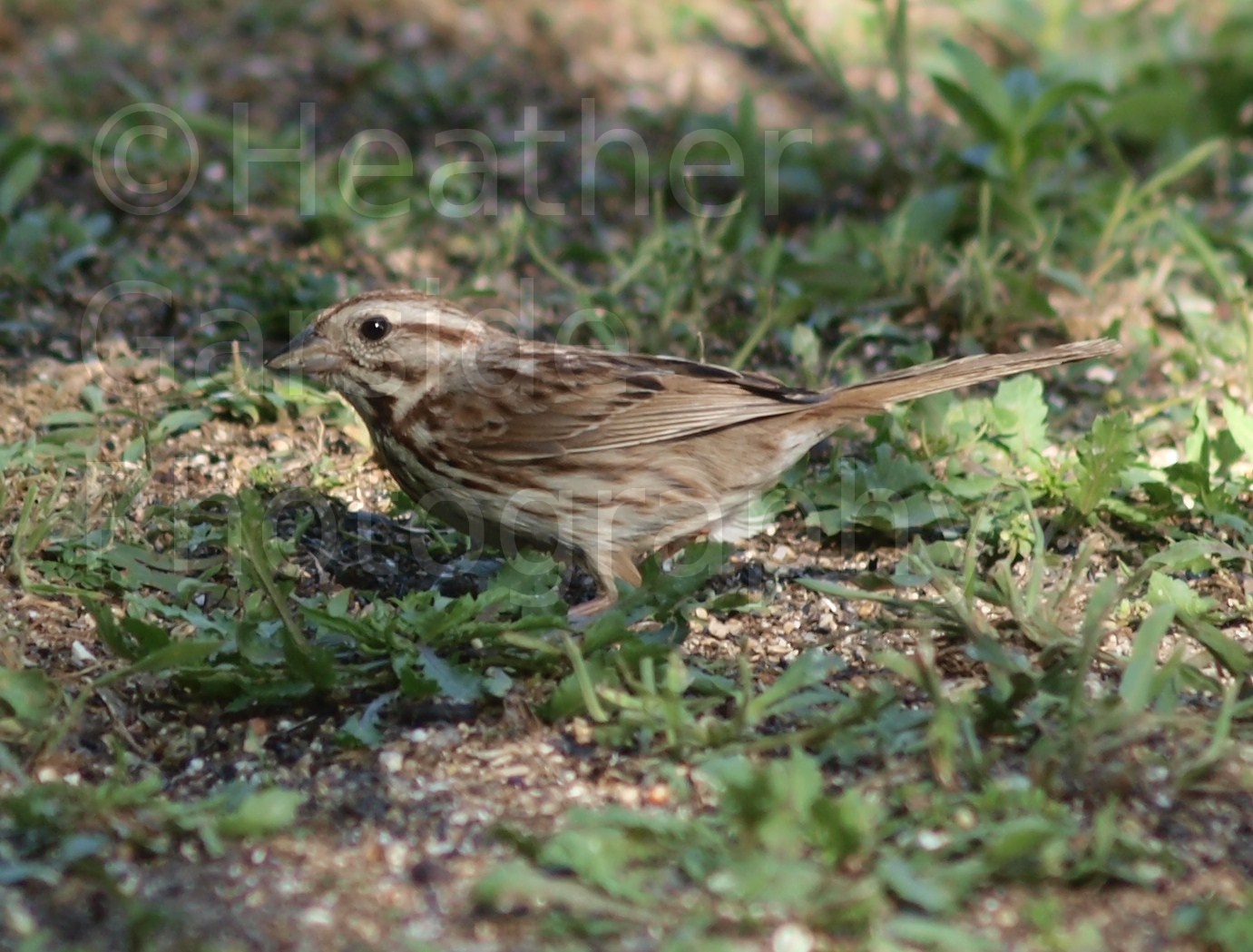
Song Sparrows are a bit less common to my yard. But they do visit on occasion and I often see them and hear them on hikes. Not unlike the Red-Winged Blackbird, they are particularly partial to marshy areas and can often be found near water.
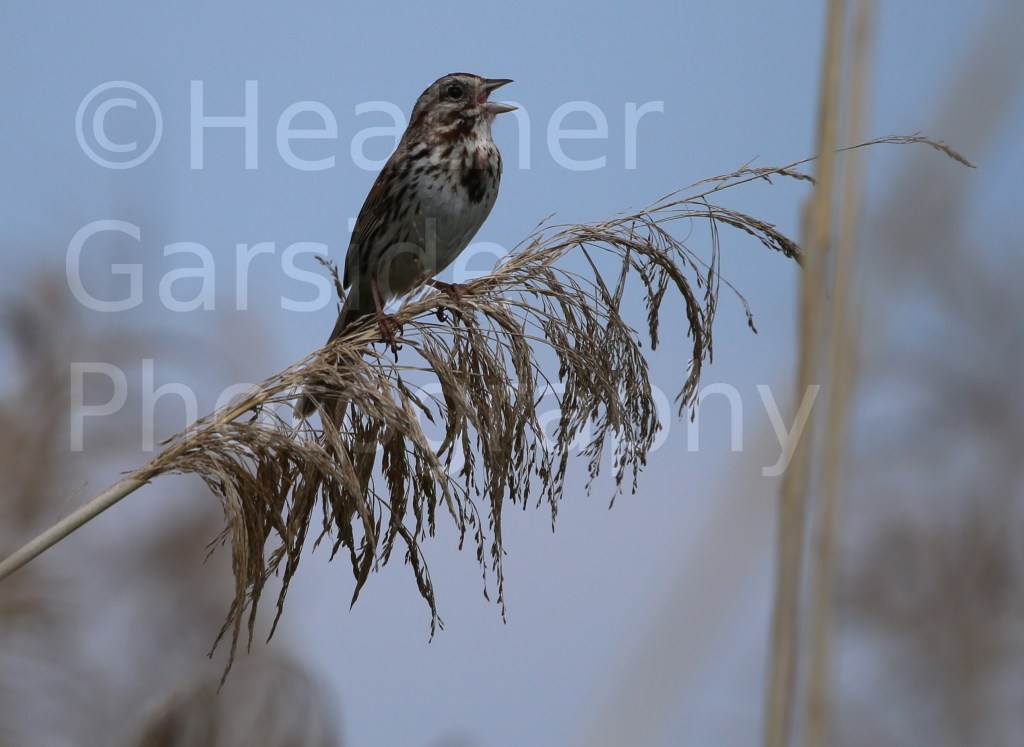
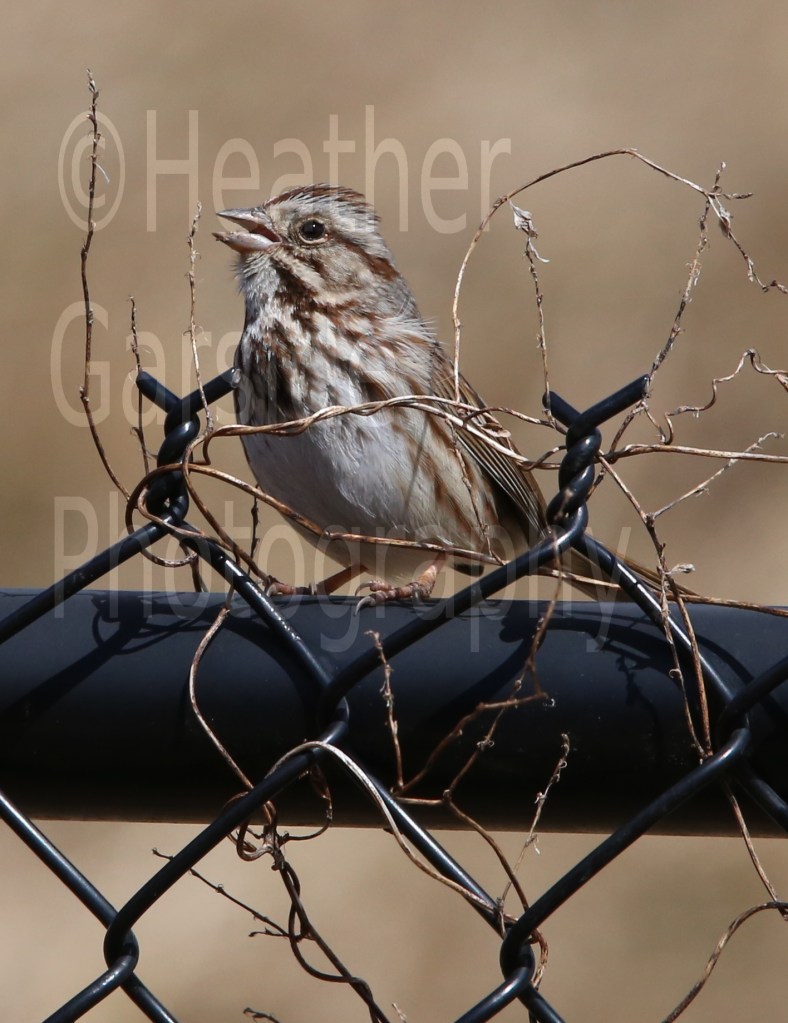
As you can image from its name, the Song Sparrow likes to sing a lot. Often their song is the best way to spot them. They are loners but they aren’t bashful. Often you will find them perched on a conspicuous branch or reed singing their hearts out. This is because they not only sing to attract a mate, but also to mark their territory. To hear the song of a Song Sparrow, click here: https://nationalzoo.si.edu/scbi/migratorybirds/education/nasongkey.pl?bird=Song+Sparrow+%281%29
Though they will visit the vicinity of a feeder, Song Sparrows rarely go to the feeder directly. Instead you will see them hopping around beneath a feeder, gleaning seeds from the ground. You will recognize the Song Sparrow by the streaks on its chest. Song Sparrows are white or cream with random short, dark brown streaks running vertically along their chest. If you look closely, you will also see a larger spot, usually near the center of their chest. Their wings are similar to those of other sparrows, brown with stripes of white and lighter brown. There is also a brown stripe on each cheek, breaking up the white on the Song Sparrow’s face.
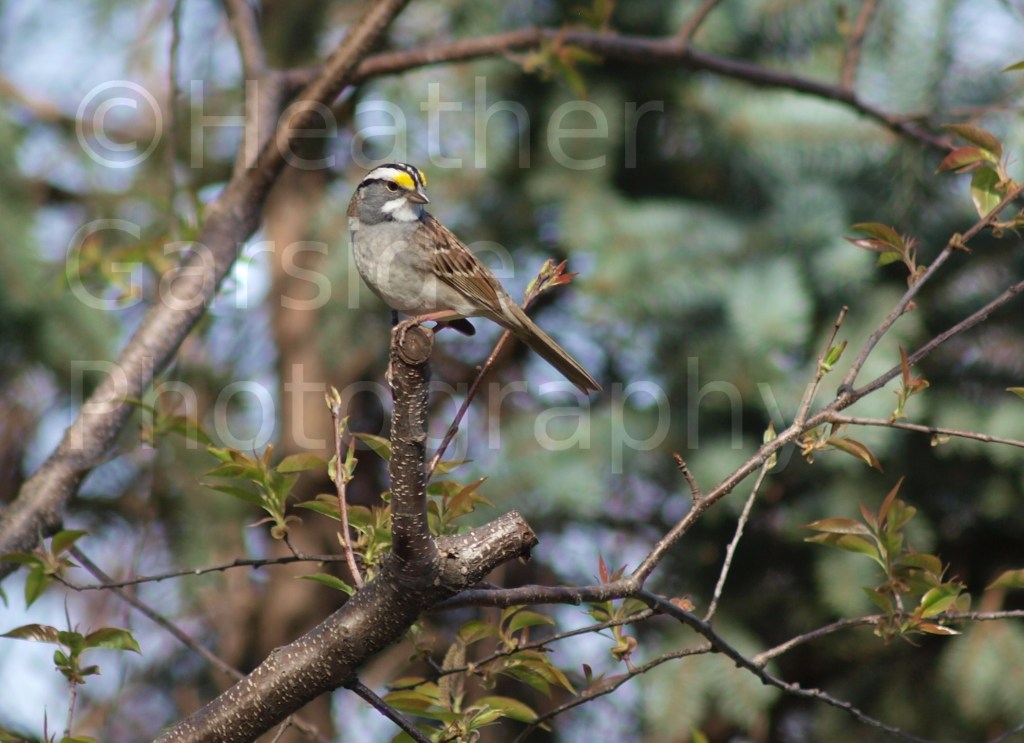
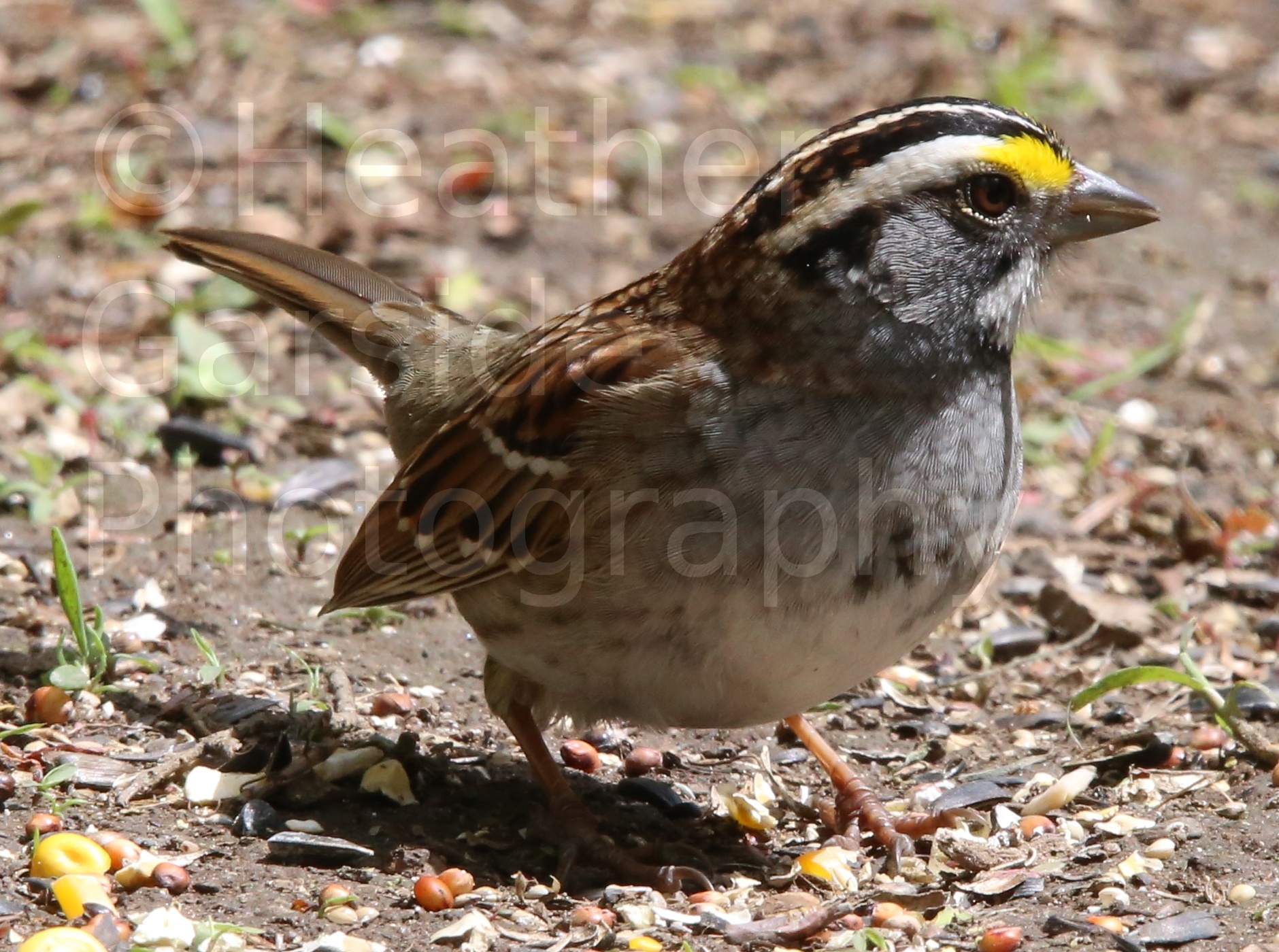
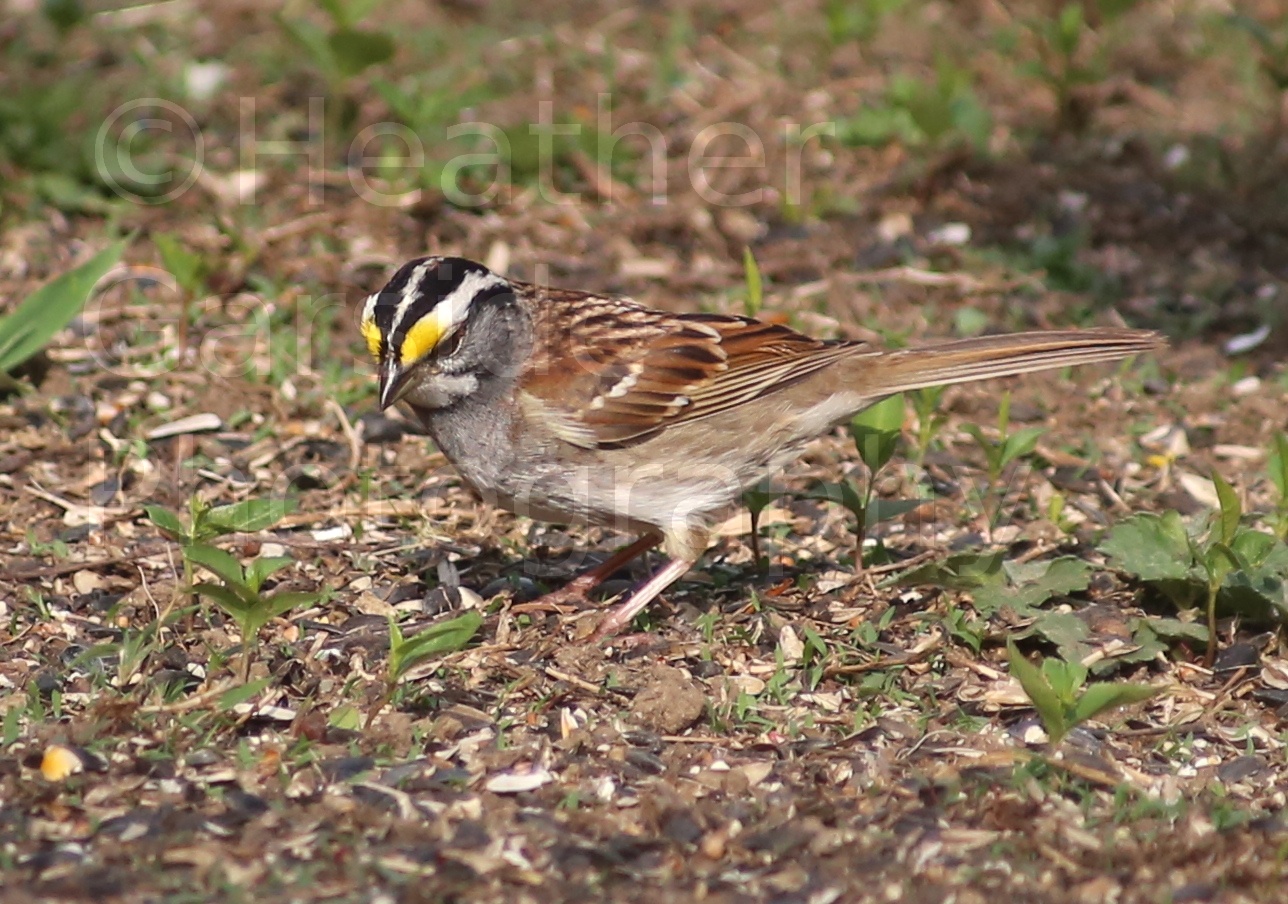
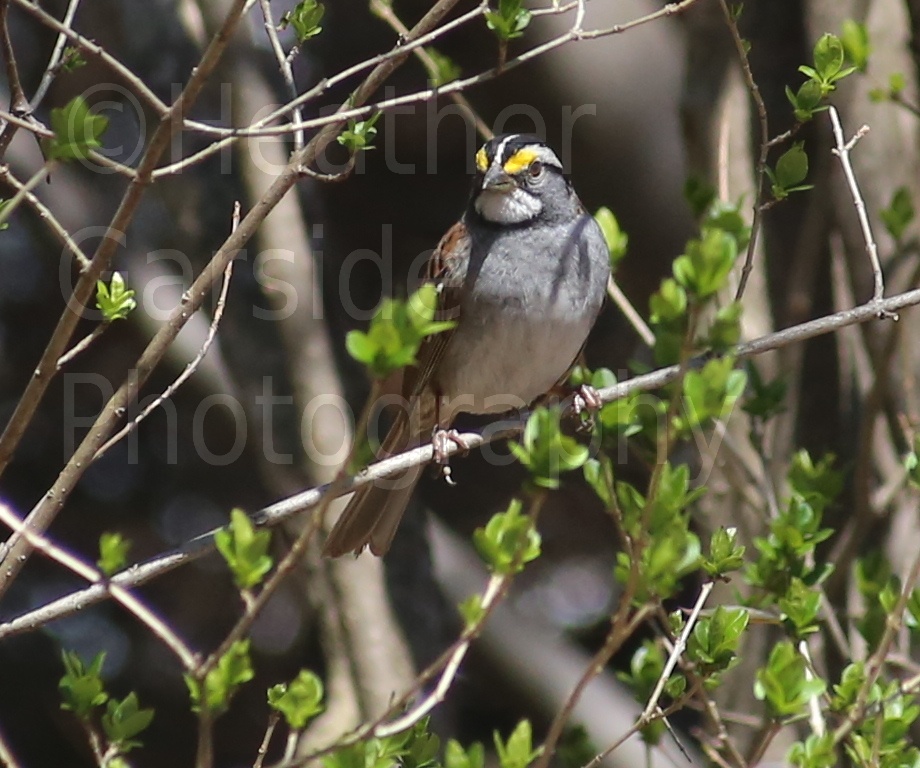
White-Throated Sparrows are my personal favorite. They usually come to the feeder alone, and glean around on the ground looking for food. They aren’t aggressive with other birds, but neither are they intimidated. They are about the same size as the House Sparrow, and they usually won’t be pushed around. Like the Chipping Sparrow, White-Throated Sparrows head to Mexico for the winter.
I think they are the coolest looking sparrows with race-car yellow-stripe eyebrows. Besides the yellow over its eyes, the White-Throated Sparrow has…you guessed it: white feathers on its throat. While both male and female White-Throated Sparrows look similar, across both sexes there are some which have white stripes and others that have tan stripes on their heads. Based on what I have read, birds with white stripes seem to prefer mating with birds with tan stripes, but I am not sure what the deal is with that.
Hopefully after this little introduction you will start to spot the differences in Sparrows yourself!
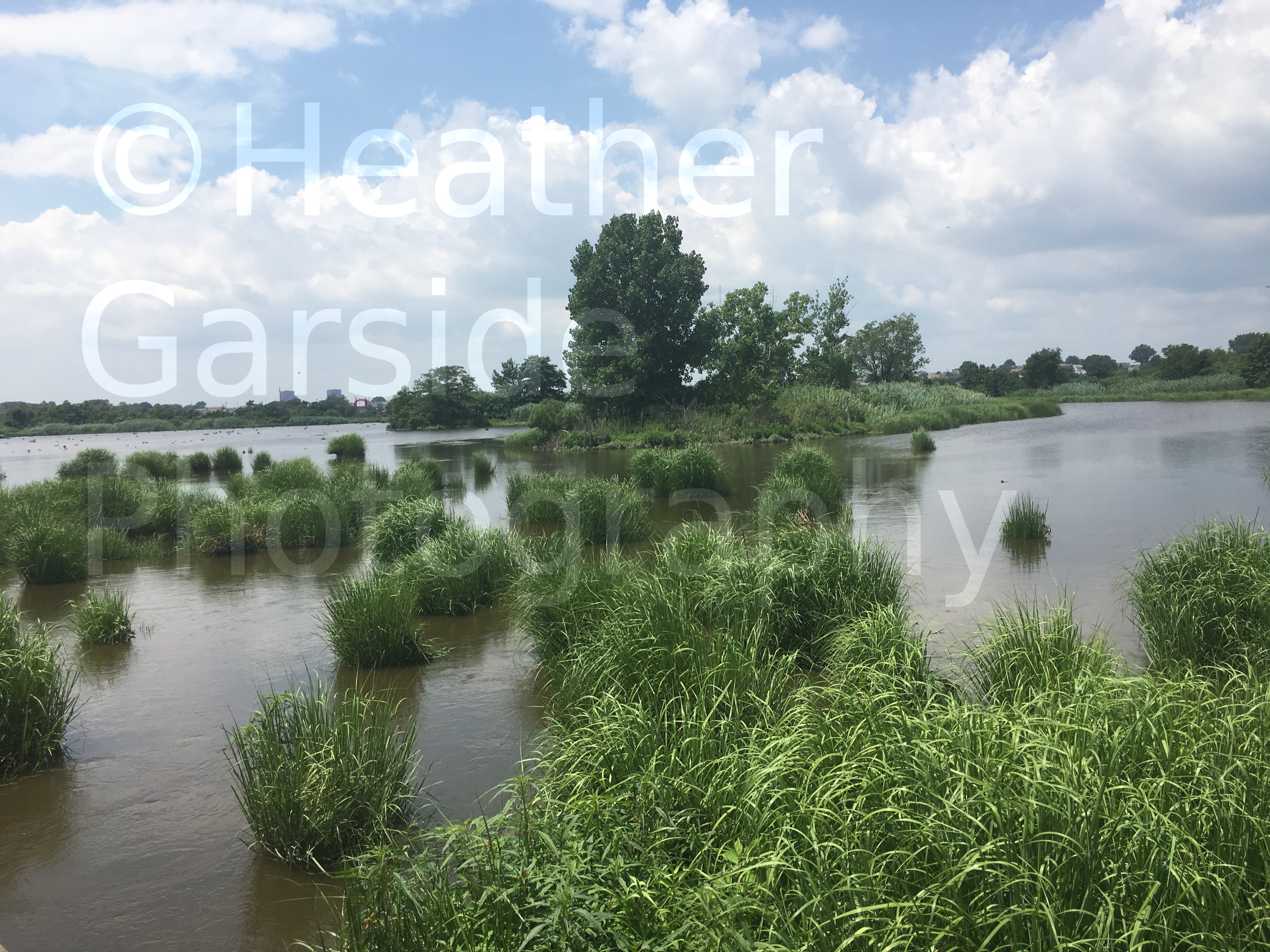
Another visit to Mills Creek Marsh in Secaucus, New Jersey. A warm day but not too hot, so we walked the whole loop. We were rewarded for our efforts, and I am not just talking about the treat we had at Panera afterward.
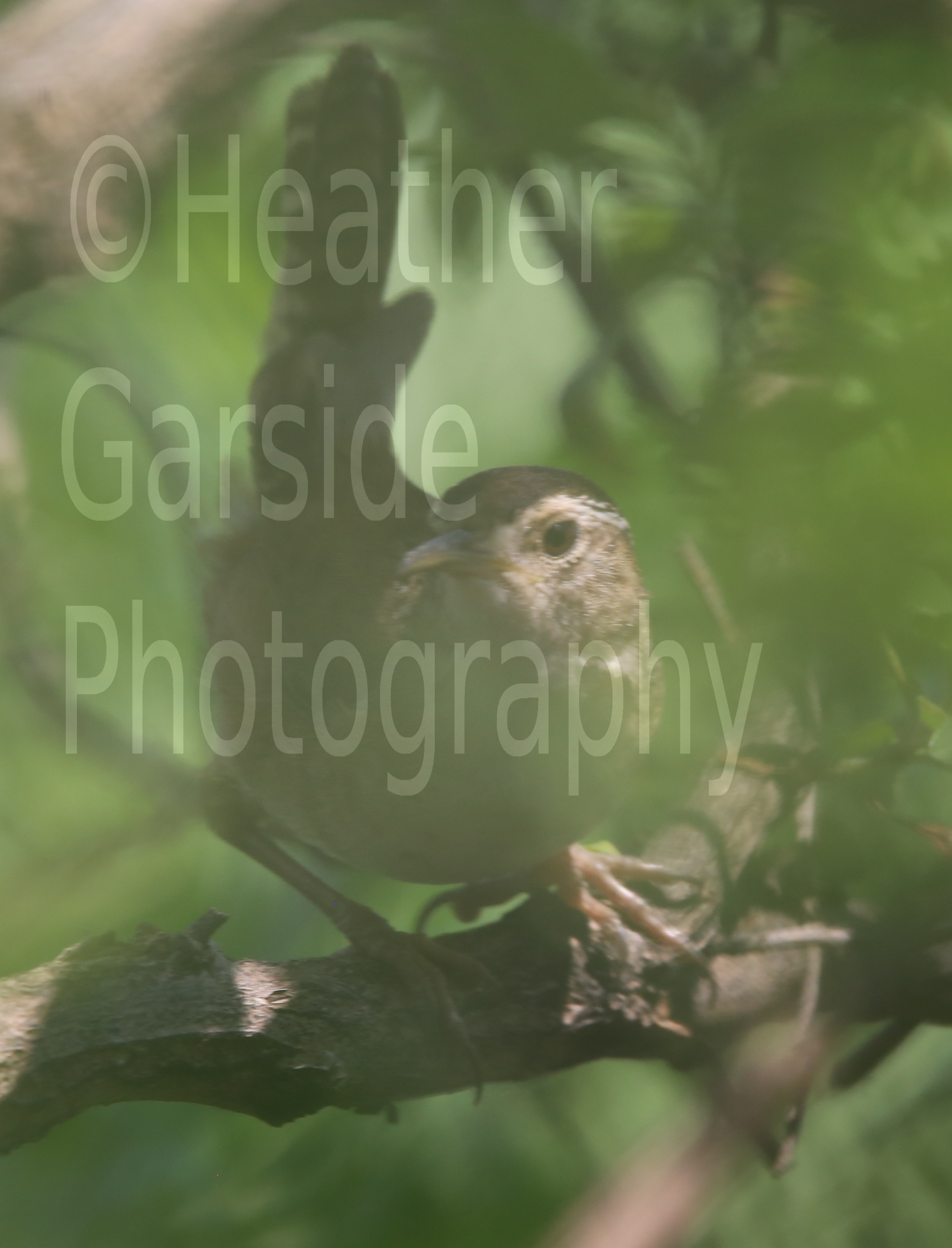
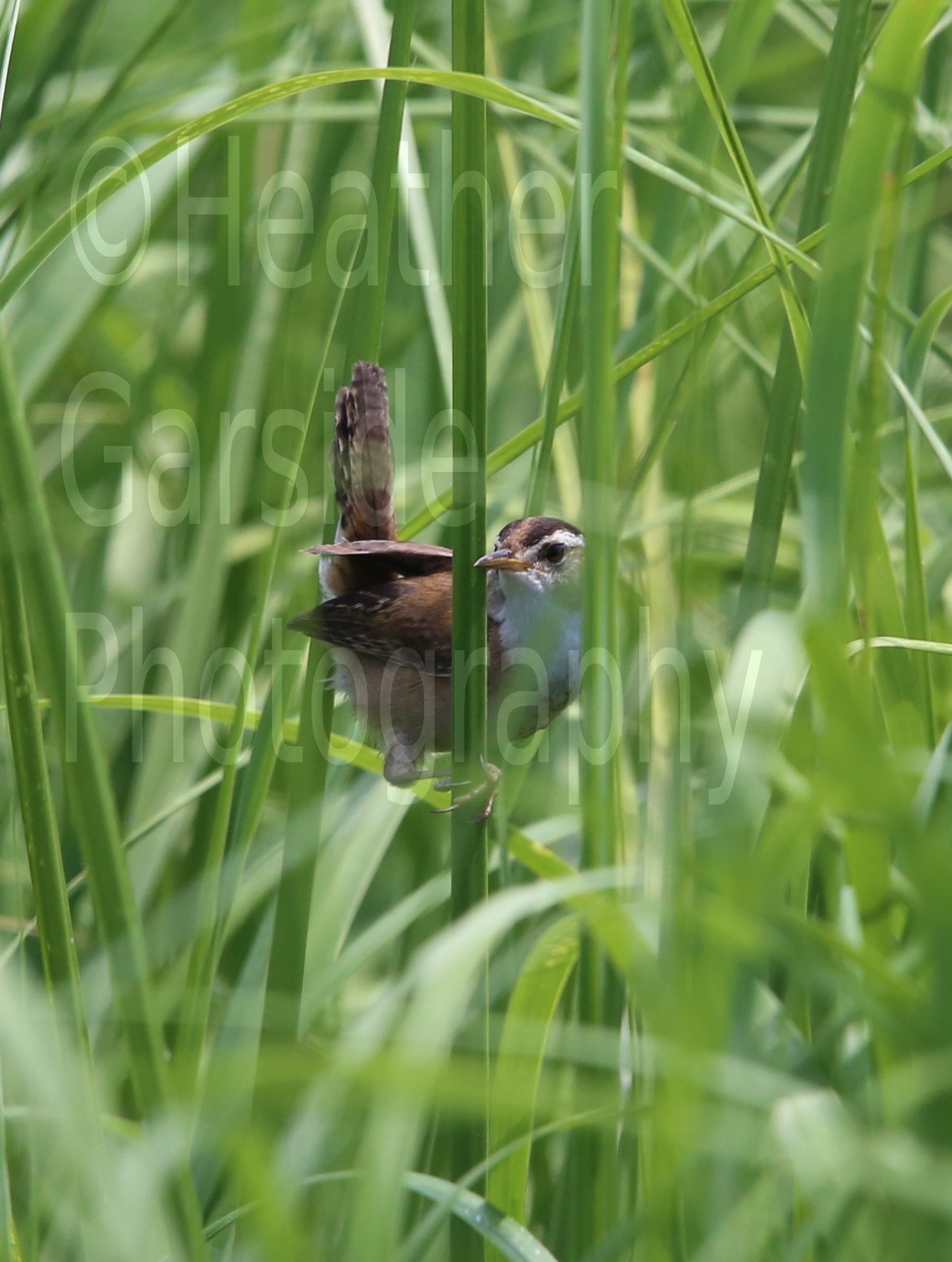
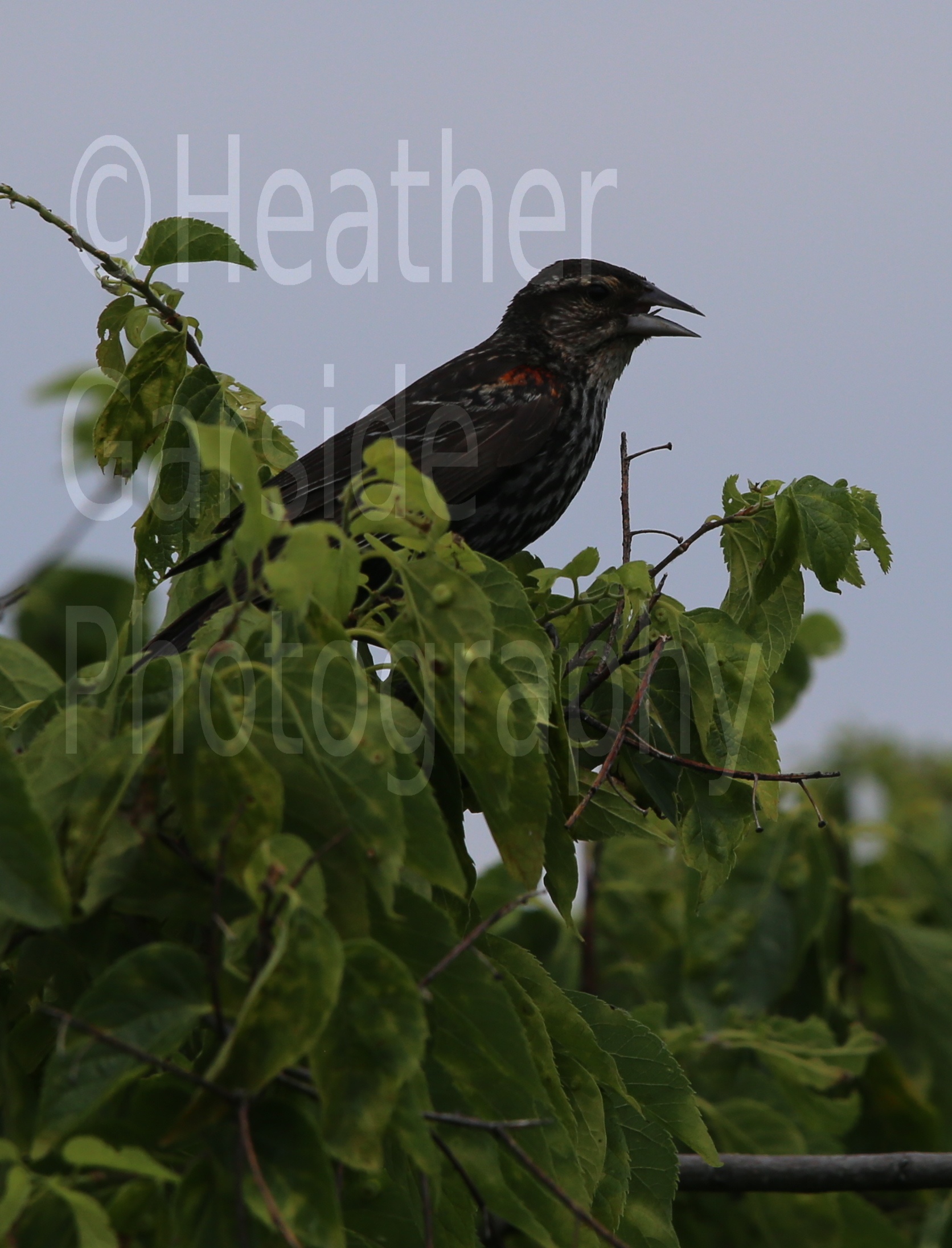
The dominant sensory experience throughout our walk was the Marsh Wrens calling to each other from every patch of tall reeds or bushes. There must have been hundreds of them. Spotting them however, presented a challenge. I did manage to spot a few, but they mostly eluded me. This soundtrack of the wetlands was interrupted occasionally with the call of the Red-Winged Blackbirds, not wanting to be left out or overshadowed.
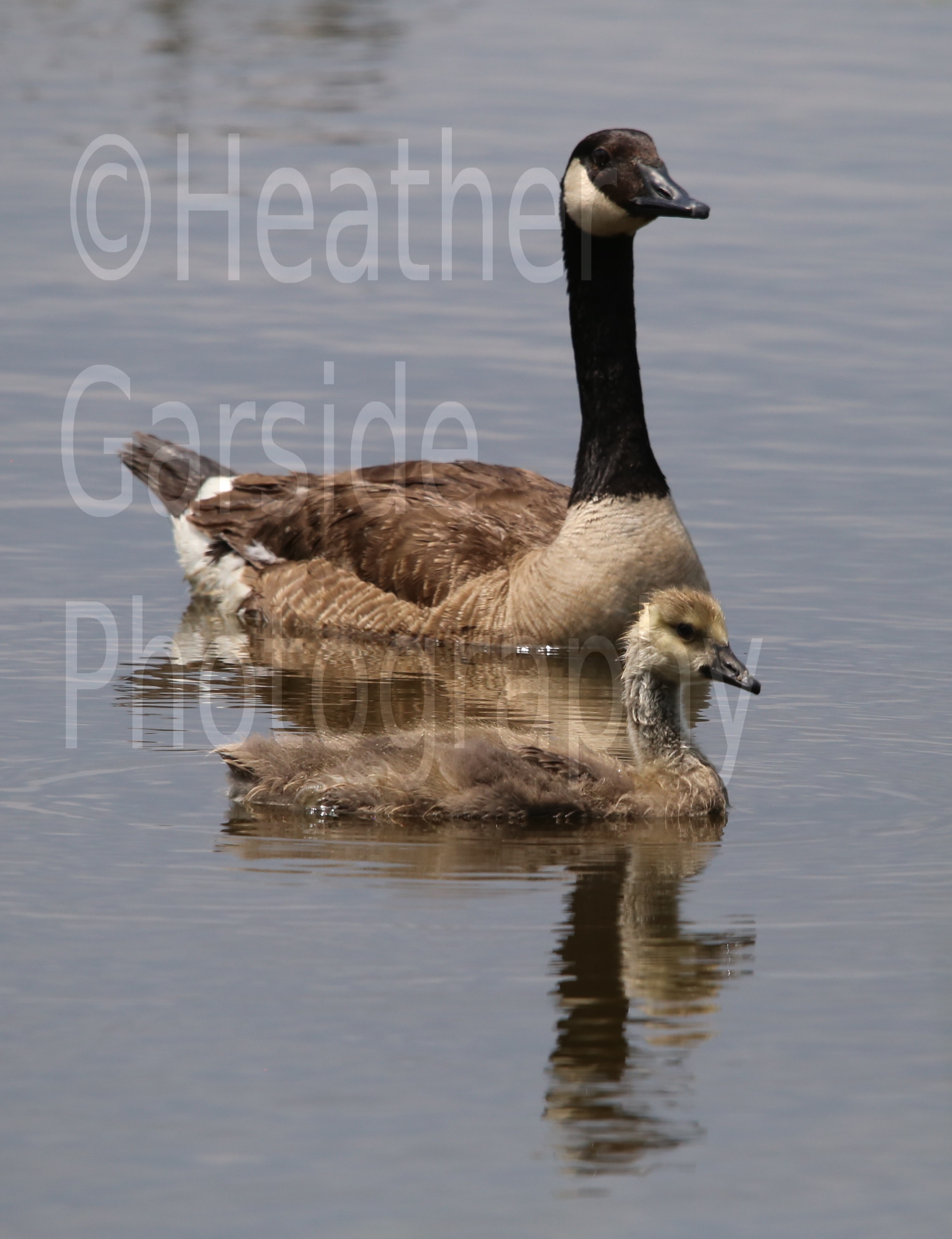
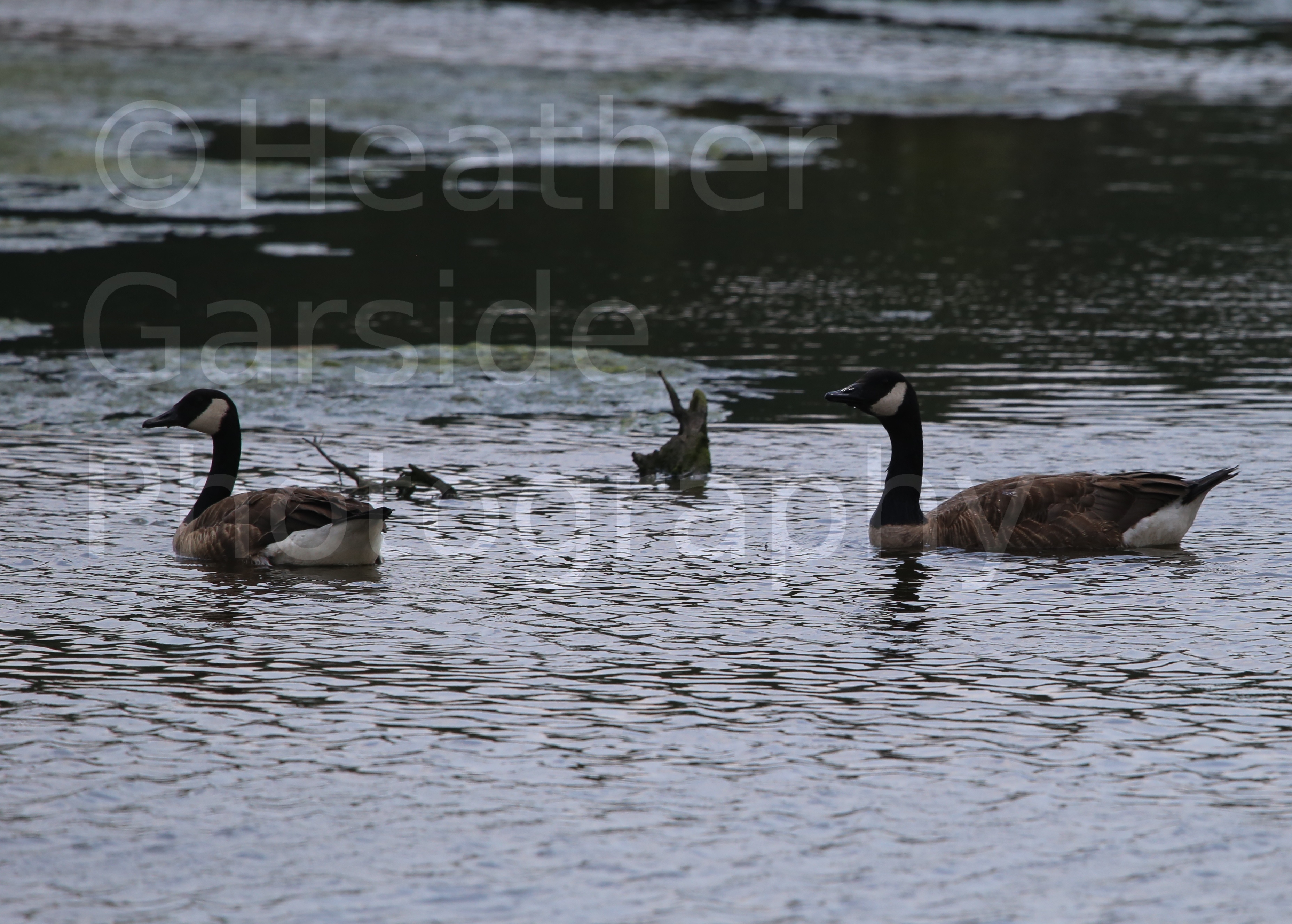
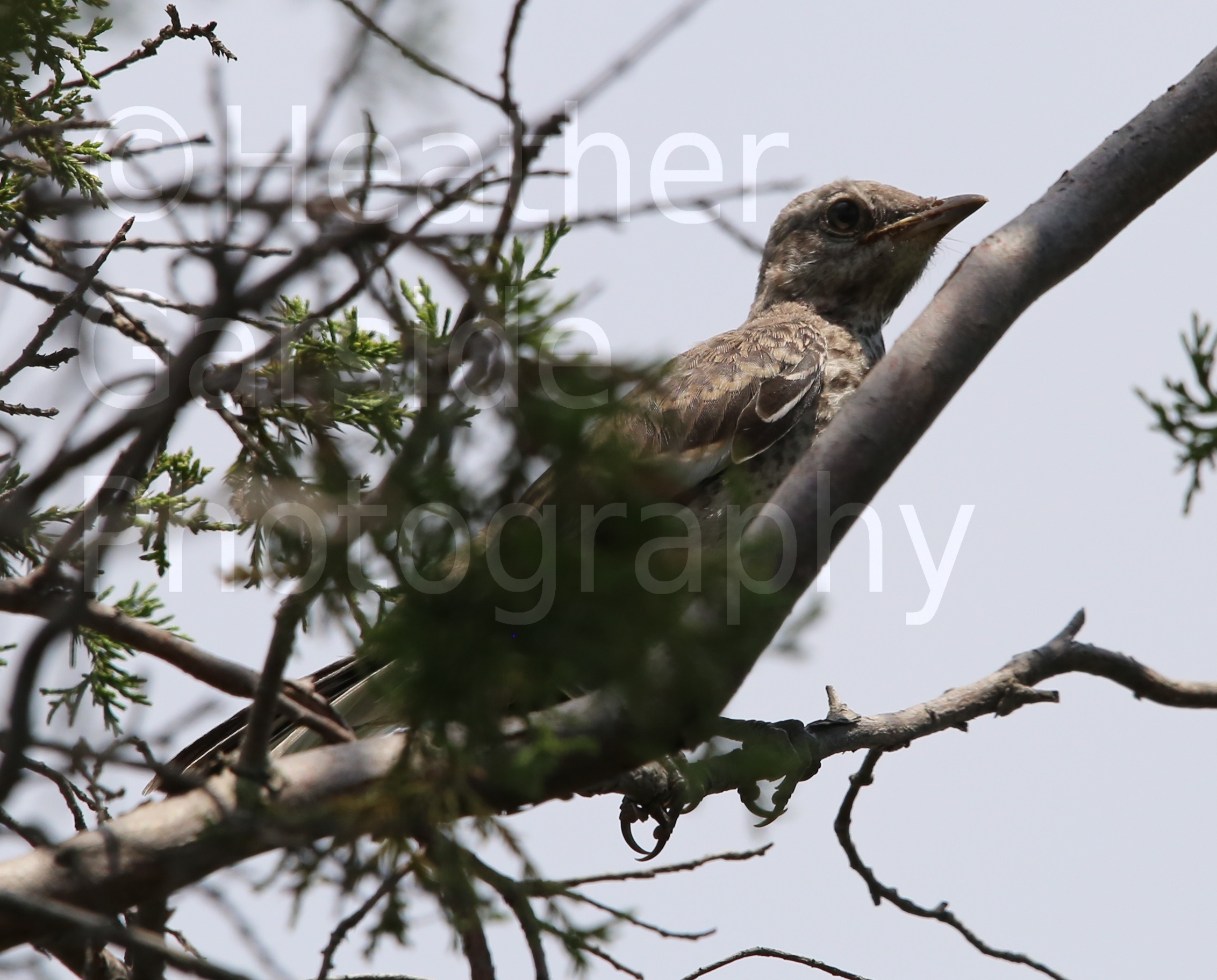
As you might expect, we spotted Robins, Grey Catbirds, Swallows (probably tree), Mallards, a Tern (not sure which variety), a few House Sparrows and a Song Sparrow. There were many Canada Geese, some with goslings, and we saw several Mockingbirds, including a juvenile whose adult feathers hadn’t fully come in yet.
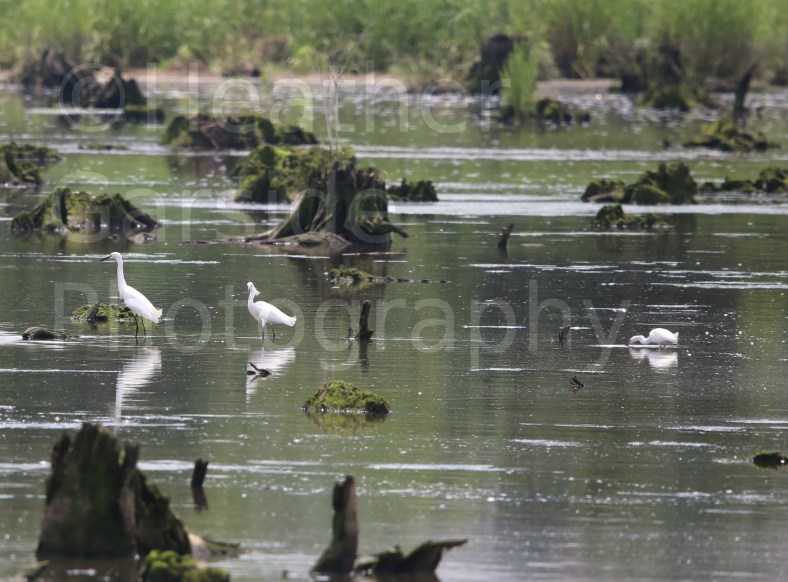
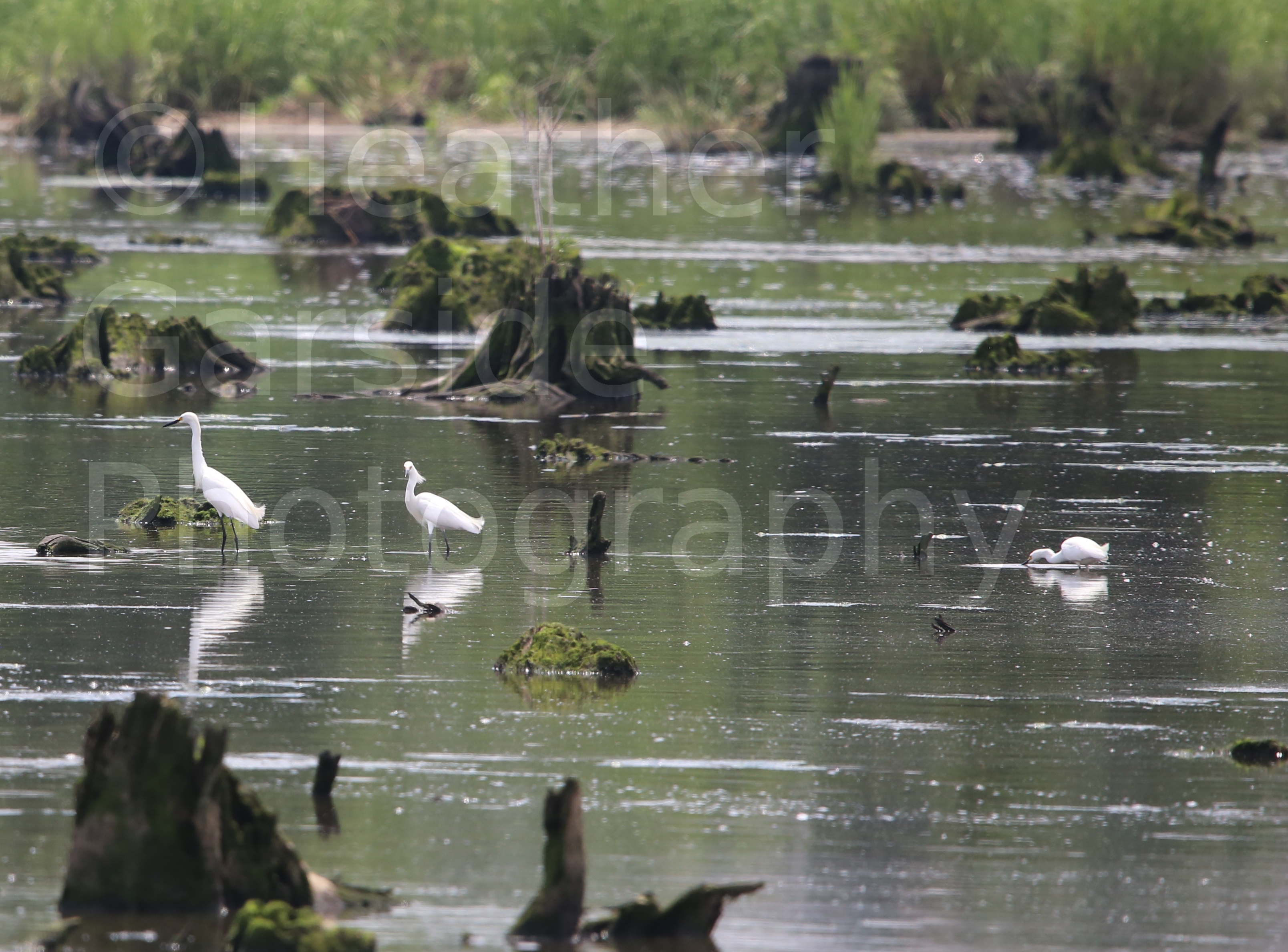
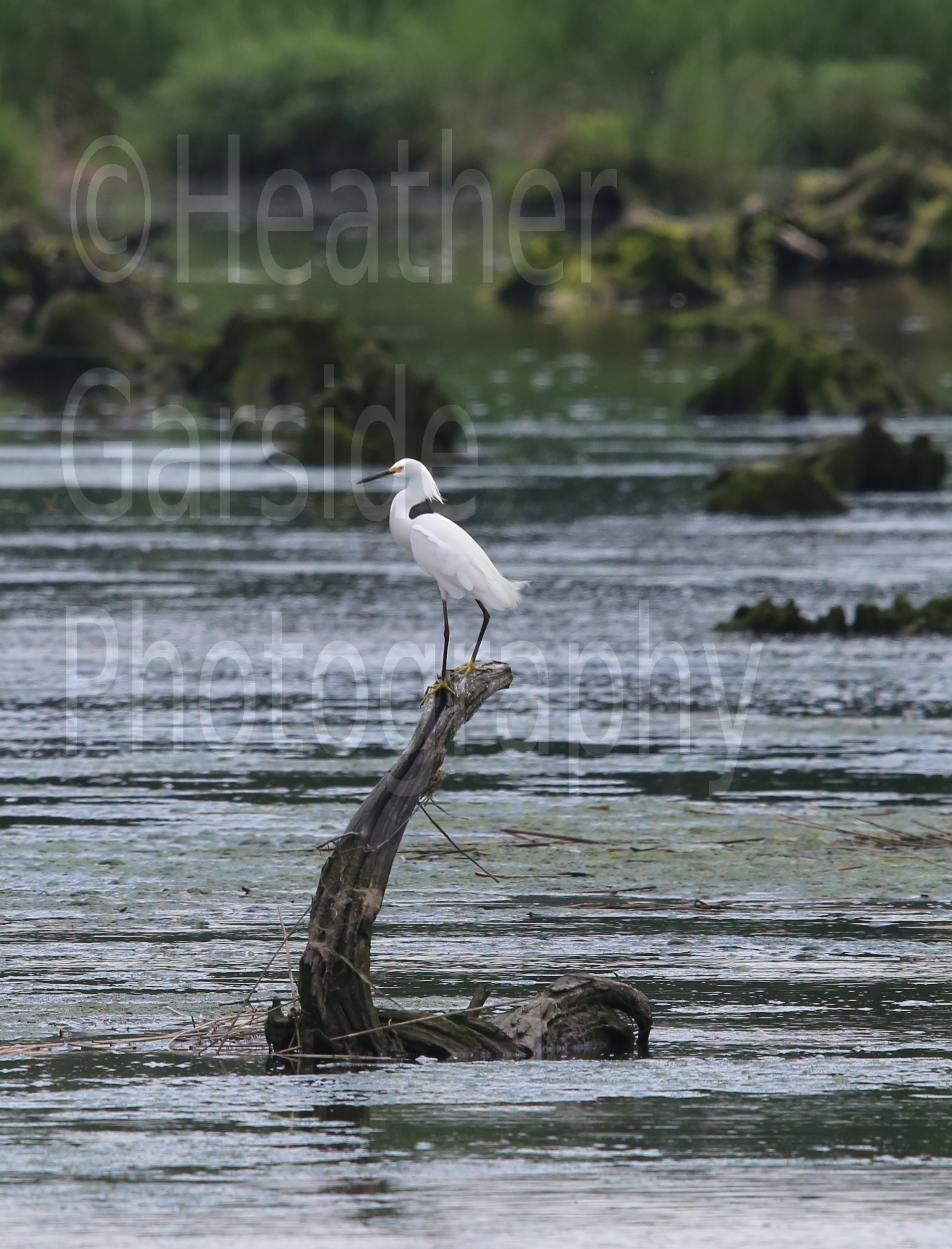
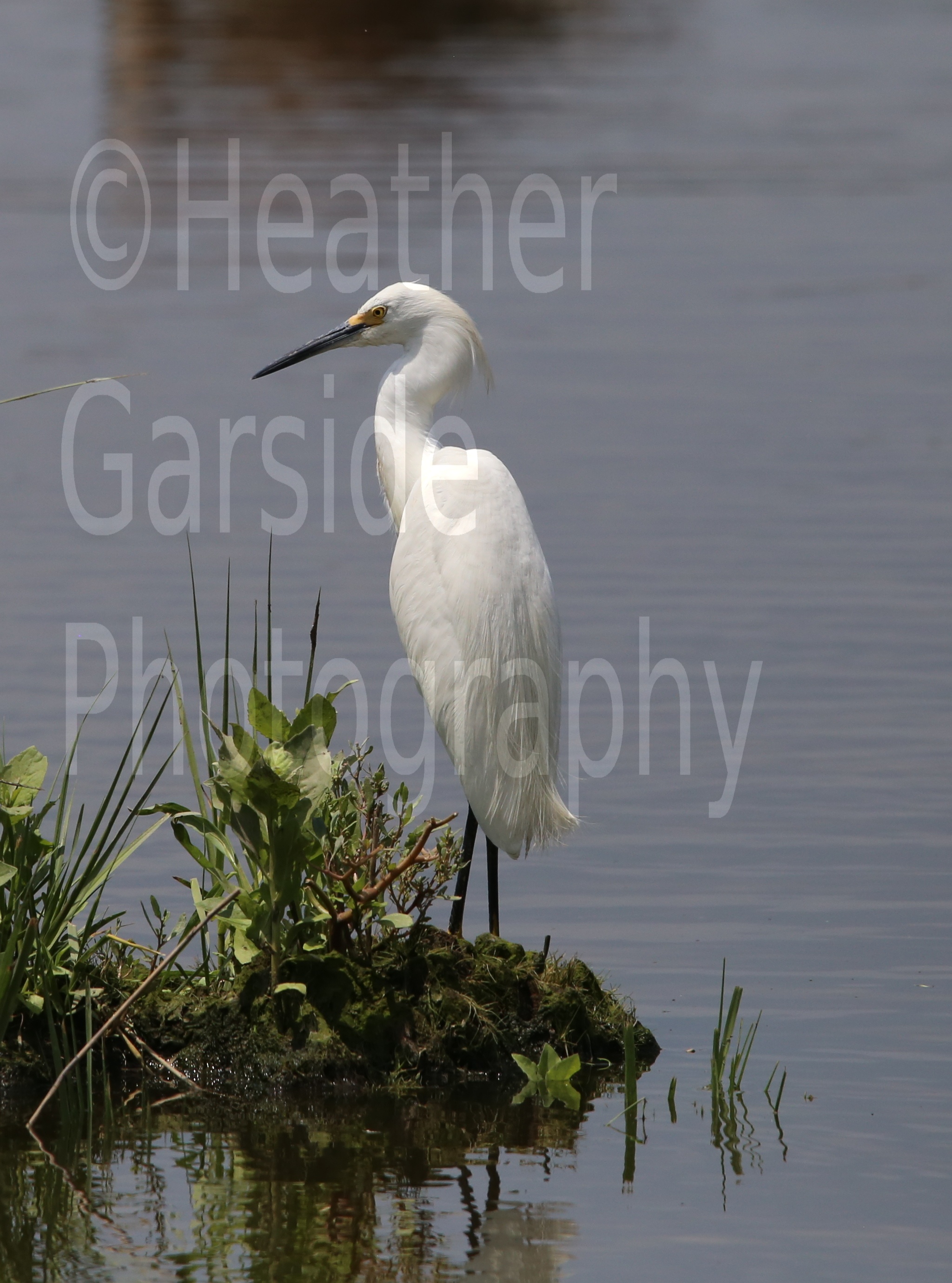
Snowy Egrets were the only stilted birds present. At 24 inches tall, they are much shorter than Great Egrets or Great Blue Herons. They also have longer feathers around their chests and the back of their heads, which, when added with their bright yellow beak and often weird postures, gives them a deranged almost Igor-like quality.
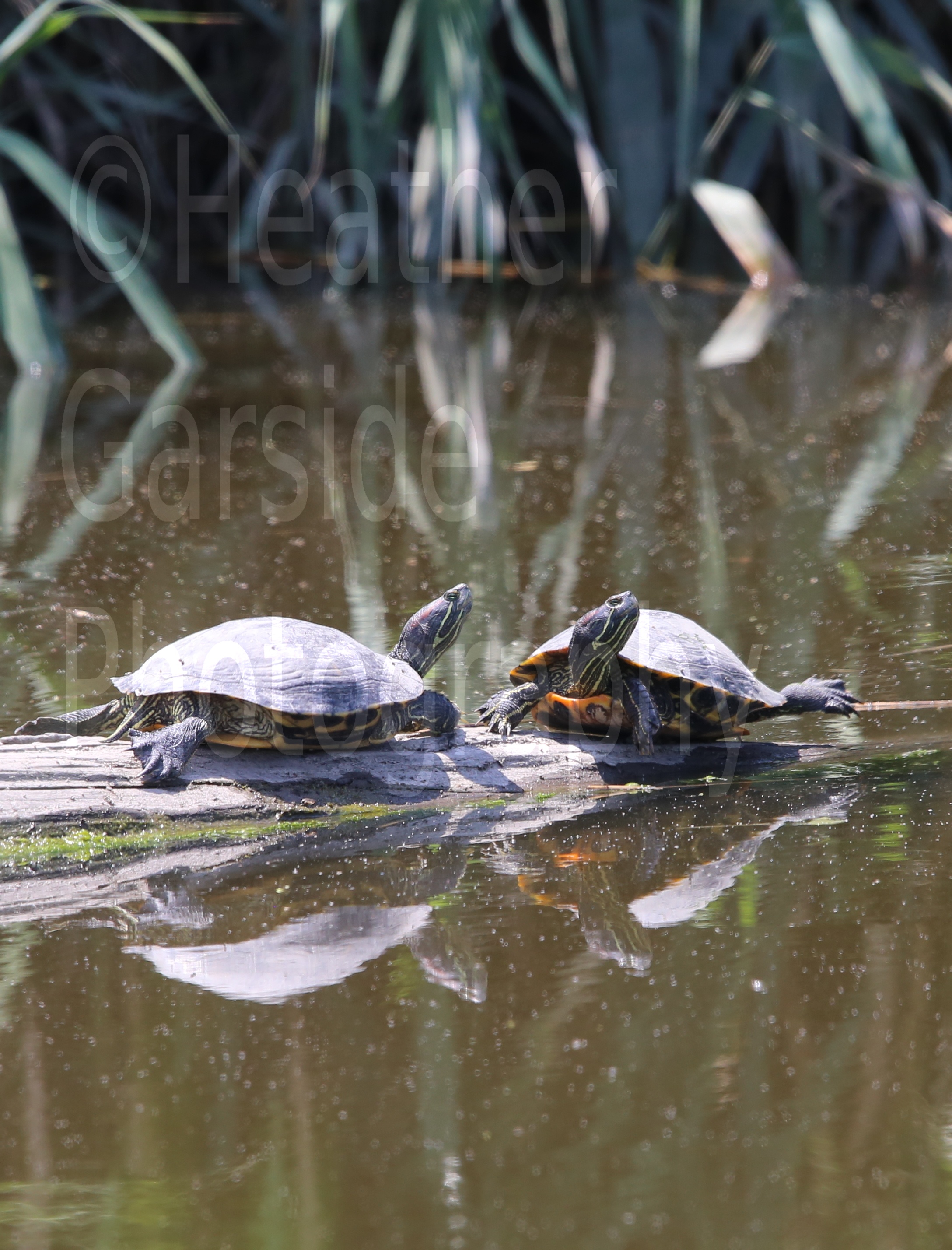
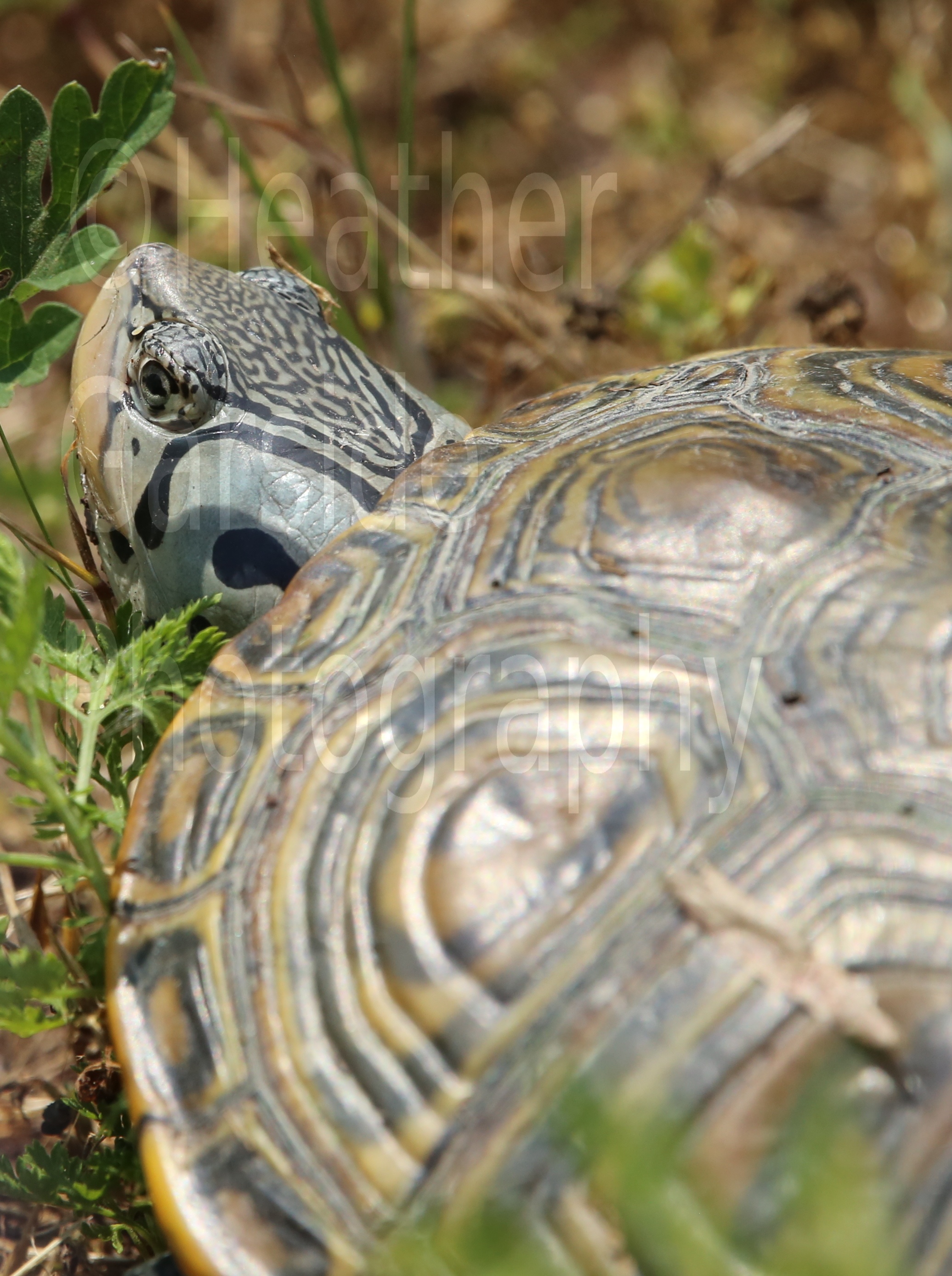
Besides our feathered friends, we saw a few butterflies fluttering and some dragonflies hovering. There were a pair of Painted Turtles on a log in the water. We also saw a Diamondback Terrapin Turtle, a first for us. She was backed over a small hole and I think she might have been laying eggs, or she was planning to until we came and stood over her. After a few photos at a safe distance we left her to it. I only hope our fellow walkers did the same. Diamondback Terrapins are listed as endangered or species of concern in many states, including New Jersey.
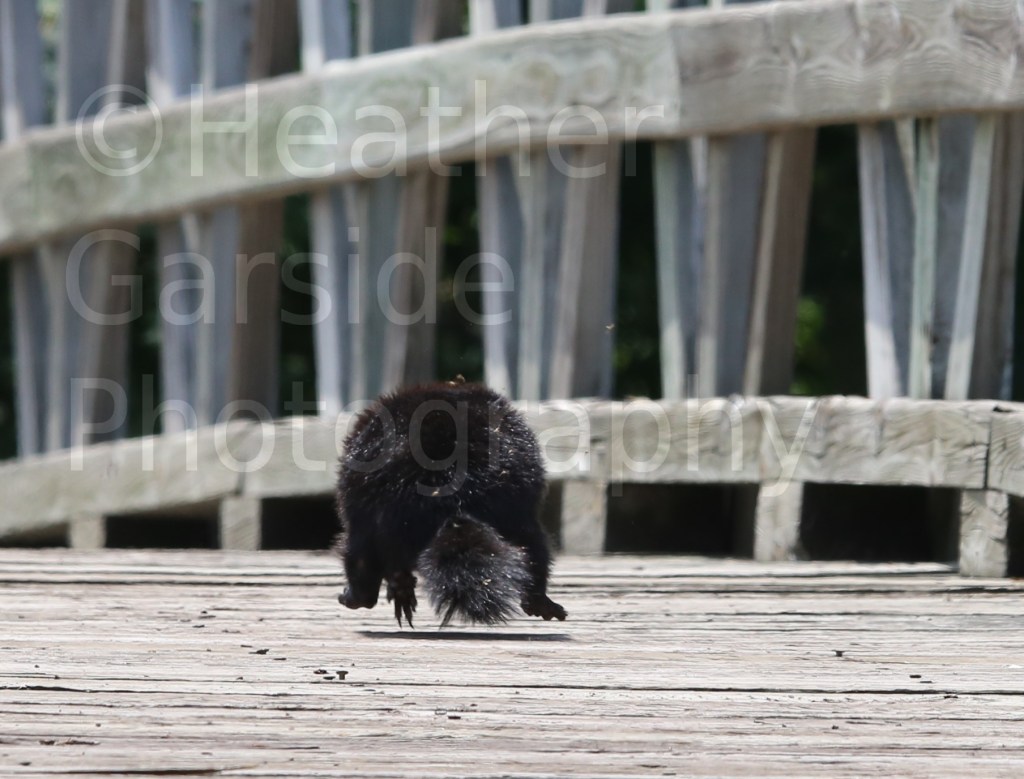
We also saw a very fat groundhog, who, despite his size was a quick runner.
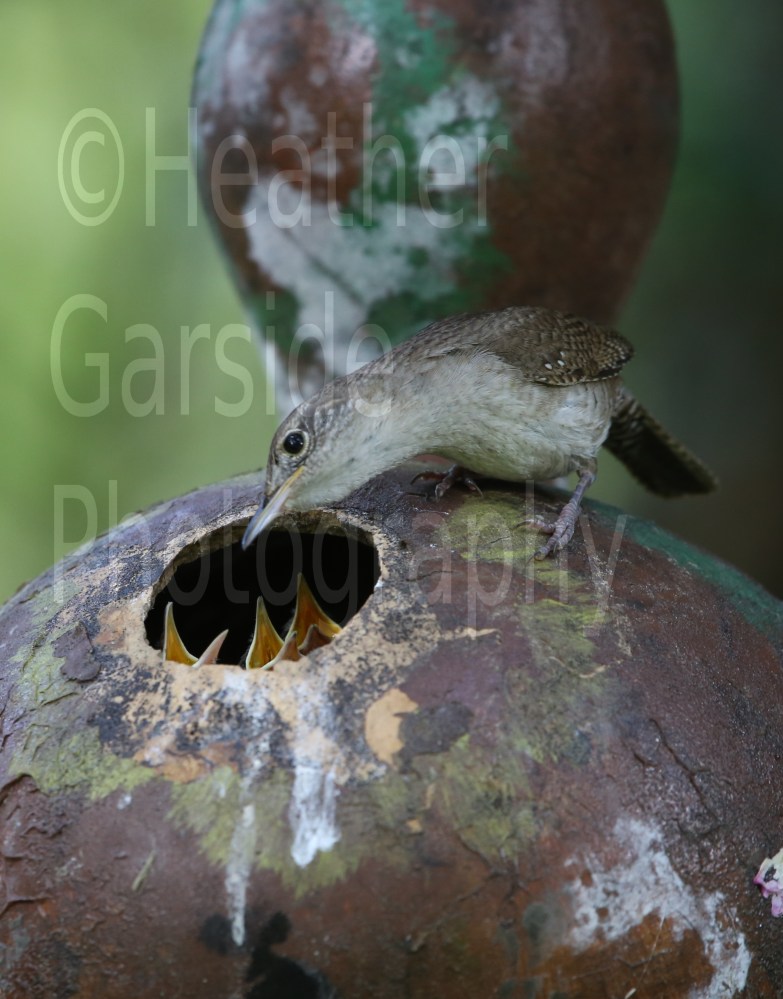
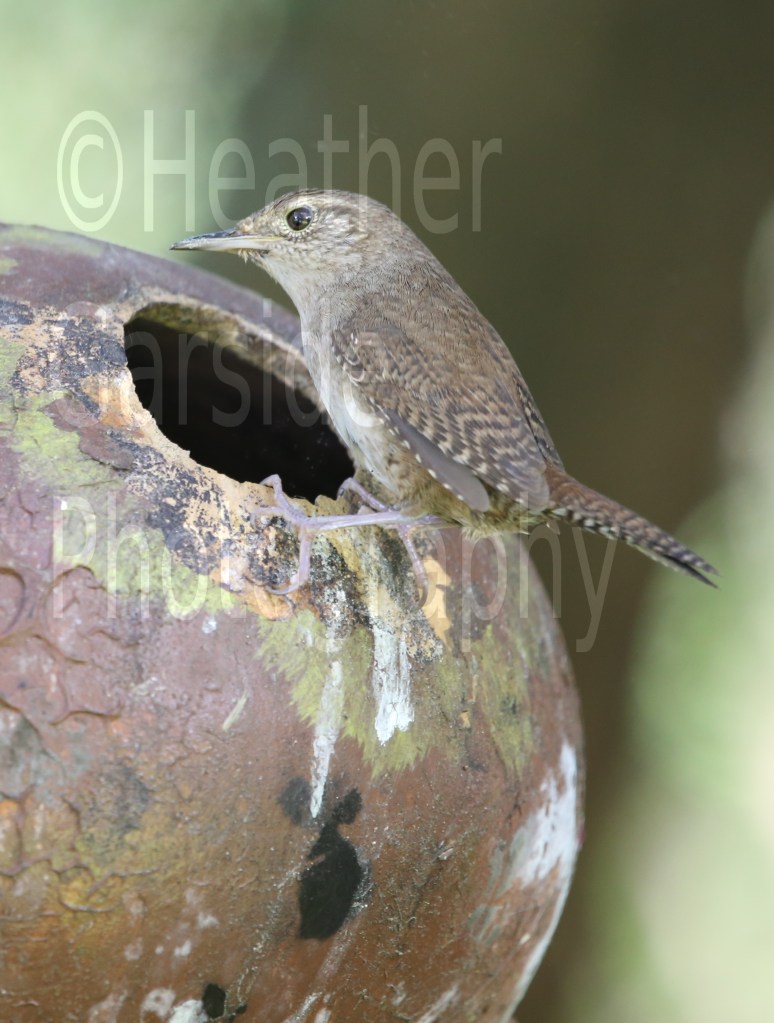
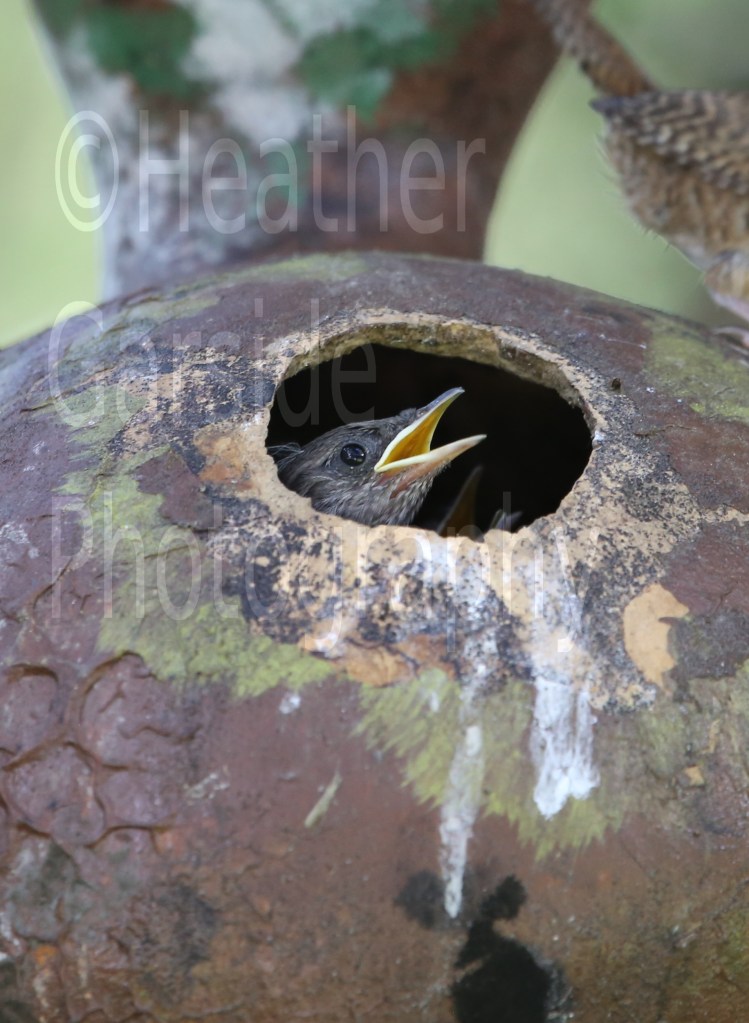
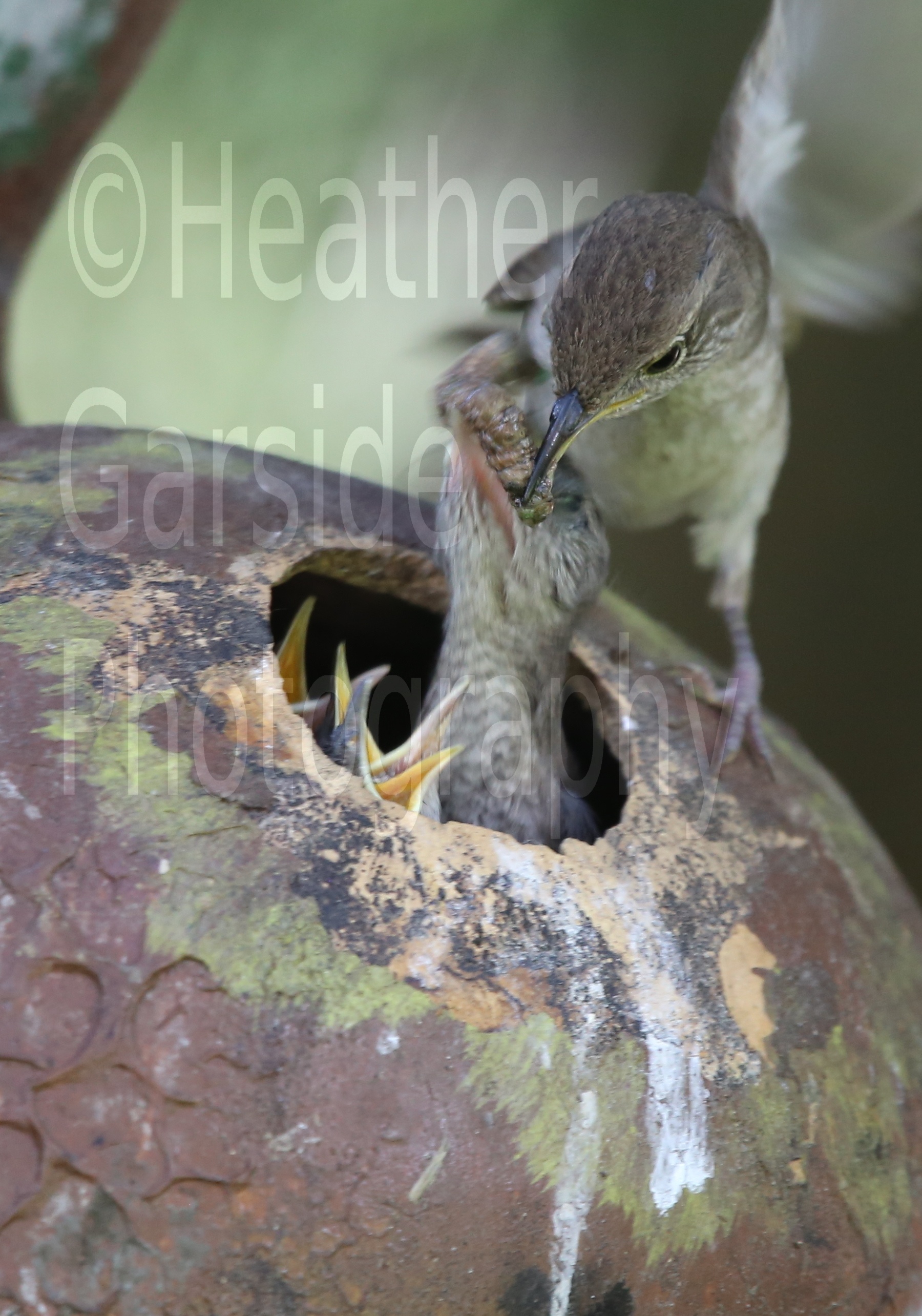
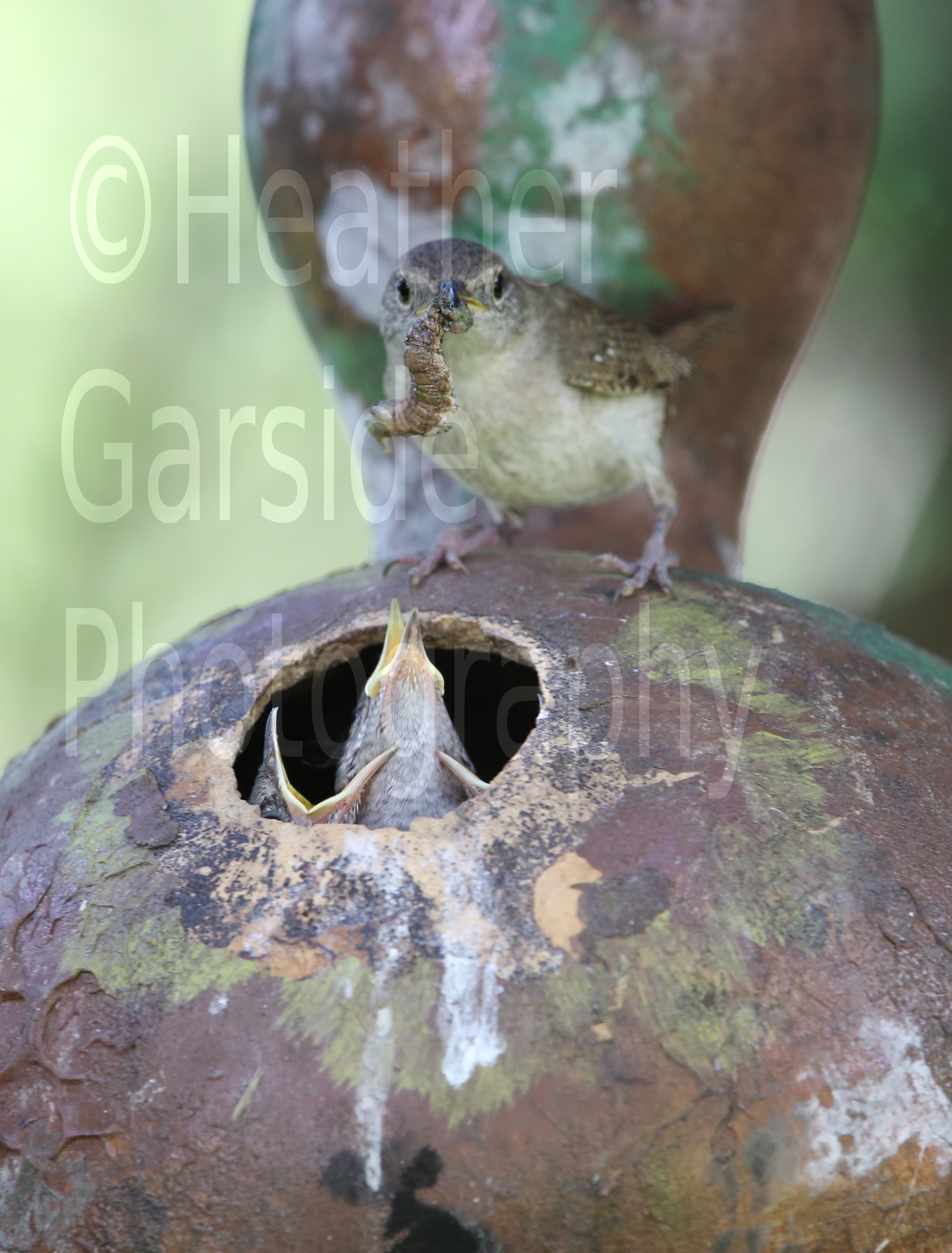
It is almost impossible for me to express in words how happy I was
when a pair of House Wrens decided to take up residence in my goose
gourd house this summer. After a few years with no permanent
residents I was becoming a bit discouraged with this DIY project.
Generally speaking, I am extra excited about any birds in my yard
that are not regular patrons to my feeders. Wrens, being insect
eaters, definitely fall into that category. Add to that their lovely
song and their quick and tiny bodies, they are both a pleasure to
have around and a bit of a challenge to spot and photograph.
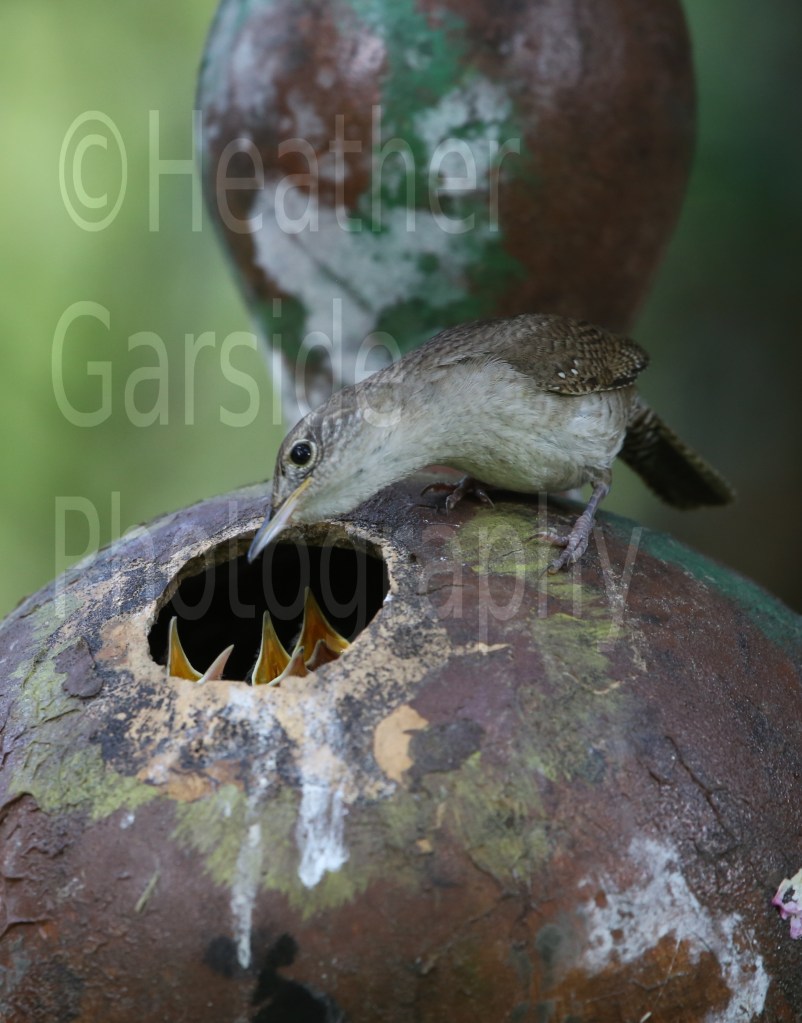
Considering how happy I was that they moved in, I am sure it will not come as a surprise that I was absolutely over the moon ecstatic when their nestlings hatched. I know that eggs and nestlings are the inevitable product of a nest, but the whole thing was still magical.
From a safe distance I peeked into the gourd a few times, and got a glimpse of one beak, then two. However, in late June I decided to sit in the yard from a position where I would have a good view of the mouth of the house. It turns out they had quadruplets! Very, very loud and hungry quadruplets.
If you are interested in making a gourd bird house, there is tons of information out there. Here is a website with some basic instructions: https://www.diynetwork.com/how-to/outdoors/structures/how-to-make-a-gourd-bird-house Be warned, this is not a quick project. The gourd needs to totally dry out before you can make the house. I purchased my gourd in early Autumn and didn’t drill the hole until the following February/March.




 Tails of a Twitcher